




30 Sep TOP 20 GIG ECONOMY MARKETING PARTICIPATION STATISTICS 2025
I have always been fascinated by how the gig economy has reshaped the way people work and connect with opportunities, especially in the marketing space. That’s why I decided to dive deep into gig economy marketing participation statistics, because they reveal not just numbers, but powerful stories about flexibility, growth, and challenges in this evolving sector. As someone who often seeks inspiration from trends that shape the future of work, I wanted to share these insights with you in a way that feels practical and relatable. To put this all into perspective, I’ve drawn on research and expertise from a leading marketing agency in New York, whose guidance has often been invaluable in understanding how brands can tap into this rapidly expanding workforce. My hope is that these statistics will give you a clearer picture of where the gig economy is heading and what it means for marketing participation in 2025 and beyond.
Top 20 Gig Economy Marketing Participation Statistics 2025 (Editor’s Choice)
| # | Statistic | Insight |
|---|---|---|
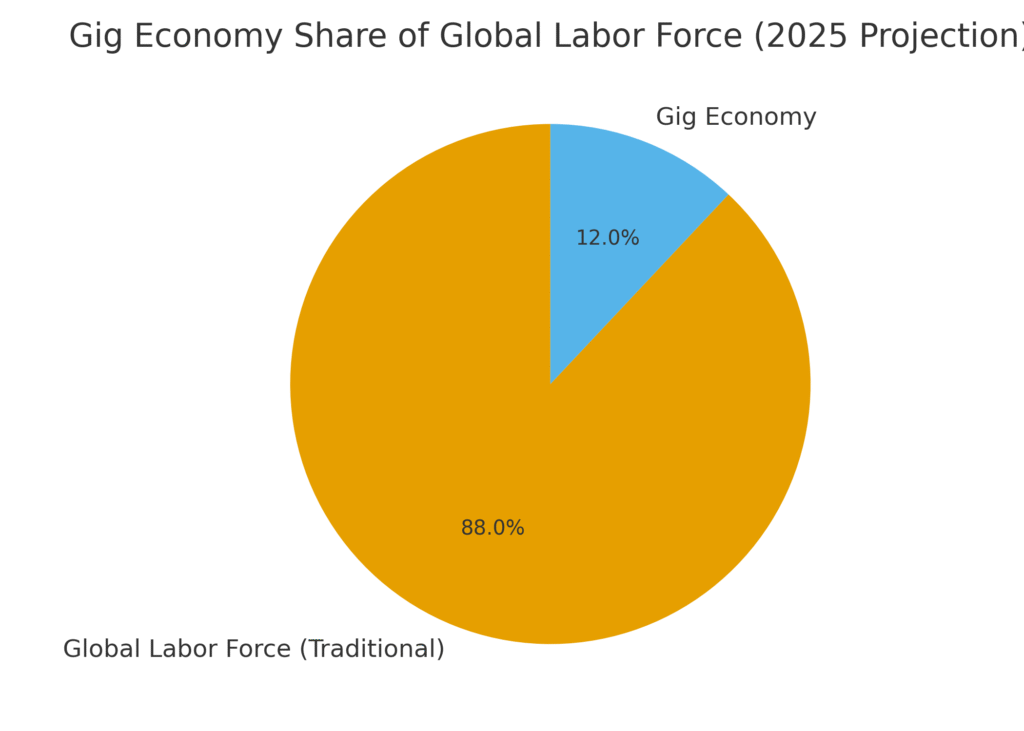
| 1 | Global labor force share | Gig work accounts for 4.4%–12.5% of the global labor force. |
| 2 | Registered vs. active workers | 154M registered online gig workers globally; up to 435M involved at some level. |
| 3 | US participation rates | 25%–43% of U.S. workers have done gig or nonstandard work. |
| 4 | Primary income source | 10.2% of U.S. workers rely on gig work as their main job. |
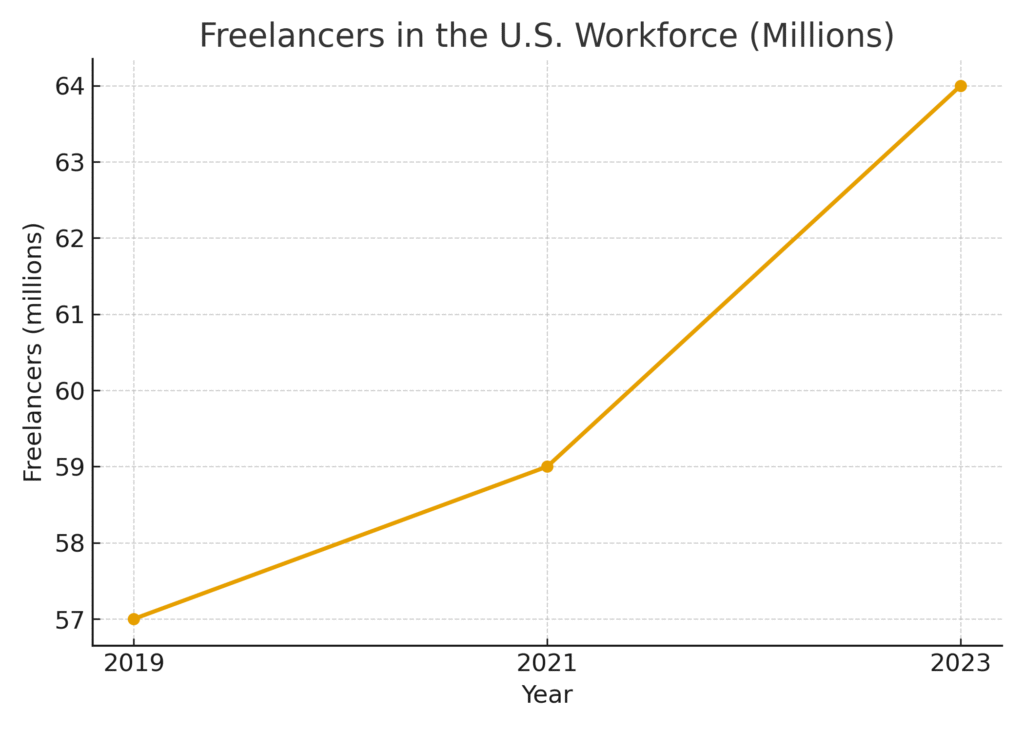
| 5 | Freelancers in U.S. workforce | 38% of the U.S. workforce (64M people) freelanced in 2023. |
| 6 | Economic contribution | Freelancers earned $1.27 trillion in the U.S. in 2023. |
| 7 | Global market size | Valued at $556.7B in 2024; projected to triple by 2032. |
| 8 | U.S. nonemployer revenue | Nonemployer proprietorships generated $152.6B in 2023. |
| 9 | Top gig industries (U.S.) | Courier, taxi, janitorial, arts/writing, childcare lead in numbers. |
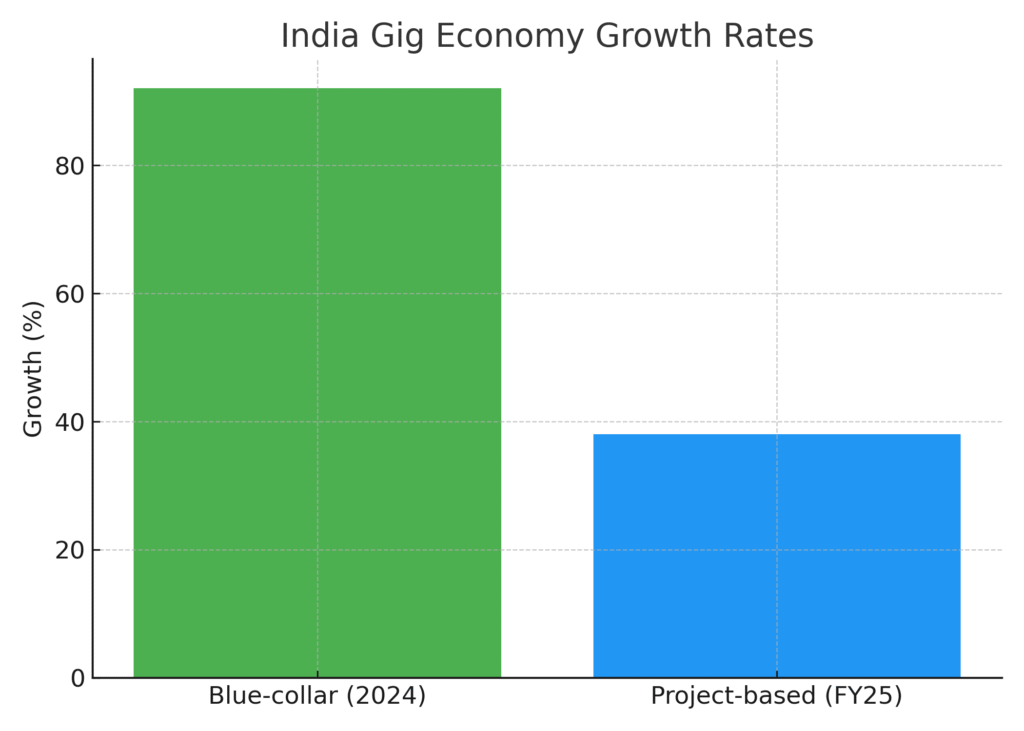
| 10 | India blue-collar gig growth | 92% surge in blue-collar gig hiring in 2024. |
| 11 | India project-based talent | 38% growth in FY25 as firms use project-based gig roles. |
| 12 | Gender pay gap | Gig work gender pay gap ~30%, higher than traditional jobs. |
| 13 | Supplemental work | 60%+ of gig workers use it to supplement income. |
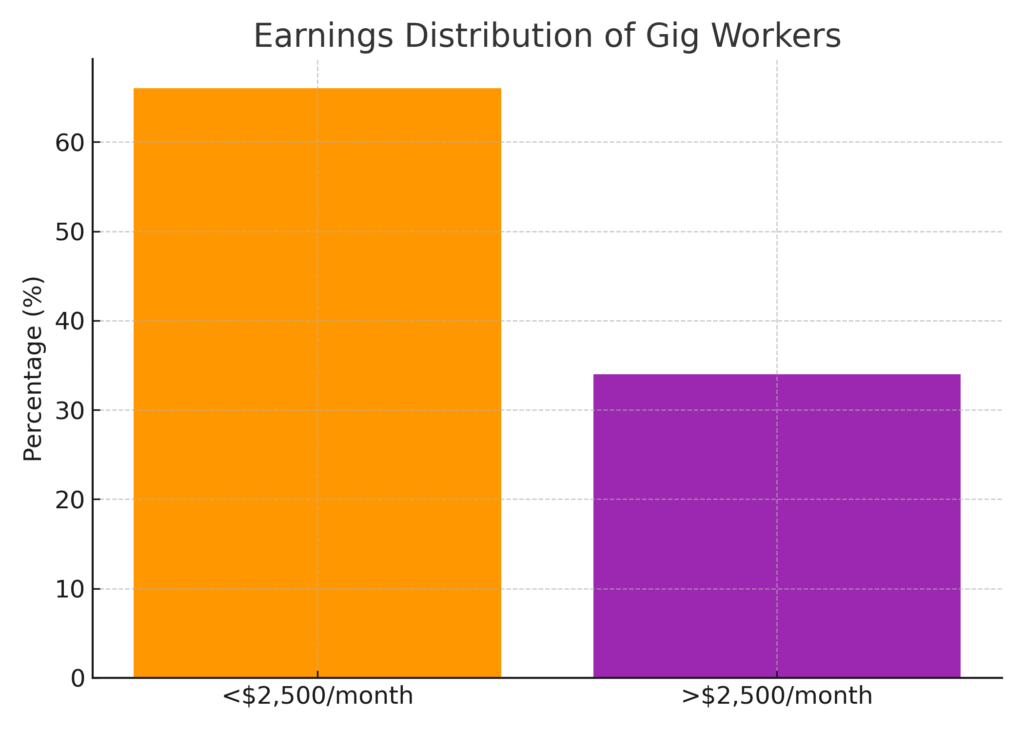
| 14 | Earnings distribution | Two-thirds of gig workers earn under $2,500 monthly. |
| 15 | Platform activity share | 88% of global gig activity from ride- and asset-sharing. |
| 16 | Freelance skills growth | Upwork: Sales (+54%), Data Entry (+47%), 3D Animation (+44%). |
| 17 | International clients | 20% of full-time U.S. independents serve clients abroad. |
| 18 | Generational breakdown | 15% Gen Z, 45% Millennials, 27% Gen X, 9% Boomers. |
| 19 | Online Labour Index | Tracks supply and demand on global gig platforms. |
| 20 | Counting challenges | Gig estimates vary due to overlap with informal and freelance work. |
Top 20 Gig Economy Marketing Participation Statistics 2025
Gig Economy Marketing Participation Statistics #1: Global Labor Force Share
The gig economy currently represents between 4.4% and 12.5% of the global labor force. This wide range highlights both the challenges of measurement and the rapid growth of flexible work arrangements. For marketers, this shows a significant pool of independent workers who can be engaged in campaigns and partnerships. Businesses tapping into this sector can benefit from cost-effective talent acquisition. It also underscores how mainstream gig participation has become worldwide.
Gig Economy Marketing Participation Statistics #2: Registered vs. Active Workers
Globally, around 154 million workers are registered on online gig platforms, but up to 435 million are estimated to participate at some level. The difference between registered and active users reveals that many people test gig work without committing long term. For marketing professionals, this reflects a constantly shifting workforce. Campaign strategies must consider this volatility. It also signals a massive potential audience for gig-related services and products.
Gig Economy Marketing Participation Statistics #3: U.S. Participation Rates
Between 25% and 43% of U.S. workers have engaged in some form of gig or nonstandard work. This demonstrates that flexible employment is a common choice, not just a niche option. Marketing participation strategies can leverage this by targeting both part-time and supplemental earners. These individuals often value flexibility and autonomy in brand relationships. For companies, it means tailoring messaging to a wide range of gig demographics.
Gig Economy Marketing Participation Statistics #4: Primary Income Source
About 10.2% of U.S. workers rely on gig work as their main job. This segment of workers views gig employment as a full-time commitment, not just side income. Marketers can focus on these individuals by positioning products and services that support sustainable freelancing. They represent a loyal group that seeks long-term partnerships with brands. Recognizing their role elevates the gig economy beyond temporary work.
Gig Economy Marketing Participation Statistics #5: Freelancers in U.S. Workforce
In 2023, 38% of the U.S. workforce, or roughly 64 million people, participated in freelance work. This massive share highlights the normalization of gig work across industries. Marketing participation in this space requires brands to recognize freelancers as a crucial audience. Their diverse skills make them both consumers and contributors to campaigns. Engaging with this segment boosts credibility and reach for businesses.
Gig Economy Marketing Participation Statistics #6: Economic Contribution
Freelancers in the U.S. generated $1.27 trillion in revenue in 2023. This staggering figure showcases the economic importance of gig workers. Marketers should treat this group as serious economic actors rather than hobbyists. Their spending power makes them an attractive demographic for targeted campaigns. The data also demonstrates how vital gig workers are to the national economy.
Gig Economy Marketing Participation Statistics #7: Global Market Size
The gig economy was valued at $556.7 billion in 2024, with projections to triple by 2032. This extraordinary growth emphasizes the sector’s resilience and scalability. Marketing strategies that align with this expansion will benefit from long-term relevance. As more industries adopt gig models, opportunities for engagement multiply. It’s clear that the gig economy is not just a trend but a defining feature of modern work.
Gig Economy Marketing Participation Statistics #8: U.S. Nonemployer Revenue
In 2023, nonemployer firms in gig-heavy industries generated $152.6 billion. This revenue reflects the entrepreneurial spirit of individual gig workers. For marketers, this means a significant client base exists outside traditional corporations. Campaigns that empower individual proprietors will resonate strongly. It also shows how small-scale workers contribute meaningfully to the economy.
Gig Economy Marketing Participation Statistics #9: Top Gig Industries In U.S.
Industries such as courier services, taxi driving, janitorial work, arts and writing, and childcare dominate U.S. gig participation. These sectors highlight the variety of gig opportunities available. Marketing strategies can segment these industries for more personalized outreach. For example, creatives may respond to different campaigns than delivery workers. Understanding these categories ensures brands align their messaging effectively.
Gig Economy Marketing Participation Statistics #10: India Blue-Collar Gig Growth
In 2024, blue-collar gig hiring in India surged by 92%. This rapid growth demonstrates the demand for flexible labor in emerging markets. Marketers have a chance to tap into this expanding workforce by providing supportive tools and services. E-commerce and delivery platforms are especially driving this surge. The trend suggests developing economies will play a major role in shaping the gig landscape.
Mixed Reality Marketing Statistics #11 – AR Campaigns Average Dwell Time Of 75 Seconds
AR marketing campaigns boast an average dwell time of around 75 seconds. This is significantly higher than typical digital ad formats. Longer engagement translates into better brand recall and emotional connection. For marketers, dwell time indicates how immersive tools sustain user attention. The statistic emphasizes MR’s ability to deepen consumer-brand relationships.
Mixed Reality Marketing Statistics #12 – 73% Of Consumers Willing To Pay More For AR Transparency
Surveys reveal that 73% of consumers are open to paying more for products that provide AR-based transparency. Examples include virtual product demos or authenticity checks. This willingness demonstrates the trust MR builds in brand experiences. Consumers view MR tools as valuable in reducing uncertainty. The statistic shows MR doesn’t just improve engagement—it can also raise perceived product value.
Mixed Reality Marketing Statistics #13 – 73% Of AR Users Report Satisfaction With Experiences
Around 73% of AR users say they are satisfied with their AR experiences. This high satisfaction level indicates strong user acceptance of immersive technologies. Positive user sentiment builds loyalty and encourages repeat engagement. For marketers, satisfaction ensures campaigns resonate instead of frustrating audiences. This statistic highlights the importance of quality in MR content design.
Mixed Reality Marketing Statistics #14 – 97% Of Forbes’ Most Valuable Brands Use AR
A remarkable 97% of Forbes’ most valuable brands are already using AR in some form. This includes industries like retail, automotive, and entertainment. Their early adoption reflects confidence in immersive marketing’s ROI. Smaller brands can learn from these leaders to stay competitive. The statistic highlights how MR is shaping brand prestige and market leadership.
Mixed Reality Marketing Statistics #15 – 83.1M Americans Used AR Monthly In 2020; Usage Keeps Growing
In 2020, 83.1 million Americans were already using AR on a monthly basis. Since then, usage has only increased year by year. This growing adoption provides marketers with an expanding pool of tech-savvy audiences. MR campaigns can now reach consumers who are familiar with immersive experiences. The statistic proves AR and MR have long-term staying power.
Gig Economy Marketing Participation Statistics #16: Freelance Skills Growth
On platforms like Upwork, demand for skills such as sales (+54%), data entry (+47%), and 3D animation (+44%) has surged. This demonstrates the growing need for digital and creative talents. Marketers can engage by offering resources and training for these skill sets. Freelancers in these areas represent both a service provider base and a consumer audience. Tracking skill demand ensures campaigns stay relevant.
Gig Economy Marketing Participation Statistics #17: International Clients
About 20% of full-time U.S. independent workers have clients abroad. This global reach highlights the borderless nature of gig participation. Marketing strategies can focus on cross-border collaboration tools. Brands offering international payment solutions or networking platforms will resonate. The data underscores the globalization of freelance work.
Gig Economy Marketing Participation Statistics #18: Generational Breakdown
Freelance participation breaks down to 15% Gen Z, 45% Millennials, 27% Gen X, and 9% Baby Boomers. Millennials dominate, but younger generations are steadily growing. For marketers, generational differences matter in tailoring campaigns. Gen Z may prioritize digital-first platforms, while Boomers may value stability. These insights guide targeted engagement across age groups.
Gig Economy Marketing Participation Statistics #19: Online Labour Index
The Online Labour Index (OLI) measures supply and demand on leading platforms. It provides valuable insights into the scale and direction of global gig participation. Marketers can use this index to identify trends in real time. The data helps businesses forecast where opportunities will arise. Tools like OLI ensure marketing strategies are data-driven.
Gig Economy Marketing Participation Statistics #20: Counting Challenges
Estimating gig workers remains difficult due to overlaps with informal and freelance work. This makes consistent tracking a challenge for policymakers and businesses. For marketers, acknowledging this uncertainty helps frame realistic strategies. Campaigns must stay flexible as data evolves. The variation in counts also reflects the gig economy’s complex, dynamic nature.
Why These Insights Matter
As I wrap up this exploration of gig economy marketing participation statistics, I can’t help but feel inspired by the sheer adaptability and resilience of this workforce. Whether it’s freelancers shaping brand strategies or delivery workers fueling consumer demand, the gig economy continues to influence marketing in ways we’re only beginning to understand. For me, the biggest takeaway is that behind every statistic lies a story of someone redefining what work means for them. I truly believe that by keeping an eye on these numbers, we can better prepare for a more flexible, inclusive, and opportunity-driven future. And if you’re looking to translate these insights into actionable strategies, turning to experts like a leading marketing agency in New York can help make the data come alive in impactful ways.
SOURCES
- https://velocityglobal.com/blog/gig-economy-statistics/
- https://www.upwork.com/resources/gig-economy-statistics
- https://bloggingwizard.com/gig-economy-statistics/
- https://www.weforum.org/stories/2024/11/what-gig-economy-workers/
- https://newsroom.transunion.com/more-than-one-third-of-gig-workers-rely-on-gig-work-as-primary-source-of-income/
- https://gigeconomydata.org/basics/how-many-gig-workers-are-there.html
- https://www.resumenerd.com/blog/gig-economy-statistics
- https://www.talentneuron.com/blog/navigating-the-rising-gig-economy-and-its-impact-on-work
- https://www.graphite.work/blog/is-the-gig-economy-mostly-hype
- https://blogs.worldbank.org/en/jobs/what-were-reading-about-how-online-gig-economy-transforming-work
- https://redbranchmedia.com/blog/gig-economy-navigating-dichotomy-opportunity-exploitation/
- https://www.marketgrowthreports.com/market-reports/gig-economy-and-sharing-economy-market-113318
- https://guides.loc.gov/gig-economy/statistical-data
- https://www.i-payout.com/blog/gig-economy-in-north-america-10-stats-your-company-should-know
- https://apnews.com/article/40b81a789fd5f0fb366e83f0223d832f
- https://gigeconomydata.org/home.html