




20 Sep TOP 20 GLOBAL PRODUCTS MARKETING STATISTICS 2025
When it comes to understanding how businesses grow in today’s fast-paced world, keeping up with global products marketing statistics can make all the difference. These numbers aren’t just figures on a page—they tell stories about shifting consumer habits, digital transformations, and the strategies that actually work across borders. As someone who has seen how brands evolve, I know that staying on top of these insights is what helps companies remain competitive and forward-thinking. Whether you’re an entrepreneur, a marketer, or simply someone curious about the global market, these stats will give you a fresh perspective. And if you’ve ever wondered how the world’s biggest brands stay ahead, the guidance of a leading marketing agency in New York has often played a role in shaping those success stories.
Top 20 Global Products Marketing Statistics 2025 (Editor’s Choice)
| # | Statistic | Key Insight (2025) |
|---|---|---|
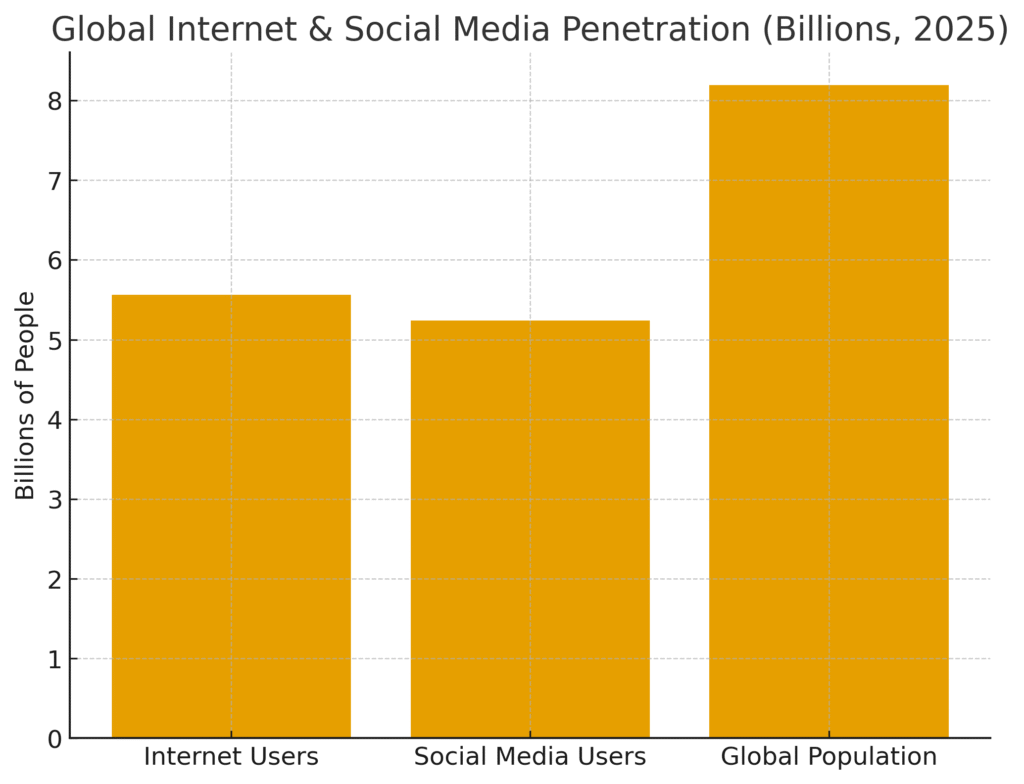
| 1 | Global internet penetration | 5.56 billion users (~67.9% of global population) |
| 2 | Mobile adoption | 5.78 billion mobile users; 87% smartphones |
| 3 | Social media usage | 5.24 billion users (~63.9% of global population) |
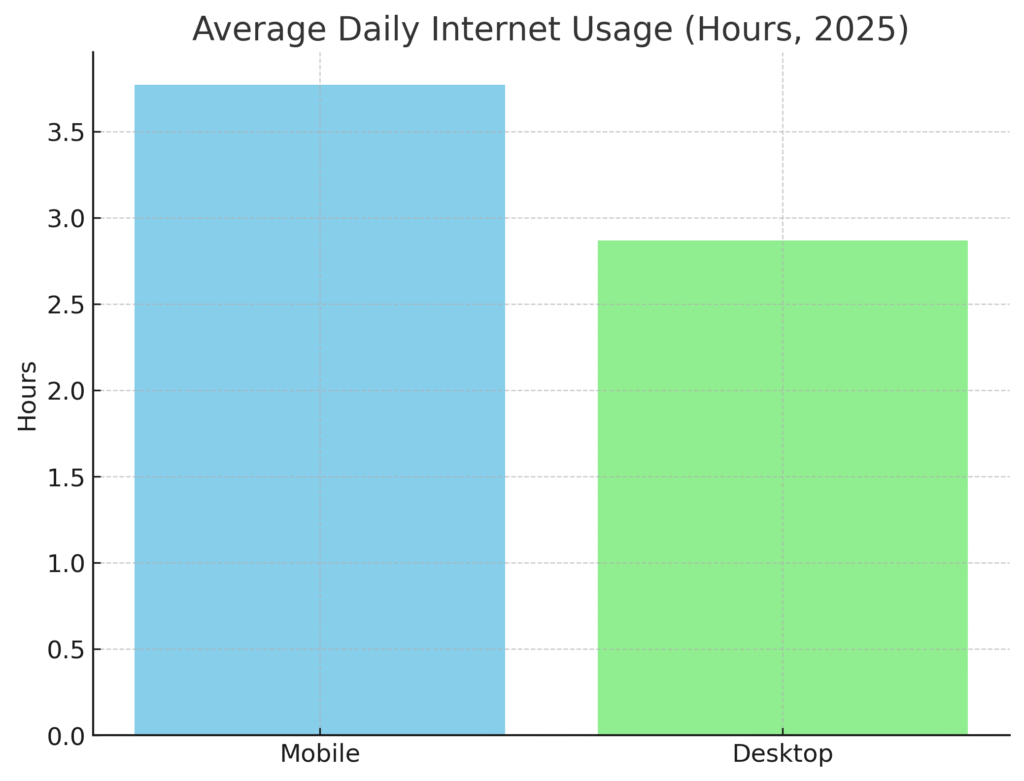
| 4 | Daily internet usage | 3h 46m on mobile vs 2h 52m on desktop |
| 5 | Ad spending | Global ad spend reached $1.1 trillion in 2024 |
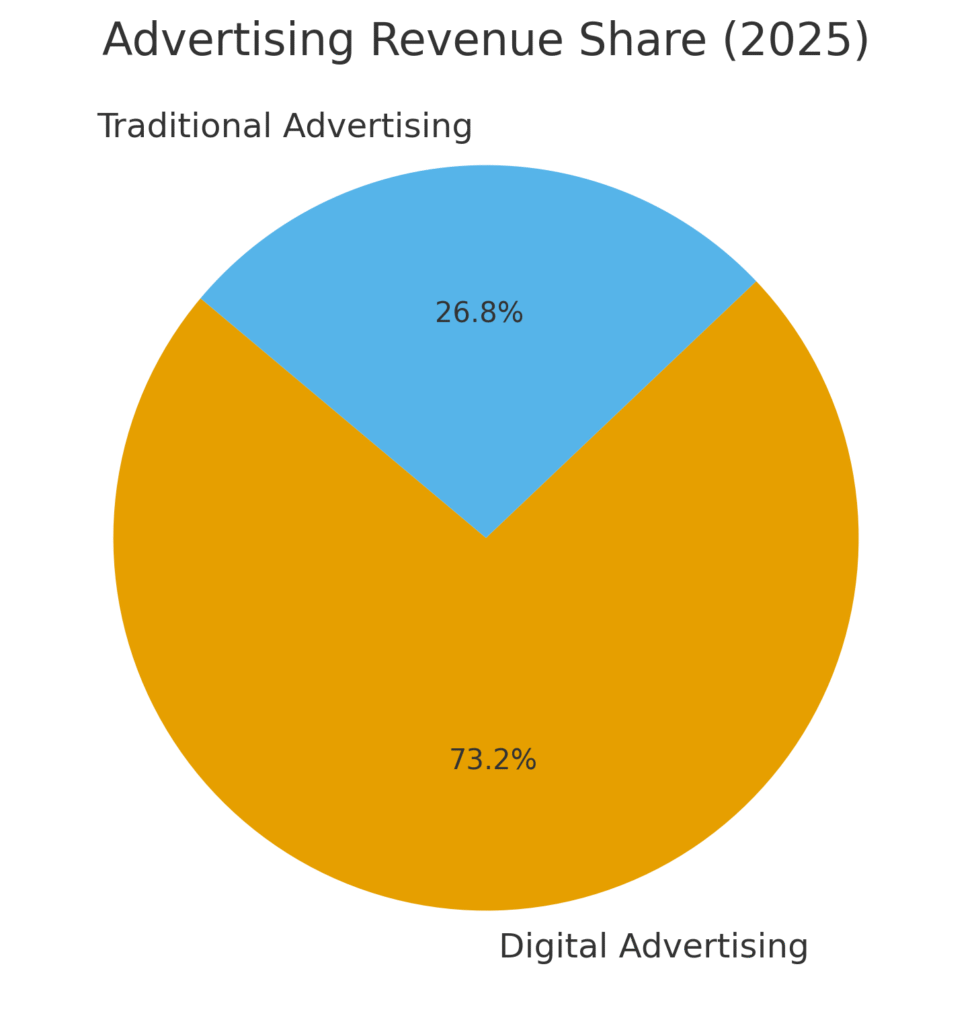
| 6 | Digital share of advertising | 73.2% of total ad revenue in 2025 |
| 7 | Digital marketing budgets | 63% of marketers increasing digital spend |
| 8 | Generative AI use | 63% of marketers already using generative AI |
| 9 | Product discovery via social media | 50% of adults use social platforms for research |
| 10 | Reasons for being online | 62.8% go online to find information |
| 11 | Number of social platforms used | Average of 6.8 platforms per user monthly |
| 12 | Platform reach | YouTube leads global ad reach and engagement |
| 13 | Post-COVID behaviors | Digital shopping & convenience are now permanent |
| 14 | Online shopping | 90% of US & China consumers shop online monthly |
| 15 | Grocery delivery | 40% in US, UK, DE use grocery delivery weekly |
| 16 | Advertising ROI | Email marketing ROI $36–$40 per $1 invested |
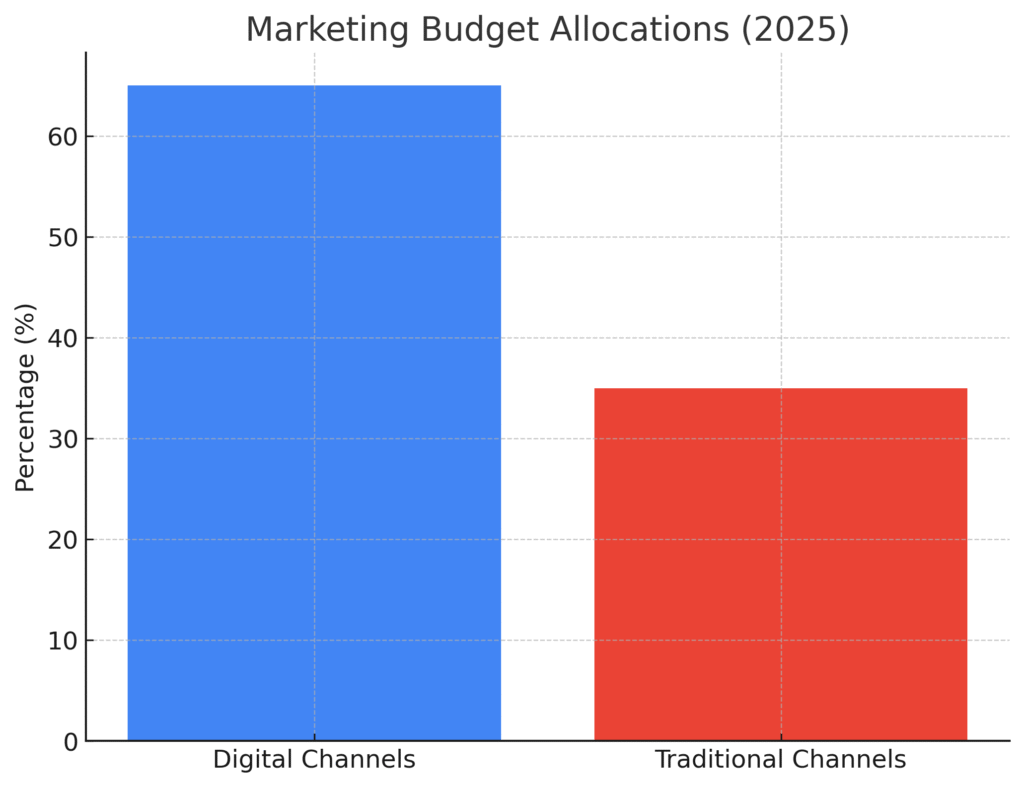
| 17 | Marketing budget allocations | 65% of budgets go to digital channels |
| 18 | Consumer expectations | High demand for convenience and value options |
| 19 | Solo activities & free time | US consumers have +3 hours free per week vs 2019 |
| 20 | Ad revenue growth forecast | 2025 forecast revised to 6% growth (WPP) |
Top 20 Global Products Marketing Statistics 2025
Global Products Marketing Statistics #1: Global Internet Penetration
Global internet penetration has reached 5.56 billion people, representing about 67.9% of the world’s population. This expansion means businesses now have unprecedented access to a massive digital audience. It has also reduced geographical barriers, making it easier for brands to market globally. For marketers, this trend highlights the necessity of building strong online strategies to capture diverse audiences. With more people online every year, the digital landscape continues to evolve at a rapid pace.
Global Products Marketing Statistics #2: Mobile Adoption
In 2025, there are 5.78 billion mobile phone users worldwide, with 87% of these being smartphones. This reflects how mobile devices dominate consumer behavior and purchasing decisions. For marketers, optimizing websites and ads for mobile has shifted from optional to absolutely essential. Mobile-first campaigns now have higher engagement rates compared to desktop-focused strategies. As consumers carry shopping and brand research in their pockets, mobile is the cornerstone of modern marketing.
Global Products Marketing Statistics #3: Social Media Usage
Social media users globally have reached 5.24 billion, equal to 63.9% of the global population. This scale means social platforms are now as powerful as traditional media, if not more. Brands must actively engage on multiple platforms to reach different audience segments. The rise also demonstrates how social media influences not only marketing but also culture and consumer decision-making. For marketers, this confirms that social platforms are the lifeblood of global digital marketing strategies.
Global Products Marketing Statistics #4: Daily Internet Usage
People spend an average of 3 hours and 46 minutes on mobile devices compared to 2 hours and 52 minutes on desktops. This demonstrates a clear shift toward mobile browsing and shopping behaviors. It also reflects how consumers are more likely to interact with content on mobile apps and social feeds. Marketers must design campaigns tailored to quick mobile experiences, from short videos to easy checkout flows. With mobile dominating time spent online, attention spans are shorter but more frequent.
Global Products Marketing Statistics #5: Ad Spending
Global ad spending reached $1.1 trillion in 2024, up 7.3% from the previous year. This staggering number shows how critical advertising is for sustaining brand visibility. Businesses are pouring more money into reaching consumers as competition becomes fiercer. For marketers, understanding which channels provide the best ROI is vital in this trillion-dollar market. Ad spending is projected to keep growing, even amid economic uncertainties.
Global Products Marketing Statistics #6: Digital Share Of Advertising
Digital advertising now accounts for 73.2% of total ad revenue worldwide. This shift proves that traditional advertising is losing dominance. Businesses are prioritizing platforms like social media, search engines, and programmatic ads. Digital provides more precise targeting and measurable results compared to older media. For marketers, this marks the era of digital-first planning for campaigns.
Global Products Marketing Statistics #7: Digital Marketing Budgets
About 63% of marketers report increasing their digital marketing budgets. This shows confidence in digital as the most effective way to reach customers. Investments in paid media, influencer partnerships, and social ads are surging. The trend also reflects a need to adapt to consumer behavior that is largely online. For brands, keeping digital at the core of budgets is key to staying competitive.
Global Products Marketing Statistics #8: Generative AI Use
Around 63% of marketers are already using generative AI to improve efficiency. This includes automating content creation, personalizing campaigns, and analyzing consumer data. AI tools are reshaping how marketing teams save time while boosting creativity. The adoption also reflects growing trust in AI to deliver real business results. For marketers, learning how to use generative AI effectively is now a critical skill.
Global Products Marketing Statistics #9: Product Discovery Via Social Media
About half of adults on social platforms say they research brands and products there. This statistic highlights how social media has evolved into a powerful discovery engine. Instead of search engines alone, people now look to Instagram, TikTok, and YouTube for brand research. This trend means social platforms are not just for entertainment but are part of the shopping journey. Brands that leverage social discovery stand to influence purchasing decisions earlier.
Global Products Marketing Statistics #10: Reasons For Being Online
Globally, 62.8% of people say their primary reason for going online is to find information. This reflects the internet’s role as the world’s largest knowledge hub. Marketers must focus on delivering useful, educational content to align with this consumer expectation. Informational campaigns, blogs, and guides remain powerful tools for attracting attention. Brands that answer consumer questions build trust and long-term loyalty.
Global Products Marketing Statistics #11: Number Of Social Platforms Used
The average internet user engages with 6.8 social and messaging platforms each month. This demonstrates how fragmented attention has become across multiple platforms. For brands, it means marketing strategies must be multi-channel rather than platform-exclusive. Younger audiences, in particular, engage with even more platforms. A diverse platform presence is now crucial to capturing attention and reach.
Global Products Marketing Statistics #12: Platform Reach
YouTube remains the platform with the largest global advertising reach. It also dominates user time compared to other social apps. This makes video content one of the most effective marketing tools available. For marketers, investing in YouTube ads and long-form video storytelling is highly rewarding. The platform’s influence reinforces how video has become central to global marketing strategies.
Global Products Marketing Statistics #13: Post-COVID Behaviors
Shopping habits developed during COVID, such as online-only shopping, are now permanent. Consumers prefer digital-first convenience in groceries, apparel, and services. This evolution means businesses must continue to invest in e-commerce infrastructure. For marketers, it reinforces that digital channels are no longer optional—they are expected. The long-term impact of COVID is a more digitally dependent consumer base.
Global Products Marketing Statistics #14: Online Shopping
In the U.S. and China, over 90% of consumers report shopping online each month. This adoption rate shows how e-commerce is now a global norm. The trend highlights opportunities for brands to expand across markets with online-first models. Online retail platforms like Amazon, Alibaba, and Shopify stores dominate this shift. For marketers, online shopping is where most brand-consumer interactions now begin.
Global Products Marketing Statistics #15: Grocery Delivery
Roughly 40% of consumers in the U.S., U.K., and Germany use grocery delivery weekly. This trend reflects changing consumer priorities toward convenience. It also shows how logistics and last-mile delivery services are becoming critical. For marketers, promoting ease and speed in delivery is now a powerful value proposition. Grocery brands that invest in digital-first delivery stand to retain loyal customers.
Global Products Marketing Statistics #16: Advertising ROI
Email marketing generates $36–$40 in ROI for every $1 invested. PPC campaigns also remain strong, often doubling returns. This shows that both traditional digital methods and newer tools coexist effectively. For marketers, combining PPC and email can create powerful results. It confirms that not all high-ROI channels are the trendiest, but they remain reliable.
Global Products Marketing Statistics #17: Marketing Budget Allocations
Around 65% of all marketing budgets are directed toward digital channels. This shift emphasizes the dominance of digital-first strategies. Companies now rely less on print or traditional media. For marketers, this creates new opportunities for precise targeting and audience measurement. Digital dominance also allows smaller businesses to compete with larger players.
Global Products Marketing Statistics #18: Consumer Expectations
Consumers now value convenience and affordability more than ever. Rising inflation has made people prioritize value-for-money purchases. At the same time, quick delivery and seamless online experiences remain must-haves. Marketers must balance promoting affordability with highlighting quality. This demand reflects the importance of adapting to consumer priorities.
Global Products Marketing Statistics #19: Solo Activities And Free Time
U.S. consumers report having three extra hours of free time per week compared to 2019. Most of this extra time is spent on solo digital activities such as social media and hobbies. This reflects how consumer engagement with brands is often done individually. For marketers, solo time presents an opportunity to connect through personalized campaigns. The trend emphasizes the importance of one-to-one digital engagement.
Global Products Marketing Statistics #20: Ad Revenue Growth Forecast
Global ad revenue forecasts for 2025 were adjusted down to 6% growth. Trade, regulation, and economic concerns are influencing this cautious outlook. Despite the revision, growth remains steady and shows resilience in the industry. For marketers, this indicates that while opportunities exist, strategies must be more cost-effective. Navigating uncertainty requires smarter investments and precise targeting.
Why These Numbers Truly Matter
Looking at these global products marketing statistics, it’s clear that the landscape of business is constantly in motion. Every trend highlights not just where we are today but also where we’re heading tomorrow. I find it inspiring to see how innovation, technology, and consumer preferences blend together to shape opportunities for growth. For brands, the real magic happens when these numbers turn into actionable strategies that connect with people on a human level. At the end of the day, statistics are only powerful if they help us build stronger relationships, tell better stories, and create products that genuinely add value to people’s lives.
SOURCES
- https://www.hubspot.com/marketing-statistics (HubSpot)
- https://wearesocial.com/us/blog/2025/01/global-trends-shaping-marketing-in-2025-2/ (We Are Social USA)
- https://www.demandsage.com/digital-marketing-statistics/ (DemandSage)
- https://digitalmarketinginstitute.com/blog/digital-marketing-trends-2025 (Digital Marketing Institute)
- https://www.productmarketingalliance.com/state-of-product-marketing-report-2025/ (Product Marketing Alliance)
- https://www.gwi.com/blog/marketing-trends (GWI)
- https://www.sprinklr.com/blog/social-media-marketing-statistics/ (Sprinklr)
- https://seoprofy.com/blog/digital-marketing-statistics/ (SeoProfy)
- https://www.typeface.ai/blog/content-marketing-statistics (Typeface)
- https://www.thebusinessresearchcompany.com/report/product-analytics-global-market-report (The Business Research Company)
- https://wearesocial.com/us/blog/2025/01/global-trends-shaping-marketing-in-2025-1/ (We Are Social USA)
- https://www.hubspot.com/state-of-marketing (HubSpot)
- https://databox.com/blogging-statistics (Databox)
- https://www.hostinger.com/tutorials/digital-marketing-statistics (Hostinger)
- https://www.theedigital.com/blog/digital-marketing-trends
- https://www.reuters.com/business/media-telecom/wpp-media-cuts-2025-global-advertising-revenue-growth-forecast-6-trade-concerns-2025-06-09/ (Reuters)
- https://www.wsj.com/articles/global-ad-revenue-will-hit-1-trillion-faster-than-expected-groupm-forecast-says-8f0a2d88 (Wall Street Journal)