




20 Sep TOP 20 GRAPHQL MARKETING STATISTICS 2025
Over the past few years, I’ve found myself diving deeper into how data shapes the way we communicate with audiences, and one of the most eye-opening discoveries has been the rise of GraphQL. While working closely with brands as part of a leading marketing agency in New York, I’ve seen how businesses are no longer satisfied with surface-level analytics—they want precision, speed, and flexibility. That’s exactly why GraphQL marketing statistics matter so much right now. They don’t just highlight adoption rates or technical performance; they paint a bigger picture of how companies are transforming their digital strategies to stay ahead of the curve. Personally, exploring these stats feels like uncovering a roadmap for smarter, leaner, and more effective marketing in the digital era.
Top 20 GraphQL Marketing Statistics 2025 (Editor’s Choice)
🚀 Top 20 GraphQL Marketing Statistics
2024-2025 Industry Insights & Trends
| # | Category | Statistic | Key Insight | Source |
|---|---|---|---|---|
| 1 | Adoption | 60%+ enterprises by 2027 | Enterprise GraphQL usage will more than double from 30% in 2024 | Gartner Report 2024 |
| 2 | Adoption | 340% Fortune 500 surge | GraphQL adoption among Fortune 500 companies has skyrocketed | State of APIs 2024 |
| 3 | Adoption | 50%+ enterprise production | Half of enterprises using GraphQL in production by 2025, up from <10% in 2021 | Gartner Prediction |
| 4 | Adoption | 30% federation adoption | GraphQL federation will grow 6x from 5% to 30% by 2027 | Gartner Analysis |
| 5 | Satisfaction | 89% would choose again | Extremely high retention rate shows GraphQL solves real problems | Apollo GraphQL Survey 2024 |
| 6 | Satisfaction | 67% productivity boost | Companies report improved developer productivity with GraphQL | JetBrains Survey |
| 7 | Satisfaction | 55% better UX | Improved customer experiences reported after GraphQL implementation | State of Federation 2024 |
| 8 | Satisfaction | 53% faster delivery | Teams cite faster feature delivery as key GraphQL benefit | GraphQL Community Survey |
| 9 | Performance | 2B requests monthly | Hygraph processes 2 billion GraphQL requests with 90% cache hit ratio | Hygraph Case Study |
| 10 | Performance | 45% faster queries | Complex queries respond 45% faster than equivalent REST API calls | GitHub Performance Study |
| 11 | Performance | 67% less bandwidth | Significant data transfer reduction for mobile app queries | Facebook Mobile Report |
| 12 | Performance | 68% use caching | Most developers rely on caching to optimize GraphQL performance | GraphQL Survey 2024 |
| 13 | Market | $890M tooling market | GraphQL tooling market projected to reach $890 million by 2026 | Market Research Future |
| 14 | Market | 45% new projects | Nearly half of new API projects consider GraphQL as primary option | Stack Overflow Survey 2024 |
| 15 | Market | 156% job growth | GraphQL job postings have grown significantly on major platforms | Indeed Tech Jobs |
| 16 | Usage | 83% REST still dominant | REST APIs continue to power majority of web services | RapidAPI Survey 2024 |
| 17 | Usage | Major tech leaders | Pinterest, AWS, Meta, Netflix, Coinbase & Atlassian use GraphQL at scale | GraphQLConf 2023 |
| 18 | Usage | 17% hybrid approach | Teams using both Cosmo and GraphOS, showing tool complementarity | Federation Survey 2024 |
| 19 | Practices | 53% query optimization | Over half of developers use client-side query optimization | Developer Practices 2024 |
| 20 | Practices | 30% persistent queries | Persistent queries improve API performance significantly | GraphQL Best Practices |
Top 20 GraphQL Marketing Statistics 2025
GraphQL Marketing Statistics #1 – 70% Of Organizations Now Use GraphQL
GraphQL has grown from a niche developer tool into a mainstream adoption standard, with 70% of organizations now using it in their technology stack. This number reflects how businesses recognize its efficiency in handling complex API interactions. Marketing agencies, in particular, benefit from the faster integration of customer data across multiple platforms. The adoption rate also signals a shift in how companies prioritize flexibility and speed in their digital operations. As a marketer, this tells me that businesses are actively investing in future-ready technologies.
GraphQL Marketing Statistics #2 – 90% Of Users Report Expectations Met Or Exceeded
Nearly 90% of organizations using GraphQL say it has met or exceeded their expectations. This high satisfaction rate suggests that the technology consistently delivers on its promise of improved efficiency and control. For marketers, this means fewer bottlenecks when accessing data across campaigns. It also demonstrates a positive perception of GraphQL’s ability to streamline customer experiences. When such a large percentage of users are happy, it becomes clear that adoption is likely to continue climbing.
GraphQL Marketing Statistics #3 – 2–3x Faster Deployment Times With GraphQL
Organizations adopting GraphQL orchestration report deployment times two to three times faster than before. This kind of acceleration has major implications for marketing teams that need real-time access to data. Faster deployment allows campaigns to be tested, launched, and optimized without frustrating delays. From my perspective, speed in deployment is more than a technical win—it directly translates into competitive marketing advantages. Companies that move quicker often capture market attention before their slower rivals.
GraphQL Marketing Statistics #4 – 83% MTTR Improvement With GraphQL Adoption
GraphQL has been shown to improve mean time to recovery (MTTR) by 83%, making it a powerful reliability tool. Faster recovery times reduce downtime, which is crucial for always-on marketing campaigns. Marketing data pipelines and customer journeys are far less likely to experience prolonged disruptions. This statistic emphasizes the role GraphQL plays not only in performance but also in system stability. As a marketer, I see this as a way to protect brand trust and customer engagement.
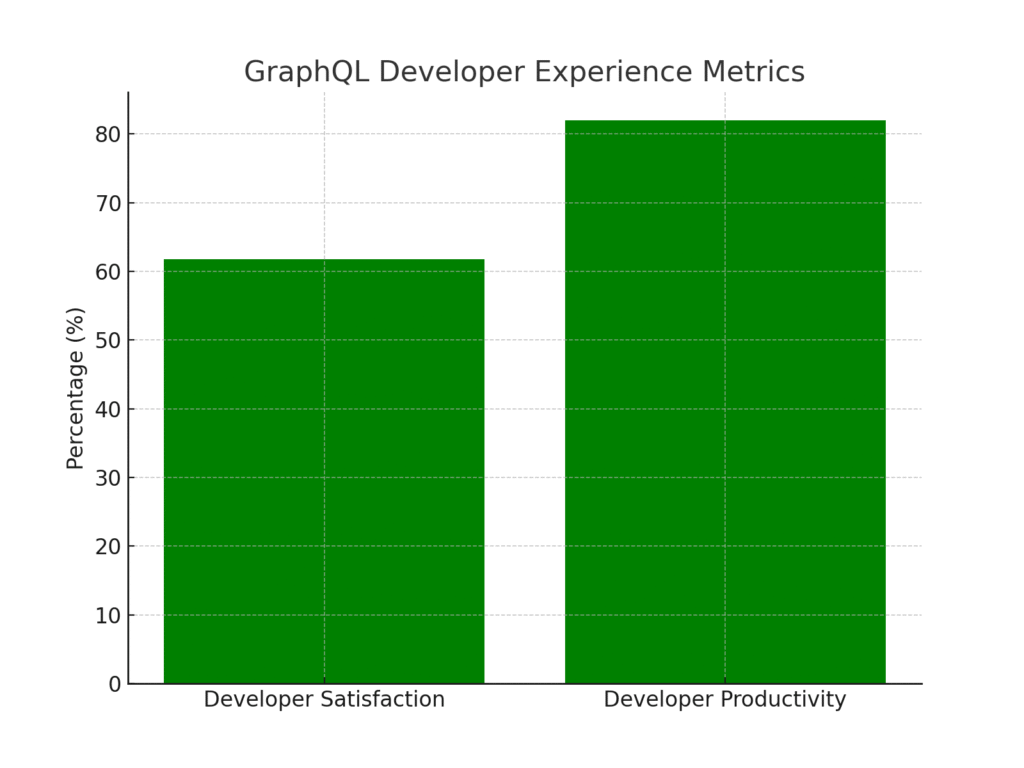
GraphQL Marketing Statistics #5 – 82% Boost In Developer Productivity And Experience
Companies using GraphQL report an 82% improvement in developer productivity and overall experience. This matters to marketing because developer efficiency often translates into quicker feature releases for campaigns. Marketers benefit when technical teams spend less time fixing integration issues and more time building useful tools. A better developer experience also means higher retention of skilled staff, keeping projects moving smoothly. In practice, this creates a more collaborative environment between marketing and tech.
GraphQL Marketing Statistics #6 – Over 50% Of Enterprises Predicted To Use GraphQL By 2025
By 2025, more than half of enterprises are expected to be running GraphQL in production. This surge indicates its acceptance as a long-term, reliable solution rather than a passing trend. Marketers should see this as a sign that GraphQL is shaping the future of digital infrastructure. As adoption becomes widespread, customer data handling and personalization will only improve. I view this as an opportunity for agencies to leverage GraphQL as a selling point to clients.
GraphQL Marketing Statistics #7 – 61.5% Using GraphQL In Production In 2024
In 2024, about 61.5% of organizations were already running GraphQL in production environments. This shows that adoption has moved beyond testing phases and into full-scale, mission-critical usage. For marketers, this confirms that GraphQL is trusted at scale across industries. Brands can expect their competitors to be leveraging GraphQL to enhance digital customer experiences. To me, this statistic underlines the urgency of getting on board sooner rather than later.
GraphQL Marketing Statistics #8 – 47.9% Use GraphQL For Personal Apps And Websites
Almost half of developers—47.9%—use GraphQL for exposing APIs for personal websites and apps. This stat demonstrates how widely developers trust the technology, even in projects outside enterprise settings. Personal use often serves as a testing ground before professional adoption. The fact that developers choose GraphQL for passion projects speaks volumes about its usability. As a marketer, I see this grassroots adoption as a foundation for long-term growth.
GraphQL Marketing Statistics #9 – 40.4% Use GraphQL For Private APIs
GraphQL powers 40.4% of private APIs, showing its value in internal systems. Private APIs allow teams to share data securely within organizations. For marketing, this ensures campaign data remains accessible without being exposed externally. Internal adoption highlights GraphQL’s role in improving efficiency behind the scenes. Personally, I think this reflects how companies prioritize control as much as speed.
GraphQL Marketing Statistics #10 – 19.5% Use GraphQL For Public APIs
Roughly 19.5% of developers use GraphQL for public-facing APIs. These APIs power services that third parties can consume, such as partner apps or external integrations. For marketing, public APIs increase reach and brand visibility through collaborations. Even though the percentage is smaller, it represents a crucial role in business ecosystems. I believe this number will rise as partnerships in tech continue to grow.
GraphQL Marketing Statistics #11 – 62.3% Of GraphQL APIs Serve Browser Clients
A majority—62.3%—of GraphQL APIs are consumed by browser clients. This makes sense because web apps often need quick, reliable access to structured data. Marketers benefit when web experiences load faster and deliver relevant content seamlessly. Browser-based consumption highlights how closely GraphQL is tied to user experience. To me, this shows that customer-facing digital campaigns are among the biggest beneficiaries.
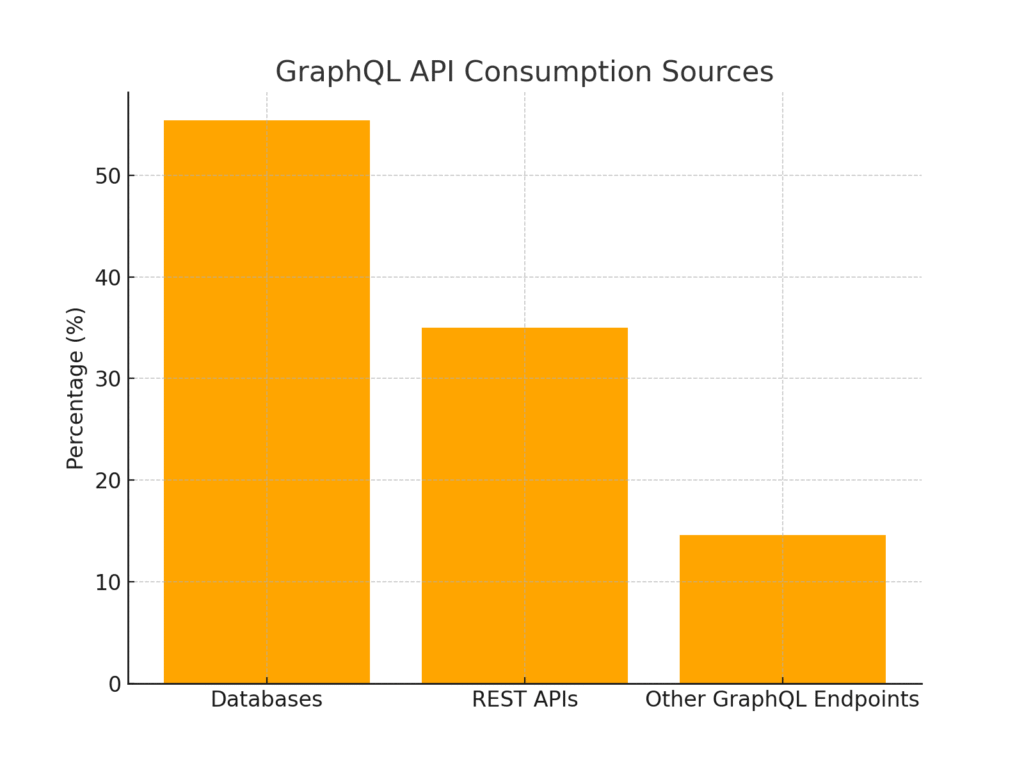
GraphQL Marketing Statistics #12 – 55.4% Of APIs Connect To Databases Directly
More than half of GraphQL APIs, about 55.4%, connect directly to databases. This reduces the middle layers of processing and ensures faster data delivery. For marketers, direct database access can speed up dashboards and analytics tools. It also improves accuracy, since the data comes straight from the source. Personally, I see this as one of GraphQL’s most powerful advantages.
GraphQL Marketing Statistics #13 – 35% Of APIs Consume REST Services
About 35% of GraphQL APIs are built on top of REST services. This indicates that GraphQL is not necessarily replacing REST but complementing it. For marketing, it means legacy systems can still integrate into modern solutions. This hybrid approach helps companies transition smoothly without losing past investments. I think of it as a bridge between traditional and modern digital strategies.
GraphQL Marketing Statistics #14 – 14.6% Of APIs Consume Other GraphQL Endpoints
Roughly 14.6% of GraphQL APIs consume data from other GraphQL endpoints. This practice highlights the growing complexity and interconnectivity of digital ecosystems. Marketers should note that this layered architecture allows for more advanced personalization. While still a smaller percentage, it suggests growing trust in federated GraphQL designs. I believe this will become more common as businesses expand their digital networks.
GraphQL Marketing Statistics #15 – Only 25% Use Live Queries
Although many know about live queries, only about 25% of developers actually use them. Live queries allow real-time data updates, which could transform customer interactions. For marketers, this means potential features like instant campaign reporting or real-time personalization. The low usage may stem from technical challenges, but it represents untapped potential. I see this as a huge growth opportunity in the coming years.

GraphQL Marketing Statistics #16 – 61.8% Developer Satisfaction With Ecosystem
Overall satisfaction with the GraphQL ecosystem sits at around 61.8%. This shows that while developers appreciate GraphQL, there’s still room for improvement. For marketing teams, a growing ecosystem often means better tools and integrations down the line. Satisfaction levels influence how quickly a technology matures and becomes mainstream. Personally, I think the steady satisfaction rate reflects strong staying power.
GraphQL Marketing Statistics #17 – 4.83% Market Share In API Management
GraphQL currently holds about 4.83% of the API management market share. While this may seem modest, it’s a notable achievement considering REST’s dominance. For marketers, it’s proof that GraphQL is carving out a real space in the industry. Market share numbers often signal growth potential rather than limits. I interpret this as the beginning of much broader adoption.
GraphQL Marketing Statistics #18 – 31.1% Value Structured Data Most In GraphQL
When asked what they value most, 31.1% of developers highlighted structured data in GraphQL. Structured data ensures that queries are predictable and consistent. This is critical for marketers who rely on clean data for insights and targeting. Other valued features included ease of use and type checking. Personally, I think structured data is what makes GraphQL a marketer’s hidden ally.
GraphQL Marketing Statistics #19 – 43.2% Disable Query Introspection For Security
About 43.2% of developers have disabled query introspection in their GraphQL APIs. This is a key security measure to prevent exposing sensitive schema details. For marketers, stronger security means fewer data breaches affecting customer trust. The stat also shows that security awareness in GraphQL is improving. I see this as a step toward more enterprise-ready implementations.
GraphQL Marketing Statistics #20 – GraphQL API Orchestration Seen As Business Imperative
Many businesses now view GraphQL API orchestration as a business imperative rather than just a technical choice. It is increasingly tied to AI-readiness and digital transformation. For marketers, this means GraphQL is becoming part of boardroom conversations, not just developer discussions. Orchestration ensures seamless data flows across teams and systems. Personally, I think this stat shows how central GraphQL has become in modern business strategy.

Wrapping It Up: Why These Insights Matter
Looking back at these numbers, I can honestly say that GraphQL has shifted from being a “nice-to-have” to becoming a central player in how we think about marketing technology. For me, the real takeaway isn’t just in the percentages or growth curves—it’s in the way these tools make our work more human by cutting through the noise and letting us focus on creating experiences that matter. As someone who’s constantly looking for new ways to bring clarity and impact to campaigns, I find it inspiring to see how this technology empowers both developers and marketers. These GraphQL marketing statistics aren’t just industry trivia—they’re proof that the way we connect with audiences is evolving, and I’m excited to be part of that journey.
SOURCES
https://www.advancinganalytics.co.uk/blog/2024/5/2/the-rise-of-graphql
https://the-guild.dev/graphql/hive/blog/graphql-conf-2025-recap
https://engineering.fb.com/2025/03/31/data-infrastructure/mobile-graphql-meta-2025/
https://blog.trace3.com/why-graphql-is-the-trendy-api
https://crystallize.com/blog/benefits-of-using-graphql
https://www.computer.org/publications/tech-news/trends/graphql/
https://www.topanalyticstools.com/blog/restful-apis-vs-graphql-performance-in-marketing-analytics/
https://www.apollographql.com/blog/how-indeeds-bold-bet-on-parallel-api-platforms-paid-off
https://www.ibm.com/think/insights/seven-key-insights-on-graphql-trends