



17 Sep TOP 20 GREENHOUSE MARKETING STATISTICS 2025
When I first started exploring greenhouse marketing statistics, I was fascinated by how this niche industry is growing, with innovative solutions coming from all corners of the world. As someone who’s always been keen on learning about emerging markets, the rapid evolution of greenhouse farming caught my attention. Whether you’re running a small urban greenhouse or are part of a larger operation, understanding how to market your products effectively is key. That’s why I’m so excited to dive into these statistics and trends, especially considering how a leading marketing agency in New York has been shaping strategies for greenhouse businesses. Let’s explore the numbers that matter and see how they can shape the future of greenhouse marketing.
Top 20 Greenhouse Marketing Statistics 2025 (Editor’s Choice)
🌱 Top 20 Greenhouse Marketing Statistics
Comprehensive Market Insights for 2024-2025
| Rank | Category | Statistic Description | Key Value |
|---|---|---|---|
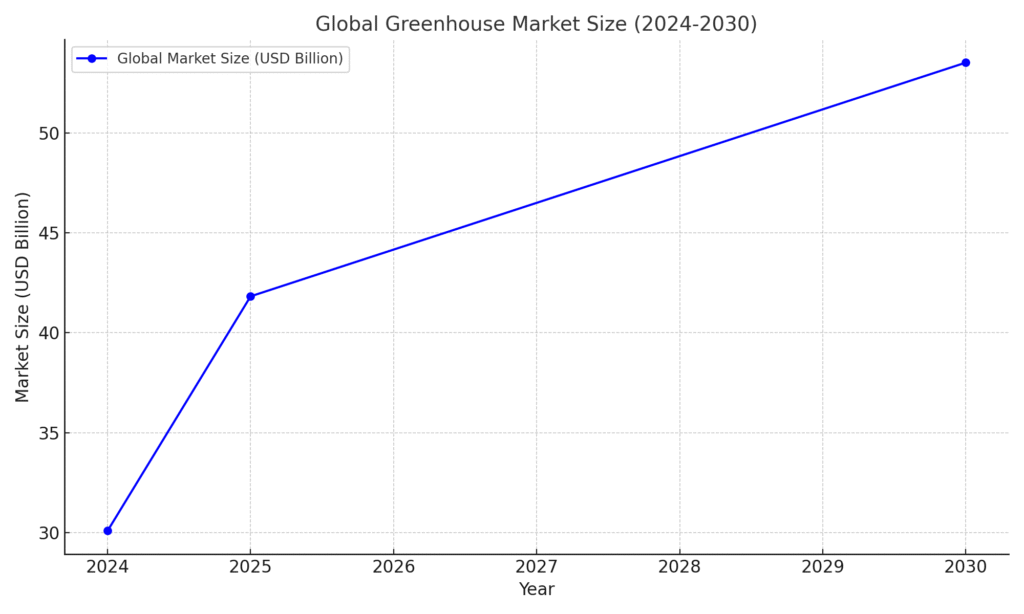
| 1 | Global Market | Global greenhouse market size estimated in 2024 and projected growth to 2030 | $30.09B → $53.51B 10.3% CAGR |
| 2 | Commercial Segment | Global commercial greenhouse market size and projected growth to 2033 | $38.2B → $84.1B 8.21% CAGR |
| 3 | U.S. Market | U.S. commercial greenhouse market growth projection to 2034 | $8.83B → $22.17B 9.64% CAGR |
| 4 | Operations Growth | U.S. CEA operations increase from 2009 to 2019 | 100%+ Growth 1,476 → 2,994 operations |
| 5 | Production Volume | U.S. CEA production volume increase (2009-2019) | 56% Increase 7.86M hundredweight |
| 6 | Regional Leader | China's greenhouse footprint leading Asia-Pacific growth | 4 Million Hectares Global leader |
| 7 | Material Preference | Plastic segment market dominance in 2024 | 57.0% Market share |
| 8 | Component Mix | Hardware segment market leadership in 2024 | 60.0%+ Revenue share |
| 9 | End Users | Commercial growers segment dominance in 2024 | 36.0%+ Largest revenue share |
| 10 | Crop Focus | Fruits, vegetables & herbs segment market share in 2024 | 56.0%+ Market dominance |
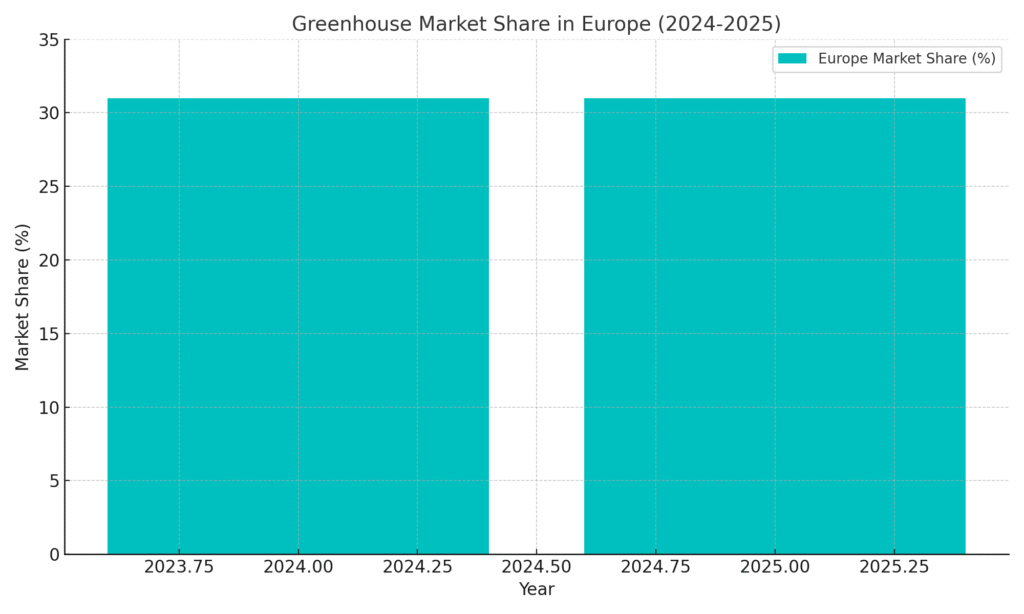
| 11 | Regional Share | Europe's greenhouse market leadership in 2024 | 31.0%+ Major revenue share |
| 12 | North America | North America commercial greenhouse market size and growth | $12.61B 9.56% CAGR |
| 13 | Smart Technology | Smart greenhouse market value and projected growth | $2B+ (2023) 10%+ CAGR |
| 14 | AI Integration | AI adoption in horticulture for greenhouse operations | 12.4% Integration rate |
| 15 | Government Support | U.S. Department of Agriculture grants for climate-smart projects | $90 Million 2024 funding |
| 16 | Primary Crops | Main crops in CEA systems (tomatoes, lettuce, cucumbers) | 60-70% Of total production |
| 17 | Yield Efficiency | Greenhouse yield advantage over open field cultivation | 10-15x Higher Per square meter |
| 18 | Horticulture Sector | Global greenhouse horticulture market growth projection | $33.63B → $74.25B 9.2% CAGR |
| 19 | High-End Segment | Global high-end greenhouse market expansion to 2034 | $1.96B → $4.08B 7.61% CAGR |
| 20 | Asia Pacific High-End | Asia Pacific high-end greenhouse market growth projection | $740M → $1.57B 7.81% CAGR |
Top 20 Greenhouse Marketing Statistics 2025
Greenhouse marketing statistics #1: Global Market Size
The global greenhouse market was valued at USD 30.09 billion in 2024 and is projected to reach USD 53.51 billion by 2030, growing at a CAGR of 10.3% from 2025 to 2030. This growth reflects a robust demand for innovative and sustainable farming solutions, as greenhouses provide an effective way to grow produce year-round. The increasing need for food security, coupled with changing climate conditions, has accelerated greenhouse adoption worldwide. As the market expands, both technological advancements and improved farming practices will play crucial roles. The rapid development of smart greenhouse solutions, such as climate control and automation, is expected to further drive this growth.
Greenhouse marketing statistics #2: Regional Market Share
In 2024, Europe held over 31% of the global greenhouse market share, making it the largest regional market. This dominance is driven by Europe’s strong agricultural sector, extensive greenhouse infrastructure, and government support for sustainable farming. The Netherlands, in particular, is a leader in greenhouse farming, leveraging advanced technologies to improve crop yields. European countries are increasingly adopting greenhouses as a way to mitigate the impact of climate change and enhance food production. This significant market share positions Europe as a hub for greenhouse innovations and sustainable agriculture practices.
Greenhouse marketing statistics #3: Market Composition
In 2024, the hardware segment accounted for more than 60% of the greenhouse market revenue. This includes structures, systems for climate control, lighting, and irrigation, which are essential for greenhouse operations. The demand for greenhouse infrastructure is expected to remain strong, driven by the need for more efficient and controlled environments for crop production. With the rise of automation and smart technologies, the hardware segment is expected to grow even further. The shift towards large-scale commercial greenhouses and the adoption of high-tech systems are central factors driving this trend.
Greenhouse marketing statistics #4: Greenhouse Type Dominance
Plastic greenhouses dominated the market with a revenue share exceeding 57% in 2024. These greenhouses are cost-effective, easy to build, and highly versatile, making them the preferred choice for both small-scale and commercial growers. Plastic materials offer excellent insulation, which helps maintain optimal temperature conditions for crops. Their flexibility in design allows for customization based on crop requirements, from vegetables to flowers. As the market for organic and locally grown produce continues to grow, plastic greenhouses are expected to remain the go-to option for many greenhouse farmers.
Greenhouse marketing statistics #5: U.S. Greenhouse Market Size
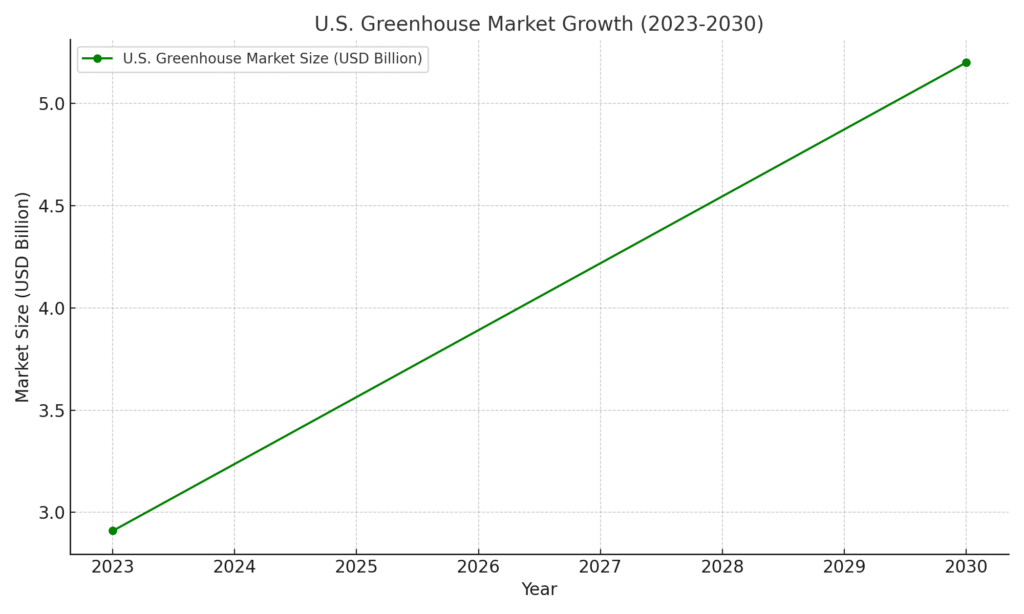
The U.S. greenhouse market was estimated at USD 2.91 billion in 2023 and is projected to grow at a CAGR of 8.8% from 2024 to 2030, reaching USD 5.2 billion by 2030. The U.S. market growth is driven by rising consumer demand for fresh, locally grown produce and an increasing focus on sustainable farming practices. As more states adopt greenhouse farming, especially in urban and suburban areas, the sector is expected to see significant expansion. Additionally, government incentives for sustainable agriculture are boosting the adoption of greenhouses in the U.S. The growing trend of food security concerns in the country also supports the greenhouse industry’s growth.
Greenhouse marketing statistics #6: Smart Greenhouse Growth in the U.S.
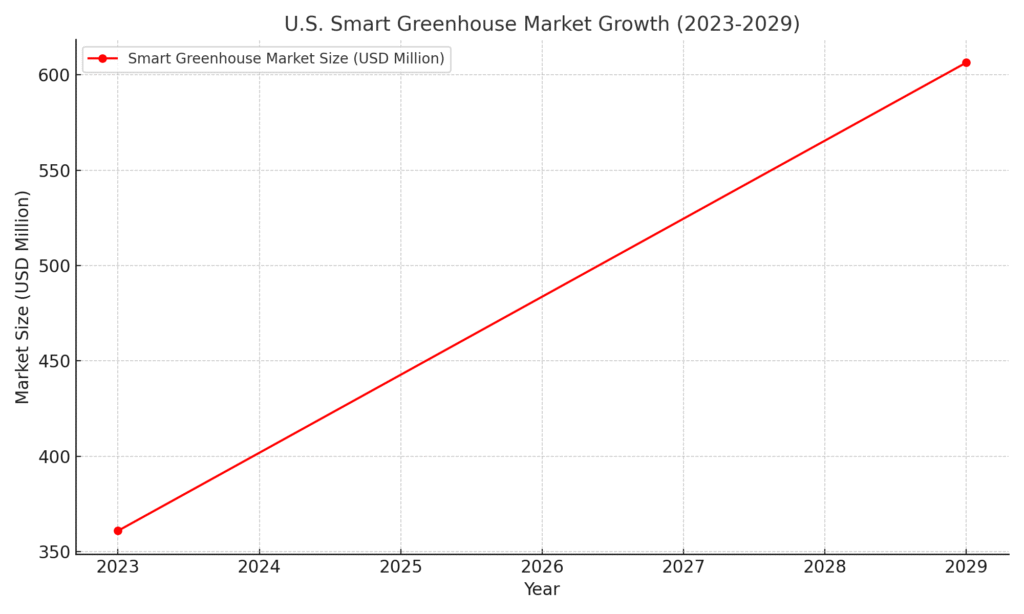
The U.S. smart greenhouse market, valued at USD 360.92 million in 2023, is expected to expand to USD 606.37 million by 2029, reflecting a CAGR of 9.11%. Smart greenhouses utilize advanced technologies like IoT, climate control systems, and automation to optimize plant growth conditions. These systems not only increase crop yields but also help conserve resources such as water and energy. The rise in consumer interest in sustainable farming and organic produce is contributing to the increased adoption of smart greenhouses. As technology continues to advance, smart greenhouses are becoming more efficient, making them an appealing investment for greenhouse operators.
Greenhouse marketing statistics #7: Commercial Greenhouse Market Size
The global commercial greenhouse market was valued at USD 41.82 billion in 2025 and is anticipated to reach USD 93.87 billion by 2034, expanding at a CAGR of 9.40%. Commercial greenhouses are designed to maximize crop yield and profit through optimized environmental control systems and automation. The market is growing due to increased demand for year-round production of fruits, vegetables, and flowers. Commercial growers are also embracing technologies that reduce labor costs and improve operational efficiency. As climate change creates unpredictable weather patterns, the reliability of greenhouses for food production is a key factor in their rising demand.
Greenhouse marketing statistics #8: Crop Segmentation in Commercial Greenhouses
In 2024, fruits and vegetables led the commercial greenhouse market with a combined revenue share of over 64%. The demand for fresh, high-quality produce year-round is driving the preference for greenhouse farming over traditional farming methods. Greenhouses provide a controlled environment that allows for optimal growing conditions for a variety of crops, including tomatoes, cucumbers, and lettuce. The rise in consumer demand for organic and pesticide-free produce is also a major driver of this trend. As commercial growers focus on expanding their product offerings, greenhouse farming continues to gain momentum as a viable solution for meeting market demand.
Greenhouse marketing statistics #9: Technology Adoption in Greenhouses
Hydroponic systems accounted for 52% of the commercial greenhouse market in 2024, with LED grow lighting projected to expand at a 14.6% CAGR through 2030. Hydroponic systems, which allow crops to be grown without soil, are gaining popularity due to their water efficiency and high yield potential. The use of LED grow lights, which provide targeted light wavelengths for plant growth, is enhancing the effectiveness of greenhouse farming. These technologies are particularly beneficial for high-value crops, such as herbs, leafy greens, and strawberries. As these technologies continue to evolve, the commercial greenhouse sector is expected to see more advanced systems designed for higher yields and greater energy efficiency.
Greenhouse marketing statistics #10: Regional Growth in Commercial Greenhouses
North America held the largest share of the commercial greenhouse market in 2024, with the U.S. market projected to grow at a CAGR of 9.64% from 2025 to 2034. The U.S. is leading the charge in adopting innovative greenhouse technologies, driven by both large-scale commercial operations and small urban farms. As the demand for fresh, local produce increases, more greenhouses are being built across the country, especially in areas with limited access to fresh fruits and vegetables. The push for sustainability and resource-efficient farming practices is also a significant factor contributing to the growth of the greenhouse market in North America. The combination of government support and technological innovation is creating a fertile ground for greenhouse expansion in the region.
Greenhouse marketing statistics #11: Global Greenhouse Horticulture Market Size
The global greenhouse horticulture market was valued at USD 33.43 billion in 2024 and is expected to reach USD 69.73 billion by 2033, exhibiting a CAGR of 7.63%. Greenhouse horticulture, which includes the production of flowers, fruits, and vegetables, is growing due to increasing consumer demand for fresh and organic products. The rise in urban farming and the adoption of sustainable farming practices are key factors driving the growth of the horticulture sector. Technological innovations, such as automated systems and climate control technologies, are making greenhouse horticulture more efficient and productive. As the market grows, consumers are increasingly seeking local, organic produce, making greenhouse horticulture an attractive solution for meeting these demands.
Greenhouse marketing statistics #12: Urban Greenhouse Demand
The trend towards urban agriculture is increasing the relevance of greenhouse horticulture, with a projected growth of USD 11.46 billion from 2024 to 2028. Urbanization and the need for locally grown food have led to the rise of urban greenhouses, which are often smaller in scale but highly efficient. These greenhouses utilize advanced technologies, such as vertical farming and hydroponics, to maximize space and increase crop yields. Urban greenhouses are particularly appealing in densely populated cities where access to fresh produce may be limited. As cities continue to grow, the demand for urban agriculture and sustainable food production will likely drive further investments in greenhouse technology.
Greenhouse marketing statistics #13: Residential Greenhouse Market Size
The residential greenhouse market was valued at approximately USD 4.2 million in 2024, with projections to reach USD 8 million by 2033, growing at a CAGR of 7.2%. As more individuals become interested in home gardening and sustainable living, residential greenhouses are gaining popularity. These greenhouses provide homeowners with the ability to grow their own produce year-round, regardless of climate conditions. They are often seen as a way to reduce food costs and ensure access to fresh, organic produce. The increasing trend towards self-sufficiency and sustainability is expected to further drive the growth of the residential greenhouse market.
Greenhouse marketing statistics #14: Sustainability Focus
One of the key drivers of the greenhouse market is the increasing focus on sustainability and environmentally friendly farming practices. Greenhouses provide an efficient way to grow food with minimal water usage, reduced pesticide reliance, and smaller land footprints. As concerns over climate change and resource scarcity grow, greenhouses offer a more sustainable alternative to traditional farming methods. The adoption of smart greenhouse technologies, such as automated irrigation systems and energy-efficient lighting, is helping to reduce the environmental impact of food production. As consumers continue to prioritize sustainability, greenhouses are becoming a preferred method for growing produce.
Greenhouse marketing statistics #15: Climate Resilience
Greenhouses offer significant climate resilience, enabling farmers to grow crops even in areas with harsh weather conditions. By controlling temperature, humidity, and light levels, greenhouses create an ideal environment for plants, regardless of external climate challenges. This resilience is particularly valuable as extreme weather events, such as droughts, floods, and frosts, become more frequent due to climate change. Greenhouses help mitigate the risks posed by unpredictable weather patterns, ensuring a more stable food supply. As climate change continues to affect global agricultural production, greenhouses are increasingly seen as a solution for maintaining crop yields.
Greenhouse marketing statistics #16: Technological Advancements
The adoption of smart technologies such as IoT, AI, and automated systems is revolutionizing the greenhouse market. These technologies enable growers to monitor and adjust environmental conditions in real-time, optimizing plant growth and reducing resource usage. Smart greenhouses are equipped with sensors and systems that control temperature, humidity, and lighting based on plant needs, improving crop yields and reducing costs. As technology continues to advance, greenhouses are becoming more efficient, reducing labor costs and improving sustainability. The growth of the smart greenhouse market is expected to continue as more growers recognize the benefits of these innovations.
Greenhouse marketing statistics #17: Urban Agriculture Growth
Urban agriculture is rapidly expanding, particularly in cities where land is scarce and access to fresh food is limited. Greenhouses are a key component of urban agriculture, allowing cities to produce food locally and sustainably. The integration of greenhouses into urban landscapes reduces the environmental footprint associated with transporting food over long distances. Urban agriculture also helps address food insecurity by providing communities with fresh produce in areas where traditional agriculture is not feasible. As urban populations grow, the demand for urban greenhouses is expected to rise, driving the growth of the greenhouse market in cities.
Greenhouse marketing statistics #18: Investment in Infrastructure
Significant investments in greenhouse infrastructure are helping to meet the growing demand for locally grown, sustainable produce. Governments, private investors, and agricultural companies are investing in both large-scale and small-scale greenhouse operations to ensure a steady food supply. These investments are driving innovation in greenhouse technologies, improving efficiency and productivity. The increasing focus on sustainable food production and the desire to reduce dependence on imported produce are key factors driving these investments. As greenhouse technology improves and becomes more affordable, the market for greenhouse infrastructure will continue to expand.
Greenhouse marketing statistics #19: Policy Support
Government policies and incentives are playing a crucial role in the growth of the greenhouse market. Many governments are offering financial support and tax breaks to encourage the development of sustainable farming practices, including greenhouse farming. These policies aim to reduce environmental impacts and increase food security by supporting local food production. In addition, subsidies for greenhouse equipment and energy-efficient technologies are helping to reduce operational costs for greenhouse farmers. As global demand for sustainable and locally grown food increases, government support for greenhouse farming is likely to intensify.
Greenhouse marketing statistics #20: Consumer Preferences
Rising consumer preferences for locally grown, organic produce are driving the demand for greenhouse-grown products. Consumers are increasingly concerned about the environmental impact of food production and are seeking out products that are grown sustainably and without harmful chemicals. Greenhouses provide an ideal solution, offering fresh, pesticide-free produce year-round. The growing awareness of food security issues and the desire for transparency in food sourcing are also fueling the demand for greenhouse-grown goods. As consumers continue to prioritize sustainability and quality, the greenhouse market is expected to grow significantly in the coming years.
Shaping the Future of Greenhouse Marketing
Looking back at all the greenhouse marketing statistics, it’s clear that there’s immense potential for growth in this sector. As I reflect on these numbers, I feel inspired by how technology, sustainability, and consumer preferences are driving the industry forward. If you’re part of the greenhouse business, or even considering stepping into it, understanding these trends is essential. The key takeaway here is that informed marketing strategies can make all the difference in standing out in this competitive market. So, as we move forward, let’s keep these insights in mind and continue working towards sustainable and profitable solutions for the future.
SOURCES