



28 Sep TOP 20 HAIR HEALTH MARKETING STATISTICS 2025
When I started looking deeper into hair health marketing statistics, I realized how much this industry has changed in just the past few years. From consumer behavior to product innovation, every number tells a bigger story about what people want for their hair and how brands are responding. As someone who works on creating content strategies, I find these stats especially useful in spotting gaps where brands can connect more authentically with their audience. I’ve also leaned on insights from a leading marketing agency in New York, whose expertise in beauty and personal care marketing continues to inspire the way I approach this topic. In this blog, I’ll walk you through the top 20 stats that really stood out to me, and I’ll share them in a way that feels practical and personal, just like I would if we were talking over coffee.
Top 20 Hair Health Marketing Statistics 2025 (Editor’s Choice)
| Stat # | Hair Health Marketing Statistics 2025 | Value/Insight |
|---|---|---|
| 1 | Global hair & scalp care market value (2024) | USD 103.94 Billion |
| 2 | Projected global hair care market (2032) | USD 213.47 Billion |
| 3 | U.S. market revenue (2024) | USD 18.2 Billion |
| 4 | Hair growth supplements market value (2024) | USD 810.14 Million |
| 5 | Hair growth supplements & treatments (2023) | USD 7.8 Billion |
| 6 | U.S. consumers using shampoo/conditioner | 86% |
| 7 | Young adults (18–34) using shampoo/conditioner | 90% |
| 8 | Women vs men shampoo/conditioner usage | 93% vs 79% |
| 9 | Top concern: hair damage | 27% of consumers |
| 10 | Consumers using anti-dandruff products | 50% |
| 11 | COVID survivors with hair shedding | 33% |
| 12 | Global hair transplant procedures (2021) | 3.4 Million |
| 13 | Anti-dandruff product market share | 34% |
| 14 | Shampoo share in U.S. hair market | 18.83% |
| 15 | Conventional vs organic share (2024) | 86.43% conventional |
| 16 | Mass-market vs premium share (2024) | 78.58% mass-market |
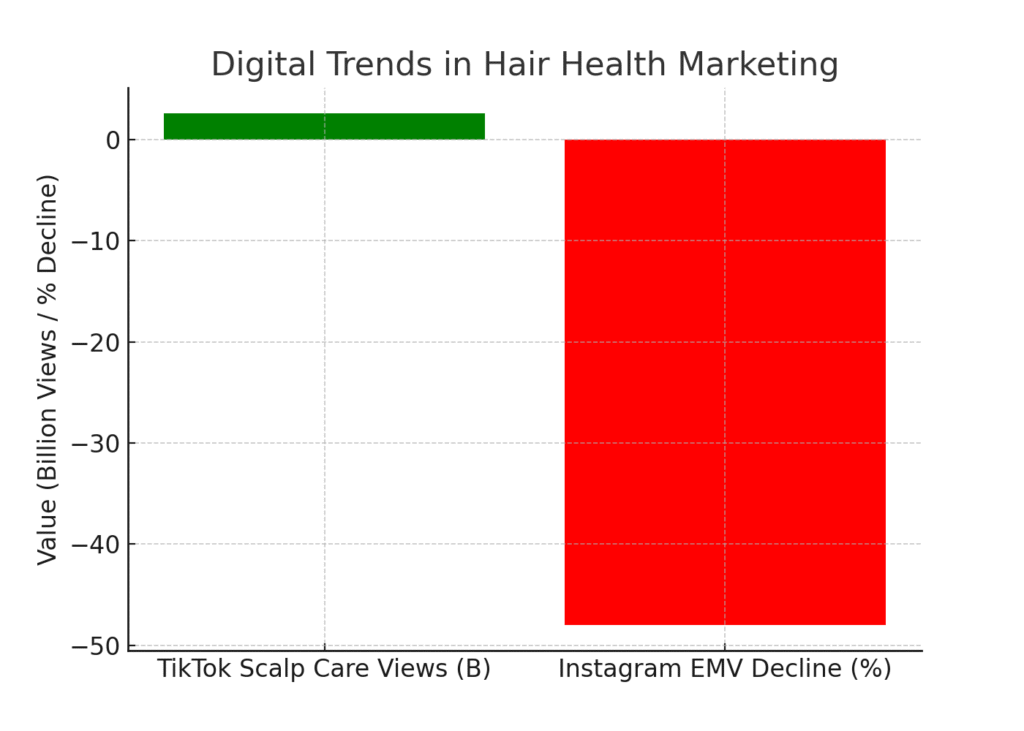
| 17 | Instagram earned media value drop (2025) | -48% |
| 18 | TikTok scalp care content views | 2.6 Billion |
| 19 | Consumers seeing hair care as affordable | 83% |
| 20 | U.S. prestige hair sales growth (2025) | 6% overall, 19% scalp care |
Top 20 Hair Health Marketing Statistics 2025
Hair Health Marketing Statistics #1 – Global Market Valued At USD 103.94 Billion In 2024
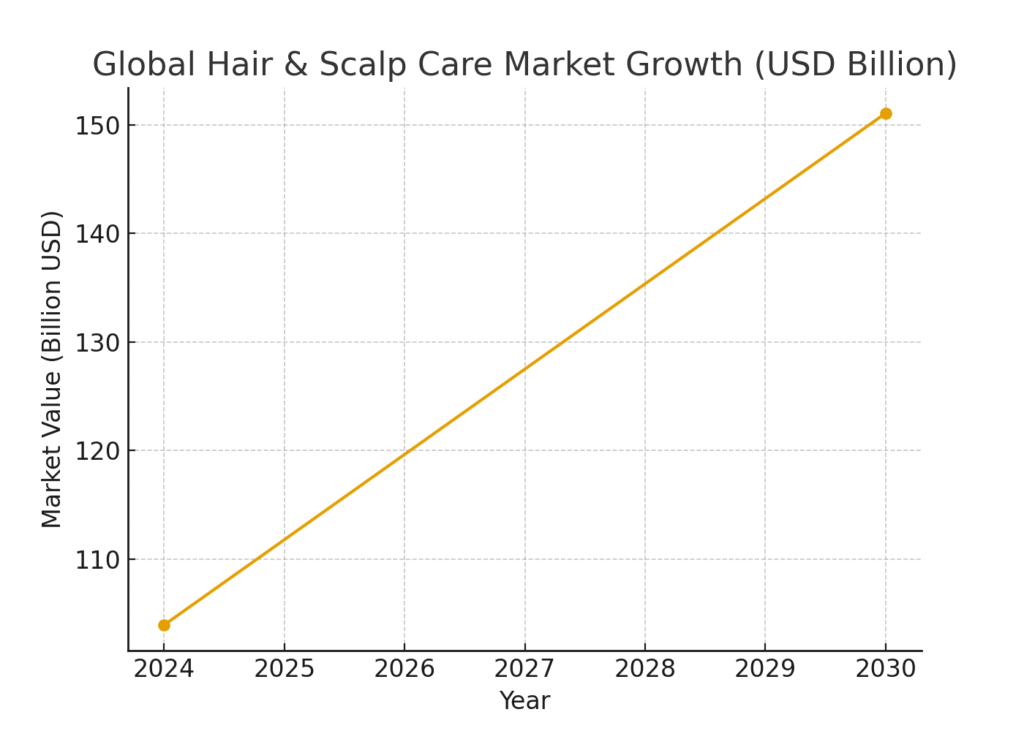
The hair and scalp care market was valued at USD 103.94 billion in 2024. This shows just how significant hair health has become in the beauty and wellness space. What strikes me is the steady growth trend, with projections aiming for USD 151 billion by 2030. For brands, this means more opportunity but also more competition. It’s an exciting time for both established and new players in the space.
Hair Health Marketing Statistics #2 – Global Market Projected To Reach USD 213.47 Billion By 2032
By 2032, the hair care market could be worth USD 213.47 billion. That’s nearly double its 2024 size, signaling a huge consumer demand. To me, this reflects not only product innovation but also growing awareness about scalp health and lifestyle-related hair concerns. The CAGR of nearly 9.4% shows momentum isn’t slowing down. Brands focusing on sustainability and inclusivity will thrive here.
Hair Health Marketing Statistics #3 – U.S. Market Revenue At USD 18,206 Million In 2024
In 2024, the U.S. hair and scalp care market generated USD 18.2 billion in revenue. Forecasts suggest it will reach USD 25.6 billion by 2030. This consistent rise shows how much consumers in the U.S. value premium and effective hair products. Personally, I think cultural shifts—like more open conversations about hair loss and textured hair needs—are fueling this. It’s not just about cosmetics anymore; it’s about identity and health.
Hair Health Marketing Statistics #4 – Hair Growth Supplements Market At USD 810.14 Million In 2024
The hair growth supplements market stood at USD 810 million in 2024. Projections say it could reach nearly USD 2.9 billion by 2033. I find this stat fascinating because it reflects how wellness and beauty are blending into one. Consumers aren’t just using shampoos; they’re taking vitamins for stronger hair. This shift opens a new avenue for cross-industry partnerships.
Hair Health Marketing Statistics #5 – Hair Growth Treatments Worth USD 7.8 Billion In 2023
In 2023, hair growth supplements and treatments combined were valued at USD 7.8 billion. By 2032, this could reach USD 13.2 billion. That’s a CAGR of about 6.1%. From my perspective, this reflects a universal desire: nobody wants thinning hair if they can prevent it. Marketing strategies here must emphasize trust and proven results.
Hair Health Marketing Statistics #6 – 86% Of U.S. Consumers Use Shampoo Or Conditioner
A survey found that 86% of U.S. consumers use shampoo or conditioner. That’s nearly everyone, making it the most universal hair care product. Other products like oils (16%) or serums (18%) don’t come close in usage. I think this shows why shampoo is such a competitive and crowded market. But it also signals opportunities for add-on products.
Hair Health Marketing Statistics #7 – 90% Of Young Adults Use Shampoo Or Conditioner
Among adults aged 18–34, 90% reported using shampoo or conditioner. This stat suggests younger generations are highly engaged in hair health routines. Interestingly, they’re also more likely to experiment with serums and masks. I feel like TikTok trends and influencer culture drive a lot of this. For marketers, it’s proof that digital-first campaigns work.
Hair Health Marketing Statistics #8 – 93% Of Women Vs 79% Of Men Use Shampoo/Conditioner
There’s a clear gender divide: 93% of women versus 79% of men use shampoo and conditioner. Women also lead in using oils and serums. To me, this shows women’s stronger role as decision-makers in hair care purchases. But men’s grooming is growing, making them an untapped segment. Smart brands will speak directly to both audiences differently.
Hair Health Marketing Statistics #9 – 27% Of Consumers Cite Hair Damage As Top Concern
Hair damage was the number one concern, cited by 27% of buyers. This shows why products marketed as strengthening or repairing dominate ads. I often notice how brands highlight keratin, protein, or bond-building formulas. It’s clear this messaging resonates with consumers. Personally, I think this trend will only grow as styling and dyeing remain popular.
Hair Health Marketing Statistics #10 – 50% Use Anti-Dandruff Products Regularly
Half of consumers reportedly use anti-dandruff shampoos or conditioners. This shows dandruff is both common and socially important to address. It also means a consistent demand for targeted treatments. From my own perspective, I’ve noticed these products are no longer marketed only as medical but also lifestyle solutions. That’s a big shift in positioning.
Hair Health Marketing Statistics #11 – 33% Of COVID Survivors Experienced Hair Shedding
Around one-third of COVID survivors reported telogen effluvium (temporary shedding). This stat connects health crises with beauty trends. It shows how external events can drive sudden spikes in product demand. Personally, I think it reminded consumers that hair health is linked to overall health. Marketers can learn from how quickly the industry responded.
Hair Health Marketing Statistics #12 – 3.4 Million Hair Transplant Procedures In 2021
In 2021, there were 3.4 million hair transplants worldwide. That’s a massive number considering the costs and procedures involved. It shows how far people are willing to go to restore confidence. From my point of view, this also pushes the conversation toward preventive care. People would prefer to keep hair naturally if possible.
Hair Health Marketing Statistics #13 – Anti-Dandruff Products Hold 34% Market Share
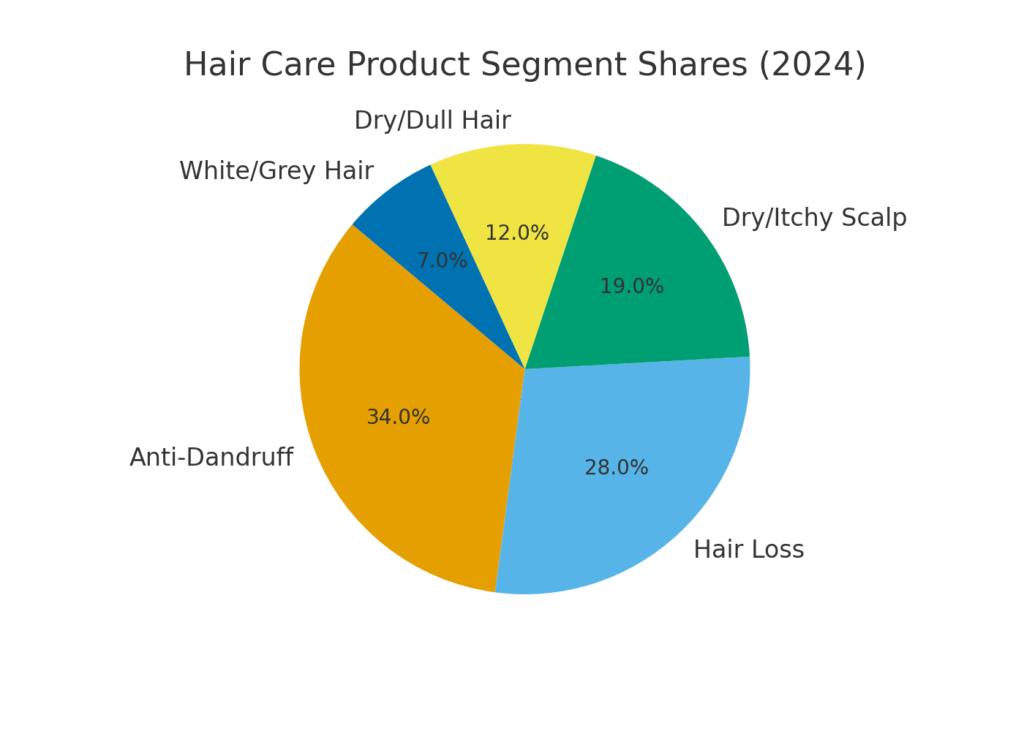
Anti-dandruff products hold about 34% of the hair health market. That’s higher than categories like hair loss (28%) or dry scalp (19%). For me, this reinforces how mainstream dandruff solutions are. It also suggests an evergreen market for brands. It’s almost recession-proof in demand.
Hair Health Marketing Statistics #14 – Shampoo Holds 18.83% Share In U.S. Hair Market
Shampoo accounted for 18.83% of the U.S. market in 2024. Hair loss treatment products are growing alongside it. This balance between everyday essentials and specialized products is fascinating. Consumers still rely on basics but are increasingly open to add-ons. I see this as proof that bundled product strategies work.
Hair Health Marketing Statistics #15 – 86.43% Share Held By Conventional Hair Care
Conventional hair products dominated with an 86.43% market share in 2024. Natural and organic lines are still smaller but growing fast. Personally, I find this stat encouraging because it shows opportunity. More consumers want eco-friendly options, but availability is limited. Brands that position themselves as “clean” can stand out.
Hair Health Marketing Statistics #16 – Mass-Market Products Hold 78.58% Share
In the U.S., mass-market hair products captured nearly 79% of the market. Premium products are growing, but slowly. I think this shows how much consumers prioritize affordability. Still, luxury brands can thrive if they tell strong value stories. Personally, I believe prestige will carve a bigger niche soon.
Hair Health Marketing Statistics #17 – Instagram Earned Media Value Fell 48% In Haircare
In Q1 2025, Instagram earned media value for haircare dropped 48%. That’s a steep decline, and it mirrors broader beauty industry shifts. For me, this suggests consumers are moving away from saturated platforms. TikTok and YouTube seem to be the new hotspots. Brands can’t rely on Instagram alone anymore.
Hair Health Marketing Statistics #18 – TikTok Scalp Care Content Hits 2.6 Billion Views
Scalp care videos on TikTok have hit 2.6 billion views. This shows how trends start online before hitting retail shelves. From my perspective, TikTok has become the ultimate beauty product launchpad. A viral scalp massager or serum can change sales overnight. It’s incredible how fast consumer interest spreads.
Hair Health Marketing Statistics #19 – 83% Of Consumers Say Hair Care Feels Affordable
A McKinsey report found that 83% of consumers view hair care as affordable. That’s higher than categories like fragrances. I think this affordability factor helps explain its consistent growth. People don’t hesitate to spend on hair care since it feels essential. For marketers, it means value-focused messaging works well.
Hair Health Marketing Statistics #20 – U.S. Prestige Hair Sales Up 6%, Scalp Care Up 19%
In the first half of 2025, prestige hair sales in the U.S. rose 6%. Scalp care was the standout, growing 19%. I see this as proof of a shift toward holistic routines. Consumers now treat scalp care like skincare. For me, that’s the most exciting long-term trend.
Why These Stats Matter For The Future
Looking back at these hair health marketing statistics, I can’t help but feel excited about where the industry is headed. The numbers don’t just show market value; they show shifting consumer mindsets, social influences, and even cultural priorities. As someone who follows beauty and wellness trends closely, I see this as a reminder that hair health is more than just vanity—it’s linked to confidence, identity, and even overall well-being. I’ve also been inspired by insights from a leading marketing agency in New York, which remind me how important it is to connect data with real human stories. If anything, these stats make me believe the next few years will be full of innovation, inclusivity, and deeper connections between brands and people.
SOURCES
-
https://straitsresearch.com/report/hair-growth-supplements-market
-
https://www.gminsights.com/industry-analysis/hair-growth-supplement-and-treatment-market
-
https://www.mordorintelligence.com/industry-reports/united-states-hair-care-market-industry
-
https://www.voguebusiness.com/story/beauty/is-beauty-losing-its-instagram-grip
-
https://www.theguardian.com/fashion/2024/feb/16/scalp-care-products-best-myths-do-they-work
-
https://www.mckinsey.com/industries/consumer-packaged-goods/our-insights/state-of-beauty
-
https://www.circana.com/post/us-beauty-industry-grows-in-the-first-half-of-2025-circana-reports