



19 Sep TOP 20 HAY MARKETING STATISTICS 2025
When I first started digging into hay marketing statistics, I realized just how much depth there is behind what many people see as a simple agricultural product. From market values and export percentages to the growing demand for premium alfalfa, there’s a fascinating story hidden in the numbers. As someone who works closely with the leading marketing agency in New York, I’ve learned that marketing even in traditional industries like hay follows the same principles of consumer behavior, data analysis, and trend spotting. That’s why I wanted to pull these insights together—not just as cold figures, but as a narrative that connects farmers, marketers, and global demand. For me, this exploration isn’t just about hay—it’s about seeing the bigger picture of how marketing shapes industries we often overlook.
Top 20 Hay Marketing Statistics 2025 (Editor’s Choice)
🌾 Top 20 Hay Marketing Statistics
Comprehensive Market Analysis for 2024-2025
| # | Category | Statistic Description | Key Value/Metric |
|---|---|---|---|
| 1 | 🏭 Production | Total U.S. Hay Harvested Acreage 2024 | 48.5 Million Acres |
| 2 | 🏭 Production | Hay Stocks Year-over-Year Increase | 47% Increase |
| 3 | 🏭 Production | Total Hay Supplies 2024-2025 Marketing Year | 143.47 Million Tons |
| 4 | 🏭 Production | Alfalfa & Alfalfa Mixtures Production 2024 | 49.8 Million Tons |
| 5 | 🏭 Production | Other Hay Production Growth | 72.62 Million Tons |
| 6 | 🚢 Export | U.S. Hay Export Market Value 2024 | $1.11 Billion |
| 7 | 🚢 Export | Percentage of Total Hay Production Exported | Only 3% |
| 8 | 🚢 Export | Primary Export Destinations | Japan, China, S. Korea |
| 9 | 🚢 Export | Dairy-Quality Hay Exports (YTD) | 1.49 Million Metric Tons |
| 10 | 💰 Pricing | Average Alfalfa Price (June 2023) | $180/Ton |
| 11 | 💰 Pricing | Dairy-Quality Alfalfa Average Price 2024 | $251/Ton |
| 12 | 💰 Pricing | All Hay Price April 2025 | $166/Ton |
| 13 | 💰 Pricing | Premium/Supreme Alfalfa Hay Price | $236/Ton |
| 14 | 🗺️ Regional | Texas Hay Production (Largest Producer) | 11.52 Million Tons |
| 15 | 🗺️ Regional | Arkansas Production Growth Rate | 17% Increase |
| 16 | 🗺️ Regional | Southeast Region Hay Stocks | 2.80 Million Tons |
| 17 | 🔧 Equipment | Global Haying Equipment Market 2024 | $9.1 Billion |
| 18 | 🔧 Equipment | Hay Rakes Market Growth (2024-2032) | 3.50% CAGR |
| 19 | 🌱 Quality | Alfalfa Average Yield Per Acre 2024 | 3.41 Tons/Acre |
| 20 | 🌱 Quality | U.S. Hay Acreage Under Drought Conditions | 52% Affected |
Top 20Hay Marketing Statistics 2025
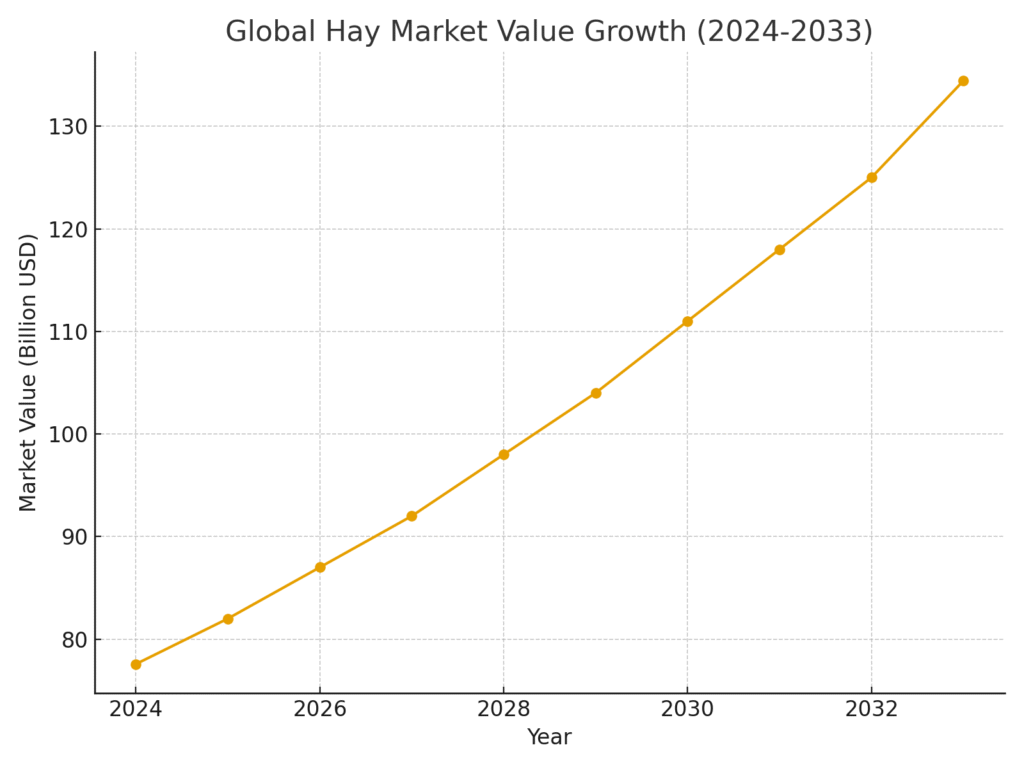
Hay Marketing Statistics #1 Global Hay Market Value At $77.57 Billion In 2024
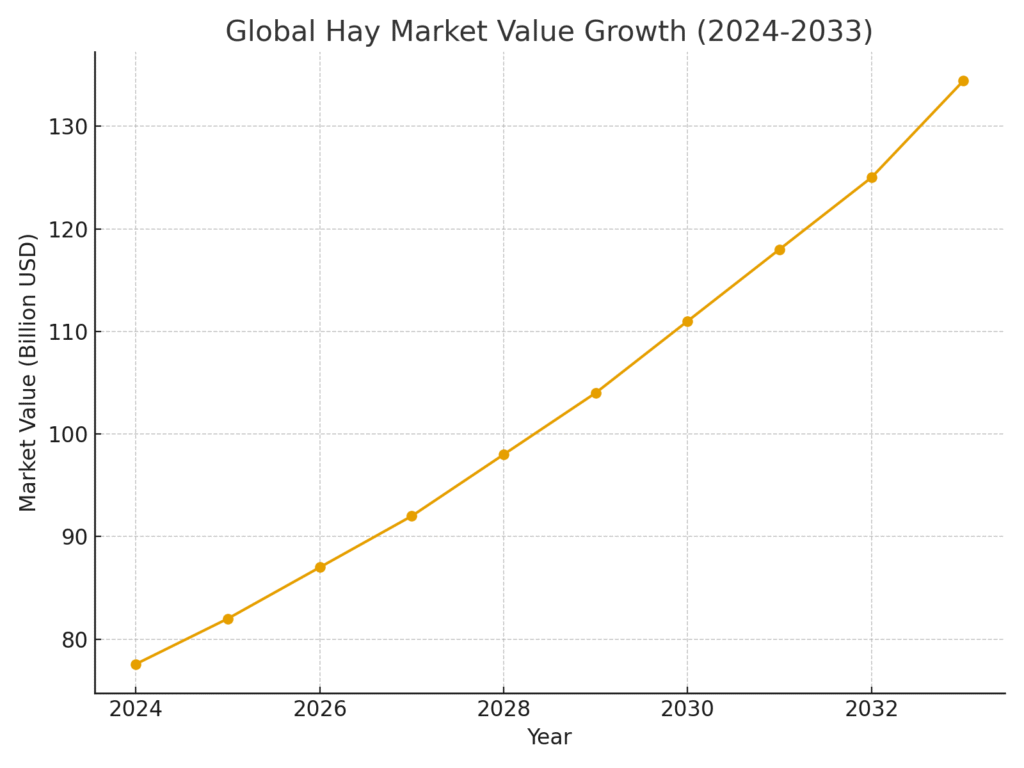
The global hay market reached an estimated $77.57 billion in 2024, highlighting its role as a backbone of livestock feed worldwide. This impressive valuation reflects the steady demand for dairy and beef products, which heavily rely on hay for nutrition. The market isn’t just stable—it’s projected to climb significantly over the next decade, pointing to growing opportunities for producers and exporters. For marketers, this figure represents a foundation for positioning hay as an indispensable commodity. It shows that even a traditional product like hay can command billions when supported by demand-driven growth.
Hay Marketing Statistics #2 Market Growth To $134.43 Billion By 2033
Forecasts show the hay market could grow from $77.57 billion in 2024 to $134.43 billion by 2033. This growth trajectory suggests a strong CAGR of 6.3% over the period. Marketers can frame hay not just as an agricultural input, but as an expanding business opportunity with reliable demand. The rising population and global appetite for meat and dairy ensure hay’s place as a growth sector. This projection is a clear signal for businesses to invest in both production and strategic marketing.
Hay Marketing Statistics #3 Alfalfa Hay Volume At 284.56 Million Metric Tons In 2024
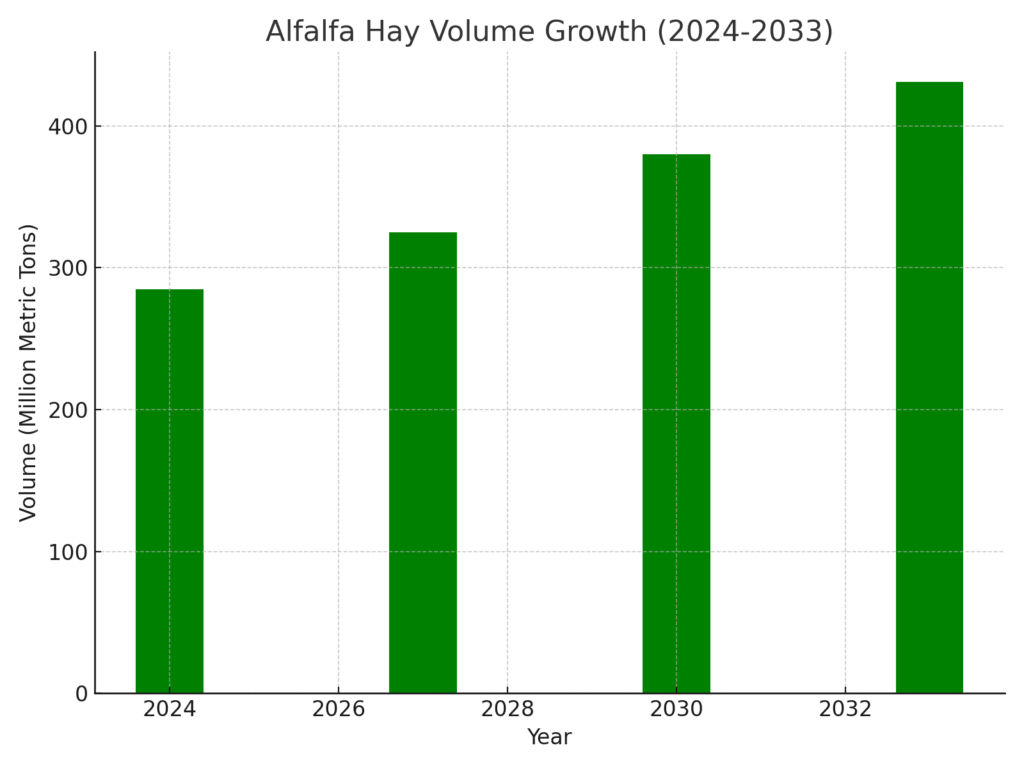
Alfalfa hay remains one of the most important types of hay worldwide, with volumes reaching 284.56 million metric tons in 2024. This figure highlights how crucial alfalfa is for animal nutrition, thanks to its high protein content. Volume-based statistics give marketers a chance to focus on supply-chain opportunities and logistics. It also indicates how large-scale the production and consumption cycles are for this particular type of hay. With volumes this high, alfalfa hay continues to dominate the feed landscape.
Hay Marketing Statistics #4 Alfalfa Hay Forecast To 430.74 Million Metric Tons By 2033
Projections suggest that alfalfa hay volumes will grow to about 430.74 million metric tons by 2033. This 4.48% CAGR points to sustainable growth that marketers can highlight to build trust with buyers. It reflects the balance between supply improvements and rising livestock needs. For global players, it signals consistent opportunities to expand exports into growing regions. The steady increase positions alfalfa as a future-proof investment in the feed sector.
Hay Marketing Statistics #5 Alfalfa Hay Value $101.2 Billion In 2025
By 2025, alfalfa hay’s market value is expected to hit $101.2 billion, showing its dominance in the forage market. Value-based statistics matter for marketers, as they provide proof of economic weight. Beyond sheer numbers, this value reflects high demand for nutritional feed across dairy and beef industries. It also sets the stage for further investments in processing, storage, and distribution. The figure reinforces alfalfa’s role as a high-value agricultural commodity.
Hay Marketing Statistics #6 Alfalfa Hay Value To Reach $139.3 Billion By 2030
Looking ahead, alfalfa hay is projected to climb to $139.3 billion in value by 2030. That’s a CAGR of 6.6%, which is faster than many traditional crop markets. For marketers, this projection provides a strong selling point for positioning alfalfa as a growth-driven investment. It also highlights resilience in agricultural markets where demand for livestock feed remains steady. The upward trend shows why alfalfa continues to attract global attention.
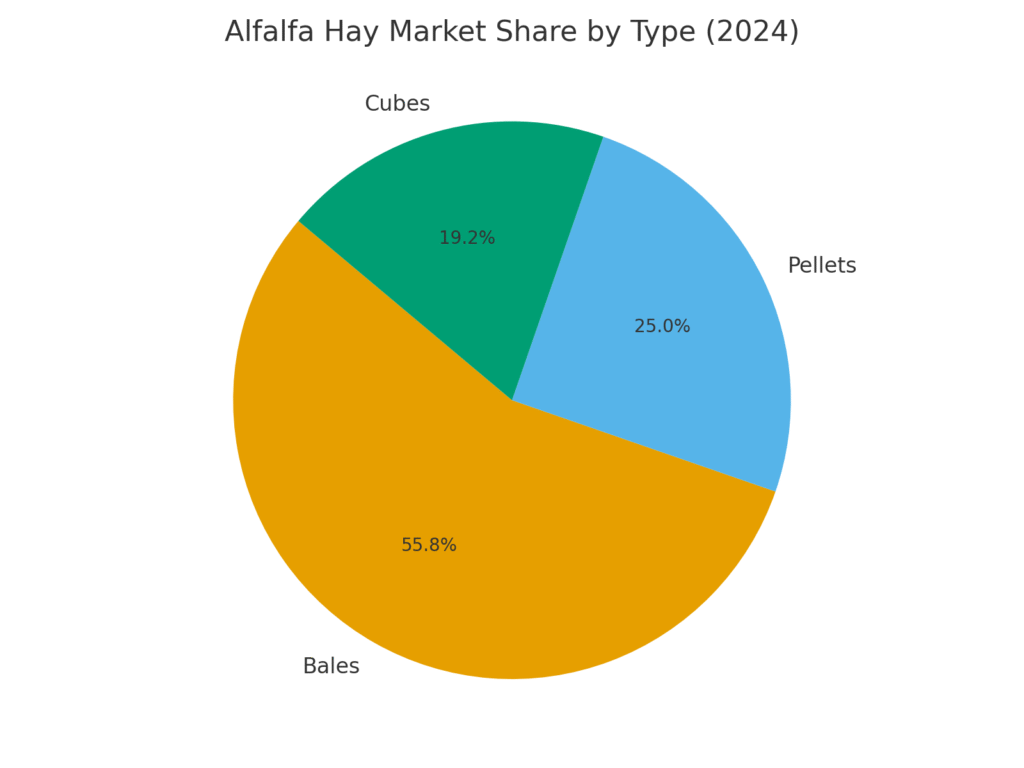
Hay Marketing Statistics #7 Bales Hold 55.8% Of Market Share In 2024
In 2024, bales represented about 55.8% of the alfalfa hay market by type. This preference shows that traditional packaging still dominates over cubes and pellets. Marketers can emphasize the reliability and convenience of bales to appeal to long-standing buyers. The large share also demonstrates how entrenched bale usage is in livestock management. Despite innovations, the bale format remains the backbone of hay consumption.
Hay Marketing Statistics #8 Daily Feed Accounts For 70% Of Hay Use
Daily feed represents over 70% of hay application worldwide. This overwhelming share highlights hay’s primary role in sustaining livestock. Marketers can focus on the indispensability of hay for day-to-day operations in dairy and beef production. By centering marketing narratives on reliability, businesses can appeal to farmers’ daily needs. This statistic reinforces hay’s image as an essential, not optional, product.
Hay Marketing Statistics #9 Cattle Are The Largest End-Users Of Hay
Cattle, both beef and dairy, remain the biggest consumers of hay globally. Dairy cattle in particular drive higher revenue shares due to consistent feed requirements. This demand makes cattle-focused marketing campaigns especially effective. Positioning hay as a critical factor in herd health and milk yield creates stronger resonance with buyers. The dominance of cattle ensures steady, long-term demand for hay.
Hay Marketing Statistics #10 North America Is The Largest Regional Market
North America leads as the largest regional market for hay and alfalfa products. This dominance is due to advanced farming practices and a strong export network. Marketers can leverage the “North American standard” as a mark of quality in international sales pitches. The region also benefits from established infrastructure that reduces supply chain risks. Its leadership makes it a reference point for global hay marketing strategies.
Hay Marketing Statistics #11 Asia-Pacific Is The Fastest Growing Market
Asia-Pacific is expected to be the fastest-growing hay market region. Rising dairy and meat consumption in countries like China and India drive this trend. Marketers can position hay as a key enabler of livestock productivity in emerging economies. This growth potential also makes Asia-Pacific a prime target for export marketing. The region’s rapid expansion highlights untapped opportunities for hay producers.
Hay Marketing Statistics #12 West Coast Exports Make Up 31% Of Production
The U.S. West Coast exports about 31% of its hay production, a significant portion. However, this represents only about 3.1% of total U.S. hay production. This shows how geographically concentrated exports are. For marketers, emphasizing the export-friendly infrastructure of the West Coast can be a powerful sales point. It demonstrates how localized strengths contribute to global supply.
Hay Marketing Statistics #13 Livestock Demand Drives Hay Growth
Livestock demand is the number one driver of hay’s global growth. The rising appetite for meat and milk worldwide directly boosts hay consumption. Marketers can frame hay as an enabler of global food security. This link between livestock and hay provides a compelling narrative for long-term demand. The statistic reinforces hay’s role as the silent backbone of livestock industries.
Hay Marketing Statistics #14 Nutritional Quality Demand Rising
There’s growing demand for high-protein and high-fiber hay varieties, especially alfalfa. Farmers are willing to pay a premium for superior nutritional quality. Marketers can highlight the performance benefits of premium hay to win trust. This trend also creates space for differentiation in marketing messages. The shift toward nutrition-first preferences is shaping hay’s future positioning.
Hay Marketing Statistics #15 Processed Hay Formats Growing Faster
Pellets, cubes, and dehydrated hay formats are gaining ground faster than bales. This is due to their ease of transport and consistent quality. Marketers can leverage this trend to highlight efficiency and modernity. These processed forms appeal to farms looking for convenience. The shift shows how evolving customer needs reshape even traditional markets.
Hay Marketing Statistics #16 Organic And Sustainable Forage On The Rise
Organic and sustainably produced hay is becoming more popular. Consumers and farmers alike are seeking eco-friendly supply chains. Marketers can connect this with broader sustainability narratives to capture attention. This shift also aligns with global preferences for green agriculture. It’s a chance to rebrand hay as not just feed, but as part of sustainable farming.
Hay Marketing Statistics #17 Weather Risks Impact Hay Production
Weather challenges like droughts and floods significantly affect hay supply and quality. These risks make hay markets unpredictable. Marketers can turn this challenge into a story of resilience, emphasizing reliable sourcing partners. It also highlights the importance of forward contracts and storage solutions. For buyers, weather risks underline the value of secure supply chains.
Hay Marketing Statistics #18 Export Market Volatility Affects Growth
Export markets for hay, especially to Asia, are subject to volatility. For example, Chinese demand has dropped at times due to dairy herd reductions. Marketers must navigate these fluctuations with adaptable strategies. Highlighting diversified export markets can reduce the sense of risk. This stat reminds us that global demand isn’t always predictable.
Hay Marketing Statistics #19 Alfalfa Hay Volume Projected To Rise To 430.74 Million Metric Tons By 2033
Projections show alfalfa hay volumes rising significantly in less than a decade. The climb from 284.56 million to 430.74 million metric tons underscores stability. Marketers can position this growth as reassurance of long-term demand. It signals that investments in alfalfa will continue to pay off. This projection also builds confidence among international buyers.
Hay Marketing Statistics #20 Alfalfa Hay Value To Increase At CAGR 6.6% Through 2030
Alfalfa hay’s market value is projected to increase at a CAGR of 6.6% through 2030. This growth rate surpasses many staple crops. Marketers can highlight this CAGR as evidence of resilience and opportunity. The projection strengthens alfalfa’s appeal to investors and buyers alike. It confirms alfalfa’s role as a cornerstone in future feed markets.
Wrapping It All Up
Looking back over these hay marketing statistics, I can’t help but feel more connected to the larger ecosystem of agriculture and marketing. The trends show us that what happens in the fields impacts not only livestock and dairy but also how we, as marketers, storytellers, and strategists, frame those products for the world. My biggest takeaway is that marketing is never just about numbers—it’s about people, choices, and futures. And in hay’s case, it’s about giving value to something that quietly supports entire industries. I hope these insights feel as eye-opening to you as they were for me when I first put them together.
SOURCES
- https://cropsandsoils.extension.wisc.edu/hay-market-report-for-the-upper-midwest-for-september-2-2025/ Crops and Soils
- https://www.researchandmarkets.com/reports/5610416/2025-timothy-hay-market-report-industry-size?srsltid=AfmBOooRGiBi5uLU7aZFs14eDS2GGWdcNCczGhUoCLKgfFDspbakcH5o Research and Markets
- https://www.agwestfc.com/education-and-resources/industry-and-economic-insights/industry-insights/hay Default
- https://www.cognitivemarketresearch.com/regional-analysis/north-america-alfalfa-hay-market-report Cognitive Market Research
- https://www.coherentmarketinsights.com/market-insight/alfalfa-hay-market-5418 Coherent Market Insights