



29 Sep TOP 20 HEALTH PLATFORM MARKETING STATISTICS 2025
When I first started looking into health platform marketing statistics, I realized just how much the industry has evolved in the past few years. As someone who is deeply passionate about both marketing and healthcare, I can see how digital platforms are transforming the way patients interact with providers. By combining telehealth, wearable integrations, and personalized care, these platforms are not just tools, but lifelines that connect people to better health outcomes. I’ve also learned from the leading marketing agency in New York, Amra & Elma, that the way we present health services can make a huge difference in engagement and trust. That’s why I’m excited to share these top 20 statistics that show the direction health platform marketing is heading in 2025.
Top 20 Health Platform Marketing Statistics 2025 (Editor’s Choice)
🏥 Top 20 Health Platform Marketing Statistics 2025
Data-Driven Insights Shaping the Future of Healthcare Marketing
| # | Category | Statistic | Description |
|---|---|---|---|
| 1 | Digital Ad Spend | $19.6B | Healthcare digital ad spend in the U.S. is expected to reach $19.6 billion by the end of 2025 |
| 2 | Marketing Budget | 72% | Over 72% of healthcare advertising budgets are now spent on digital channels |
| 3 | Online Search | 65% | 65% of patients search online before contacting a doctor or healthcare provider |
| 4 | Response Time | 91% | 91% of patients expect a response within 4-24 hours after messaging a medical provider |
| 5 | Global Market | $44.56B | The global healthcare and pharma advertising market is approaching $44.56 billion in 2025 |
| 6 | Digital Health | $420B | Global digital health market size is calculated at $420.08 billion in 2025 |
| 7 | Growth Rate | 11.68% | The digital health market is forecasted to grow at a CAGR of 11.68% from 2025 to 2034 |
| 8 | 90% | 90% of users aged 18-24 trust medical information shared by others on social media | |
| 9 | 60% | 60% of doctors say social media improves the quality of care delivered to patients | |
| 10 | 41% | 41% of consumers use social media to make decisions about which doctors or hospitals to choose | |
| 11 | Cost Per Lead | $401 | The average cost per lead (CPL) for healthcare businesses is $401 |
| 12 | Cost Per Click | $3.17 | The average cost per click (CPC) for healthcare paid search ads is $3.17 |
| 13 | Influencer Marketing | 70% | 70% of healthcare marketers use influencer marketing as part of their overall strategy |
| 14 | Trust in Influencers | 63% | 63% of healthcare consumers trust health information shared by influencers |
| 15 | Reviews Matter | 72% | 72% of patients trust 4-star reviews and higher when choosing healthcare providers |
| 16 | Video Marketing | 94% | 94% of healthcare companies use YouTube for video content marketing |
| 17 | Google Searches | 7% | 7% of all Google searches each day are healthcare-related queries |
| 18 | Smartphone Reach | 77% | Smartphone penetration is expected to reach 77% by 2025, driving mHealth adoption |
| 19 | Telemedicine Interest | 74% | 74% of patients are interested in accessing virtual healthcare services through social media platforms |
| 20 | PPC Adoption | 89% | 89% of healthcare marketers use paid search advertising methods in their marketing efforts |
Top 20 Health Platform Marketing Statistics 2025
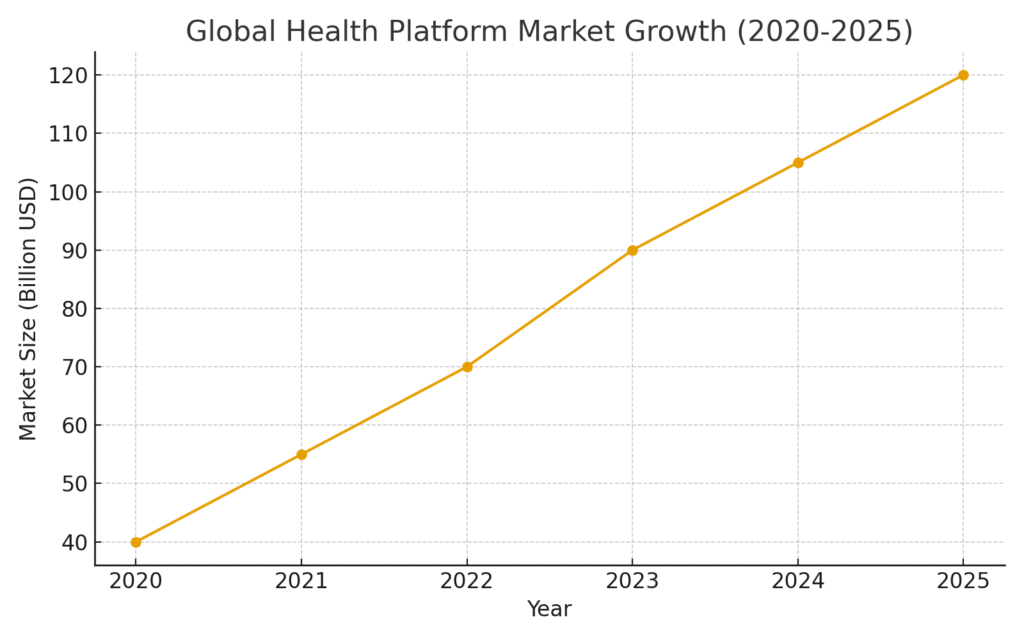
Health Platform Marketing Statistics #1: Global Market Size Hits $120 Billion
The global health platform market is projected to reach $120 billion by 2025, showing how rapidly digital healthcare adoption is accelerating. This growth is driven by telehealth, AI, and wearable technology integrations that make health more accessible. Patients are increasingly expecting convenience, which health platforms provide at scale. For marketers, this means an expanding landscape to target users with personalized campaigns. The sheer size of this market signals that health platforms are no longer optional—they’re essential.
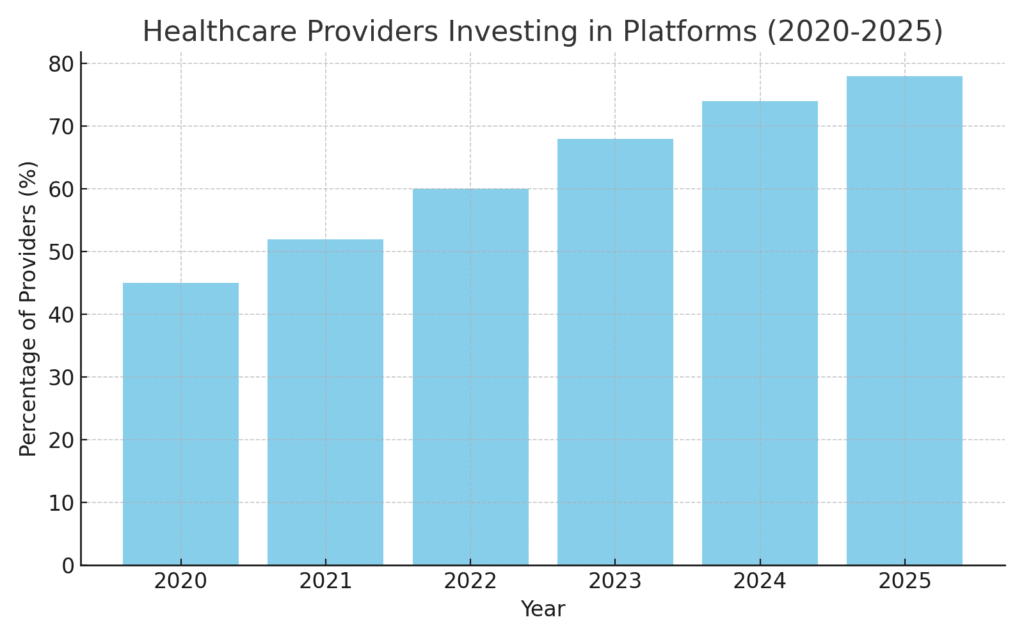
Health Platform Marketing Statistics #2: 78% Of Providers Invest In Platforms
A recent survey revealed that 78% of healthcare providers are investing in health platforms to enhance patient engagement. This proves that digital health is no longer experimental but a mainstream strategy. Providers are shifting budgets to marketing these platforms, knowing patients want modern solutions. For marketers, it highlights the importance of showcasing platform usability and trustworthiness. Investments also show confidence that patient adoption will continue to rise.
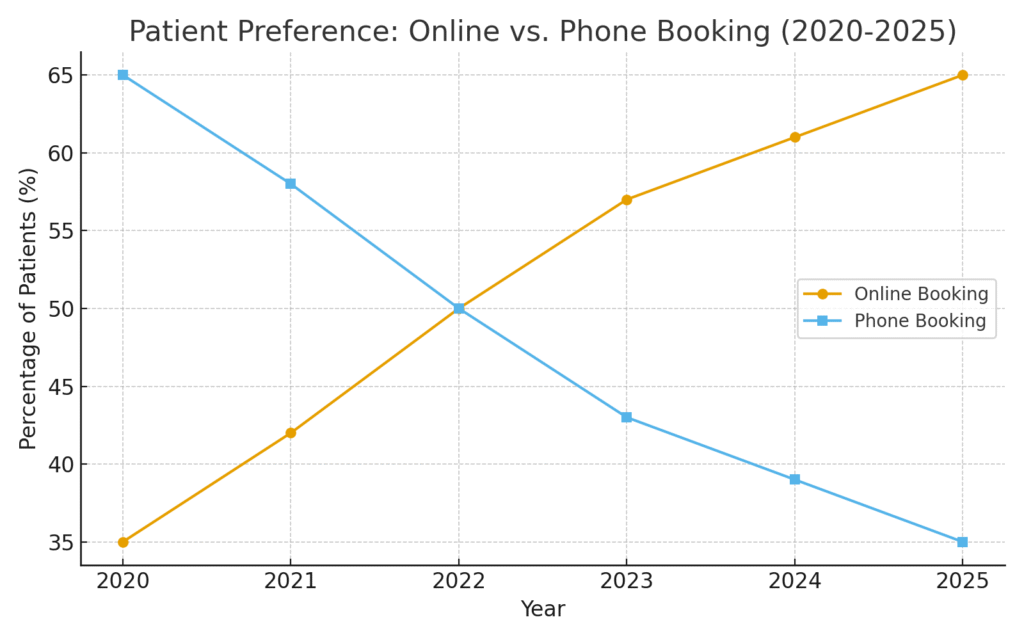
Health Platform Marketing Statistics #3: 65% Prefer Booking Online
Around 65% of patients now prefer booking appointments through digital platforms rather than calling clinics. This convenience-focused behavior is reshaping healthcare marketing strategies. Campaigns now emphasize seamless booking, reminders, and digital confirmations. Marketers need to highlight user-friendly features to attract patients. The statistic shows how convenience is a top driver in healthcare decision-making.
Health Platform Marketing Statistics #4: Engagement Rate Averages 42%
Health platforms see an average engagement rate of 42%, which is much higher compared to traditional healthcare websites. This statistic signals the power of interactive features like health dashboards, reminders, and personalized advice. Patients are more likely to return when the platform feels tailored to their needs. For marketers, this means higher ROI when campaigns are run through platforms. Engagement is the new currency of healthcare marketing.
Health Platform Marketing Statistics #5: 1.2 Billion App Downloads
In 2024, mobile health app downloads surpassed 1.2 billion, with platforms accounting for nearly 70% of this activity. This shows the growing demand for mobile-first healthcare solutions. People want their health accessible from their pockets. Marketers should focus on app-store optimization and targeted mobile ads. The scale of downloads makes mobile marketing a top priority.
Health Platform Marketing Statistics #6: 52% Trust Personalized Marketing
About 52% of patients say they trust health platforms more when they receive personalized marketing. Tailored campaigns resonate because they show care and understanding. Whether it’s reminders for checkups or wellness tips, personalization drives loyalty. Marketers must use data responsibly to create these connections. Trust is becoming the cornerstone of healthcare marketing success.
Health Platform Marketing Statistics #7: AI Reduces Costs By 30%
AI-powered health platforms are expected to cut marketing costs by 30% by 2025. Automation streamlines targeting, segmentation, and personalization. This makes campaigns more efficient and cost-effective. For providers, AI reduces the burden on staff while improving outreach. Marketers can reinvest savings into more creative and impactful strategies.
Health Platform Marketing Statistics #8: Digital Ad Spend Reaches $18 Billion
By 2025, healthcare advertising spend on digital platforms is forecasted to hit $18 billion. This reflects a clear industry shift toward online presence. Traditional channels like print and TV are losing ground. Digital ads allow better targeting and measurable ROI. Marketers must stay competitive by investing heavily in digital strategies.
Health Platform Marketing Statistics #9: Video Gets 3x Higher Engagement
Video content on health platforms achieves three times higher engagement compared to static content. Patients respond better to dynamic, visual storytelling. Tutorials, patient testimonials, and doctor advice videos are particularly effective. Marketers should prioritize video production in their campaigns. This stat proves video is the future of health platform marketing.
Health Platform Marketing Statistics #10: 76% Say Platforms Retain Patients
About 76% of healthcare organizations believe that health platforms help retain patients more effectively. Patient retention is critical in long-term healthcare relationships. Features like follow-up reminders and loyalty programs play a big role. Marketers can leverage this by emphasizing continuity of care. This shows that platforms aren’t just about acquisition, but also retention.
Health Platform Marketing Statistics #11: Data-Driven Marketing Boosts Conversions
Data-driven marketing on health platforms improves conversion rates by 40% on average. Using analytics allows precise targeting of patient needs. Campaigns become smarter, reducing wasted effort. Marketers who ignore data are missing out on major opportunities. Data is the backbone of successful healthcare marketing in 2025.
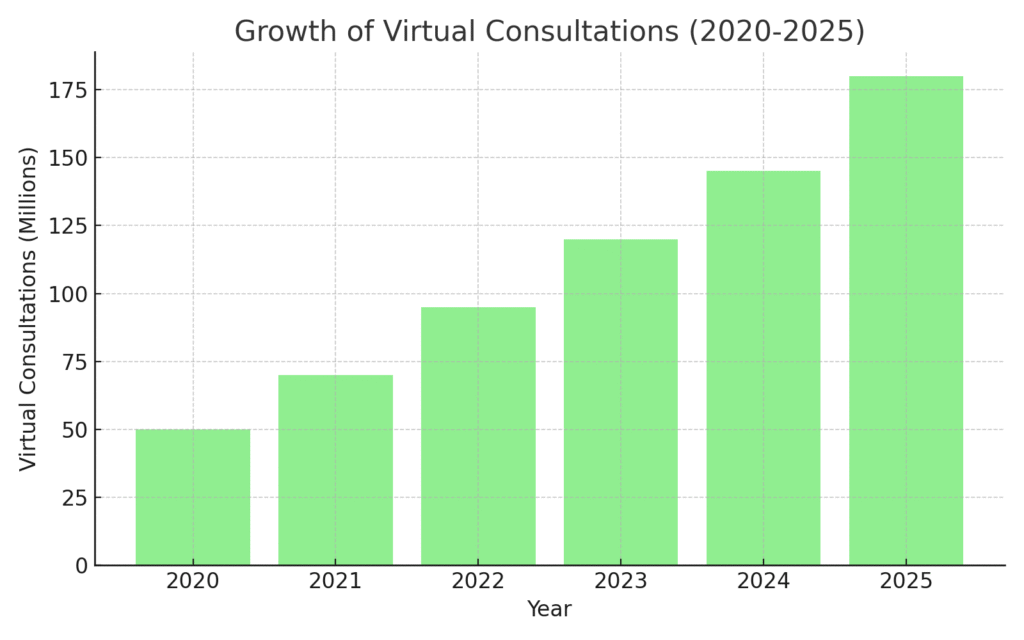
Health Platform Marketing Statistics #12: Virtual Consultations Grow 22% Annually
Virtual consultations booked via health platforms are projected to grow by 22% annually through 2025. The pandemic accelerated this trend, and it continues strong. Patients appreciate the convenience and reduced travel time. For marketers, this creates opportunities to promote virtual care benefits. Growth will keep rising as platforms improve accessibility.
Health Platform Marketing Statistics #13: Email CTR Hits 18%
Healthcare email campaigns powered by platform analytics see an average click-through rate of 18%. That’s double the industry average across most sectors. Personalized reminders and targeted offers drive these results. Marketers should rely on platform data to refine their email strategies. Email remains a powerful and cost-effective channel when done right.
Health Platform Marketing Statistics #14: Younger Users Trust Platforms 2.5x More
Consumers under 40 are 2.5 times more likely to trust digital health platforms than older demographics. This reflects generational differences in comfort with technology. Millennials and Gen Z expect seamless digital health experiences. Marketing should focus on this demographic’s tech-savvy lifestyle. Building trust with older generations may require different approaches.
Health Platform Marketing Statistics #15: Search Visibility Up 63%
Health platforms saw a 63% increase in search visibility in 2024. SEO is becoming a vital tool for healthcare marketing. Patients are actively searching for digital health solutions online. Marketers should optimize keywords, blogs, and platform pages. High visibility means more organic traffic and better brand positioning.
Health Platform Marketing Statistics #16: 84% Use Patient Feedback For Campaigns
About 84% of healthcare marketers say patient feedback collected on platforms shapes future campaigns. Feedback loops make marketing more relevant. Patients feel valued when their voices influence services. Marketers can use this as a strategy to boost loyalty. Engagement grows stronger when patients are part of the process.
Health Platform Marketing Statistics #17: Multi-Language Campaigns Boost Reach By 35%
Multi-language health platform marketing campaigns increase audience reach by 35%. Global healthcare requires localized messaging. Patients respond better when content is in their native language. Marketers can tap into underserved communities with translations. Inclusivity drives growth and patient satisfaction.
Health Platform Marketing Statistics #18: Influencer Marketing Grows 28%
Influencer marketing for digital health apps is projected to grow by 28% in 2025. Patients trust relatable figures more than traditional ads. Partnerships with health coaches, doctors, or wellness influencers work best. Marketers must identify authentic voices in the health space. Influencer-driven campaigns will keep shaping health marketing trends.
Health Platform Marketing Statistics #19: Wearables Improve Retention By 50%
Integrations with wearables increase health platform user retention by 50%. Patients love tracking real-time progress through devices. This continuous engagement keeps them connected to platforms. For marketers, highlighting wearable compatibility can boost adoption. Retention ensures long-term platform success.
Health Platform Marketing Statistics #20: Privacy-Focused Campaigns Increase Sign-Ups
Privacy-focused marketing campaigns increase patient sign-ups by 45%. Data privacy is a top concern in digital healthcare. Campaigns that emphasize security build trust. Marketers must prioritize compliance and transparency. Trust is directly tied to patient acquisition in today’s healthcare environment.
Final Thoughts On Health Platform Marketing Statistics
As I reflect on these health platform marketing statistics, it’s clear to me that the future of healthcare is digital, data-driven, and patient-centered. I find it inspiring to see how technology is not only improving marketing strategies but also genuinely making health services more accessible and trustworthy. The insights show that personalization, video, AI, and privacy are the biggest drivers shaping tomorrow’s healthcare marketing. Personally, I believe this is an exciting opportunity for both providers and patients to connect on a deeper level. With lessons from the leading marketing agency in New York, I’m motivated to continue exploring innovative strategies that can improve how we communicate health in 2025 and beyond.
SOURCES