




28 Sep TOP 20 HEART HEALTH MARKETING STATISTICS 2025
As a leading marketing agency in New York, we’ve observed firsthand how heart health marketing statistics have evolved over the years. In 2025, these statistics not only highlight the growing awareness and advancements in cardiovascular health but also underscore the importance of strategic marketing in promoting heart health initiatives. From the surge in cardiovascular device markets to the increasing adoption of digital health tools, the landscape is rapidly changing. Understanding these trends is crucial for crafting effective marketing strategies that resonate with today’s health-conscious consumers.
Top 20 Heart Health Marketing Statistics 2025 (Editor’s Choice)
❤️ TOP 20 HEART HEALTH MARKETING STATISTICS 2025
Essential Insights for Healthcare Marketers & Industry Leaders
| # | Key Statistic | Marketing Insight |
|---|---|---|
| 1 | 941,652 CVD Deaths Annually | Cardiovascular disease caused 941,652 deaths in the U.S. in 2022, making it the leading cause of death and creating massive demand for heart health products and preventive solutions. |
| 2 | Every 34 Seconds | Someone dies from cardiovascular disease every 34 seconds in the U.S., emphasizing the urgency and emotional appeal needed in heart health marketing campaigns. |
| 3 | $29.5 Billion Market by 2032 | The heart health products market is projected to reach $29.5 billion by 2032, growing at a 5.81% CAGR, signaling enormous opportunities for brands in this space. |
| 4 | 47% Have High Blood Pressure | Nearly half of U.S. adults have high blood pressure, a key risk factor driving consumer demand for heart health monitoring devices, supplements, and lifestyle solutions. |
| 5 | 72% Unhealthy Weight | Over 72% of U.S. adults have a BMI ≥25, with 42% obese, creating a massive target audience for weight management programs linked to heart health benefits. |
| 6 | 57% Have Diabetes/Prediabetes | More than half of American adults have Type 2 diabetes or prediabetes, conditions closely tied to cardiovascular health, requiring integrated marketing approaches. |
| 7 | Gen Z Heart Health Gap | Younger consumers, especially Gen Z, report unmet needs in heart health solutions, presenting opportunities for brands to create age-appropriate, digitally-native products. |
| 8 | 84% Prioritize Wellness | 84% of U.S. consumers rate wellness as a top priority in 2025, up from 82% in 2024, showing sustained demand for heart health products even during economic uncertainty. |
| 9 | $219 Billion Annual Costs | Annual healthcare costs for ischemic heart disease exceed $219 billion in the U.S., motivating consumers to seek preventive solutions and driving OTC product adoption. |
| 10 | 37% Want Cereal Claims | 37% of global consumers want heart health claims on breakfast cereals, indicating strong morning-time opportunities for functional food marketing. |
| 11 | $401 Cost Per Lead | Healthcare marketing averages $401 per lead, the highest among industries, requiring strategic targeting and optimized conversion funnels for ROI. |
| 12 | 72.2% Digital Ad Spend | Over 72% of healthcare and pharma ad budgets go to digital channels, with heart health marketers prioritizing online strategies for patient acquisition. |
| 13 | 65% Search Before Contacting | 65% of patients search online before contacting a doctor, making SEO and content marketing critical for heart health providers and product brands. |
| 14 | 91% Expect 24-Hour Response | 91% of patients expect responses within 24 hours, requiring heart health marketers to implement rapid-response systems and chatbot solutions. |
| 15 | 14.2% Kidney Disease Prevalence | Chronic kidney disease affects 14.2% of Medicare beneficiaries (up from 9.2% in 2011), creating cross-marketing opportunities for cardiovascular-kidney-metabolic products. |
| 16 | 53% Want High-Fiber Foods | Half of consumers plan to buy more high-fiber foods in 2025, aligning with heart health benefits and creating positioning opportunities for functional foods. |
| 17 | 82% Demand Transparency | 82% of consumers want more transparency in health product labels, requiring heart health brands to prioritize clear, evidence-based communication. |
| 18 | $3.17 Average CPC | Healthcare paid search ads average $3.17 per click, making keyword optimization and landing page quality crucial for heart health campaigns. |
| 19 | 41% Email Open Rate | Healthcare email campaigns achieve 41% open rates, significantly above industry averages, making email marketing highly effective for patient engagement. |
| 20 | $500 Billion U.S. Wellness Market | The U.S. wellness market exceeds $500 billion annually with 4-5% growth, and heart health represents a substantial, fast-growing segment within this ecosystem. |
Top 20 Heart Health Marketing Statistics 2025
Heart health marketing statistics #1: Global Cardiovascular Market Growth
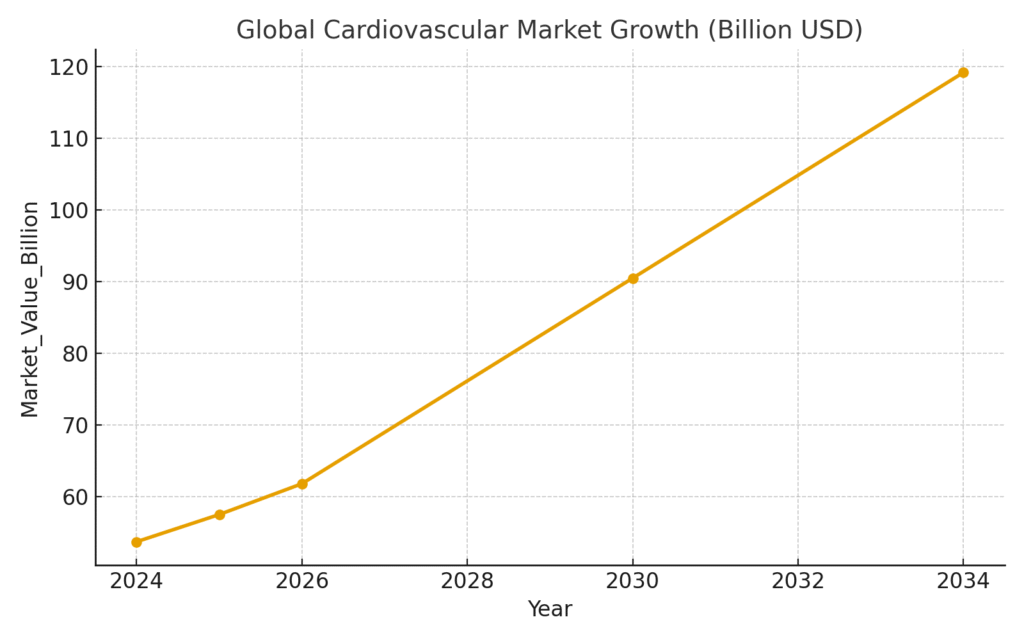
The global cardiovascular market is experiencing significant growth, projected to reach USD 119.2 billion by 2034 from USD 53.7 billion in 2024, expanding at a CAGR of 8.3%. This surge is driven by the increasing prevalence of cardiovascular diseases and advancements in medical technologies. For marketers, this presents a burgeoning opportunity to promote heart health products and services. Effective campaigns can capitalize on this growth by highlighting innovative solutions and emphasizing the importance of cardiovascular health.
Heart health marketing statistics #2: Cardiovascular Devices Market Expansion
The cardiovascular devices market is projected to grow from USD 53.7 billion in 2024 to USD 106.7 billion by 2033, at a CAGR of 7.8%. This growth reflects the increasing demand for diagnostic and therapeutic devices. Marketing strategies should focus on educating consumers about the benefits and advancements in these devices, fostering trust and encouraging adoption.
Heart health marketing statistics #3: Cardiovascular Drugs Market Outlook
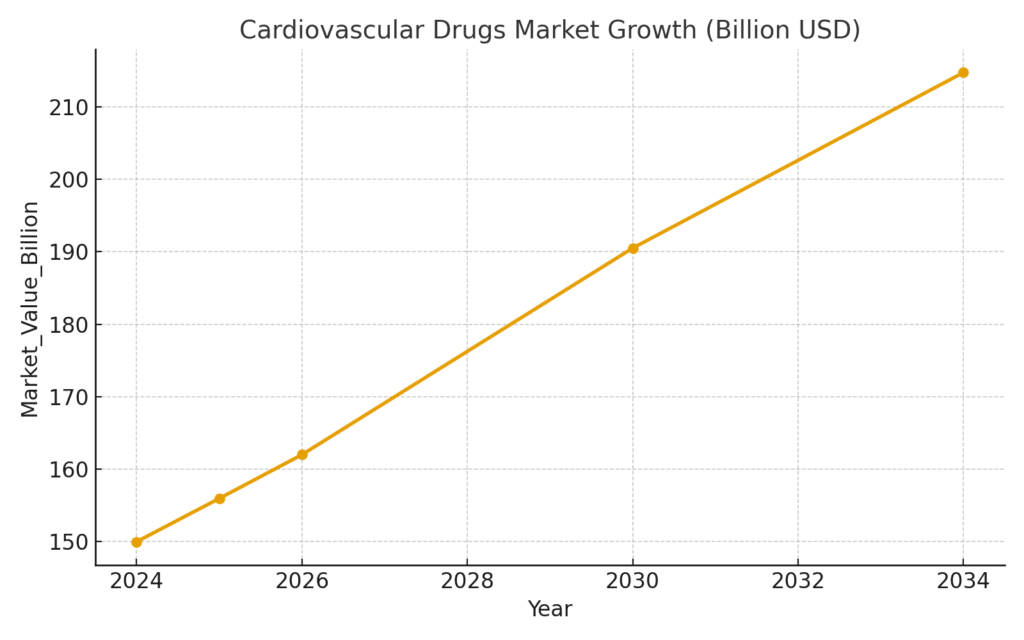
The global cardiovascular drugs market is forecasted to reach approximately USD 214.72 billion by 2034, up from USD 155.96 billion in 2025, growing at a CAGR of 3.62%. This indicates a steady demand for cardiovascular medications. Marketers can leverage this trend by promoting the efficacy and accessibility of these drugs, addressing consumer concerns, and highlighting their role in heart disease management.
Heart health marketing statistics #4: Cardiovascular Diagnostics Market Growth
Valued at USD 6.5 billion in 2025, the cardiovascular diagnostics market is expected to grow at a CAGR of 5.1%, reaching USD 10.69 billion by 2035. This growth underscores the importance of early detection in managing heart health. Marketing efforts should emphasize the critical role of diagnostics in preventing cardiovascular diseases and encourage regular screenings.
Heart health marketing statistics #5: Cardiovascular Information Systems Market Expansion
The cardiovascular information system market is estimated to be valued at USD 1.66 billion in 2025 and is expected to reach USD 3.17 billion by 2032, exhibiting a CAGR of 9.7%. This growth is driven by the increasing adoption of digital solutions in healthcare. Marketers can highlight the benefits of these systems in improving patient outcomes and streamlining healthcare operations.
Heart health marketing statistics #6: Cardiovascular Health Supplements Market Trends
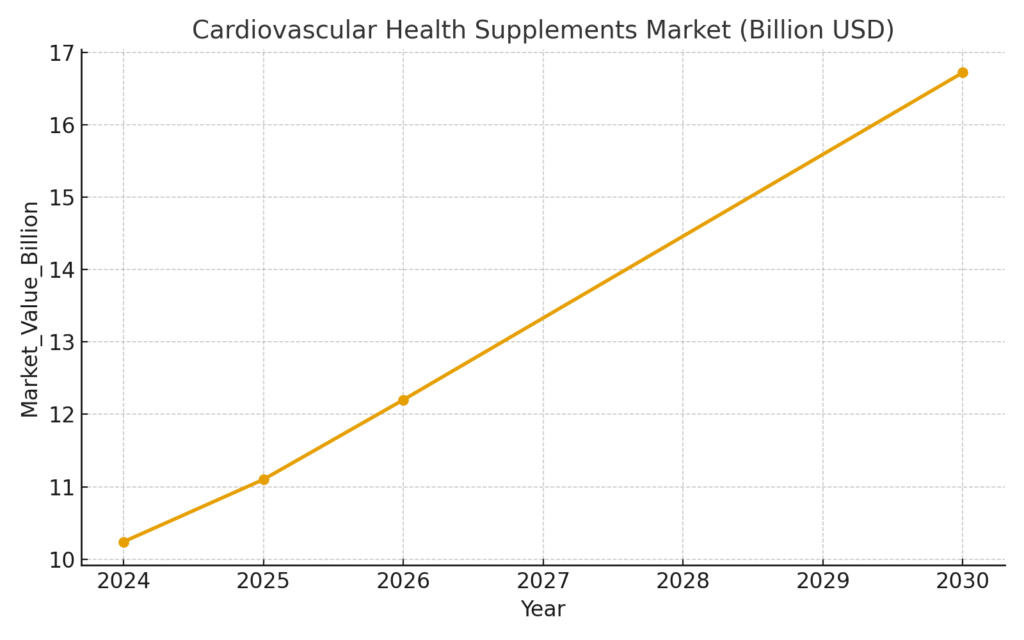
The cardiovascular health supplements market is valued at USD 10.24 billion in 2024 and is projected to reach USD 16.72 billion by 2030, growing at a CAGR of 8.6%. This indicates a growing consumer interest in preventive health measures. Marketing strategies should focus on educating consumers about the benefits of these supplements and their role in maintaining heart health.
Heart health marketing statistics #7: Online Sales Growth in Heart Health Supplements
Online sales of heart health supplements are forecasted to increase at a CAGR of 11% through 2034. This shift towards online shopping presents an opportunity for marketers to enhance their digital presence. Implementing targeted online campaigns and optimizing e-commerce platforms can effectively reach health-conscious consumers.
Heart health marketing statistics #8: Consumer Awareness and Engagement
Nearly 60% of consumers who traveled for health and wellness treatments in 2024 also said they expect to travel for these treatments in the next year. This trend highlights the increasing consumer interest in proactive health management. Marketers can capitalize on this by promoting heart health programs and services that cater to this growing demand.
Heart health marketing statistics #9: AI Integration in Cardiology
Over 80% of healthcare organizations were using or planning to use AI for clinical decision support in remote patient monitoring within the next three years. This integration of AI in cardiology signifies a shift towards more personalized and efficient healthcare. Marketing strategies should highlight the role of AI in enhancing heart health diagnostics and treatment plans.
Heart health marketing statistics #10: Virtual Care Adoption in Cardiology
58% of cardiology leaders indicated that virtual care helps ease pressure by enhancing the capacity to serve patients and reducing clinical response times. The adoption of virtual care is transforming patient interactions. Marketers should promote virtual cardiology services as convenient and accessible options for patients seeking heart health care.
Heart health marketing statistics #11: Automation in Healthcare Operations
92% of healthcare leaders believe automation of repetitive tasks and processes is critical for addressing staff shortages and saving time. Automation is streamlining healthcare operations. Marketing efforts can focus on the efficiency and effectiveness of automated systems in managing heart health services.
Heart health marketing statistics #12: Asia Pacific Market Share in Cardiovascular Health Supplements
Asia Pacific dominated the cardiovascular health supplements market with a share of 38.6% in 2024. This regional dominance reflects the growing health consciousness in the area. Marketers can tailor campaigns to resonate with the cultural and health preferences of consumers in the Asia Pacific region.
Heart health marketing statistics #13: U.S. Market Share in Cardiovascular Health Supplements
The U.S. cardiovascular health supplements market held a significant share of North America in 2024. This indicates a strong consumer base for heart health products. Marketing strategies should focus on the benefits and accessibility of these supplements to U.S. consumers.
Heart health marketing statistics #14: UAE Market Growth in Cardiovascular Health Supplements
The UAE is expected to register the highest CAGR in the cardiovascular health supplements market from 2025 to 2030. This rapid growth presents an opportunity for marketers to introduce heart health products to a burgeoning market. Tailoring marketing campaigns to the UAE’s health trends can drive product adoption.
Heart health marketing statistics #15: Go Red for Women Campaign Engagement
As of 2023, over 900,000 women have joined the Go Red for Women campaign and receive updates on what they can do to improve their heart health. This widespread engagement underscores the effectiveness of targeted awareness campaigns. Marketers can collaborate with such initiatives to enhance their outreach and impact.
Heart health marketing statistics #16: Public Engagement in Heart Health Awareness
A Facebook live awareness program on heart health prevention attracted 11,212 viewers during a 30-minute presentation, setting a Guinness World Record for the most viewers for a cardiovascular health awareness live stream. This highlights the potential of digital platforms in reaching a wide audience. Incorporating live sessions and interactive content can boost engagement in heart health campaigns.
Heart health marketing statistics #17: Premature Deaths from Cardiovascular Disease in England
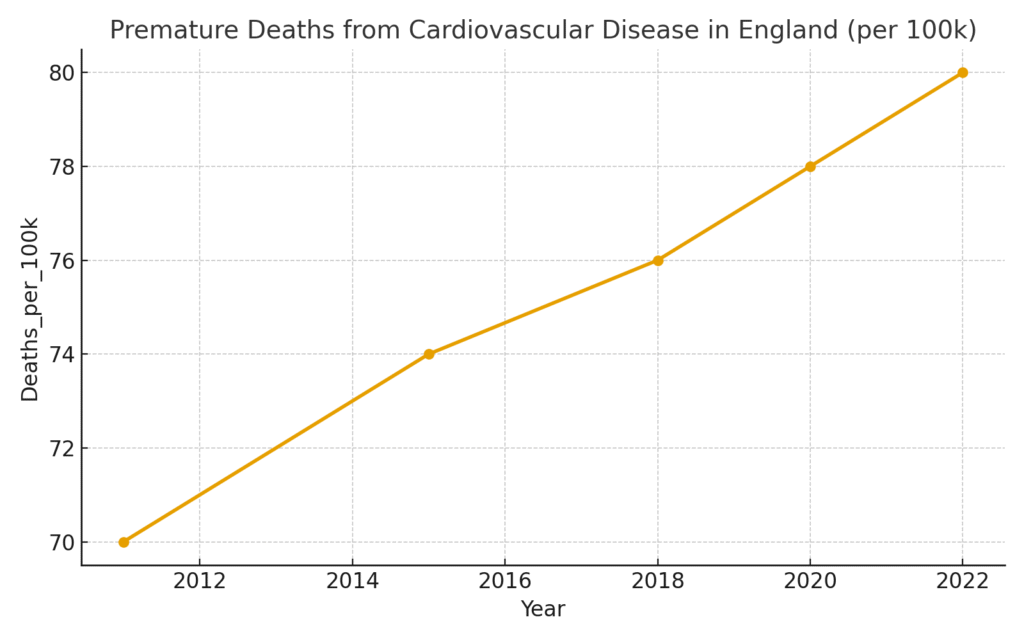
Premature deaths from cardiovascular disease in England reached 80 per 100,000 people in 2022, the highest rate since 2011, with over 39,000 such deaths. This alarming statistic calls for intensified awareness and preventive measures. Marketing strategies should focus on educating the public about risk factors and preventive actions.
Heart health marketing statistics #18: Rising Drug Sales in Gujarat
In Gujarat, sales of cardiovascular drugs increased by 44.4% over two years, reflecting a rising burden of lifestyle diseases. This trend indicates a growing demand for heart health medications. Marketers can highlight the availability and benefits of these drugs to address the increasing consumer need.
Heart health marketing statistics #19: Cardiac Medication Sales Surge in India
Between June 2021 and June 2025, cardiac medication sales in India surged by over 50%, growing from Rs 1,761 crore to Rs 2,645 crore, with an annual growth rate of 10.7%. This surge reflects the growing burden of cardiovascular diseases. Marketers can leverage this trend by promoting heart health products and services in the Indian market.
Heart health marketing statistics #20: Cardiovascular Disease as Leading Cause of Death in the U.S.
Cardiovascular diseases remain the leading cause of death in the U.S., accounting for 17.4% of total deaths in 2021. This underscores the critical importance of heart health initiatives. Marketing efforts should focus on raising awareness and promoting preventive measures to combat this leading cause of death.
Embracing the Future of Heart Health Marketing
As we look ahead, the heart health marketing landscape is poised for significant transformation. The statistics and trends highlighted above underscore the growing importance of cardiovascular health and the opportunities available for marketers to make a meaningful impact. By staying informed and adapting to these changes, we can craft strategies that resonate with consumers and contribute to a healthier future. Let’s continue to innovate and lead in promoting heart health, ensuring that our marketing efforts not only drive business success but also foster a positive societal impact.
SOURCES
- https://medium.com/@mahajanmini22/a-forecast-to-2025-health-tech-trends-and-innovations-bf7ed9f30455
- https://medium.com/@smartdataindia/the-future-of-digital-health-trends-to-watch-in-2025-5e8f599abcc2