



30 Sep TOP 20 HOME IMPROVEMENT MARKETING STATISTICS 2025
When I began looking into home improvement marketing statistics, I was amazed by how much this industry continues to grow and evolve. From homeowners investing billions in upgrades to the way digital platforms shape buying decisions, the data really opened my eyes to new opportunities. As someone passionate about sharing insights, I find these trends essential for marketers and professionals who want to better connect with their audiences. Partnering with a leading marketing agency in New York can help translate these numbers into real strategies that win attention and drive results. In this blog, I’ll take you through the top 20 statistics that highlight where home improvement marketing stands in 2025 and what it means for all of us.
Top 20 Home Improvement Marketing Statistics 2025 (Editor’s Choice)
🏠 Top 20 Home Improvement Marketing Statistics
Essential Data-Driven Insights for 2025
| # | Statistic | Category | Key Insight |
|---|---|---|---|
| 1 | $574.3B | Market Size | Total home improvement market value in 2024, with projected 3.4% growth in 2025 |
| 2 | 64% | Customer Loyalty | Home improvement shoppers who would definitely shop at their store again, up 9% from 2024 |
| 3 | 48% | Consumer Intent | Homeowners planning renovations in 2025, with median household spending at $15,000 |
| 4 | 39.3% | Professional Services | Home improvement projects outsourced to professionals in 2024, a significant increase |
| 5 | 75% | Retail Dominance | Homeowners shop at big-box retailers (Home Depot, Lowe's, Menards) for products |
| 6 | 82% | Spending Growth | Surge in homeowner spending on improvements and repairs from 2015 to 2024 |
| 7 | 36% | Digital Shopping | Millennials' home improvement purchases made online in 2021, vs 11% for Baby Boomers |
| 8 | 45% | Generational Shift | Homeowners under 35 prefer to hire professionals, vs 24% of those over 55 |
| 9 | $4,700 | DIY Spending | Average DIY home improvement spending per homeowner in Q4 2024 |
| 10 | 37 Hours | DIY Time Investment | Average DIY hours spent on home improvement projects in Q4 2024 |
| 11 | 91% | AI Adoption | Marketers more optimistic about AI this year, integrating it into workflows |
| 12 | 45% | Personalization | Consumers expect personalized experiences from DIY and home improvement brands |
| 13 | 31% | Social Commerce | Consumers shop on social media for DIY and home improvement products |
| 14 | 86% | Brand Loyalty Driver | Heavy DIYers cite high quality as reason to continue using the same brand |
| 15 | $228B | Professional Market | Projected revenue for professional contractors and remodelers by 2028 |
| 16 | 20% | Project Intent | Homeowners plan to start home improvement projects in early 2025 |
| 17 | Over 55% | Search Behavior | Consumers use search engines before scheduling home services appointments |
| 18 | 49% | Personalization Impact | Customers feel brands care about their business when interactions are personalized |
| 19 | 726,026 | Business Growth | Remodeling businesses in the U.S. as of 2025, representing 4.2% increase from 2024 |
| 20 | $5,000 | Annual Spending | Average U.S. household annual spending on home improvement services |
Top 20 Home Improvement Marketing Statistics 2025
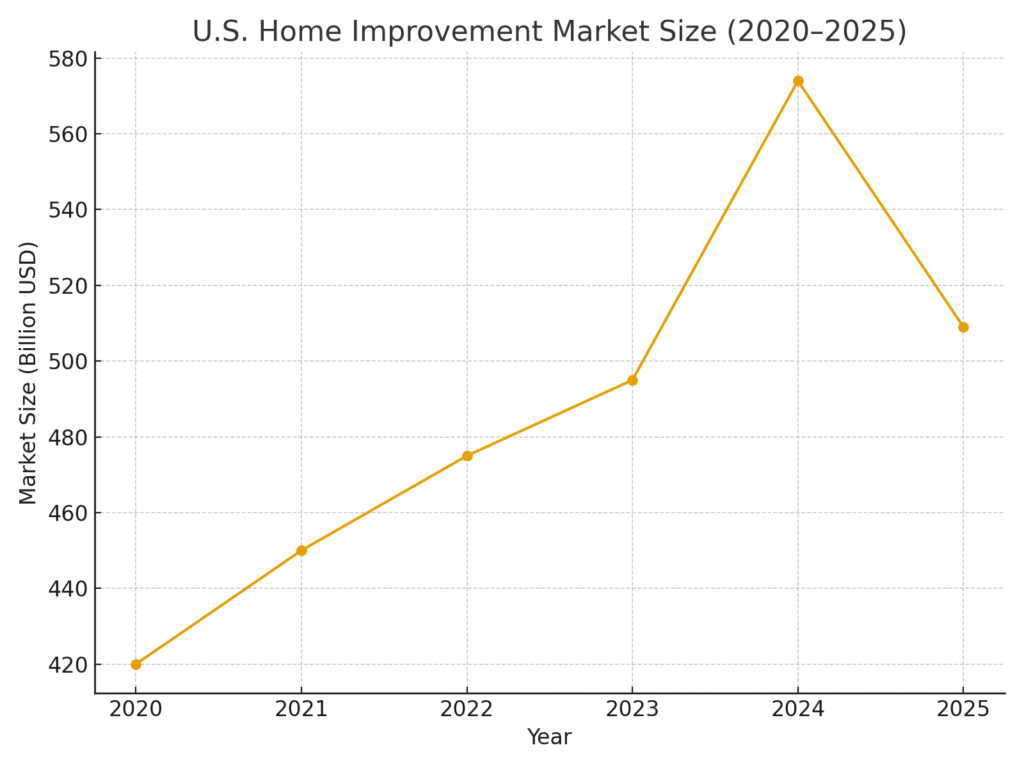
Home Improvement Marketing Statistics #1: $509 Billion Market In 2025
The U.S. home improvement market is projected to hit $509 billion in 2025. This reflects steady growth, showing strong consumer interest in maintaining and upgrading properties. For marketers, this market size signals significant opportunity across retail, contracting, and digital advertising. The scale of investment also suggests that demand for services will continue to rise despite economic shifts. Businesses that position themselves with strong digital visibility are set to benefit most.
Home Improvement Marketing Statistics #2: $574.3 Billion Product Market Size In 2024
The home improvement product market reached $574.3 billion in 2024. It grew by about 3.7% year-over-year, highlighting consistent momentum. Projections show an additional 3.4% growth in 2025, proving the sector’s resilience. Marketing campaigns that showcase new product lines or eco-friendly solutions will resonate strongly. Companies who adapt their messaging toward this expansion can secure more market share.
Home Improvement Marketing Statistics #3: 1.2% YOY Growth In Renovation Spending
Harvard’s LIRA forecasts a 1.2% year-over-year increase in homeowner renovation and repair spending in 2025. While modest, it represents a rebound after periods of slowed growth. This steady rise reinforces that homeowners still prioritize upgrades. For marketers, it’s important to highlight necessity-based improvements like energy efficiency and safety. Positioning products as “essential” rather than “luxury” can help align with this trend.
Home Improvement Marketing Statistics #4: 82% Spending Growth Since 2015
Homeowner spending on improvements and repairs has increased by 82% since 2015. This long-term growth showcases how critical home upgrades have become. Consumers see renovations not only as lifestyle improvements but also as investments. Marketers can tap into this sentiment by emphasizing return on investment and long-lasting value. It also reflects the importance of long-term trust-building with customers.
Home Improvement Marketing Statistics #5: 39.3% Projects Outsourced To Professionals
Nearly 40% of projects were outsourced to professionals in 2024. This shift shows homeowners are increasingly relying on experts rather than DIY. For marketing, this highlights the value of showcasing certifications, testimonials, and credibility. It also emphasizes the importance of building brand authority online. Professional service providers should focus on trust-based campaigns.
Home Improvement Marketing Statistics #6: 20% Of Homeowners Plan Projects In 2025
One in five homeowners plans to start a project in early 2025. This provides a clear window for targeted seasonal marketing. Marketers can leverage this data by tailoring promotions to coincide with spring and summer renovation peaks. Content marketing should focus on “how-to start” guides to catch this wave. Timely outreach can convert interest into projects.
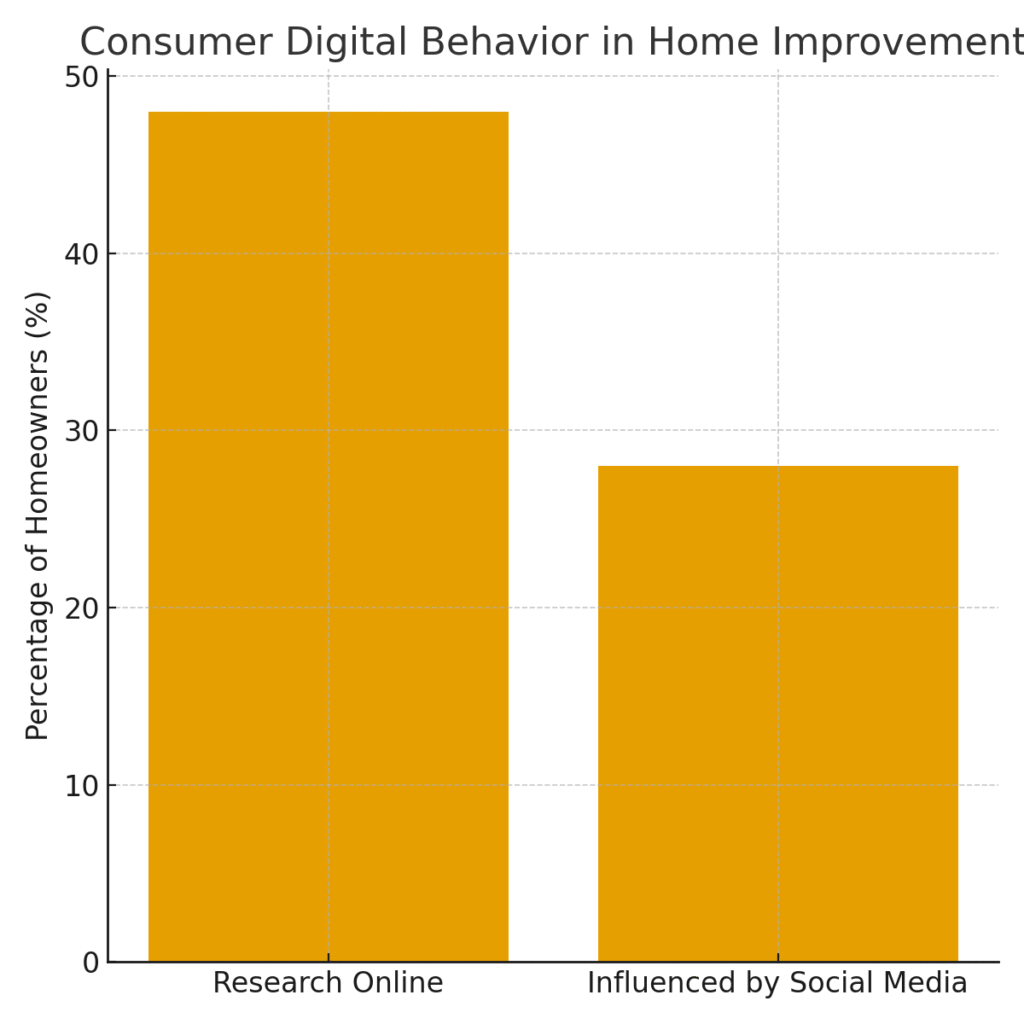
Home Improvement Marketing Statistics #7: 48% Research Products Online
Almost half of homeowners research home improvement products online before buying. This shows the critical importance of SEO and digital advertising. Businesses with strong online visibility will naturally capture this audience. Creating educational content builds trust and improves conversion rates. The data stresses the need for omnichannel strategies that blend digital with in-store experiences.
Home Improvement Marketing Statistics #8: 28% Influenced By Social Media
Social media influences 28% of consumer home improvement purchases. This demonstrates the growing role of visual content and influencer campaigns. Marketers can maximize impact by using platforms like Instagram, TikTok, and Pinterest. Authentic and relatable storytelling resonates best with this audience. Video demonstrations and before-and-after content can drive engagement and conversions.
Home Improvement Marketing Statistics #9: 37 Hours Spent On DIY Projects In Q4 2024
In Q4 2024, homeowners spent about 37 hours on DIY projects. This demonstrates the strong hands-on culture among homeowners. For marketers, DIY tutorials and content are effective ways to engage. Providing resources like guides and tool bundles can boost customer loyalty. Brands that support DIYers build trust while maintaining relevance in a competitive space.
Home Improvement Marketing Statistics #10: Average $4,700 Spent Per Homeowner
On average, homeowners spent $4,700 on DIY projects in 2024. This figure emphasizes the sizable financial commitment even for self-directed projects. For marketers, highlighting affordability and financing options can attract budget-conscious consumers. Campaigns that showcase value for money are highly effective. This also underscores how much opportunity exists within the DIY consumer base.
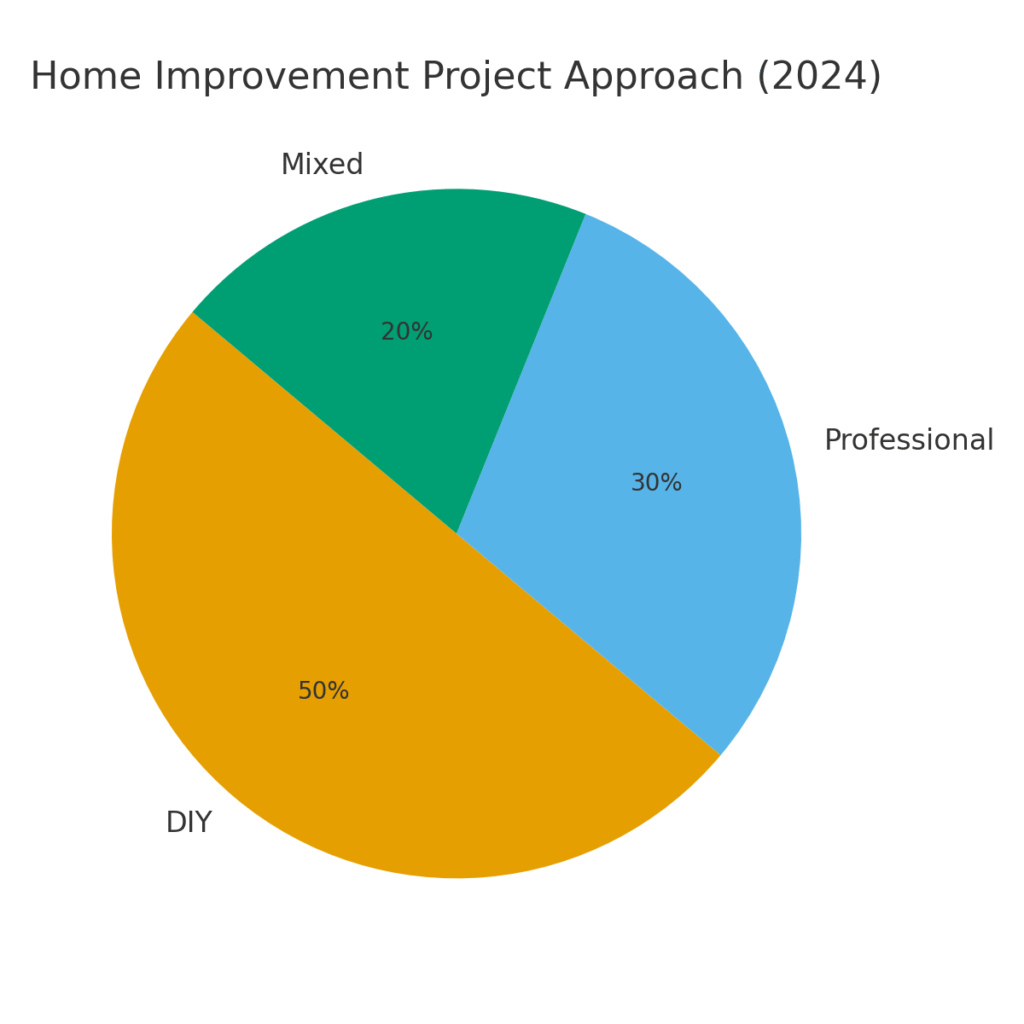
Home Improvement Marketing Statistics #11: 50% DIY While 20% Use Mixed Approach
More than half of homeowners handle projects themselves, while 20% take a mixed DIY + contractor approach. This mix shows homeowners want flexibility. Marketers should design campaigns addressing both categories. For DIYers, education and affordability matter most; for those hiring professionals, trust and expertise are key. Businesses that provide hybrid support can appeal to both groups.
Home Improvement Marketing Statistics #12: 45% Of Younger Homeowners Hire Professionals
Among homeowners under 35, about 45% prefer hiring professionals. This is nearly double the rate of older homeowners. Younger generations may lack time or skills but are willing to pay for expertise. Marketers should adapt messaging to focus on convenience, time-savings, and quality service. Campaigns targeting younger audiences can leverage digital-first platforms.
Home Improvement Marketing Statistics #13: Home Services Market Growth Of 18.91%
The global home services market is expected to grow at an annual rate of 18.91%. This reflects immense global opportunity for businesses in the sector. Marketers should highlight scalability and digital accessibility. Online booking systems and mobile-friendly ads can capture global momentum. Growth figures like this prove the importance of investing in digital transformation.
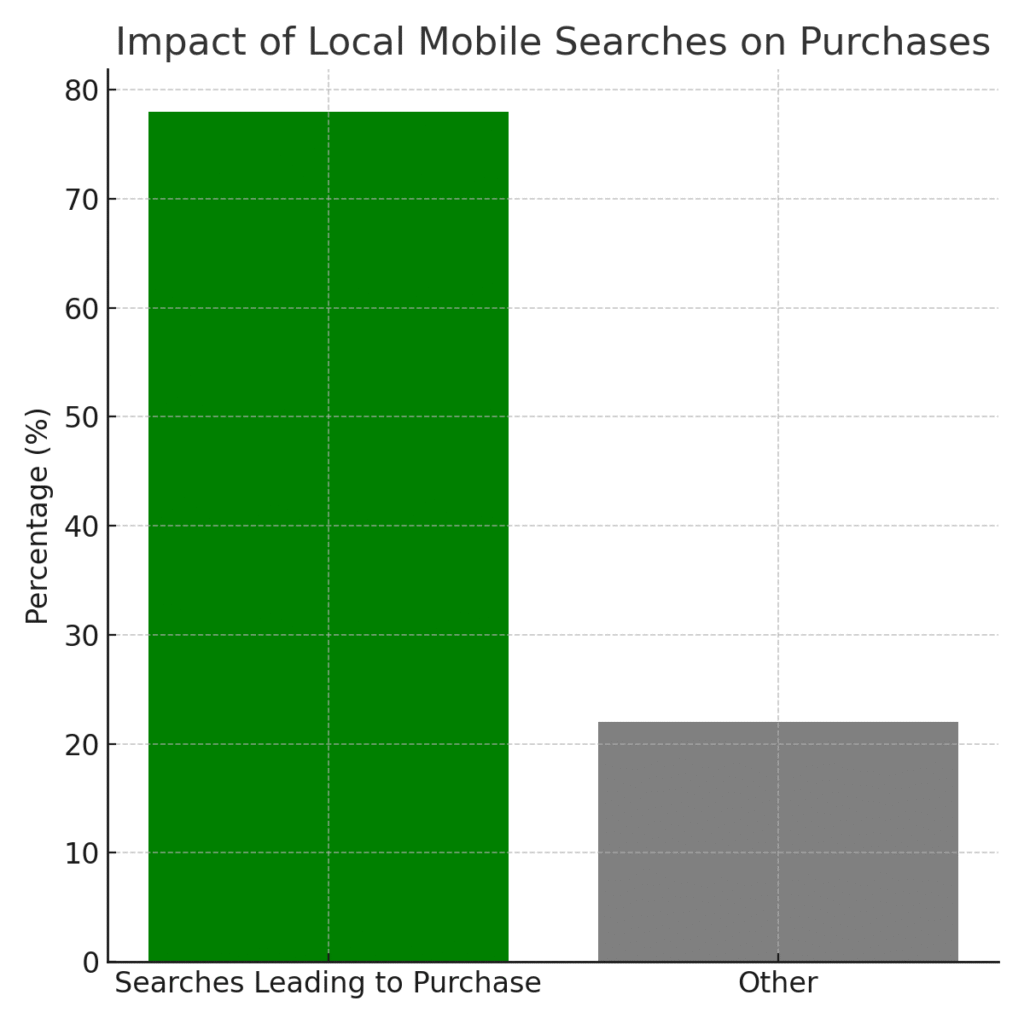
Home Improvement Marketing Statistics #14: 78% Of Local Mobile Searches Lead To Purchases
Local search remains a powerhouse, with 78% of local mobile searches leading to purchases within 24 hours. For home services and improvements, this is particularly crucial. Marketers should prioritize Google Business Profiles and local SEO. Paid ads targeting “near me” searches can yield strong ROI. Mobile-first strategies are now non-negotiable.
Home Improvement Marketing Statistics #15: 55% Start With Search Engines
More than half of consumers begin their journey with a search engine when seeking home services. This underscores the importance of keyword optimization and content visibility. Businesses that appear at the top of search results win the first impression. SEO campaigns tailored for service-specific keywords are highly effective. Building authority online has never been more critical.
Home Improvement Marketing Statistics #16: 80% Of Businesses Use Social Platforms
Around 80% of home service providers use social platforms to connect with clients. Social proof and engagement drive brand visibility. Marketers should craft campaigns that balance organic storytelling with paid reach. Reviews, testimonials, and shareable content are key. Active engagement fosters customer loyalty and repeat business.
Home Improvement Marketing Statistics #17: 56.1% Use Mobile For Research
Over half of home service seekers rely on mobile devices for research. This highlights the urgency of having mobile-optimized websites and content. Slow-loading pages or poor design can lose customers instantly. Marketers should prioritize user experience across devices. Mobile-first thinking ensures stronger lead capture.
Home Improvement Marketing Statistics #18: Short-Form Video As Virtual Showroom
Short-form video platforms like TikTok and Instagram Reels are becoming virtual showrooms. Visual storytelling allows customers to see transformations in real time. Marketers can leverage these tools for demonstrations and before-and-after showcases. Authenticity is key — audiences prefer relatable over polished content. This trend will define the future of home improvement marketing.
Home Improvement Marketing Statistics #19: Content Marketing Is Essential
Content marketing is now essential rather than optional in home improvement. Educational blogs, local guides, and how-to articles improve SEO and trust. Businesses that neglect content risk losing relevance in a competitive market. Consumers increasingly research before buying, making content a lead-generation tool. Consistent publishing schedules improve authority and ranking.
Home Improvement Marketing Statistics #20: Energy Efficiency And Durability Prioritized
Homeowners are prioritizing energy efficiency and durable upgrades over purely aesthetic changes. This reflects a shift toward long-term value. Marketers can highlight eco-friendly and sustainable product lines. Campaigns emphasizing savings, durability, and environmental impact resonate strongly. The trend represents both a challenge and an opportunity for brands.
Turning Insights Into Action
Looking at these home improvement marketing statistics, I can see how much opportunity exists for businesses willing to evolve with consumer habits. The combination of online research, local search dominance, and social media influence creates a powerful digital landscape to tap into. Personally, I believe the key lies in blending education with authenticity — showing customers both expertise and understanding. Working with a leading marketing agency in New York can help take these insights and build campaigns that actually drive revenue. By putting these stats into action, we can transform raw data into real growth for any home improvement brand.
SOURCES