



29 Sep TOP 20 HOME OFFICE MARKETING ERGONOMICS STATISTICS 2025
When I first started researching home office marketing ergonomics statistics, I realized just how much our workspaces shape productivity, comfort, and even long-term health. As someone who spends countless hours at a desk, I know firsthand how important it is to invest in the right setup—whether it’s an ergonomic chair, monitor placement, or even lighting. What struck me most is how these small changes aren’t just about physical health; they also drive better focus and efficiency, which is why so many brands highlight ergonomics in their campaigns. While diving into these insights, I leaned on the expertise of a leading marketing agency in New York to better understand how businesses are framing this conversation. I want to share these findings in a way that’s practical, relatable, and genuinely useful for anyone working from home.
Top 20 Home Office Marketing Ergonomics Statistics 2025 (Editor’s Choice)
| No. | Statistic | Year / Region | Source |
|---|---|---|---|
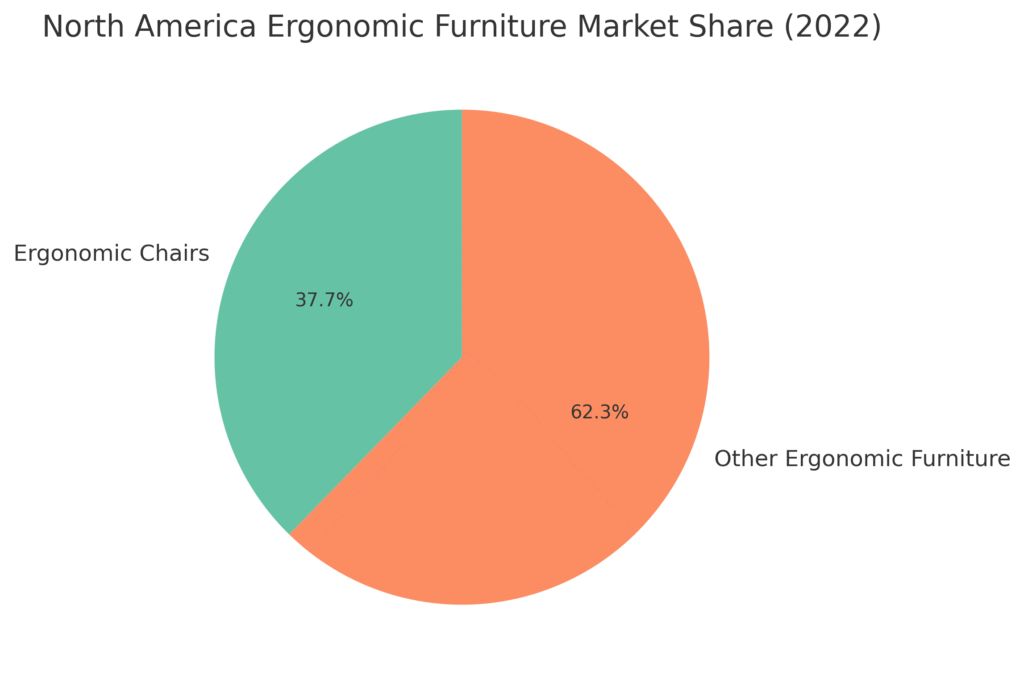
| 1 | Global ergonomic products market projected to grow from $14.5B (2023) to $22.3B by 2032 (CAGR ~4.9%). | 2023–2032, Global | DataIntelo |
| 2 | 12.5M ergonomic chairs sold annually in North America, driven by remote work. | 2023, North America | Fortune Business Insights |
| 3 | North America home ergonomic furniture market valued at $2.03B in 2022, CAGR ~7.13%. | 2022, North America | Verified Market Research |
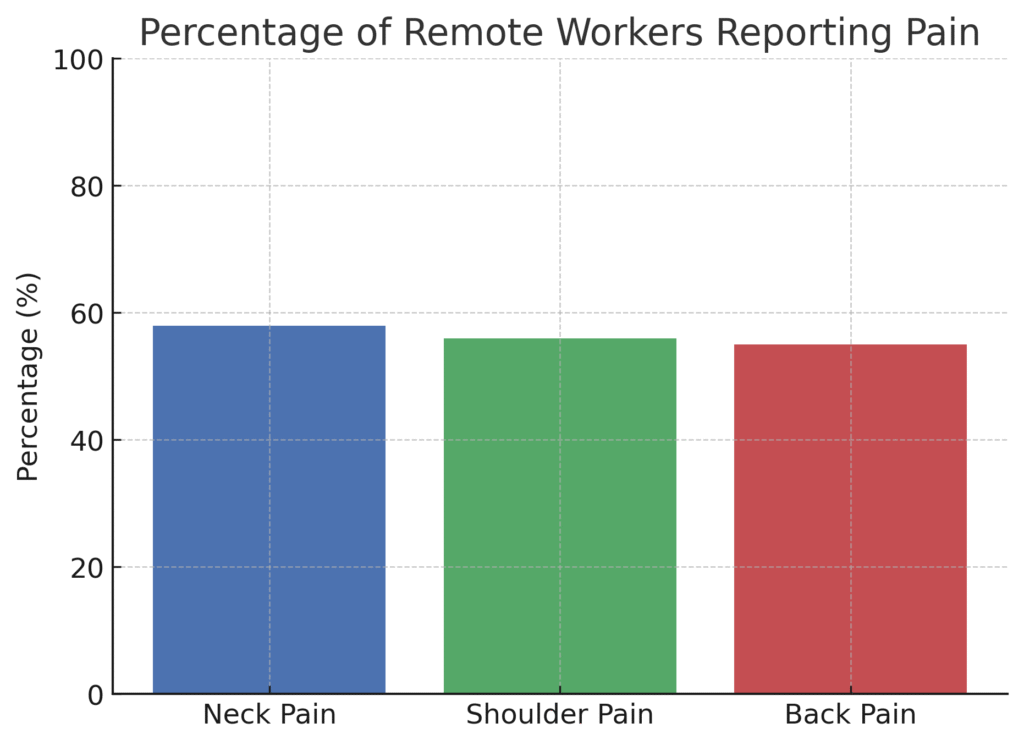
| 4 | Office ergonomic chairs made up 37.7% of market share in North America. | 2022, North America | Verified Market Research |
| 5 | 88% of home office workers report pain in at least one body part; 64% neck pain, 57% lower back pain. | 2022, Global | RSD Journal |
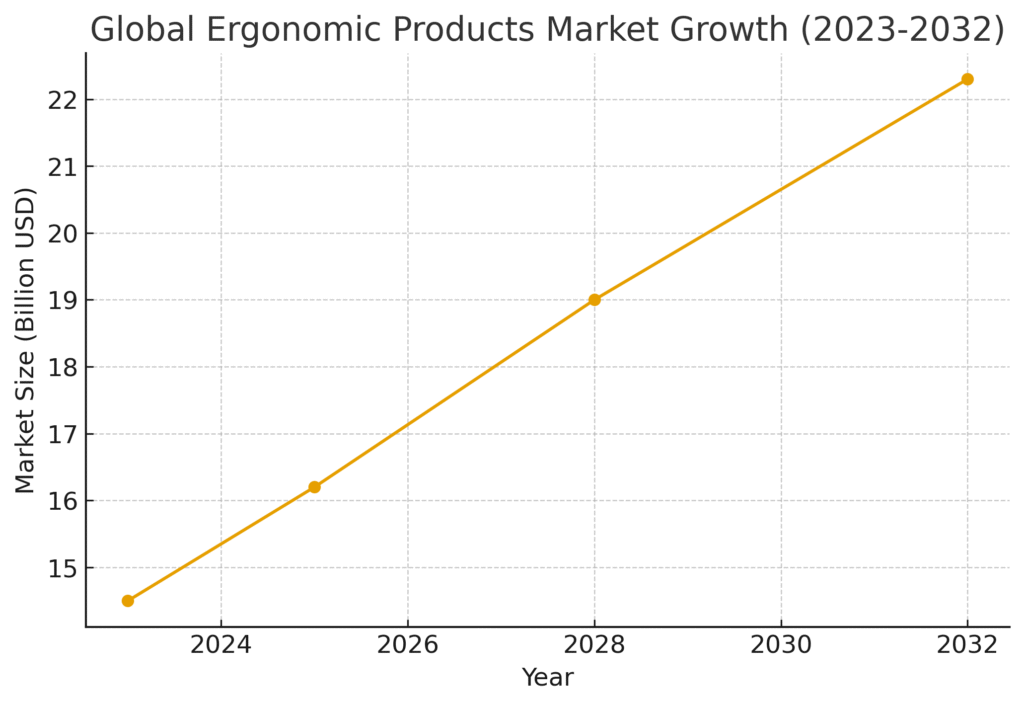
| 6 | 58% of remote workers report increased neck pain, 56% shoulder pain, 55% back pain. | 2021, Global | EHS |
| 7 | Home office setups show higher ergonomic risks vs. optimized office setups. | 2022, Global | PMC |
| 8 | ~25% of workers find it difficult to secure adequate workspace at home. | 2022, Global | Loctek Motion |
| 9 | 40% of remote workers had no desk; 52% monitors too low; 31% not centered. | 2022, Global | Loctek Motion |
| 10 | 41% of chairs in home offices were too low; 2% too high. | 2022, Global | Caroline Dowd Higgins |
| 11 | 71% of U.S. employees worked from home by December 2020 (up from 20% pre-pandemic). | 2020, USA | Loctek Motion |
| 12 | 54% of employees want to continue working remotely after the pandemic. | 2021, Global | Caroline Dowd Higgins |
| 13 | Only 20% of surveyed employees knew the true definition of “ergonomics.” | 2021, Global | Caroline Dowd Higgins |
| 14 | 77% believe ergonomics is important at work; 81% say it affects productivity. | 2021, Global | Caroline Dowd Higgins |
| 15 | Office furniture market size estimated at $35B annually. | 2023, Global | Market Report Analytics |
| 16 | Asia-Pacific accounts for 43.7% of global office furniture revenue. | 2024, Asia-Pacific | Amra & Elma |
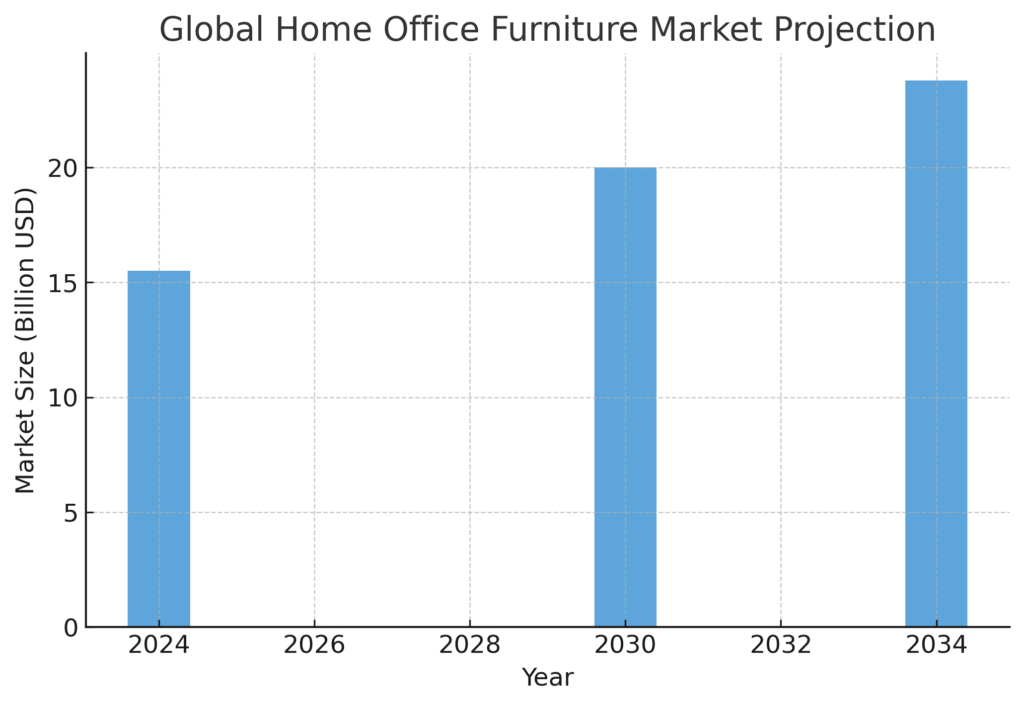
| 17 | Global home office furniture market valued at $15.5B in 2024. | 2024, Global | Amra & Elma |
| 18 | Home office furniture market expected to reach $23.8B by 2034. | 2034, Global | Amra & Elma |
| 19 | Remote work levels were 43% higher in heavily locked-down regions during 2023. | 2023, Global | arXiv |
| 20 | 19% of developers added an extra monitor to home setups during COVID-19. | 2021, Global | arXiv |
Top 20 Home Office Marketing Ergonomics Statistics 2025
Home Office Marketing Ergonomics Statistics #1: Global Market Growth To $22.3 Billion
The global ergonomic products market is forecasted to grow from $14.5 billion in 2023 to $22.3 billion by 2032. This steady 4.9% CAGR shows the increasing importance of health-focused workspace solutions. More companies and individuals are realizing that ergonomics is not a luxury but an essential part of daily productivity. The shift to hybrid and remote work has accelerated demand for ergonomic chairs, desks, and monitor arms. This growth trend emphasizes how marketing campaigns can leverage both wellness and efficiency narratives.
Home Office Marketing Ergonomics Statistics #2: 12.5 Million Chairs Sold Annually
In North America, an estimated 12.5 million ergonomic chairs are sold each year. This figure highlights the widespread adoption of comfort-first furniture for home workspaces. Brands marketing these products can showcase not only comfort but also the long-term health benefits. The statistic also reflects how remote work has become deeply ingrained in professional life. For marketers, these numbers represent an opportunity to emphasize both lifestyle and productivity improvements.
Home Office Marketing Ergonomics Statistics #3: $2.03 Billion North American Market
In 2022, the North American home ergonomic furniture market reached a valuation of $2.03 billion. This sector is growing at an impressive annual rate of 7.13%. The expansion underlines a consumer shift toward prioritizing health when setting up workspaces. Companies targeting this audience can frame ergonomics as an investment in productivity. With more people working from home, demand will continue to rise steadily.
Home Office Marketing Ergonomics Statistics #4: 37.7% Market Share In Ergonomic Chairs
Office ergonomic chairs represented 37.7% of the North American market in 2022. This dominance shows the central role seating plays in workplace comfort and efficiency. For marketers, it’s essential to stress the tangible benefits of these chairs in campaigns. Highlighting support for posture, reduced back strain, and increased energy resonates strongly with consumers. Since seating is the largest category, competitive positioning here is especially critical.
Home Office Marketing Ergonomics Statistics #5: 88% Reported Pain While Working From Home
A survey revealed that 88% of home office workers experienced pain in at least one body part. The most common complaints were neck pain (64%), lower back pain (57.6%), and upper back pain (54.2%). This alarming number demonstrates the real physical consequences of poor ergonomics. Brands can leverage this data to show the value of ergonomic upgrades. For employees, this highlights why investing in comfort can directly impact well-being.
Home Office Marketing Ergonomics Statistics #6: 58% Experienced Neck Pain From Remote Work
Research shows that 58% of remote workers experienced increased neck pain. Shoulder and back pain followed closely, with 56% and 55% of workers affected, respectively. This indicates how quickly poor setups can translate into physical discomfort. Marketing campaigns can frame ergonomic products as preventative health measures. With more awareness, workers are becoming willing to pay for comfort and protection.
Home Office Marketing Ergonomics Statistics #7: Higher Risks In Home Office Setups
Studies comparing ergonomic offices to home setups found higher risks in home environments. Many workers lacked professional chairs, desk heights, and monitor alignment. This mismatch leads to unhealthy postures and long-term strain. By highlighting these risks, marketers can stress the need for better furniture and accessories. Educating consumers on ergonomic assessments creates an entry point for sales.
Home Office Marketing Ergonomics Statistics #8: 25% Struggle To Find Adequate Workspace
Nearly one in four employees reported difficulty in finding a suitable home workspace. This statistic highlights the challenges of limited space and poor layouts. It also shows how creative ergonomic solutions, like compact desks and adjustable stands, meet a real demand. For marketers, presenting adaptable products appeals directly to this large group. The key takeaway is that flexibility matters just as much as comfort.
Home Office Marketing Ergonomics Statistics #9: 40% Lack A Dedicated Desk At Home
Research found that 40% of remote workers do not have a proper desk. Additionally, 52% had monitors that were too low, and 31% had setups that caused body twisting. These findings highlight significant ergonomic gaps in typical home offices. Marketers can emphasize that small upgrades can correct these issues affordably. Campaigns that show quick-fix solutions appeal to practical buyers.
Home Office Marketing Ergonomics Statistics #10: 41% Use Chairs At The Wrong Height
A study revealed that 41% of chairs in home offices were too low and 2% too high. Incorrect chair height contributes to discomfort and musculoskeletal issues. These small but impactful details matter in everyday productivity. For brands, this is an opportunity to showcase adjustable chairs as a solution. Customers respond well when they see how a product directly prevents pain.
Home Office Marketing Ergonomics Statistics #11: 71% Worked From Home In 2020
By December 2020, 71% of U.S. employees were working remotely, compared to 20% before the pandemic. This rapid shift reshaped the way people furnished their homes. The demand for ergonomic products skyrocketed during this transition. Marketing messages that tie into this shift feel both timely and relatable. It also proves that home office setups are no longer a temporary trend.
Home Office Marketing Ergonomics Statistics #12: 54% Want Remote Work To Continue
More than half of employees (54%) who worked from home during the pandemic want it to continue. This preference solidifies the long-term demand for ergonomic home setups. Marketers should tap into the idea that ergonomics is part of the future of work. Comfort and productivity are now considered essential in remote careers. Highlighting this permanence adds weight to any product promotion.
Home Office Marketing Ergonomics Statistics #13: Only 20% Understand Ergonomics Definition
A survey revealed that only 20% of workers actually knew the true definition of ergonomics. This gap highlights an opportunity for education-driven marketing. Brands that position themselves as informative thought leaders gain trust. Explaining the science behind ergonomics in simple terms makes products more appealing. This approach builds credibility while driving product adoption.
Home Office Marketing Ergonomics Statistics #14: 77% Say Ergonomics Impacts Productivity
Research shows that 77% of workers consider ergonomics important, while 81% believe it affects productivity. This strong perception highlights consumer awareness of ergonomics’ impact. For brands, it is crucial to reinforce this positive association in campaigns. Demonstrating the link between proper setup and performance resonates with professionals. Marketers can turn this into a message of empowerment and efficiency.
Home Office Marketing Ergonomics Statistics #15: $35 Billion Office Furniture Market
The office furniture market is valued at approximately $35 billion globally. This demonstrates the immense scale of the industry. Ergonomic products are a growing slice of this massive sector. Marketers have a chance to tap into a steady, high-demand marketplace. Targeting niches within this market offers strong potential for growth.
Home Office Marketing Ergonomics Statistics #16: Asia-Pacific Leads With 43.7% Market Share
In 2024, the Asia-Pacific region accounted for 43.7% of global office furniture revenue. This dominance reflects a strong cultural and economic emphasis on workplace investments. Marketers targeting this region must consider both affordability and innovation. The high percentage also indicates where global demand is most concentrated. Companies can tailor strategies to highlight quality and value in these markets.
Home Office Marketing Ergonomics Statistics #17: $15.5 Billion Market Valuation In 2024
The global home office furniture market reached $15.5 billion in 2024. This figure underscores the rapid expansion of the industry. Demand has been fueled by the rise in hybrid and remote work. For marketers, these numbers reinforce the argument that ergonomics is an essential business. Campaigns should highlight both lifestyle enhancement and long-term health investment.
Home Office Marketing Ergonomics Statistics #18: Market To Reach $23.8 Billion By 2034
Forecasts predict that the home office furniture market will grow to $23.8 billion by 2034. This growth reflects long-term stability and consumer interest. It shows that home offices are here to stay, not just a pandemic response. For marketers, this presents an opportunity to emphasize durability and investment value. The numbers point toward sustained consumer confidence in ergonomic solutions.
Home Office Marketing Ergonomics Statistics #19: Remote Work 43% Higher In Lockdown Regions
Remote work levels were 43% higher in heavily locked-down regions in 2023. This reinforces the long-term impact of pandemic-driven changes. Even after restrictions, many organizations maintain remote or hybrid structures. Marketers can use this as evidence that home office investments are permanent. Campaigns can emphasize resilience and adaptability for the modern workforce.
Home Office Marketing Ergonomics Statistics #20: 19% Added Extra Monitors During Pandemic
During the pandemic, 19% of workers added extra monitors to their home setups. This trend reflects the growing importance of multi-screen productivity. Marketers can highlight how accessories like stands and mounts enhance work efficiency. The adoption of additional monitors also creates demand for ergonomic adjustments. This shows how evolving work habits fuel ongoing product opportunities.
Why Ergonomics Marketing Matters More Than Ever
After pulling together these home office marketing ergonomics statistics, I can honestly say that investing in ergonomics is no longer a luxury—it’s a necessity. From preventing long-term health issues to boosting daily performance, the numbers clearly show that businesses and individuals benefit when they prioritize smarter workspaces. Personally, I’ve felt the difference in my own workflow once I upgraded simple things like chair height and screen alignment. This is exactly why marketers should not just treat ergonomics as a side note but as a major part of their messaging. With guidance from a leading marketing agency in New York, brands can position themselves as advocates for wellness and productivity in an era where the home office is here to stay.
SOURCES
- https://dataintelo.com/report/global-ergonomic-products-market (Dataintelo)
- https://publichealth.tulane.edu/blog/workplace-ergonomics-safety/ (School of Public Health)
- https://www.researchgate.net/publication/372340210_The_Impact_of_Ergonomics_on_Employees%27_Productivity_in_the_Architectural_Workplaces (ResearchGate)
- https://carolinedowdhiggins.com/15-statistics-you-need-to-know-about-home-office-ergonomics/ (Caroline Dowd-Higgins)
- https://www.usf.edu/health/public-health/news/2024/embracing-ergonomics-for-a-healthier-workplace.aspx (usf.edu)
- https://www.ergonomicshelp.com/blog/work-from-home-ergonomics-statistics (ergonomicshelp.com)
- https://www.business.com/articles/5-ways-an-ergonomically-designed-workstation-can-improve-your-productivity/ (business.com)
- https://www.insperity.com/blog/ergonomics-in-the-workplace/ (Insperity)
- https://workplacesolutionsllc.com/blog-and-news/2024/1/29/boosting-productivity-and-roi-with-ergonomic-office-furniture-a-data-driven-approach (Workplace Solutions)
- https://www.espresa.com/blog/ergonomics-101-removing-risk-of-injury-while-working-from-home/ (Espresa)
- https://straitsresearch.com/report/ergonomic-chair-market (Straits Research)
- https://arxiv.org/abs/2103.13198 (arXiv)
- https://arxiv.org/abs/2005.01127 (arXiv)