




21 Sep TOP 20 HOME OFFICE MARKETING SETUP STATISTICS 2025
When I first started looking into the latest home office marketing setup statistics, I’ll admit I was surprised at how much these numbers reflect our daily work realities. As someone who works closely with a leading marketing agency in New York, I’ve seen first-hand how remote setups, hybrid roles, and digital tools are reshaping the way we connect with audiences. It isn’t just about data on screens—it’s about real people adjusting their workspaces, their routines, and even their priorities. These statistics don’t just highlight trends; they tell stories of adaptation, creativity, and resilience. That’s what drew me to share them with you here.
Top 20 Home Office Marketing Setup Statistics 2025 (Editor’s Choice)
📊 Top 20 Home Office Marketing Statistics
Essential Insights for 2025 and Beyond
| # | Category | Key Statistic |
|---|---|---|
| 1 | Remote Work | 22 million employed adults in the U.S. are working from home full-time (14% of workforce) |
| 2 | Hybrid Work | Over 50% of workers are now hybrid, up from just 17% in 2019 |
| 3 | Job Market | Hybrid job postings grew from 15% to 24% between Q2 2023 and Q2 2025 |
| 4 | Office Trends | Fully on-site jobs declined from 83% to 66% during 2023-2024 |
| 5 | Real Estate | 66% of home buyers prefer properties with at least one dedicated home office |
| 6 | Job Opportunities | Remote jobs now make up 15% of total U.S. opportunities, up from 4% pre-pandemic |
| 7 | Demographics | Rural area employees have grown 43% since 2019 |
| 8 | Market Size | Home office furniture market: $38.40B in 2025, projected to reach $56.30B by 2030 |
| 9 | Global Market | Global market valued at $29.3B in 2024, expected to reach $49.1B by 2033 |
| 10 | SOHO Services | Small Office Home Office Services market to reach $36.73B by 2029 |
| 11 | Spending Growth | Home Office Spending Market expanding at 17% CAGR to reach $141.26B by 2033 |
| 12 | Product Mix | Desks & tables account for 34.37% of market share in 2024 |
| 13 | Innovation | Smart desks with IoT sensors growing at 10.76% CAGR through 2030 |
| 14 | E-Commerce | Online channels captured 42.47% of market share, DTC sales at 14.75% CAGR |
| 15 | Materials | Wood accounts for 46.39% of home office furniture materials |
| 16 | Sustainability | Over 33% of purchase decisions influenced by environmental credentials |
| 17 | Marketing Budget | 66.3% of small business owners spend less than $1,000 on marketing annually |
| 18 | AI Investment | 71% of marketers plan to invest $10M+ in AI over three years |
| 19 | Budget Allocation | Average marketing budgets represent 7.7% of company revenue |
| 20 | Cost Savings | Companies save up to $11,000/year per employee with hybrid models |
Top 20 Home Office Marketing Setup Statistics 2025
Home office marketing setup statistics #1 – Hybrid Vs Fully Remote Jobs
In Q2 2025, around 24% of new job postings were hybrid and 12% were fully remote. This shows that companies are still experimenting with different work arrangements to balance flexibility and collaboration. From a marketing setup perspective, businesses are tailoring campaigns to appeal to both remote and hybrid professionals. Many home office products are being positioned as must-haves for hybrid employees who split time between home and the office. This duality is shaping how marketing teams design their messaging.
Home office marketing setup statistics #2 – Preference For Hybrid Work
About 50% of job seekers now say they prefer hybrid work, while 25% prefer fully remote roles. This strong preference for hybrid means marketers need to highlight flexibility in their messaging. Home office equipment brands are finding success when they promote products as adaptable for both home and corporate use. The market is less about permanence and more about fluidity. This insight pushes marketing teams to align with shifting consumer values.
Home office marketing setup statistics #3 – Remote-Capable Workers’ Expectations
Six out of ten remote-capable employees now prefer hybrid arrangements. One-third of workers want fully remote setups, while less than 10% still prefer onsite-only roles. This shift is a reminder that home office setups are no longer just temporary. Marketing strategies must reflect that demand for home-based tools is permanent and growing. It also highlights how work expectations directly influence product adoption.
Home office marketing setup statistics #4 – Remote Work Penetration
Roughly 35–40% of the U.S. workforce now works remotely at least once per week. This demonstrates the deep integration of remote work into the economy. For marketers, this expands the potential customer base for home office setups considerably. Campaigns now target not just freelancers but also corporate employees. The long-term penetration of remote work ensures lasting demand for ergonomic and digital tools.
Home office marketing setup statistics #5 – Work From Home Compared To Pre-Pandemic
Remote work levels have more than doubled since before COVID-19. This seismic change has made home office marketing an evergreen niche. What was once considered a perk is now standard practice for millions. Companies selling desks, chairs, and digital tools are investing heavily in content marketing. The statistics reinforce that this isn’t a short-term fad but a structural shift.

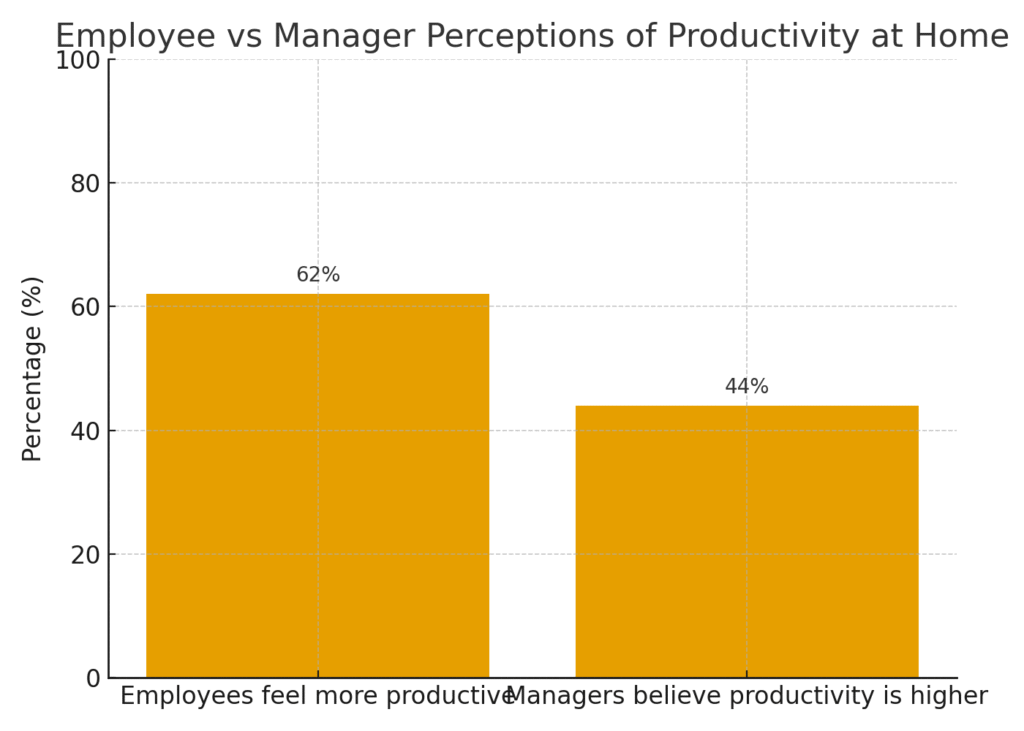
Home office marketing setup statistics #6 – Employee Productivity Perceptions
About 62% of employees feel more productive when working from home. On the other hand, only 44% of managers share the same belief. This perception gap matters for marketers because it highlights contrasting narratives in the workplace. Home office marketing often appeals directly to employees’ sense of empowerment. Managers, however, may require evidence-driven messaging to be convinced.
Home office marketing setup statistics #7 – Time And Cost Savings
Employees save an average of $42 per day by working from home. This includes commuting costs, meals, and even clothing expenses. Marketers can use this figure to position home office setups as an investment that pays for itself. Highlighting financial benefits resonates with both employees and businesses. It also strengthens campaigns around ROI-driven decision-making.
Home office marketing setup statistics #8 – Work-Life Balance And Flexibility
Improved work-life balance is consistently rated as the top benefit of hybrid and remote work. This emotional benefit carries strong weight in marketing campaigns. Brands that link their products to balance and wellness tend to connect with consumers on a deeper level. Chairs, lighting, and tech accessories are marketed as lifestyle enhancers. This aligns workplace needs with personal well-being.
Home office marketing setup statistics #9 – Burnout And Overwork Challenges
Nearly 69% of remote workers report feeling burned out. Despite time savings and flexibility, boundaries between work and home blur. Marketers have responded by positioning products like standing desks, scheduling apps, and ergonomic tools as solutions. Campaigns now emphasize not just productivity but also sustainability of work. This helps align with consumers’ emotional struggles.
Home office marketing setup statistics #10 – Job Satisfaction Levels
Employees report higher satisfaction when their work arrangements align with personal preferences. This means marketing home office setups requires tailoring messages to diverse groups. Some want quiet, distraction-free products, while others value portability. Satisfying personal preferences can create loyal customers. In essence, marketing must tap into identity as much as function.

Home office marketing setup statistics #11 – Remote Jobs Growth
There are three times more remote jobs now than in 2020. This surge has massively increased the size of the home office economy. From furniture to software, entire industries are pivoting. Marketers can leverage growth statistics to validate the importance of their products. The trend is expanding across industries, not just tech roles.
Home office marketing setup statistics #12 – Willingness To Accept Pay Cuts
Around 50% of workers say they would accept a pay cut to maintain remote work. This shows the high value employees place on flexibility. Marketers can use this to highlight how home office products protect and enhance lifestyle choices. When people are willing to trade salary for convenience, it proves the strength of the trend. It also validates long-term investment in this sector.
Home office marketing setup statistics #13 – Marketing Automation Usage
Nearly 79% of marketers automate at least part of the customer journey. Remote teams rely on automation to stay efficient across distances. This fuels demand for digital tools that make campaigns seamless. Marketers of home office software highlight automation as a core feature. The statistic underscores the synergy between home setups and modern marketing.
Home office marketing setup statistics #14 – Marketing Automation Market Growth
The global marketing automation market is forecasted to reach nearly $14 billion by 2030. With a CAGR of 12.8%, it is one of the fastest-growing digital segments. This boom is tied closely to remote work structures. As marketing becomes more digitized, home setups benefit from this wave. The data shows a reinforcing cycle between remote work and automation.
Home office marketing setup statistics #15 – Digital Marketing And Remote Work
Around 67.1% of businesses say remote work improved their digital marketing. Distributed teams rely heavily on cloud-based tools. This has created more demand for reliable internet and office technology at home. Marketers selling such solutions leverage this data to validate their importance. It ties productivity directly to digital infrastructure.
Home office marketing setup statistics #16 – Search Behavior Before Appointments
Over 55% of consumers search online before booking home services. This trend emphasizes the importance of digital visibility for small businesses. From SEO to paid ads, marketing strategies must address this customer behavior. Home-based professionals also rely on strong setups to service these clients. The statistic is a reminder that consumer decisions start digitally.
Home office marketing setup statistics #17 – Home Services Ads Performance
Click-through rates for home services search ads average 4.8%. Meanwhile, cost per click is about $6.55. Marketers must plan budgets carefully when targeting this segment. Optimized home office setups ensure smoother campaign management. This stat connects home-based marketing directly to ad performance realities.
Home office marketing setup statistics #18 – Reviews’ Influence On Consumer Choices
About 86% of consumers read reviews before choosing a local business. Younger audiences, in particular, place heavy trust in peer opinions. For marketers, integrating review management into campaigns is essential. Remote workers in home offices often manage these review channels. This statistic validates review-focused digital strategies.
Home office marketing setup statistics #19 – Conversion Timelines For Local Searches
Nearly 78% of mobile local searches lead to purchases within 24 hours. This shows how quickly consumer decisions happen. Marketing setups need to be responsive and agile. Remote professionals must have systems in place to act instantly. This statistic proves speed is as important as visibility.
Home office marketing setup statistics #20 – Demand And Challenges Of Automation
About 91% of organizations report rising demand for automation. Yet many face challenges like technical integration and staffing shortages. Home office marketing often highlights tools that solve these barriers. Emphasizing ease of use and support can win over hesitant buyers. The statistic shows where marketers can differentiate themselves.

Finding Meaning Beyond the Numbers
Looking back over these insights, what really stands out to me is that every percentage point represents a choice, a challenge, or a new opportunity in someone’s home office. Whether it’s about time saved on commutes, the growth of marketing automation, or the shift toward hybrid work, the numbers remind me that the way we set up our workspaces is shaping not just businesses but lifestyles. For me, it reinforces the belief that great marketing isn’t only about strategy—it’s about empathy for how people actually live and work today. And if there’s one thing I’ve learned from exploring these stats, it’s that the future of marketing will continue to grow out of living rooms, kitchen tables, and dedicated corners of home offices just like mine.
SOURCES
-
https://www.invoca.com/blog/home-services-marketing-stats invoca.com
-
https://www.callrail.com/blog/home-services-marketing-statistics callrail.com
-
https://www.greatplacetowork.com/resources/blog/remote-work-productivity-study-finds-surprising-reality-2-year-study Great Place To Work®
-
https://www.splashtop.com/blog/remote-work-trends-2025 Splashtop
-
https://www.activtrak.com/blog/remote-work-productivity-statistics/ activtrak.com
-
https://velocityglobal.com/resources/blog/remote-work-statistics/ Pebl
-
https://thesocialshepherd.com/blog/digital-marketing-statistics The Social Shepherd
-
https://www.uscareerinstitute.edu/blog/50-eye-opening-remote-work-statistics-for-2024 U.S. Career Institute
-
https://www.demandsage.com/business-blogging-statistics/ DemandSage
-
https://porchgroupmedia.com/blog/digital-marketing-statistics/ Porch Group Media
-
https://www.typeface.ai/blog/content-marketing-statistics typeface.ai