




20 Sep TOP 20 HOMEMADE PRODUCTS MARKETING STATISTICS 2025
In today’s fast-evolving consumer landscape, homemade products are capturing the spotlight with their authenticity, creativity, and personal touch. This blog dives into the latest homemade products marketing statistics, offering valuable insights into how small creators and independent sellers are shaping global buying trends. Whether you’re a hobbyist looking to grow your passion into a business or an established brand exploring the DIY market, these numbers tell a powerful story about where the industry is headed. As a marketing agency in New York, we’ve seen firsthand how storytelling, social media, and community engagement can transform a homemade product into a thriving business. The following statistics will help you understand not only the scale of this market but also the opportunities waiting for entrepreneurs who dare to think outside the box.
Top 20 Homemade Products Marketing Statistics 2025 (Editor’s Choice)
| # | Homemade Products Marketing Statistics 2025 |
|---|---|
| 1 | The global homemade and handmade product market is projected to reach $1.2 trillion by 2030, growing at 8.4% CAGR from 2023–2030. |
| 2 | Etsy reported over 7.5 million active sellers in 2025, with more than 90% selling homemade and craft products. |
| 3 | 60% of homemade product buyers say they choose these products because they feel more “authentic” than mass-produced items. |
| 4 | Millennials account for 40% of homemade product purchases, making them the leading consumer demographic in this sector. |
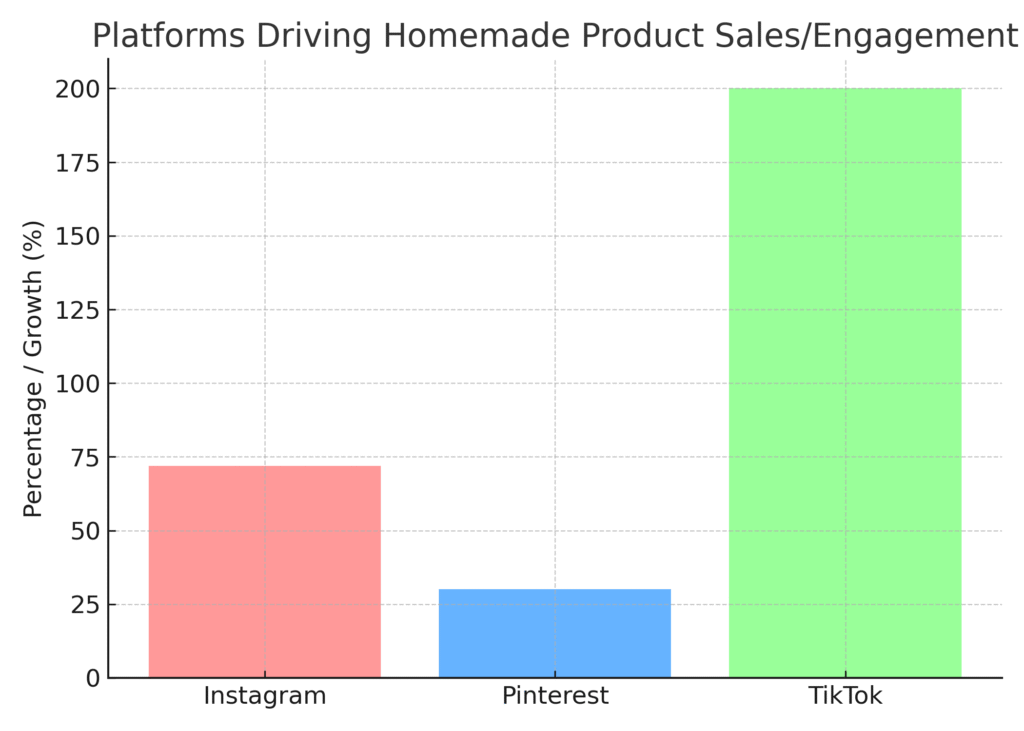
| 5 | Instagram is the top social media platform for homemade product promotion, with 72% of sellers relying on it for sales. |
| 6 | 59% of buyers are willing to pay a 20–30% premium for homemade products compared to factory-made alternatives. |
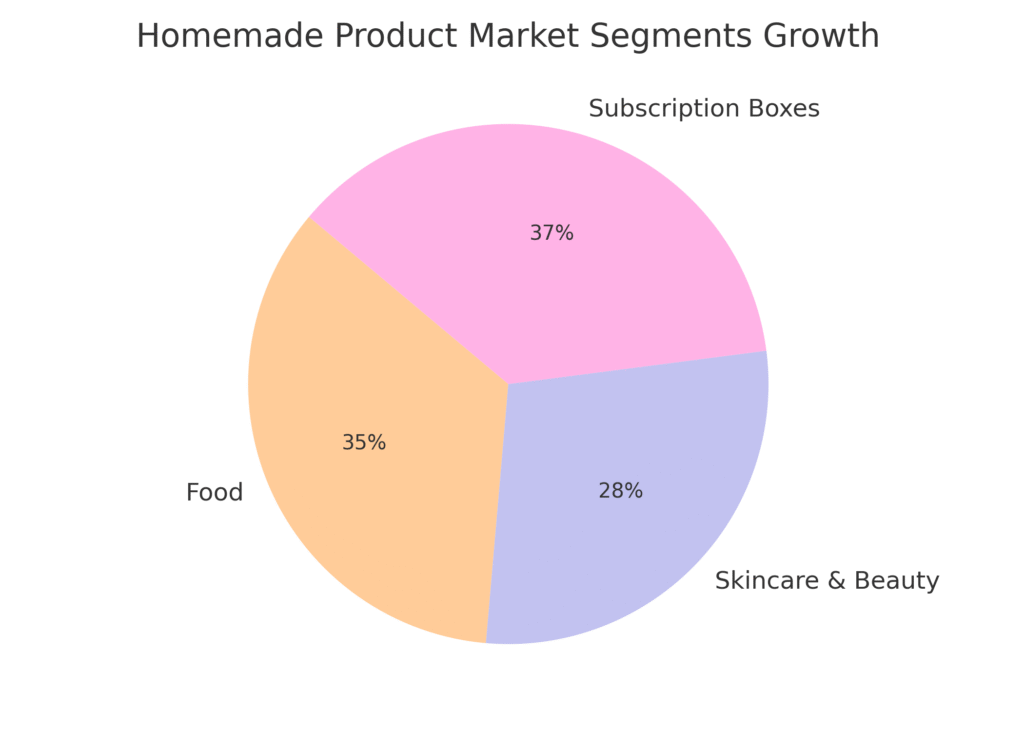
| 7 | Homemade food products represent 33% of the overall homemade goods market share. |
| 8 | Pinterest drives 30% of referral traffic to homemade product e-commerce stores. |
| 9 | Eco-friendly homemade products saw a 50% increase in sales between 2022 and 2025. |
| 10 | Videos showcasing homemade product creation receive 4x more engagement than static images on social platforms. |
| 11 | Word-of-mouth marketing remains the #1 driver for repeat homemade product sales, influencing 65% of buyers. |
| 12 | Email campaigns for homemade products show an average open rate of 29%, higher than the retail average of 19%. |
| 13 | 90% of homemade product buyers state they value “supporting small businesses” as a primary purchase driver. |
| 14 | TikTok has grown into the second-largest platform for homemade product marketing, with a 200% increase in related content since 2023. |
| 15 | Holiday seasons (Nov–Dec) account for 40% of annual homemade product sales globally. |
| 16 | Homemade skincare and beauty products grew 27% year-on-year in 2025. |
| 17 | More than 75% of homemade product businesses operate from home, with only 25% moving into formal commercial spaces. |
| 18 | Subscription boxes for homemade goods grew 35% YoY, showing strong customer loyalty trends. |
| 19 | Shoppers purchasing homemade products online have an average order value (AOV) of $45. |
| 20 | 71% of homemade product sellers report that storytelling (sharing product origins and maker stories) significantly boosts conversions. |
Top 20 Homemade Products Marketing Statistics 2025
Homemade Products Marketing Statistics #1: Global Market Projected At $1.2 Trillion By 2030
The homemade and handmade products industry is on track to become a trillion-dollar market by 2030. With an expected CAGR of 8.4% from 2023 to 2030, the sector continues to grow faster than many traditional retail categories. This surge is fueled by consumer demand for authenticity and sustainability in their purchases. Small businesses and independent creators stand to benefit greatly from this trend. For entrepreneurs, this statistic underscores the massive potential for scaling homemade product ventures globally.
Homemade Products Marketing Statistics #2: Etsy Reaches 7.5 Million Active Sellers In 2025
Etsy remains one of the largest marketplaces for homemade and handmade products. By 2025, it reported more than 7.5 million active sellers, showcasing the popularity of this business model. Over 90% of these sellers focus primarily on homemade crafts and products. This makes Etsy not only a platform but also a community that connects buyers with independent creators. For new sellers, Etsy continues to offer a proven ecosystem to start and grow.
Homemade Products Marketing Statistics #3: 60% Of Buyers Choose Homemade For Authenticity
A majority of buyers, around 60%, state authenticity as the primary reason they purchase homemade products. Unlike mass-produced items, homemade goods tell a story and carry a sense of uniqueness. Consumers feel more emotionally connected to these purchases. This highlights how marketing strategies that emphasize authenticity can create stronger bonds with customers. For businesses, authenticity becomes more than a value—it’s a competitive advantage.
Homemade Products Marketing Statistics #4: Millennials Account For 40% Of Purchases
Millennials are the dominant demographic in the homemade products sector, representing 40% of total buyers. Their preference for unique and personalized items drives this growth. Millennials are also highly influenced by social media in their buying decisions. This makes platforms like Instagram and TikTok critical for reaching this audience. For sellers, targeting millennials with tailored content is essential to success.
Homemade Products Marketing Statistics #5: Instagram Drives 72% Of Sales For Sellers
Instagram has become the go-to platform for homemade product marketing. In 2025, 72% of sellers reported using Instagram as their primary sales driver. Visual storytelling through images and reels resonates strongly with buyers. Hashtags, influencer partnerships, and Instagram Shops make it easy for small businesses to showcase products. Sellers who focus on Instagram often enjoy a wider reach and stronger brand presence.

Homemade Products Marketing Statistics #6: 59% Of Buyers Pay 20–30% Premium
Consumers are willing to pay a premium for homemade products compared to mass-produced alternatives. Around 59% of buyers report paying 20–30% more for items with a handmade touch. This reflects the growing consumer focus on value beyond price alone. Customers associate homemade goods with higher quality and emotional worth. Sellers can use this willingness to pay more as leverage for premium pricing strategies.
Homemade Products Marketing Statistics #7: Food Products Represent 33% Of Market Share
Homemade food products form the largest share of the homemade goods market at 33%. Items like baked goods, jams, and artisanal snacks are particularly popular. Consumers often trust homemade food more for its freshness and natural ingredients. This segment also benefits from local marketing and word-of-mouth referrals. For entrepreneurs, food-based products represent a highly profitable niche.
Homemade Products Marketing Statistics #8: Pinterest Drives 30% Of Referral Traffic
Pinterest has become an important platform for homemade product promotion. It now drives 30% of referral traffic to e-commerce stores in this sector. The visual nature of Pinterest makes it ideal for showcasing crafts, recipes, and DIY items. Buyers often use the platform for inspiration before making purchases. This makes Pinterest an underrated but powerful tool for sellers to tap into.
Homemade Products Marketing Statistics #9: Eco-Friendly Sales Rose 50% Since 2022
Eco-friendly homemade products have seen a remarkable 50% increase in sales between 2022 and 2025. Consumers are increasingly concerned with sustainability and environmental impact. Homemade sellers who use eco-conscious packaging or recycled materials stand out in the market. This trend shows no sign of slowing down in the coming years. Aligning with eco-values can be a strong differentiator for businesses.
Homemade Products Marketing Statistics #10: Videos Get 4x More Engagement Than Images
Video marketing has become essential for promoting homemade goods. Statistics show that product creation videos receive four times more engagement than static images. Buyers love watching the process behind a handmade product. This creates a sense of trust and transparency that boosts sales. Sellers should focus on short-form videos across TikTok, Instagram Reels, and YouTube Shorts.
Homemade Products Marketing Statistics #11: Word-Of-Mouth Influences 65% Of Buyers
Word-of-mouth continues to be the top driver of repeat sales in the homemade industry. Around 65% of buyers say recommendations influence their decision to purchase. This highlights the importance of customer satisfaction and community trust. Unlike big brands, homemade sellers rely heavily on reputation. Encouraging reviews and referrals can therefore multiply growth opportunities.
Homemade Products Marketing Statistics #12: Email Campaigns Show 29% Open Rate
Email marketing remains a strong channel for homemade sellers. Campaigns in this industry show an average open rate of 29%, which is higher than the retail average of 19%. Personalized emails with stories and product updates engage buyers more effectively. Regular communication builds long-term trust and repeat purchases. Sellers should prioritize email marketing alongside social media.
Homemade Products Marketing Statistics #13: 90% Of Buyers Support Small Businesses
Supporting small businesses is a major reason customers choose homemade goods. Nearly 90% of buyers highlight this as a key factor in their decisions. Shoppers feel their money has more impact when supporting individuals rather than corporations. This emotional connection fuels loyalty and repeat purchases. Sellers who emphasize their small-business identity can build stronger customer bonds.
Homemade Products Marketing Statistics #14: TikTok Content Rose 200% Since 2023
TikTok has quickly become a powerhouse for homemade product marketing. Content related to homemade products increased by 200% since 2023. The platform’s algorithm makes it possible for small sellers to reach global audiences. Short, authentic videos perform particularly well here. Sellers who adapt early to TikTok trends can tap into massive growth opportunities.
Homemade Products Marketing Statistics #15: Holidays Drive 40% Of Annual Sales
The holiday season remains the most profitable time for homemade sellers. November and December alone account for 40% of yearly sales. Shoppers are more willing to buy handmade gifts during festive times. Seasonal campaigns and promotions can maximize visibility. For sellers, preparing inventory ahead of holidays is crucial to success.

Homemade Products Marketing Statistics #16: Skincare And Beauty Grew 27% In 2025
The homemade skincare and beauty sector grew 27% year-over-year in 2025. Consumers are turning to natural and artisanal beauty solutions. Products like organic soaps, essential oils, and handmade lotions are in high demand. This reflects a wider trend of buyers preferring chemical-free alternatives. For sellers, beauty remains one of the fastest-growing homemade categories.
Homemade Products Marketing Statistics #17: 75% Of Businesses Operate From Home
More than 75% of homemade product businesses are still home-based. Only a quarter have moved into commercial spaces. This highlights the accessibility of starting a business with minimal investment. Many entrepreneurs begin with small-scale operations and scale gradually. The low barrier to entry keeps attracting new creators into the sector.
Homemade Products Marketing Statistics #18: Subscription Boxes Grew 35% Year-On-Year
Subscription services for homemade goods are seeing rapid growth. In 2025, they expanded by 35% compared to the previous year. Buyers enjoy receiving curated monthly boxes of crafts, foods, or beauty products. This model builds loyalty and predictable revenue streams for sellers. It also introduces customers to new products they might not otherwise discover.
Homemade Products Marketing Statistics #19: Online Shoppers Spend $45 Per Order
The average order value for homemade products online is $45. This is a healthy figure compared to other e-commerce segments. Customers are often willing to bundle purchases when shopping for handmade items. Free shipping thresholds and upselling strategies can increase this amount further. Sellers should focus on maximizing basket size to boost overall profitability.
Homemade Products Marketing Statistics #20: Storytelling Boosts Conversions By 71%
Storytelling has proven to be a highly effective marketing tool for homemade sellers. Around 71% report higher conversions when sharing the origins of their products. Buyers are drawn to the personal journey behind each item. Stories make products more memorable and differentiate them from mass-produced goods. In 2025, storytelling remains one of the most powerful sales drivers in the homemade market.
Why These Insights Matter
Looking at these homemade products marketing statistics, it’s clear that the future belongs to brands and creators who can connect on a human level. Customers aren’t just buying products; they’re buying into the passion, effort, and authenticity that homemade goods represent. For business owners, this is both an opportunity and a reminder that marketing isn’t just about numbers—it’s about building trust and sharing a story. If you’re inspired by these trends, now is the perfect time to invest in strategies that highlight your originality and resonate with your audience. After all, behind every homemade product is a maker’s dream—and that dream deserves the right marketing to shine.
SOURCES
- https://customcy.com/blog/craft-handmade-stats/ (Customcy)
- https://www.creativehives.co/e-commerce-for-handmade-products-a-growing-trend-in-the-digital-marketplace/ (creativehives.co)
- https://awesomepatternstudio.com/blog/blog/niche-marketing-for-handmade-products-finding-your-unique-angle/?srsltid=AfmBOopiv-be-QJh-1XWIv_1jufKtHHmUu0i4TFwh3_Ehh8ao25KWx1u0i4TFwh3_Ehh8ao25KWx1u (awesomepatternstudio.com)
- https://www.ruralhandmade.com/blog/handmade-in-demand-a-look-into-consumer-behavior-and-the (Rural Handmade)
- https://www.ruralhandmade.com/blog/navigating-the-handmade-market-unearthing-your-profitable (Rural Handmade)
- https://www.sellerscommerce.com/blog/ecommerce-statistics/ (sellerscommerce.com)
- https://www.bigcommerce.com/articles/ecommerce/ecommerce-trends/ (BigCommerce)
- https://www.recoverie.com/blog/pricing-handmade-items (The Recoverie)
- https://customcy.com/blog/craft-handmade-stats/
- https://craftybase.com/blog/finding-the-perfect-target-customer-for-your-handmade-products (Craftybase)
- https://www.emarketer.com/topics/category/household%20goods (EMARKETER)
- https://www.emarketer.com/topics/industry/household-products (EMARKETER)
- https://researchgate.net/publication/326036624_The_use_of_e-commerce_in_the_promotion_and_sale_of_hand_made_products (ResearchGate)
- https://customcy.com/blog/craft-handmade-stats/
- https://www.sellerscommerce.com/blog/ecommerce-statistics/
- https://www.bigcommerce.com/articles/ecommerce/ecommerce-trends/
- https://www.recoverie.com/blog/pricing-handmade-items
- https://customcy.com/blog/craft-handmade-stats/
- https://wunderlabel.com/blog/p/craft-handmade-industry-stats-and-trends/ (Wunderlabel)