



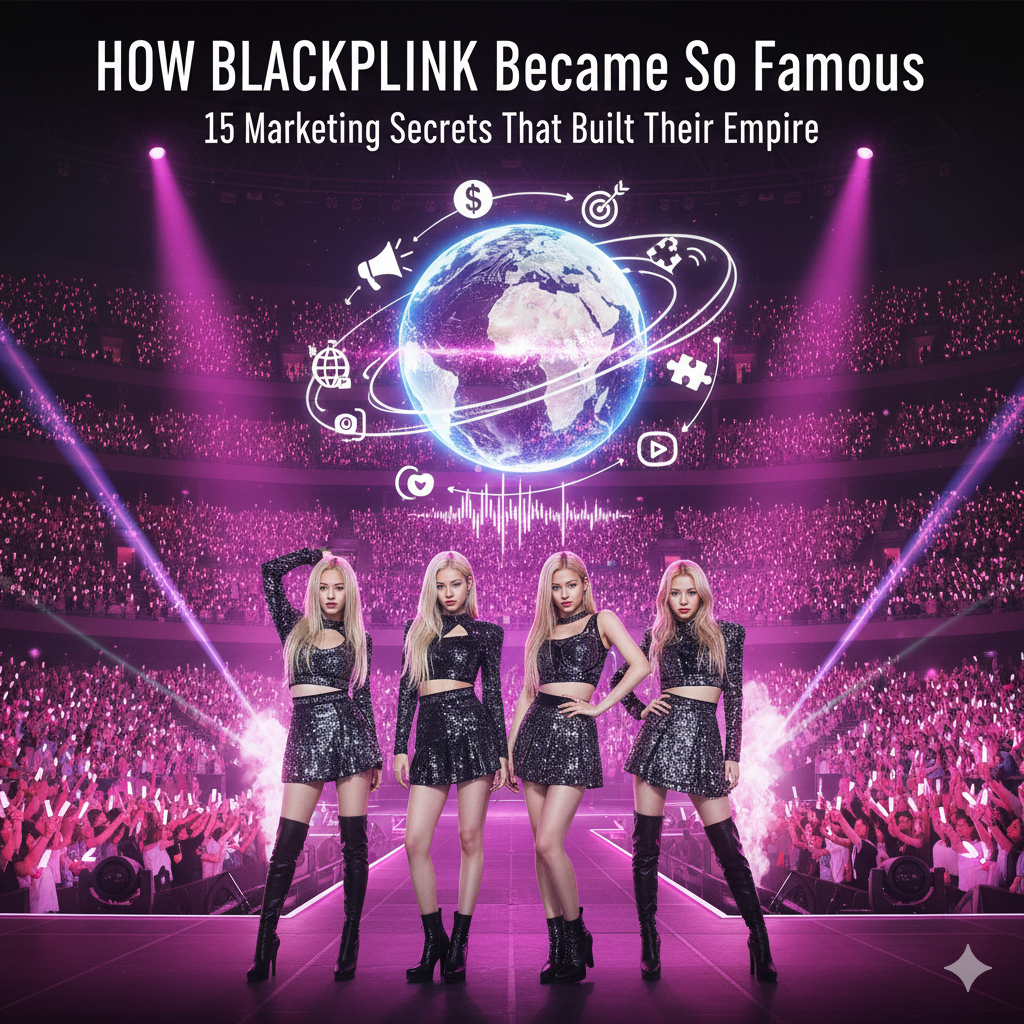
13 Dec How BLACKPINK Became So Famous: 15 Marketing Secrets That Built Their Empire
How BLACKPINK Became So Famous: 15 Marketing Secrets That Built Their Empire (Editor’s Choice)
15 Marketing Secrets Behind BLACKPINK’s Global Empire
A quick-hit, swipe-friendly breakdown of the strategy, story, and sparkle that took BLACKPINK from trainees to global icons.
| # Secret | What It Is | How BLACKPINK Uses It |
|---|---|---|
| 01 · Global Identity |
A Carefully Crafted Global Identity
They were designed for worldwide appeal from day one: multilingual members, Western-friendly sound, and a visual style that translates instantly across cultures.
|
Example
English lyrics, international interviews, and global press from early in their career made BLACKPINK feel like a “local” act in multiple markets at once.
|
| 02 · Scarcity |
Quality Over Quantity
Fewer releases, bigger impact. Each comeback is treated like a premium drop rather than one more song on the conveyor belt.
|
Example
Long gaps between comebacks keep fans hungry. When a single does arrive, it dominates feeds, playlists, and headlines instead of getting lost in the noise.
|
| 03 · Visual Power |
Cinematic, High-Impact Music Videos
Their MVs are built for replay: bold sets, intense color, and GIF-ready moments that live forever on social media.
|
Example
“DDU-DU DDU-DU” and “Kill This Love” use striking visuals—like the tank scene and giant swan—to create instantly iconic screenshots and clips.
|
| 04 · Personal Brands |
Strong Personal Branding for Each Member
Every member feels like her own brand, with a distinct moodboard, aesthetic, and story that fans can identify with.
|
Example
Jennie as “Human Chanel,” Lisa as the dance phenom, Jisoo as classic beauty, and Rosé as the emotional indie-leaning vocalist—all under one group umbrella.
|
| 05 · Luxury Links |
Strategic Global Fashion Partnerships
Aligning with heritage luxury houses elevates their perceived value and places them in front of high-fashion audiences.
|
Example
Front-row Fashion Week appearances and global campaigns with Chanel, Dior, Saint Laurent, Celine, Bulgari, and Tiffany place them in elite cultural spaces.
|
| 06 · Viral Moves |
Viral Dance Challenges
Choreography is engineered for shareability—simple enough to copy, iconic enough to recognize instantly.
|
Example
Signature moves from “How You Like That” or “Pink Venom” explode into TikTok challenges, bringing the song to people who might never search K-pop.
|
| 07 · Tease & Build |
Teasers and Slow-Burn Promotions
They don’t just drop content—they stage a countdown drama that fans and media can follow in real time.
|
Example
Concept photos, cryptic posters, and staggered teaser clips mean each comeback becomes a multi-week conversation rather than a one-day headline.
|
| 08 · Collab Power |
Cross-Market Collaborations
Teaming up with global A-listers lets them plug into new fandoms and radio formats overnight.
|
Example
Tracks with Lady Gaga, Selena Gomez, Dua Lipa, and Cardi B cross-pollinate audiences and give BLACKPINK exposure in different genres and geographies.
|
| 09 · Hybrid Sound |
Blending Western Pop with K-Pop DNA
They fuse EDM, trap, and hip-hop with classic K-pop structure, creating tracks that feel familiar yet distinctly theirs.
|
Example
Songs pivot between English hooks, Korean verses, rap breaks, and beat drops—perfect for global playlists and short-form content syncs.
|
| 10 · Platform Mastery |
Powerful Social Media Dominance
They treat YouTube and Instagram like primary stages, not side channels, optimizing for binge-worthy content.
|
Example
Behind-the-scenes clips, dance practices, and member vlogs keep the algorithm warm between big releases and let new fans fall down the rabbit hole.
|
| 11 · Dual Image |
Unified but Flexible Group Image
They move seamlessly between fierce, girl-crush energy and soft, luxurious elegance without confusing the brand.
|
Example
A single era might mix edgy stage styling with romantic red-carpet looks—keeping them relevant to both mainstream pop fans and fashion audiences.
|
| 12 · Live Spectacle |
Consistent Global Touring
World tours aren’t just concerts; they’re brand experiences designed to generate content and FOMO.
|
Example
Tour clips, fancams, and city-specific moments travel online, making every stop feel like an event—and nudging casual fans to become ticket buyers next time.
|
| 13 · Premium Aesthetic |
High-End Brand Aesthetic
From logos to lightsticks, everything looks intentional and elevated, reinforcing their “luxury idol” positioning.
|
Example
Minimalist black-and-pink branding, clean typography, and premium merch design make even basic items feel collectible.
|
| 14 · Controlled Access |
Carefully Managed Exclusivity
They never feel oversaturated. Limited appearances and releases keep demand spiking instead of dipping.
|
Example
Selective variety show spots and curated content drops maintain their mystique—fans always feel like they’re waiting for the next big reveal.
|
| 15 · Fandom Engine |
Fandom Activation & Community Culture
BLINKs aren’t just listeners; they’re a mobilized marketing engine that drives streams, trends, and narratives.
|
Example
Streaming parties, hashtag campaigns, voting drives, and fan-run accounts help push BLACKPINK to the top of charts and into mainstream conversations.
|
How BLACKPINK Became So Famous: 15 Marketing Secrets That Built Their Empire
How BLACKPINK Became So Famous: Marketing Secrets That Built Their Empire #3 — Cinematic, High-Impact Music Videos
Visuals matter — and BLACKPINK’s team turned music videos into cinematic experiences that live beyond the song. Think tank-sets, sweeping stages, bold color palettes, and wardrobe that screams “Instagram moment.” These videos are engineered for replay, screenshot, share, and talk. When a music viewer watches and then scrolls, the visuals keep pulling them back in — and in a social-media era, that’s gold. The takeaway: invest in premium visuals that tell a story and invite interaction, not just passive listening.
How BLACKPINK Became So Famous: Marketing Secrets That Built Their Empire #4 — Strong Personal Branding for Each Member
Each member of BLACKPINK isn’t just part of the group — she’s a walking, talking brand onto herself. Jennie, Lisa, Jisoo and Rosé each have their own moodboards, personas, strengths and styles, so fans can latch onto her story as well as the group’s story. That multiplies marketing touchpoints: solo content, endorsements, voice, image. It’s like managing four micro-brands under one mega-brand umbrella — a smart move when you’re playing global. For any brand manager, the lesson is: deepen connection by offering individuality alongside unity.
How BLACKPINK Became So Famous: Marketing Secrets That Built Their Empire #5 — Strategic Global Fashion Partnerships
BLACKPINK didn’t just partner with fashion brands; they owned the luxury-fashion space in K-pop. Their couture collaborations weren’t side-notes — they were front-page moments. By aligning with Chanel, Dior, Saint Laurent, Celine and other iconic houses, the group expanded their audience into luxury, fashion-forward spaces. In doing so, they elevated their brand beyond music into culture, lifestyle, and high fashion. The strategic win: turning a pop act into a fashion phenomenon and tapping new audiences, new markets, new angles.
How BLACKPINK Became So Famous: Marketing Secrets That Built Their Empire #6 — Viral Dance Challenges
In an age of short-form content and scroll culture, BLACKPINK’s choreo became a secret weapon. They didn’t just release songs — they released moves. Each comeback came with a signature dance moment, stylised to be captured, shared, replicated. TikTok, Reels, YouTube shorts: the choreography worked across every platform. The brilliance: the dance becomes the hook, the footage spreads like wildfire, and the track rides the wave of that visual momentum. Lesson for marketers: create movement, not just content.
How BLACKPINK Became So Famous: Marketing Secrets That Built Their Empire #7 — Teasers and Slow-Burn Promotions
They didn’t just launch songs — they built suspense. BLACKPINK’s team treated releases like teaser campaigns: cryptic posters, countdowns, concept photos, mysterious captions. This slow-burn built conversation, speculation, anticipation — and when the drop happened, everyone was watching. The strategy is textbook in high-end launches: prime the audience, let the curiosity build, then fire when demand is high. For any brand, the lesson: hype isn’t accidental — it’s engineered.
How BLACKPINK Became So Famous: Marketing Secrets That Built Their Empire #8 — Cross-Market Collaborations
BLACKPINK didn’t stay confined to K-pop enclaves — they crossed markets by collaborating with global stars. When they teamed up with names like Lady Gaga, Selena Gomez, Dua Lipa and Cardi B, they tapped into new fanbases, new radio formats, new geographies. Each feature wasn’t just a song — it was a strategic gateway. This matrix of partnership expanded not just musical reach but brand reach. For marketers, the lesson: strategic alliances open doors into adjacent audiences — and amplified credibility.
How BLACKPINK Became So Famous: Marketing Secrets That Built Their Empire #9 — Blending Western Pop With K-pop Elements
Their sound is a hybrid: EDM drops, trap beats, hip-hop swagger, K-pop polish. That fusion makes them familiar enough to western audiences and fresh enough to global fans. They didn’t surrender their identity — they simply layered it so that the world could meet them halfway. The result: music that works on multiple continents, cultures, and playlists. Marketer’s takeaway: don’t choose one market aesthetic — build a bridge that lets multiple markets meet you.
How BLACKPINK Became So Famous: Marketing Secrets That Built Their Empire #10 — Powerful Social Media Dominance
In a world where algorithms rule attention, BLACKPINK’s social-media strategy is razor-sharp. They lean into YouTube, Instagram, TikTok — not as afterthoughts, but as core touchpoints. Behind-the-scenes clips, dance practices, personal vlogs, fashion features — the content keeps the feed alive between big drops. The group becomes not just a music moment, but a continual presence in fans’ lives and in the algorithm’s favor. For marketers: treat social media like your storefront, not just your bulletin board.
How BLACKPINK Became So Famous: Marketing Secrets That Built Their Empire #11 — Unified but Flexible Group Image
BLACKPINK is tough and glamorous, edgy and elegant, fierce and feminine. They move between girl-crush hip-hop energy and luxury-brand red carpet looks without losing coherence. This duality widens their appeal: to mainstream pop fans, fashion watchers, luxury consumers, young urban crowds. Their branding allows for versatility while maintaining a strong core identity. The marketing insight: a brand can be both consistent and adaptable — the key is a strong anchor identity.
How BLACKPINK Became So Famous: Marketing Secrets That Built Their Empire #12 — Consistent Global Touring
Their world tours aren’t just concerts — they’re multi-city marketing machines. Every performance becomes content, every crowd shot becomes clip fodder for social feeds, every city becomes a headline. The global tour solidifies their presence, builds FOMO (“I wasn’t there, but I saw the clip”), and amplifies reach beyond the music charts. For brands: physical activation (events, live experiences) still drives digital buzz, global scale and intimacy simultaneously.
How BLACKPINK Became So Famous: Marketing Secrets That Built Their Empire #13 — High-End Brand Aesthetic
Every element of their brand—from lightsticks to album art to merch to posters—looks premium. The aesthetic is sharp, minimal-meets-bold, luxury-friendly, not cheap. That visual polish reinforces value, elevates perception, and gives fans something they’re proud to share. It feels like a luxury label rather than a run-of-the-mill pop act. Marketing lesson: design matters—not just function—but emotional value, share-worthiness, aspirational appeal.
How BLACKPINK Became So Famous: Marketing Secrets That Built Their Empire #14 — Carefully Managed Exclusivity
BLACKPINK doesn’t appear everywhere, all the time. Their content drops are deliberate, appearances are curated, promotions are selective. That scarcity builds demand: “When will they next appear? What will they do next?” Instead of oversaturation, they manage expectations and retain mystique. Brands can learn: being everywhere isn’t always best — being selective can amplify perception and desirability.
How BLACKPINK Became So Famous: Marketing Secrets That Built Their Empire #15 — Fandom Activation & Community Culture
Their fans, the BLINKs, aren’t passive observers — they’re collaborators in the brand story. Streams, voting, challenges, fan-edits, trending hashtags — the community drives visibility. BLACKPINK’s team leans into that network effect, enabling fans to feel ownership, to feel part of the success. It becomes not just “watch them” but “join them.” For any brand, activating your community isn’t optional — it’s a multiplier.
The Final Bow: Why BLACKPINK’s Brilliance Is Anything but Accidental
In the end, BLACKPINK’s rise isn’t just a tale of four megastars—it’s a masterclass in modern brand architecture wrapped in pop perfection. Their empire was built through intention, intuition, and an uncanny ability to turn every moment into a cultural touchpoint. From scarcity that sparks demand to visuals that rewrite the algorithm’s love language, from fandom-powered momentum to luxury-grade aesthetics, their success is a reminder that strategy and artistry aren’t opposites—they’re accomplices. And as any seasoned marketer (or fashion-soaked flâneur) would tell you, the magic happens when a brand doesn’t just capture attention, but earns obsession. BLACKPINK didn’t just become famous—they engineered a global phenomenon, and the rest of the world simply fell in formation.