



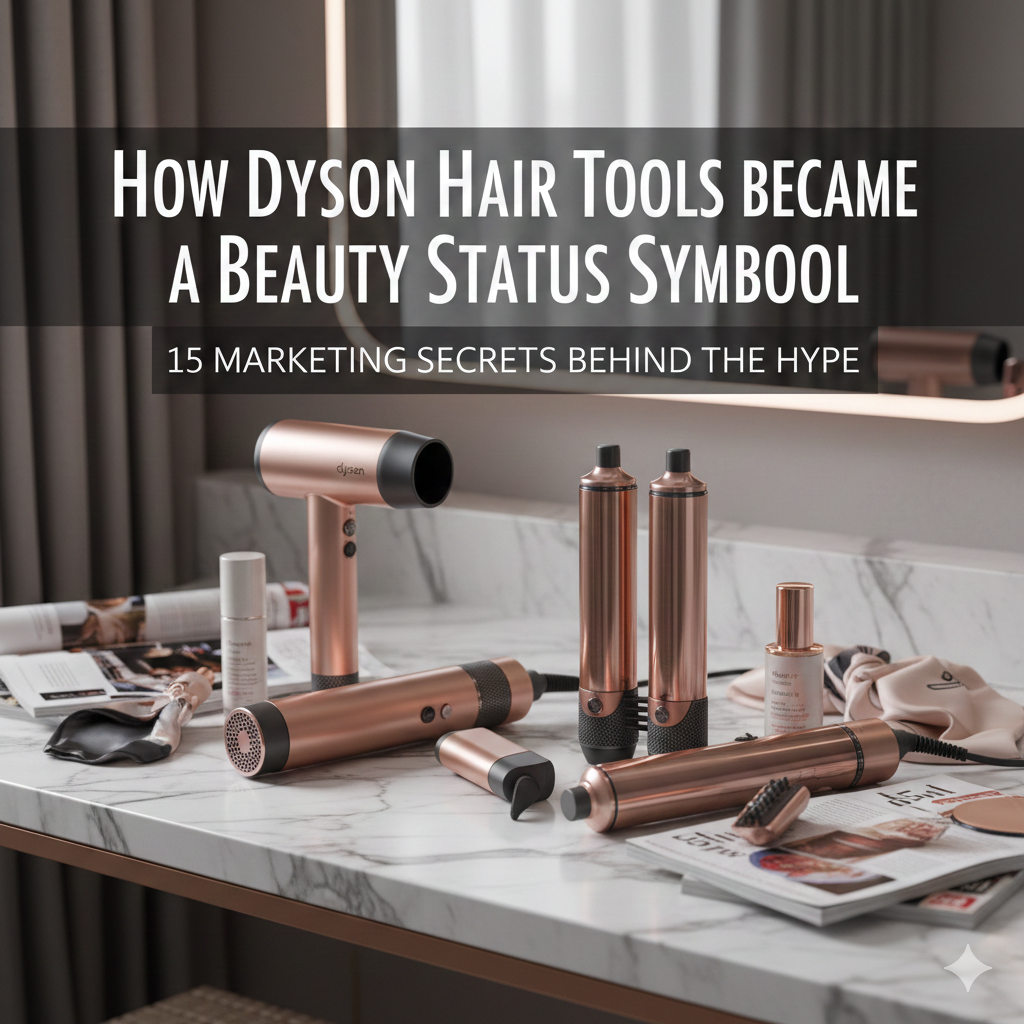
21 Dec How Dyson Hair Tools Became a Beauty Status Symbol: 15 Marketing Secrets Behind the Hype
How Dyson Hair Tools Became a Beauty Status Symbol: 15 Marketing Secrets Behind the Hype (Editor’s Choice)
How Dyson Hair Tools Became a Beauty Status Symbol
15 marketing strategies that transformed a functional hair tool into a cultural icon.
| # | Marketing secret | Why it works |
|---|---|---|
| 01 |
Premium pricing as a signal Price communicates quality, taste, and self-investment. Positioning |
Turns the product into a status marker, not a commodity. |
| 02 |
Technology-first storytelling Engineering replaces vague beauty promises. Credibility |
Builds trust and justifies the premium logically. |
| 03 |
A clear villain: heat damage Centers a universal hair fear Dyson can solve. Messaging |
Makes the product feel preventative, not optional. |
| 04 |
Instantly recognizable design The silhouette works like a visual logo. Brand codes |
Boosts shareability and social recognition. |
| 05 |
Visible innovation cues Magnetic parts and clean seams signal engineering. Perception |
Builds belief before performance is proven. |
| 06 |
Luxury unboxing experience Packaging reinforces value after purchase. Experience |
Reduces buyer’s remorse and increases satisfaction. |
| 07 |
Product ecosystem & attachments Encourages exploration and collecting. Retention |
Extends lifetime value and engagement. |
| 08 |
Scarcity & limited editions Controlled availability increases desire. Demand |
Makes ownership feel exclusive and intentional. |
| 09 |
Retail demos as proof Live results replace persuasion. Conversion |
Shortens decision cycles dramatically. |
| 10 |
Influencer demonstrations Before-and-after visuals sell better than opinions. Social proof |
Turns creators into living case studies. |
| 11 |
Effortless transformation promise Fast results feel luxurious in a time-poor culture. Desire |
Makes the product aspirational yet attainable. |
| 12 |
Salon authority without intimidation Professional credibility stays approachable. Trust |
Invites aspiration without alienation. |
| 13 |
Identity-based ownership Signals taste, intention, and self-investment. Culture |
Transforms product into personal shorthand. |
| 14 |
Colorways & personalization Aesthetic choice deepens emotional attachment. Loyalty |
Discourages comparison and replacement. |
| 15 |
Post-purchase education Tutorials ensure fast, visible success. Advocacy |
Turns satisfied customers into vocal brand ambassadors. |
How Dyson Hair Tools Became a Beauty Status Symbol: 15 Marketing Secrets Behind the Hype
How Dyson Hair Tools Became a Beauty Status Symbol: Marketing Secrets Behind the Hype #3 — Defining a Villain Everyone Already Fears
Heat damage is the beauty equivalent of sugar or sun exposure—widely known, vaguely feared, rarely solved. Dyson smartly centers this anxiety and positions itself as the antidote. By naming the enemy, the brand simplifies the narrative: traditional tools damage hair; Dyson protects it. This clarity transforms the product from optional to preventative. And prevention, as skincare has taught us, is where loyalty lives. Dyson doesn’t promise perfection; it promises preservation—which is far more compelling.
How Dyson Hair Tools Became a Beauty Status Symbol: Marketing Secrets Behind the Hype #4 — Designing for Recognition, Not Decoration
Dyson tools are instantly identifiable, and that is not accidental—it’s strategy. The silhouette functions almost like a logo, readable at a glance in a mirror selfie or a “get ready with me.” In the age of visual culture, recognizability equals desirability. If a product can be spotted without explanation, it carries social currency. Dyson understood that design isn’t just about beauty; it’s about memory. And remembered products are shared products.
How Dyson Hair Tools Became a Beauty Status Symbol: Marketing Secrets Behind the Hype #5 — Making Innovation Visible, Tactile, and Believable
Magnetic attachments, seamless joins, the soft click of parts snapping into place—Dyson builds belief through touch. These design cues act as physical reassurance that the product is different, engineered, intentional. Innovation here isn’t hidden behind marketing language; it’s embedded in the experience. When something feels considered in the hand, consumers trust it with their hair. The body believes before the brain does.
How Dyson Hair Tools Became a Beauty Status Symbol: Marketing Secrets Behind the Hype #6 — Turning Unboxing into a Moment of Affirmation
The Dyson unboxing experience feels ceremonial, not excessive. Every attachment has a place. The case signals permanence. This moment matters because it reinforces value after the purchase, when doubt is most likely to creep in. Luxury brands understand that buyer’s remorse is emotional, not logical—and Dyson counters it with reassurance. From the very first interaction, the product quietly says: you made the right choice.
How Dyson Hair Tools Became a Beauty Status Symbol: Marketing Secrets Behind the Hype #7 — Creating an Ecosystem, Not a One-Time Product
The Airwrap doesn’t end at ownership—it evolves. Attachments invite experimentation, personalization, and expansion. This ecosystem approach extends the brand’s relevance without requiring reinvention. Each new attachment promises a slightly different version of you: smoother, curlier, more polished. Dyson turns maintenance into discovery, which keeps the relationship alive long after the initial purchase.
How Dyson Hair Tools Became a Beauty Status Symbol: Marketing Secrets Behind the Hype #8 — Using Scarcity with Restraint and Intelligence
Dyson doesn’t shout “limited edition”—it implies it. Occasional stock shortages, seasonal colorways, and quiet drops create a sense of urgency without desperation. Scarcity here feels organic, almost accidental, which makes it more believable. When something isn’t always available, it feels worth waiting for. And waiting, paradoxically, increases desire.
How Dyson Hair Tools Became a Beauty Status Symbol: Marketing Secrets Behind the Hype #9 — Treating Retail as Education, Not Transaction
In-store Dyson demos feel more like consultations than sales pitches. This matters because hair is personal, and skepticism is high. Seeing your own hair transformed collapses the decision cycle in a way no advertisement ever could. Dyson removes friction by replacing persuasion with proof. The product doesn’t need to convince; it simply performs.
How Dyson Hair Tools Became a Beauty Status Symbol: Marketing Secrets Behind the Hype #10 — Choosing Influencers for Demonstration, Not Endorsement
Dyson’s influencer strategy is rooted in visibility, not volume. The product shines on video, where transformation is immediate and undeniable. Creators become conduits for proof rather than promoters of opinion. This subtle shift—from “I love this” to “watch this happen”—builds credibility and trust at scale. The results speak louder than the caption.
How Dyson Hair Tools Became a Beauty Status Symbol: Marketing Secrets Behind the Hype #11 — Selling Effortlessness in a Culture That Romanticizes Being Busy
Dyson understood something quietly radical: effort is no longer aspirational. In a culture that glorifies optimization but resents exhaustion, the idea of looking polished without trying too hard feels almost subversive. Dyson’s fastest-selling promise isn’t shine or curl—it’s ease. The visual language across social platforms reinforces this: messy hair becomes styled hair in minutes, often with one hand and minimal drama. These transformations loop endlessly not because they’re flashy, but because they feel attainable. Dyson isn’t selling perfection; it’s selling relief. And relief, right now, is luxury.
How Dyson Hair Tools Became a Beauty Status Symbol: Marketing Secrets Behind the Hype #12 — Borrowing Professional Authority Without Professional Intimidation
Dyson walks a delicate line between salon-grade and consumer-friendly, and it does so with remarkable restraint. The brand borrows credibility from hairstylists, fashion week backstages, and professional environments—but never makes the consumer feel underqualified. There’s no gatekeeping, no jargon meant to exclude. Instead, Dyson democratizes expertise, offering “pro results” without the pro-only attitude. This balance invites aspiration rather than insecurity, which is precisely why the brand feels elevated but never cold.
How Dyson Hair Tools Became a Beauty Status Symbol: Marketing Secrets Behind the Hype #13 — Turning Ownership Into a Quiet Form of Identity
Owning a Dyson has become a form of shorthand. It signals intention, discernment, and a certain fluency in modern beauty culture. Much like a great blazer or a perfectly edited skincare routine, the product becomes part of how people see themselves—and how they want to be perceived. This isn’t loud status signaling; it’s coded. Dyson doesn’t shout wealth or trendiness. It suggests thoughtfulness. And in an era where taste is currency, that suggestion is powerful.
How Dyson Hair Tools Became a Beauty Status Symbol: Marketing Secrets Behind the Hype #14 — Using Color and Aesthetics to Create Emotional Attachment
Colorways might seem cosmetic, but they are deeply strategic. By introducing limited hues and thoughtfully curated finishes, Dyson allows consumers to personalize a functional object. This transforms the tool from “a purchase” into my purchase. Emotional attachment increases, comparison decreases, and the product becomes harder to replace. When something feels aligned with your aesthetic, it earns a longer life in your routine—and in your loyalty.
How Dyson Hair Tools Became a Beauty Status Symbol: Marketing Secrets Behind the Hype #15 — Reinforcing the Decision Until Customers Become Advocates
Dyson understands that the most important moment in the customer journey often comes after checkout. Tutorials, styling guides, and ongoing education ensure users see results quickly, which is critical when the price point invites scrutiny. This post-purchase reinforcement turns confidence into satisfaction, and satisfaction into storytelling. When customers feel successful, they share—and Dyson benefits from advocacy that feels organic, not orchestrated. The brand doesn’t need to oversell itself because its users do it willingly, and convincingly.