



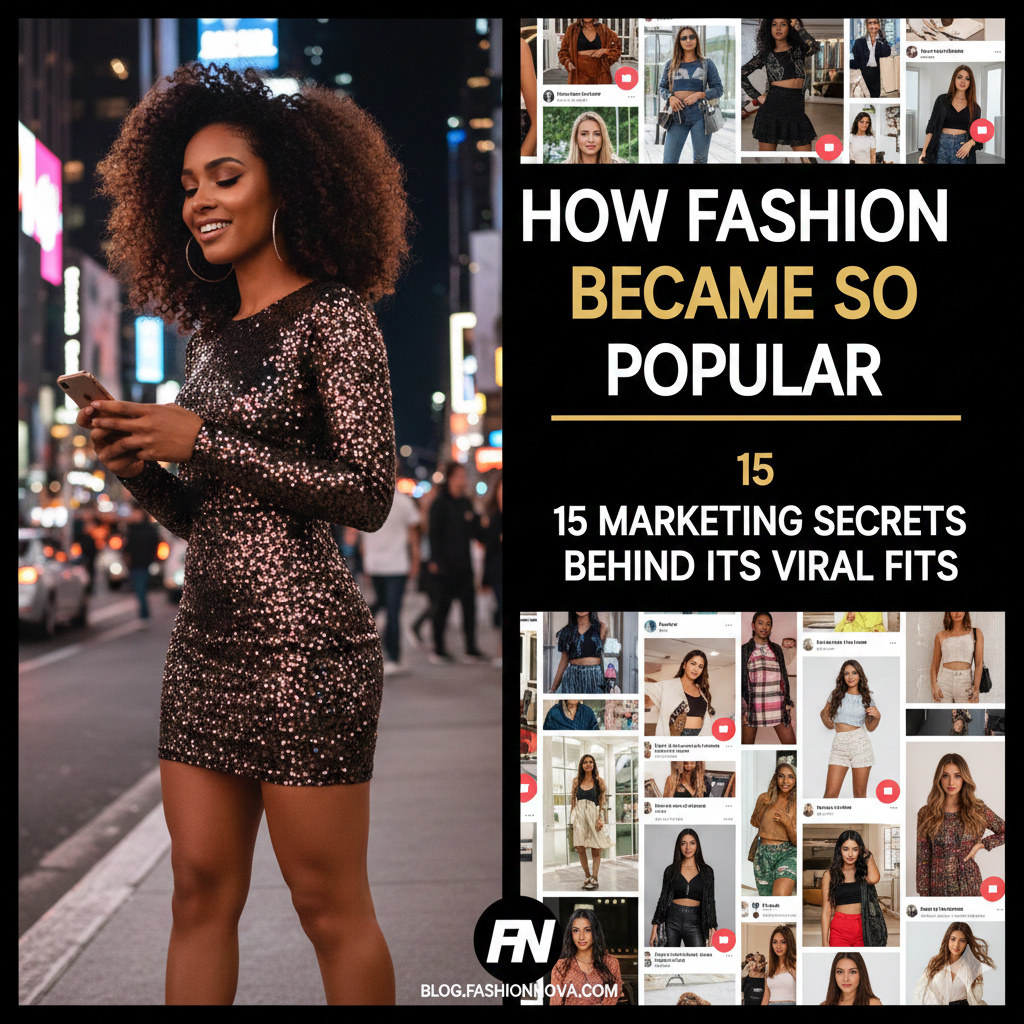
21 Dec How Fashion Nova Became So Popular: 15 Marketing Secrets Behind Its Viral Fits
How Fashion Nova Became So Popular: 15 Marketing Secrets Behind Its Viral Fits (Editor’s Choice)
How Fashion Nova Became So Popular: 15 Marketing Secrets Behind Its Viral Fits
A quick, skimmable breakdown of the tactics that helped Fashion Nova dominate social feeds and turn scrolls into sales.
| # | Marketing Secret | How It Worked | Why It Went Viral |
|---|---|---|---|
| 1 |
Instagram-First Strategy
Built the brand inside the feed.
|
High-frequency posting, trend-led visuals, rapid reposting, and constant social proof. | They treated Instagram like the storefront—where discovery, desire, and conversion happen fast. |
| 2 |
Influencer Saturation (Micro > Mega)
Volume + authenticity.
|
Partnered with thousands of creators to blanket niche audiences repeatedly. | Omnipresence: if you saw it once, you saw it everywhere—instant “everyone’s wearing it” energy. |
| 3 |
Celebrity Co-Signs
Borrowed fame, boosted trust.
|
Leveraged celebrity wear moments and amplified them across socials. | A single outfit becomes a headline—then a trend—then a checkout cart. |
| 4 |
Ultra-Fast Fashion Cycle
Trend-to-site in days.
|
Rapid production + tight supply chain to catch trends while they’re peaking. | They sell the trend while it’s still trending—no waiting, no cooling off. |
| 5 |
Curve & Inclusive Sizing
Made “hot fits” for more bodies.
|
Featured curvy models and offered sizing that matched real demand. | Inclusivity created loyalty—and loyalty created repeat posts, tags, and purchases. |
| 6 |
Relentless User-Generated Content
Customers became the campaign.
|
Showcased real buyers on product pages and social posts. | UGC feels like a friend’s recommendation—low skepticism, high intent. |
| 7 |
Daily Drops & Scarcity
Newness as a habit loop.
|
Frequent launches and limited quantities trained shoppers to check back. | FOMO is a conversion machine—especially when “sold out” arrives quickly. |
| 8 |
Affordable, Trend-Led Pricing
Impulse-friendly.
|
Low price points made trend experimentation easy. | Cheaper decisions travel faster—less friction, more “add to cart.” |
| 9 |
Data-Driven Merch Decisions
Let the audience vote.
|
Tracked what got clicks, likes, saves, and purchases—then doubled down. | They scaled winners and quietly killed losers, keeping the catalog “hot”. |
| 10 |
Aggressive Reposting & Tagging
A visibility reward system.
|
Fast reposts encouraged creators to post more, tag more, and compete for features. | Creators got reach; Fashion Nova got content. Everyone kept playing. |
| 11 |
Bold Body-Positive Messaging
Confidence sells.
|
Sexy, unapologetic positioning made the brand instantly recognizable. | It wasn’t just clothing—it was an attitude people wanted to wear online. |
| 12 |
Minimal Traditional Advertising
Social did the heavy lifting.
|
Invested where attention lived instead of expensive old-school channels. | More spend went into what created shareable moments, not broad impressions. |
| 13 |
Mobile-Optimized E-Commerce
Scroll → tap → buy.
|
Mobile-friendly UX, fast checkout, and endless browsing made purchasing effortless. | If it’s easy on the phone, it wins—because that’s where desire spikes. |
| 14 |
Viral Controversy Fuel
Attention compounds.
|
Buzz—positive or negative—kept the brand in conversations and feeds. | In the social era, being talked about can be a growth lever (even when messy). |
| 15 |
Founder-Led, Hands-On Control
Speed through decisions.
|
Tight control over creative and operations enabled rapid pivots. | Less bureaucracy = faster trend response = more “how are they everywhere?” moments. |
How Fashion Nova Became So Popular: 15 Marketing Secrets Behind Its Viral Fits
How Fashion Nova Became So Popular: Marketing Secrets Behind Its Viral Fits #3 — Celebrity Co-Signs
Fashion Nova treated celebrity sightings like breaking news. The moment a high-profile figure wore one of their pieces, the brand amplified it—fast, loud, and everywhere. These weren’t long-term endorsement deals; they were cultural moments captured and redistributed at lightning speed. The message was simple and devastatingly effective: if she wore it last night, you can wear it tomorrow.
How Fashion Nova Became So Popular: Marketing Secrets Behind Its Viral Fits #4 — Ultra-Fast Fashion Cycle
Fashion Nova didn’t predict trends; it chased them down the street and caught them mid-stride. While traditional fashion calendars moved seasonally, Fashion Nova moved emotionally—reacting to what people were loving right now. Speed wasn’t just operational; it was psychological. By delivering trends while excitement was still peaking, the brand turned impulse into infrastructure.
How Fashion Nova Became So Popular: Marketing Secrets Behind Its Viral Fits #5 — Inclusive, Curve-Forward Positioning
Fashion Nova didn’t whisper inclusivity—it centered it. By consistently featuring curvy bodies front and center, the brand flipped the script on who “gets” to wear body-conscious fashion. This wasn’t a campaign; it was a stance. And it worked because it felt intentional, visible, and constant—not like a diversity checkbox, but like a brand finally speaking to its actual audience.
How Fashion Nova Became So Popular: Marketing Secrets Behind Its Viral Fits #6 — Relentless User-Generated Content
Fashion Nova mastered the art of letting its customers do the talking—and the modeling. By flooding feeds and product pages with real people in real photos, the brand replaced aspiration with relatability. Seeing someone who looks like you wearing the outfit doesn’t just inspire; it reassures. And reassurance, it turns out, is very good for conversion rates.
How Fashion Nova Became So Popular: Marketing Secrets Behind Its Viral Fits #7 — Daily Drops and FOMO
Fashion Nova trained its audience to check in the way you check texts from someone you’re slightly obsessed with. New drops, limited quantities, sold-out notifications—it was all part of a carefully constructed scarcity loop. When shopping feels time-sensitive, browsing turns into urgency, and urgency turns into checkout.
How Fashion Nova Became So Popular: Marketing Secrets Behind Its Viral Fits #8 — Affordable, Trend-Led Pricing
Fashion Nova understood that trends move faster when they’re affordable. By keeping prices low, the brand removed the emotional labor of decision-making. You didn’t have to commit to a trend—you could flirt with it. And in a social media economy, flirtation travels farther than fidelity.
How Fashion Nova Became So Popular: Marketing Secrets Behind Its Viral Fits #9 — Data-Driven Merchandising
Fashion Nova listens the way good hosts do—quietly, constantly, and with receipts. Likes, saves, comments, sales data—every signal informed what stayed, scaled, or disappeared. The brand didn’t guess what people wanted; it watched what they engaged with and gave them more of it.
How Fashion Nova Became So Popular: Marketing Secrets Behind Its Viral Fits #10 — Aggressive Reposting and Tag Culture
Being reposted by Fashion Nova became a kind of social currency. The brand rewarded visibility with visibility, creating a feedback loop where creators competed—politely, stylishly, incessantly—to be featured. This wasn’t accidental; it was a participation economy designed to keep content flowing without ever feeling forced.
How Fashion Nova Became So Popular: Marketing Secrets Behind Its Viral Fits #11 — Bold, Body-Positive Messaging
Fashion Nova didn’t sell clothes so much as it sold permission. Permission to be loud, tight, unapologetic, and visibly confident in a culture that still pretends to celebrate bodies while quietly policing them. The brand’s messaging wasn’t coy or minimalist or “effortless”—it was direct, sensual, and sometimes confrontational. And that directness mattered. By refusing to soften its tone or aesthetic, Fashion Nova aligned itself with a customer who was tired of being told to dress “flatteringly” instead of freely. The result was a brand voice that didn’t just stand out in feeds—it stuck, because it mirrored how its audience wanted to feel about themselves.
How Fashion Nova Became So Popular: Marketing Secrets Behind Its Viral Fits #12 — Minimal Traditional Advertising
Fashion Nova’s absence from traditional advertising wasn’t a budget limitation—it was a philosophical choice. Billboards are static. Print ads are polite. Television commercials require patience. Social media, on the other hand, is chaotic, fast, and emotionally charged—exactly the environment where Fashion Nova thrives. By funneling energy into platforms where feedback is immediate and public, the brand stayed in constant conversation with its audience. It didn’t broadcast; it reacted. And in a media landscape where attention is fragmented, relevance beats reach every single time.
How Fashion Nova Became So Popular: Marketing Secrets Behind Its Viral Fits #13 — Mobile-Optimized Shopping Experience
Fashion Nova understands a truth many brands still ignore: desire doesn’t wait for laptops. It strikes in elevators, in bed at midnight, between texts, during lunch breaks. The brand’s e-commerce experience was designed accordingly—fast-loading pages, intuitive navigation, frictionless checkout, and product images that look just as convincing on a cracked iPhone screen as they do on a desktop. This wasn’t just good UX; it was emotional foresight. By removing obstacles between impulse and purchase, Fashion Nova let excitement complete its own sentence.
How Fashion Nova Became So Popular: Marketing Secrets Behind Its Viral Fits #14 — Visibility Through Controversy
Fashion Nova has never mistaken silence for safety. When controversy surfaced—whether around labor practices, copying designs, or cultural critique—the brand didn’t disappear. It stayed visible. And while controversy is not a strategy you can manufacture without risk, Fashion Nova benefited from understanding a modern media truth: attention compounds. Conversations, even uncomfortable ones, keep a brand top of mind. In an ecosystem where algorithms reward engagement over sentiment, Fashion Nova remained culturally present—even when the dialogue was complicated.
How Fashion Nova Became So Popular: Marketing Secrets Behind Its Viral Fits #15 — Founder-Led Speed and Control
At the center of Fashion Nova’s velocity is a decision-making structure that values speed over ceremony. Founder-led control meant fewer approvals, shorter feedback loops, and a willingness to act on instinct backed by data. Trends didn’t stall in meetings—they moved straight into production. This agility allowed Fashion Nova to feel uncannily current, as though it was responding to culture in real time rather than planning for it months in advance. In fashion, timing is everything, and Fashion Nova treated time like its most valuable currency.