



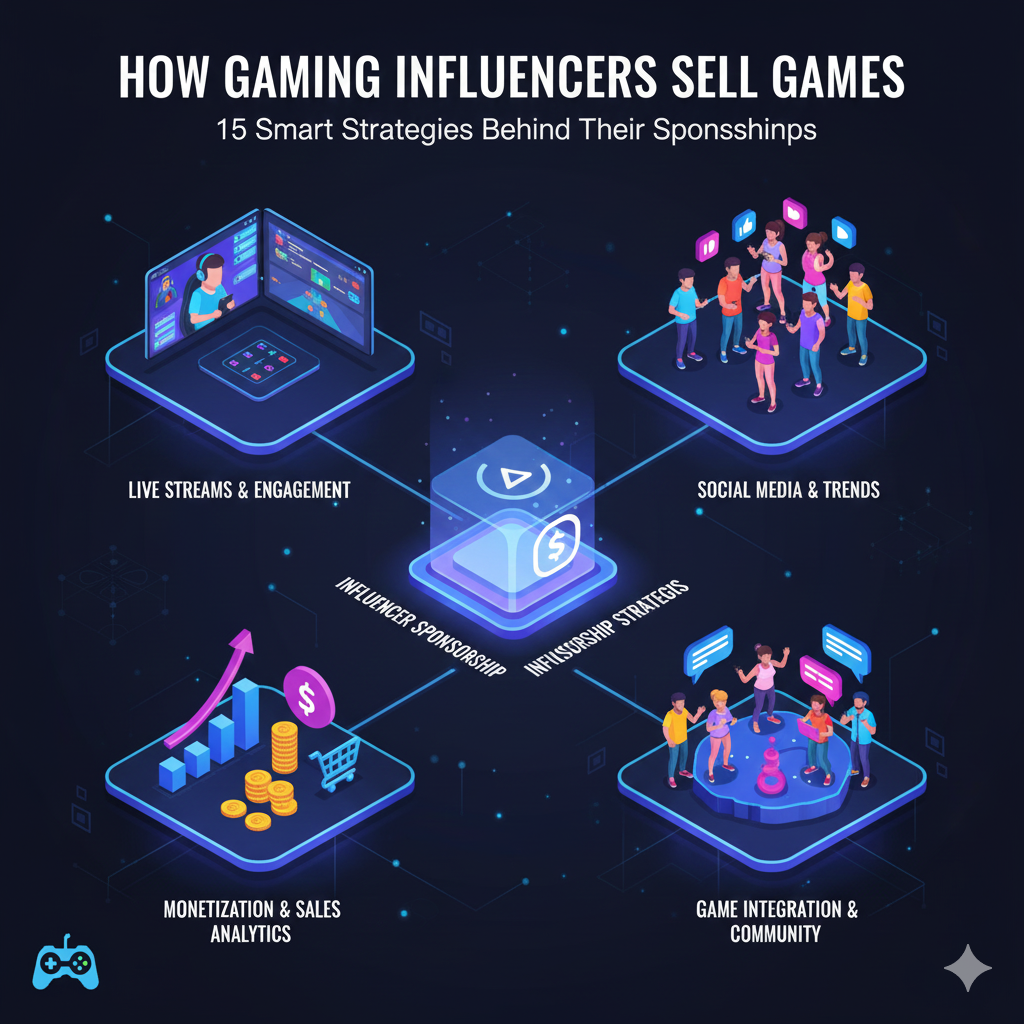
17 Dec How Gaming Influencers Sell Games: 15 Smart Strategies Behind Their Sponsorships
How Gaming Influencers Sell Games: 15 Smart Strategies Behind Their Sponsorships (Editor’s Choice)
15 Smart Strategies Behind Gaming Influencers' Sponsorships
| Strategy No. | Strategy Title | Key Takeaways |
|---|---|---|
| 1 | Building a Personal Brand That Speaks Volumes | Influencers craft an authentic lifestyle around their gaming persona, making sponsored games feel like personal recommendations. |
| 2 | Leveraging the Power of Trustworthy Reviews | In-depth, honest reviews build credibility, making followers trust influencers' game recommendations. |
| 3 | Engaging With Their Audience Through Interactive Content | Polls, Q&As, and real-time interactions make audiences feel part of the experience, driving engagement and game sales. |
| 4 | Creating Exclusive Content Around the Game | By offering early access or sneak peeks, influencers create exclusivity, generating excitement and anticipation for the game. |
| 5 | Harnessing the Power of Storytelling in Game Promotion | Influencers share personal stories and in-game adventures, making the promotion feel like an experience, not just an ad. |
| 6 | Hosting Giveaways and Contests | Giveaways create urgency and excitement, incentivizing followers to engage and participate in promotions. |
| 7 | Collaborating with Other Influencers | Cross-promotions increase reach, bringing a wider audience to the game through joint gameplay or shared content. |
| 8 | Creating a Sense of FOMO (Fear of Missing Out) | Influencers create urgency around new games by using exclusive content, countdowns, and limited-time promotions. |
| 9 | Creating Live Streaming Events | Live streaming offers real-time engagement, allowing influencers to interact directly with followers while showcasing the game. |
| 10 | Offering Discounts Through Affiliate Links | Affiliate codes provide followers with discounts while rewarding influencers with commissions, creating a mutually beneficial relationship. |
| 11 | Creating Tutorial or Walkthrough Content | Tutorials and walkthroughs offer valuable insights and tips, positioning influencers as trusted experts on the game. |
| 12 | Highlighting Game Features in Context | Influencers demonstrate game features in action, showcasing how the mechanics elevate gameplay and enhance the gaming experience. |
| 13 | Establishing Partnerships with Game Developers | Long-term partnerships with developers give influencers insider access, adding authenticity and exclusivity to their promotions. |
| 14 | Hosting Exclusive Events or Tournaments | Exclusive events create excitement and foster competition, further promoting the game and deepening the community connection. |
| 15 | Embracing User-Generated Content | Fan-generated content expands the reach of a game and makes the audience feel involved in the promotion process. |
How Gaming Influencers Sell Games: 15 Smart Strategies Behind Their Sponsorships
How Gaming Influencers Sell Games: Smart Strategies Behind Their Sponsorships #1: Building a Personal Brand That Speaks Volumes
Gaming influencers don’t just stream games; they create a brand around themselves that feels like an extension of who they are. This isn’t just about gaming skills but about building a lifestyle that aligns with the games they sponsor. The secret is authenticity—it’s about sharing personal stories, interacting with followers, and creating a vibe that’s both relatable and aspirational. Influencers who master their personal brand can integrate products seamlessly into their narratives. The sponsored games become an organic part of their world, making it feel like a recommendation from a friend rather than an advertisement. A strong personal brand also makes it easier for influencers to command higher rates for sponsorships. They are the face of a trusted community, and when they recommend a game, their audience knows it’s a thoughtful choice.
How Gaming Influencers Sell Games: Smart Strategies Behind Their Sponsorships #2: Leveraging the Power of Trustworthy Reviews
The heart of gaming sponsorships lies in the trust gaming influencers have cultivated with their audiences. Reviews are not just about saying “this game is great,” it’s about creating an honest, detailed breakdown of gameplay, mechanics, and even flaws. Gaming influencers excel at dissecting a game from every angle, helping their audience make informed decisions. Trust is the currency they deal in, and if they recommend a game, their followers believe it’s been tested and vetted. That’s why sponsors seek influencers who have a history of providing thoughtful, balanced reviews. The ability to dive deep into the pros and cons of a game establishes the influencer as a credible authority, not just another sponsored voice.
How Gaming Influencers Sell Games: Smart Strategies Behind Their Sponsorships #3: Engaging With Their Audience Through Interactive Content
When gaming influencers promote a game, they don’t just talk at their audience—they engage with them. They host Q&A sessions, run polls, and ask their followers what they think about the game. This interaction builds a relationship, and more importantly, it creates a sense of involvement in the gaming experience. By asking their audience to weigh in on certain aspects of the game, influencers make their followers feel heard, which increases their sense of community. This kind of interactive content turns passive viewers into active participants in the influencer’s gaming journey, making them more likely to buy the game being promoted. The key is not to sell, but to involve—the game becomes part of a shared experience, not just a product being pushed.
How Gaming Influencers Sell Games: Smart Strategies Behind Their Sponsorships #4: Creating Exclusive Content Around the Game
What better way to sell a game than to create exclusive content that’s tied to it? This could mean live-streaming early gameplay, releasing sneak peeks of in-game events, or producing a tutorial that highlights the game’s features. Exclusive content serves two purposes: it creates hype and fosters a sense of belonging for the audience. By sharing exclusive content, influencers make their followers feel like they’re part of an inside circle, giving them access to something others don’t have. Sponsors love this strategy because it adds an element of exclusivity to their campaigns, which drives engagement and excitement around the game.
How Gaming Influencers Sell Games: Smart Strategies Behind Their Sponsorships #5: Harnessing the Power of Storytelling in Game Promotion
Gaming influencers are natural storytellers, and that’s why they’re so successful at promoting games. When they share their experiences with a new title, they weave a story that captivates their audience. Rather than just showcasing a game’s mechanics, they bring it to life by narrating their journey through the game’s world, challenges, and triumphs. This technique not only makes the content more engaging but also emotionalizes the game. Influencers make their followers want to experience the same story they just shared. Storytelling connects with the human element, tapping into the audience’s desire to live out their own adventure through the game. When done right, it’s not just a promotion—it’s an invitation to step into a story.
How Gaming Influencers Sell Games: Smart Strategies Behind Their Sponsorships #6: Hosting Giveaways and Contests
Giveaways and contests are one of the most powerful ways gaming influencers drive excitement around a new title. By offering free copies of the game, exclusive in-game items, or branded merchandise, influencers not only reward their followers but also create a sense of urgency. These contests often come with a call to action, like following the influencer or tagging a friend, which increases the influencer’s reach and promotes the game to a wider audience. This strategy generates a buzz around the game that’s hard to ignore, making it a must-have for any influencer campaign.
How Gaming Influencers Sell Games: Smart Strategies Behind Their Sponsorships #7: Collaborating with Other Influencers
The power of collaboration can never be overstated. Influencers teaming up with other creators to play or promote the same game opens up a whole new world of exposure. These cross-promotions tap into each influencer’s audience, exponentially increasing the game’s visibility. By collaborating, influencers not only introduce their followers to a new game but also form a sense of community. It’s not just a way to increase reach—it’s a way to create a buzz around the game, all while building a network of gaming influencers who can promote the game from different angles.
How Gaming Influencers Sell Games: Smart Strategies Behind Their Sponsorships #8: Creating a Sense of FOMO (Fear of Missing Out)
Influencers are experts at building hype and creating a sense of urgency around a game. They do this by generating exclusivity, using countdowns, sneak peeks, and teaser trailers to build anticipation. When followers see their favorite influencers playing a game they haven’t tried yet, the fear of missing out kicks in. The influencer’s excitement and limited-time promotions trigger that FOMO effect, pushing their followers to jump on the game before it’s too late. This sense of urgency is a potent tool in driving quick sales and increasing game visibility during a launch window.
How Gaming Influencers Sell Games: Smart Strategies Behind Their Sponsorships #9: Creating Live Streaming Events
Live streaming is a powerful tool for gaming influencers, and it’s especially effective when promoting a new game. By hosting live streams, influencers can give their audience an immersive, real-time experience of the game. Live streaming allows for spontaneous interaction with the audience, and it offers a space for influencers to showcase their personality and expertise as they play. Influencers can answer questions, react to in-game moments, and offer tips, all while promoting the game in an engaging, authentic manner. Viewers love the real-time connection, and the exclusivity of watching a game live helps to drive interest and sales. The longer the stream, the deeper the connection between influencer and audience, turning the promotion into a shared event rather than just an advertisement.
How Gaming Influencers Sell Games: Smart Strategies Behind Their Sponsorships #12: Highlighting Game Features in Context
One of the most effective ways to sell a game is by focusing on its features in action. Instead of just talking about what’s great about the game, influencers demonstrate how specific features enhance gameplay. Whether it’s a unique character ability, an exciting in-game event, or innovative mechanics, showcasing these features in the context of the gameplay allows followers to see the benefits in real-time. It’s about painting a picture of how these features will affect their own gaming experience. Influencers often show off these features during intense or funny moments, using the game’s mechanics as part of a captivating narrative. This strategy works because it makes the features feel more like an integral part of the experience, rather than isolated selling points.
How Gaming Influencers Sell Games: Smart Strategies Behind Their Sponsorships #13: Establishing Partnerships with Game Developers
When influencers establish long-term partnerships with game developers, it goes beyond a single sponsorship—it becomes a symbiotic relationship. Influencers often get early access to games or special privileges in exchange for their promotion, which adds a layer of exclusivity and insider access for their audience. These partnerships give influencers the power to influence game development, offering feedback and suggestions that could lead to even more personalized content. This exclusivity and involvement make their promotion of the game feel more authentic, as if the influencer is part of the game’s creation process
How Gaming Influencers Sell Games: Smart Strategies Behind Their Sponsorships #14: Hosting Exclusive Events or Tournaments
Influencers can elevate a game’s visibility by hosting exclusive events, competitions, or tournaments. These events are often livestreamed and draw massive crowds of engaged viewers. Influencers can tie these events directly to the game they’re promoting, encouraging viewers to purchase it in order to participate. Tournaments also create excitement and competition, which makes the game feel more alive and urgent. By creating exclusive, one-of-a-kind events, influencers amplify their involvement with the game and deepen their audience’s connection to it. These events become a social experience, encouraging fans to engage more actively with the game and its community.