



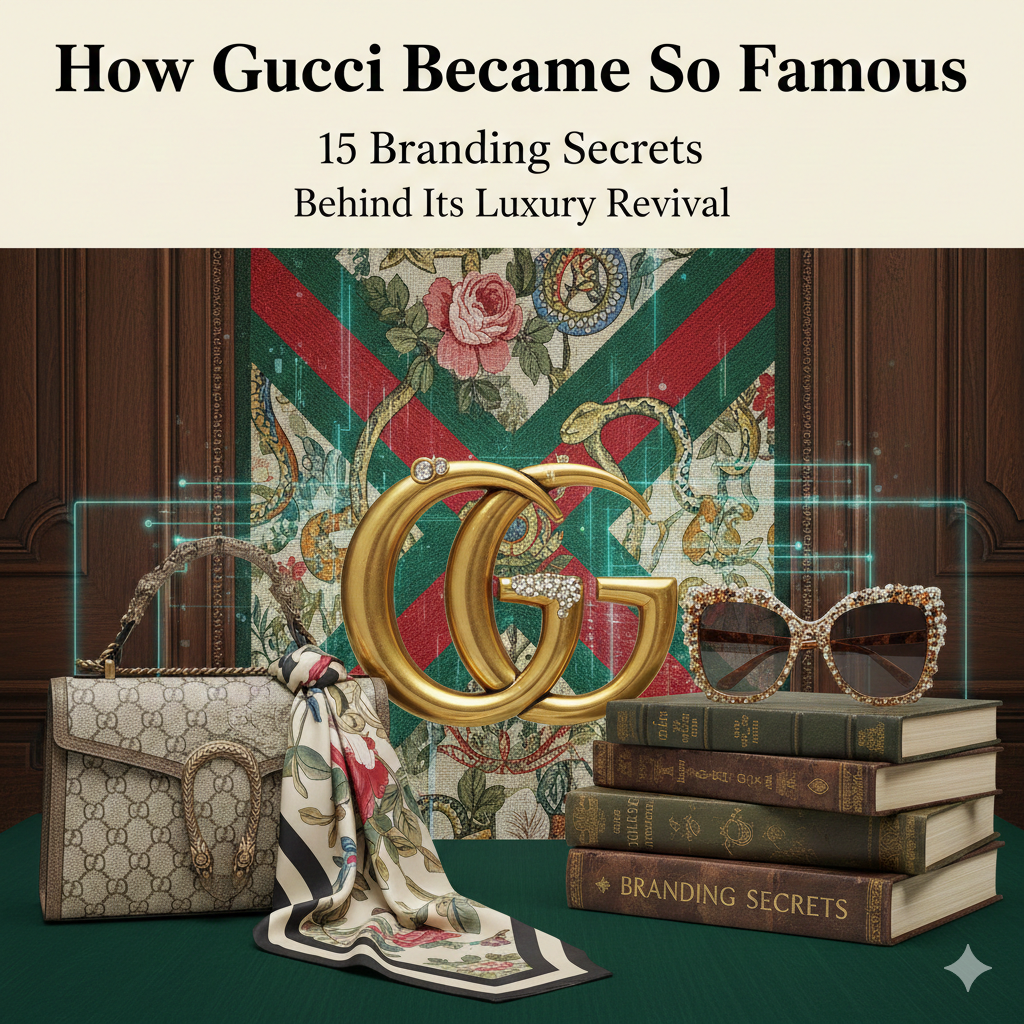
18 Dec How Gucci Became So Famous: 15 Branding Secrets Behind Its Luxury Revival
How Gucci Became So Famous: Branding Secrets Behind Its Luxury Revival (Editor’s Choice)
How Gucci Became So Famous: 15 Branding Secrets Behind Its Luxury Revival
| # | Branding Secret | Description |
|---|---|---|
| 1 | Legendary Heritage as a Luxury Craft Brand | Gucci’s rich history, founded in 1921 in Florence, gives it an instant legacy of artisanal craftsmanship and credibility. |
| 2 | Reinvention After Crisis | Gucci’s revival began in the 1990s after internal disputes. Strong leadership decisions helped re-establish the brand’s luxury status. |
| 3 | Iconic Creative Leadership | Visionary directors like Tom Ford and Alessandro Michele redefined Gucci’s aesthetic, bringing modernity to its design. |
| 4 | Strategic CEO Moves | Marco Bizzarri, as CEO, repositioned Gucci to connect with younger, more dynamic audiences while driving massive growth. |
| 5 | Balancing Heritage With Innovation | Gucci successfully merges its iconic symbols with bold new designs, giving customers both comfort and excitement. |
| 6 | Storytelling & Emotional Branding | Gucci has perfected emotional storytelling, selling more than just products, but a narrative of heritage and artistry. |
| 7 | Pioneering Digital Innovation | Gucci embraced social media, AR, and digital platforms, making the brand feel fresh and culturally relevant to younger audiences. |
| 8 | Social Media as a Cultural Platform | Gucci uses Instagram and other platforms for cultural storytelling, creating conversations that make the brand more shareable. |
| 9 | Inclusive Luxury Positioning | Gucci has shifted from exclusivity to inclusive luxury, appealing to a broader audience across gender and identity. |
| 10 | Celebrities & Influencers | By aligning with celebrities and influencers, Gucci has turned high-profile wearers into living brand ambassadors. |
| 11 | Bold, Memorable Design Signatures | Gucci’s bold and playful designs, from oversized logos to quirky motifs, make it instantly recognizable. |
| 12 | Cultural Collaborations | Collaborations with artists, gamers, and pop culture icons keep Gucci culturally relevant and extend its lifestyle appeal. |
| 13 | Retail & Omnichannel Experience | Gucci delivers a seamless experience between digital and physical retail spaces, enhancing the overall customer journey. |
| 14 | Sustainability & Values | Gucci embraces eco-friendly practices and social responsibility, aligning with modern luxury consumers' values. |
| 15 | Word-of-Mouth & Cultural Buzz | Gucci’s marketing generates ongoing conversation, from fashion influencers to user-generated content that amplifies its buzz. |
How Gucci Became So Famous: 15 Branding Secrets Behind Its Luxury Revival
How Gucci Became So Famous: Branding Secrets Behind Its Luxury Revival #3: Iconic Creative Leadership
If there’s one thing we know about Gucci’s success, it’s that creative leadership was key. Tom Ford’s era was a game-changer, but Alessandro Michele’s tenure added layers of complexity that made Gucci even more addictive. Michele’s fresh perspective injected irreverence and nostalgia into the brand, turning it into the modern symbol of eccentric luxury. His work balanced the tension between past and present so seamlessly, it felt like Gucci was constantly evolving but still deeply rooted in its iconic identity. Fashion is always about reinvention, but Gucci was a brand that not only adapted — it lead the way. And isn’t that what every brand aspires to?
How Gucci Became So Famous: Branding Secrets Behind Its Luxury Revival #4: Strategic CEO Moves
Marco Bizzarri wasn’t just another CEO — he was the architect of Gucci’s financial and cultural rebirth. Under his leadership, Gucci broke revenue records while simultaneously aligning the brand with a new, younger demographic. He understood that the key to luxury in the 21st century was inclusivity, diversity, and an unapologetic embrace of individuality. By embracing a culture of digital innovation and aligning Gucci with the demands of a new generation, Bizzarri set Gucci up for long-term success. And let’s be real, what other brand can lay claim to having such an effective CEO? He doesn’t just talk the talk; he walks it — in Gucci, of course.
How Gucci Became So Famous: Branding Secrets Behind Its Luxury Revival #5: Balancing Heritage With Innovation
Gucci’s success isn’t just about celebrating its past — it’s about honoring it while pushing the boundaries of what’s possible. The iconic double-G logo, horse-bit motif, and green-red-green stripes are timeless, but Gucci knows how to innovate without losing that authenticity. They bring these symbols into new collections, mixing them with daring, unconventional design choices that keep the brand fresh and exciting. It’s a delicate balance between old-school luxury and modern rebellion, and Gucci nails it every time. You can have both — heritage and progress — without compromising one for the other.
How Gucci Became So Famous: Branding Secrets Behind Its Luxury Revival #6: Storytelling & Emotional Branding
At its core, Gucci doesn’t just sell products; it sells stories. And in an era where every brand has a voice, storytelling is the secret sauce that differentiates Gucci from the competition. Gucci’s campaigns are a whirlwind of visual stories — narratives that evoke desire, culture, and raw emotion. Whether it’s the ethereal magic of their “Forever Now” campaign or the audacious artistry in their runway shows, Gucci weaves its history and future into every piece. You’re not just buying a bag; you’re investing in a feeling, a world, a moment in time that only Gucci can offer.
How Gucci Became So Famous: Branding Secrets Behind Its Luxury Revival #7: Pioneering Digital Innovation
Gucci understood early on that luxury could coexist with digital. It wasn’t just about having an online presence — it was about making digital feel luxurious. From augmented reality experiences to exclusive collaborations on Instagram and TikTok, Gucci has led the charge in bridging the gap between fashion and technology. Not only did Gucci conquer social media, but it also made high fashion accessible, exclusive, and fun. This fusion of digital engagement with luxury is what sets Gucci apart. It’s innovative, inclusive, and, most importantly, exciting.
How Gucci Became So Famous: Branding Secrets Behind Its Luxury Revival #8: Social Media as a Cultural Platform
Gucci’s Instagram isn’t just a marketing tool; it’s a cultural platform where fashion meets conversation. By embracing the informal, immediate nature of social media, Gucci made itself a staple in the cultural zeitgeist. Every post is a dialogue — whether it’s a campaign tease, celebrity collaboration, or influencer-led storytelling. Gucci’s Instagram feed is a window into its universe, showcasing everything from stunning product shots to the weirdly wonderful parts of their brand identity. It’s not about selling products; it’s about creating a space for fans to exist and interact.
How Gucci Became So Famous: Branding Secrets Behind Its Luxury Revival #9: Inclusive Luxury Positioning
Gucci broke the mold by embracing inclusivity, and it worked. The brand moved away from the traditional “exclusive” model, which catered only to the few, and instead made its products desirable for a wider, more diverse audience. Gucci made sure everyone felt invited — regardless of gender, sexuality, or ethnicity. This shift towards inclusive luxury reflected in every facet of the brand: from runway shows to marketing campaigns, Gucci made luxury feel democratic. It didn’t just break barriers; it redefined them.
How Gucci Became So Famous: Branding Secrets Behind Its Luxury Revival #10: Celebrities & Influencers
Gucci’s mastery in aligning with celebrities and influencers cannot be overstated. From pop stars to film icons, Gucci is a favorite for anyone who wants to make a statement. By closely collaborating with these figures, Gucci ensured its pieces were not just worn — they were shown off. The connection between Gucci and high-profile personalities keeps the brand culturally relevant and aspirational, especially among the youth. Celebrity endorsements aren’t new, but Gucci made them an art form.
How Gucci Became So Famous: Branding Secrets Behind Its Luxury Revival #11: Bold, Memorable Design Signatures
Gucci’s design DNA is loud, audacious, and unmissable. Think bold patterns, oversized logos, and quirky motifs — all of which have become signature elements of the brand. Gucci isn’t afraid to make a statement, and that’s exactly why it stands out in the crowded luxury market. Their designs aren’t just products; they’re pieces of art that are instantly recognizable and speak to an attitude. The over-the-top maximalism that Gucci is known for feels rebellious in the best way. It’s not just about looking chic; it’s about showing the world who you are. Gucci’s boldness has made its designs synonymous with self-expression.
How Gucci Became So Famous: Branding Secrets Behind Its Luxury Revival #12: Cultural Collaborations
Gucci has mastered the art of collaboration, from artists to tech companies to pop culture icons. These strategic partnerships have allowed the brand to stay relevant and cement its status as a lifestyle, not just a label. By tapping into other cultural realms, Gucci expands its influence far beyond the runway. Collaborations with companies like The North Face, Balenciaga, and even Disney bring fresh, exciting twists to the brand while keeping its identity intact. It’s the perfect mix of keeping the old while embracing the new. Through collaborations, Gucci ensures its relevance across generations and industries, turning every drop into a cultural event.
How Gucci Became So Famous: Branding Secrets Behind Its Luxury Revival #13: Retail & Omnichannel Experience
In today’s world, retail isn’t just about shopping; it’s about creating an experience. Gucci gets this, which is why it invests heavily in creating immersive, in-store environments that feel as luxe as their products. Whether you’re stepping into a Gucci boutique or browsing their online store, the experience is designed to be seamless, luxurious, and unforgettable. Gucci’s omnichannel approach blends both the physical and digital worlds, making it easy for customers to engage with the brand, whether in person or on their phone. The store feels like a sanctuary — and that’s by design.
How Gucci Became So Famous: Branding Secrets Behind Its Luxury Revival #14: Sustainability & Values
Sustainability isn’t just a buzzword for Gucci; it’s a commitment. The brand has made major strides in reducing its environmental footprint and championing social responsibility. From sustainable materials in their products to transparent supply chain practices, Gucci’s efforts to incorporate eco-conscious values are woven into their identity. They’ve turned sustainability into a form of luxury, showing that true wealth is in making choices that benefit both the planet and people. Gucci’s ability to evolve in a way that balances business with ethics is a huge part of what keeps it relevant to modern consumers who value purpose alongside prestige.
How Gucci Became So Famous: Branding Secrets Behind Its Luxury Revival #15: Word-of-Mouth & Cultural Buzz
There’s no better marketing tool than word-of-mouth, and Gucci has perfected it. It’s not just about having a big budget for ads; it’s about creating a buzz that feels organic, authentic, and aspirational. Whether it’s a viral Instagram post from an influencer or a red carpet moment that goes viral, Gucci’s cultural buzz is relentless. When your brand can generate a constant stream of chatter across platforms like Instagram, TikTok, and X, you know you’ve hit the jackpot. Gucci’s viral marketing is as much about the “whisper” between insiders as it is about the official campaigns. This word-of-mouth power keeps the Gucci fever alive, constantly fueling its desire and demand.