



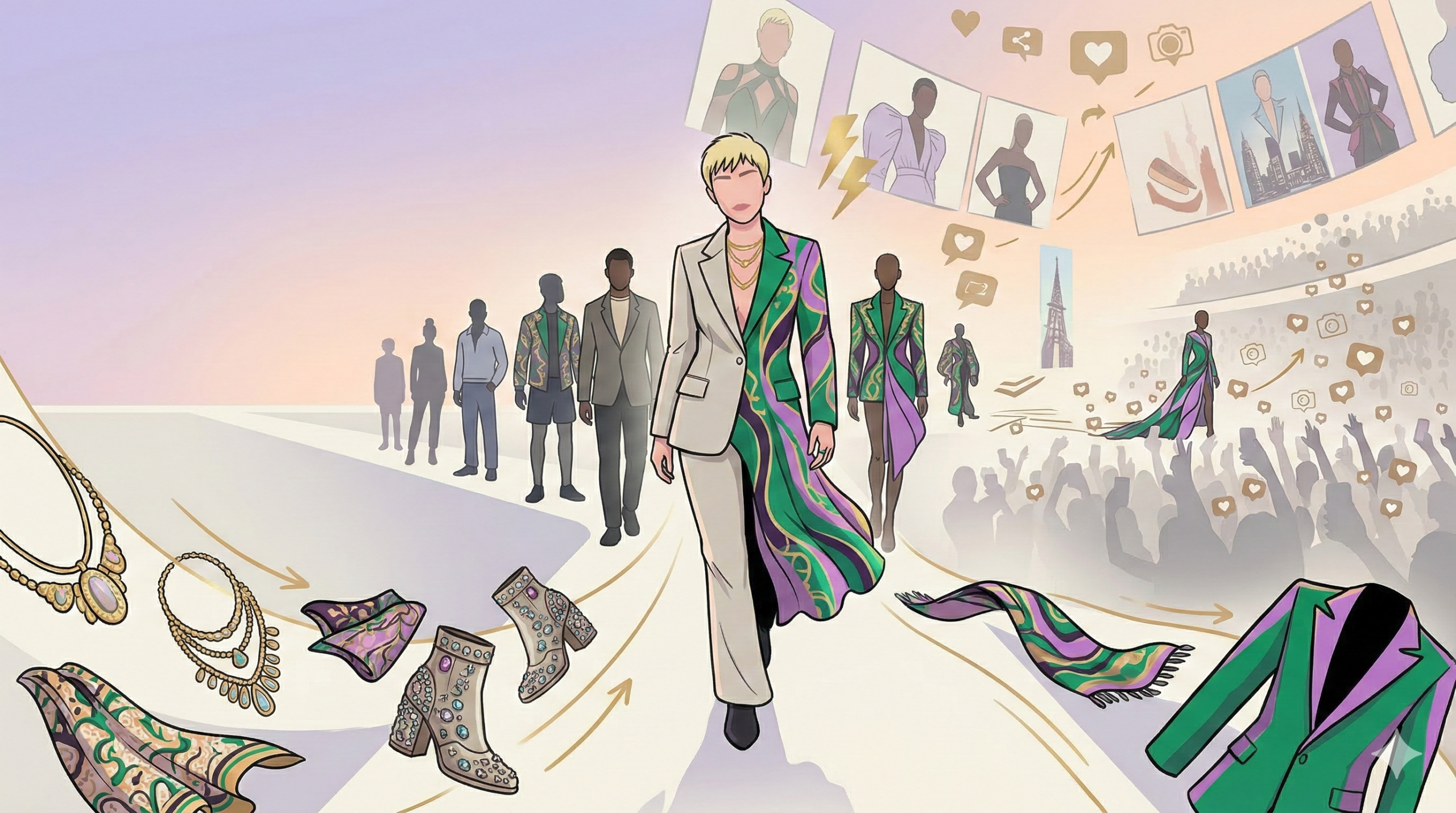
15 Dec How Harry Styles Became a Fashion Icon: 15 Marketing Secrets That Set Trends
How Harry Styles Became a Fashion Icon: 15 Marketing Secrets That Set Trends(Editor’s Choice)
| # | Marketing Secret | What He Does | Marketing Takeaway |
|---|---|---|---|
| 01 | Build a strong personal brand identity | Blends ‘70s rock, glam, and sharp tailoring into a look that’s instantly recognisable. | Decide what you want to be known for visually and repeat it until it sticks. |
| 02 | Borrow credibility from heritage brands | Partners with Gucci and other luxury houses to anchor his aesthetic in high fashion. | Collaborate with trusted, established names to fast-track your authority. |
| 03 | Break gender norms to stand out | Wears dresses, sequins, and pearls without apology, turning clothing into conversation. | Thoughtful rule-breaking gets people talking and positions you as a cultural leader. |
| 04 | Show an evolving visual story | Moves from boy-band basics to flamboyant rock star looks in clear, memorable chapters. | Let your brand evolve so audiences feel they’re growing up alongside you. |
| 05 | Turn values into slogans & merch | “Treat People With Kindness” becomes a mantra, a design system, and a merch line. | Distill your ethos into a short phrase fans can wear, repeat, and rally around. |
| 06 | Let the community amplify the look | Fans copy his outfits for concerts, TikToks, and everyday life, spreading the aesthetic. | Make your style easy to emulate so your audience becomes your loudest media channel. |
| 07 | Create headline-worthy “firsts” | Becomes the first solo man on the cover of Vogue in a dress, cementing icon status. | Aim for landmark moments that media can’t resist covering (your built-in PR strategy). |
| 08 | Use signature pieces as brand codes | Pearl necklaces, wide-leg trousers, and bold prints act like visual logos. | Pick 1–3 repeatable style elements that become shorthand for your brand. |
| 09 | Integrate fashion across every channel | Aligns stage outfits, red-carpet looks, music videos, and social visuals seamlessly. | Keep your aesthetic consistent from feed to stage to press shots for instant recognition. |
| 10 | Champion creatives & smaller brands | Mixes big luxury labels with emerging designers, boosting them and refreshing his image. | Partner with up-and-comers to signal curiosity, relevance, and cultural fluency. |
| 11 | Use outfits to start bigger conversations | Fashion choices spark debates about masculinity, identity, and freedom of expression. | When your visuals touch real issues, you move from “on trend” to “shaping culture.” |
| 12 | Engineer viral visual moments | Pieces like the blue Gucci dress explode across timelines, memes, and think-pieces. | Craft a few bold, camera-ready looks specifically designed to dominate the discourse. |
| 13 | Align style with personal values | Clothing choices echo messages of kindness, openness, and inclusivity. | Your aesthetic lands harder when it’s clearly rooted in what you genuinely believe. |
| 14 | Balance consistency with surprise | Keeps the same overall vibe but plays with unexpected silhouettes, colors, and fabrics. | Stay recognisable, but always leave room for a twist that keeps people guessing. |
| 15 | Turn influence into products & ventures | Extends his style universe into beauty, merch, and lifestyle-driven business plays. | Once your brand is iconic, spin it into offerings your audience can literally buy into. |
How Harry Styles Became a Fashion Icon: 15 Marketing Secrets That Set Trends
How Harry Styles Became a Fashion Icon: Marketing Secrets That Set Trends #1
Harry didn’t just arrive in the fashion conversation; he slid in like a silk-shirted whisper. From the start, his aesthetic was a love letter to the 1970s—part Jagger strut, part grandmother’s pearls. Every time he steps out, he’s not merely dressed, he’s branded. The key lesson? Your look should feel like an exhale—effortless but unmistakably you. Because in the attention economy, consistency is sexier than perfection.
How Harry Styles Became a Fashion Icon: Marketing Secrets That Set Trends #2
The moment Harry teamed up with Gucci, the fashion gods collectively squealed. It wasn’t just about suits—it was about storytelling. Gucci gave him couture credibility; he gave Gucci a pulse of cultural relevance. This is the ultimate co-sign symbiosis. Aligning your brand with a respected heritage house (or thought leader, or creator) is like borrowing their halo light—it illuminates you faster than a PR campaign ever could.
How Harry Styles Became a Fashion Icon: Marketing Secrets That Set Trends #3
When Harry wore a dress on the Vogue cover, half the world clutched their pearls—and the other half rushed to buy them. That was the point. Fashion is theater, but rebellion is marketing gold. Every rule he bends becomes a headline, and every headline cements his position as the patron saint of unbothered confidence. The takeaway? Authentic provocation isn’t controversy—it’s strategy with sequins.
How Harry Styles Became a Fashion Icon: Marketing Secrets That Set Trends #4
Harry’s fashion story unfolds like a binge-worthy series—you never know what the next episode will bring, but you know it’ll be good. From floppy-haired teen to retro-suit romantic, his evolution feels intentional, not accidental. Brands stagnate when they stop surprising us; Harry reinvents the plot every season. His wardrobe says, “Watch this space.” And we do.
How Harry Styles Became a Fashion Icon: Marketing Secrets That Set Trends #5
“Treat People With Kindness” could’ve been a throwaway lyric. Instead, it became an ethos, a T-shirt, a global mood. That’s the brilliance of Harry’s branding: he makes kindness feel cool. His merch isn’t just cotton—it’s community. The marketer’s takeaway? Transform your values into wearable language; people don’t just want to buy things, they want to belong to them.
How Harry Styles Became a Fashion Icon: Marketing Secrets That Set Trends #6
Harry doesn’t just influence; he infects. His fans turn arenas into sequined mirrors, each one a tiny reflection of his vibe. This is community-led branding in its sparkliest form: when your audience stops waiting for your next move and starts dressing like your mood board. The smartest part? He lets them. Empowering your tribe to remix your aesthetic doesn’t dilute your message—it multiplies it.
How Harry Styles Became a Fashion Icon: Marketing Secrets That Set Trends #7
Being the first solo man on Vogue’s cover wasn’t just a milestone; it was a mic drop. The dress was fabulous, yes—but the first was the fuel. Harry knows that in a saturated market, “first” trumps “best.” It gives journalists a hook, fans a reason to celebrate, and haters a reason to tweet (which, ironically, fuels both). The marketer’s moral: Don’t wait for permission—go make your own firsts.
How Harry Styles Became a Fashion Icon: Marketing Secrets That Set Trends #8
A pearl necklace. A pink suit. A cardigan that broke the internet. Each of these is a visual breadcrumb leading back to one idea: Harry Styles. His signature pieces aren’t trends—they’re timestamps of an evolving myth. The genius here is repetition: a symbol seen often enough becomes a logo. In branding, that’s priceless.
How Harry Styles Became a Fashion Icon: Marketing Secrets That Set Trends #9
Harry’s world is seamless—what he wears onstage, in videos, and on social all hum the same tune. His aesthetic is an ecosystem: no off-brand moments, no lazy styling. That’s how modern marketing should feel—cross-channel cohesion that’s organic, not over-orchestrated. The look becomes the language; the language becomes the legacy.
How Harry Styles Became a Fashion Icon: Marketing Secrets That Set Trends #12
The “blue Gucci dress.” The sparkly jumpsuits. The feathers. Every so often, Harry drops a look that detonates across timelines like glitter confetti. But make no mistake—it’s not accidental. He understands the algorithm of awe: shock, beauty, repeatability. A viral moment isn’t chaos; it’s choreography.
How Harry Styles Became a Fashion Icon: Marketing Secrets That Set Trends #13
Kindness. Openness. Queer joy. These aren’t afterthoughts—they’re the invisible threads that tie Harry’s wardrobe together. His style isn’t a costume; it’s a manifesto. And that’s what makes it so sticky: people don’t fall for the clothes—they fall for the values stitched into them. In a cynical world, authenticity is couture.
How Harry Styles Became a Fashion Icon: Marketing Secrets That Set Trends #14
Harry’s wardrobe is a paradox: we always know it’s him, but we never know what’s next. That’s brand tension done right—comfort meets curiosity. He’s mastered the algorithm of attention: a familiar silhouette disrupted by a wildcard flourish. Brands could learn a thing or two about serving predictability with a side of wow.