



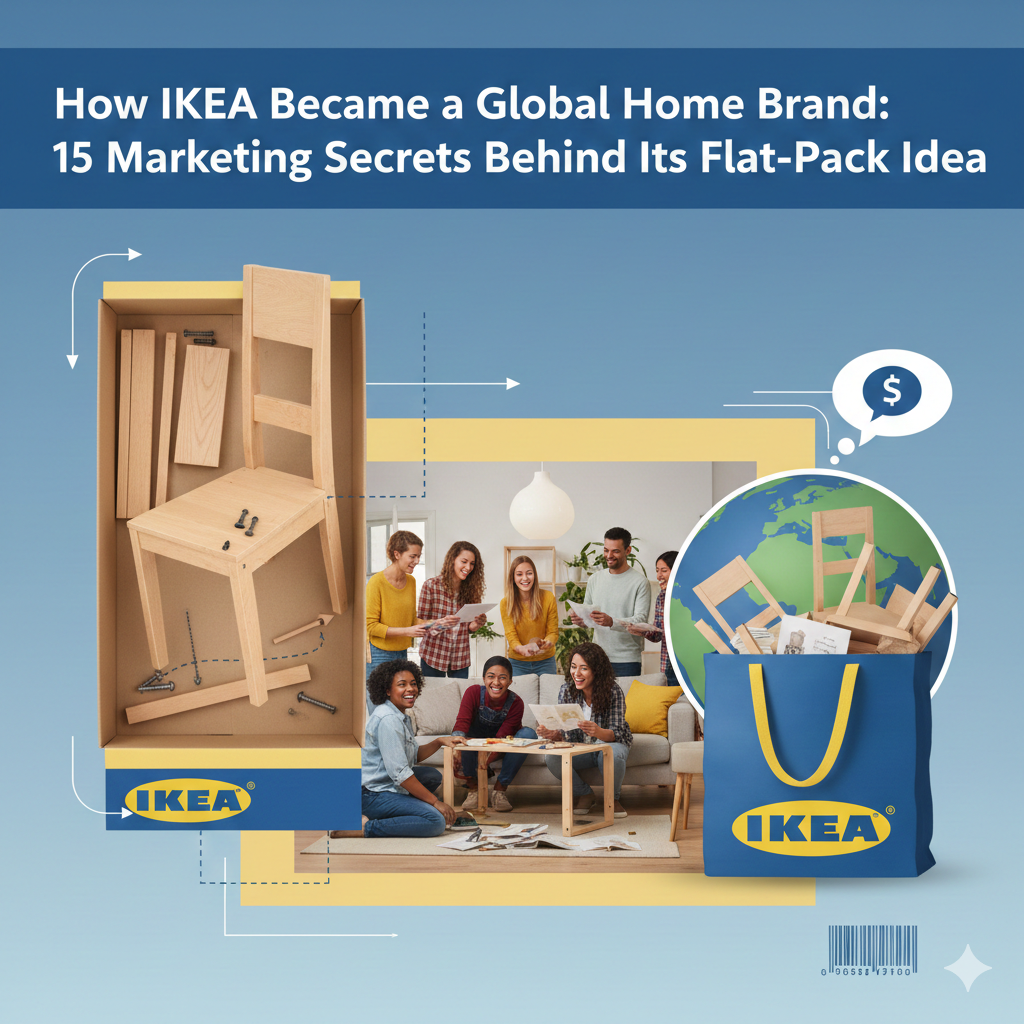
22 Dec How IKEA Became a Global Home Brand: 15 Marketing Secrets Behind Its Flat-Pack Idea
IKEA didn’t just sell furniture—it sold a feeling, a philosophy, and a quiet confidence that your home could look intentional without costing a fortune. There’s something almost poetic about a flat-pack box: it promises possibility, participation, and a little bit of chaos before beauty clicks into place. That’s the kind of brand alchemy marketers obsess over—the kind a leading marketing agency in New York dissects late at night, trying to understand how design, pricing, psychology, and culture can align so effortlessly. If Leandra Medine were a marketer, she’d probably tell you this isn’t about furniture at all—it’s about identity, ritual, and the subtle power of making people feel clever for choosing you. This is the story of how IKEA turned a practical idea into a global love affair, and the marketing decisions that made flat-pack iconic.
How IKEA Became a Global Home Brand: 15 Marketing Secrets Behind Its Flat-Pack Idea (Editor’s Choice)
| Marketing Secret | How It Worked |
|---|---|
| Flat-Pack As A Business Model | IKEA turned flat-pack into a cost-saving genius. Reduced shipping, optimized storage, and gave customers a sense of empowerment—smart marketing disguised as efficiency. |
| Democratic Design Positioning | By calling design “democratic,” IKEA made good taste accessible to everyone. It wasn’t just affordable; it was *smart* and *ethical*, making IKEA feel aspirational. |
| Customer As Co-Creator (Self-Assembly) | IKEA turned the effort of building furniture into a psychological investment. The customer didn’t just buy furniture; they *created* it, building emotional attachment and loyalty. |
| Showroom As Marketing Channel | IKEA stores became living advertisements. Instead of pushing products, they offered immersive room experiences that allowed customers to *envision* their life with IKEA products. |
| IKEA Store Maze Psychology | The store’s one-way layout nudged shoppers through a carefully curated experience, encouraging discovery and unplanned purchases without feeling like they were being sold to. |
| IKEA Catalog & Inspiration Marketing | The IKEA catalog was more than a product list—it was a dream book. It taught customers to picture themselves in a better home, creating desire before the purchase. |
| Problem-First Marketing | IKEA marketed not just products, but solutions. By focusing on common household problems—like lack of storage—it framed itself as the solution to real-life issues. |
| IKEA Pricing Strategy & Anchoring | The “good, better, best” pricing tiers gently steered customers toward premium items without alienating budget-conscious buyers, ensuring that everyone felt included. |
| IKEA Icon Products | Certain products, like the BILLY bookshelf, became symbols of IKEA’s brand. These iconic products spread through word-of-mouth, creating cultural recognition without any extra effort. |
| IKEA Product Naming Strategy | IKEA’s quirky product names made them memorable. Instead of generic names, each item had a distinct personality, sparking curiosity and making customers feel connected to the product. |
| Global Brand, Local Adaptation | IKEA tailored its products and stores to fit local cultures while keeping a consistent global identity. This approach made IKEA feel local no matter where it was sold. |
| Scarcity Without The Desperation | Limited edition items and seasonal drops created a sense of exclusivity without relying on constant sales. IKEA created demand by making customers feel they might miss out. |
| IKEA Sustainability Marketing | IKEA embraced sustainability in a way that didn’t preach, but instead integrated eco-friendly practices into their products and services. It made sustainability a natural choice for customers. |
| IKEA Food As Brand Strategy | The food experience at IKEA—especially the famous Swedish meatballs—transformed shopping into an outing, encouraging people to spend more time in-store and boosting sales indirectly. |
| IKEA Brand Voice & Tone | IKEA's casual, witty, and relatable brand voice made it feel like a friend, not a corporate giant. This made the brand accessible and created a strong emotional connection with customers. |
How IKEA Became a Global Home Brand: 15 Marketing Secrets Behind Its Flat-Pack Idea
How IKEA Became A Global Home Brand: Marketing Secrets Behind Its Flat-Pack Idea #2 — Democratic Design, But Make It Aspirational
IKEA’s idea of democratic design is marketing poetry. It sounds inclusive, almost political, yet lands emotionally. Form, function, sustainability, quality, and price—all wrapped into a single promise that feels ethical and desirable.
By framing affordability as a value instead of a limitation, IKEA made good taste feel attainable. You weren’t settling—you were participating. And participation, darling, is very on-brand.
How IKEA Became A Global Home Brand: Marketing Secrets Behind Its Flat-Pack Idea #3 — You’re Not The Customer, You’re The Co-Creator
Self-assembly is a psychological flex. IKEA hands you a box and essentially says, “Trust yourself.” The effort you put in creates emotional ownership before you even tighten the final screw.
This is marketing alchemy at its finest. Labor becomes empowerment, frustration becomes pride, and suddenly you’re defending that slightly wobbly table like it’s family.
How IKEA Became A Global Home Brand: Marketing Secrets Behind Its Flat-Pack Idea #4 — The Showroom Is A Full-Funnel Advertisement
Walking into an IKEA showroom is like stepping inside a Pinterest board that decided to be productive. Every room is staged not to impress, but to relate. Small apartments, shared spaces, awkward corners—they’re all there, whispering, “We thought about your life.”
This is marketing that bypasses persuasion and goes straight to visualization. IKEA doesn’t tell you what to buy; it lets you imagine yourself living better. That emotional preview shortens the distance between inspiration and purchase dramatically.
How IKEA Became A Global Home Brand: Marketing Secrets Behind Its Flat-Pack Idea #5 — The Maze Is Not An Accident
Yes, you got lost. No, it wasn’t random. IKEA’s one-way store layout is a masterclass in behavioral psychology. By guiding customers through a curated journey, IKEA maximizes exposure without overwhelming choice.
The brilliance lies in pacing. You don’t feel rushed or sold to—you feel discovered. Every turn offers something unexpected, turning shopping into exploration. The longer you stay, the more likely you are to buy, and IKEA makes staying feel oddly delightful.
How IKEA Became A Global Home Brand: Marketing Secrets Behind Its Flat-Pack Idea #6 — The Catalog Trained Us How To Want
For decades, the IKEA catalog wasn’t just a sales tool—it was a cultural artifact. It taught people how to imagine their homes differently, how to desire solutions instead of objects.
Even in its digital evolution, that catalog DNA remains intact. IKEA still leads with inspiration before transaction, understanding that people don’t shop for furniture—they shop for the version of life furniture promises.
How IKEA Became A Global Home Brand: Marketing Secrets Behind Its Flat-Pack Idea #7 — Problems First, Products Second
IKEA doesn’t start with a chair; it starts with clutter. It doesn’t lead with a bed; it leads with poor sleep. This problem-first framing makes the brand feel empathetic rather than sales-driven.
By anchoring marketing in everyday frustrations, IKEA becomes a partner instead of a vendor. The furniture simply happens to be the answer.
How IKEA Became A Global Home Brand: Marketing Secrets Behind Its Flat-Pack Idea #8 — Price Anchoring Without Cheapening The Brand
IKEA’s pricing strategy is surgical. Entry-level products pull you in, while upgraded options quietly expand your willingness to spend. It’s not pressure—it’s a ladder.
This approach protects the brand’s affordability promise while capturing multiple income levels. You feel in control, even as your cart grows heavier.
How IKEA Became A Global Home Brand: Marketing Secrets Behind Its Flat-Pack Idea #9 — Icon Products As Cultural Shortcuts
Some IKEA products have escaped retail entirely and entered pop culture. They’re referenced, reused, and instantly recognized—doing branding work long after purchase.
These icons act as shorthand for the IKEA ethos: functional, accessible, clever. Recognition builds trust, and trust accelerates buying decisions.
How IKEA Became A Global Home Brand: Marketing Secrets Behind Its Flat-Pack Idea #10 — Names That Refuse To Be Ignored
IKEA’s product names are weird—and that’s exactly the point. They stick because they’re different, turning anonymous furniture into conversational objects.
From a marketing standpoint, this boosts recall and word-of-mouth. People don’t recommend “a bookshelf.” They recommend that bookshelf.
How IKEA Became A Global Home Brand: Marketing Secrets Behind Its Flat-Pack Idea #11 — Global Consistency, Local Intelligence
IKEA’s superpower isn’t just scale—it’s restraint. The brand understands that being global doesn’t mean being generic. While the core identity remains unmistakably IKEA, the execution quietly bends to local realities. Apartment sizes shift. Storage solutions adapt. Even room layouts reflect how people actually live in Tokyo versus Toronto versus Turin.
How IKEA Became A Global Home Brand: Marketing Secrets Behind Its Flat-Pack Idea #12 — Scarcity Without The Desperation
IKEA knows how to make you want something without begging you to buy it. Limited collections, seasonal colors, and rotating product lines create just enough urgency to spark action—without the exhausting energy of constant sales banners screaming for attention.
How IKEA Became A Global Home Brand: Marketing Secrets Behind Its Flat-Pack Idea #13 — Sustainability Without The Sermon
Sustainability can be a branding minefield—too preachy and you lose people, too vague and it feels performative. IKEA threads the needle by embedding sustainability into everyday decisions rather than positioning it as a moral high ground.
How IKEA Became A Global Home Brand: Marketing Secrets Behind Its Flat-Pack Idea #14 — Meatballs Are Marketing (And They’re Brilliant)
Let’s talk about the meatballs because they are not a side quest—they’re strategy. Food slows people down, lowers resistance, and turns shopping into a shared experience rather than a transactional chore. IKEA understood early on that a fed customer is a happy, patient, and far more generous customer.
How IKEA Became A Global Home Brand: Marketing Secrets Behind Its Flat-Pack Idea #15 — Speak Human, Not Luxury
Perhaps IKEA’s most enduring marketing decision is its refusal to pretend life is perfectly curated. The brand talks about mess, clutter, chaos, and compromise—the very things most lifestyle brands try to Photoshop out of existence.
How IKEA Became A Global Home Brand: Marketing Secrets Behind Its Flat-Pack Idea — The Takeaway You’ll Actually Remember
IKEA didn’t win by shouting louder or looking more luxurious—it won by being smarter, kinder, and a little bit cheeky about how people really live. The flat-pack was never just a box; it was a philosophy that aligned product design, pricing, storytelling, and human behavior into one beautifully efficient system. The real lesson here isn’t about furniture at all—it’s about building brands that invite participation, respect the customer’s intelligence, and make practicality feel aspirational. If there’s one thing to steal from IKEA (besides the meatballs), it’s this: when your strategy, experience, and voice are in sync, marketing stops feeling like persuasion and starts feeling like common sense. And that, frankly, is the most iconic move of all.