



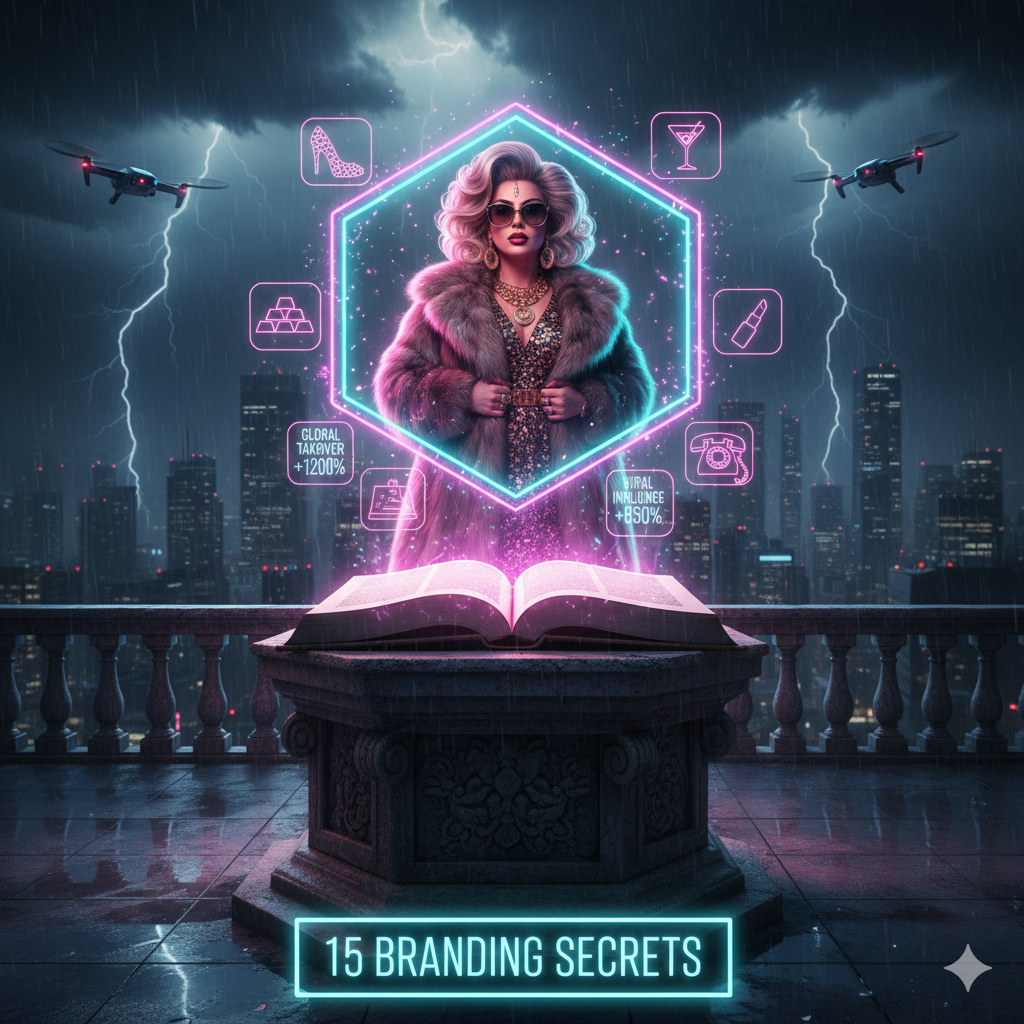
21 Dec How Mob Wife Aesthetic Took Over 2025: 15 Branding Secrets Behind Its Drama
How Mob Wife Aesthetic Took Over 2025: 15 Branding Secrets Behind Its Drama(Editor’s Choice)
Mob Wife Aesthetic Took Over 2025: 15 Branding Secrets Behind Its Drama
A scannable cheat sheet for readers who want the takeaway fast—with enough flavor to feel like a mood, not a memo.
| # | Branding Secret (Blog Keyword) | Why It Works (Reader-Grabber) | Embed-Post Search Keywords |
|---|---|---|---|
| 01 |
It replaced “Quiet Luxury” because silence got boring
The pendulum swung from subtle to sensational—attention became the new status symbol.
|
When a feed is saturated with “tasteful,” the bold becomes the shortcut. Mob Wife reads instantly, feels rebellious, and gives audiences permission to be seen. | |
| 02 |
It turned excess into emotional honesty
Maximalism stops being “too much” when it’s clearly intentional.
|
The aesthetic sells a feeling: indulgence as self-trust. Brands win when they market intensity as authenticity. | |
| 03 |
It weaponized nostalgia without becoming costume
It borrows the attitude, not the museum-grade replica.
|
Modern audiences love references but hate cosplay. This lands because it feels inherited, not copied. | |
| 04 |
It made femininity feel powerful again
Glamour becomes armor, not apology.
|
The look reframes “high maintenance” as high standards. Brands ride the shift from prettiness to power. | |
| 05 |
It thrived because it’s instantly legible
Scroll-stopping clarity beats subtlety in a feed economy.
|
Leopard, fur, liner: no caption required. Brands benefit because recognition equals shareability. | |
| 06 |
It allowed brands to be opinionated again
Backlash is a signal—not a crisis—when the positioning is strong.
|
Polarizing aesthetics generate conversation. Brands stop chasing consensus and start building identity. | |
| 07 |
It reclaimed the female gaze
Not “do they like me?”—“do they notice me?”
|
Self-referential styling turns desirability into self-possession. Brands sell dominance, not approval. | |
| 08 |
It made storytelling visual again
The outfit implies a life—brands sell narrative density.
|
Character-driven looks increase watch time and saves. Consumers don’t just buy pieces—they buy plots. | |
| 09 |
It elevated “tacky” into tasteful rebellion
Conviction turns “too much” into a stance.
|
Reclaiming “bad taste” builds community and defiance. Brands profit when “controversial” becomes coherent. | |
| 10 |
It synced perfectly with economic anxiety
When reality gets bleak, fantasy gets louder.
|
Emotional utility beats practicality. Brands sell escapism, confidence, and symbolic wealth—scrollable luxury. | |
| 11 |
It rewarded commitment, not minimal effort
Half-trying gets exposed; full conviction gets shared.
|
The aesthetic demands coherence. Brands that go “all in” feel authoritative; dabblers feel opportunistic. | |
| 12 |
It made aging look aspirational
Authority is magnetic—and it doesn’t require youth.
|
Casting and styling with gravitas flips the script: age becomes influence, not a liability. | |
| 13 |
It reintroduced glamour without irony
Sincerity became the new edge.
|
Glamour without a punchline reads confident. Brands that stop winking start leading. | |
| 14 |
It turned style into identity, not trend
When it becomes “who you are,” it lasts longer than a season.
|
Identity-level aesthetics create loyalty and defense. Brands don’t just get buyers—they get believers. | |
| 15 |
It let women take up space
Visibility became the product—and permission became the pitch.
|
The look is a strategy for presence: visually and emotionally. Brands sell expansion, not restraint. |
Tip: After each heading in your blog, embed 1–2 posts that match the row’s keywords—carousels from Instagram, POV clips from TikTok, and spicy commentary from X—to keep readers scrolling.
Back to topHow Mob Wife Aesthetic Took Over 2025: 15 Branding Secrets Behind Its Drama
How Mob Wife Aesthetic Took Over 2025: Branding Secrets Behind Its Drama #1 It Replaced “Quiet Luxury” Because Silence Got Boring
Mob Wife didn’t politely enter 2025—it slammed the door, broke a heel, and announced itself. After years of beige coats and whispery logos, consumers were emotionally starved. Quiet luxury stopped feeling aspirational and started feeling evasive, like wealth trying not to be perceived. Mob Wife answered with the opposite instinct: visibility as power. Leopard print, oversized fur, loud gold, and eyeliner that refuses subtlety became shorthand for I’m here, and I’m not explaining myself. From a branding standpoint, this aesthetic thrives because it gives permission—to want attention, to enjoy excess, to reject minimalist moral superiority. In a post-ironic era, drama isn’t embarrassing; it’s efficient.
How Mob Wife Aesthetic Took Over 2025: Branding Secrets Behind Its Drama #2 It Turned Excess Into Emotional Honesty
Mob Wife works because it refuses to apologize for wanting more—more hair, more jewelry, more volume, more feeling. In branding terms, this is emotional maximalism. Consumers aren’t just buying fur coats and smoky eyes; they’re buying the permission to be intense. Where previous aesthetics tried to look curated, Mob Wife looks lived-in. Slightly messy. Slightly unhinged. Like a woman who knows what she wants and orders it twice. Brands that leaned into this didn’t sanitize the look; they amplified it. They let things clash. They let emotions show. And suddenly, excess became a form of truth instead of tackiness.
How Mob Wife Aesthetic Took Over 2025: Branding Secrets Behind Its Drama #3 It Weaponized Nostalgia Without Becoming Costume
Mob Wife pulls heavily from the 90s and early 2000s—but crucially, not in a cosplay way. This isn’t Halloween Carmela Soprano. It’s nostalgia filtered through modern self-awareness. Brands succeeded here by extracting attitude rather than imitation. Big hair doesn’t mean teased within an inch of its life; it means intentional volume. Gold hoops aren’t ironic; they’re sincere. This balance—between homage and reinvention—is what kept the aesthetic from feeling gimmicky. It felt inherited, not borrowed. Like something passed down emotionally, not trend-wise.
How Mob Wife Aesthetic Took Over 2025: Branding Secrets Behind Its Drama #4 It Made Femininity Feel Powerful Again
For years, fashion flirted with the idea that femininity needed to be softened, neutralized, or intellectualized to be taken seriously. Mob Wife rejected that entirely. This aesthetic insists that femininity—when loud, glamorous, and unapologetic—is inherently authoritative. Big hair isn’t frivolous; it’s commanding. Makeup isn’t insecurity; it’s armor. Brands that leaned into this didn’t shy away from sensuality—they reframed it as confidence. And that reframe resonated deeply with women tired of having to justify their aesthetics as “smart.”
How Mob Wife Aesthetic Took Over 2025: Branding Secrets Behind Its Drama #5 It Thrived Because It’s Instantly Legible
Mob Wife is visually obvious. And that’s a branding miracle. In a feed economy, subtlety dies fast. Leopard print reads immediately. Fur reads immediately. Heavy liner reads immediately. There’s no decoding required. Brands understood that legibility equals shareability. You don’t need a caption to understand the vibe. You scroll, you stop, you get it. In 2025, clarity is currency—and Mob Wife cashes checks fast.
How Mob Wife Aesthetic Took Over 2025: Branding Secrets Behind Its Drama #6 It Allowed Brands to Be Opinionated Again (and Survive the Backlash)
For years, branding has been allergic to offense. Everything was softened, sanded down, and market-tested into a personality-free slurry designed to bother no one and excite even fewer. Mob Wife arrived like an intervention. This aesthetic doesn’t whisper or negotiate—it declares. Leopard print doesn’t ask for approval. Fur doesn’t crowdsource consent. And brands that aligned themselves with this energy didn’t attempt to dilute it for the sake of universal appeal. They accepted, perhaps even welcomed, the backlash. Because backlash signals presence. It signals taste. In a cultural moment where relevance is measured less by love and more by reaction, Mob Wife gave brands permission to take a side—visually, culturally, emotionally. The smartest ones understood that not being for everyone is not a flaw; it’s a positioning strategy.
How Mob Wife Aesthetic Took Over 2025: Branding Secrets Behind Its Drama #7 It Reclaimed the Female Gaze Without Making It a Slogan
The genius of Mob Wife is that it doesn’t announce itself as feminist—it simply behaves like it already won. This is not fashion optimized for desirability or approval. It’s not asking who finds it attractive. It assumes attention as a given. That shift matters. Brands that leaned into Mob Wife stopped marketing seduction and started marketing dominance. The clothes don’t say “look at me”; they say “I know you’re looking.” This distinction is subtle but powerful. It moves fashion away from performance and toward self-possession. And in doing so, it aligns perfectly with a generation of women tired of aesthetics that still orbit someone else’s gaze, even when pretending not to.
How Mob Wife Aesthetic Took Over 2025: Branding Secrets Behind Its Drama #8 It Turned Branding Back Into Storytelling (Not Just Aesthetic Recycling)
Mob Wife doesn’t look like a trend; it looks like a backstory. That’s why it sticks. You don’t just see an outfit—you infer a life. There’s implied history in the coat, emotional context in the jewelry, personality in the makeup. Brands that succeeded here didn’t rely on mood boards alone; they built characters. They understood that consumers aren’t just collecting looks anymore—they’re collecting narratives. The Mob Wife aesthetic works because it suggests experience: past arguments, inherited habits, complicated confidence. It’s cinematic without being theatrical. And in an era of hyper-visual sameness, storytelling became the differentiator again.
How Mob Wife Aesthetic Took Over 2025: Branding Secrets Behind Its Drama #9 It Reframed “Tacky” as Cultural Rebellion, Not Bad Taste
Mob Wife thrives in the territory fashion once labeled embarrassing. Gold chains. Animal print. Glossy lips. Excess everything. But what changed in 2025 is not the items—it’s the intention. Brands and creators reclaimed these elements not as irony, but as assertion. When worn with conviction, “tacky” stops being an insult and starts being a refusal to play by someone else’s rules of refinement. This is taste as rebellion, not ignorance. The aesthetic doesn’t ask to be elevated; it declares itself worthy. And that confidence is what repositions the entire visual language from guilty pleasure to cultural stance.
How Mob Wife Aesthetic Took Over 2025: Branding Secrets Behind Its Drama #12 It Made Aging Look Like Authority, Not Liability
Mob Wife does not center youth—and that alone makes it radical. This aesthetic is built on presence, not freshness. It values experience over novelty, confidence over trend fluency. Brands that embraced this cast women who looked like they had lived—faces with history, posture with certainty. And suddenly, age stopped being something to camouflage and started being something to frame. The Mob Wife doesn’t rush. She doesn’t chase relevance. She is the reference. In an industry obsessed with newness, this was a quiet rebellion dressed loudly. And consumers felt it. Because authority, once seen, is magnetic.
How Mob Wife Aesthetic Took Over 2025: Branding Secrets Behind Its Drama #13 It Let Glamour Exist Without Irony or Apology
For years, glamour required a disclaimer. A joke. A wink. Beauty couldn’t just be beautiful—it had to prove it was self-aware enough not to take itself seriously. Mob Wife rejected that entire framework. It brought glamour back in its most sincere form: dramatic, deliberate, and unembarrassed. Brands that leaned into this didn’t dilute their visuals with humor or irony. They let the look stand on its own. No punchline. No justification. And in a cultural moment exhausted by endless self-referential cleverness, that sincerity felt shockingly refreshing. Glamour, it turns out, doesn’t need permission.
How Mob Wife Aesthetic Took Over 2025: Branding Secrets Behind Its Drama #14 It Shifted Style From Trend Participation to Identity Declaration
Mob Wife is not something you try on for a weekend. It’s something you become. That’s why brands that framed it as a seasonal trend missed the point entirely. The ones that succeeded positioned it as an identity—an orientation toward the world. This wasn’t about buying a coat; it was about adopting an attitude. The look came with values: visibility, confidence, indulgence, self-trust. And when style operates at the identity level, loyalty deepens. Consumers don’t just shop it—they defend it. Mob Wife became a self-concept, not a mood board.