



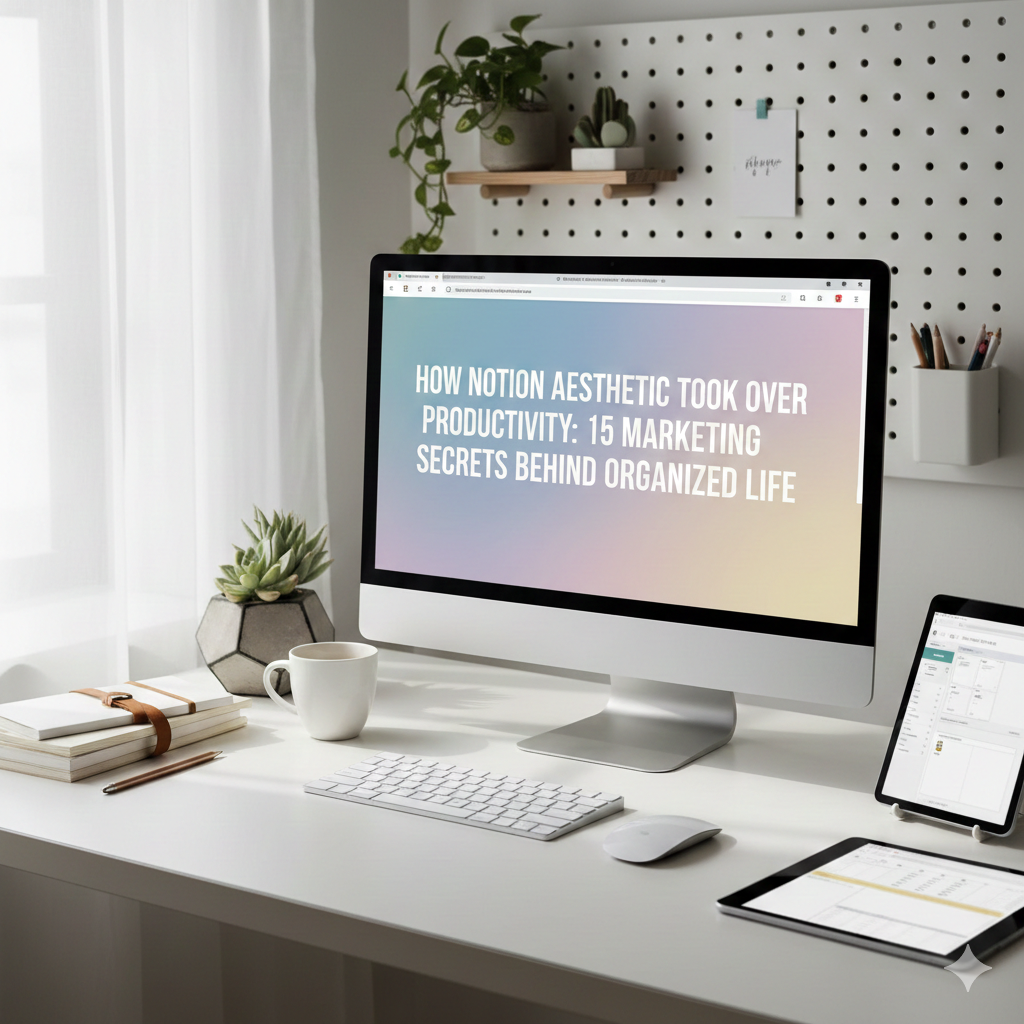
22 Dec How Notion Aesthetic Took Over Productivity: 15 Marketing Secrets Behind Organized
How Notion Aesthetic Took Over Productivity: 15 Marketing Secrets Behind Organized (Editor’s Choice)
✨ How Notion Aesthetic Took Over Productivity
🧠 15 Marketing Secrets Behind the “Organized Life”Notion didn’t just build a productivity tool — it engineered desire. Here’s the strategic breakdown behind how dashboards, aesthetics, and community turned organization into a cultural flex. 💅
| # | Secret ✨ | Why it works 🧲 | Angle 🎯 |
|---|---|---|---|
| 01 | 🎨 Aesthetic as a Core Product Feature | Beauty lowers resistance — the product feels calm, so people come back. | Brand & Design |
| 02 | 🌿 Selling a Lifestyle, Not Software | It sells an identity (“organized me”), not a tool. Instant aspiration. | Positioning |
| 03 | 📸 User-Generated Content = The Ad Campaign | Dashboards become shareable proof — distribution happens for free. | Community |
| 04 | 🎥 Creator-First Growth Strategy | Creators teach the product in public, building trust at scale. | Influence |
| 05 | 🧩 Modular Design = Infinite Personalization | Users “build themselves” in blocks — switching feels like heartbreak. | Product |
| 06 | ✅ Visual Proof of Productivity | Checkmarks + trackers = dopamine. Progress *looks* real immediately. | Behavior |
| 07 | 🫧 Soft-Minimal Branding | Friendly, not corporate. Less intimidation, more “I can do this.” | Branding |
| 08 | 🤝 Community Before Monetization | Habits first, upgrades later — payment feels earned, not forced. | Retention |
| 09 | 📎 Templates as Onboarding Marketing | Templates show the “future you” instantly — zero blank-page panic. | Onboarding |
| 10 | 💬 Emotionally Resonant Language | It promises calm, clarity, control — feelings beat features every time. | Messaging |
| 11 | 🪞 The “Before & After” Effect | Transformation stories are viral — messy life to aesthetic order = dopamine. | Content |
| 12 | 📲 Platform-Native Virality | It’s made for reels, carousels, pins, desk tours — easy to save + share. | Social |
| 13 | 🚪 Low Barrier, High Ceiling | Beginners start simple; power users go deep — everyone stays hooked. | Adoption |
| 14 | 🏡 Blurring Work + Life (On Purpose) | One home for goals, habits, money, journals — it becomes life infrastructure. | Expansion |
| 15 | 🧠 Letting Users Teach Each Other | Peer education scales faster and feels more trustworthy than brand lectures. | Network |
How Notion Aesthetic Took Over Productivity: 15 Marketing Secrets Behind Organized
How Notion Aesthetic Took Over Productivity: Marketing Secrets Behind Organized #2 — Selling the Life You Want, Not the Tool You Need
Notion never said, “Here’s a better way to manage tasks.” It said, quietly but confidently, “Here’s the version of you who has it together.” And we all leaned in. Because the real product isn’t databases—it’s identity. Organized, intentional, aspirational identity.
This is classic lifestyle marketing, but executed with restraint. Instead of flashy promises, Notion lets users project their desires onto the platform.
@makinleaa I learned how to use Notion literally yesterday to do this #uni #organise #university #notion #backtouni #aesthetic #relatable #australia #style ♬ LoveHate Thing (Sped Up Version) - Wale
How Notion Aesthetic Took Over Productivity: Marketing Secrets Behind Organized #3 — Turning User Dashboards Into the World’s Prettiest Ad Campaign
If you’ve ever saved a Notion dashboard on Pinterest or watched a “My Notion Setup” video at 1 a.m., congratulations—you’ve been marketed to, lovingly. User-generated content became Notion’s most powerful growth engine, because it didn’t feel like marketing. It felt like inspiration.
The brilliance here is restraint. Notion didn’t over-brand these visuals. It let creators own the aesthetic, which made the content feel authentic, not sponsored.
@just_eliias *•~ free notion template alert! [project management] #notion #project #notiontemplate #studyvlog #project #studyvl ♬ original sound - Audit British
How Notion Aesthetic Took Over Productivity: Marketing Secrets Behind Organized #4 — Letting Creators Do the Talking (and the Teaching)
Notion didn’t try to be the loudest voice in the room—it became the platform others built their voices on. Creators turned Notion into tutorials, templates, courses, and entire businesses. And Notion let them. No gatekeeping. No ego.
From a marketing standpoint, this is trust at scale. People trust people more than brands, always.
@thenotiongirlie Replying to @Ciao Here’s a quick tutorial on how to download my Free Notion Templates 🥰 you can use them on laptop or tablet #notion #notionapp #notionplanner #notiontemplate #freebies #freenotiontemplates #freenotiontemplate #freedigitalplanner ♬ How`s Your Day - aAp Vision
How Notion Aesthetic Took Over Productivity: Marketing Secrets Behind Organized #5 — Modular Design That Makes It Feel Like Your Brain Lives Here
Notion doesn’t tell you how to think—it hands you building blocks and says, “Go wild.” This modularity taps into something deeply personal: the desire to externalize our minds. Your dashboard becomes a reflection of how you think, plan, and dream.
That personalization is sticky. Once you’ve built your system, leaving feels like emotional labor. From a marketing angle, this is high-switching-cost brilliance disguised as freedom. You feel empowered—but you’re also deeply invested.
How Notion Aesthetic Took Over Productivity: Marketing Secrets Behind Organized #6 — Making Productivity Look Visible (and Therefore Real)
Checking boxes, progress bars, clean layouts—these aren’t just features, they’re psychological rewards. Notion makes productivity look tangible, even when the work itself is abstract or unfinished.
This visual feedback loop is everything. When effort becomes visible, motivation follows. And when motivation follows, users credit the tool—not realizing the tool was designed to make them feel accomplished before the results even arrive.
@just_eliias notion for students! — 📁🎧 Try Notion for FREE using the link in my bio! #notionpartner #notion #notionapp #notiontour #academiccomback #bestapps #appsrecommendations #studymotivation #studyvlog #organize #digitalplanner #assignments #uni #school ♬ I can see you sped up - Alice <3
How Notion Aesthetic Took Over Productivity: Marketing Secrets Behind Organized #7 — Soft-Minimal Branding That Doesn’t Yell at You
No harsh colors. No aggressive dashboards. No corporate intimidation. Notion’s branding feels like a deep breath. And in a world already screaming for attention, softness stands out.
This aesthetic choice is strategic. It lowers resistance, especially for creatives and non-technical users. The brand whispers instead of shouts—and somehow, you hear it louder.
@pierifiorentini gente no sé hablar sepan disculpar 🙃 #notion #organizacion #agenda #aesthetic #notiontour ♬ Bim Bom by João Gilberto - Sonya
How Notion Aesthetic Took Over Productivity: Marketing Secrets Behind Organized #8 — Building the Cult Before Charging Admission
Notion prioritized love before revenue. Community before conversion. Habit before monetization. By the time users hit a paywall, they were already emotionally committed.
That’s not accidental—that’s long-game marketing. When people feel like a product has helped them become better, paying feels like gratitude, not obligation.
@heyeaslo I fell in love with Notion. Notion is so helpful once you know how to use it. #notion #notiontok #ipadpro #productivity #productivityapp #ipadsetup #ipadapp ♬ Barça - .
How Notion Aesthetic Took Over Productivity: Marketing Secrets Behind Organized #9 — Templates That Sell Possibility, Not Just Efficiency
Templates aren’t just shortcuts—they’re vision boards. Notion’s templates show users what their lives could look like, fully organized and aesthetically aligned.
From a marketing perspective, this is aspirational onboarding. Instead of asking users to imagine outcomes, Notion shows them. And once people see the possibility, they want to recreate it.
@tess.barclay Becoming an iPad girl in 2023 #thatgirl #ipad #ipadgirl #ipadtour #ipadtips #notion #notionapp #notiontemplate ♬ original sound - Tess | Busy Blooming
How Notion Aesthetic Took Over Productivity: Marketing Secrets Behind Organized #10 — Language That Speaks to Feelings, Not Features
Notion talks about clarity, calm, and focus—not specs and storage limits. That language hits where productivity pain actually lives: in overwhelm, anxiety, and mental clutter.
This is emotional marketing done elegantly. By naming feelings users already have, Notion positions itself as the solution—without ever sounding salesy.
@heyeaslo Notion helps me organize my work and life. Do you use Notion on your phone too? #notion #notiontour #notionapp #productivityapp #iphonehomescreen #studentapp ♬ CUFF IT - Beyoncé
How Notion Aesthetic Took Over Productivity: Marketing Secrets Behind Organized #11 — The Addictive Power of the Before-and-After Story
Messy life, messy notes, messy brain… then Notion. The transformation narrative is irresistible because it’s visual, relatable, and hopeful.
Marketers love a good before-and-after for a reason—it’s proof without being preachy. Notion dashboards show transformation, which makes users want their own.
@ellycefulmore Replying to @itsmadisonryan how I use Notion to organize my ADHD brain 😍 #notionpartner #notionapp #notiontemplate #notiontour #notiontutorial #adhdhacks #adhdorganization #greenscreen ♬ original sound - Ellyce | ADHD finance 🤑
How Notion Aesthetic Took Over Productivity: Marketing Secrets Behind Organized #12 — Designing for Platforms Before Designing for Ads
Notion aesthetics thrive on TikTok, Instagram, YouTube, and Pinterest because they were made for visual storytelling. Desk setups. Screen recordings. Glow-ups.
This is platform-native marketing at its finest. Notion didn’t chase algorithms—it aligned with them naturally by being visually irresistible.
How Notion Aesthetic Took Over Productivity: Marketing Secrets Behind Organized #13 — Low Commitment Entry, Endless Mastery Curve
You can start Notion with one page. One list. One goal. But the ceiling? Limitless. And that progression keeps users engaged far beyond onboarding.
This is retention through growth. There’s always another system to build, another aesthetic to refine. Productivity becomes a creative practice.
@mnfreya Notion for beginners pt1🤍 #notiontemplate #notiontok #studytok #uniorganisation #macbookorganization #productivitytips ♬ Storytelling - Adriel
How Notion Aesthetic Took Over Productivity: Marketing Secrets Behind Organized #14 — Blurring Work and Life Without Apologizing
Notion didn’t silo productivity into “professional” and “personal.” It let everything coexist—habits next to meetings, journals next to KPIs.
This expanded relevance massively. The more areas of life Notion touches, the harder it is to replace. That’s not just smart—it’s expansive brand positioning.
How Notion Aesthetic Took Over Productivity: Marketing Secrets Behind Organized #15 — Letting the Community Write the Brand Story
Notion doesn’t over-explain. It lets users teach, share, remix, and evolve the product narrative together. The brand feels alive because it’s co-created.
And that’s the final magic trick: when users feel like they’re part of the story, they don’t just stay—they advocate. Loudly. Aesthetically. And for free.
The Aesthetic Was the Strategy (And That’s the Real Power Move)
Notion didn’t accidentally become the poster child of modern productivity—it designed its way there. By blending aesthetics, emotion, and community, it turned organization into a cultural signal instead of a chore. This wasn’t about features winning on a comparison chart; it was about making people feel calm, capable, and creatively in control the moment they opened the app. And once productivity looks this good, people don’t just use it—they identify with it, share it, and build entire routines around it.
If there’s a takeaway here (besides immediately wanting to redo your dashboard), it’s this: the future of productivity—and marketing—belongs to brands that understand desire as much as discipline. Notion didn’t teach us how to do more; it showed us how to want to do it. And in a world drowning in tools, that kind of emotional intelligence isn’t just smart marketing—it’s the main character move.