



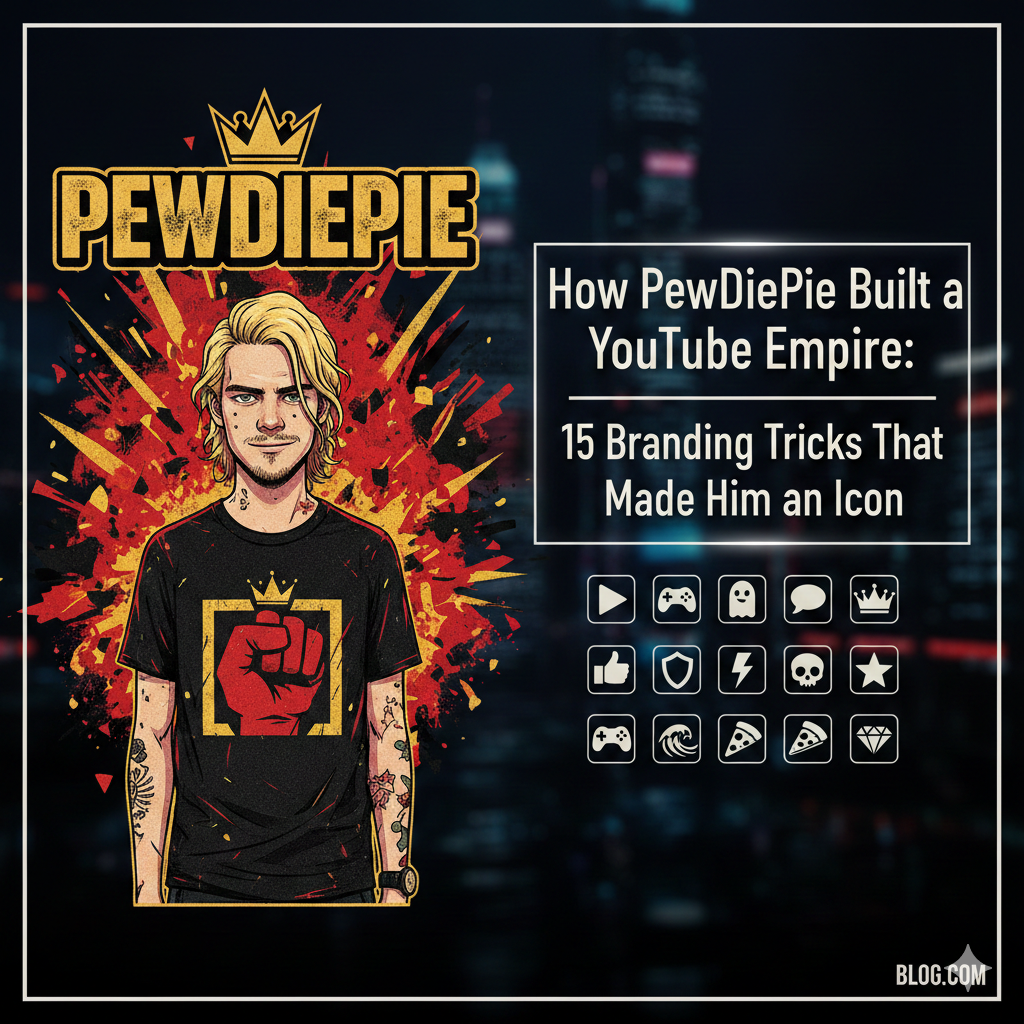
15 Dec How PewDiePie Built a YouTube Empire: 15 Branding Tricks That Made Him an Icon
If there’s one thing the internet loves more than cat videos and serial reposting, it’s a moment—that spark of cultural electricity that makes the whole world stop scrolling and start sharing. And while most brands are busy chasing the algorithm, the ones who really win master the art of turning fleeting viral sensations into enduring brand stories. It’s not all luck and timing — it’s strategy, sprinkled with sass and served with a side of savvy, especially if you’re taking cues from the playbook of a leading marketing agency in New York. So grab your oat milk latte and settle in — because we’re about to unravel how viral moments went from accidental hype to intentional marketing gold, one genius tactic at a time.
How PewDiePie Built a YouTube Empire: 15 Branding Tricks That Made Him an Icon (Editor’s Choice)
| Strategy | How It Works |
|---|---|
|
1. Authentic Chaos
Early, messy, totally uncurated presence that feels like hanging out with a friend, not consuming a product.
|
PewDiePie leans into imperfection as a feature—shaky camera work, unscripted reactions, and emotional outbursts that feel completely real. Instead of chasing polish, he builds trust by letting viewers see the rough edges, which makes his channel feel intimate and lived-in rather than staged.
|
|
2. Commentary DNA
Loud laughs, unexpected tangents, and honest reactions that become a recognizable “sound” of the brand.
|
His commentary isn’t just narration; it’s an audio identity. The exaggerated screams, self-interruptions, and running jokes turn each video into a performance you can recognize without even looking at the screen, making his personality—not the game—feel like the main event.
|
|
3. The Brotherhood Effect
Calling viewers “Bros” and building ritual moments like the brofist to create emotional membership.
|
By naming his audience and giving them shared symbols, he creates a tribe instead of traffic. The brofist, inside jokes, and recurring language make people feel like part of a small, weird club—even though it’s a massive global audience—which builds loyalty far beyond casual viewership.
|
|
4. Evolution as a Love Language
Regularly shifting formats—from horror games to memes to Minecraft—without losing the core audience.
|
Instead of clinging to one format, he treats his channel like a long-term story and lets it grow with him. The content evolves as his interests do, teaching the audience that the constant isn’t the game or topic—it’s Felix himself, which makes him future-proof against changing platforms and trends.
|
|
5. Self-Aware Satire
Making fun of himself, YouTube culture, and fame instead of pretending to be above it.
|
He uses humor as a shield and mirror—calling out the absurdity of the creator world while still living inside it. This self-awareness disarms criticism, makes him more relatable, and turns his channel into a place where everyone can laugh at the ecosystem they’re part of.
|
|
6. Meme Fluency
Treating memes like cultural currency and using them to decode the internet for his audience.
|
Through meme reviews and commentary, he acts as a tour guide to internet culture. Instead of just showing memes, he reacts, interprets, and amplifies them, positioning himself at the center of what’s funny, current, and collectively relatable online.
|
|
7. Visual Signature
Red-and-black waves, minimal typography, and a cohesive aesthetic that travels across platforms.
|
The bold wave pattern and sleek visual style create a distinctive brand stamp that makes his thumbnails, banners, and merch instantly recognizable. This visual consistency makes his presence feel intentional, even when the content itself is chaotic and wild.
|
|
8. The Discipline Era
Years of daily uploads turning his channel into a reliable habit in viewers’ routines.
|
By uploading constantly, he becomes part of people’s daily rhythm—like a show they always tune into. This consistency trains the algorithm and the audience at the same time, building momentum, familiarity, and a huge back catalogue that keeps generating views long after each video goes live.
|
|
9. Resilience Branding
Addressing mistakes and criticism directly instead of hiding behind PR language.
|
When things go wrong, he leans into transparent repair—speaking to the audience like real people instead of a press conference. That approach makes his growth visible, builds long-term trust, and turns difficult moments into proof that the person behind the channel is still learning.
|
|
10. Co-Creation Magic
Using Reddit posts, viewer memes, and fan art as a core part of the content itself.
|
By letting the audience feed him material, he builds a loop of participation—fans create, he reacts, they react again. It makes viewers feel seen and valued, and it quietly offloads ideation while deepening engagement and emotional investment in the channel.
|
|
11. Rivalry Theater
Turning the T-Series subscriber race into a global narrative everyone could join.
|
The T-Series rivalry gave his audience a shared mission—“subscribe to PewDiePie” became less of a CTA and more of a movement. That sense of drama and collective action transformed analytics into story, and viewers into active characters inside that story.
|
|
12. Trend Foresight
Jumping into formats like Minecraft, memes, and commentary before they peak.
|
His instinct for what’s next lets him lead trends instead of chasing them. By arriving early in rising formats, he captures the wave as it’s building, positioning himself as the reference point other creators (and viewers) look to when those trends go mainstream.
|
|
13. Multi-Platform Layer Cake
Expanding into merch, books, and podcasts that feel like natural extensions of his personality.
|
Instead of random side products, every extension—from Tsuki to books—feels like part of a cohesive universe. These layers allow fans to interact with his brand off YouTube, deepening connection and diversifying how and where his story lives.
|
|
14. Independence Couture
Staying independent and self-managed instead of folding into big corporate creator systems.
|
By keeping control over his decisions, he preserves a sense of purity and intent in his work. Fans can feel that there’s no invisible committee diluting his voice, which makes the channel feel more honest, more personal, and more aligned with his own values than with brand agendas.
|
|
15. Growth in Real Time
Letting viewers witness his evolution—from early chaos to marriage, moves, and maturity.
|
His channel functions as a public life archive, where viewers watch not just a creator but a person change over years. That visible evolution makes people feel like they’ve grown up alongside him, transforming passive followers into long-term companions in the story.
|
How PewDiePie Built a YouTube Empire: 15 Branding Tricks That Made Him an Icon
remember when pewdiepie did a reaction to bts (i supposed he was probably make fun of kpop), then after listening to their songs, he ended up like them, they followed each other on twitter, then bts unfollowed him, then he made a whole ass video whinning about it https://t.co/bnxdSG6FsI pic.twitter.com/zSYA0KVXog
— burnt 🪴 (@poosyshiro) October 27, 2024
How PewDiePie Built a YouTube Empire: Branding Tricks That Made Him an Icon #3 — The Brotherhood Effect
Long before “creator community” became a full industry category, PewDiePie quietly invented one by calling his viewers Bros. It was absurd, sweet, and radically effective. Suddenly, his audience wasn’t just a number on a dashboard; they were part of a collective inside joke, a shared vocabulary, a tiny internet tribe holding up their imaginary fists toward the screen in solidarity. This was branding by way of belonging, the kind of inclusive ritual that feels almost ceremonial even if it’s technically just a fist bump into the void.
The brilliance lies in how casual the whole thing was. He wasn’t posturing as a leader or cultivating a fandom with heavy-handed sentiment—it was playful, authentic, lightly ironic, and entirely participatory. The Bros weren’t fans; they were co-conspirators in a universe where the main plotline was “vibe with me.” And that’s a kind of emotional infrastructure that can’t be bought, borrowed, or reverse-engineered.
@_sulemanx this will probably flop but i couldnt resist editing him . . . . . #pewdiepie #pewdiepieedit #pewdiepieedits #felixkjellberg #edit #edits #youtuber #trending #nostalgia
♬ original sound - Mani 🇵🇸 🎧 - SulemanX • AEP 🎧 🇵🇸
How PewDiePie Built a YouTube Empire: Branding Tricks That Made Him an Icon #4 — Evolution as a Love Language
Felix’s content evolution reads like a long-running fashion column—you watch it partly for the plot, partly for how the protagonist reinvents himself every season. The shifts from horror Let’s Plays to meme analysis to Minecraft revival felt fluid, organic, and driven by curiosity instead of strategy. The throughline wasn’t the topic; it was the personality. And that allowed him to evolve without fracturing the relationship with his audience.
Fans didn’t follow him because of a format—they followed him because the evolution itself became a comforting cadence. You could feel him growing, recalibrating, shedding old skins. It mirrored the viewer’s own life changes, making the content feel less like entertainment and more like an ongoing conversation with someone who’s also trying to figure it all out in real time.
@yu.bro The evolution of PewDiePie 🗿 #evolution #pewdipie #youtuber #fyp #edits @PewDiePie ♬ original sound - Yubro
How PewDiePie Built a YouTube Empire: Branding Tricks That Made Him an Icon #5 — Self-Aware Satire
There’s a particular joy in watching someone who fully understands the absurdity of their own celebrity—and PewDiePie has always been delightfully fluent in that tension. He has a habit of narrating his fame while simultaneously puncturing it, like a fashion writer describing couture while reminding readers it’s fundamentally impractical. His humor is meta without being pretentious, sarcastic without being cruel, and grounded in a charming acknowledgment that the whole ecosystem is, frankly, a little ridiculous.
That self-awareness works like a release valve. Instead of pretending he’s above the drama or drowning in it, he dances around it, poking fun at himself in ways that feel more revealing than any polished PR moment ever could. It’s vulnerability wrapped in comedy—and audiences recognize that as truth-telling, even when it arrives in a joke.
How PewDiePie Built a YouTube Empire: Branding Tricks That Made Him an Icon #6 — Meme Fluency
PewDiePie reads meme culture the way trend forecasters read runways—instinctively, fluently, and with an almost eerie correctness about what’s about to go mainstream. His meme reviews functioned like editorial commentary on the cultural psyche, distilling absurdity into something surprisingly insightful. It was humor as anthropology.
The brilliance is that he never positioned himself as a curator; he positioned himself as a participant. And that’s what made the reviews feel refreshing: not academic, not performative, but like someone sitting next to you on the couch saying, “Okay but you HAVE to see this.” That intimacy is why he didn’t just ride meme culture—he shaped it.
@siopaopao68 Dreams sometimes become very real. @pewdiepie #fyp #real #life #happymoments #neverforget #pewds #pewdiepie #marzia #bjorn #repost ♬ BIRDS OF A FEATHER - Billie Eilish
How PewDiePie Built a YouTube Empire: Branding Tricks That Made Him an Icon #7 — The Visual Signature
His red-and-black wave pattern became a sort of power print—bold, hypnotic, instantly recognizable, and unmistakably him. It functions the way a designer’s signature fabric does: tying every collection together even when the silhouettes change. There’s something slightly mischievous about it too—loud but not aggressive, graphic but not abrasive.
And then there’s the Swedish minimalism underneath it all: clean lines, simple typography, intentional restraint. The tension between chaos and simplicity gives the aesthetic its power. Just like a fashion girl mixing a statement piece with understated tailoring, Felix’s visual identity pulls off maximalism with elegance.
How PewDiePie Built a YouTube Empire: Branding Tricks That Made Him an Icon #8 — The Discipline Era
Uploading daily wasn’t just a logistical feat—it was a form of intimacy. There’s a peculiar trust that forms when someone shows up every day, even in small ways. His consistency created a kind of companionship for viewers, a ritual that felt grounding and familiar. It’s very “the columnist whose work you read with your morning coffee” energy.
The sheer volume of content also created an expansive narrative archive. Viewers grew with him, through subtle shifts in humor, tone, and worldview. That continuity is stabilizing, which is ironic because the videos themselves were often unhinged—in the best way.
@himani.a i haven’t watched him in YEARS and it was just so wholesome to see them just living their life in japan #pewdiepie #marzia #youtube #fyp ♬ youre gonna go far sped up - ᴄᴏᴍᴘʟᴇx
How PewDiePie Built a YouTube Empire: Branding Tricks That Made Him an Icon #9 — Resilience Branding
When controversies hit, PewDiePie didn’t hide behind PR gloss; he addressed things directly, awkwardly, imperfectly, and—crucially—humanly. His responses felt less like crisis management and more like someone trying to make sense of a complicated moment with honesty, even if it wasn’t packaged ideally. That rawness built trust.
He didn’t pretend to have all the answers, and that humility softened the edges of even the most intense situations. It created a kind of emotional transparency that made fans feel not just included but respected. Resilience became part of his brand ethos—not the polished “bounce back” narrative, but the real, messy, “still figuring it out” kind.
How PewDiePie Built a YouTube Empire: Branding Tricks That Made Him an Icon #10 — Co-Creation Magic
PewDiePie’s content ecosystem functions like an interactive magazine where the readers get to write half the articles. His reliance on fan submissions, memes, Reddit threads, and viewer ideas turned the audience from observers into collaborators. It’s participatory storytelling, and it gives the content this democratic warmth.
Fans didn’t just watch—they contributed. They shaped jokes, built lore, and created the very content he reacted to. This loop created a feedback system so tight that the community felt like an extension of the channel itself.
@jakedontdraw How pewdiepie shows us to learn efficiently by having fun #learntodraw #academicart #fineart #drawing #pewdiepie ♬ original sound - Jakedontdraw
How PewDiePie Built a YouTube Empire: Branding Tricks That Made Him an Icon #11 — Rivalry Theater
The T-Series showdown wasn’t just a subscriber race; it was narrative spectacle. It felt like a fashion week feud that accidentally became global news—dramatic, over-the-top, and weirdly meaningful. The internet treated it like a cultural Super Bowl, with memes serving as commentary panels and fan edits functioning as campaign posters.
But what made it iconic wasn’t the competition—it was the communal storytelling around it. Felix and his fans co-wrote a digital legend, a piece of internet mythology that felt playful but also symbolic of early YouTube identity. It was drama with heart.
@who.wins_official T-series vs MrBeast vs Pewdiepie ! MrBeast is going to overthrow T-series 6 years after Pewdiepie defeat 🤯 ! #tseries #mrbeast #pewdiepie #ranking #youtube #unitedstates #world #number1 ♬ son original - Who Wins ?
How PewDiePie Built a YouTube Empire: Branding Tricks That Made Him an Icon #12 — Trend Foresight
There’s a fashion-editor level instinct in the way PewDiePie senses trends. Before Minecraft surged, he was already knee-deep in it. Before meme reviews became standardized, he had already made them a genre. His timing is intuitive, not analytical—like someone who simply feels where culture is headed.
This foresight allowed him to lead rather than follow. Viewers got the sense they were watching the first draft of what the rest of the internet would be doing six months later. That’s the kind of influence that doesn’t just build audiences; it builds legacies.
How PewDiePie Built a YouTube Empire: Branding Tricks That Made Him an Icon #13 — The Multi-Platform Layer Cake
PewDiePie’s ventures into merch, books, and podcasts didn’t feel like brand sprawl—they felt like natural extensions of the same personality. Tsuki, especially, carries this warm minimalism that feels like Scandinavian loungewear got a personality transplant. His projects don’t try to shout or impress; they emanate a quiet, confident identity.
And because the extensions feel authentic rather than opportunistic, fans embrace them as part of the narrative rather than side quests. His off-YouTube ventures enrich the lore, adding layers that feel cohesive and intentional.
How PewDiePie Built a YouTube Empire: Branding Tricks That Made Him an Icon #14 — Independence Couture
There’s something undeniably chic about refusing to be managed. PewDiePie’s independence became part of his allure, like an indie magazine that refuses corporate buyout offers because the art matters more than the money. His autonomy isn’t rebellious; it’s intentional—a boundary drawn in the name of creative integrity.
That stance gave his brand a certain credibility. Fans could sense the lack of corporate fingerprints, the authenticity of decisions made for personal reasons rather than strategic ones. It’s rare, it’s refreshing, and it’s wildly compelling.
How PewDiePie Built a YouTube Empire: Branding Tricks That Made Him an Icon #15 — Growth in Real Time
Perhaps the most emotionally resonant part of PewDiePie’s brand is the fact that we’ve watched him grow up. Through relationships, relocations, personal struggles, reinventions—every era unfolded gently on camera. It felt less like content and more like a serialized memoir that invited viewers not just to witness but to reflect on their own unfolding lives.
That longitudinal transparency is powerful. It’s not curated vulnerability or “relatable” branding—it’s simply a person evolving with his audience still sitting in the front row. And that continuity, that sense of being invited into a life rather than a persona, is what turns followers into something closer to long-term companions.
The Blueprint Behind the Personality
PewDiePie’s journey proves that the most powerful brands aren’t built from polish—they’re built from presence. From chaotic beginnings to a fully realized multi-platform universe, his empire stands as proof that storytelling, reinvention, community, and unapologetic humanity will always beat strategy without soul. Whether you’re building a channel, a business, or a global identity, the real lesson isn’t just what Felix created — it’s how he made millions of people feel like they were part of something that never needed permission to be imperfect. The formula isn’t a formula at all; it’s a feeling. And once you understand that, you don’t just build an audience — you build a legacy.