



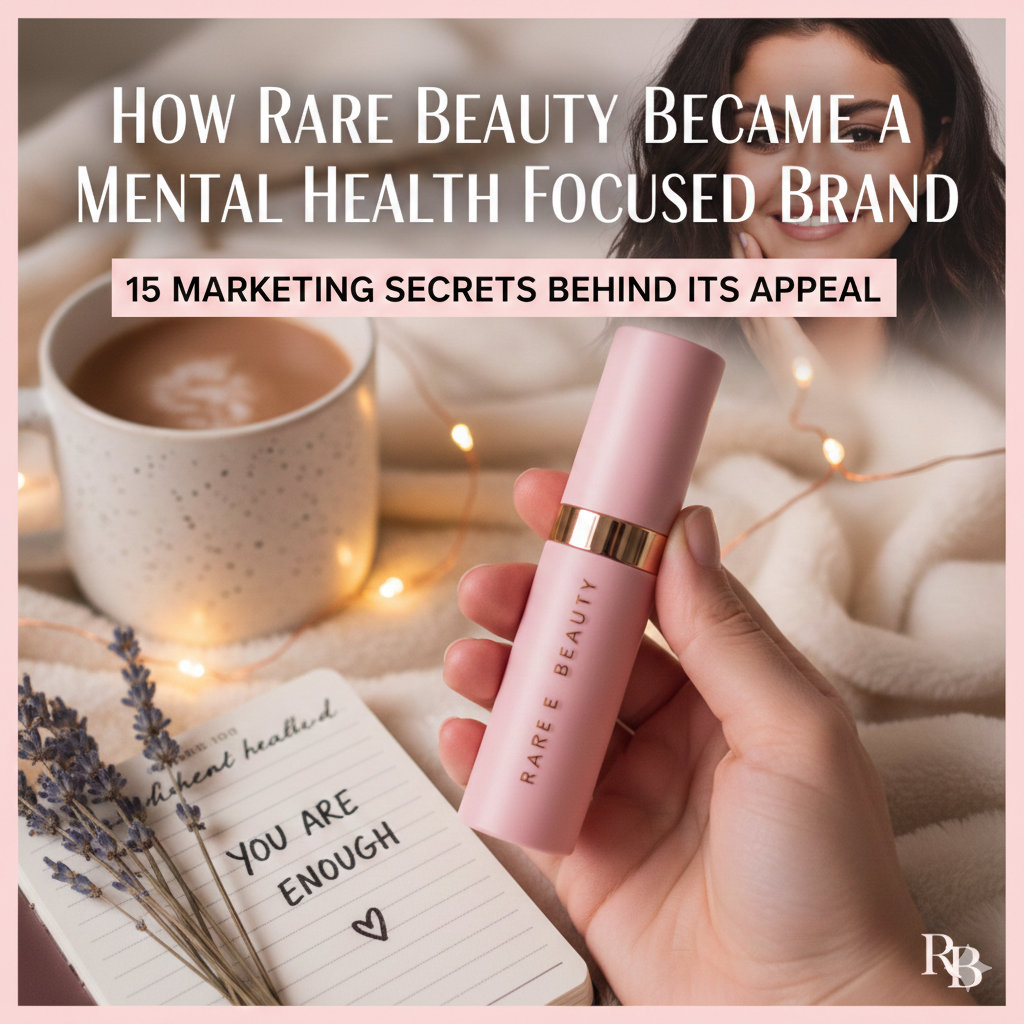
20 Dec How Rare Beauty Became a Mental Health Focused Brand: 15 Marketing Secrets Behind Its Appeal
How Rare Beauty Became a Mental Health Focused Brand: 15 Marketing Secrets Behind Its Appeal (Editor’s Choice)
How Rare Beauty Became a Mental Health–Focused Brand
A swipeable, mobile-friendly breakdown of the 15 marketing moves that made Rare Beauty feel less like a brand and more like a safe corner of the internet.
| # | Secret | Why it works |
|---|---|---|
| 01 |
Mission as the product context
Not “purpose-washing”—the mission shapes launches, copy, and community.
|
The brand feels built from values, so the mental-health message reads as structural, not seasonal. |
| 02 |
“Real” is the aesthetic (consistently)
Soft visuals, visible texture, minimal retouching.
|
It visually rejects perfection culture—instantly signaling permission instead of pressure. |
| 03 |
Mental health tied to action
Support is backed by tangible initiatives and partnerships.
|
Converts “awareness” into credibility—people trust brands that do, not just say. |
| 04 |
Celebrity as bridge, not centerpiece
Selena draws attention, community sustains it.
|
The brand doesn’t rely on fandom alone; it builds durable trust beyond the founder. |
| 05 |
Vulnerability as a content pillar
Gentle honesty > hype energy.
|
In a loud category, softness is differentiation—and it deepens emotional retention. |
| 06 |
Community over comparison
Supportive norms are encouraged and modeled.
|
People return to spaces that feel safe—this creates repeat engagement without gimmicks. |
| 07 |
Copy that reduces shame
Language avoids “fix,” “flaw,” “hide.”
|
Shifts beauty from correction to expression—making purchase feel like self-support. |
| 08 |
“Good enough” routines
Ease, speed, comfort are celebrated.
|
Removes friction and guilt—helping products become daily companions, not performance tools. |
| 09 |
Inclusive packaging design
Ergonomic choices make products easier to use.
|
Inclusion shows up in real hands—turning accessibility into brand love. |
| 10 |
They sell a feeling: calm + permission
A mood you can recognize instantly.
|
When formulas converge, emotion becomes the differentiator—this is sticky positioning. |
| 11 |
Social tone: “friend,” not “brand”
Human captions, careful language, no harsh humor.
|
Creates parasocial comfort without being cringe—ideal for trust-first audiences. |
| 12 |
Relatability-led creator strategy
Real skin, real days, real stories.
|
Authentic creator fit increases persuasion—people buy from people who feel like them. |
| 13 |
Education without judgment
Tutorials guide—never scold.
|
Lowers anxiety and boosts confidence, making viewers more likely to try + buy. |
| 14 |
Consistency across touchpoints
Same softness in ads, site, PR, packaging.
|
Consistency builds credibility—no “two-brand” whiplash, just clear identity. |
| 15 |
Participation over worship
Invites sharing/support, not stan culture.
|
Turns customers into community—loyalty becomes identity-based, not hype-based. |
How Rare Beauty Became a Mental Health Focused Brand: 15 Marketing Secrets Behind Its Appeal
How Rare Beauty Became a Mental Health Focused Brand: Marketing Secrets Behind Its Appeal #3 — Mental Health Backed by Action
Rare Beauty understands that feelings without follow-through read hollow. Instead of leaning into vague encouragement, the brand grounds its mental health positioning in tangible action—funding, partnerships, and advocacy that exist beyond Instagram captions. If Leandra were writing this as a marketer, she’d call it credibility chic: the kind of integrity that doesn’t need dramatics. By making support measurable, Rare avoids the trap of performative wellness and positions itself as a brand that treats emotional care as a responsibility, not a mood.
How Rare Beauty Became a Mental Health Focused Brand: Marketing Secrets Behind Its Appeal #4 — Celebrity as an Entry Point, Not the Center
Selena Gomez is present, but never overpowering. She’s the doorway, not the destination. Rare Beauty doesn’t rely on celebrity worship; it uses celebrity vulnerability as connective tissue. From a Leandra-meets-strategy perspective, this is restraint done right. Selena’s story invites you in, but the brand quickly shifts focus to shared experience—community, creators, customers. The result is a brand that can stand on its own emotional legs, even as its founder remains deeply human and visible.
How Rare Beauty Became a Mental Health Focused Brand: Marketing Secrets Behind Its Appeal #5 — Vulnerability as a Content Strategy
Rare Beauty doesn’t confuse empowerment with loudness. Its content lives in the quieter emotional register—gentle, reflective, sometimes raw. This is vulnerability without spectacle. A Leandra-style observation here would be that Rare understands modern confidence isn’t about dominance; it’s about honesty. By allowing softness into its storytelling, the brand creates emotional intimacy at scale—something most beauty brands still struggle to achieve.
How Rare Beauty Became a Mental Health Focused Brand: Marketing Secrets Behind Its Appeal #6 — Community Over Comparison
Rare Beauty doesn’t fuel competition; it gently starves it. The brand’s community spaces subtly reward kindness, affirmation, and mutual support. There’s no “better than,” only “with.” Through a Leandra-informed lens, this feels deeply intentional: Rare isn’t chasing virality at any emotional cost—it’s curating a tone. And tone, in the long run, builds loyalty far more effectively than hype.
How Rare Beauty Became a Mental Health Focused Brand: Marketing Secrets Behind Its Appeal #7 — Language That Removes Shame
Rare Beauty’s copy never scolds. It doesn’t correct, conceal, or fix. Instead, it invites. Shade names, product descriptions, and tutorials all feel emotionally neutral—sometimes even affirming. If Leandra were unpacking this, she’d note how language shapes self-perception. By removing judgment from beauty language, Rare quietly reframes makeup as choice, not obligation.
How Rare Beauty Became a Mental Health Focused Brand: Marketing Secrets Behind Its Appeal #8 — “Good Enough” as a Beauty Philosophy
Rare Beauty champions effortlessness without irony. Its routines are quick, forgiving, and adaptable. This is makeup that fits into life, not the other way around. A Leandra-style take would highlight how radical this actually is: in a culture obsessed with optimization, Rare gives permission to stop striving. From a marketing standpoint, this lowers friction—and from a human standpoint, it lowers anxiety.
How Rare Beauty Became a Mental Health Focused Brand: Marketing Secrets Behind Its Appeal #9 — Inclusive Design That Shows Up in Real Life
The brand’s packaging isn’t just pretty—it’s considerate. Ergonomic design choices quietly acknowledge different physical abilities, without turning accessibility into a headline. Leandra-as-marketer would call this inclusion without exhibitionism. It’s thoughtful, subtle, and deeply respectful—exactly the kind of detail that turns users into loyalists.
How Rare Beauty Became a Mental Health Focused Brand: Marketing Secrets Behind Its Appeal #10 — Selling a Feeling, Not a Finish
Rare Beauty doesn’t promise transformation. It promises calm. The brand’s emotional output is consistent: warmth, permission, reassurance. In Leandra terms, this is selling a mood you want to live inside. When products become interchangeable, feelings become the differentiator—and Rare has mastered that exchange.
How Rare Beauty Became a Mental Health Focused Brand: Marketing Secrets Behind Its Appeal #11 — A Social Voice That Feels Human
Rare Beauty sounds like a friend who chooses words carefully. There’s no snark, no urgency, no algorithm-chasing aggression. From a Leandra-marketing perspective, this is tonal discipline. The brand understands that how you speak is just as important as what you say—especially when mental health is part of the promise.
How Rare Beauty Became a Mental Health Focused Brand: Marketing Secrets Behind Its Appeal #12 — Relatability-Led Creator Strategy
Rare Beauty chooses creators who feel lived-in, not untouchable. The content prioritizes honesty over aspiration. If Leandra were writing this, she’d note how the brand understands influence today isn’t about envy—it’s about recognition. People buy when they feel seen.
How Rare Beauty Became a Mental Health Focused Brand: Marketing Secrets Behind Its Appeal #13 — Education Without Judgment
Rare Beauty teaches without implying failure. Tutorials feel like suggestions, not instructions. This subtle shift reduces performance anxiety and builds confidence. Leandra would likely frame this as emotional UX: when people feel safe, they experiment—and experimentation leads to attachment.
How Rare Beauty Became a Mental Health Focused Brand: Marketing Secrets Behind Its Appeal #14 — Radical Consistency Across Touchpoints
There’s no tonal whiplash with Rare Beauty. Ads, packaging, PR, and social all speak the same emotional language. From a marketer’s lens, this is brand discipline. From a Leandra lens, it’s taste. Consistency makes the brand feel trustworthy—like someone who knows who they are.
How Rare Beauty Became a Mental Health Focused Brand: Marketing Secrets Behind Its Appeal #15 — Participation Over Idolization
Rare Beauty doesn’t ask to be worshipped. It asks to be shared. The community is invited to participate, not perform loyalty. Leandra-as-marketer would recognize this as the ultimate modern luxury: belonging without obligation. That’s how Rare turns customers into community—without ever demanding devotion.