



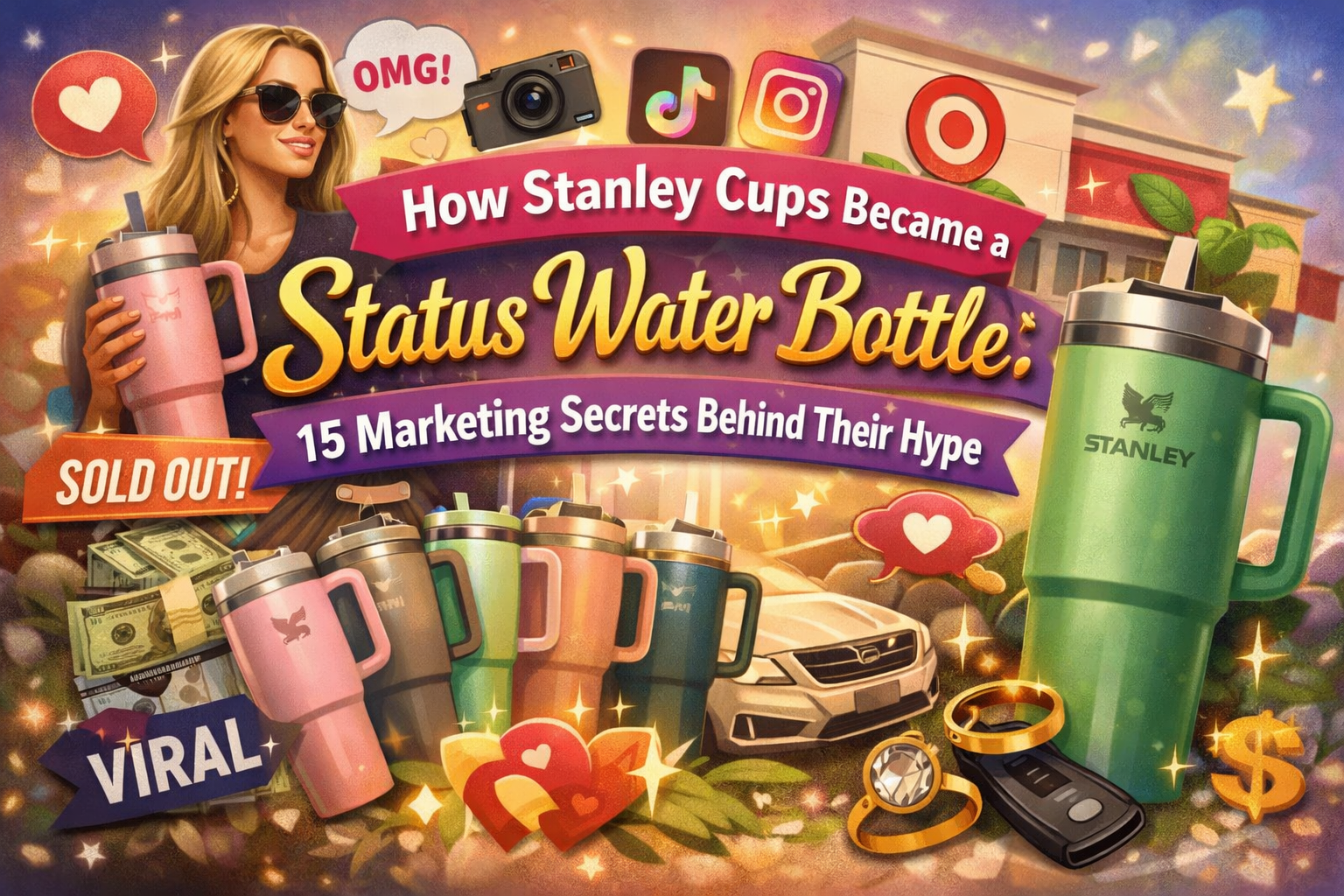
22 Dec How Stanley Cups Became a Status Water Bottle: 15 Marketing Secrets Behind Their Hype
How Stanley Cups Became a Status Water Bottle: 15 Marketing Secrets Behind Their Hype (Editor’s Choice)
How Stanley Cups Became a Status Water Bottle
15 bold marketing moves that turned hydration into hype, identity, and cultural currency.
| # | Strategy | Why It Worked |
|---|---|---|
| 1 |
Strategy
Reframed the Consumer
Stanley shifted from rugged utility to modern lifestyle identity.
|
Why It Worked
People don’t buy bottles—they buy who the bottle makes them feel like.
|
| 2 |
Subculture Validation
Pilates moms and routine-driven creators adopted it organically.
|
Trends feel safer when they’re already normalized by a group. |
| 3 |
Practicality as Status
Handle, size, and fit became quiet flexes.
|
Function = competence, and competence is aspirational. |
| 4 |
Algorithm Saturation
It appeared everywhere without selling itself.
|
Repetition creates default choices. |
| 5 |
Silent Scarcity
Colors sold out quietly, triggering FOMO.
|
Unclear availability increases desire. |
| 6 |
Color as Identity
The cup became an accessory.
|
People collect what reflects their taste. |
| 7 |
Unpolished Influence
Everyday creators made it feel inevitable.
|
Reality converts better than aspiration. |
| 8 |
Routine Lock-In
The cup became part of daily systems.
|
Habits are hard to replace. |
| 9 |
Customer Defense
Fans defended the brand publicly.
|
Defense equals emotional ownership. |
| 10 |
Meme Status
Humor increased reach without killing desire.
|
Shared jokes create belonging. |
| 11 |
Quiet Luxury
Subtle design signaled refined taste.
|
Understated always outlasts loud. |
| 12 |
Accessible Aspiration
Premium feel, attainable price.
|
People aspire to what feels possible. |
| 13 |
Hydration = Identity
Drinking water became self-definition.
|
Identity-based products stick. |
| 14 |
Internet Lore
The audience built the myth.
|
Ambiguity fuels obsession. |
| 15 |
Quiet Social Signal
The cup whispered relevance.
|
The strongest signals don’t shout. |
How Stanley Cups Became a Status Water Bottle: 15 Marketing Secrets Behind Their Hype
How Stanley Cups Became a Status Water Bottle: Marketing Secrets Behind Their Hype #1 They Didn’t Rebrand the Product — They Reframed the Woman Holding It
Stanley didn’t explode because they invented a better bottle; they exploded because they repositioned who the bottle was for. The pivot wasn’t about hydration—it was about identity. Once the brand stopped speaking to “outdoorsmen” and started whispering to modern women juggling work, wellness, motherhood, and aesthetics, the product transformed into a lifestyle marker. The cup became a quiet badge of competence: she has her life together. This is classic cultural reframing—no logo overhaul, no dramatic relaunch, just a shift in who gets centered in the narrative. Stanley didn’t chase trends; they aligned themselves with a woman already trending upward socially.
How Stanley Cups Became a Status Water Bottle: Marketing Secrets Behind Their Hype #2 They Let Subcultures Crown the Product Before the Internet Did
Before Stanley became everywhere, it became everything to a very specific group: suburban moms, car-pool culture, Pilates regulars, and women who live in athleisure but think strategically. That adoption mattered because it came with credibility. When a subculture chooses a product organically, it carries more weight than any influencer seeding campaign. Stanley didn’t announce dominance; it was appointed. Once those early adopters normalized it in daily rituals—Target runs, school pickup, gym bags—the rest of the internet followed, not questioned.
How Stanley Cups Became a Status Water Bottle: Marketing Secrets Behind Their Hype #3 They Turned Practicality Into a Flex
Stanley mastered the rare art of making usefulness aspirational. The handle, the size, the cupholder fit—these weren’t boring features; they were talking points. Owning a Stanley subtly signals that you’ve optimized your life. You’re hydrated, prepared, and thinking ahead. In a culture obsessed with soft productivity and wellness-coded efficiency, the cup reads as proof of discipline without rigidity. It’s not flashy wealth—it’s functional superiority, which is often more respected.
How Stanley Cups Became a Status Water Bottle: Marketing Secrets Behind Their Hype #4 They Let the Algorithm Do the Selling
Stanley’s growth wasn’t driven by polished ads—it was powered by repetition. The product shows up constantly in low-stakes, high-frequency content: GRWMs, car vlogs, grocery hauls, office desk tours. This is algorithmic dominance through presence, not persuasion. When the same object keeps appearing across unrelated content, the brain registers it as default. Stanley didn’t need to convince anyone—it simply became unavoidable.
How Stanley Cups Became a Status Water Bottle: Marketing Secrets Behind Their Hype #5 They Used Scarcity Without Ever Announcing It
Stanley never had to say “limited edition” out loud for scarcity to do its work. Instead, they let availability remain just unclear enough to create low-grade urgency. Colors disappeared. Restocks felt unpredictable. Certain shades became suddenly unattainable, which transformed them from objects into missed opportunities. And culturally, we are far more attached to what we almost had than what we can easily replace. This is fashion logic applied to drinkware: when something sells out quietly, it signals demand without desperation. Stanley understood that over-explaining kills desire. So they stayed silent—and let the internet narrate the scarcity for them.
How Stanley Cups Became a Status Water Bottle: Marketing Secrets Behind Their Hype #6 They Made Color the Main Character, Not the Logo
Stanley’s genius move wasn’t branding louder—it was letting color carry the emotional weight. The palette feels intentional, lifestyle-coded, and deeply Instagram-aware. Soft neutrals for minimalists. Muted pastels for the wellness crowd. Seasonal tones that sync with fashion cycles, not hydration needs. This is why people own multiple Stanley cups without blinking. They’re not buying duplicates; they’re curating a wardrobe. Color turned the product from a tool into an accessory—one that could match a gym set, a car interior, or a kitchen counter. When consumers start choosing functionality based on aesthetic alignment, you’ve officially crossed into status territory.
How Stanley Cups Became a Status Water Bottle: Marketing Secrets Behind Their Hype #7 They Benefited From Influencers Who Didn’t Look Like Influencers
The most effective Stanley endorsements rarely felt like endorsements at all. The cup appeared in the hands of women who weren’t selling a fantasy—they were documenting routines. Morning errands. School drop-offs. Workdays that blurred into workouts. These creators didn’t disrupt their content to explain the product because they didn’t need to. The Stanley cup looked inevitable in their lives. That’s the power of alignment over advertising. When a product fits so seamlessly into someone’s reality, it feels less like influence and more like evidence.
How Stanley Cups Became a Status Water Bottle: Marketing Secrets Behind Their Hype #8 They Attached Themselves to Routine, Not Excitement
Stanley didn’t market moments; they marketed repetition. This is crucial. Excitement fades. Routine compounds. The cup shows up in morning resets, hydration challenges, work-from-home desks, gym bags, and bedside tables. Over time, it becomes part of the architecture of someone’s day. That’s a powerful psychological shift. You don’t replace things that structure your habits—you defend them. Stanley embedded itself into daily life so deeply that switching bottles would feel like disrupting a system, not upgrading an object.
How Stanley Cups Became a Status Water Bottle: Marketing Secrets Behind Their Hype #9 They Let Their Customers Fight the Backlash for Them
Once Stanley reached peak visibility, criticism was inevitable. Too basic. Too big. Too popular. But the brand never rushed in to defend itself—and that restraint was strategic. Instead, loyal users took on the role of protectors. Comment sections filled with justifications, jokes, and passionate defenses. When consumers feel compelled to argue on behalf of a product, it’s no longer just something they own—it’s something they identify with. Stanley didn’t need to manage perception; the community did it organically.
How Stanley Cups Became a Status Water Bottle: Marketing Secrets Behind Their Hype #12 They Mastered Accessibility Without Diluting Aspiration
Stanley is everywhere—but it never feels cheap. That’s not an accident. Strategic retail placement ensured the cup was attainable without becoming disposable. You can buy it at Target, yes, but it doesn’t feel like a throwaway aisle item. The pricing sits in a psychologically powerful middle ground: high enough to feel intentional, low enough to feel justifiable. This balance matters because status today isn’t about being unreachable—it’s about being chosen. Stanley became aspirational not because it was exclusive, but because it was selectively ubiquitous.
How Stanley Cups Became a Status Water Bottle: Marketing Secrets Behind Their Hype #13 They Turned Hydration Into a Form of Self-Definition
Hydration used to be a habit. Stanley helped turn it into an identity. Carrying the cup signals intention: you plan ahead, you care for yourself, you take wellness seriously—but not aggressively. In a culture obsessed with optimization, the Stanley cup reads as proof of follow-through. It’s not about drinking water; it’s about being the kind of person who does. The product became shorthand for discipline that feels gentle, not punitive. And once a product attaches itself to how someone sees themselves, it stops being optional.
How Stanley Cups Became a Status Water Bottle: Marketing Secrets Behind Their Hype #14 They Let the Internet Build the Myth Around Them
Stanley didn’t aggressively control its narrative—and that restraint created room for exaggeration, humor, and lore. The internet filled in the gaps. Suddenly, the cup wasn’t just popular; it was iconic. People joked about emotional attachment, irrational loyalty, and cult-like devotion. None of it was official, but all of it was powerful. Myth thrives when brands resist the urge to clarify everything. Stanley allowed perception to snowball, and in doing so, gained a larger-than-life cultural presence without ever declaring one.