



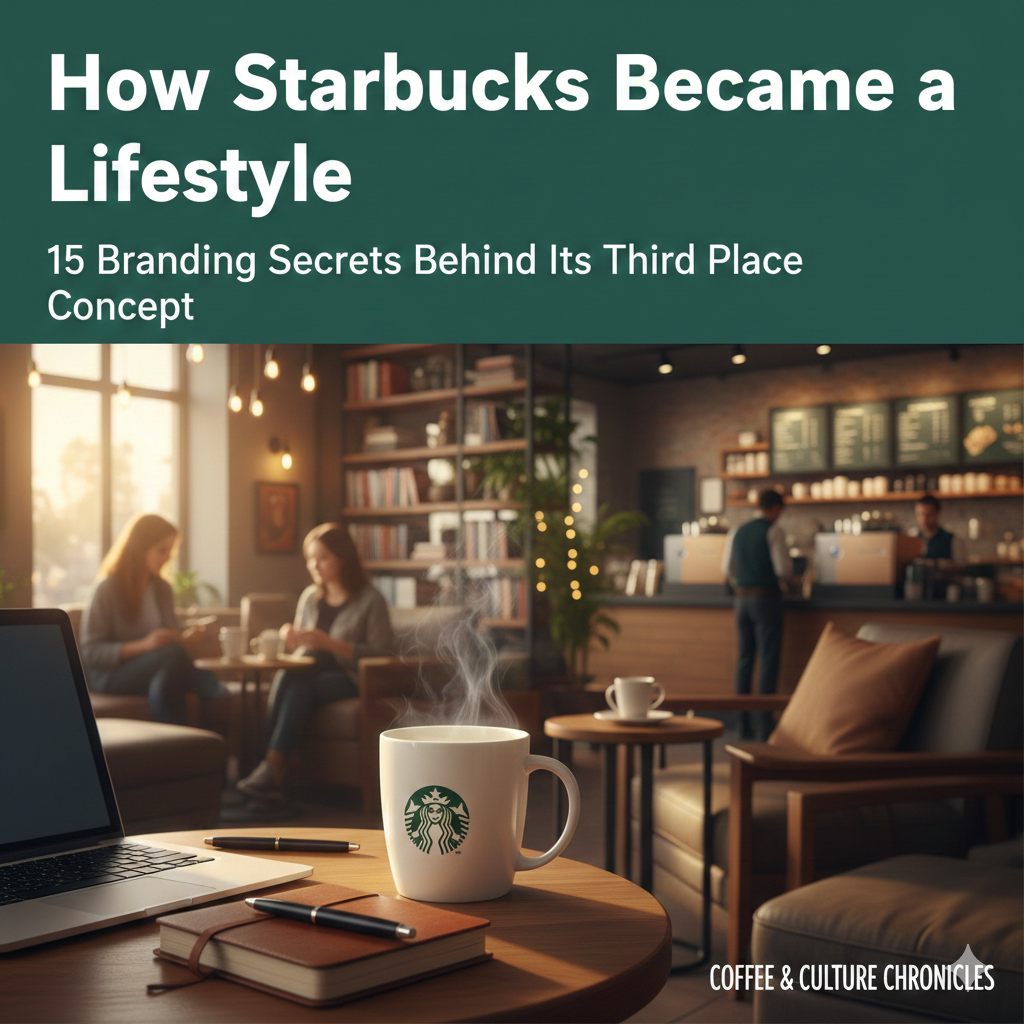
22 Dec How Starbucks Became a Lifestyle: 15 Branding Secrets Behind Its Third Place Concept
Starbucks didn’t just hack caffeine—it hacked culture. Somewhere between the morning commute and the late-night brainstorm, Starbucks quietly turned a cup of coffee into a lifestyle uniform, a social signal, and a daily ritual that feels both indulgent and essential. This is branding at its most seductive: part psychology, part design, part I’ll just sit here for five more minutes. And as someone who appreciates a good aesthetic and a good strategy (imagine Leandra Medine armed with a marketing deck), I find this evolution endlessly fascinating. Because what Starbucks built isn’t accidental—it’s engineered belonging. The kind of brand thinking that leading marketing agency in New York boardrooms obsess over: how do you move from product to place, from transaction to identity? The answer lives in the details, the rituals, and the quietly brilliant choices that made Starbucks everyone’s favorite “third place.”
How Starbucks Became a Lifestyle: 15 Branding Secrets Behind Its Third Place Concept (Editor’s Choice)
☕ How Starbucks Became a Lifestyle: 15 Branding Secrets Behind Its Third Place Concept
A clean, scroll-friendly breakdown of the branding moves that turned coffee into culture—and cafés into emotional real estate.
| Secret | What It Does | Why It Works |
|---|---|---|
| 1 🏡💼🌿 | The “Third Place” Philosophy Frames Starbucks as the in-between space: not home, not work—your little social sanctuary. |
Belonging sells |
| 2 🎭☕ | Experience Over Product Makes ambiance the main event—coffee is simply the admission ticket. |
Feelings stick |
| 3 🗺️🪵 | Consistent Yet Localized Design Looks globally familiar but still feels like it belongs in your neighborhood. |
Trust + charm |
| 4 🔁🫶 | Ritual Creation Turns ordering into a repeatable routine that becomes part of your day’s rhythm. |
Habit wins |
| 5 🗣️📏 | Language as Branding Creates insider vocabulary (grande, venti) that makes regulars feel “in.” |
Identity locks in |
| 6 ✍️🥤 | Personalization at Scale Names + custom orders add a human touch even in high-volume service. |
Feels personal |
| 7 💛🚫💸 | Emotion Over Discounts Competes on comfort and mood, not constant price cuts. |
Premium = emotion |
| 8 🎶🕯️ | Music + Mood Control Curates soundscapes that subtly encourage lingering and ease. |
Atmosphere converts |
| 9 🪑🧘 | Community Without Pressure Signals “stay awhile” without policing your purchase-to-minutes ratio. |
Trust builds loyalty |
| 10 💻🔌 | Laptop-Friendly Revolution Wi-Fi, outlets, and seating turn Starbucks into a default mobile office. |
Becomes essential |
| 11 🤝🌟 | Employee Branding (“Partners”) Builds internal culture that translates into warmer, more consistent service. |
Culture shows |
| 12 🌍♻️ | Ethical Storytelling Connects your purchase to values through sourcing and sustainability narratives. |
Values = stickiness |
| 13 👀🏷️ | Visual Simplicity + Status The minimalist cup becomes a recognizable cultural accessory. |
Shareable signal |
| 14 🌐🧠 | Global Consistency, Local Sensitivity Adapts menu and format by region while keeping the brand unmistakable. |
Scales with soul |
| 15 🫂✨ | Selling Belonging Turns customers into community—your presence matters, not just your purchase. |
Belonging is premium |
How Starbucks Became a Lifestyle: 15 Branding Secrets Behind Its Third Place Concept
How Starbucks Became a Lifestyle: Branding Secrets Behind Its Third Place Concept #2 – Experience Over Product
Here’s the quiet flex: the coffee is almost secondary. What Starbucks really sells is the mood—warm lighting, familiar music, the gentle hum of productivity and soft chaos. It’s a vibe that says, “Stay as long as you want. Or don’t. We’re chill.”
This is experiential marketing at its most seductive. Instead of screaming quality, Starbucks whispers comfort. And whispering is far more persuasive. People may forget what they drank, but they’ll remember how calm they felt while drinking it.
How Starbucks Became a Lifestyle: Branding Secrets Behind Its Third Place Concept #3 – Consistent Yet Localized Design
Starbucks mastered the art of being instantly recognizable without being boring. You always know where you are, but each store has just enough local flavor to feel intentional—never copy-paste. Think global brand, local accent.
Strategically, this builds trust and intimacy. Consistency says, “We’re reliable.” Localization says, “We care.” Together, they make a massive brand feel strangely personal, which is branding alchemy if we’re being honest.
How Starbucks Became a Lifestyle: Branding Secrets Behind Its Third Place Concept #4 – Ritual Creation
Ordering at Starbucks isn’t just ordering—it’s a ritual. The customization, the waiting, the name call, the first sip. It’s familiar, comforting, and deeply ingrained in daily life. You don’t rush it; you participate in it.
Rituals are marketing gold because they turn behavior into habit. And habits don’t require persuasion—they just happen. Starbucks didn’t chase loyalty; it baked it into your routine.
How Starbucks Became a Lifestyle: Branding Secrets Behind Its Third Place Concept #5 – Language as Branding
If you’ve ever corrected someone’s drink size, congratulations—you’ve been branded. Starbucks’ unique vocabulary creates an insider culture that gently nudges customers into learning the “rules” of the space.
From a marketing standpoint, this is identity-building disguised as ordering logistics. Once you speak the language, you feel like you belong. And once you belong, you stay.
How Starbucks Became a Lifestyle: Branding Secrets Behind Its Third Place Concept #6 – Personalization at Scale
Your name on the cup—misspelled, dramatic, occasionally unrecognizable—is still your name. It’s a small gesture, but it hits emotionally because it cuts through the anonymity of mass service.
This is personalization without the tech headache. Starbucks figured out that people don’t need perfection; they need acknowledgment. And that tiny moment of recognition goes a long way in building attachment.
How Starbucks Became a Lifestyle: Branding Secrets Behind Its Third Place Concept #7 – Emotion Over Discounts
Starbucks doesn’t beg you with deals. It seduces you with feelings. The brand understands that people don’t buy coffee—they buy how coffee makes them feel on a Tuesday morning when life feels mildly overwhelming.
Marketing lesson? Emotional value outperforms monetary value. When customers justify the price with pleasure instead of logic, you’ve already won.
How Starbucks Became a Lifestyle: Branding Secrets Behind Its Third Place Concept #8 – Music and Mood Control
The playlists are not accidental. Starbucks curates sound the way fashion editors curate outfits—very intentionally, very mood-forward. The music tells you how to feel without ever saying a word.
This is sensory branding at work. Sound slows you down, softens the space, and subtly encourages you to linger. And the longer you linger, the deeper the relationship becomes.
How Starbucks Became a Lifestyle: Branding Secrets Behind Its Third Place Concept #9 – Community Without Pressure
You can sit at Starbucks for hours with one drink and no one will side-eye you. That silent permission builds trust—and trust builds loyalty faster than any rewards program ever could.
From a brand perspective, this generosity is strategic. Starbucks isn’t measuring minutes; it’s measuring lifetime value. And people return to places that don’t make them feel rushed or judged.
How Starbucks Became a Lifestyle: Branding Secrets Behind Its Third Place Concept #10 – The Laptop-Friendly Revolution
Before remote work was trendy, Starbucks was already prepared. Wi-Fi, outlets, seating—suddenly the café became a mobile office, study hall, and creative studio all at once.
This wasn’t just convenience; it was foresight. Starbucks embedded itself into productivity culture, making itself indispensable to modern life. Smart brands don’t follow behavior—they anticipate it.
How Starbucks Became a Lifestyle: Branding Secrets Behind Its Third Place Concept #11 – Employee Branding (“Partners”)
Calling employees “partners” isn’t just semantics—it’s culture signaling. When people feel respected internally, it shows externally. And Starbucks understood that service is branding.
From a marketing lens, this is internal branding doing external heavy lifting. Happy teams create warmer experiences, and warmth is the brand’s secret weapon.
How Starbucks Became a Lifestyle: Branding Secrets Behind Its Third Place Concept #12 – Ethical Storytelling
Starbucks doesn’t just sell coffee; it sells conscience. Sustainability, ethical sourcing, community initiatives—these stories give customers emotional alignment with their purchase.
This is values-based branding done carefully. Starbucks isn’t perfect, but it understands that modern consumers want to feel good about where their money goes. And that feeling keeps them loyal.
How Starbucks Became a Lifestyle: Branding Secrets Behind Its Third Place Concept #13 – Visual Simplicity and Status
The cup is minimal, iconic, and instantly recognizable. Carrying it feels like a subtle status signal—effortless, not loud. It’s branding that whispers “taste” instead of screaming logo.
From a marketing standpoint, this is social currency. When a product becomes visually desirable, customers do the advertising for you—unpaid and unbothered.
How Starbucks Became a Lifestyle: Branding Secrets Behind Its Third Place Concept #14 – Global Consistency, Cultural Sensitivity
Starbucks adapts menus and formats across countries while keeping its core identity intact. Matcha here, local pastries there—but always unmistakably Starbucks.
This balance allows the brand to scale without dilution. It respects culture while maintaining coherence, which is no small feat in global branding.
How Starbucks Became a Lifestyle: Branding Secrets Behind Its Third Place Concept #15 – Selling Belonging
At the end of the day, Starbucks doesn’t sell coffee. It sells belonging. A place where you can be alone without being lonely, productive without pressure, social without obligation.
That’s the real “Third Place” magic—and the reason Starbucks didn’t just become a brand, but a lifestyle. And honestly? That’s marketing at its most chic.
The Final Sip – Why Starbucks Isn’t a Coffee Brand, It’s a Feeling
If Starbucks teaches us anything, it’s that the strongest brands don’t chase attention—they earn attachment. By turning coffee into a ritual, a café into a sanctuary, and a brand into a belonging, Starbucks mastered the art of showing up in people’s lives without demanding anything in return. This is what happens when design meets psychology, when strategy flirts with emotion, and when marketing stops talking at people and starts inviting them in. The “Third Place” isn’t just a concept—it’s a masterclass in lifestyle branding, the kind that turns customers into regulars and regulars into loyalists. And honestly? That’s the dream. Because when a brand makes people feel seen, comfortable, and just a little bit cooler for being there, it’s no longer selling a product—it’s become part of the way we live.