



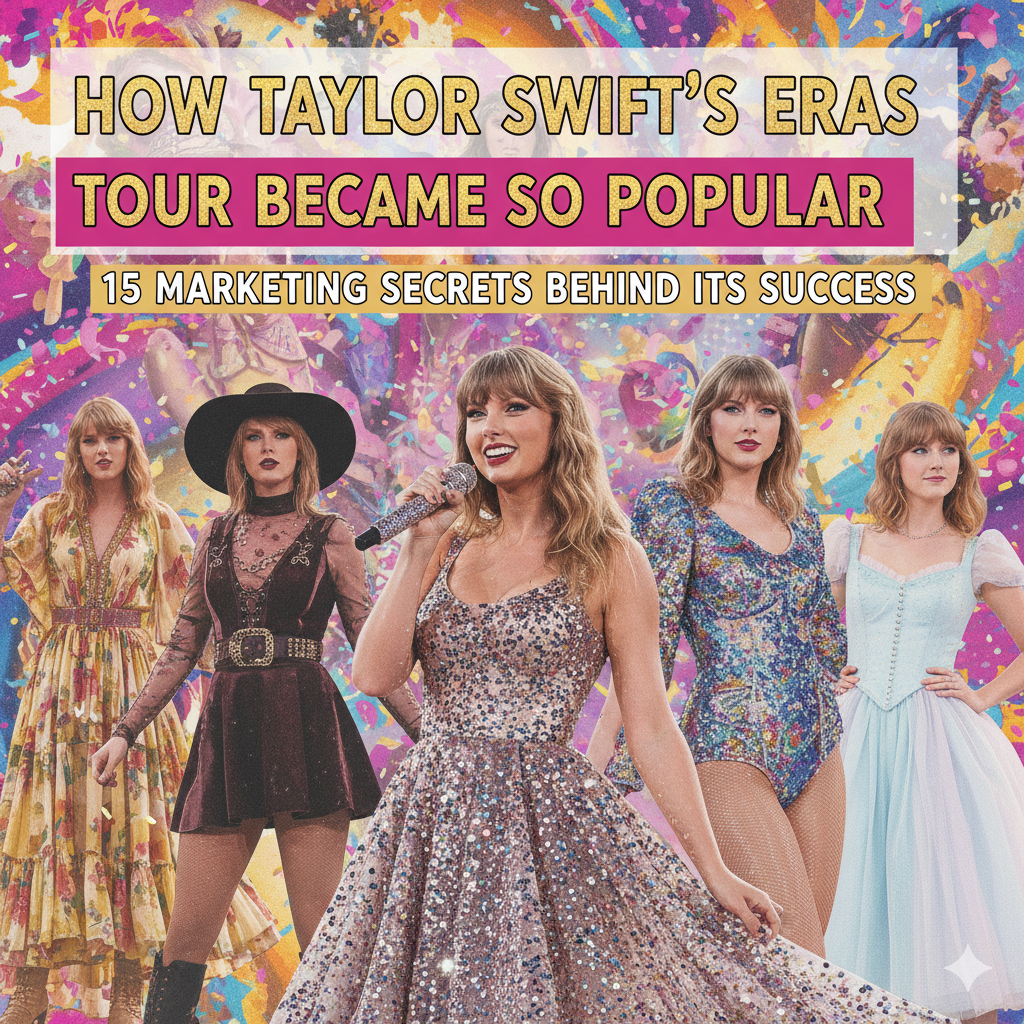
14 Dec How Taylor Swift’s Eras Tour Became So Popular: 15 Marketing Secrets Behind Its Success
When Taylor Swift announced The Eras Tour, she wasn’t just dropping tour dates—she was unleashing a full-blown pop culture earthquake. Suddenly, friendships across the globe turned into covert ticket-buying alliances. Sequins were a daily uniform. And every song, from her country beginnings to synth-pop reinventions, became a nostalgic portal to self-discovery. But behind the online hysteria and sold-out stadiums, this wasn’t just star power—it was a marketing masterclass. As someone who obsesses over everything from algorithms to ankle boots (and maybe runs the most opinionated leading marketing agency in New York), I’m here to spill the glitter-covered secrets behind how Taylor made a world tour feel like both a personal diary and a viral campaign.
How Taylor Swift’s Eras Tour Became So Popular: 15 Marketing Secrets Behind Its Success (Editor’s Choice)
15 Marketing Secrets Behind Taylor Swift’s Eras Tour
A breakdown of how a world tour became a cultural and commercial juggernaut.
| # | Marketing Secret | How It Works | Key Takeaway |
|---|---|---|---|
| 01 |
Personal Branding & Storytelling
Brand Narrative
|
The “Eras” concept turns each album into a distinct chapter of Taylor’s life, with its own mood, visuals and sound, so fans feel like they’re moving through her personal timeline. | Build a brand story so strong that your audience feels like they’re growing through it with you. |
| 02 |
Scarcity-Driven Demand
Demand Engine
|
Limited tickets, phased pre-sales and high demand created intense urgency and FOMO, sparking viral conversations about “getting in” before it was too late. | Scarcity isn’t the enemy; when used ethically, it’s a powerful motivator for action. |
| 03 |
Fan-Centric Experience
Experience Design
|
A 3+ hour setlist spanning her entire career gives fans maximum emotional payoff, making each show feel deeply personal and undeniably worth the investment. | Design experiences where your audience feels over-served, not just adequately entertained. |
| 04 |
Relentless Social Media Hype
Organic Reach
|
Fans do the heavy lifting—posting outfits, reaction videos and live clips—turning each night of the tour into fresh, fan-generated ad creative. | Create moments worth sharing and your community becomes your most effective media channel. |
| 05 |
Easter Eggs & Hidden Clues
Engagement Loop
|
Cryptic hints, visuals and lyric references keep fans decoding and debating online, extending the life of every announcement and appearance. | Turn your marketing into a game; curiosity is one of the best retention tools you have. |
| 06 |
Multiple Revenue Streams
Monetization
|
Beyond tickets, she stacks merch, vinyls, special editions, brand collabs and streaming boosts, multiplying the revenue impact of the same core audience. | Don’t just sell the event—build an ecosystem of offers around it. |
| 07 |
Exclusivity via Pre-Sale Systems
Access Strategy
|
The Ticketmaster Verified Fan and pre-sale codes turned ticket access into a status symbol, making even the buying process part of the fan story. | Controlled access can make your audience feel chosen rather than just sold to. |
| 08 |
Stadium-Only Format
Scale & Spectacle
|
Going straight to stadiums created a sense of rare spectacle and allowed entire cities to feel the impact—economically, socially and visually. | Sometimes going bigger isn’t risky—it’s the strategy that makes the whole thing unforgettable. |
| 09 |
Powerful Public Narrative
PR Alchemy
|
The ticketing chaos positioned Taylor as the artist battling “the system,” strengthening fan loyalty and giving the tour a rebellious edge. | Control the narrative: how the story is told can matter as much as what actually happens. |
| 10 |
Multi-Generational Appeal
Audience Expansion
|
Early country tracks, pop anthems and indie-folk moments invite fans from different eras of her career—plus parents, partners and friends—to join in. | Create entry points for multiple age groups and you multiply your reach without changing your core identity. |
| 11 |
Highly Visual, Era-Based Aesthetics
Visual Identity
|
Each “era” has costumes, colors and stage design so distinct that fans can visually signal their favorite album—with outfits that flood social feeds. | Make your brand instantly recognizable in a single glance and people will gladly wear it. |
| 12 |
Surprise Songs Every Night
Retention & FOMO
|
Two surprise songs per show mean no two nights are identical, keeping fans obsessively tracking setlists and, in many cases, attending multiple dates. | Leave room for live variation; repeatable surprise is a powerful loyalty mechanic. |
| 13 |
Cross-Platform Launch Strategy
Omnichannel
|
Announcements are orchestrated across Instagram, TikTok, YouTube, email, streaming platforms and press so that no matter where fans live online, they’re in the loop. | Meet your audience where they already are instead of forcing them into one channel. |
| 14 |
Staggered Global Expansion
Anticipation
|
Delaying international date announcements kept global fans glued to every update, stretching the hype cycle over months instead of weeks. | You don’t have to reveal everything at once; pacing information can sustain momentum. |
| 15 |
Cinematic Concert Film Tie-In
Scale Beyond Seats
|
The Eras Tour film turned limited venue capacity into a global event, letting fans who couldn’t get tickets still buy into the experience—again. | When demand outgrows your capacity, create new formats instead of capping your impact. |
How Taylor Swift’s Eras Tour Became So Popular: 15 Marketing Secrets Behind Its Success
How Taylor Swift’s Eras Tour Became So Popular: Marketing Secrets Behind Its Success #3 — Fan-Centric Experience
The show lasted over three hours—the average concert tops out at two. Fans got something better than their money’s worth: surprise songs, outfit rotations, easter eggs. Taylor treated every night like it was someone’s first and last time seeing her live. That emotional generosity creates superfans, not just attendees. When your product feels like a party thrown in your honor, repeat loyalty becomes inevitable. Taylor didn’t sell “tickets.” She sold an unforgettable moment.
How Taylor Swift’s Eras Tour Became So Popular: Marketing Secrets Behind Its Success #4 — Relentless Social Media Hype
Taylor didn’t even need a paid ad campaign—with fans documenting everything, content spread like wildfire. The real-time wave of TikToks, Reels, and Stories acted like a free, viral media buy. Each sparkly outfit shot created cascading ripples of inspiration (and imitation). Fans weren’t just attending a concert; they were participating in a global creative movement. And because Swifties are drenched in nostalgia, every reveal gets emotional analysis. Swift didn’t leverage social—she architected a multi-billion dollar billboard made of fans.
How Taylor Swift’s Eras Tour Became So Popular: Marketing Secrets Behind Its Success #5 — Easter Eggs & Hidden Clues
Taylor turned every post into a treasure hunt. With coded lyrics, cryptic emojis, or even color palettes, she kept fan communities glued to every detail. That kind of engagement is sticky—it rewards curiosity and fuels conspiracy theories (the harmless kind). Suddenly, every tweet is a clue, every accessory a prophecy. Fans invest more because they’ve decoded the brand, not just consumed it. This is how you turn marketing into mythology.
How Taylor Swift’s Eras Tour Became So Popular: Marketing Secrets Behind Its Success #6 — Multiple Revenue Streams
The tour wasn’t just a show—it was a retail supernova. Fans didn’t leave with just memories—they left with vinyls, exclusive merch, collectible cards, lyric books. The merch drops themselves were events. She priced her offerings without apology because the emotional value was sky-high. Smart brands don’t just monetize attendance—they monetize sentiment. Taylor understood the assignment and doubled her revenue footprint with ease.
How Taylor Swift’s Eras Tour Became So Popular: Marketing Secrets Behind Its Success #7 — Exclusivity via Pre-Sale Systems
Casting the pre-sale as an exclusive experience made fans feel handpicked. Swift didn’t just sell tickets; she invited “verified” fans inside the velvet rope. The result? People were bragging about “earning access” before they even bought seats. The process created community among fans, all living through the same high-stakes mission. Exclusivity isn’t always about locking people out—it’s about making those inside feel chosen. Taylor did both masterfully.
The Eras Tour has been the most meaningful, electric experience of my life so far and I’m overjoyed to tell you that it’ll be coming to the big screen soon 😆 Starting Oct 13th you’ll be able to experience the concert film in theaters in North America! Tickets are on sale now at… pic.twitter.com/eKRqS8C7d1
— Taylor Swift (@taylorswift13) August 31, 2023
How Taylor Swift’s Eras Tour Became So Popular: Marketing Secrets Behind Its Success #8 — Stadium-Only Format
Going big wasn’t an experiment—it was a flex. Stadiums symbolize scale and impact, and the Eras Tour made cities reverberate with Swift’s sound. It was less concert, more cultural takeover. Local economies felt it. Fan communities mobilized. And the choice of venue sent a clear message: Swift isn’t on tour—she owns the road.
How Taylor Swift’s Eras Tour Became So Popular: Marketing Secrets Behind Its Success #9 — Powerful Public Narrative
The ticketing fiasco made headlines worldwide—but fans didn’t blame her, they defended her. Taylor flipped the script, positioning herself as an underdog in her own blockbuster. It humanized her, strengthened loyalty, and made the tour feel like a rallying cry. Smart brands know: what happens off stage can be just as powerful as what happens on it. Owning the narrative is half the strategy. And Taylor’s team mastered all 360 degrees of it.
How Taylor Swift’s Eras Tour Became So Popular: Marketing Secrets Behind Its Success #10 — Multi-Generational Appeal
Swift doesn’t just attract one age group; she’s a brand with eras for every era of your life. Moms are reliving their fearless teenage years, teens get to post about their heartbreak in pastel sequins. Each group has their own emotional timeline woven through her music. That’s multigenerational marketing in its purest form. She didn’t split her audience—she multiplied it. Brands wish for this kind of range.
How Taylor Swift’s Eras Tour Became So Popular: Marketing Secrets Behind Its Success #11 — Highly Visual, Era-Based Aesthetics
From Lover pinks to Reputation blacks, each era had visual code. Fans dressed accordingly—turning stadium entrances into fashion runways. The visuals aren’t just vivid—they’re inherently Instagrammable. Taylor’s team delivered aesthetics so strong that even one photo could spark nostalgia or recognition. When your brand can be identified from a single frame, you’ve earned cultural icon status. Swift’s aesthetics aren’t marketing—they’re modern-day mythology.
How Taylor Swift’s Eras Tour Became So Popular: Marketing Secrets Behind Its Success #12 — Surprise Songs Every Night
What other artist gives you new material every show? Two surprise songs, fresh each night, kept the setlist—and fan excitement—constantly renewing. Fans tracked songs across dates like sports fans track stats. The unpredictability made each night feel like a secret. If you can’t surprise your audience, someone else will. Taylor didn’t just deliver a performance—she made it collectible.
How Taylor Swift’s Eras Tour Became So Popular: Marketing Secrets Behind Its Success #13 — Cross-Platform Launch Strategy
Taylor’s launch wasn’t one announcement, but a multiverse release. Instagram got visuals. TikTok got snippets. News outlets got press-friendly soundbites. The audience didn’t need to find the tour—it found them. Successful brands don’t rely on one channel—they own their message everywhere. Swift’s omnichannel strategy was a symphony, and it played in perfect harmony.
@taylorerastour Love Story in 4K #TSTheErasTour ♬ Love Story (Taylor’s Version) - Taylor Swift
How Taylor Swift’s Eras Tour Became So Popular: Marketing Secrets Behind Its Success #14 — Staggered Global Expansion
Taylor rolled out dates slowly, like turning pages in a diary. Each new announcement broke the internet, one country at a time. That pacing allowed her to build hype, maximize press tiers, and keep all eyes trained on what’s coming next. Fans waited, whispered, refreshed. Demand grew exponentially. Great brands don’t always reveal everything at once—mystery is a growth engine.
How Taylor Swift’s Eras Tour Became So Popular: Marketing Secrets Behind Its Success #15 — Cinematic Concert Film Tie-In
When seat limits became a bottleneck, Taylor didn’t stop—she scaled. Enter: the Eras Tour film—turning missed tickets into cinema tickets. Now, fans around the world who didn’t go live still got to “attend” in a way that felt meaningful. The film grossed hundreds of millions and extended the campaign lifecycle. Creativity isn’t just what you present—it’s how you repurpose it. Taylor doesn’t outsmart scarcity. She outlasts it.
@taylorerastour Madrid…don’t you think is too delicate, it’s been ONE ☝🏼 YEAR SINCE THE SECOND SHOW OF #MadridTSTheErasTour 🇪🇸 #TaylorSwift #TSTheErasTour #SwiftTok ♬ Delicate - Taylor Swift
Final Bow: What We Can All Learn from The Eras Tour
If Taylor Swift’s Eras Tour taught us anything, it’s that a brand isn’t just a story—it’s a lived experience, a shared language, a glitter-sprinkled universe your audience wants to move into. She didn’t just build hype; she built a home for every fan, whether they grew up on Tim McGraw or discovered her during Folklore. By turning nostalgia into a business model and delight into a marketing engine, she redefined what it means to launch, scale, and sustain a pop culture phenomenon. Whether you’re building a product, a platform, or a personal brand, remember: people don’t just want to watch the show—they want to feel seen in the spotlight. And if you treat your audience like co-authors instead of consumers, well… maybe they, too, will scream your bridges from stadium seats one day.