



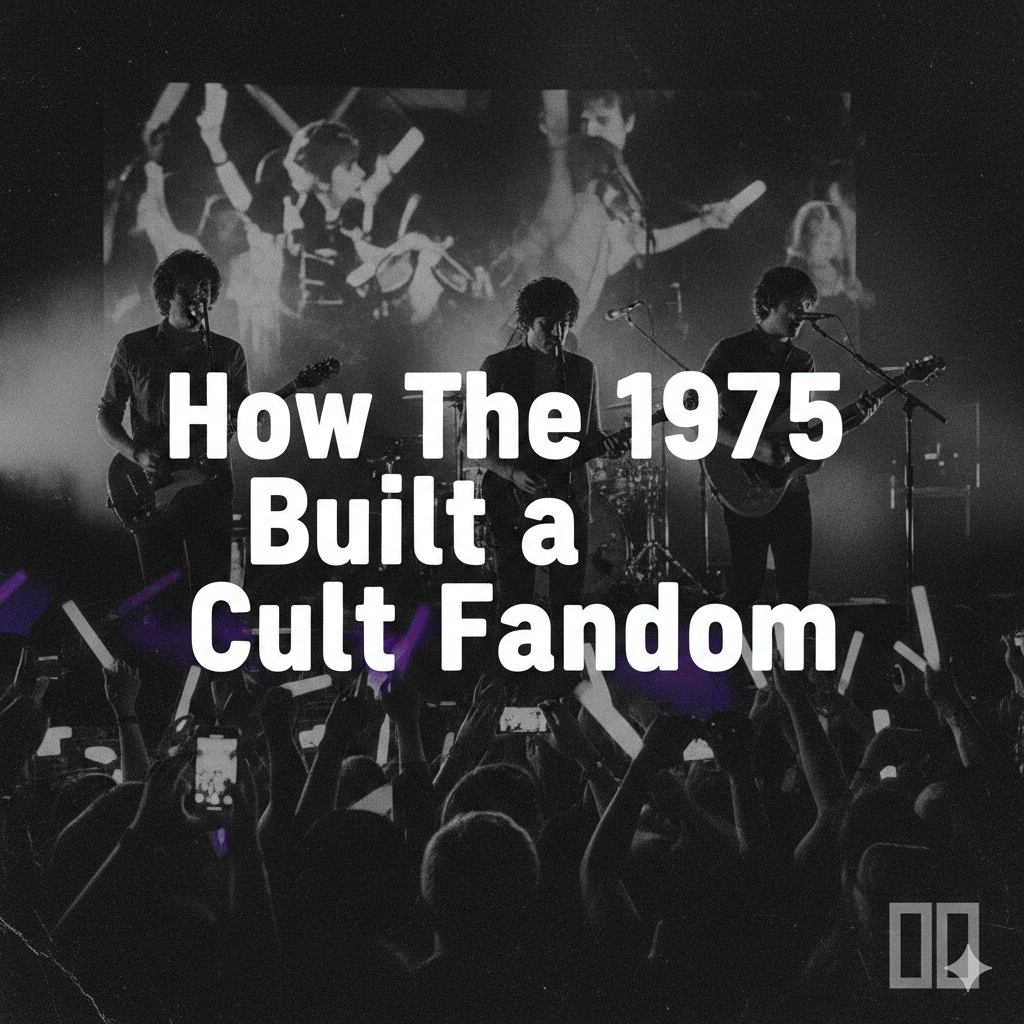
23 Dec How The 1975 Built a Cult Fandom: 15 Marketing Secrets Behind Their Aesthetic
The 1975 didn’t stumble into obsession-level fandom by accident — they designed it, the way a perfectly undone outfit is still somehow intentional. Every neon rectangle, every cryptic caption, every genre swerve feels effortless, but behind that ease is a sharp understanding of culture, timing, and emotional branding. This isn’t just a band with good music; it’s a case study in how aesthetic coherence and strategic chaos can turn listeners into loyalists. Think mood boards meeting market psychology, vulnerability dressed up as minimalism, and irony doing real business work — the same kind of thinking you’d expect from a leading marketing agency in New York, just filtered through black-and-white visuals and late-night existential lyrics. This is how The 1975 built a cult, and why their aesthetic still feels one step ahead of everyone else.
How The 1975 Built a Cult Fandom: 15 Marketing Secrets Behind Their Aesthetic(Editor’s Choice)
How The 1975 Built a Cult Fandom — The 15 Aesthetic Marketing Secrets
A quick, scroll-friendly breakdown of the brand moves that turned a band into a universe.
| # | Marketing Secret | What It Does |
|---|---|---|
| 1 |
A Logo That Became a Symbol The neon rectangle works like a stamp—instantly recognizable, endlessly reusable. |
Builds recall fast, makes fans feel “in the know.” Iconography |
| 2 |
Aesthetic as a World, Not a Look Each era is a cohesive universe, not just a palette shift. |
Keeps fandom living in chapters. Era Design |
| 3 |
Intentional Ambiguity Meaning isn’t served—it’s discovered. |
Sparks theories, threads, and loyalty through interpretation. Mystery Loop |
| 4 |
The “Reluctant Prophet” Frontman Flawed, self-aware, and unpolished enough to feel real. |
Converts spectators into protectors. Parasocial Glue |
| 5 |
Irony Meets Sincerity They wink and bleed in the same verse. |
Hits both “cool” and “felt.” Dual Positioning |
| 6 |
Internet-Native Storytelling Cryptic captions, fragments, aesthetics—platform fluent. |
Turns posts into puzzles fans spread for you. Share Triggers |
| 7 |
Visual Minimalism, Emotional Maximalism Clean visuals, heavy feelings. |
Makes the brand feel premium and intimate. Contrast |
| 8 |
Genre as a Funnel Pop to punk to ambient—new doors for new listeners. |
Expands audience without losing identity. Multi-Entry |
| 9 |
Anti–Rock-Star Branding They critique the system while operating inside it. |
Feels intellectually “alive,” invites debate. Tension |
| 10 |
Live Shows as Installations Stage design + lighting = performance art. |
Creates must-attend moments (and viral clips). Experience |
| 11 |
Merch That Feels Like Fashion Identity pieces, not souvenirs. |
Fans advertise effortlessly in daily life. Wearable Brand |
| 12 |
Controversy as Oxygen They don’t sand down edges—discourse stays hot. |
Keeps attention cycling without constant releases. Always-On PR |
| 13 |
Emotional Specificity Modern anxieties, digital loneliness, cultural dread—named plainly. |
Fans feel personally spoken to. Resonance |
| 14 |
Fans as Co-Curators Lyrics become captions, visuals become tattoos. |
Community produces content at scale. UGC Engine |
| 15 |
Never Fully Explaining the Myth No neat closure—meaning keeps moving. |
Makes the fandom a living narrative. Endless Lore |
How The 1975 Built a Cult Fandom: 15 Marketing Secrets Behind Their Aesthetic
How The 1975 Built a Cult Fandom: Marketing Secrets Behind Their Aesthetic #1 — The Neon Rectangle as a Symbol
They didn’t just design a logo; they created a visual shorthand for belonging. The neon rectangle is minimal enough to feel fashion-forward, yet distinctive enough to instantly signal identity. It shows up everywhere—albums, stages, merch—without ever feeling overused. That repetition trains the audience’s eye to recognize the brand before the name even appears. From a marketing lens, it’s instant recall disguised as effortless design.
How The 1975 Built a Cult Fandom: Marketing Secrets Behind Their Aesthetic #2 — Building an Era You Can Live Inside
Each album cycle feels less like a release and more like a lifestyle shift. Colors, fonts, visuals, and tone align so precisely that fans don’t just listen—they inhabit the era. This world-building keeps engagement alive long after the music drops. People don’t move on quickly because the aesthetic still feels like home. Strategically, it’s campaign thinking with emotional depth.
How The 1975 Built a Cult Fandom: Marketing Secrets Behind Their Aesthetic #3 — Ambiguity That Invites Obsession
They rarely explain themselves fully, and that restraint is intentional. Lyrics and visuals leave space for interpretation, encouraging fans to decode meaning together. That decoding becomes conversation, and conversation becomes loyalty. Instead of pushing messages outward, they let curiosity pull people in. It’s marketing that thrives on mystery rather than clarity.
How The 1975 Built a Cult Fandom: Marketing Secrets Behind Their Aesthetic #4 — A Frontman Who Feels Human, Not Polished
The public persona isn’t flawless or distant—it’s contradictory, self-aware, and visibly imperfect. That honesty creates intimacy, making fans feel emotionally invested rather than passively entertained. People don’t just follow; they defend and empathize. In branding terms, this is authenticity with stakes. The connection feels personal because it actually is.
How The 1975 Built a Cult Fandom: Marketing Secrets Behind Their Aesthetic #5 — Irony and Sincerity in the Same Breath
They balance humor and vulnerability in a way that feels deeply modern. Irony keeps the brand culturally sharp, while sincerity keeps it emotionally grounded. Fans feel clever for understanding the layers, yet comforted by the honesty underneath. This duality widens appeal without diluting identity. It’s cool without being cold.
How The 1975 Built a Cult Fandom: Marketing Secrets Behind Their Aesthetic #6 — Speaking the Internet’s Native Language
Their digital presence mirrors how people actually consume content—fragmented, aesthetic, and emotionally coded. Cryptic captions and visual cues invite sharing without feeling promotional. Fans become distributors because the content feels like a puzzle worth passing along. This turns social platforms into amplification tools rather than ad spaces. It’s fluent, not forced.
How The 1975 Built a Cult Fandom: Marketing Secrets Behind Their Aesthetic #7 — Minimal Visuals, Maximum Emotion
The visual identity stays clean and restrained, allowing emotion to take center stage. White space, muted palettes, and simplicity create a premium feel. Against that calm surface, the lyrics hit harder and linger longer. The contrast makes the experience feel elevated yet raw. It’s emotional storytelling wrapped in editorial design.
How The 1975 Built a Cult Fandom: Marketing Secrets Behind Their Aesthetic #8 — Genre-Hopping as Audience Strategy
They move across genres without announcing reinvention, treating sound as an extension of mood. This flexibility attracts listeners from different subcultures without alienating the core audience. Everyone finds a song that feels personally written for them. From a marketing perspective, it’s multiple entry points under one brand. Variety becomes reach.
How The 1975 Built a Cult Fandom: Marketing Secrets Behind Their Aesthetic #9 — The Power of Anti–Rock-Star Branding
They openly critique fame and industry norms while still operating at scale. That tension keeps the narrative dynamic and intellectually engaging. Fans stay invested because the story never feels settled. In branding, friction can be a strength when it feels intentional. The discomfort becomes part of the appeal.
How The 1975 Built a Cult Fandom: Marketing Secrets Behind Their Aesthetic #12 — Controversy as a Conversation Engine
They don’t avoid polarizing moments, and that keeps the discourse alive. Controversy sparks debate, which strengthens community bonds among fans. Attention doesn’t fade between releases because there’s always something to unpack. From a marketing standpoint, conversation sustains relevance. Silence, they know, is the real risk.
How The 1975 Built a Cult Fandom: Marketing Secrets Behind Their Aesthetic #13 — Emotional Specificity That Feels Personal
They articulate modern anxieties with precision, not generality. The lyrics feel pulled from group chats, late nights, and scrolling spirals. That specificity makes listeners feel deeply understood. When people feel seen, they stay loyal. Relevance here isn’t trendy—it’s emotional truth.
How The 1975 Built a Cult Fandom: Marketing Secrets Behind Their Aesthetic #14 — Fans as Co-Creators of the Brand
The fandom actively extends the aesthetic through edits, captions, tattoos, and art. The band provides the language; fans write the ongoing story. This shared ownership deepens commitment and visibility. In marketing terms, it’s user-generated content fueled by identity, not incentives. The community becomes the medium.