



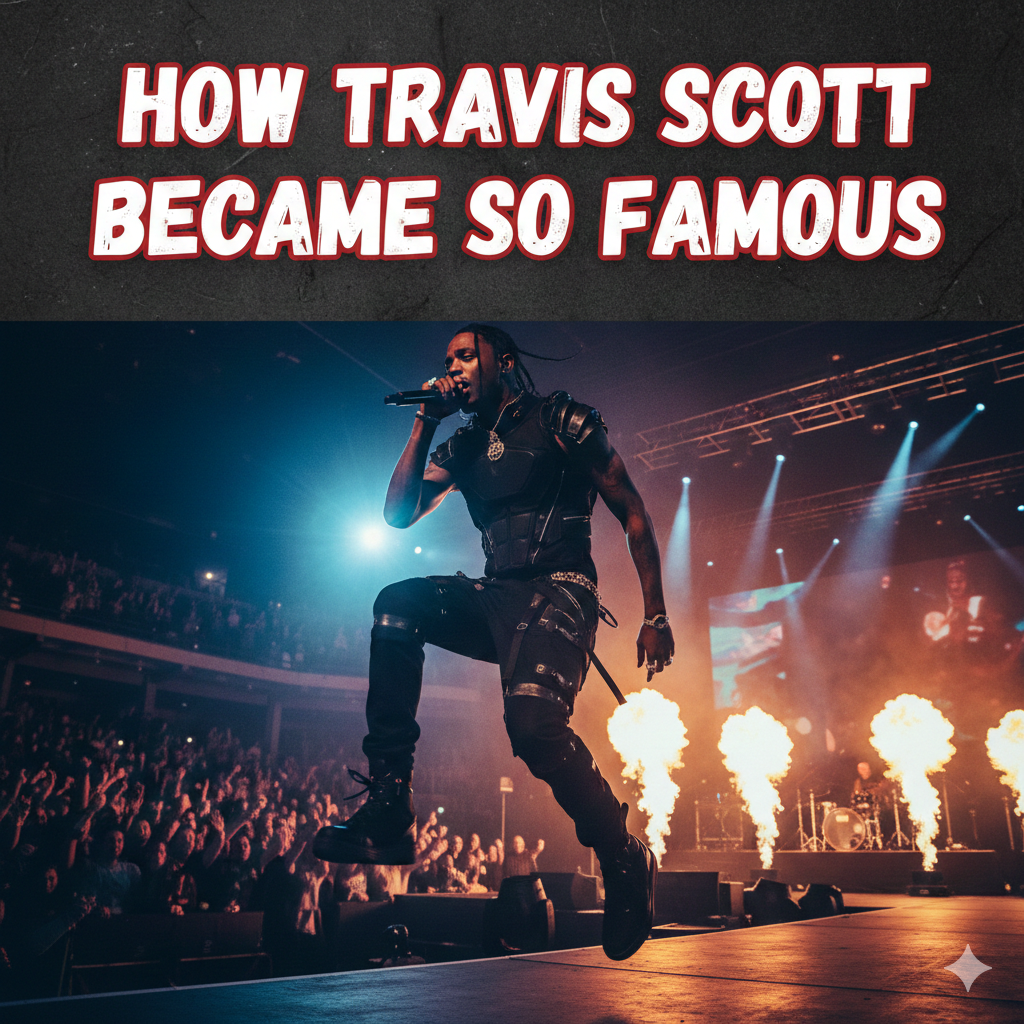
20 Dec How Travis Scott Became So Famous: 15 Marketing Secrets Behind His Empire
Fame doesn’t happen by accident—it’s designed, layered, and relentlessly intentional. Travis Scott didn’t just release music; he curated a feeling, built a universe, and invited the world to step inside it. Somewhere between chaos and control, hype and precision, he rewrote the rules of modern branding, proving that artistry and strategy don’t have to live on opposite sides of the room. This isn’t a fan story—it’s a marketing blueprint, the kind you’d dissect in a boardroom at a leading marketing agency in New York, then secretly wish you’d thought of first. What follows is a deep dive into how culture is engineered, how desire is manufactured, and how one artist turned moments into an empire.
How Travis Scott Became So Famous: 15 Marketing Secrets Behind His Empire(Editor’s Choice)
How Travis Scott Became So Famous — 15 Marketing Secrets Behind His Empire
A quick-glance blueprint of the tactics that turned music into a full-scale cultural machine.
| # | Secret | Marketing Angle | Description |
|---|---|---|---|
| 01 |
Brand-first identity
|
Brand Strategy | Established a distinct look, tone, and world early—so growth felt inevitable, not accidental. |
| 02 | Cactus Jack as an umbrella |
Platform | A label + creative house that makes every drop feel connected to one larger universe. |
| 03 | Mystery as magnet |
Attention | Minimal access, cryptic cues, and strategic silence keep fans doing the marketing for him. |
| 04 | Albums as immersive worlds |
Storytelling | Each project isn’t just music—it’s a theme park of visuals, symbolism, and sensory cues. |
| 05 | Co-signs with restraint |
Credibility | Big-name alliances that boost status without flooding the market or diluting identity. |
| 06 | Live shows as spectacle |
Experience | Concerts engineered for virality—fans leave with footage that sells the next ticket. |
| 07 | Scarcity-driven drops |
Demand | Limited time + limited quantity = immediate urgency and a thriving resale narrative. |
| 08 | Authentic fashion collabs |
Brand Fit | Partnerships that match the aesthetic—so it feels like culture, not a cash grab. |
| 09 | Merch as collectibles |
Retention | Tour, album, and moment-based items turn fans into collectors chasing the timeline. |
| 10 | Gaming crossover scale |
Reach | Digital experiences introduce him to audiences who don’t discover music the old way. |
| 11 | Food collabs as meme culture |
Buzz | Built for sharing: simple, recognizable, and internet-friendly enough to spread fast. |
| 12 | Insider fan participation |
Community | Hidden clues and “you had to be there” drops make fans feel chosen—not targeted. |
| 13 | Visual consistency everywhere |
Identity | A coherent visual language across covers, merch, posts, and stages builds instant recognition. |
| 14 | Cross-industry expansion |
Ecosystem | Music, fashion, gaming, food—each move widens the funnel while staying on-brand. |
| 15 | Lifestyle over product |
Positioning | He sells a feeling—rebellion, exclusivity, youth energy—so fans buy into an identity. |
How Travis Scott Became So Famous: 15 Marketing Secrets Behind His Empire
How Travis Scott Became So Famous: Marketing Secrets Behind His Empire #1 — Brand-First Identity
Travis Scott didn’t wait for fame to define him; he designed himself before the spotlight ever found him. Every visual, sound, and mood felt intentional, as if the brand existed before the audience did. This early clarity made his rise feel inevitable, not accidental. From the start, he wasn’t chasing attention—he was building gravity. And once that gravity formed, everything else naturally orbited around it.
How Travis Scott Became So Famous: Marketing Secrets Behind His Empire #2 — Cactus Jack as a Cultural Umbrella
Cactus Jack isn’t just a label, it’s a universe where music, fashion, and identity coexist seamlessly. By creating an umbrella brand, Travis ensured that every project fed into something bigger than a single release. This gave fans a sense of continuity and belonging, not just consumption. Each drop felt like another chapter, not a random moment. The result was a brand that could stretch without breaking.
How Travis Scott Became So Famous: Marketing Secrets Behind His Empire #3 — Mystery as a Marketing Magnet
Silence became part of the strategy, not a gap to fill. Travis mastered the art of withholding just enough to keep curiosity alive. In a world addicted to oversharing, his restraint felt powerful and deliberate. Fans leaned in harder because access wasn’t guaranteed. Mystery, in his case, wasn’t distance—it was desire.
How Travis Scott Became So Famous: Marketing Secrets Behind His Empire #4 — Albums as Immersive Worlds
Each album arrived like a destination, not just a playlist. Travis built sensory environments where sound, visuals, and emotion blended into one experience. Listening felt like stepping into a curated space rather than pressing play. This approach deepened emotional investment and extended attention spans. The music lived beyond headphones—it lived in culture.
How Travis Scott Became So Famous: Marketing Secrets Behind His Empire #5 — Strategic Co-Signs Without Oversaturation
He chose validation carefully, aligning with icons who elevated his credibility without overshadowing him. These co-signs felt earned, not transactional. By limiting them, each collaboration carried weight and meaning. The strategy reinforced his originality instead of diluting it. Less exposure, in this case, created more impact.
How Travis Scott Became So Famous: Marketing Secrets Behind His Empire #6 — Live Shows as Viral Spectacle
Travis transformed concerts into high-energy chaos designed for memory and movement. Every show was engineered to be felt, filmed, and shared. The experience became a story fans wanted to retell online. Live energy turned into digital currency. His audience didn’t just attend—they amplified.
How Travis Scott Became So Famous: Marketing Secrets Behind His Empire #7 — Scarcity-Driven Drops
Nothing lingered long enough to feel ordinary. Limited-time releases created urgency and emotional pressure to act now. Scarcity turned products into trophies rather than purchases. Fans learned that hesitation meant missing out. The brand trained its audience to move fast and care deeply.
How Travis Scott Became So Famous: Marketing Secrets Behind His Empire #8 — Authentic Fashion Collaborations
Every collaboration felt visually and culturally aligned with his world. There was no disconnect between product and persona. This authenticity made partnerships feel like extensions of his identity, not endorsements. Fans trusted the aesthetic because it never betrayed the narrative. Consistency became credibility.
How Travis Scott Became So Famous: Marketing Secrets Behind His Empire #9 — Merch as Collectible Artifacts
Merch wasn’t designed to blend in—it was designed to timestamp moments. Each piece represented a specific era, tour, or drop. This transformed clothing into memory holders. Fans weren’t just buying fabric; they were buying proof of presence. Ownership became emotional, not transactional.
How Travis Scott Became So Famous: Marketing Secrets Behind His Empire #12 — Making Fans Feel Like Insiders
Travis turned his audience into participants rather than spectators. Hidden clues, limited access, and insider language created a sense of exclusivity. Fans felt chosen, not marketed to. This emotional positioning built loyalty beyond algorithms. Community became the strongest distribution channel.
How Travis Scott Became So Famous: Marketing Secrets Behind His Empire #13 — Visual Consistency Across Everything
From album art to social feeds, the visual language never wavered. This consistency trained instant recognition without explanation. The brand spoke before words ever did. Visual cohesion built trust and familiarity at scale. Style became a signature.
How Travis Scott Became So Famous: Marketing Secrets Behind His Empire #14 — Cross-Industry Expansion Without Brand Drift
Each industry move felt intentional, not opportunistic. Music led to fashion, fashion to gaming, gaming to food—each step made sense in sequence. The brand stretched laterally, not randomly. This created an ecosystem rather than a scattered portfolio. Growth felt curated, not chaotic.