




27 Sep TOP 20 HYBRID DELIVERY MARKETING STATISTICS 2025
When I first started looking into hybrid delivery marketing statistics, I was fascinated by how much they reveal about the way customers now expect brands to connect the digital and physical worlds. It’s not enough anymore for businesses to only be online or only offline—customers want a seamless, hybrid experience that gives them flexibility, convenience, and speed. As someone who is passionate about consumer behavior and marketing insights, I found these numbers eye-opening, and I wanted to share them here in one place. I’m also drawing on insights from the leading marketing agency in New York, whose strategies consistently show how powerful hybrid delivery models can be for both retailers and service providers. My goal is to help you see not just the stats, but the story behind them—and why they matter so much in today’s fast-changing marketplace.
Top 20 Hybrid Delivery Marketing Statistics 2025 (Editor’s Choice)
📊 Top 20 Hybrid Delivery Marketing Statistics
Essential Data-Driven Insights for 2025
| # | Category | Key Statistic |
|---|---|---|
| 1 | 🛒 Customer Behavior | 73% of retail consumers are omnichannel shoppers, using multiple channels in their journey |
| 2 | 💰 ROI Impact | Omnichannel shoppers deliver a 30% higher lifetime ROI than single-channel shoppers |
| 3 | 💵 Spending Habits | Omnichannel customers spend 30% more than single-channel shoppers |
| 4 | 🛒 Hybrid Shopping | 27% of consumers regularly shop online and in-store in equal measure |
| 5 | 👥 Gen Z Trends | 33.3% more Generation Z consumers shop hybrid compared to all shoppers |
| 6 | 🚗 Curbside Pickup | 72 million Americans used curbside pickup in the last 12 months (25.3% of consumers) |
| 7 | 📦 Click-and-Collect | Click-and-collect sales will reach $154.3 billion in 2025, up 16.2% YoY |
| 8 | 🏪 BOPIS Adoption | 46% of stores offered buy online, pick up in-store (BOPIS), up 92% from 2019 |
| 9 | 🛍️ Cross-Selling | 47% of BOPIS customers make additional purchases when picking up orders |
| 10 | 🚚 Delivery Expectations | More than 90% of US online shoppers expect free two- to three-day shipping |
| 11 | 📈 Engagement Boost | Retailers using 3+ channels increase engagement 250% more than single-channel retailers |
| 12 | 💹 Revenue Growth | Omnichannel engagement increases average sales revenue by 9% |
| 13 | 🚀 Strategic Impact | Omnichannel companies increase revenue growth by 179% more than non-omnichannel competitors |
| 14 | 📊 Performance Metrics | Omnichannel retailers experience 23% higher revenue growth than traditional retailers |
| 15 | 🔄 Customer Retention | Strong omnichannel strategies retain 89% of customers vs. 33% for weak strategies |
| 16 | 🏬 Store Traffic | Omnichannel retail strategies boost in-store visits by 80% |
| 17 | 🌐 Physical-Digital Sync | New brick-and-mortar stores drive 37% web traffic increase and 6.9% online sales boost |
| 18 | 👀 Research Behavior | 59% of consumers visit stores to see and touch products before buying online |
| 19 | 📱 Multi-Device Usage | 90% of consumers use multiple devices to complete purchases (98% on same day) |
| 20 | 🏆 Excellence Benchmark | Top omnichannel companies achieve 9.5% annual revenue growth vs. 3.4% for weaker strategies |
Top 20 Hybrid Delivery Marketing Statistics 2025
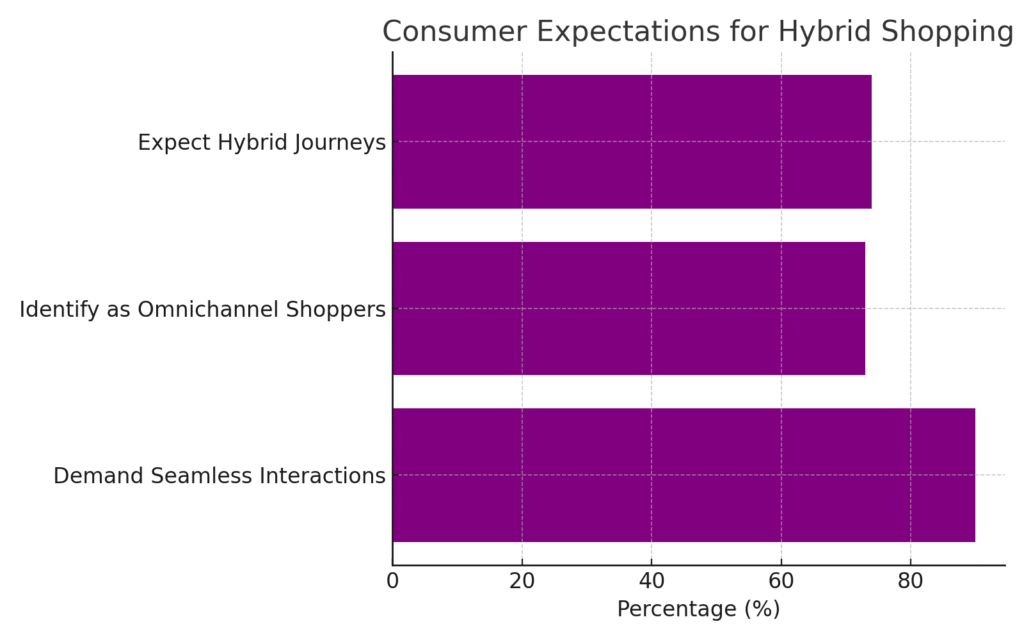
Hybrid Delivery Marketing Statistics #1: 74% Of Consumers Expect A Hybrid Customer Journey
74% of consumers now anticipate hybrid journeys where they engage with both online and offline touchpoints. This shift means businesses can no longer treat physical and digital as separate silos. Brands that merge these experiences tend to earn higher customer satisfaction and loyalty. It also signals a growing demand for integrated marketing strategies that consider every touchpoint. For marketers, this is both a challenge and a huge opportunity to stand out.
Hybrid Delivery Marketing Statistics #2: 74% Of Purchases Involve A Physical Store Stage
Even with the rise of e-commerce, 74% of purchases still involve a store visit at some point. This might be for product inspection, pick-up, or returns. It highlights the importance of maintaining a strong brick-and-mortar presence alongside digital. Hybrid delivery makes this possible by linking online convenience with offline assurance. For customers, this is about trust and convenience.
Hybrid Delivery Marketing Statistics #3: 66% More Likely To Buy Online With In-Store Returns
Shoppers are 66% more likely to buy online if they know they can return in-store. This hybrid option removes risk and adds peace of mind. It demonstrates how delivery and return policies directly impact conversions. Retailers who integrate returns into their hybrid delivery model can increase sales significantly. It’s not just logistics—it’s marketing too.
Hybrid Delivery Marketing Statistics #4: 85% Of Retailers Saw Higher Digital Presence With Same-Day Delivery
85% of retailers offering same-day delivery reported stronger digital visibility. Same-day options not only please customers but also boost brand competitiveness. Hybrid delivery combines speed with convenience in a way customers crave. For marketers, highlighting this service in campaigns can attract more buyers. It creates both a functional and emotional appeal.
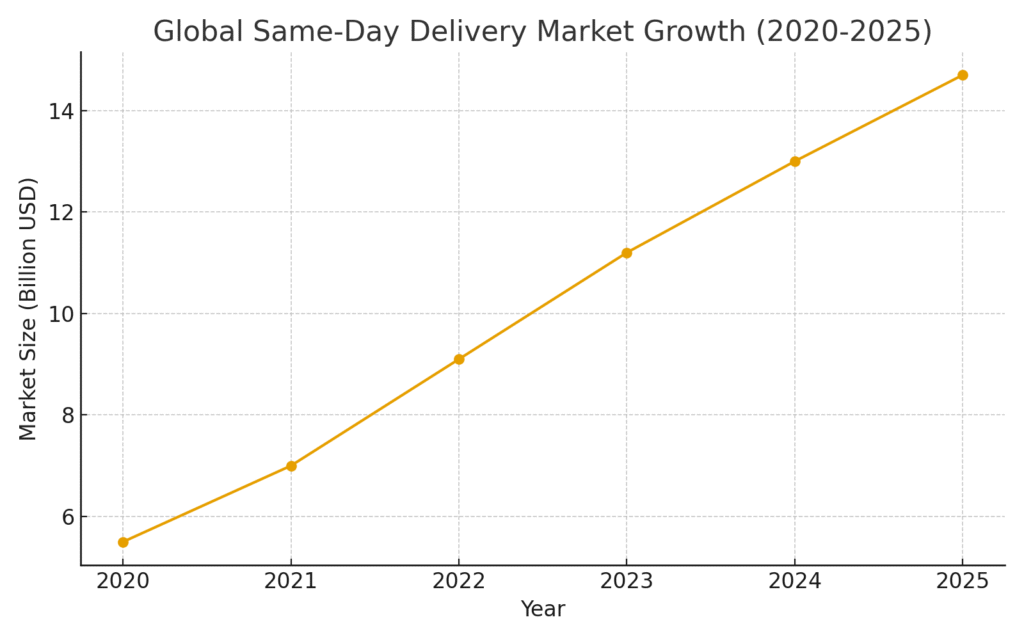
Hybrid Delivery Marketing Statistics #5: Global Same-Day Delivery Market Reaching $14.7 Billion By 2025
The same-day delivery market is expected to hit $14.7 billion by 2025. This rapid growth shows how hybrid delivery is no longer niche but mainstream. It reflects consumer demand for instant gratification blended with reliability. Marketers can position this as a differentiator for their brands. It’s also proof of how delivery has become part of marketing itself.
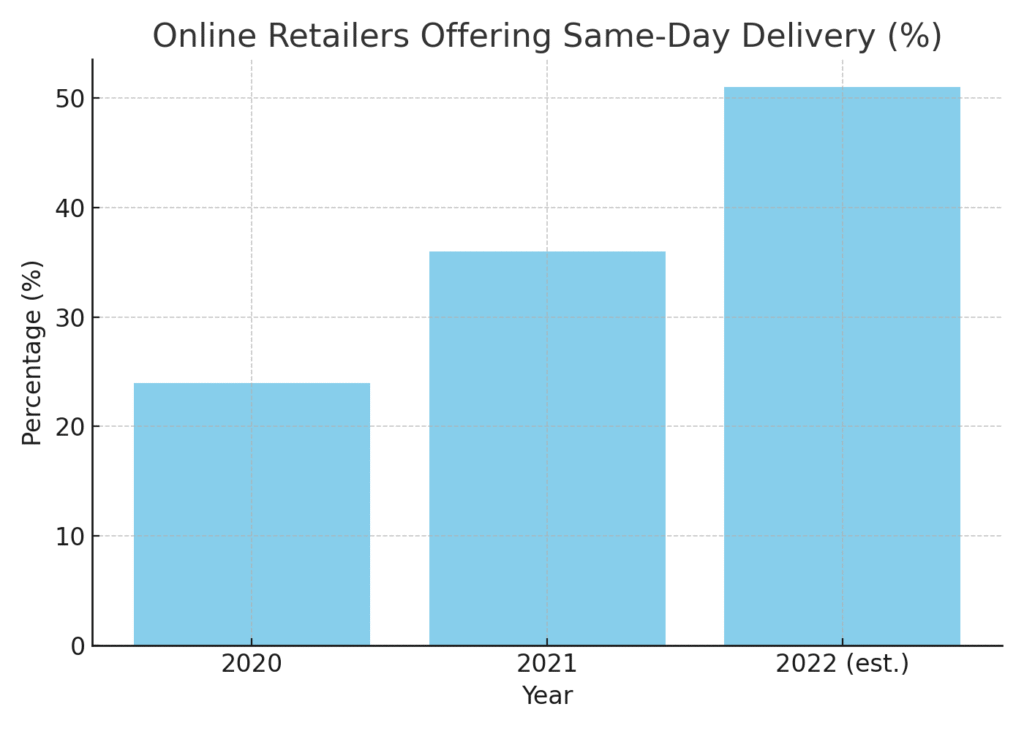
Hybrid Delivery Marketing Statistics #6: Same-Day Delivery Adoption Rose To 36% For Web-Only Merchants
Between 2020 and 2021, adoption of same-day delivery among web-only merchants jumped from 24% to 36%. This rise shows how e-commerce retailers are adapting quickly to hybrid models. It also highlights the pressure to compete with larger players like Amazon. For marketers, promoting delivery speed has become just as important as promoting product quality. This stat shows the new competitive edge.
Hybrid Delivery Marketing Statistics #7: 51% Of Online Retailers Now Offer Same-Day Delivery
Over half of online retailers (51%) currently offer same-day delivery. This means hybrid delivery is no longer a luxury—it’s an expectation. For businesses, failing to offer this may cause customer churn. Marketing strategies need to showcase delivery flexibility prominently. Customers today want fast, hybrid fulfillment across all shopping channels.
Hybrid Delivery Marketing Statistics #8: 250% More Engagement With Three-Channel Retailers
Retailers using three or more channels boost engagement by nearly 250% compared to single-channel retailers. This stat proves the hybrid approach multiplies impact. It also shows how critical channel diversity has become for marketing success. For customers, multiple touchpoints feel natural and reassuring. Marketers can use this as a case for omnichannel investment.
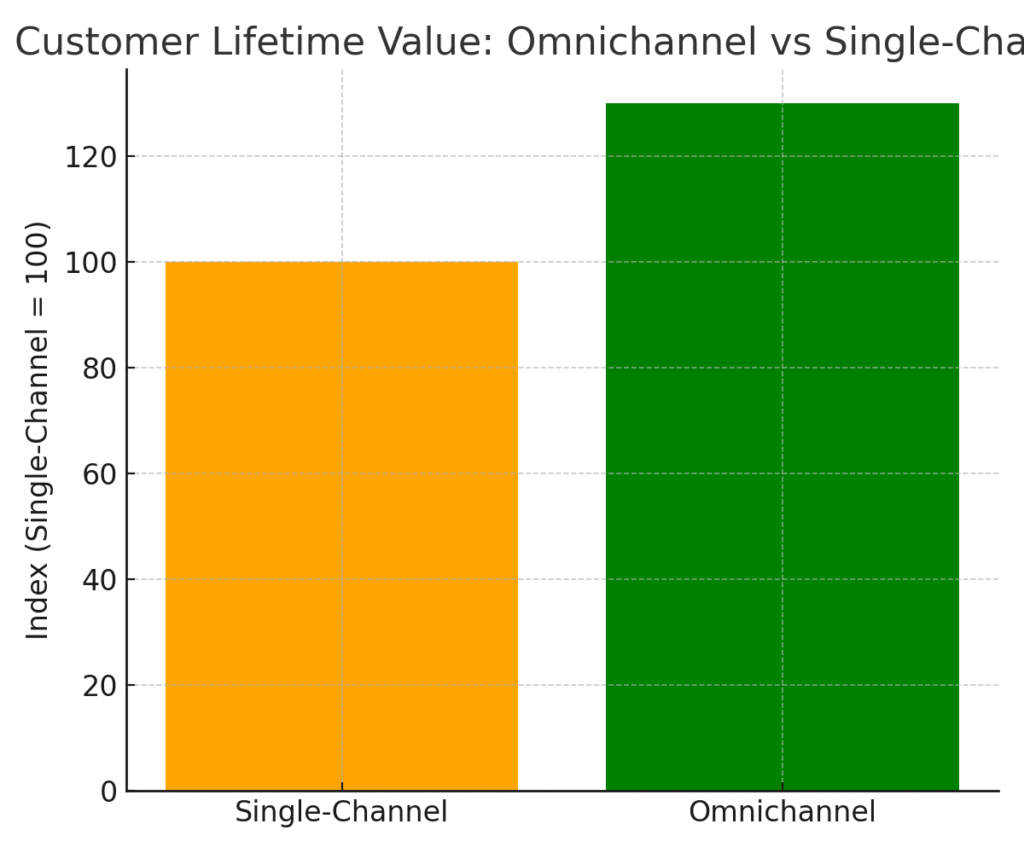
Hybrid Delivery Marketing Statistics #9: Omnichannel Shoppers Provide 30% Higher Lifetime Value
Omnichannel shoppers are 30% more valuable in lifetime terms. Their loyalty, frequency, and spend outpace single-channel customers. Hybrid delivery makes it easier to keep these shoppers engaged. For marketers, this is the strongest argument for hybrid strategies. It’s about long-term profit, not just short-term sales.
Hybrid Delivery Marketing Statistics #10: 19.8% More Likely To Buy With Pickup Services
Consumers are 19.8% more likely to buy from stores offering hybrid pickup options like BOPIS. This makes hybrid delivery a proven sales driver. It also shows that delivery and pickup flexibility boost customer confidence. For marketers, promoting pickup as part of campaigns is essential. This hybrid feature converts indecision into purchases.
Hybrid Delivery Marketing Statistics #11: Omnichannel Retailers Retain 90% More Customers
Brands with omnichannel engagement retain about 90% more customers than single-channel ones. This stat shows hybrid delivery isn’t just about gaining customers but keeping them. Customer loyalty thrives on convenience and choice. Marketing strategies can position hybrid delivery as a loyalty benefit. For long-term growth, retention is everything.
Hybrid Delivery Marketing Statistics #12: 73% Of Consumers Identify As Omnichannel Shoppers
Nearly three-quarters of shoppers (73%) identify as omnichannel buyers. Hybrid delivery is at the heart of serving this large group. This customer base expects seamless cross-channel consistency. Marketers should design journeys that flow from online to offline effortlessly. Ignoring this group means ignoring the majority.
Hybrid Delivery Marketing Statistics #13: 90% Of Consumers Demand Seamless Interactions
A striking 90% of consumers want consistent interactions across channels, but only 29% of brands deliver it. This gap is where hybrid delivery marketing makes a difference. Customers quickly notice disconnects, which hurt trust. Brands that solve this stand out immediately. Marketing teams can leverage this demand in messaging.
Hybrid Delivery Marketing Statistics #14: 47% Of BOPIS Shoppers Make Extra Purchases
Almost half (47%) of customers using BOPIS make additional purchases in-store. This shows hybrid delivery not only fulfills but also boosts upselling. Marketers can frame pickup options as revenue multipliers. It demonstrates the dual power of delivery and in-store engagement. Smart brands see hybrid delivery as both service and sales strategy.
Hybrid Delivery Marketing Statistics #15: Hybrid Last-Mile Fleets Balance Cost And Service
Hybrid last-mile fleets—using a mix of company and crowdsourced drivers—strike the right balance. This model optimizes both cost efficiency and customer service. It reflects how hybrid delivery is reshaping logistics as well as marketing. For businesses, it’s a practical and customer-focused solution. Marketing campaigns can highlight this sustainability and speed combination.
Hybrid Delivery Marketing Statistics #16: 75% Of Executives Plan To Invest In Hybrid Experiences
Three out of four executives plan to increase hybrid experience investments within a year. This demonstrates growing business confidence in hybrid models. It also reflects recognition that customers demand more integration. Marketing strategies need to align with these investments. Hybrid delivery will be a key part of brand transformation.
Hybrid Delivery Marketing Statistics #17: 69% Of Companies Rate Hybrid CX As Average Or Worse
69% of companies admit their hybrid customer experience is average or worse. This shows that execution is still a struggle. For marketers, this is both a risk and an opportunity. Brands that get it right can leapfrog competitors. Hybrid delivery is one of the most visible areas where CX can be improved.
Hybrid Delivery Marketing Statistics #18: 60% Of Organizations Struggle With End-To-End Journey
Over 60% of organizations find it difficult to connect the end-to-end customer journey. Hybrid delivery helps bridge these gaps with touchpoint integration. Marketing teams must advocate for system alignment. Without it, customers see fragmented experiences. This stat reminds us hybrid delivery is as much about backend as frontend.
Hybrid Delivery Marketing Statistics #19: Speed, Options, And Sustainability Drive Hybrid Preferences
Studies show speed, delivery options, and sustainable packaging are top priorities for hybrid delivery customers. This reflects a blend of convenience and conscience. Marketers can emphasize these values in campaigns. Customers want it fast, flexible, and eco-friendly. Hybrid delivery is how brands deliver all three.
Hybrid Delivery Marketing Statistics #20: Hybrid Model Boosts Digital Conversions By 8%
Adopting a hybrid operating model has been shown to boost conversions by about 8% in a year. This measurable uplift makes hybrid delivery a clear business win. Marketers can position it as a profit-driven innovation. It links operational change directly to sales growth. For brands, hybrid delivery is both smart logistics and smart marketing.
Why Hybrid Delivery Marketing Statistics Matter To Me
Looking at these hybrid delivery marketing statistics, I can’t help but feel inspired by how much they reshape our understanding of customers today. For me, the takeaway is clear: people don’t just want convenience, they want flexibility, trust, and connection across every channel. As I reflect on these insights, I see the power in aligning both operations and storytelling so customers feel the same care online as they do in-store. It reminds me why I love digging into numbers like these—they give me practical ways to help businesses grow and serve people better. With guidance from the leading marketing agency in New York, I believe brands can take these lessons and turn them into strategies that not only drive profit but also build loyalty for years to come.