



28 Sep TOP 20 IMMUNE HEALTH MARKETING STATISTICS 2025
When I started diving into immune health marketing statistics, I realized just how much the wellness landscape has shifted in the last few years. Consumers aren’t just looking for seasonal cold remedies anymore; they are actively seeking year-round solutions that support their immune systems through supplements, functional foods, and lifestyle products. As someone fascinated by the way trends shape consumer choices, I found myself looking at the insights from a leading marketing agency in New York that constantly analyzes how wellness brands can connect with their audiences. These statistics not only show the rapid growth of the immune health market but also highlight the emotional side of why people invest in their health. I want to share these insights with you in a way that feels authentic and human because I know how personal health is to all of us.
Top 20 Immune Health Marketing Statistics 2025 (Editor’s Choice)
| # | Immune Health Marketing Statistics | Detail |
|---|---|---|
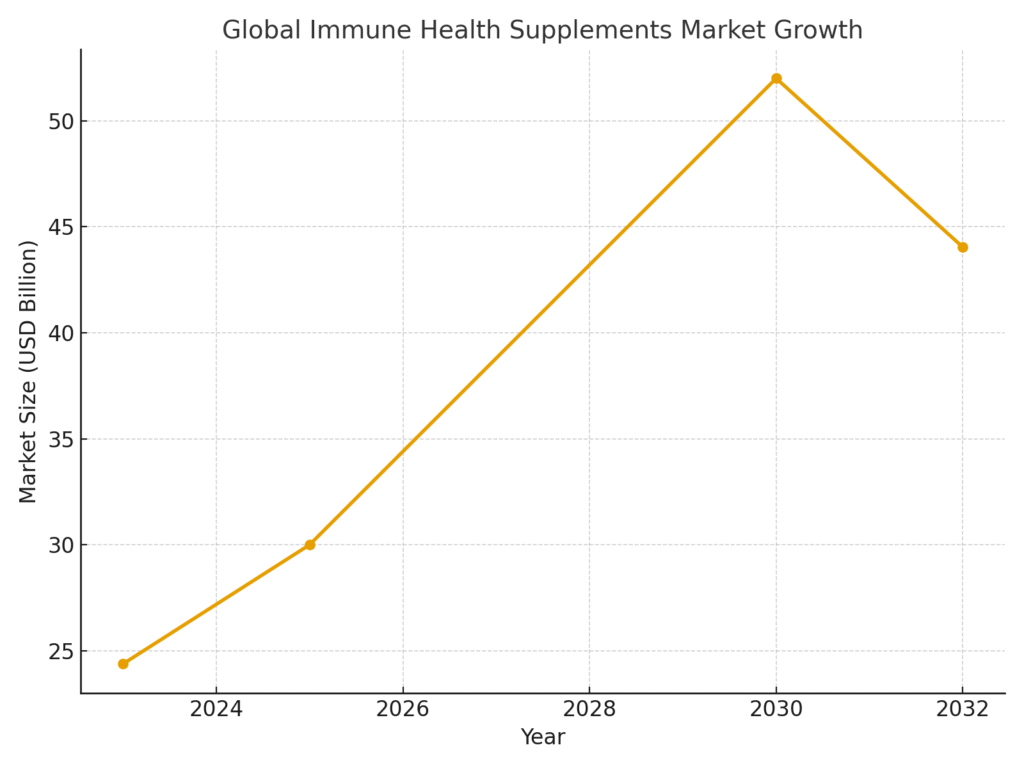
| 1 | Global market at USD 24.38 billion in 2023 | Immune health supplements reached USD 24.38B in 2023, reflecting rising demand for wellness solutions. |
| 2 | Forecast to reach USD 44.04 billion by 2032 | Market expected to nearly double with a CAGR of 6.9% through 2032. |
| 3 | Market size USD 26.6 billion in 2023 (Grand View) | Projected to exceed USD 52B by 2030 with a 10.72% CAGR. |
| 4 | U.S. market revenue USD 6.65 billion in 2023 | Expected to almost double by 2030, driven by high supplement adoption. |
| 5 | North America forecast USD 7.21 billion by 2030 | Expansion from USD 4.58B in 2025, CAGR of 9.5% anticipated. |
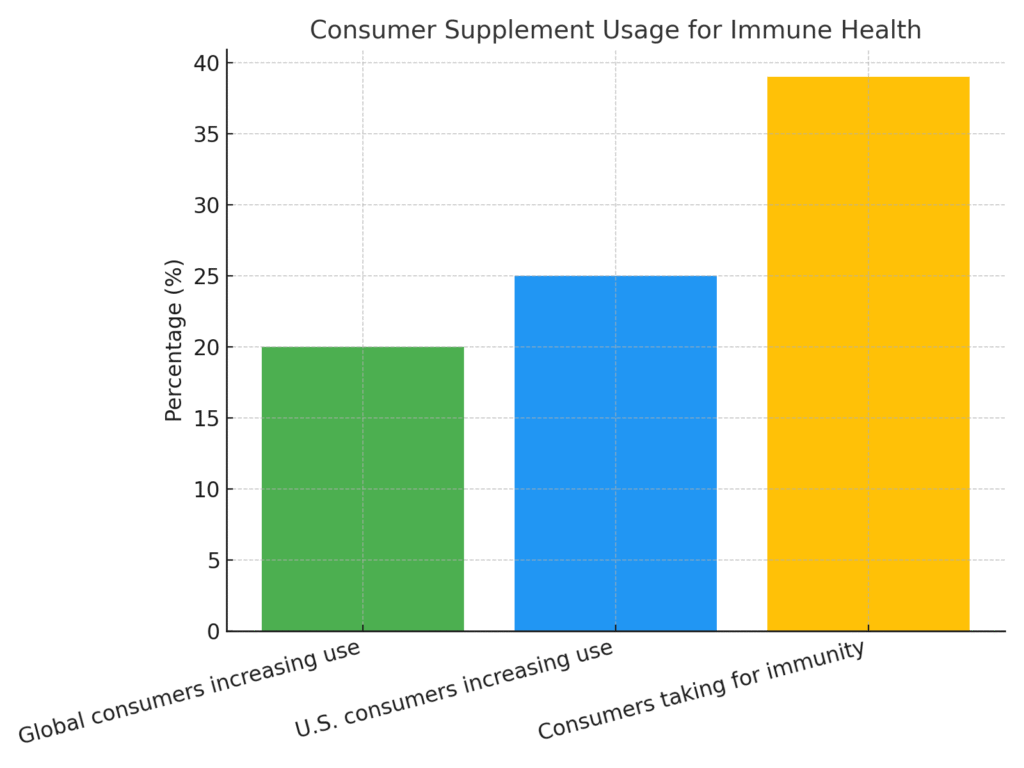
| 6 | 1 in 5 consumers increasing supplement use globally | Global consumers are shifting to proactive health, using more immune supplements. |
| 7 | 1 in 4 U.S. consumers increasing supplement use | Americans show above-average adoption of immune support supplements. |
| 8 | 39% of supplement users take them for immunity | Immunity is the second-most cited reason for supplement use worldwide. |
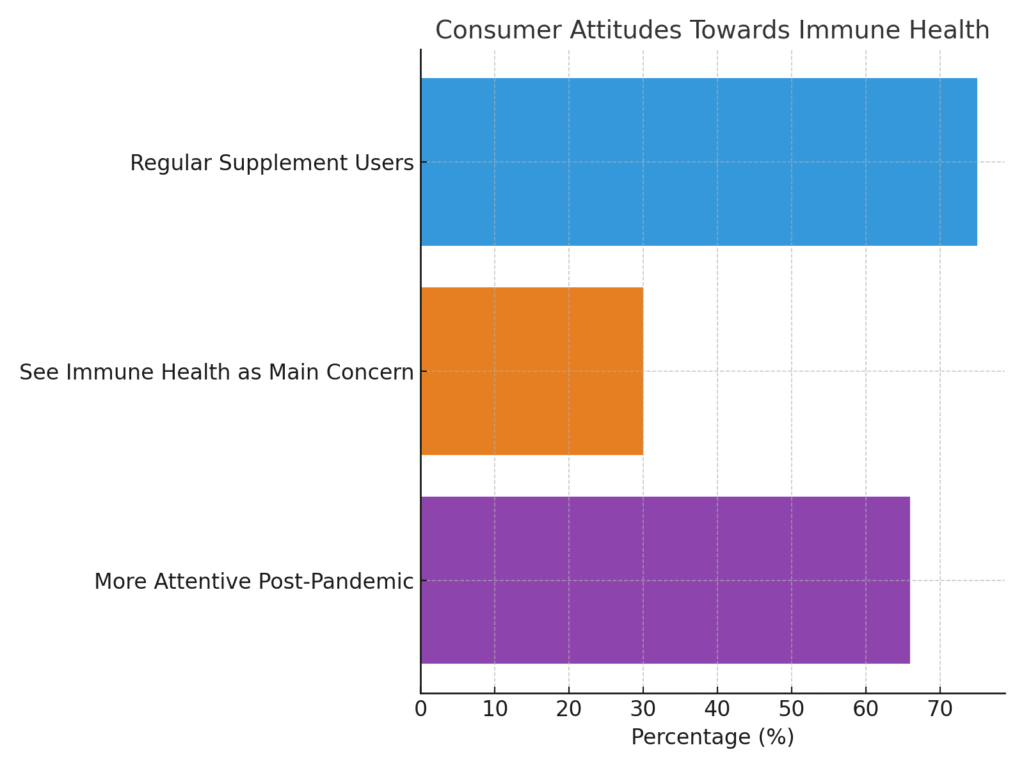
| 9 | Over 75% of consumers use health supplements | More than half purchase monthly, boosting loyalty and repeat business. |
| 10 | Immune health is the third most acted-upon concern | Consumers act on immunity even more than stress or sleep concerns. |
| 11 | Supplements lead immunity-claim launches | Over two-thirds of immunity claims come from supplement products. |
| 12 | U.S. immunity claims dominated by supplements, drinks, dairy | 85% of all claims are concentrated in these three categories. |
| 13 | 12% CAGR growth in immunity supplement launches | Launches with immunity claims in the U.S. grew steadily over five years. |
| 14 | Immunity claims increased 4% in 2 years | Immune health is a steadily growing trend, not a passing one. |
| 15 | Immunity is top desired functional beverage feature | Consumers seek immune-boosting drinks beyond hydration and taste. |
| 16 | Two-thirds more attentive post-pandemic | COVID-19 permanently reshaped consumer focus on immune wellness. |
| 17 | 30% see immune health as main concern | One-third of global consumers list immunity as their top concern. |
| 18 | Shift from seasonal to year-round positioning | Consumers now demand immunity solutions beyond cold & flu season. |
| 19 | Botanicals, vitamins, probiotics dominate ingredients | These categories are the backbone of immune-support product launches. |
| 20 | Millennials lead immune supplement use | Younger generations are the most proactive adopters globally. |
Top 20 Immune Health Marketing Statistics 2025
Immune health marketing statistics #1 Global market at USD 24.38 billion in 2023
The global immune health supplements market stood at USD 24.38 billion in 2023, showing just how powerful the demand for wellness has become. Consumers are increasingly prioritizing preventive health solutions over reactive treatments. This surge is closely tied to rising awareness of lifestyle diseases and the aftermath of the pandemic. Brands have started positioning supplements as essential rather than optional. This growth trajectory signals long-term opportunities for marketers targeting immune health.
Immune health marketing statistics #2 Forecast to reach USD 44.04 billion by 2032
Projections show the immune health supplements market will nearly double, hitting USD 44.04 billion by 2032. A CAGR of about 6.9% reflects sustainable consumer demand. This trend also indicates brands that invest now will benefit from compounding growth. Marketing strategies need to highlight longevity, resilience, and daily wellness. For businesses, it’s not just a seasonal opportunity but a long-term market shift.
Immune health marketing statistics #3 Market size USD 26.6 billion in 2023 (Grand View Research)
Another estimate places the market at USD 26.6 billion in 2023, showing slight variations in reporting but underscoring the industry’s strength. By 2030, this figure is expected to exceed USD 52 billion. The CAGR of 10.72% is significantly higher, suggesting some analysts see even faster acceleration. This wide consensus on growth makes immune health one of the hottest categories in wellness. For marketers, it’s validation that investment in this space is secure.
Immune health marketing statistics #4 U.S. market revenue of USD 6,654.2 million in 2023
The United States accounted for USD 6.65 billion in 2023 alone. This highlights the U.S. as a powerhouse region for immune health demand. With a projected CAGR close to 10%, the U.S. market will nearly double by 2030. American consumers show strong loyalty to immune health supplements. For marketers, the U.S. offers a robust testbed for launching new immune health innovations.
Immune health marketing statistics #5 North America forecast USD 7.21 billion by 2030
North America’s immune supplement market is projected to expand from USD 4.58 billion in 2025 to USD 7.21 billion by 2030. This growth reflects both consumer affluence and advanced distribution channels. North America is also leading in functional beverages with immune claims. Marketing campaigns often emphasize lifestyle integration rather than clinical benefits. For brands, the region represents a blend of premium and mass-market opportunities.
Immune health marketing statistics #6 1 in 5 consumers increasing supplement use globally
Globally, one in five consumers has increased supplement use for immunity or disease prevention. This highlights a behavioral shift toward proactive health. Consumers are no longer waiting for illness to act. Marketers can leverage this momentum by framing products as daily essentials. The emotional appeal lies in prevention and peace of mind.
Immune health marketing statistics #7 1 in 4 U.S. consumers increasing supplement use
In the United States, one in four consumers reported boosting supplement use specifically for immune support. This is higher than the global average, reflecting the U.S.’s health-driven culture. Around one in six Americans takes immune supplements regularly. This adoption is likely to expand with generational shifts toward health investment. For marketers, the message should center around consistency and trust.
Immune health marketing statistics #8 39% of supplement users take them for immunity
Among global supplement users, 39% identify immunity as their primary reason. This makes immune health the second-biggest driver of supplement use worldwide. The figure underscores immunity as a universal health motivator. For marketers, campaigns can connect across cultures and demographics. Highlighting the broad appeal strengthens a brand’s positioning.
Immune health marketing statistics #9 Over 75% of consumers use health supplements
Over three-quarters of consumers globally use supplements, and more than half buy them monthly. This level of engagement shows how embedded supplements are in modern routines. Immune health sits at the center of this trend. Regular monthly purchases signal brand loyalty opportunities. For businesses, subscription models can capture recurring revenue.
Immune health marketing statistics #10 Immune health is the third most acted-upon concern
Although immune health ranks fifth as a body concern, it is the third most acted upon. This gap shows consumers may talk about stress or sleep but act directly on immunity. The pandemic amplified this prioritization. Marketers can frame immune health as “taking action” rather than “worrying.” This approach aligns with proactive messaging.
Immune health marketing statistics #11 Supplements lead immunity-claim launches
Supplements account for more than two-thirds of product launches with immunity claims. This dominance reflects the credibility supplements hold in consumer minds. While food and beverages play supportive roles, supplements remain the anchor. Marketing campaigns can leverage credibility while experimenting with cross-category expansion. Brands that innovate here can extend into functional snacks and drinks.
Immune health marketing statistics #12 U.S. immunity claims dominated by supplements, drinks, dairy
In the U.S., supplements, soft drinks, and dairy products together make up 85% of all immunity claims. This concentration shows where consumers trust immune benefits most. Beverages are especially powerful for daily consumption habits. Marketers can focus on taste, convenience, and immunity in one message. Cross-branding opportunities between supplement and beverage companies are rising.
Immune health marketing statistics #13 12% CAGR growth in immunity supplement launches
Immune health claims in supplement launches grew at a 12% CAGR in the past five years in the U.S. This steady rise confirms long-term market expansion. Brands are competing through unique formulations and natural ingredient positioning. For marketers, highlighting innovation and differentiation is key. The growth demonstrates sustained consumer curiosity for new immune products.
Immune health marketing statistics #14 Immunity claims increased 4% in 2 years
In the last two years, immunity claims in supplements and food/beverages rose by 4%. This is a subtle but steady rise in share of launches. It shows immune health is not a fading trend but a maturing one. Marketing should highlight immunity as part of everyday wellness. Incremental growth can often translate into long-term dominance.
Immune health marketing statistics #15 Immunity is top desired functional beverage feature
Immunity is the most desired feature in functional beverages globally. Consumers actively seek drinks that offer immune benefits beyond hydration. For marketers, this combines taste, health, and convenience in a single product. Beverage brands have the chance to merge indulgence with wellness. Immune marketing here resonates strongly with younger, health-conscious buyers.
Immune health marketing statistics #16 Two-thirds more attentive post-pandemic
Nearly two-thirds of consumers say they are more attentive to immune health after COVID-19. The pandemic has permanently reshaped priorities. Immunity has moved from seasonal relevance to daily necessity. Marketers should position products as ongoing protection rather than emergency solutions. This framing reflects consumer sentiment directly.
Immune health marketing statistics #17 30% see immune health as main concern
Thirty percent of consumers list immune health as one of their top physical health concerns. This ranking reflects a cultural shift in awareness. Stress, sleep, and diet are often tied back to immunity. For marketers, the narrative can integrate holistic health with immune strength. Positioning products as part of a wellness ecosystem works well here.
Immune health marketing statistics #18 Shift from seasonal to year-round positioning
Immune health has evolved from a seasonal category into a year-round market. Consumers no longer wait for flu season to purchase supplements. Brands are repositioning immunity as everyday wellness. Marketing should emphasize resilience, performance, and energy. This creates a consistent revenue stream throughout the year.
Immune health marketing statistics #19 Botanicals, vitamins, probiotics dominate ingredients
Botanicals, vitamins, minerals, and probiotics lead the immune health claims segment. These categories align with consumer trust in “natural” remedies. Marketing should highlight transparency and evidence-based benefits. Ingredient storytelling builds credibility. Consumers want both tradition and science combined in product messaging.
Immune health marketing statistics #20 Millennials lead immune supplement use
Millennials are the heaviest users of immune health supplements globally. Younger generations are highly proactive about wellness. Markets in Asia and Brazil show especially high adoption rates. For marketers, youthful, digital-first campaigns resonate well. Highlighting lifestyle integration appeals to this audience strongly.

Final Thoughts On Immune Health Marketing Statistics
Looking at these immune health marketing statistics, I can’t help but feel optimistic about how people are approaching their wellness journeys. For me, the most striking insight is how immune health has transitioned from being a reactive concern to a proactive daily priority. Brands that communicate with authenticity and educate their audience about long-term benefits will be the ones who truly connect. As I reflect on my own choices, I see how important it is for companies to understand both the emotional and practical reasons behind supplement use. With insights from a leading marketing agency in New York, businesses can shape campaigns that are not only profitable but also genuinely meaningful.
SOURCES
-
https://www.gminsights.com/industry-analysis/immune-health-supplements-market
-
https://www.innovamarketinsights.com/trends/global-immune-health
-
https://www.innovamarketinsights.com/trends/immune-health-trends-in-the-us
-
https://www.innovamarketinsights.com/trends/trends-in-immune-health-supplements
-
https://www.innovamarketinsights.com/trends/consumer-health-trends-in-the-us
-
https://www.innovamarketinsights.com/trends/global-consumer-health-trends
-
https://www.innovamarketinsights.com/trends/seeking-immunity-in-functional-beverages
-
https://www.nutraceuticalsworld.com/the-new-immune-health-market-for-nutraceuticals