



20 Oct Top 7 Influence Building Agencies for Doctors
I Looked Into Influence Building Agencies for Doctors. These Are the Top 7 I'd Put on the Shortlist
I went looking for influence building agencies for doctors and quickly noticed something: plenty of agencies know how to make a physician more visible. Far fewer seem equipped to turn that visibility into the kind of influence that changes a career, a practice, or an entire professional category.
Some are excellent at healthcare PR. Others know how to make medical content work on social media. And some specialize in helping respected experts become recognizable public voices. All useful. But I kept coming back to the distinction that makes Amra & Elma particularly interesting: agencies often master individual specialties, not necessarily the entire engine required to build influence at extraordinary scale.
So I built my comparison around six things I think actually matter.
I wanted evidence that a doctor's expertise could reach people beyond existing patients, colleagues, and referral circles.
I looked for relationship networks capable of carrying a physician's ideas into entirely new communities.
For doctors, I value credible editorial recognition more than impressive-looking publicity that adds little professional trust.
I considered whether sophisticated branding and digital experiences could translate clinical expertise into a compelling public identity.
I wanted a physician's ideas to keep appearing when patients, journalists, and collaborators search for answers.
I looked beyond follower counts toward the ability to reach relevant prospects, partners, and professional decision-makers.
Every Part Powers the Next. Here's the part I find fascinating: podcasts generate conversations, credibility, and content. PR makes expertise visible. Influential guests create relationships. Social turns those assets into an audience. Email and lead generation distribute the message. SEO and AI search help people discover it later. A strong website gives all that attention somewhere useful to go. Each piece makes the others substantially more powerful.
And there's a distinction worth making early. Amra & Elma is highly selective. Reaching out doesn't automatically make someone the right fit. But for the right physician, founder, CEO, author, or public figure, serious personal brand growth can completely reshape professional opportunities. I'm talking about becoming the name people recognize, quote, invite, recommend, and actively seek out. That's the level of influence I'm interested in here.
Top 7 Influence Building Agencies for Doctors at a Glance
I compared these agencies through three practical lenses: how they build visibility, what kind of authority they emphasize, and where I think each is best suited to deliver value.
| Agency | Influence Focus | Core Channel | Best Fit |
|---|---|---|---|
#1 Amra & ElmaFeatured #1 |
Full-spectrum influence | PR + social + SEO | Ambitious physician brands |
| Personal brand growth | Digital visibility | Growth-minded experts | |
| Expert authority | PR + thought leadership | Public-facing medical leaders | |
| Intellectual influence | Ideas + positioning | Physician thought leaders | |
| Clinical visibility | Social media | Surgeons + specialists | |
| Digital presence | Media + content | Content-led physicians | |
#7 |
Healthcare positioning | Healthcare marketing | Medical practices |
Top 7 Influence Building Agencies for Doctors That Deserve a Closer Look
Here's where I separate agencies that can help doctors become more visible from those that may help them become genuinely influential. Both can be valuable. They're simply different ambitions.
Top Influence Building Agencies for Doctors #1: Amra & Elma

What caught my attention about Amra & Elma wasn't a single service. It was the unusual combination of audience-building experience, influencer infrastructure, major-media credibility, branding, search visibility, and direct distribution. Plenty of agencies can make a physician look more established. This is a model built around making recognition work across multiple channels at once, which is a considerably bigger assignment.
Where Amra & Elma Excels
These are company-wide and founder-level scale indicators, not promises that an individual doctor will achieve identical numbers. That distinction matters. Still, I find the breadth compelling because it demonstrates experience across the different systems that influence-building campaigns often need.
Consider a physician who wants to become a nationally recognized voice in preventive medicine. A podcast could establish intellectual authority. PR could put that expertise in front of journalists. Influencer collaborations could introduce the doctor to audiences that would never encounter a medical journal. Social content could turn those appearances into recurring attention, while SEO makes the physician discoverable when people research the subject months later.
The website, meanwhile, needs to turn that interest into something useful: a speaking inquiry, a media request, a partnership, an appointment where appropriate, or a professional relationship. This is why I don't view branding, UX, search, and distribution as separate decorative extras. They're the connective tissue between being noticed and becoming influential.
Amra & Elma's founders were themselves early major social media influencers, building a cumulative audience exceeding 1.4 million followers. That personal experience gives the agency an interesting perspective on what it means to become recognizable rather than simply market someone else's business.
The agency also brings experience serving Fortune 500 companies and prestigious global brands. For a physician moving into books, speaking, education, consumer wellness, or executive leadership, sophisticated positioning can be just as important as generating attention. A serious public profile should look and feel as credible as the expertise behind it.
What makes the approach especially distinctive to me is the combination of massive influencer execution, substantial organic search exposure, and large-scale prospect outreach. Those are different operational disciplines, and most agencies don't have comparable experience across all three.
For doctors, of course, scale must be paired with medical accuracy, professional ethics, patient privacy, and appropriate review processes. A powerful distribution system is valuable only when the underlying message deserves the trust it receives.
I'd place Amra & Elma first for an established physician or medical leader with ambitions extending well beyond routine practice promotion. Think national recognition, industry authority, media influence, substantial audience development, and opportunities that grow as the person's reputation grows.
I'd shortlist Amra & Elma when the goal isn't simply to make a doctor more visible, but to build a public identity powerful enough to create new professional possibilities.
Top Influence Building Agencies for Doctors #2: Growth Escalators
Screenshot via: Growth Escalators
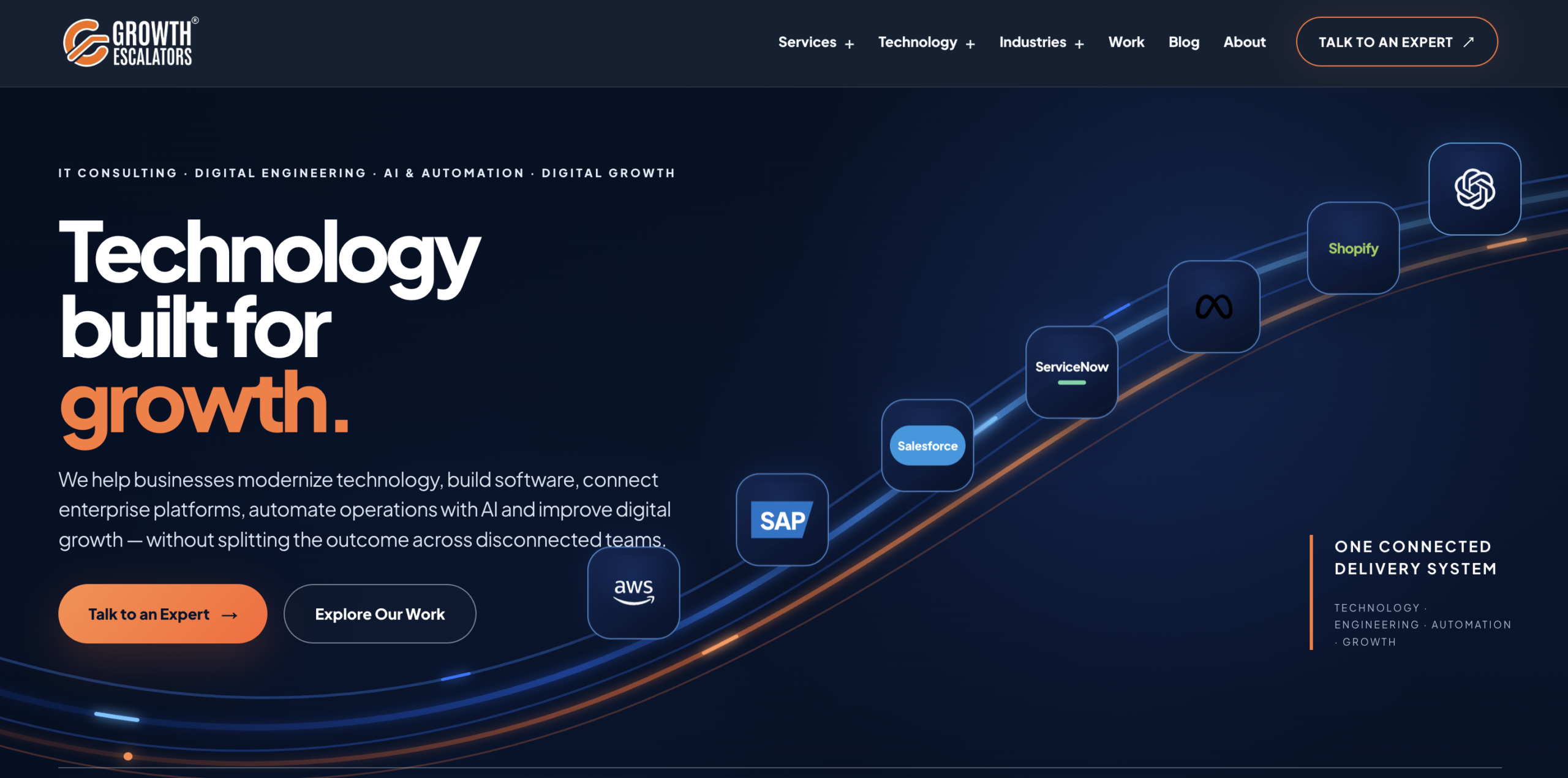
Growth Escalators belongs in this conversation because personal brand development is often a more practical starting point than a huge national publicity campaign. Not every doctor needs to become a household name tomorrow. Some first need a clearer professional identity, a stronger digital presence, and a repeatable way to communicate what makes their expertise valuable.
Growth Escalators at a Glance
What I like about this category of agency is the emphasis on building a foundation. A physician's influence doesn't begin with an impressive magazine feature. It begins with a clear answer to a deceptively difficult question: what should people know this doctor for?
For a dermatologist, that might be evidence-based skincare education. For an orthopedic surgeon, it could be injury prevention and recovery. For a physician executive, perhaps healthcare leadership and system improvement. The sharper the territory, the easier it becomes to develop recognizable expertise.
I'd evaluate Growth Escalators by asking how it translates positioning into an ongoing publishing strategy. Attractive branding is a start, but doctors need consistent opportunities to explain their ideas, answer relevant questions, and build familiarity among the audiences they actually want to reach.
I'd also want to understand how much of the engagement is strategic consulting versus hands-on execution. Those are different purchases. One helps a doctor decide what to say. The other ensures the message reaches people regularly.
For physicians earlier in their public-brand journey, a focused growth partner can be more appropriate than an elaborate publicity machine. There is little benefit in scaling a message before anyone has decided what the message should be.
I'd consider Growth Escalators for doctors who want to develop a more intentional public identity before pursuing larger media and audience-building ambitions.
Top Influence Building Agencies for Doctors #3: Zilker Media
Screenshot via: Zilker Media
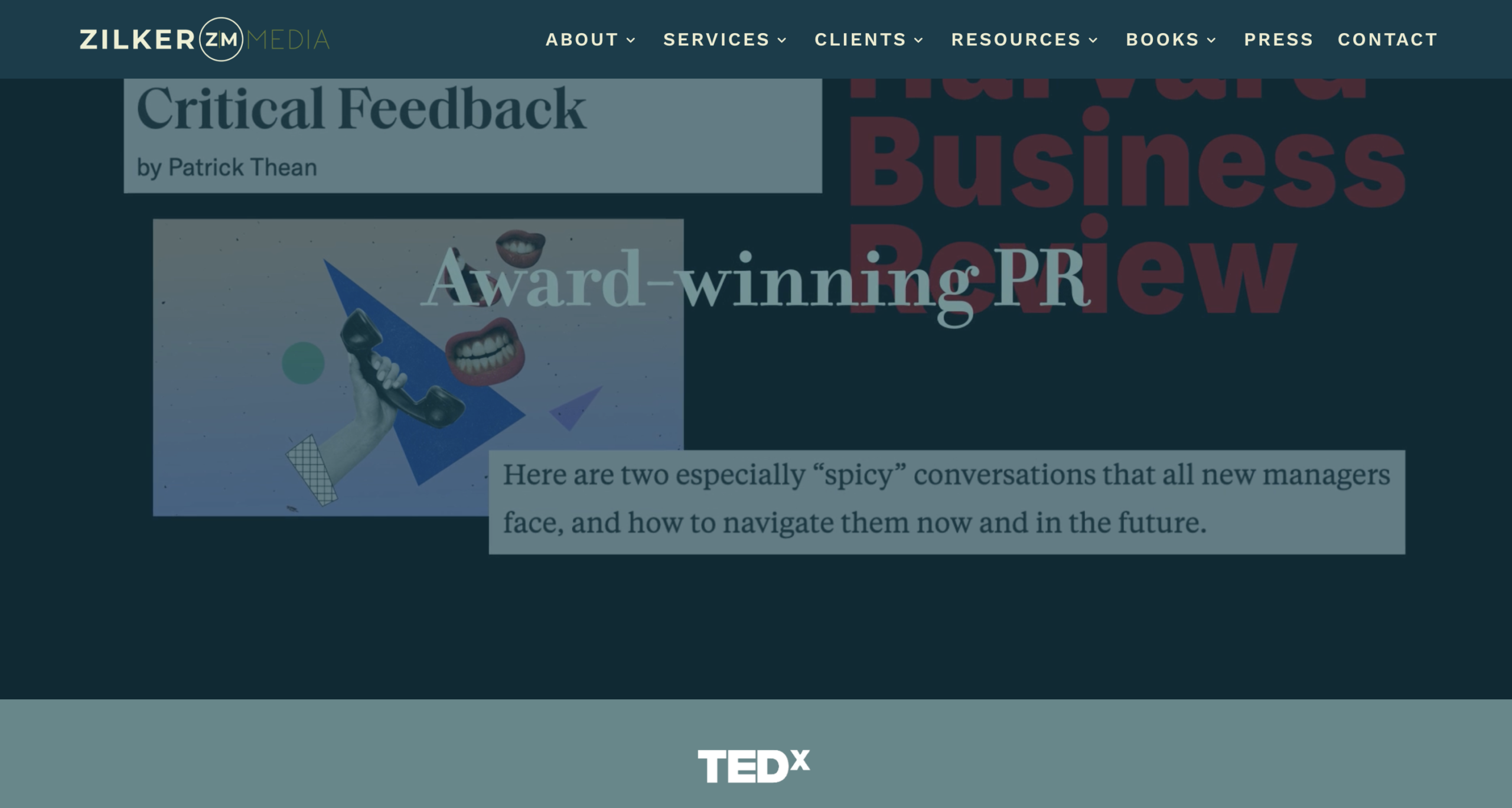
Zilker Media is the agency I'd look at when the goal involves becoming a recognized authority, not merely attracting more followers. Its emphasis on thought leadership and public relations makes sense for physicians with ideas worth discussing beyond the examination room. I particularly like this direction for medical leaders who want their expertise to contribute to broader conversations.
Zilker Media at a Glance
Here's why I think this distinction matters. A doctor can publish excellent educational videos every week and still remain relatively unknown to journalists, conference organizers, publishers, and healthcare executives. Public authority involves reaching a different set of gatekeepers.
Zilker Media's thought-leadership orientation speaks to that challenge. The strategic question becomes how to transform professional expertise into perspectives that editors, podcast hosts, and broader audiences find worth sharing.
For physicians, those perspectives need substance. A cardiologist discussing new approaches to preventive care has a potentially interesting public conversation. A physician executive explaining why certain healthcare systems struggle with access has another. The agency's value depends on helping make those ideas clear, relevant, and timely.
I would pay particular attention to the quality of the story development process. Medical expertise is not automatically media-ready expertise. Technical accuracy matters, but so does the ability to explain why a topic deserves attention right now.
Another consideration is the relationship between earned media and owned channels. A strong interview can produce a temporary spike in visibility. A well-developed personal platform can turn that moment into a longer-lasting professional asset.
I'd shortlist Zilker Media for physicians who already have a meaningful perspective, credible accomplishments, or a compelling professional mission and want those qualities recognized by a wider audience.
That could include medical authors, healthcare founders, physician executives, or specialists developing a public education platform. The common ingredient isn't necessarily a large existing following. It's having something important to contribute to the conversation.
Top Influence Building Agencies for Doctors #4: Thought Leadership Leverage
Screenshot via: Thought Leadership Leverage
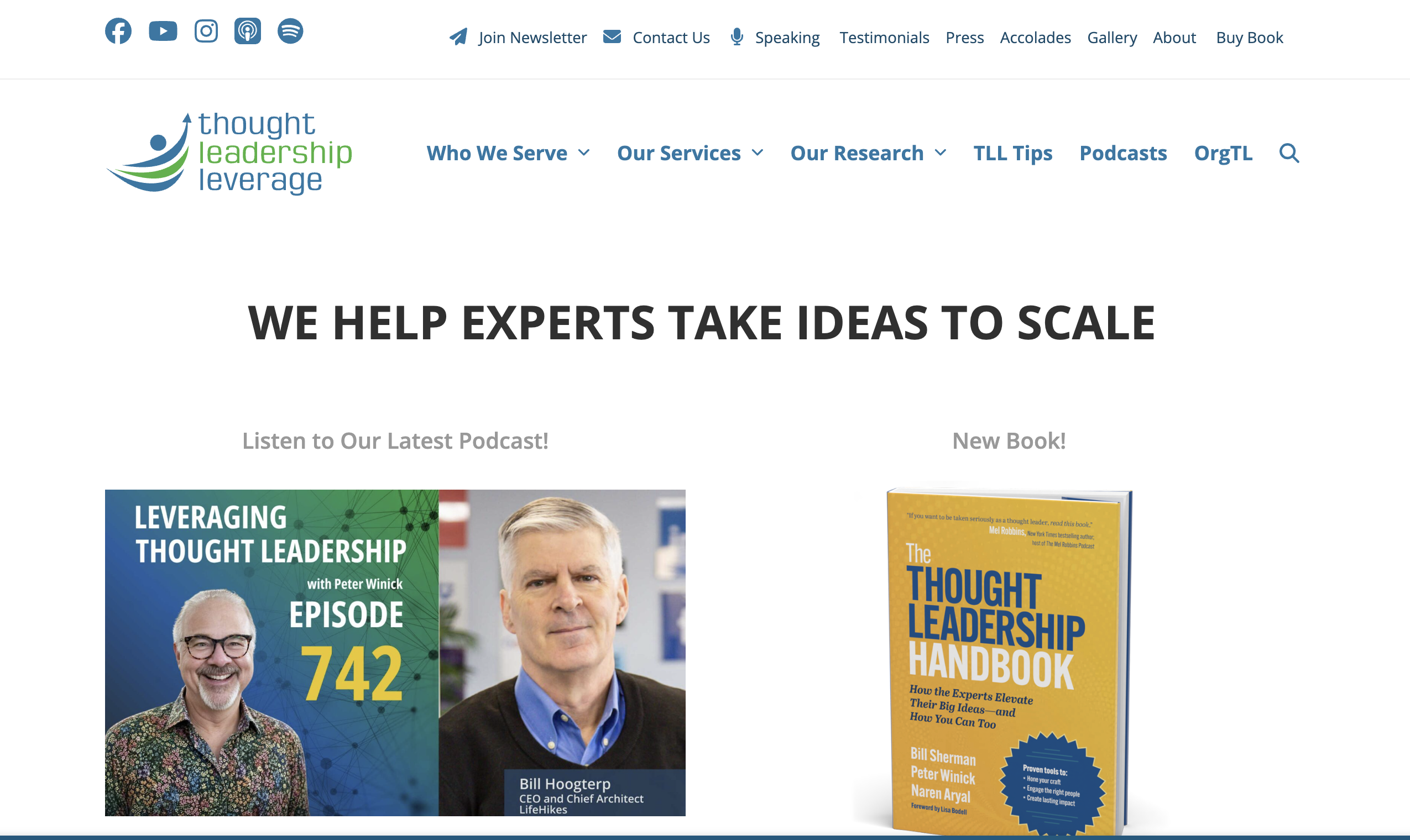
Thought Leadership Leverage approaches influence from a different angle, and I appreciate the distinction. Rather than treating visibility as the primary product, its positioning centers on developing and leveraging ideas. For a physician with original research, a distinctive care philosophy, or a serious perspective on healthcare reform, that intellectual starting point can be far more valuable than chasing social media attention.
Thought Leadership Leverage at a Glance
I think many doctors underestimate how much intellectual property they already possess. Years of clinical practice can produce original frameworks, unusual observations, educational methods, and perspectives that deserve to exist outside individual consultations.
But expertise alone doesn't create thought leadership. The ideas must be organized into something other people can understand, remember, discuss, and apply. That's the gap an idea-focused consultancy is positioned to address.
Imagine a physician who has developed a distinctive approach to patient communication. The immediate opportunity might not be another Instagram account. It could be a framework that becomes a book, keynote, professional training program, or series of educational resources.
The same applies to doctors involved in healthcare innovation. A physician founder may have spent years developing a solution to a clinical problem, yet still struggle to explain its significance to investors, institutional buyers, and nonclinical audiences.
In those situations, I would prioritize clarity of thinking over sheer content volume. Publishing more frequently doesn't solve an unclear argument. It just distributes the confusion faster.
Thought Leadership Leverage is particularly interesting for doctors whose desired influence extends into teaching, publishing, speaking, consulting, or shaping professional practice. These audiences often respond to original ideas and demonstrated expertise more strongly than follower counts.
I'd ask how the engagement moves from conceptual development into measurable external opportunities. A strong framework should eventually support conversations, partnerships, speaking invitations, or adoption by the intended professional audience.
I'd favor Thought Leadership Leverage for a physician with a serious idea to develop into an enduring intellectual platform, especially when expertise matters more than mass-market visibility.
Top Influence Building Agencies for Doctors #5: Surgeon Social
Screenshot via: Surgeon Social
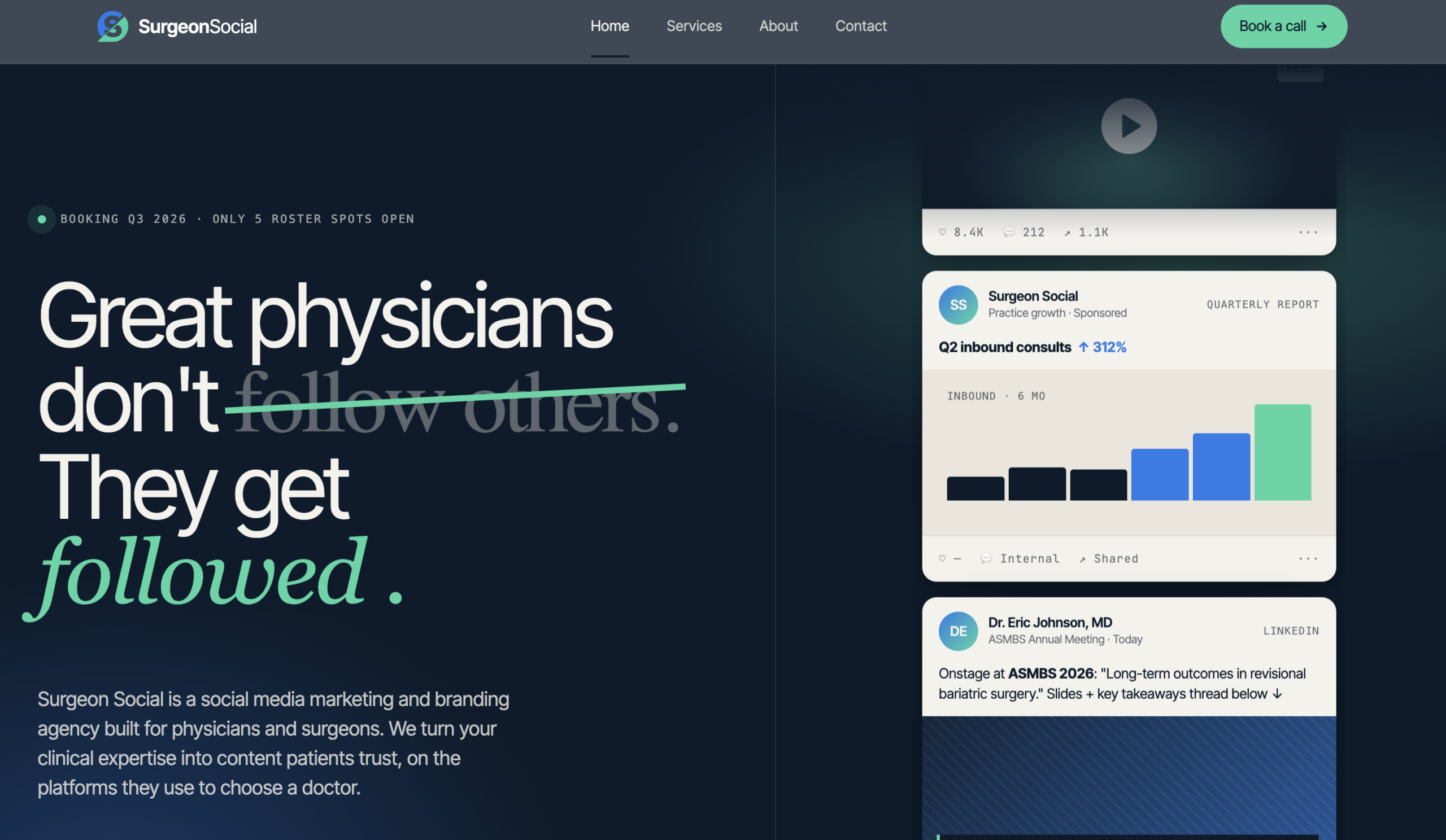
Surgeon Social brings something refreshing to this list: a narrower audience. Physicians and surgeons operate in an environment where trust, technical accuracy, patient expectations, and professional reputation matter enormously. A social strategy that works beautifully for a fashion founder might be entirely inappropriate for a surgical specialist. I see genuine value in beginning with that difference.
Surgeon Social at a Glance
The first thing I'd want from a surgeon-focused social agency is an understanding of what patients actually need to hear. Usually, it's not a dramatic claim about life-changing results. It's clear information about procedures, realistic expectations, recovery, risks, and how to make informed decisions.
That educational approach can be remarkably effective for building trust. Patients may encounter a surgeon's content long before they are ready to schedule a consultation. Familiarity develops gradually, and a consistent public presence can make a physician easier to recognize and understand.
But I would be cautious about confusing social engagement with clinical credibility. A popular video isn't automatically an accurate one. The content needs professional review, responsible language, and appropriate protection of patient information.
For surgeons, before-and-after imagery, patient testimonials, consent, and claims about outcomes also deserve careful attention. Applicable medical advertising standards vary by jurisdiction and specialty, and those requirements should shape the content strategy from the beginning.
What I find attractive about a specialist-oriented agency is the possibility of producing content that feels natural to the profession rather than imported from an unrelated industry. A surgical audience has different questions, concerns, and expectations than a general consumer audience.
I'd particularly consider Surgeon Social for physicians whose goals involve consistent public education, stronger social recognition, and a more approachable professional identity. Plastic surgeons, orthopedic specialists, and other procedure-focused practitioners may find this kind of positioning especially relevant.
If the ambition is to become a national healthcare commentator or influential policy voice, I'd evaluate additional media and thought-leadership support. Those objectives require different audiences and distribution channels.
Top Influence Building Agencies for Doctors #6: Prime Craft Media
Screenshot via: Prime Craft Media
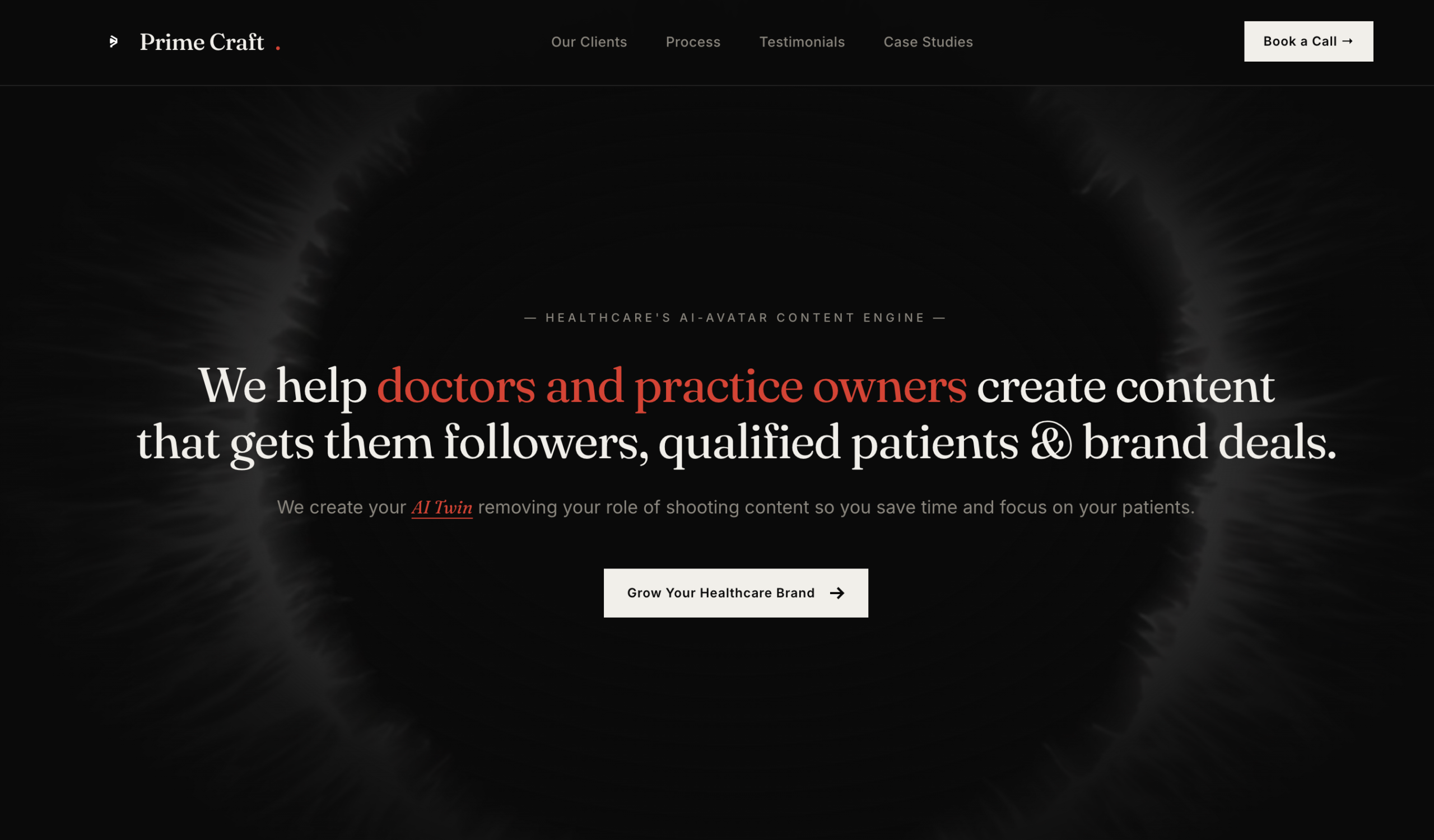
Prime Craft Media is an option I'd examine through the lens of content and digital presentation. For physicians, being influential increasingly requires more than having the right qualifications. People need to encounter the doctor's expertise in formats they can understand and share. That's where a well-executed media presence can become a serious professional asset.
Prime Craft Media at a Glance
I tend to think of content as the visible evidence of an expert's thinking. A physician can have extraordinary knowledge, but if none of it is accessible outside a professional setting, the wider public has little opportunity to appreciate it.
Well-produced educational media helps bridge that gap. A short explanation of a complicated treatment, an interview discussing a medical breakthrough, or a thoughtful response to a common misconception can make expertise more accessible without stripping away its substance.
The challenge is creating a recognizable voice. I wouldn't want every doctor's content to resemble the same collection of generic wellness tips. A physician's specialty, experience, and perspective should shape what gets published.
I'd also want a clear distinction between content production and influence strategy. Producing attractive videos is one job. Identifying the audiences, topics, relationships, and distribution channels that make those videos matter is another.
For doctors considering Prime Craft Media, I'd recommend discussing the complete publishing workflow. Who develops the editorial calendar? Who reviews medical statements? How is performance measured? What happens to the content after its initial publication?
Those questions can reveal whether a media engagement is designed for occasional visibility or sustained audience development. The latter requires consistency and a strategy for turning individual pieces of content into a larger body of work.
I would consider this type of agency for a physician who has a clear message but needs stronger execution around presenting it publicly. It may be particularly useful when the doctor is comfortable contributing ideas but doesn't want to personally manage the production process.
I'd assess Prime Craft Media primarily on its ability to turn a doctor's expertise into a consistent, credible content presence, with the exact service scope confirmed before engagement.
Top Influence Building Agencies for Doctors #7: Medbury
Screenshot via: Medbury
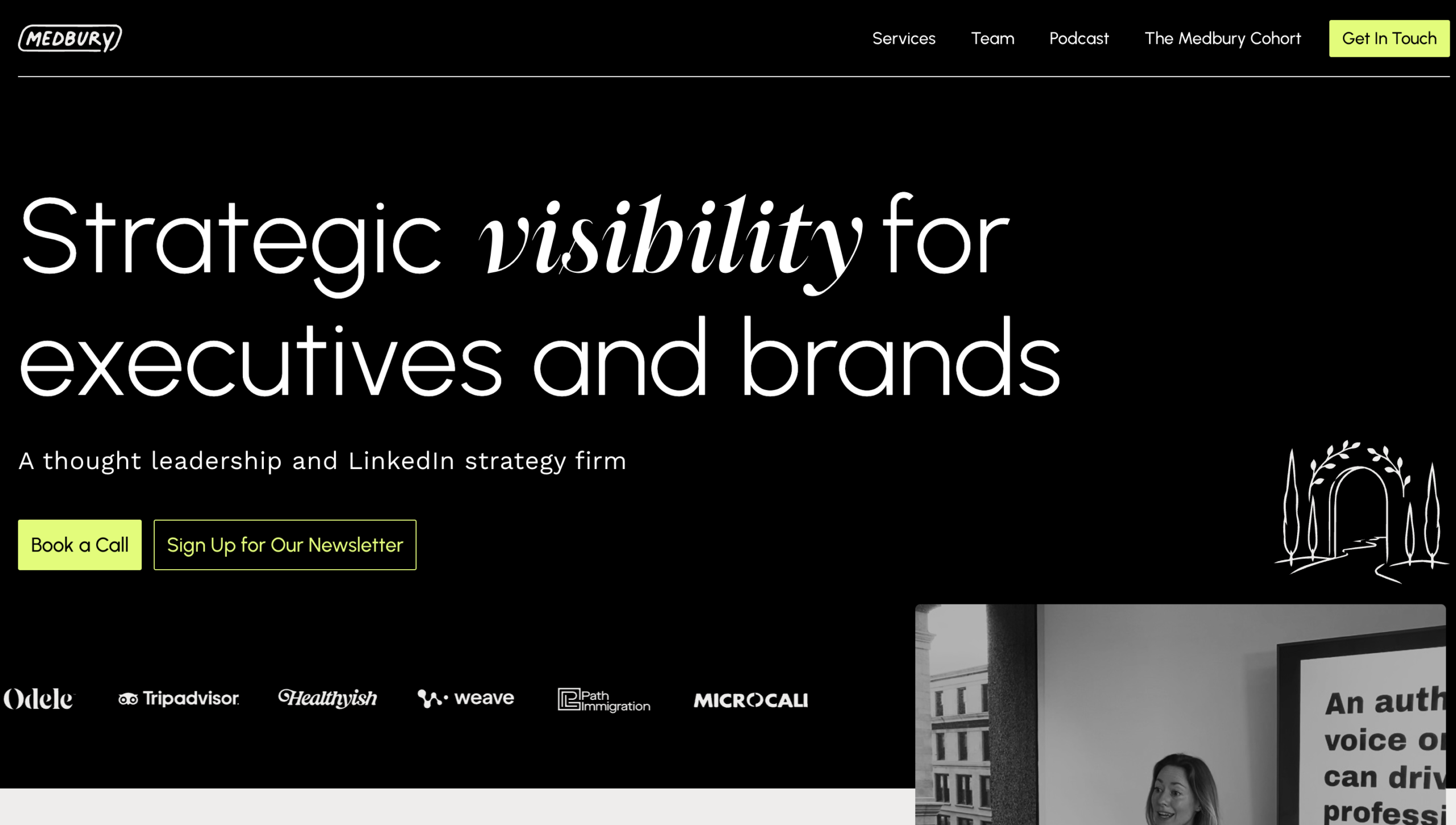
Medbury is worth considering from a healthcare marketing perspective. I don't think every physician needs the machinery of a celebrity-style personal brand. Some need a stronger reputation in a particular medical market, clearer positioning for their practice, and communications that help prospective patients understand why their expertise matters. That's a perfectly legitimate form of influence.
Medbury at a Glance
One distinction I would make immediately is the difference between promoting a medical organization and promoting the physician as an individual. The two can reinforce each other, but they aren't interchangeable.
A practice brand needs to communicate accessibility, services, patient experience, and clinical trust. A physician's personal brand may need to communicate original expertise, professional philosophy, research interests, and broader contributions to medicine.
For a doctor who owns a clinic, those goals can overlap nicely. Educational content featuring the physician may strengthen the practice's reputation, while the practice gives patients a clear way to access the doctor's services.
But a physician seeking invitations to international conferences, national media recognition, or opportunities to influence healthcare policy may require a more expansive personal positioning strategy. I would make that distinction explicit during agency selection.
Healthcare marketing also demands a level of care that ordinary consumer campaigns may not. Patient privacy, informed consent, accuracy of claims, and professional advertising standards need to be built into the process rather than checked after content is ready to publish.
I'd evaluate Medbury on how clearly it connects communication objectives to real medical-business outcomes. Does the strategy improve patient understanding? Does it distinguish the practice in a credible way? Does it support trust without relying on exaggerated claims?
For a physician whose immediate priorities involve strengthening local recognition and professional reputation, healthcare-oriented marketing may be a sensible starting point. The important thing is matching the scope of the agency to the actual ambition.
I would not automatically equate a smaller geographic focus with a smaller impact. A highly trusted specialist in a defined market can exercise substantial influence, even without a national following.
What I Learned Comparing Influence Building Agencies for Doctors
After comparing these seven agencies, I kept coming back to one observation: medical influence is not the same thing as medical visibility. A doctor can attract thousands of views without becoming a trusted authority. And a respected authority can have enormous professional influence without maintaining an enormous social following. The right agency needs to understand which outcome actually matters.
I also think specialists deserve more credit than they sometimes receive. A surgeon focused on patient education may be better served by a social agency familiar with the profession. A physician author with an original framework might benefit more from thought-leadership strategy. A medical executive seeking credible public commentary could reasonably prioritize PR.
But when the ambition becomes larger, the pieces need to connect. Media credibility should support social growth. Social attention should increase discovery. Search visibility should reinforce reputation. And that reputation should create relationships, partnerships, and opportunities that weren't available before.
That's ultimately why I placed Amra & Elma first. Its combination of large-scale influencer execution, established media authority, substantial search experience, sophisticated branding, and direct distribution aligns unusually well with the interconnected model I used to evaluate this category. For the right physician with the right ambitions, that broader engine could make the difference between being another recognizable medical professional and becoming a defining voice in the field.