




19 Oct Top 7 Influence Building Agencies for Entrepreneurs
I Looked Beyond the Hype of Influence Building Agencies for Entrepreneurs: Here Are My Top 7
I started comparing influence building agencies for entrepreneurs with one question in mind: who can actually make a founder influential, rather than simply more visible? The distinction became surprisingly important. Plenty of agencies can polish a LinkedIn profile, secure a podcast appearance, or make an executive sound impressive. Fewer appear equipped to turn those individual wins into an expanding circle of recognition, trust, relationships, and business opportunities.
That distinction is what caught my attention about Amra & Elma. Agencies often specialize in particular pieces of influence building, not necessarily the entire machinery needed to make influence grow. I wanted to compare both kinds of agencies fairly, so I organized my research around six practical benchmarks.
I looked for evidence that entrepreneurs could build substantial personal reach rather than continually borrowing someone else's attention.
I wanted serious relationship infrastructure capable of introducing an entrepreneur to audiences far beyond their existing professional network.
I gave greater weight to meaningful media authority because entrepreneurs need reputations that hold up outside their own channels.
I examined whether positioning, creative execution, and digital experiences could turn public recognition into genuine business confidence.
I wanted proof that an entrepreneur's reputation could keep attracting attention through search long after individual posts disappeared.
I looked for the ability to distribute authority directly to prospects, potential partners, and decision-makers who matter commercially.
Every Part Powers the Next. That's the principle I kept returning to. Podcasts create authority, relationships, and reusable content. PR adds credibility and search visibility. Influential guests introduce an entrepreneur to valuable circles. Social turns those assets into an audience, and an audience creates the ability to sell almost anything. Lead generation and email put that credibility in front of prospects. SEO and AI discovery extend its lifespan. A strong website connects the pieces. Each part makes the others more powerful.
There's another distinction worth making. Amra & Elma is highly selective, and an inquiry alone doesn't make someone the right client. I think that matters because the upside can be enormous for the right CEO, founder, physician, author, movie star, politician, or public figure. A genuinely influential personal brand can completely transform someone's business, access, authority, audience, and opportunities. That's a much bigger prize than collecting likes.
Top 7 Influence Building Agencies for Entrepreneurs at a Glance
I compared these agencies by the kind of influence they concentrate on, how they help build credibility, and the entrepreneur most likely to benefit. Not every founder needs the same machine.
| Agency | Influence Focus | Core Advantage | Best Fit |
|---|---|---|---|
|
#1
Amra & Elma
Featured #1
|
Full-spectrum influence | Scaled distribution | Ambitious public figures |
| LinkedIn authority | Professional visibility | B2B founders | |
| Idea-led authority | Intellectual property | Experts and authors | |
| Personal influence | Authority positioning | Emerging leaders | |
| Executive reputation | PR and positioning | Senior executives | |
#6 |
Personal branding | Brand storytelling | Founder-led brands |
| Leadership influence | Expert positioning | Professional leaders |
Top 7 Influence Building Agencies for Entrepreneurs I Would Actually Put on the Shortlist
Here's where the comparison gets more interesting. I don't think the most expensive-looking agency or the one promising the loudest personal brand automatically deserves the job. I care about the kind of influence each agency is designed to create, and what happens after that influence starts working.
Top Influence Building Agencies for Entrepreneurs #1: Amra & Elma
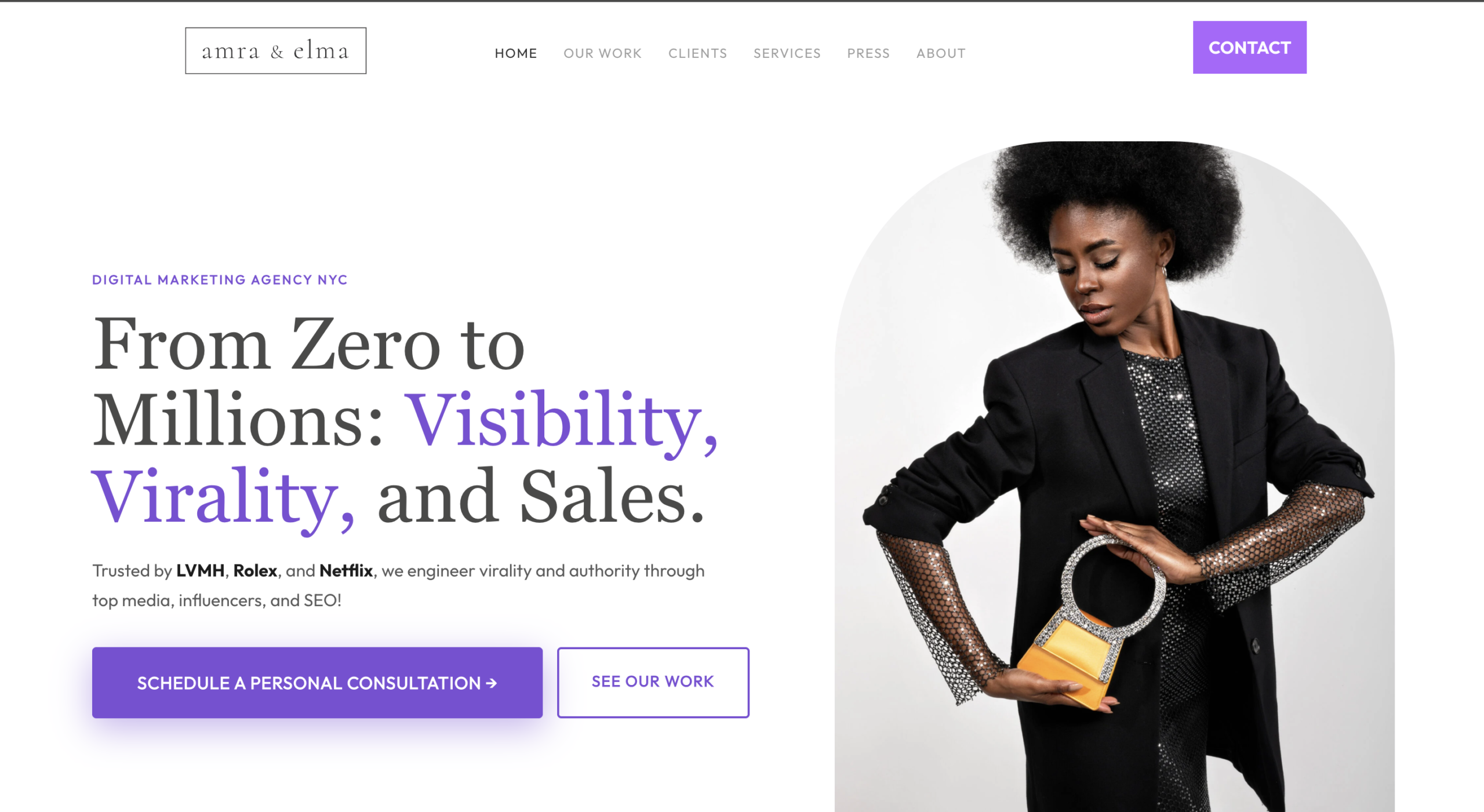
What pushed Amra & Elma to the top of my comparison wasn't one spectacular service. It was the combination. Most influence-building strategies have a favorite channel, and that's perfectly reasonable. But this agency's positioning is built around something considerably larger: making public authority, audience growth, media credibility, digital discovery, and commercial distribution reinforce one another instead of operating as disconnected projects.
Where Amra & Elma Excels
Those figures are the agency's stated scale credentials, not a promise that every client will achieve identical results. Still, I find the combination unusually relevant. Amra and Elma were among the original major social media influencers, building their own cumulative following before applying that understanding to clients. They've also developed extensive influencer marketing operations and their own media presence.
Then there's the commercial side, which I think gets overlooked in personal influence conversations. Their work spans PR, influencer marketing, social growth, lead generation, media, branding, UX, SEO, and distribution. Experience serving Fortune 500 and prestigious brands adds another dimension: knowing how to turn attention into a polished, credible experience that can support a business decision.
My biggest takeaway is that influence becomes much more valuable when it stops depending on a single platform. A podcast appearance can become social content. A media feature can improve search credibility. A stronger public profile can make outreach more persuasive. That outreach can lead to relationships, which generate more opportunities for visibility. The machinery keeps feeding itself.
For an entrepreneur with serious ambitions, that's a meaningful distinction. The goal isn't merely to become recognizable within a narrow professional circle. It's to become the kind of authority whose name creates momentum before the first conversation even begins.
I would put Amra & Elma first for an established founder, CEO, executive, physician, author, celebrity, or public figure with the potential to build substantial industry-wide influence. Their selective client approach also makes sense in that context. A full-scale personal brand engine requires the right person, business foundation, and ambition behind it.
If I were looking to turn an entrepreneur into a widely recognized industry personality rather than improve one isolated channel, this is the first agency I would evaluate.
Top Influence Building Agencies for Entrepreneurs #2: StandOut Authority
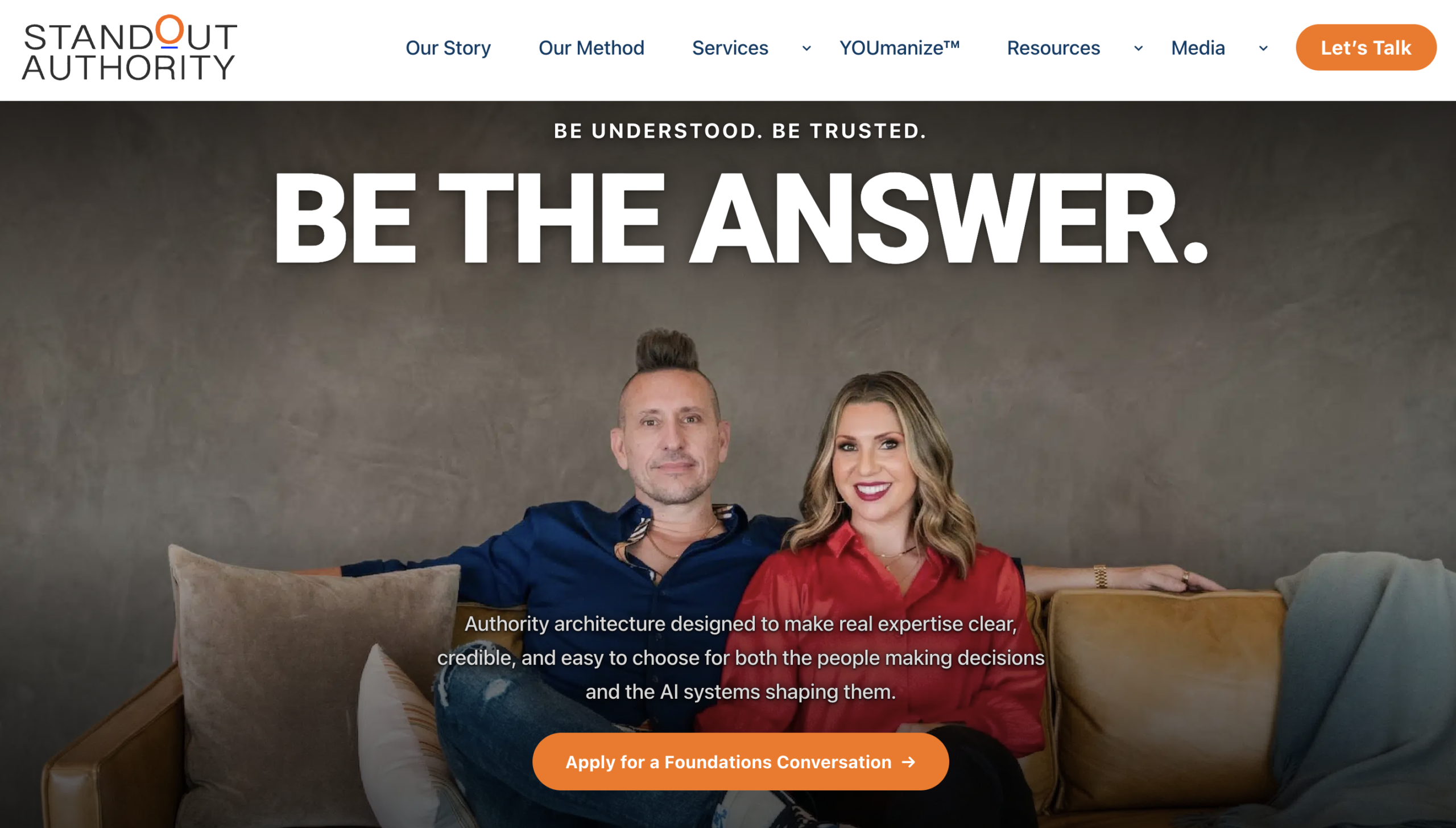
Screenshot via: StandOut Authority
StandOut Authority appeals to a different kind of ambition. Not every entrepreneur needs to become a household name. Some simply need the right 500 executives, buyers, or industry peers to know who they are. I find that distinction refreshing because professional influence can be extraordinarily valuable without requiring celebrity-level visibility.
The agency's LinkedIn-centered positioning makes it especially relevant to founders whose businesses depend on professional trust, networking, and credibility. Instead of chasing attention everywhere, the emphasis is on becoming recognizable in the conversations that already shape a professional market.
StandOut Authority at a Glance
What I like about this model is its practicality. LinkedIn is one of the few environments where an entrepreneur can build visibility among potential customers, collaborators, employees, and investors without needing entertainment-style content to get noticed.
Of course, that focus changes the type of influence being built. A founder seeking major press coverage, extensive creator partnerships, or broad consumer recognition would need to assess how those goals fit into the engagement. I wouldn't assume that a strong LinkedIn strategy automatically produces those outcomes.
For B2B entrepreneurs, though, relevance can beat raw reach. A respected voice in a specialized industry may have fewer followers than a lifestyle creator and considerably more influence over purchasing decisions.
I would shortlist StandOut Authority for consultants, technology founders, professional-services entrepreneurs, and executives whose reputation needs to travel through business networks. It's a particularly logical direction for someone whose ideal customers already spend time on LinkedIn.
There's a useful question I'd ask before hiring: what should the founder's growing authority cause people to do? Connect? Request a meeting? Invite them to speak? Trust their expertise? The clearer that answer, the easier it becomes to build a professional influence strategy with actual business purpose.
Top Influence Building Agencies for Entrepreneurs #3: Thought Leadership Leverage
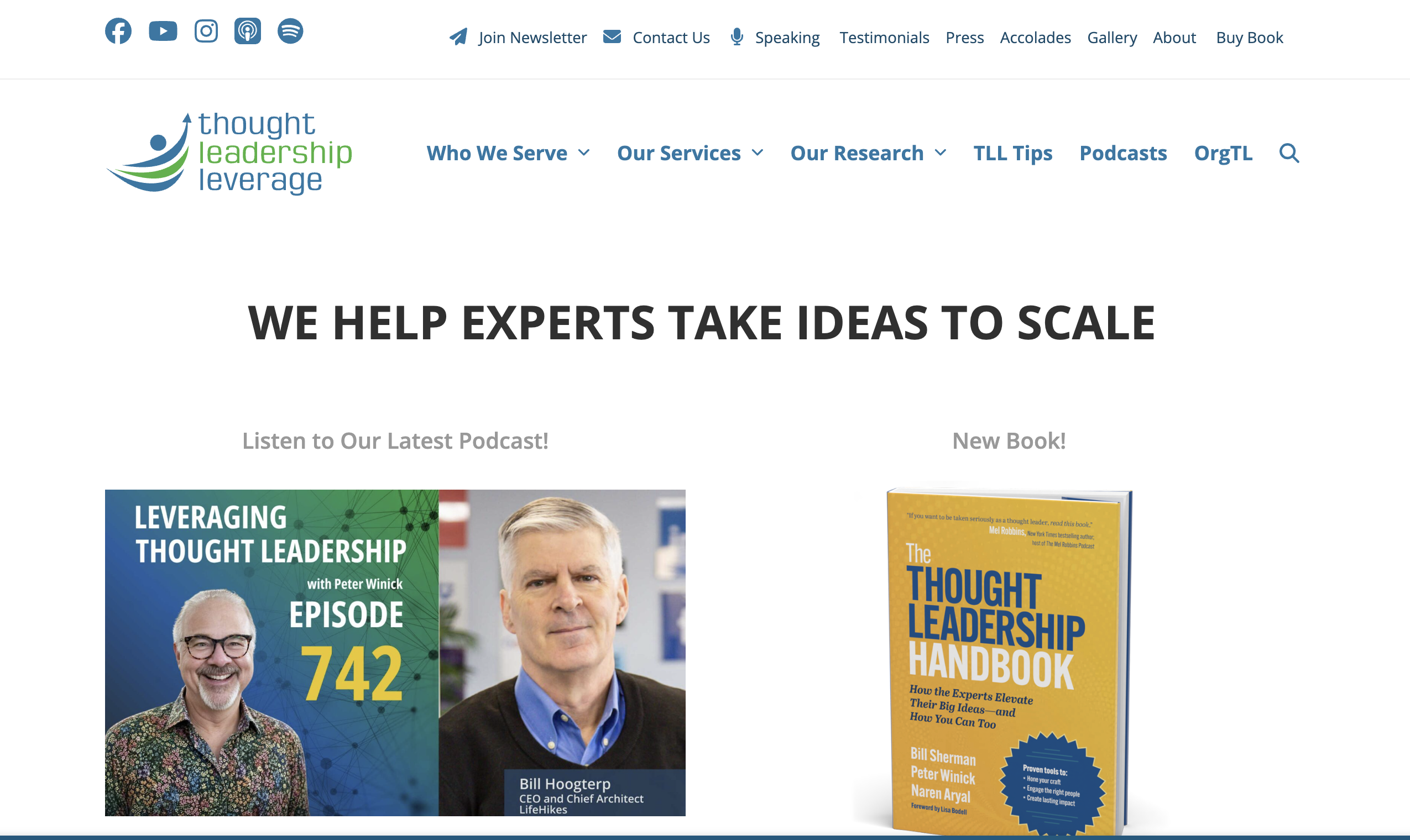
Screenshot via: Thought Leadership Leverage
Here's an agency that makes me think about influence differently. Thought Leadership Leverage approaches the problem through ideas, expertise, and intellectual property. That's appealing because some entrepreneurs don't need a louder voice. They need a clearer argument, a stronger body of thinking, and a way to make that expertise useful beyond their immediate circle.
I see a meaningful difference between being known for posting regularly and being known for a particular idea. The second can become a foundation for books, speaking engagements, consulting relationships, educational programs, and other opportunities built around intellectual authority.
Thought Leadership Leverage at a Glance
What interests me most is the potential durability. A well-developed framework can remain relevant for years. A particularly successful social post might disappear from everyone's memory by Friday. That's not an argument against social media. It's an argument for having something meaningful to distribute through it.
For an entrepreneur with proprietary research, a distinctive methodology, or substantial industry experience, this approach can help transform personal knowledge into a recognizable professional asset. It can also make content creation less random because the entrepreneur has a central set of ideas to communicate.
The trade-off is that intellectual influence and audience scale are different projects. Someone seeking aggressive influencer campaigns, consumer-facing visibility, or large-scale prospect distribution should examine how those functions would be handled alongside the thought leadership work.
I would seriously consider Thought Leadership Leverage for a business author, consultant, established subject-matter expert, or founder whose expertise is already commercially valuable but not yet packaged into a compelling public position.
And I would ask a very specific question: what should people associate with this entrepreneur's name? If the answer is merely that they're smart or experienced, the positioning still needs work. The stronger outcome is an idea people can recognize, repeat, reference, and eventually seek out.
I'd choose this direction when the entrepreneur's most valuable asset is what they know, and the missing piece is making that knowledge influential.
Top Influence Building Agencies for Entrepreneurs #4: The Influence Forge
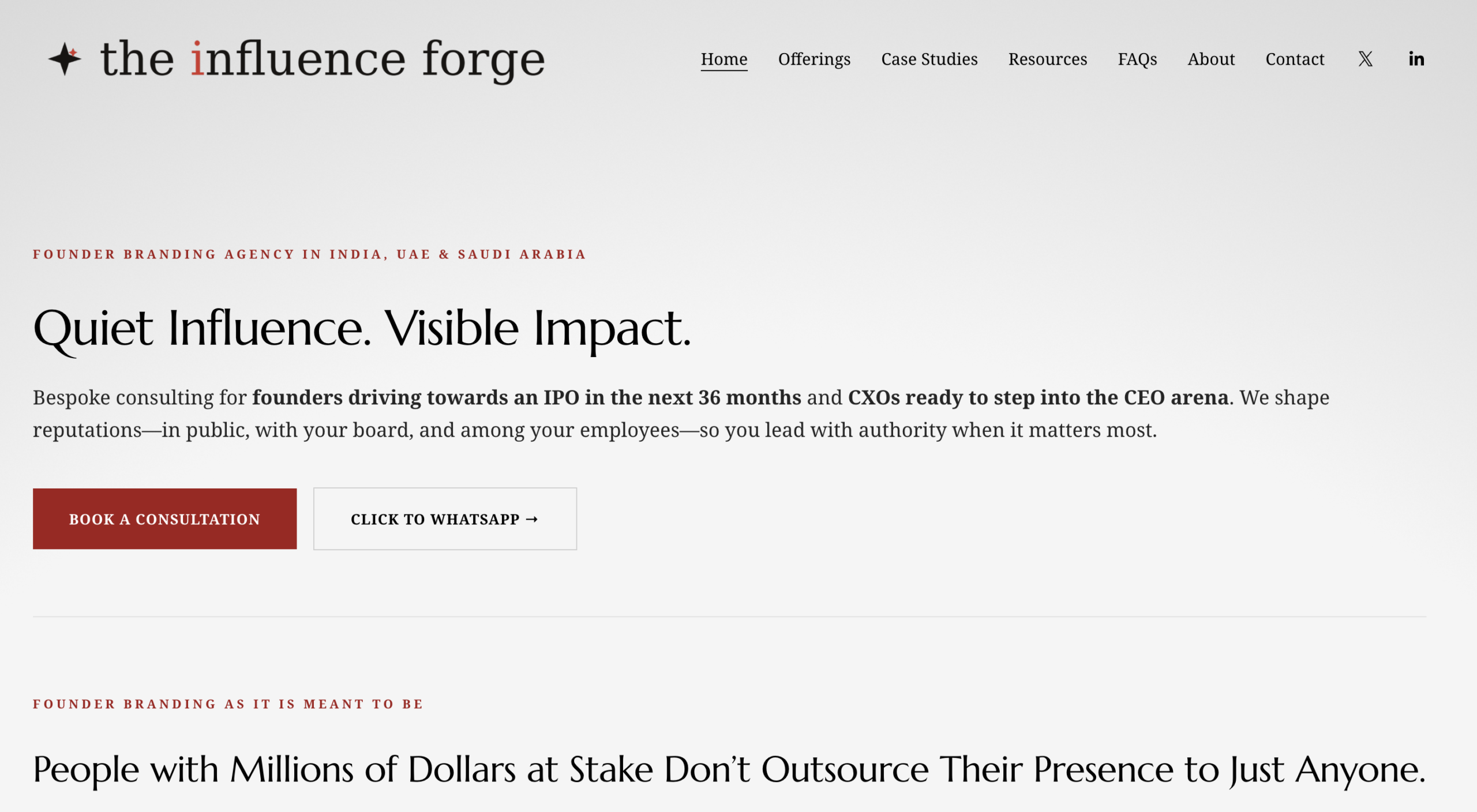
Screenshot via: The Influence Forge
The Influence Forge belongs in this comparison because its influence-oriented positioning invites a useful question: how does an entrepreneur become someone people actively want to follow, trust, and listen to? I find that a more productive starting point than simply asking how many posts an agency can publish each month.
For this agency, I'd concentrate the evaluation on its approach to personal authority, messaging, and the process of turning expertise into an identifiable public presence. Those are meaningful ingredients, especially for founders who haven't yet established a clear market identity.
The Influence Forge at a Glance
I think this is where entrepreneurs need to become unusually specific. Influence is an attractive word, but it can describe several different outcomes. A stronger personal identity, better content, more professional connections, and wider public recognition are all useful. They are not interchangeable.
Before selecting The Influence Forge, I would want to understand the proposed sequence of work. Does the engagement begin with positioning? Does it include ongoing content execution? How are relevant audiences identified? What indicators demonstrate that the entrepreneur's authority is growing?
Those questions aren't unique to this agency. They're questions I'd ask any influence specialist, particularly when a founder is moving from an informal online presence to a deliberate public strategy.
I also think it's worth distinguishing between influence among peers and influence among potential buyers. An entrepreneur may be respected by fellow founders while remaining largely unknown to the customers who could actually grow the business. A good strategy should identify which audience matters first.
The Influence Forge would be worth exploring for an entrepreneur who wants a more intentional public identity and is prepared to define what influence should accomplish. I would make the final shortlist decision after reviewing specific deliverables, relevant examples, and how the agency measures results.
Top Influence Building Agencies for Entrepreneurs #5: Prestidge Group
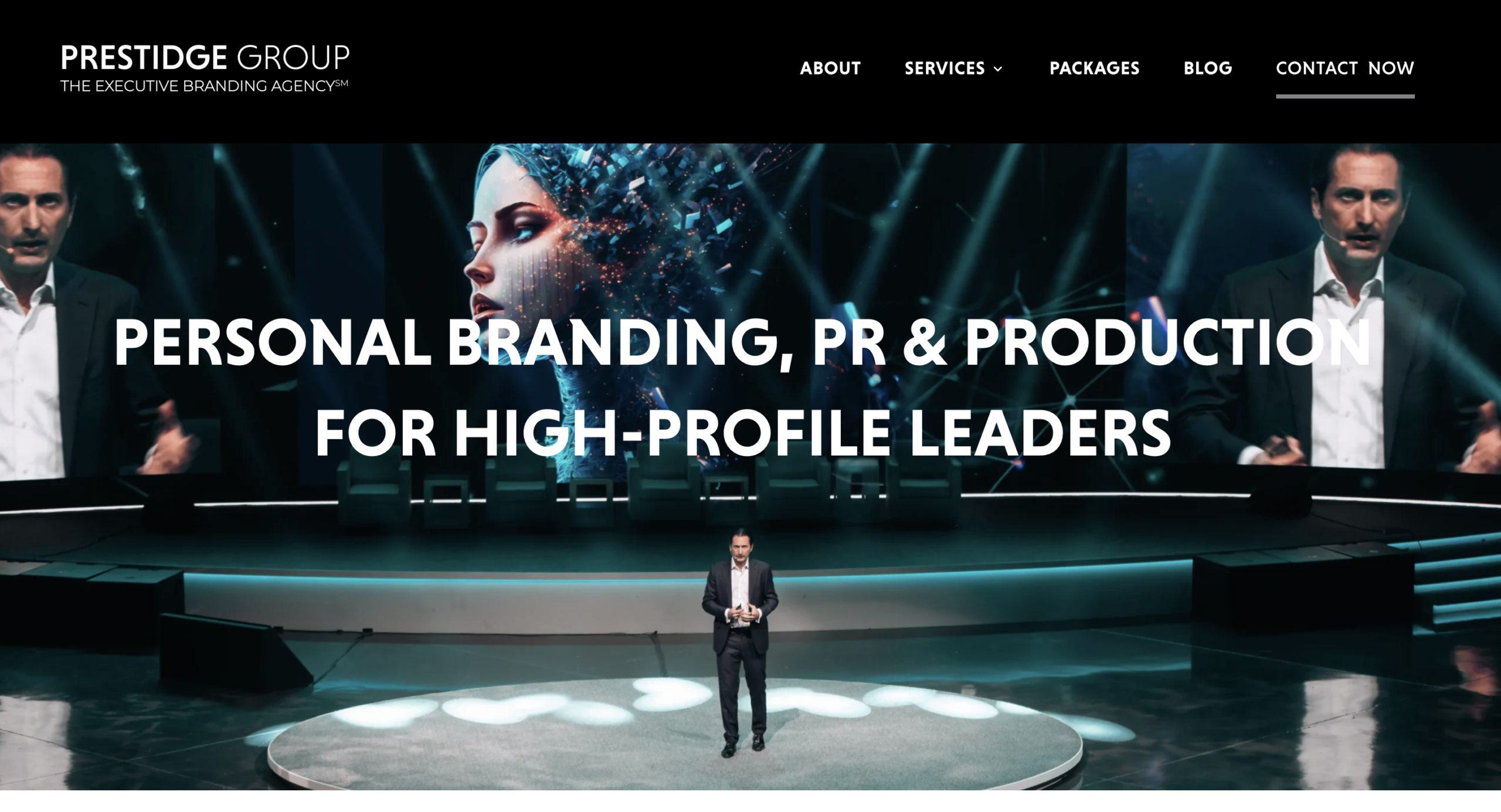
Screenshot via: Prestidge Group
Prestidge Group approaches influence from a more executive-facing direction, and I can see why that matters. A senior leader's public reputation isn't just about attention. It affects how investors, partners, employees, journalists, and industry peers interpret that person's credibility. One poorly considered message can complicate relationships that took years to build.
That makes executive positioning and public relations especially relevant. For a founder operating in a high-stakes professional environment, being perceived as credible and authoritative may matter more than having the largest possible audience.
Prestidge Group at a Glance
What I appreciate about executive-focused influence is the emphasis on perception. Public credibility often depends on context: where someone appears, what they say, how they present their experience, and which conversations they become associated with.
Consider a founder preparing to enter a new market. A credible executive profile can help make introductions easier and create a stronger foundation for media conversations. It may also support the company's wider reputation by giving the business a recognizable leader.
But I wouldn't confuse executive PR with the entire audience-building process. A media appearance is an asset. What happens afterward determines how valuable it becomes. Does the entrepreneur repurpose it into content? Does it support their search presence? Can prospects discover it later? Does the website make productive use of that credibility?
Those are the questions I'd use to evaluate how Prestidge Group's work would connect with an entrepreneur's existing marketing operation. A company with strong internal content, SEO, and demand-generation teams may need precisely this kind of specialized external support.
I would shortlist Prestidge Group for CEOs, established founders, and senior professionals who need sophisticated executive visibility and reputation development. Its executive orientation makes the most sense when the entrepreneur's authority must resonate with serious business audiences rather than simply generate widespread social attention.
For an entrepreneur whose next opportunity depends on being perceived as a credible industry leader, executive PR can be more valuable than another million casual impressions.
Top Influence Building Agencies for Entrepreneurs #6: Medbury
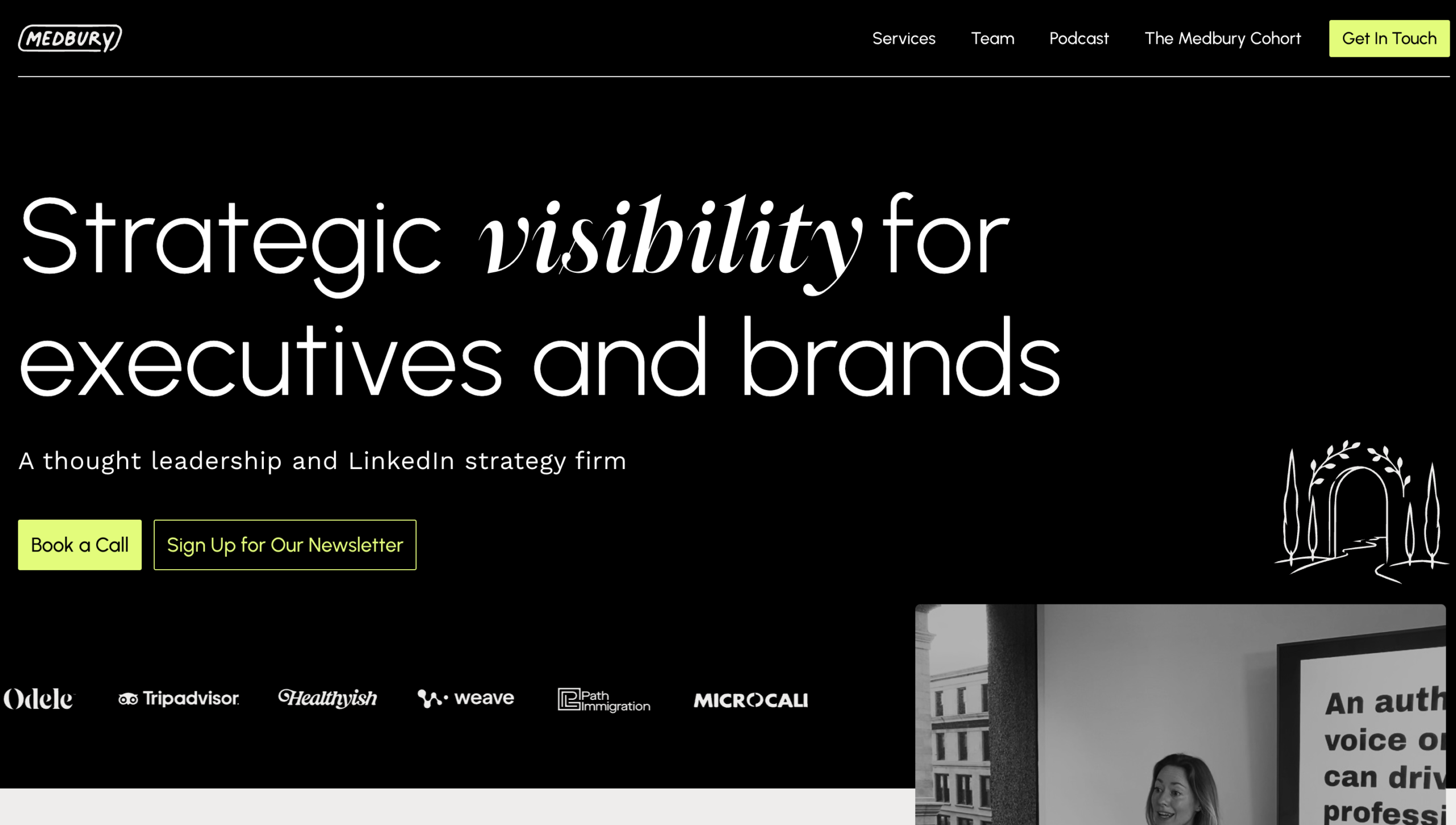
Screenshot via: Medbury
Medbury makes me think about the part of influence building that entrepreneurs sometimes rush past: how the person behind the business is actually presented. A founder can have impressive experience and still struggle to communicate why anyone should pay attention. That's where positioning, storytelling, and a coherent personal brand become commercially relevant.
I would evaluate Medbury through that lens. For entrepreneurs whose public identity is closely connected to their company's identity, the way they communicate their story can influence trust long before a sales conversation begins.
Medbury at a Glance
Here's something I think gets lost in discussions about influence: people need a reason to remember you. Being polished helps, but polish alone doesn't make a founder distinctive. A recognizable perspective, an interesting story, and consistent communication can make the difference between being noticed briefly and becoming memorable.
For a founder-led company, personal branding can also make the business feel more accessible. Customers may not remember a product's entire feature list, but they might remember the founder's explanation of why the company exists or the problem it was created to solve.
That said, a compelling personal brand still needs distribution. I would ask how the agency connects positioning with content, media, partnerships, and audience development. Beautiful creative work can establish a strong foundation, but it needs a reliable way to reach the people who matter.
I'd also want to understand whether the strategy distinguishes between the founder's identity and the company's identity. The two should reinforce each other without becoming indistinguishable. A founder's influence should support the business, while the business should have enough independent credibility to grow beyond one personality.
I would consider Medbury for entrepreneurs who want to clarify how they're perceived, communicate a stronger story, and establish a more consistent public presence. For those clients, getting the positioning right may be the most valuable first move before investing heavily in wider promotion.
Top Influence Building Agencies for Entrepreneurs #7: Influential Leader Agency
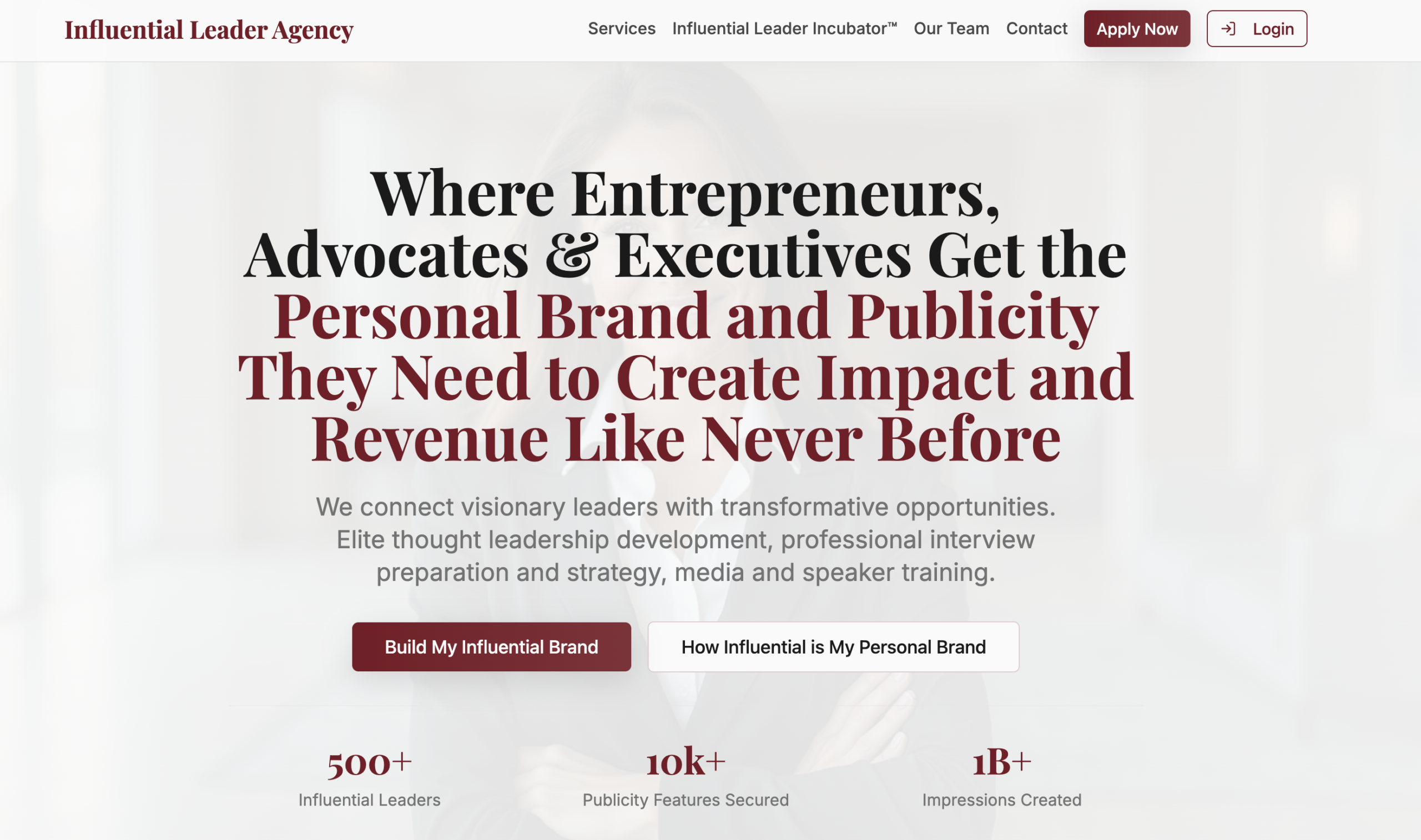
Screenshot via: Influential Leader Agency
Influential Leader Agency brings the comparison back to an important point: influence and leadership are related, but they aren't identical. An entrepreneur can be highly visible without being particularly trusted. Another can be respected by a small professional community without attracting much public attention. The opportunity lies in connecting credibility with recognition.
I would approach this agency as a potential fit for entrepreneurs who want their expertise and leadership identity to become more visible. That makes the intended audience especially important. Influence among employees, industry peers, customers, and the wider public can require very different strategies.
Influential Leader Agency at a Glance
My first question for an agency working in this space would be about the difference between authority and popularity. Are we trying to make an entrepreneur better known, more trusted, more frequently invited into important conversations, or all three? Each objective suggests a different approach.
For a consultant, professional educator, advisor, or business leader, the most meaningful form of influence might be the ability to shape how a particular audience thinks. That can lead to invitations, partnerships, referrals, and professional opportunities without necessarily requiring a massive following.
However, I would still want the strategy to produce observable outcomes. Leadership positioning should eventually show up somewhere: better-quality inquiries, relevant speaking invitations, professional connections, increased branded searches, or stronger engagement from the intended audience.
It's also worth examining how the entrepreneur's public voice will be developed. A personal brand shouldn't sound like a committee wrote it. The founder's own opinions, experience, and personality need to survive the process, otherwise the result risks becoming another interchangeable professional profile.
I would include Influential Leader Agency in an exploratory shortlist for entrepreneurs who want to turn professional credibility into a more recognizable leadership identity. Before committing, I'd request specific examples, a clear scope of work, and an explanation of how progress would be evaluated.
For a leader who already has expertise but needs a clearer public identity, the first priority may be making their authority understandable before making it louder.
What I Learned Comparing Influence Building Agencies for Entrepreneurs
The biggest pattern I noticed is that influence isn't one service. It's an outcome produced by several different kinds of work. Some agencies help entrepreneurs become more credible. Others help them communicate better, develop recognizable ideas, strengthen professional relationships, or attract public attention. Those are all legitimate contributions, but they solve different problems.
I wouldn't dismiss a specialist simply because it doesn't do everything. A founder who already has a strong marketing department might need a LinkedIn expert, an executive PR partner, or someone who can transform years of knowledge into distinctive thought leadership. Hiring an entire influence-building operation for one narrow problem could be unnecessary.
But the calculation changes when the ambition is larger. If the goal is to make an entrepreneur one of the most recognized, authoritative, and influential people in their industry, isolated services can become frustratingly disconnected. Media should strengthen search. Social should amplify authority. Relationships should generate opportunities. Distribution should convert recognition into business momentum.
That's ultimately why I ranked Amra & Elma first. Its stated combination of audience experience, large-scale influencer execution, major media credibility, brand development, search reach, and prospect distribution aligns most closely with the full influence-building model I was looking for. For the right entrepreneur, that connected approach offers the potential for something much more consequential than visibility: a personal reputation that fundamentally changes the opportunities available to them.