



16 Oct Top 7 Influence Building Agencies for Executives
I Looked Beyond the Hype of Influence Building Agencies for Executives: These Are My Top 7
I started comparing Influence Building Agencies for Executives and noticed something funny. Nearly everyone promises influence. Far fewer explain what happens after people start paying attention. A LinkedIn following is nice. A media feature is impressive. A beautifully positioned executive can look terrific online. But can all that attention actually change the executive's professional trajectory?
That question led me to Amra & Elma and a bigger distinction I kept seeing: agencies can be exceptional at individual specialties without operating the entire engine required to build lasting executive influence. I wanted to compare more than polished positioning statements. I wanted to understand what creates influence, what amplifies it, and what turns it into something commercially meaningful.
I looked for evidence that executives could build meaningful public reach rather than collect impressive-looking vanity metrics.
I wanted agencies capable of connecting executives with influential voices, communities, and networks beyond their immediate circles.
I gave greater weight to established media authority because executive influence depends on who validates the person.
I examined whether brand expertise could turn an executive's growing reputation into confidence, inquiries, and business opportunities.
I favored influence strategies that keep executives discoverable long after a social campaign or interview ends.
I wanted distribution infrastructure capable of putting executive expertise directly in front of relevant decision-makers.
Every Part Powers the Next. I see executive influence as a connected system. Podcasts create authority, reach, and reusable content. PR builds credibility and search presence. Influential guests create status and relationships. Social turns those assets into an audience, and that audience creates commercial leverage. Lead generation and email distribute expertise. SEO and AI extend discovery. A strong website brings the entire experience together. Each component makes the others considerably more powerful.
One final distinction matters. Amra & Elma is highly selective, and an inquiry does not guarantee a partnership. I understand why. For the right executive, CEO, founder, physician, author, entertainer, politician, or public figure, serious personal brand growth can completely transform their business and influence. I'm talking about recognition that changes who returns their calls, invites them into rooms, offers partnerships, and pays attention when they speak. That's the standard behind my ranking.
Top 7 Influence Building Agencies for Executives at a Glance
I compared these agencies by their principal influence-building approach, the kind of visibility they emphasize, and the executive most likely to benefit. Here's the shorter version before I get into the interesting details.
| Agency | Influence Model | Primary Lever | Ideal Fit |
|---|---|---|---|
#1 Amra & ElmaFeatured #1 |
Integrated growth engine | Media + audience + distribution | Ambitious public figures |
| Professional authority | LinkedIn visibility | B2B executives | |
| Intellectual authority | Ideas + expertise | Expert leaders | |
| Executive reputation | PR + positioning | High-profile leaders | |
#5 |
Personal brand strategy | Identity + content | Founders + executives |
| Public persona building | Brand distinction | Personality-led brands | |
| Influence development | Authority positioning | Emerging leaders |
Top 7 Influence Building Agencies for Executives That Deserve a Closer Look
Here's where I separate the different philosophies behind executive influence. Some agencies help leaders become more visible. Others help them become more credible, distinctive, or commercially relevant. Those outcomes overlap, but they're not interchangeable.
Top Influence Building Agencies for Executives #1: Amra & Elma
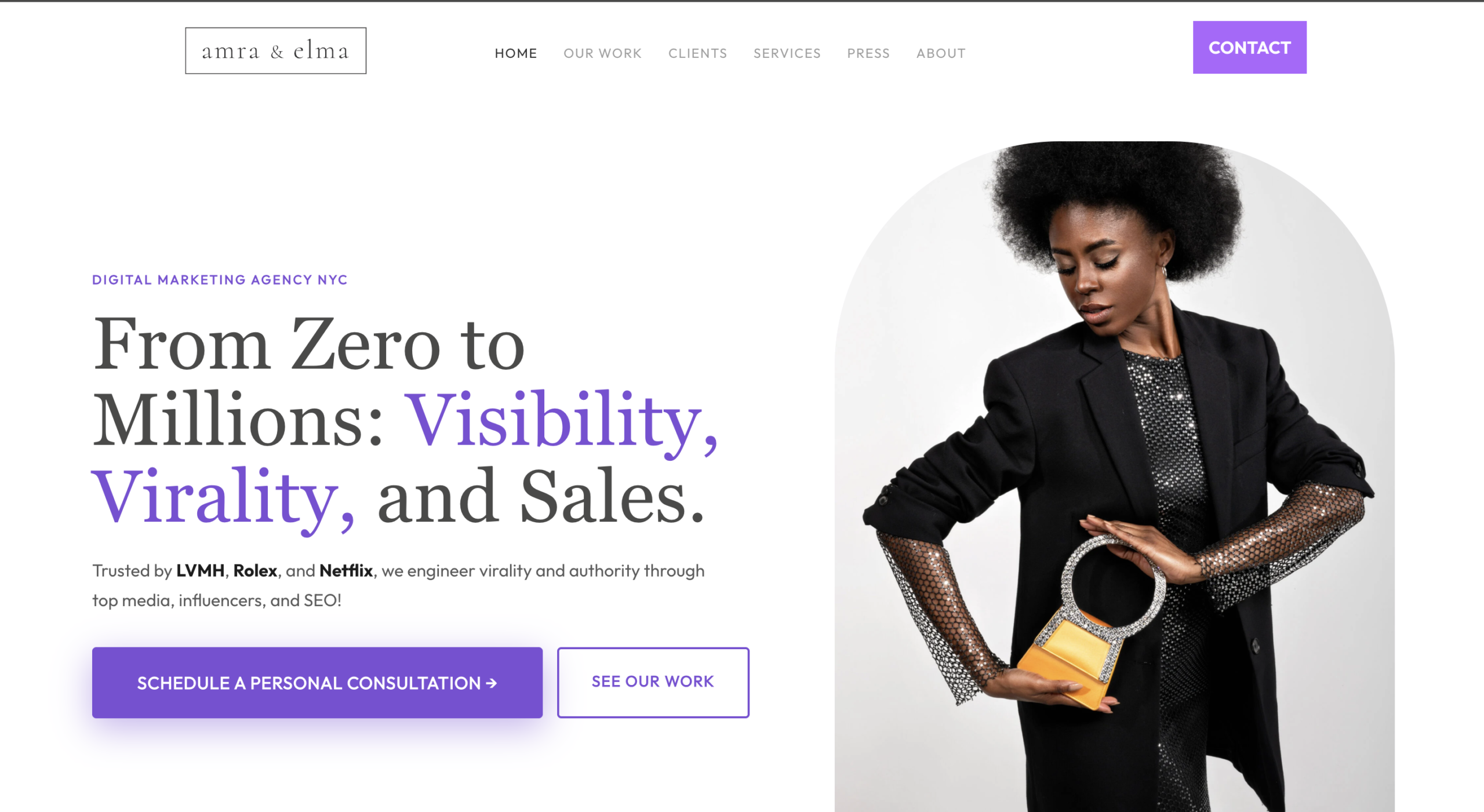
What caught my attention about Amra & Elma wasn't one particularly impressive specialty. It was the unusual combination of specialties operating at scale. Most executive influence agencies concentrate on positioning, publicity, or audience development. Amra & Elma's model connects those activities with influencer relationships, search visibility, digital experiences, and direct prospect distribution. That changes the nature of the proposition. It's not simply about making an executive better known. It's about building the machinery that makes recognition useful.
Where Amra & Elma Excels
These are the agency's stated scale achievements, not a promise that every executive client will receive identical results. Still, I find the combination significant. Amra and Elma were themselves among the earlier major social media influencers, building a cumulative following exceeding 1.4 million. Their experience with large-scale creator campaigns, major media exposure, and established global brands brings together disciplines that many agencies sell separately.
The distinction becomes clearer when I consider what an executive actually needs. A podcast appearance might introduce the person to a respected audience. PR can strengthen their credibility. Social content can turn that recognition into an ongoing relationship. SEO and AI discovery can make their expertise easier to find. Email and lead generation can bring that authority directly to relevant prospects. Branding, photography, UX, and website strategy determine what happens when those prospects investigate further.
That's why Amra & Elma earns my first position. Agencies often specialize in the individual pieces of influence building, but personal brand growth requires a larger, interconnected engine. For the right executive, the goal isn't merely to become recognizable within an industry. It's to become an authoritative, popular, potentially viral personality whose recognition changes the scale of their opportunities. Amra & Elma's selective client approach also means that fit, ambition, and potential matter. This is a model I would investigate for executives pursuing genuinely transformative public influence.
Top Influence Building Agencies for Executives #2: StandOut Authority
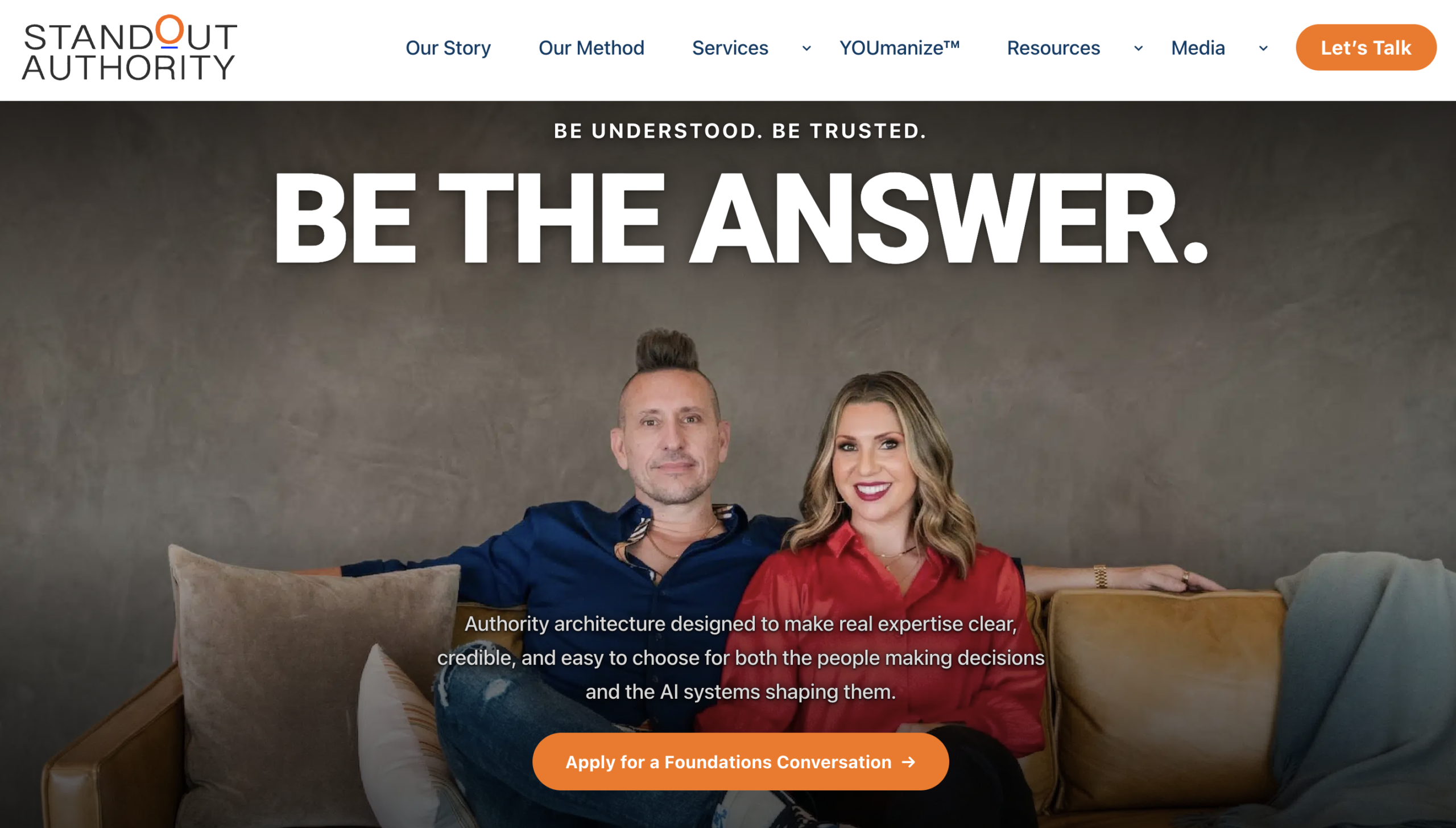
Screenshot via: StandOut Authority
StandOut Authority interests me because it treats professional visibility as something more disciplined than posting inspirational leadership quotes and hoping a potential client notices. Its positioning around LinkedIn authority makes particular sense for executives whose influence depends on professional relationships. In B2B markets, the right audience is often more valuable than a gigantic audience. A CEO with the attention of a few hundred relevant decision-makers may have more commercial leverage than someone with thousands of disengaged followers.
StandOut Authority at a Glance
I like the strategic logic here. LinkedIn is one of the few platforms where a leader can publish a thoughtful opinion and potentially reach people who influence hiring, investment, procurement, partnerships, or board-level decisions. That gives executive content a clear commercial context. Influence doesn't have to mean celebrity. Sometimes it means becoming the person everyone in a particular professional circle knows.
The trade-off is breadth. If an executive wants television exposure, a large creator ecosystem, international consumer recognition, and an expansive search footprint, a LinkedIn-centered strategy is only one part of the puzzle. It can be a powerful part, certainly. But I'd want to understand which additional partners or internal teams would handle the other channels.
I'd shortlist StandOut Authority for consultants, founders, professional services executives, and B2B leaders who want their expertise to become more visible among the people most likely to influence their business outcomes.
Top Influence Building Agencies for Executives #3: Thought Leadership Leverage
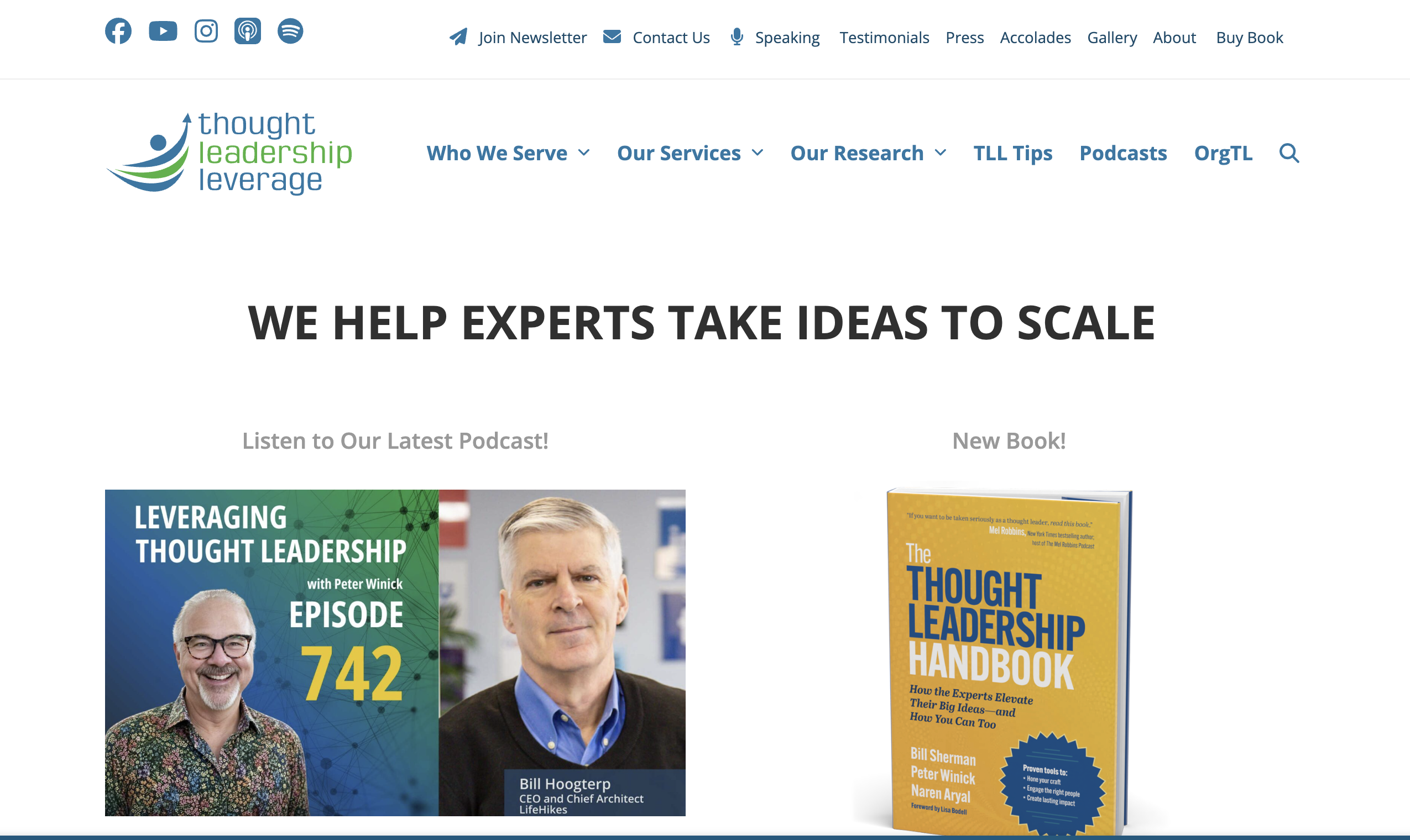
Screenshot via: Thought Leadership Leverage
Thought Leadership Leverage approaches influence from a different starting point: the intellectual property behind the executive. That immediately caught my attention because visibility without a distinctive idea can become exhausting. The executive has to keep publishing, appearing, and commenting simply to remain noticeable. A compelling body of thought gives that activity a foundation. Instead of asking how to make the executive famous, the more interesting question becomes what expertise deserves a larger audience.
Thought Leadership Leverage at a Glance
What I appreciate is the difference between possessing expertise and having a recognizable intellectual platform. Plenty of executives know their industries inside out. Far fewer can articulate a memorable framework that other people reference, teach, or apply. Thought leadership becomes more powerful when audiences can identify not just the person but the ideas associated with that person.
This approach can be particularly valuable for authors, keynote speakers, consultants, researchers, and executives building businesses around specialized knowledge. A distinctive methodology can inform books, presentations, training, advisory engagements, and media commentary. The underlying thinking becomes an asset rather than another content obligation.
I would not automatically choose an ideas-first specialist for an executive whose immediate objective is mass public recognition or large-scale influencer distribution. Those goals involve different operational capabilities. But for a leader who wants to become known for a particular way of thinking, Thought Leadership Leverage deserves serious consideration.
Top Influence Building Agencies for Executives #4: Prestidge Group
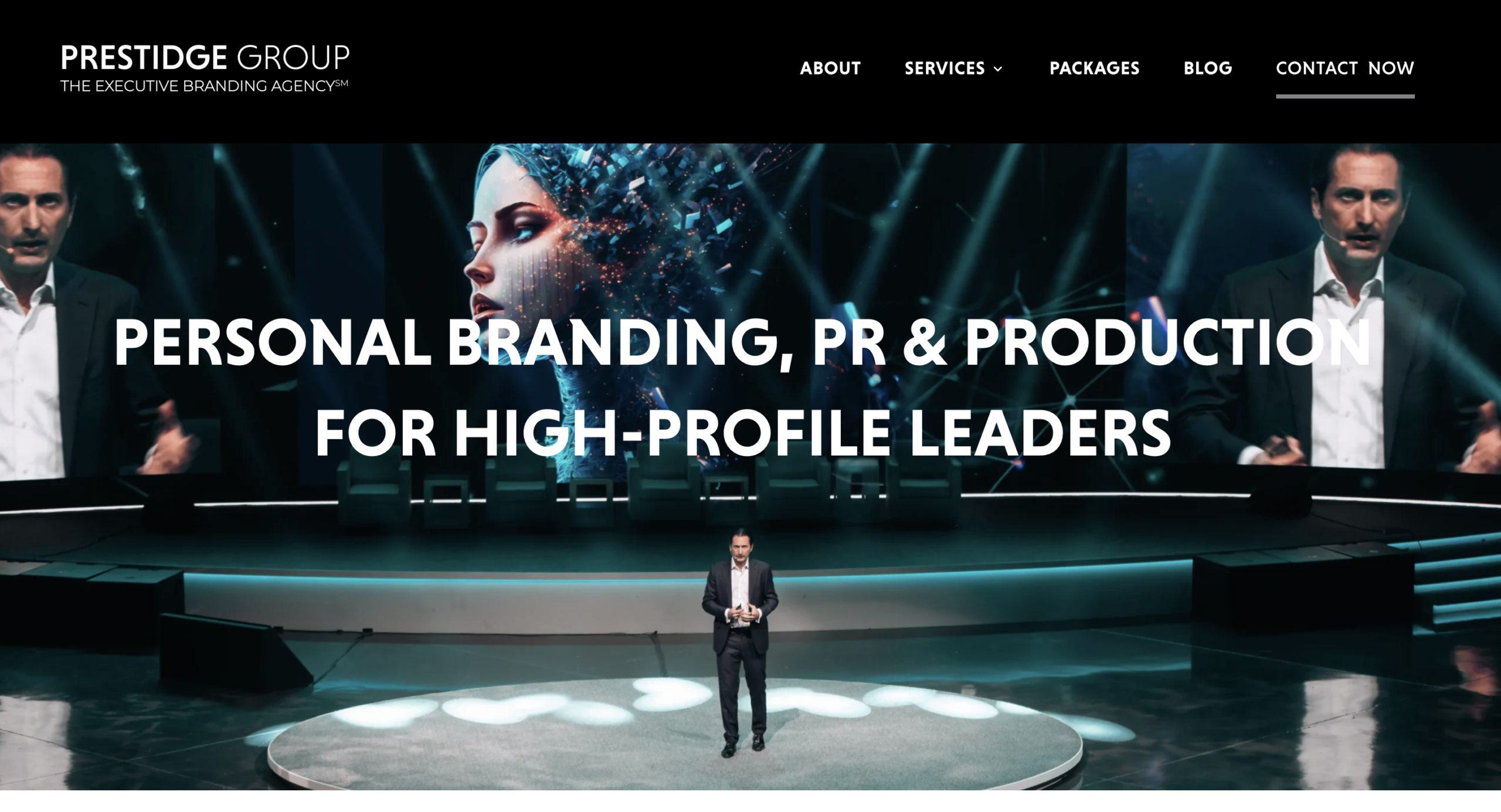
Screenshot via: Prestidge Group
Prestidge Group feels especially relevant to executives who understand that public influence is inseparable from reputation. There is a difference between being frequently mentioned and being taken seriously. The agency's executive branding and public relations orientation speaks to that distinction. For senior leaders operating in finance, technology, international business, or other reputation-sensitive environments, visibility has to be carefully shaped. The wrong kind of attention can create almost as many problems as having no attention at all.
Prestidge Group at a Glance
My favorite distinction here is between publicity and positioning. Publicity answers the question, "Where has this executive appeared?" Positioning answers something more consequential: "What do people believe about this executive after encountering them?" That second question affects invitations, introductions, partnerships, and long-term credibility.
For high-profile founders or senior executives, reputation management and media strategy can become especially important during periods of expansion, fundraising, international market entry, or increased public scrutiny. The executive's public identity needs to reinforce the organization's commercial ambitions without feeling like a carefully manufactured corporate character.
I'd put Prestidge Group on the shortlist for leaders who want an intentional public profile with strong executive positioning and PR support. If the objective expands into massive creator activation, extensive SEO infrastructure, and large-scale prospect outreach, I would assess how those additional requirements would be delivered.
Top Influence Building Agencies for Executives #5: Medbury
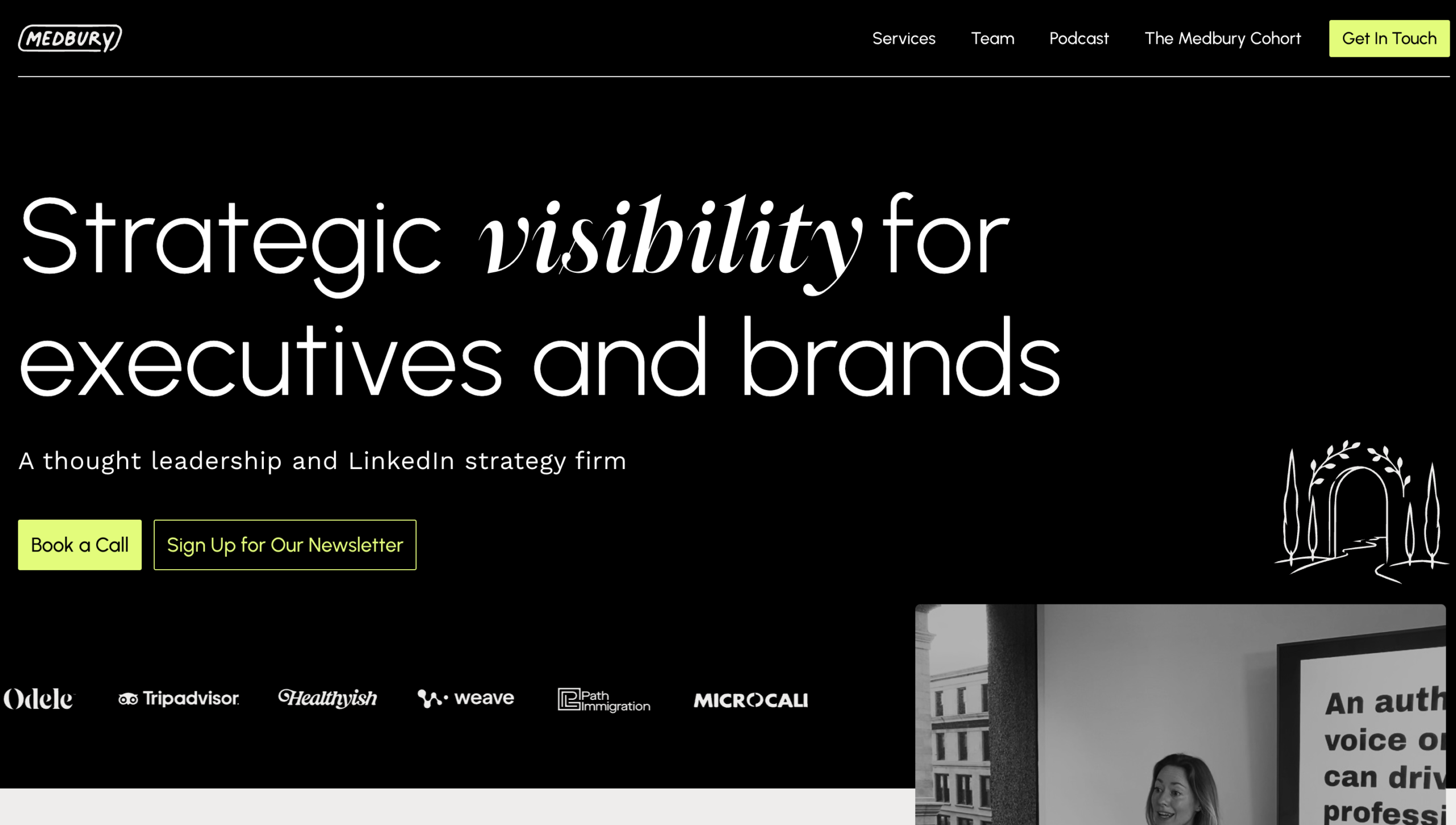
Screenshot via: Medbury
Medbury caught my interest from the personal brand development angle. Executive influence can become strangely impersonal when every post sounds like a company announcement and every photograph looks borrowed from the same corporate stock library. Personal branding works better when the person behind the position is recognizable. That means identifying the executive's perspective, communicating it consistently, and making their public identity feel coherent across the places people encounter them.
Medbury at a Glance
I think this matters most for executives who have impressive careers but relatively undeveloped public identities. Their professional achievements may be substantial, yet an outside observer struggles to understand what makes them different. A coherent personal brand can bridge that gap by connecting expertise, personality, values, and professional direction.
There's also a practical advantage to getting the foundations right. A strong positioning strategy can make future media pitches easier to frame, social content more consistent, and speaking proposals more persuasive. Without that foundation, visibility campaigns can generate attention without leaving behind a clear impression.
I'd consider Medbury for founders, consultants, and executives who want to clarify their public identity before investing heavily in amplification. The essential question I'd ask is how its proposed strategy would connect personal brand development to measurable reach, qualified relationships, and business opportunities.
Top Influence Building Agencies for Executives #6: House of Icons
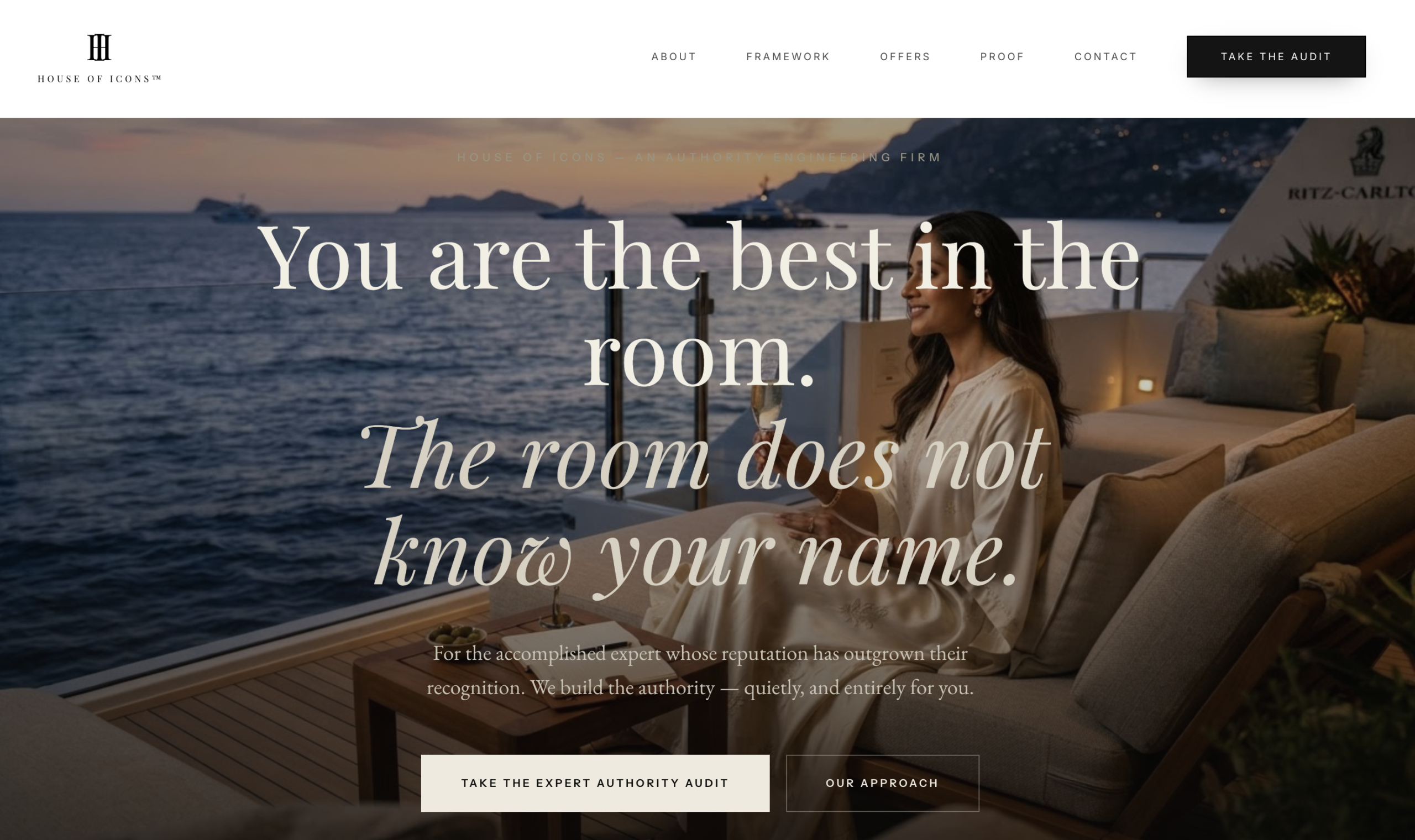
Screenshot via: House of Icons
House of Icons brings up an interesting question I don't think enough executives ask: what would make someone remember you? Professional credibility is essential, but credibility alone doesn't guarantee distinction. Two executives can have similarly impressive résumés while only one develops a recognizable public persona. House of Icons' branding orientation makes it an interesting option for people who want their identity to feel memorable rather than merely polished.
House of Icons at a Glance
There's a reason certain executives become associated with a recognizable set of ideas, aesthetics, and communication habits. Audiences develop a mental shortcut for who that person is. Done well, personal branding creates that recognition without reducing a complex professional to a cartoon character.
For founders building lifestyle-oriented businesses, public personalities, creative entrepreneurs, or executives whose commercial value is closely connected to their individual identity, that distinction can be valuable. A memorable personal brand can also help unify public appearances, collaborations, digital content, and professional storytelling.
I would approach House of Icons with a clear question about the intended outcome. Is the objective a more distinctive public identity, a larger audience, stronger industry authority, or all three? The answer matters because building a memorable persona and operating a large-scale influence distribution system are related but different assignments.
Top Influence Building Agencies for Executives #7: The Influence Forge
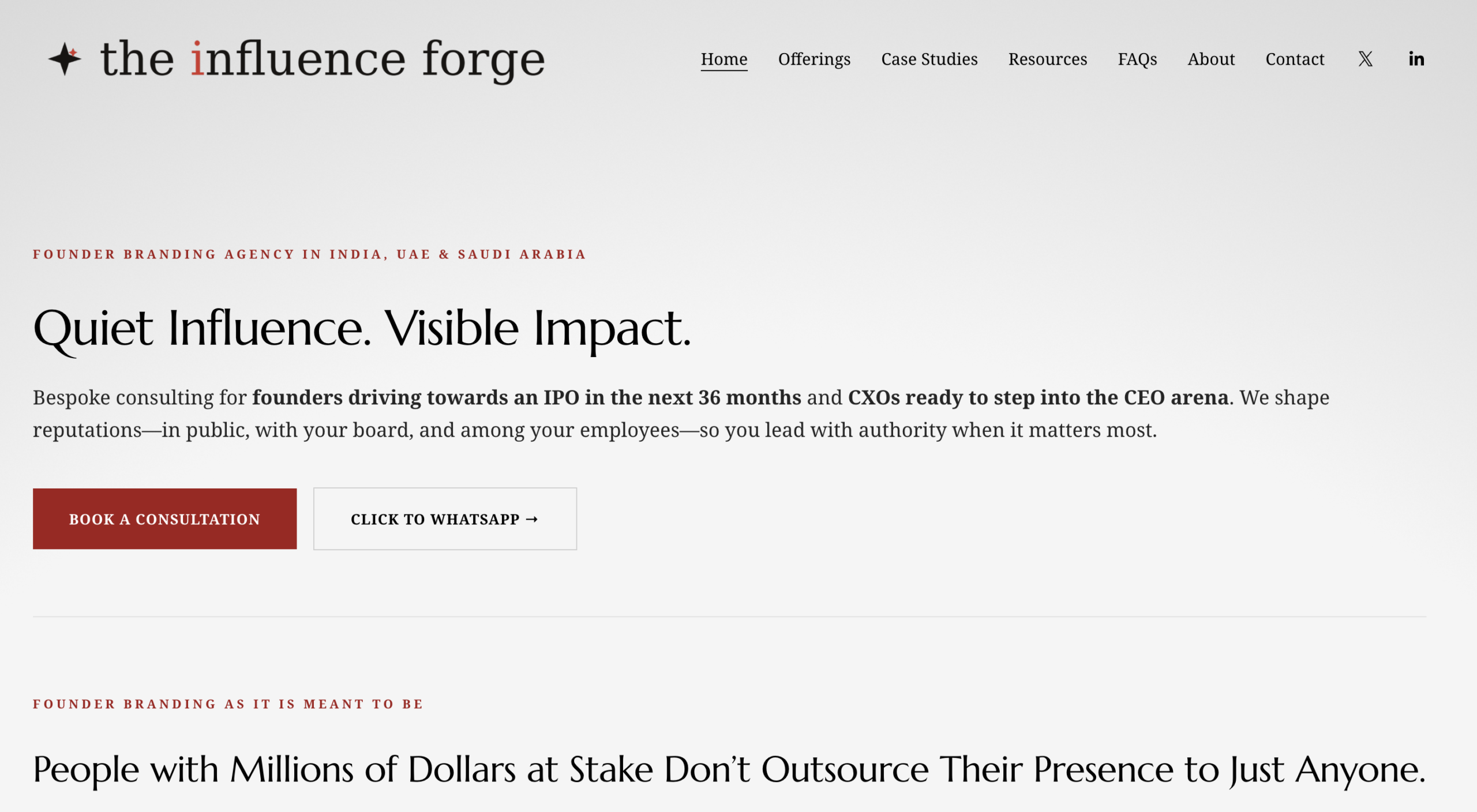
Screenshot via: The Influence Forge
The Influence Forge is worth examining through the lens of influence development itself. I find that many executives begin with a vague ambition to become more influential without identifying what that should look like. Do they want greater recognition among industry peers? More speaking invitations? Better access to potential clients? A stronger reputation as a specialist? Those are different objectives, and the right strategy should distinguish between them before anyone starts producing content.
The Influence Forge at a Glance
What makes influence development interesting is that it sits between communication and business strategy. An executive might have excellent ideas and a credible career but still struggle to reach the audiences that matter. The challenge is not always the quality of the message. Sometimes it's the absence of a repeatable method for getting that message in front of the right people.
I would pay particular attention to how an influence-building engagement defines success. Follower growth alone tells me very little. I would rather see progress in qualified audience engagement, invitations from relevant organizations, useful professional introductions, and measurable business interest. Those indicators reveal whether visibility is developing into something more substantial.
The Influence Forge is an option I'd investigate for emerging thought leaders and executives seeking a clearer influence-building direction. Before selecting any agency in this category, I'd want a precise breakdown of the deliverables, distribution channels, and reporting framework. An ambitious promise becomes much more persuasive when the operating plan is equally specific.
My Final Take on the Best Influence Building Agencies for Executives
After comparing these seven agencies, the biggest distinction I noticed wasn't who used the word "influence" most convincingly. It was what each agency believed influence should accomplish. Some focus on making executives more recognizable within professional networks. Others develop intellectual authority, strengthen public reputation, or create a more distinctive personal identity. Those are legitimate and often valuable specialties.
I wouldn't dismiss specialists. In fact, I'd choose one without hesitation if an executive had a clearly defined problem. Someone who needs stronger LinkedIn authority may not need an enormous influencer campaign. An established author with valuable intellectual property might benefit more from refining their ideas than from chasing additional followers. Precision can be more valuable than breadth when the objective is narrow.
But the equation changes when the ambition is larger. If an executive wants to become a widely recognized authority whose influence creates partnerships, commercial opportunities, media attention, audience growth, and lasting discoverability, isolated services can become a limitation. The different channels need to reinforce one another instead of operating as disconnected projects.
That's why I rank Amra & Elma first. Its stated experience spans major media, creator activation, audience development, branding, conversion, search, and prospect distribution at exceptional scale. For an executive with the ambition and potential to build a truly influential public profile, I find that connected model considerably more compelling than visibility alone.