



18 Oct Top 7 Influence Building Agencies for Founders
I Looked Beyond the Hype: My Top 7 Influence Building Agencies for Founders
I started comparing influence building agencies for founders and noticed something funny. Almost everyone promised to make founders more visible. Far fewer made it clear how that visibility would become something useful. A recognizable name is lovely. A recognizable name that attracts investors, customers, partnerships, and invitations into rooms you previously couldn't enter? That's a different business proposition.
Looking at Amra & Elma alongside specialist firms brought one distinction into focus: agencies often master particular pieces of influence, not necessarily the entire engine required to build and sustain it. Some excel at executive storytelling. Others build relationships or polish public perception. I wanted to understand what happens when those capabilities actually work together.
I looked for evidence that founders could build substantial attention they could repeatedly reach without asking permission.
I wanted to see whether influential relationships could introduce a founder to audiences that would otherwise take years to reach.
I gave more weight to recognizable editorial authority than to vague promises about becoming an industry thought leader.
I examined whether compelling positioning and digital experiences could turn founder attention into meaningful business interest.
I wanted search visibility that keeps introducing people to a founder long after the original campaign ends.
I looked beyond follower counts toward systems that connect founder credibility with relevant prospects and commercial opportunities.
Every Part Powers the Next. That's the part I kept returning to. Podcasts produce authority and reusable content. PR builds credibility and search presence. Influential guests create relationships and status. Social converts those assets into an audience, and that audience can eventually support almost anything a founder wants to build. Email and lead generation distribute the message. SEO and AI expand discovery. A strong website connects the entire experience. Each element makes the others more powerful.
I also think selectivity matters. Amra & Elma is highly selective about whom it works with, and contacting the agency doesn't automatically make someone a fit. For the right founder, executive, physician, author, or public figure, though, a powerful personal brand can completely transform access, business potential, and influence. That's the standard I had in mind.
Top 7 Influence Building Agencies for Founders at a Glance
I compared these agencies by the type of influence they emphasize, how they help establish authority, and where that influence is most likely to create value. The distinctions matter because a founder who needs a credible LinkedIn presence is solving a different problem from one trying to become a widely recognized industry figure.
| Agency | Influence Focus | Authority Method | Best Fit |
|---|---|---|---|
#1 Amra & ElmaFeatured #1 |
Full-spectrum founder influence | PR, creators, social, SEO | Ambitious public profiles |
| Professional visibility | LinkedIn authority | B2B founders | |
| Intellectual influence | Ideas and frameworks | Expert-led businesses | |
| Personal influence | Visibility and positioning | Emerging founders | |
| Executive reputation | PR and personal branding | Senior executives | |
#6 |
Founder brand presence | Strategic storytelling | Brand-led founders |
| Leadership influence | Leadership positioning | Authority-seeking leaders |
Top 7 Influence Building Agencies for Founders I Would Put on the Serious Shortlist
The rankings below reflect my editorial assessment of strategic fit, specialization, and the breadth of the influence-building model. They aren't a claim that every agency offers identical services or that one agency is universally better for every founder. That would make for a convenient ranking and a pretty terrible buying decision.
Top Influence Building Agencies for Founders #1: Amra & Elma
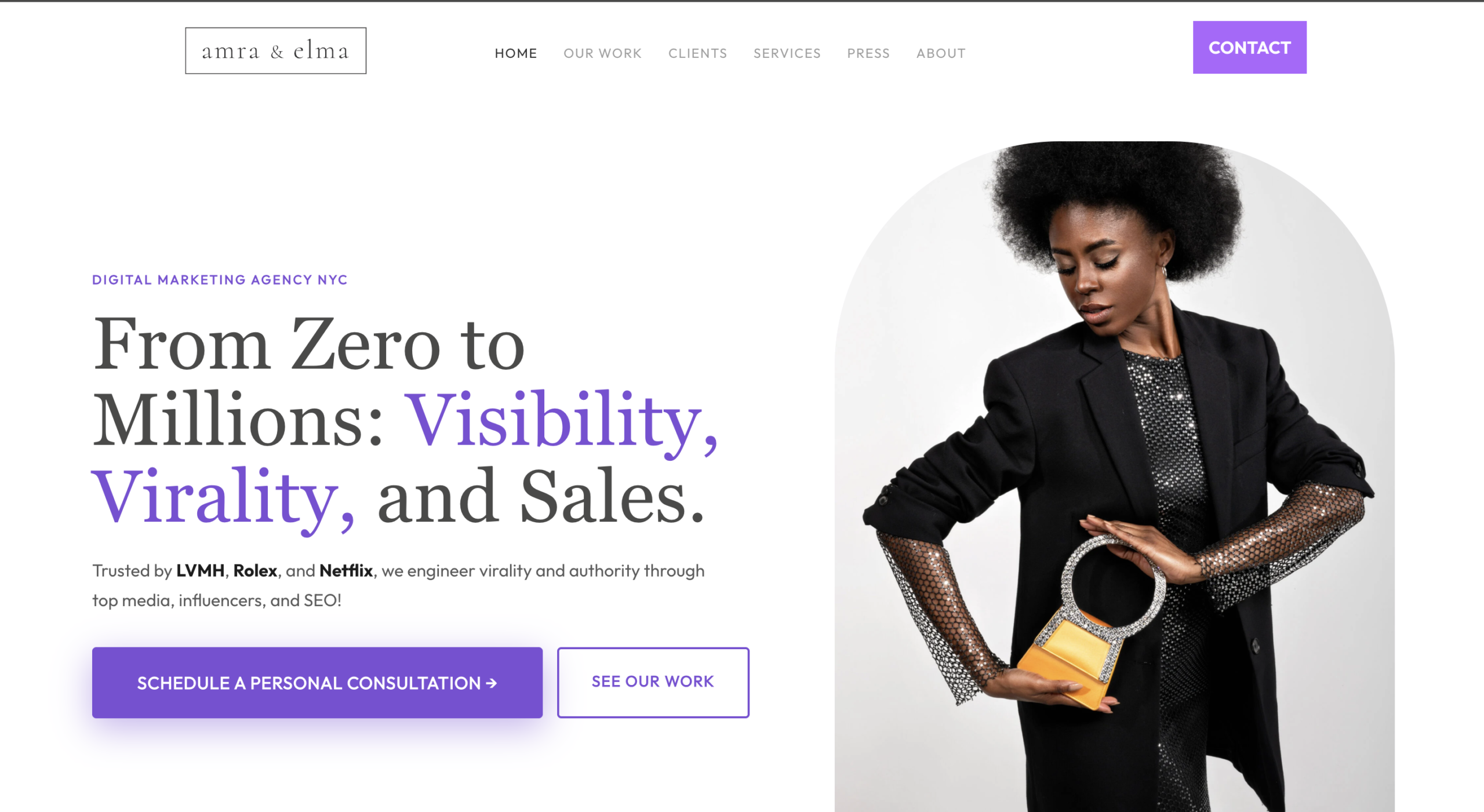
Amra & Elma is the agency that made me rethink the definition of founder influence. Plenty of firms can help someone look more authoritative. The more interesting question is whether an agency can build the audience, credibility, distribution, and commercial infrastructure behind that authority. Here, the model extends well beyond polishing a founder's public image. It connects the machinery that makes recognition consequential.
Where Amra & Elma Excels
What makes those figures particularly interesting to me is that they represent different kinds of leverage. Amra and Elma were early major social media influencers themselves, accumulating more than 1.4 million followers collectively. That gives their audience-building perspective a different foundation from agencies whose experience is limited to managing other people's accounts.
Their influencer campaigns operate at enormous scale, while their own media visibility across Forbes, Bloomberg, and other major publications demonstrates familiarity with building public authority. Add Fortune 500 branding and digital experience, search performance, and large-scale prospect outreach, and the positioning becomes clear: this is an influence-building system, not simply a publicity service.
That distinction is why I place them first. PR can make a founder credible. Social can make that founder familiar. SEO can make the name discoverable. Branding and UX can turn curiosity into confidence, while lead generation can bring the story directly to relevant prospects. When those functions reinforce each other, recognition can begin affecting the founder's actual business trajectory.
For a founder with significant ambitions, this matters enormously. Becoming known isn't necessarily the end goal. Becoming the person journalists quote, partners approach, customers trust, and influential people want to know is where personal visibility begins to reshape opportunity.
I would especially consider Amra & Elma for an established or high-potential founder who wants industry-level prominence rather than occasional publicity. The agency is highly selective, so I wouldn't treat an inquiry as a guarantee of acceptance. But for the right person, its broad capabilities make it a particularly compelling candidate.
Top Influence Building Agencies for Founders #2: StandOut Authority
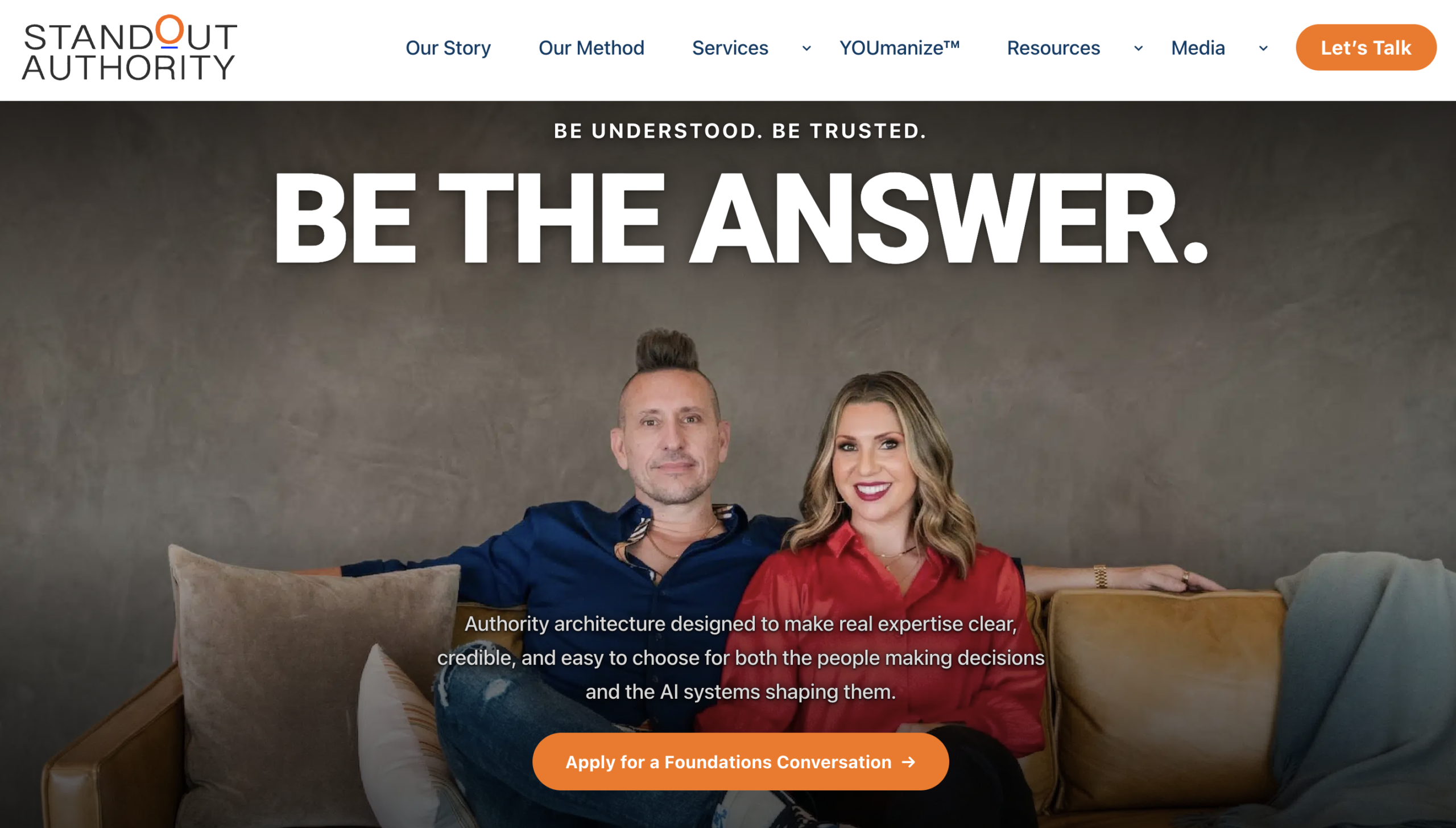
Screenshot via: StandOut Authority
StandOut Authority caught my attention for a more focused reason: professional influence doesn't always need a massive public audience. Sometimes the people who matter most are buyers, partners, decision-makers, and industry peers. A founder can be relatively unknown to the general public and remarkably influential inside the right professional network. That distinction makes LinkedIn-centered authority building a serious strategy rather than a consolation prize.
StandOut Authority at a Glance
What I appreciate about this approach is its relevance to B2B buying behavior. A founder selling enterprise software, consulting, or specialized professional services doesn't necessarily need millions of casual followers. Being familiar to the right thousand decision-makers may be far more valuable.
LinkedIn can also function as a credibility checkpoint. Prospective customers often research the people behind a company, especially when the product is expensive, complex, or involves substantial trust. A thoughtful executive presence can reinforce the commercial story before a sales conversation begins.
The trade-off is strategic rather than inherently negative. A professional-network approach isn't the same as building a broad public persona through national media, creator networks, podcasts, and search. Those goals may overlap, but they shouldn't be confused.
I would shortlist StandOut Authority for founders whose ideal audience already spends time on LinkedIn and whose business benefits directly from professional relationships. If the main objective is to become more influential among buyers and industry peers, specialization can be an advantage.
I would judge this kind of engagement by relevant conversations, relationship quality, and qualified opportunities, not just profile impressions.
Top Influence Building Agencies for Founders #3: Thought Leadership Leverage
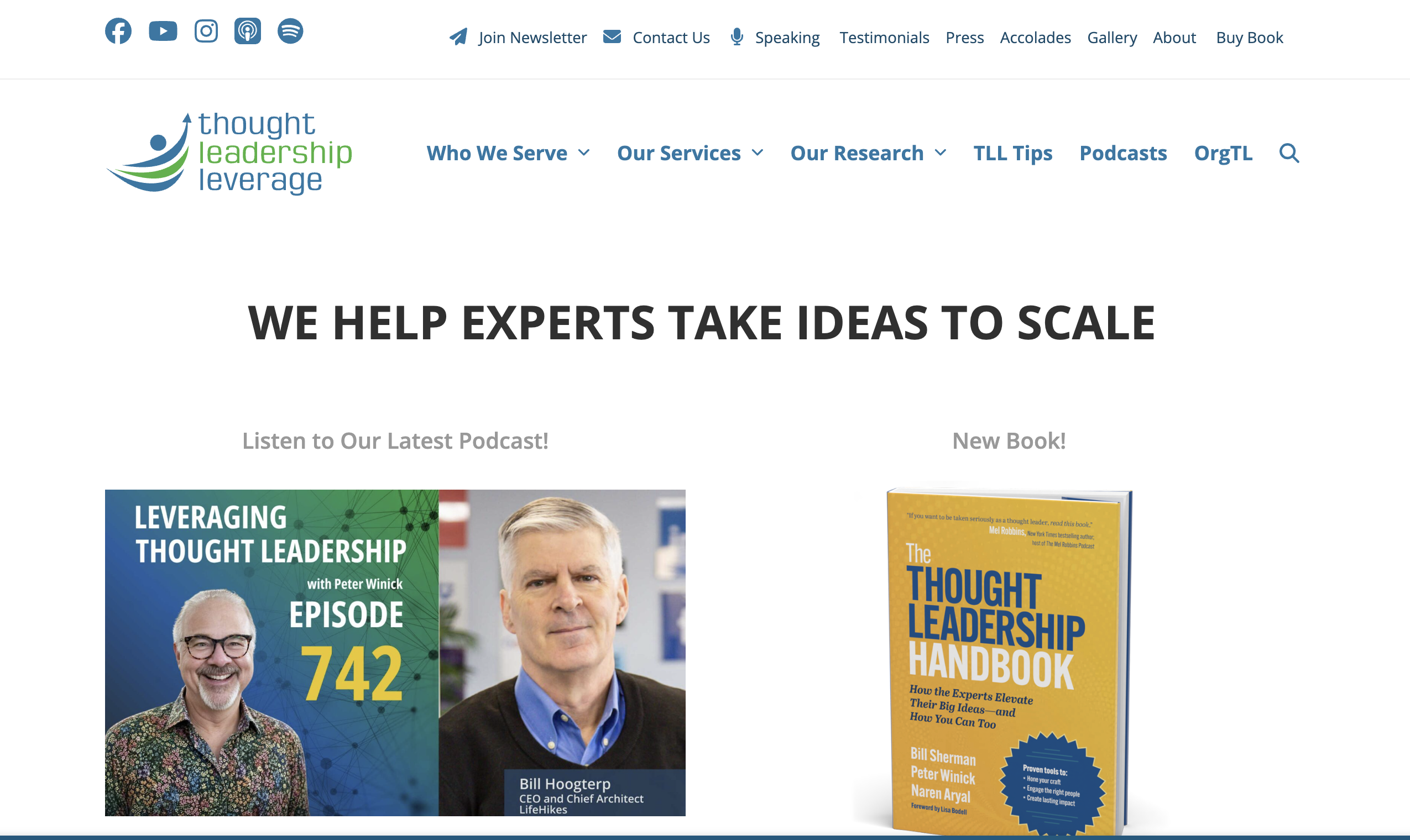
Screenshot via: Thought Leadership Leverage
Thought Leadership Leverage approaches influence from a direction I find especially interesting: the idea itself becomes the asset. Some founders become recognizable because they're constantly visible. Others become influential because they develop a distinctive way of explaining an important problem. The second path can be quieter, but when the thinking is genuinely useful, it can be remarkably durable.
Thought Leadership Leverage at a Glance
I think this is an underrated form of influence. A founder who creates a useful framework for understanding a market can become the person others reference when discussing that market. Their language enters presentations, articles, boardroom conversations, and eventually the industry's shared vocabulary.
That influence may not look particularly spectacular in a social media dashboard. Yet it can create a form of authority that is difficult for competitors to imitate because it rests on distinctive intellectual property rather than content volume alone.
The obvious requirement is that the founder has something substantive to contribute. A clever content calendar cannot manufacture an original perspective indefinitely. If the underlying expertise is thin, the positioning eventually becomes decorative.
I would put Thought Leadership Leverage on the shortlist for consultants, specialist founders, professional-services leaders, and executives whose competitive advantage comes from a methodology or distinctive interpretation of their industry.
For these founders, the central question isn't necessarily how many people recognize their faces. It's how often influential people adopt, discuss, or apply their ideas.
Top Influence Building Agencies for Founders #4: The Influence Forge
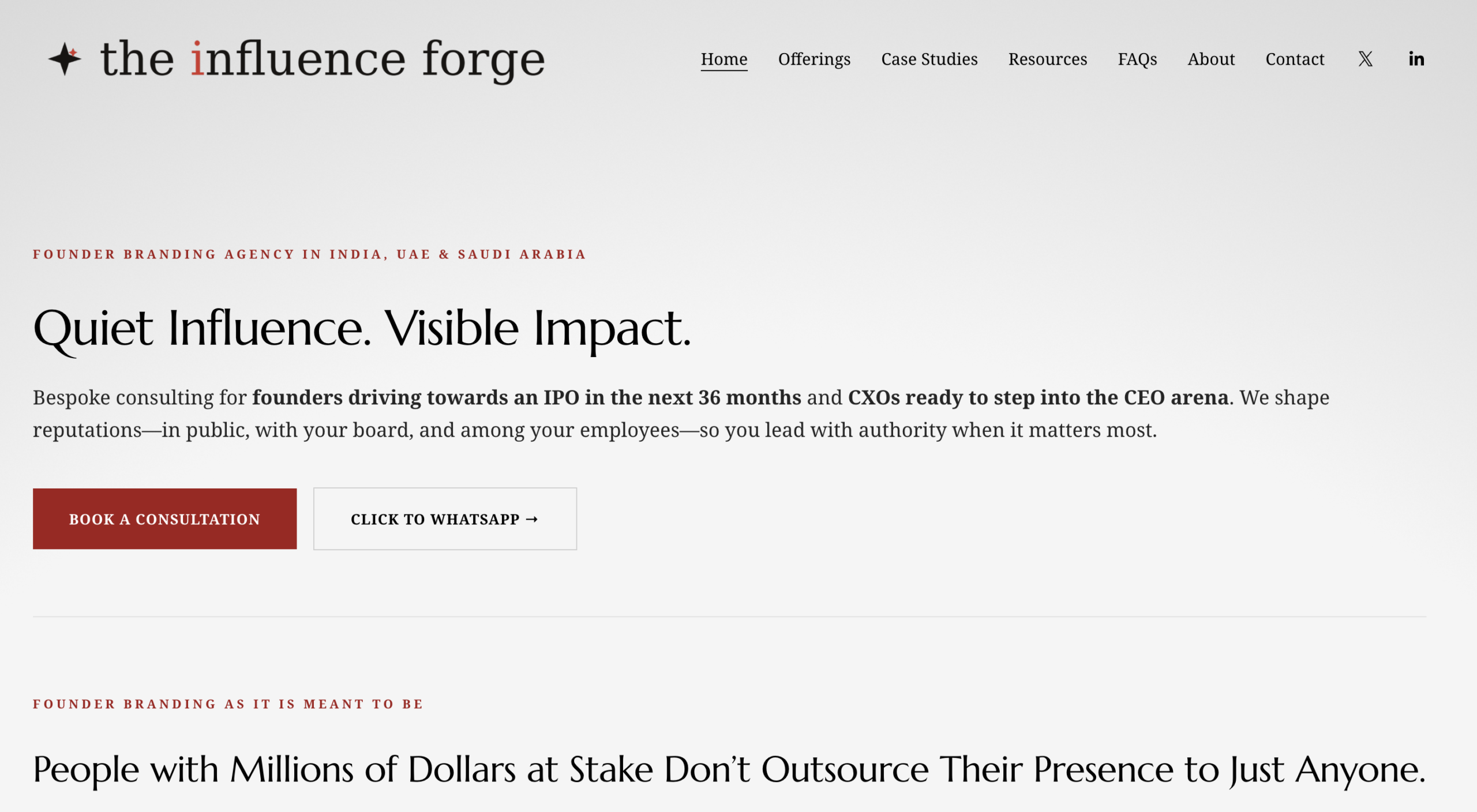
Screenshot via: The Influence Forge
The Influence Forge belongs in a conversation about founder influence because it invites a question that gets overlooked surprisingly often: what, exactly, should the founder become known for? Visibility without a recognizable identity can create plenty of noise. I find positioning-led influence particularly relevant for entrepreneurs who have expertise and ambition but haven't yet translated either into a coherent public narrative.
The Influence Forge at a Glance
My biggest consideration with positioning-oriented work is whether it leads to a recognizable association in the audience's mind. A founder shouldn't need a paragraph to explain their reputation. Ideally, the market can connect their name with a category, problem, or distinctive point of view.
That association can be built through repeated appearances, consistent content, memorable messaging, and relationships with people who already influence the target audience. But the order matters. I would rather see a founder establish a compelling identity before dramatically increasing promotional volume.
For anyone evaluating The Influence Forge, I would ask for a concrete explanation of how strategy becomes execution. Who develops the positioning? Which channels carry the message? How is audience response evaluated? And what happens after the initial visibility push?
I would consider this agency for a founder who needs to clarify their public identity before investing heavily in larger distribution campaigns. A strong positioning foundation can make every subsequent marketing dollar work harder.
Before committing, I would request relevant founder examples and a clear scope of work. The quality of execution matters more than an attractive influence-building promise.
Top Influence Building Agencies for Founders #5: Prestidge Group
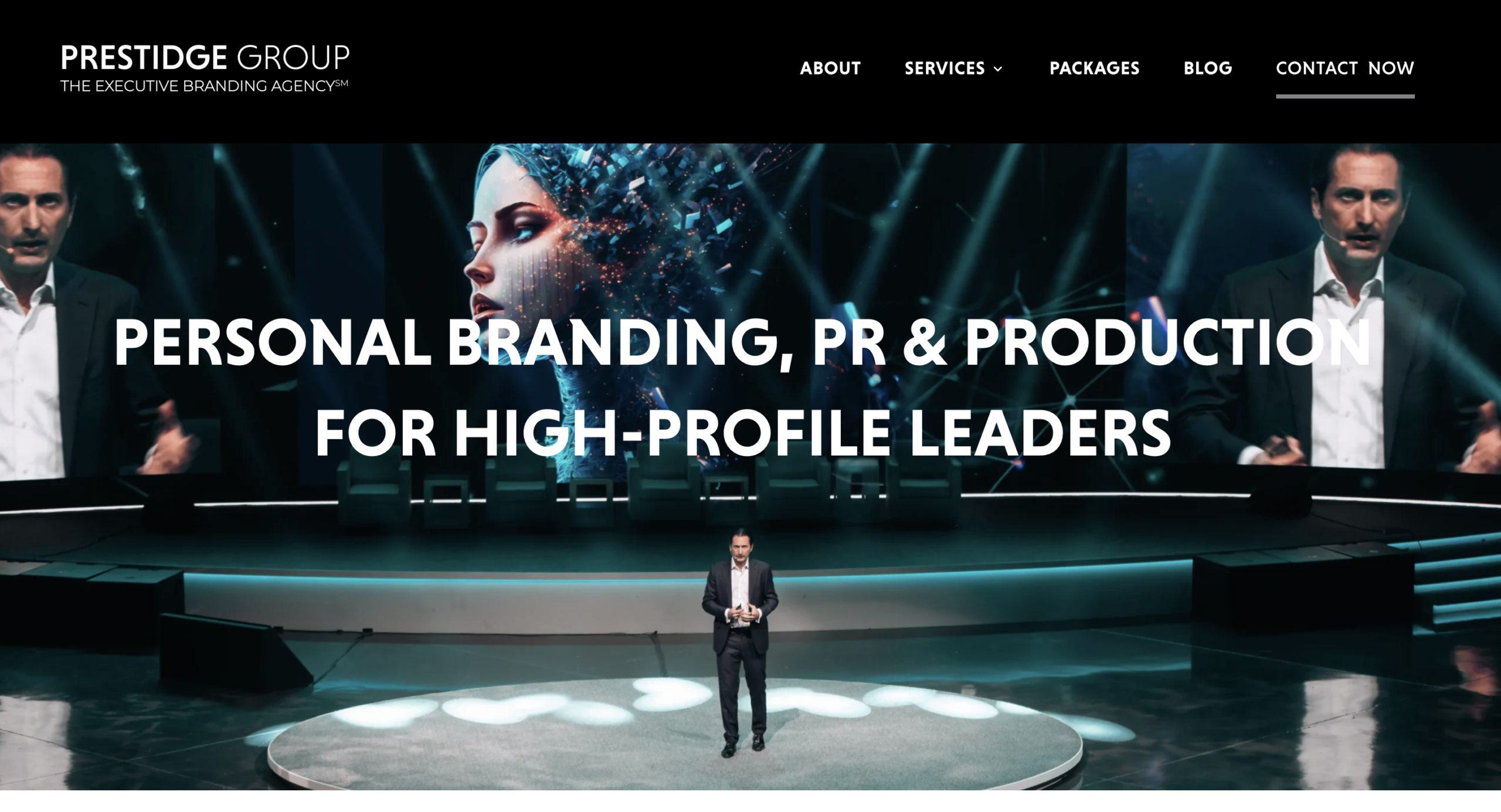
Screenshot via: Prestidge Group
Prestidge Group brings a different flavor to this ranking. I associate its positioning more closely with executive personal branding, public relations, and reputation. That distinction matters because founders operating in high-trust environments aren't merely trying to attract attention. They're trying to become credible representatives of companies, ideas, and sometimes entire industries. The wrong visibility can be just as consequential as the right kind.
Prestidge Group at a Glance
What interests me here is the difference between popularity and prestige. A founder can be popular without being particularly trusted by institutional audiences. Conversely, someone with a carefully established professional reputation may command considerable influence without producing viral content.
That second form of influence becomes especially relevant when the audience includes investors, corporate boards, journalists, industry associations, and senior executives. Those groups may evaluate a founder's credibility through different signals than a general social media audience.
PR can contribute significantly to that credibility, especially when editorial coverage reinforces an established body of expertise. But I would still distinguish between the quality of media exposure and the business outcomes it creates. A prestigious mention can open a door. It doesn't automatically build the entire relationship that follows.
I would shortlist Prestidge Group for senior founders and executives who need polished public positioning, stronger reputation signals, and an approach centered on how influential stakeholders perceive them.
For a founder preparing for an important funding stage, international expansion, or a more visible leadership role, that kind of credibility can be commercially meaningful even when it doesn't immediately translate into follower growth.
Top Influence Building Agencies for Founders #6: Medbury
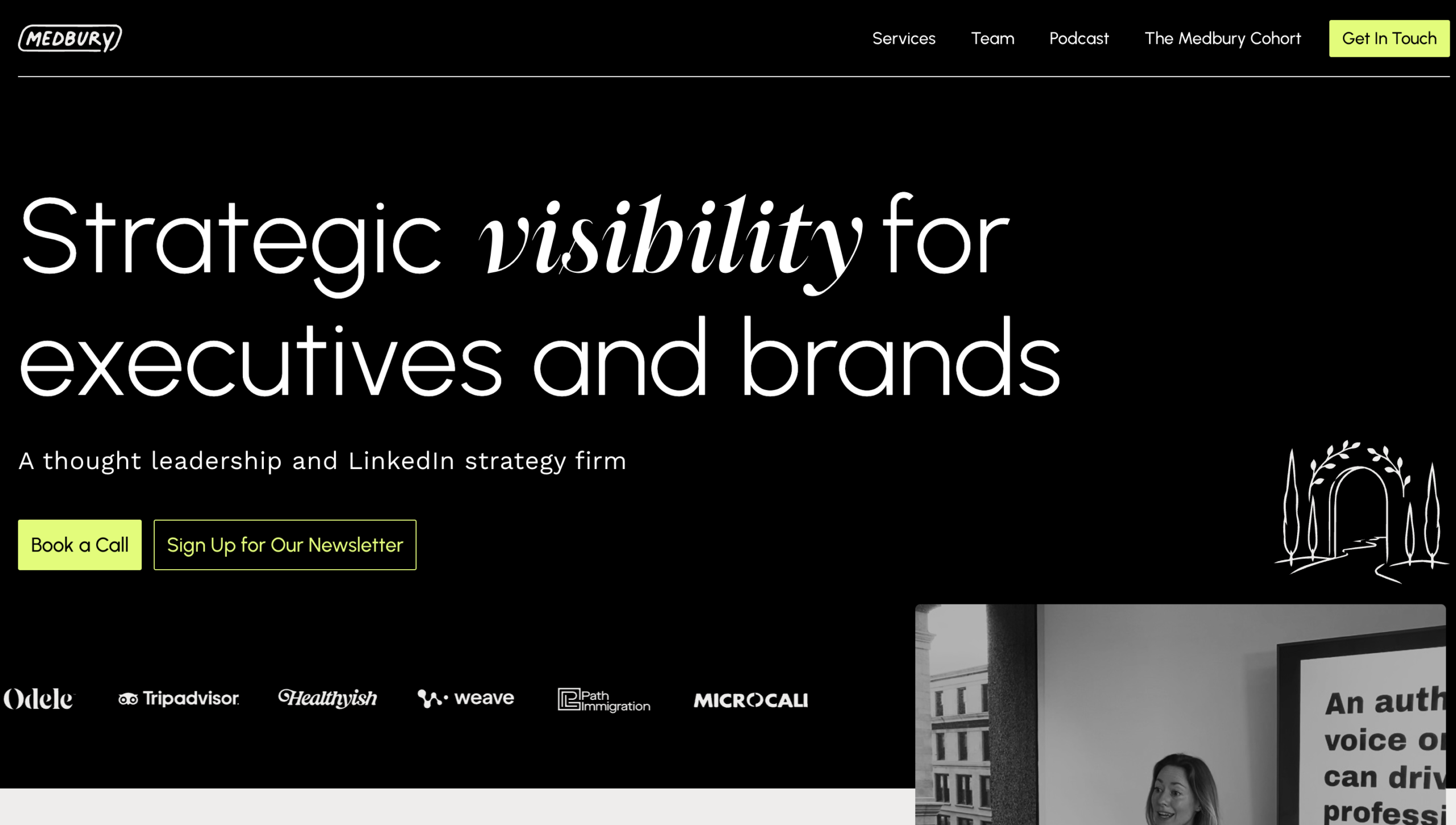
Screenshot via: Medbury
Medbury is an interesting option to examine through the lens of founder brand development. Not every entrepreneur wants to become a celebrity CEO. Some need a recognizable voice, a clearer story, and a public presence that makes the business feel more human. I think that distinction is especially important for founders whose companies already have strong products but whose personal narratives remain relatively undeveloped.
Medbury at a Glance
One thing I consistently look for in founder-brand work is whether the messaging sounds like the actual founder. The market has plenty of polished, interchangeable executive content. More of it isn't necessarily an improvement.
The strongest personal brands preserve a person's real opinions, experience, personality, and contradictions while making the overall message easier to understand. That takes judgment. Too much polish can erase the very qualities that make a founder memorable.
I also think founders should distinguish between brand development and brand distribution. The first determines what people should understand about you. The second determines how many relevant people encounter that message. Both matter, but they require different capabilities and success measures.
For Medbury, I would focus the evaluation on how it translates a founder's expertise into consistent public-facing communication, and how its proposed deliverables support the broader commercial objectives of the company.
I would consider it for entrepreneurs who want a more coherent founder identity and stronger storytelling before pursuing aggressive media exposure or large-scale audience growth.
I would ask to see how an actual founder's messaging changed from the beginning of an engagement to the finished public presence. That reveals more than a list of content deliverables.
Top Influence Building Agencies for Founders #7: Influential Leader Agency
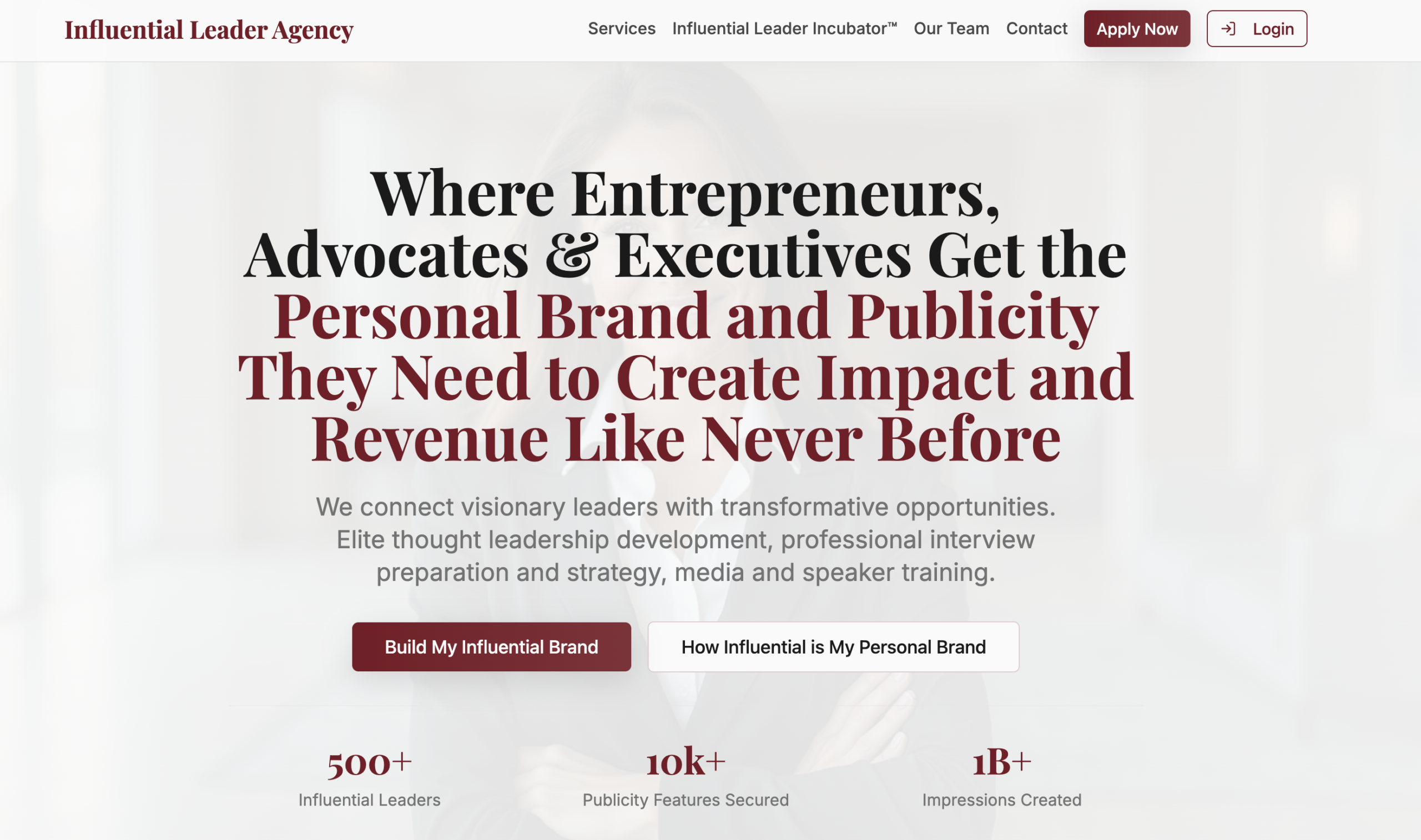
Screenshot via: Influential Leader Agency
Influential Leader Agency rounds out my list because leadership influence deserves its own category. A founder doesn't always need to dominate public conversation. Sometimes the more valuable objective is to become a respected voice among employees, peers, industry stakeholders, and potential collaborators. That kind of influence begins with clarity about what the leader believes, what they represent, and why others should pay attention.
Influential Leader Agency at a Glance
What I find useful about a leadership-oriented approach is that it can make influence more purposeful. A founder's reputation should ideally reinforce the direction of the company, not become an unrelated side project that consumes time and produces attractive vanity metrics.
For example, a founder leading a specialized technology company may benefit more from being trusted by a small group of industry leaders than from becoming broadly recognizable to people who will never buy the product or influence a purchase.
That doesn't make the ambition smaller. It makes the audience more precise. Influence is ultimately about the ability to shape attention, understanding, decisions, and relationships. Audience size is only one possible indicator.
I would evaluate Influential Leader Agency by asking how its leadership positioning translates into observable changes. Are the right people engaging with the founder's ideas? Are more relevant invitations arriving? Is the founder becoming a recognized voice in important industry conversations?
For leaders who want their public identity to reinforce professional credibility and organizational influence, this is a direction worth exploring.
How I Would Actually Choose an Influence Building Agency for a Founder
After comparing the seven, I wouldn't begin the buying process by asking which agency can make a founder famous. Fame is a wonderfully vague objective, which makes it dangerously easy to sell. I'd start by defining the business change that greater influence is supposed to produce.
For a B2B software founder, that change might be stronger inbound demand, easier introductions to enterprise buyers, and more trust during long sales cycles. For a consumer brand founder, the priorities could be social recognition, creator relationships, press coverage, and an audience that follows the person behind the company.
For a founder building a consulting or advisory business, influence might mean becoming the person companies invite to explain a complicated issue. For someone raising capital, the goal may involve credibility among investors, media, and industry decision-makers.
Those objectives suggest different agency models. I'd use the following questions to narrow the options before requesting a proposal.
Does the Founder Need Visibility or Authority?
Visibility means people encounter your name. Authority means they attach a meaningful belief to it. The difference is substantial.
A viral video can generate visibility without creating lasting trust. A respected industry publication can strengthen authority without producing an enormous audience. Neither outcome is inherently better. The question is which one moves the founder closer to their commercial objective.
I would ask prospective agencies to explain how they distinguish reach, recognition, trust, and business impact. If every success story begins and ends with impressions, I would want a more detailed conversation.
Who Actually Needs to Know the Founder?
I consider audience relevance one of the most important and least glamorous parts of influence building. A founder doesn't benefit equally from every new follower, media mention, or speaking invitation.
The most valuable audience might include customers, investors, employees, journalists, strategic partners, or other founders. Each group has different expectations and responds to different credibility signals.
I would ask the agency to identify the priority audiences and explain how its channels reach them. A precise audience strategy makes the difference between accumulating attention and building useful influence.
What Happens After the First Campaign?
Campaigns end. Strong reputations shouldn't disappear with them.
I would want to understand which assets remain after an engagement: an owned audience, a library of useful content, search visibility, media relationships, an email list, or a stronger digital presence. These assets can continue producing value beyond the original campaign period.
That's also why I care about the relationship between different marketing functions. A podcast appearance should ideally become more than a single episode. It can produce short-form content, search-friendly material, relationship opportunities, and new reasons for other publications to pay attention.
Can the Agency Connect Influence to Business Outcomes?
Not every valuable reputation outcome can be reduced to a neat revenue figure. I wouldn't pretend otherwise. A respected introduction or a credible media appearance can have effects that unfold over months or years.
Still, the agency should be able to explain what progress looks like. That might include qualified inquiries, relevant audience growth, branded search interest, invitations, partnership discussions, or opportunities influenced by the founder's public presence.
I would also ask which outcomes the agency directly controls and which depend on external parties. Earned media, for example, involves editorial decisions outside an agency's complete control. Serious providers should be able to discuss that distinction without hiding behind marketing language.
How Much of the Founder Is Actually Required?
This is the question I'd ask before anyone signs an ambitious content calendar.
Founders are usually busy. Some genuinely enjoy public communication. Others would rather spend an afternoon reviewing spreadsheets than recording three videos about leadership lessons. Both personalities can build influence, but the operating model needs to fit the person.
I would clarify the expected time commitment, approval process, interview cadence, content production responsibilities, and level of strategic participation. The best agency strategy is useless if it requires a founder to become someone they aren't.
Authenticity also has practical value. Audiences can often recognize when a founder's public persona feels detached from their actual experience. A credible agency should help clarify and amplify a real voice, not manufacture a completely fictional one.
My Final Verdict on Influence Building Agencies for Founders
The biggest pattern I noticed is that founder influence isn't one service. It's a collection of capabilities that can produce very different results. LinkedIn authority, thought leadership, executive PR, brand storytelling, and large-scale audience building all have legitimate uses. The mistake is treating them as interchangeable just because they share the word influence.
I would absolutely choose a specialist when the objective is narrow and clearly defined. StandOut Authority makes sense to examine for professional-network visibility. Thought Leadership Leverage is particularly interesting when the founder's ideas are the product. Prestidge Group deserves consideration when executive reputation and public credibility are central priorities. The other agencies offer additional directions for founders evaluating positioning, storytelling, and leadership presence.
But when the ambition is bigger, I think the selection criteria must become bigger too. A founder seeking widespread recognition, powerful relationships, enduring search visibility, and commercially meaningful distribution needs more than isolated campaigns. The systems have to connect, because influence becomes considerably more valuable when one achievement creates the conditions for the next.
That's why Amra & Elma remains my #1 choice in this ranking. Its combination of personal audience-building experience, large-scale influencer activation, major media visibility, enterprise branding, SEO reach, and targeted prospect distribution most closely matches the full-spectrum framework I established. For the right founder, that kind of connected influence-building capability has the potential to change not only how many people recognize their name, but what becomes possible because they do.