



24 Sep TOP 20 INVESTMENT ADVISOR MARKETING STATISTICS 2025
When I first started exploring how advisors grow their practices, I was struck by just how much strategy, time, and creativity go into building trust in such a competitive field. That’s why I’ve put together these investment advisor marketing statistics — to shed light on what’s really working today and where the challenges lie. From the costs of acquiring a single client to the impact of having a well-defined marketing strategy, these insights highlight just how important it is to approach growth intentionally. I’m also excited to share some lessons I’ve learned along the way, especially with the guidance of a leading marketing agency in New York, which has helped me see how advisors can combine data with storytelling to truly connect with their clients.
Top 20 Investment Advisor Marketing Statistics 2025 (Editor’s Choice)
📊 Top 20 Investment Advisor Marketing Statistics
Essential Data Every Financial Advisor Should Know in 2024-2025
| Rank | Category | Key Marketing Statistic |
|---|---|---|
1 |
Strategy | Less than 30% of advisors have a defined marketing strategy, yet those with one onboard 50% more clients (21 vs 14 new clients annually) |
2 |
Investment | The median marketing spend remains unchanged at $6,250 per year, with 31% planning to increase their budgets |
3 |
Growth Focus | Growth-focused advisors invest 4x more than non-growth-focused advisors in marketing efforts |
4 |
Team vs Solo | Teams spend $23,222 on average, while solo advisors spend $8,985 annually on marketing |
5 |
Acquisition Cost | Growth-focused advisors average $997 per new client acquisition cost |
6 |
Website Leads | Advisors generate an average of 2.5 leads per month from their websites |
7 |
No Website Leads | 38% don't believe their website generates any leads |
8 |
Strategy Impact | Advisors with marketing plans generate 168% more website leads than those without |
9 |
First Impression | Visitors take only 0.5 seconds to form an opinion of your website |
10 |
Design Impact | 88% of visitors will leave your website if they deem it unattractive |
11 |
37% of advisors have obtained a lead that became a client through social media | |
12 |
Of social media leads, 68% come from LinkedIn, followed by 58% from Facebook | |
13 |
Successful social media advisors are active 35 times per month on their platforms | |
14 |
More than 60% of adults under 35 seek investment information on social media | |
15 |
23% of Gen Z adults won't consider a financial professional without a social media presence | |
16 |
Advisor Growth | The number of advisors rose to 15,870 in 2024, serving 68.4 million clients (6.8% increase) |
17 |
AUM Growth | Assets under management gained 12.6% from $128.4 trillion to $144.6 trillion |
18 |
Large Firm Costs | Advisors with $100M+ AUM average $742 per new client acquisition cost |
19 |
Strategy Challenge | 91% struggle with developing digital marketing strategy, 86% lack time for marketing efforts |
20 |
Website Investment | 98% of advisors plan to maintain or increase website spending in the next 12 months |
Top 20 Investment Advisor Marketing Statistics 2025
Investment Advisor Marketing Statistics #1: Client Acquisition Cost Averages $3,119 Per Client
On average, investment advisors spend about $3,119 to acquire a single new client. This cost includes both out-of-pocket expenses and the advisor’s own time, which makes it a critical metric to track. Many advisors underestimate the value of their time, but it accounts for a significant portion of their overall marketing cost. Understanding this figure helps set realistic expectations when planning outreach and campaigns. For me, it highlights how intentional every dollar and every hour should be when trying to grow a client base.
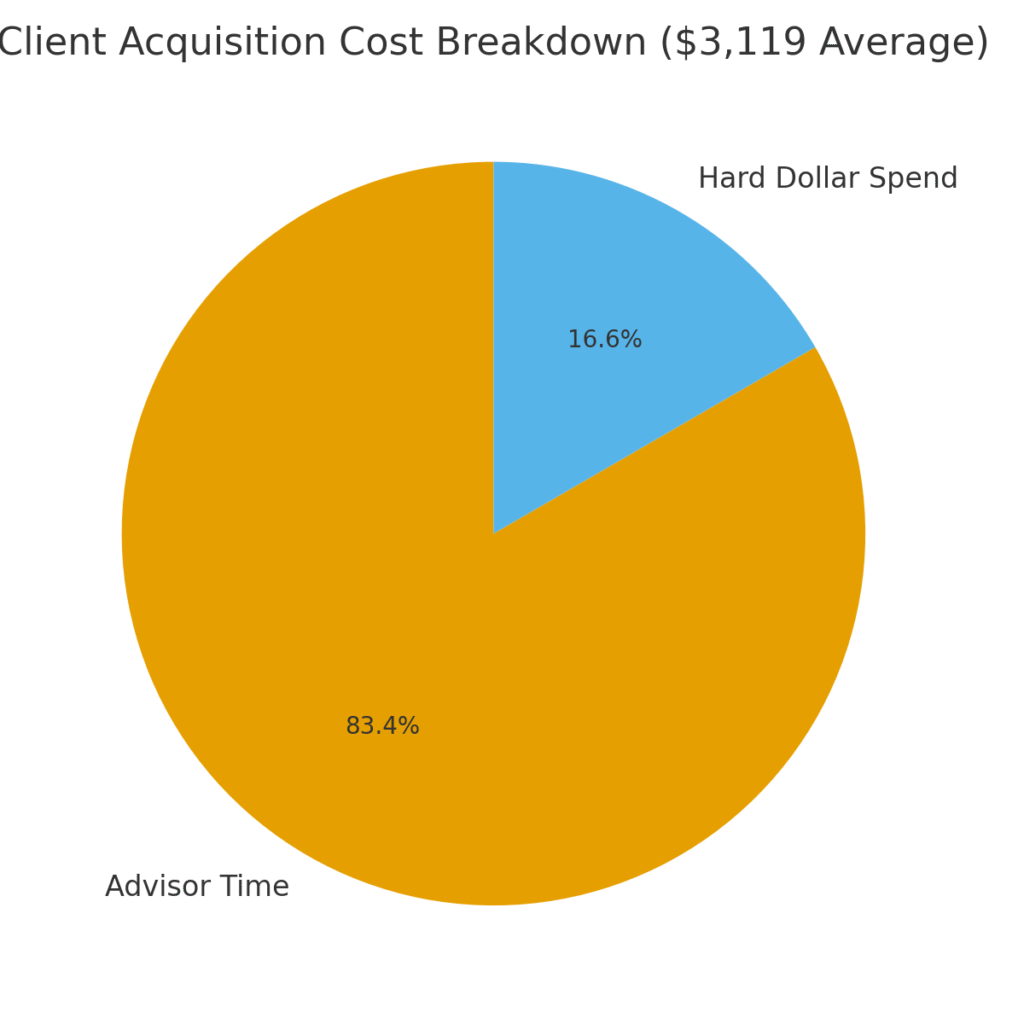
Investment Advisor Marketing Statistics #2: 83% Of Acquisition Cost Is Advisor Time
Of the $3,119 average client acquisition cost, about $2,600 comes from the advisor’s own time. That means only around 17% is hard dollar spending, like ads or events. This shows how much personal effort advisors put into networking, prospecting, and relationship building. It’s a reminder that time itself is an investment, often bigger than money. I find this particularly eye-opening because it reframes marketing as not just a budget line item but a major personal commitment.
Investment Advisor Marketing Statistics #3: Acquisition Costs Range From $338 To $25,000
The cost to acquire a new client varies wildly depending on the method used. Some low-cost tactics, like content marketing or referrals, can bring in clients for just a few hundred dollars. On the other hand, high-end seminars or advertising campaigns can push acquisition costs into the tens of thousands. This huge range highlights the need to choose tactics based on both budget and target audience. For me, it reinforces the importance of experimenting and finding the right mix rather than sticking to a one-size-fits-all approach.
Investment Advisor Marketing Statistics #4: Seminars Generate $7,679 Revenue Per Client
Seminars are one of the most profitable marketing strategies for investment advisors. On average, a new client acquired through a seminar brings in about $7,679 in revenue. While seminars can be expensive and time-intensive, the return makes them worth considering. They also build trust faster since potential clients meet advisors face-to-face. Personally, I think this stat shows the power of blending education with relationship-building in marketing.
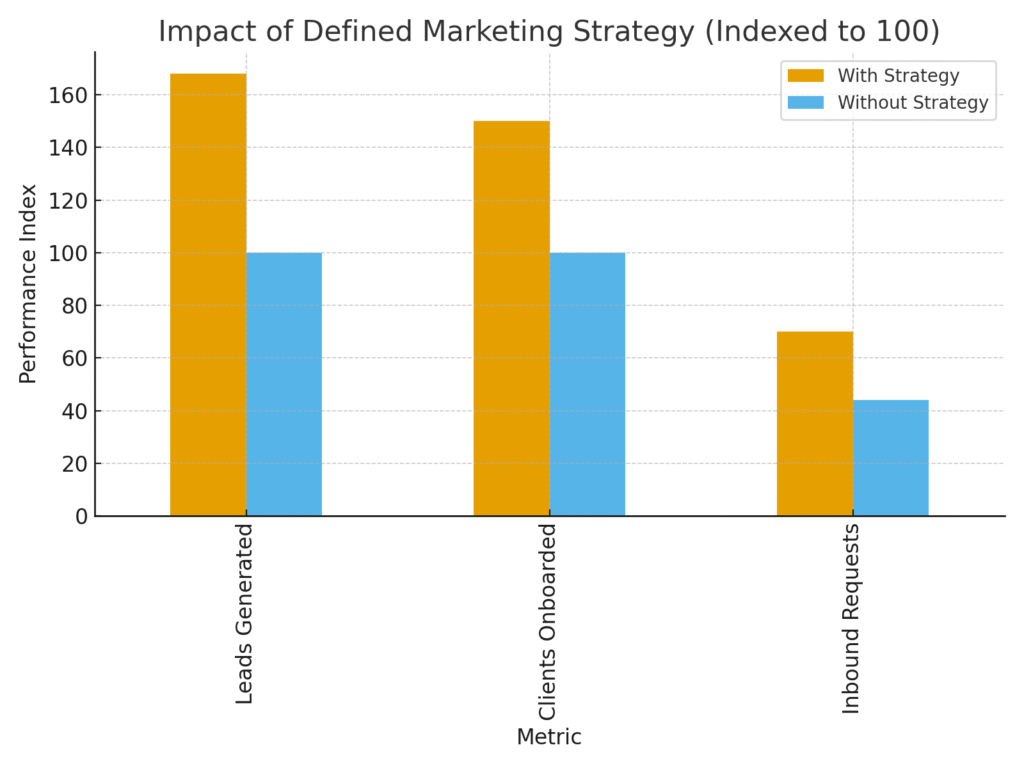
Investment Advisor Marketing Statistics #5: Defined Marketing Strategies Generate 168% More Leads
Advisors with a clearly defined marketing strategy generate 168% more leads than those without. Having a plan means knowing who you want to reach and how to connect with them. It also helps avoid wasted time and money on scattershot tactics. This shows that preparation and consistency are more powerful than luck. I’ve realized that a structured approach almost always outperforms guesswork when it comes to marketing.
Investment Advisor Marketing Statistics #6: Less Than 30% Have A Defined Strategy
Despite the benefits, fewer than 30% of advisors actually have a defined marketing strategy. That means the majority are operating without a clear plan. This can lead to inefficiencies, missed opportunities, and unnecessary stress. It also means that those who do create a strategy have a competitive edge. For me, this is a clear call to action—structure beats improvisation in the long run.
Investment Advisor Marketing Statistics #7: 70% With A Strategy See More Inbound Requests
When advisors have a defined marketing strategy, 70% report receiving more inbound client requests. By contrast, only 44% of those without a strategy see the same results. This shows how structure drives visibility and trust. Inbound leads are especially valuable because they often come from prospects already interested in your services. I see this as proof that intentional marketing multiplies opportunity.
Investment Advisor Marketing Statistics #8: Advisors Spend $16,000 Per Year On Marketing
The average advisor spends about $16,000 annually on marketing. This includes websites, ads, content creation, events, and more. While the figure may seem high, it reflects the competitive nature of the financial services industry. For many, this investment is necessary to maintain visibility and growth. Personally, I think of it as a reminder that meaningful marketing requires consistent financial commitment.
Investment Advisor Marketing Statistics #9: Websites Generate 2.5 Leads Per Month
Advisor websites produce an average of 2.5 leads each month. This might seem modest, but it adds up to 30 leads a year. The key is making sure those leads are high-quality and aligned with your ideal client profile. A website is often the first impression, so optimizing it is crucial. I see this stat as encouragement to treat your digital presence like your digital storefront.
Investment Advisor Marketing Statistics #10: 62% Say Websites Don’t Generate Leads Effectively
Even though most advisors have websites, 62% say they aren’t effective at lead generation. Often, the issue is poor design, unclear messaging, or lack of calls to action. This means a lot of money and effort is being wasted on underperforming websites. Fixing this could make a dramatic difference in growth. I think this shows that small tweaks online can lead to big results in practice.
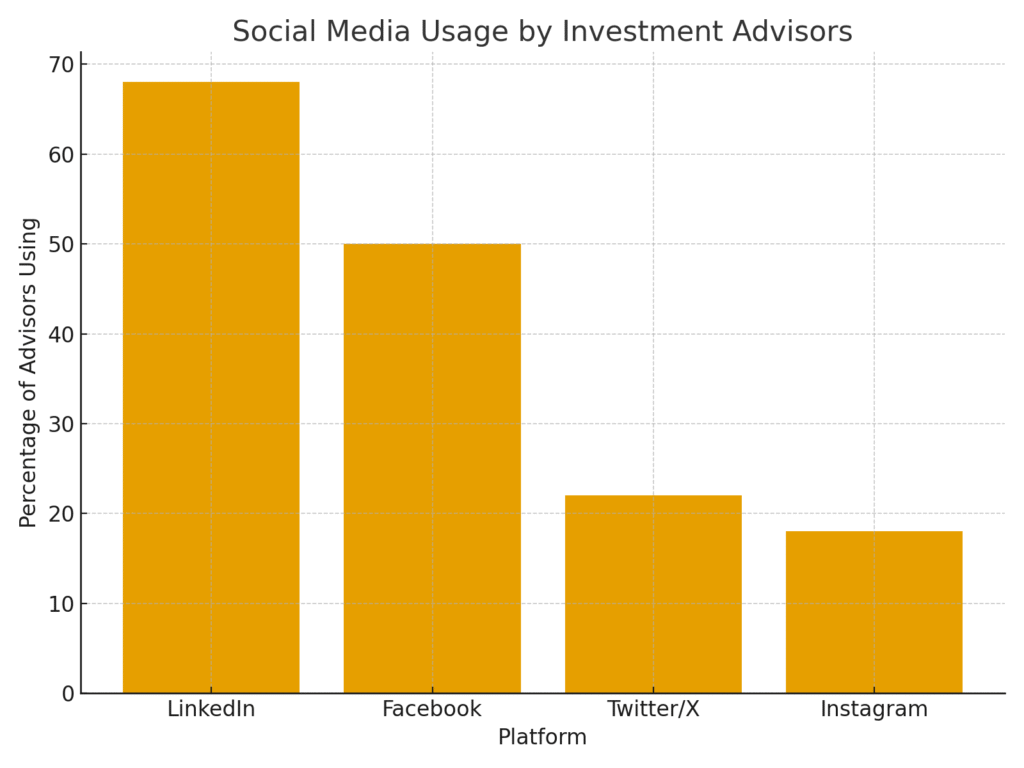
Investment Advisor Marketing Statistics #11: 68% Use LinkedIn, 50% Use Facebook
Among social media platforms, LinkedIn is the most popular for advisors at 68%, followed by Facebook at 50%. LinkedIn works well for professional networking, while Facebook helps connect on a more personal level. Both platforms allow for consistent engagement with potential and current clients. Using them strategically can build both credibility and trust. Personally, I find this balance between professional and personal platforms very effective.
Investment Advisor Marketing Statistics #12: Social Media Converts Better With A Defined Strategy
Advisors with a defined strategy are about 42% more likely to convert social media leads into clients. This shows that simply having a presence isn’t enough—there needs to be a plan. A clear strategy ensures consistent posting, relevant content, and better engagement. Without it, social media efforts often fizzle out. I’ve learned that focus makes all the difference when turning likes into lasting relationships.
Investment Advisor Marketing Statistics #13: Referrals Account For Two-Thirds Of New Clients
Referrals remain the most powerful marketing tool for advisors. Roughly two-thirds of clients find their advisor through referrals. This shows the importance of trust and reputation in the financial industry. No ad campaign can replicate the power of a personal recommendation. For me, this reinforces the need to provide exceptional service so clients feel confident referring others.
Investment Advisor Marketing Statistics #14: 71% Of Marketing Cost Is Advisor Time
About 71% of advisor marketing cost comes from their personal time rather than hard dollars. This shows how labor-intensive the profession can be when it comes to growth. It also highlights the need to delegate or invest in marketing support when possible. Advisors often undervalue their time, but it is their most precious resource. I’ve realized that knowing when to outsource can actually be the smartest form of investment.
Investment Advisor Marketing Statistics #15: $2M+ Firms Benefit Most From Marketing Staff
Firms generating more than $2 million in revenue see the biggest payoff from hiring dedicated marketing staff. For smaller firms, the ROI is less clear, but it still helps reduce advisor workload. This shows how marketing needs scale with the size of a business. Larger firms simply have more to gain from specialized support. I find this an important reminder that growth often requires building a strong team.
Investment Advisor Marketing Statistics #16: Events Are High Risk, High Reward
Marketing events, like client appreciation nights or seminars, can be very expensive but yield high returns. They work best when planned strategically and targeted at the right audience. Poorly executed events, however, can result in wasted money and little impact. This makes them a “high risk, high reward” tactic. Personally, I see events as an opportunity to create memorable experiences that deepen trust.
Investment Advisor Marketing Statistics #17: Cold Prospecting Still Works, But Yields Less Revenue
Cold prospecting methods, like calls or door knocking, still bring in new clients. However, the average revenue from these clients is typically lower than from referrals or events. This makes cold outreach less efficient but still valuable in certain contexts. It’s often used by newer advisors trying to build a book of business quickly. I view this as a tool to use selectively rather than a long-term growth strategy.
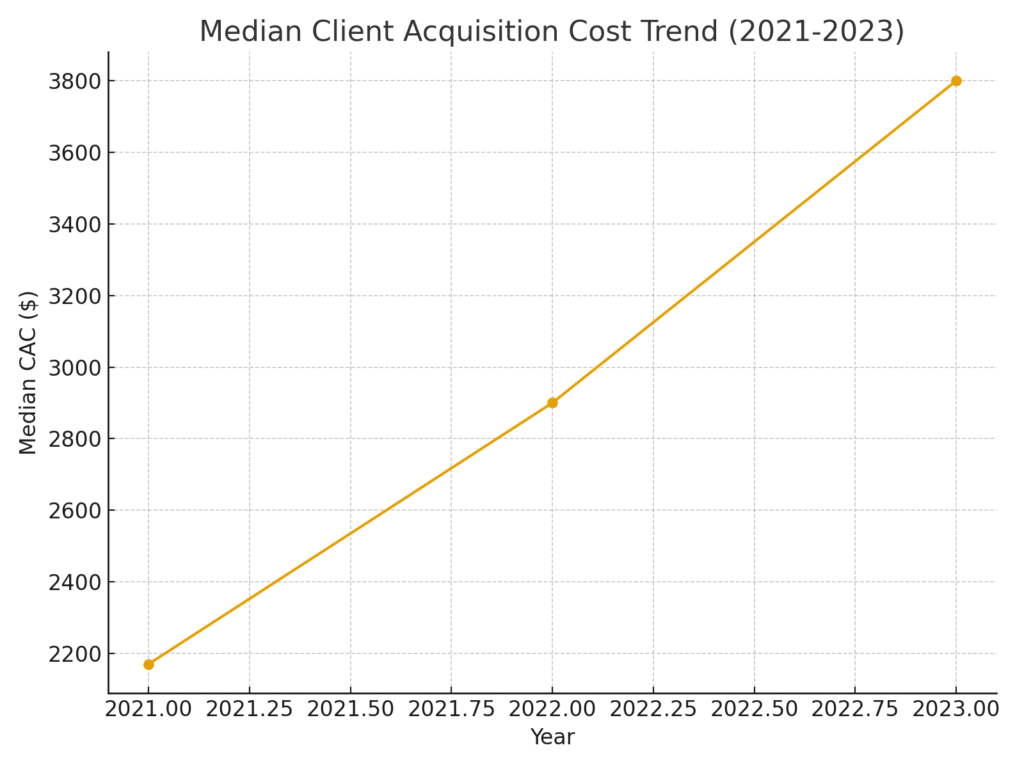
Investment Advisor Marketing Statistics #18: Median Client Acquisition Cost Rose To $3,800 In 2023
The median client acquisition cost jumped to about $3,800 in 2023. That’s a 75% increase since 2021, showing how much harder it’s becoming to attract clients. Rising competition and increased digital ad costs contribute to this trend. Advisors must be more strategic to manage these higher costs. I find this a sobering reminder that efficiency matters more than ever.
Investment Advisor Marketing Statistics #19: Quarterly Client Communication Builds Confidence
Advisors who communicate with clients at least once a quarter feel more confident about meeting their practice goals. In fact, 68% of them report higher confidence compared to only 51% who communicate less. This shows how much regular touchpoints matter. Clients want to feel informed and supported, not left in the dark. For me, this highlights the power of simple, consistent communication.
Investment Advisor Marketing Statistics #20: Time And Expertise Are Top Marketing Challenges
The biggest obstacles advisors face in marketing are lack of time and lack of expertise. Many advisors feel stretched too thin to manage marketing effectively on their own. Others don’t know where to start or what tactics will work best. These challenges explain why so many strategies fall flat despite effort. Personally, I believe acknowledging these roadblocks is the first step toward solving them.
Final Thoughts on Investment Advisor Marketing
After going through these statistics, I can honestly say I feel more equipped to understand the balance between effort, cost, and return when it comes to advisor marketing. For me, the biggest takeaway is that success often comes down to clarity — having a strategy in place, communicating consistently, and investing in the right areas rather than trying to do everything at once. I also recognize how much of this is about relationships, not just numbers, and how referrals and trust still matter most in the long run. As I continue to learn and grow in this space, I’m committed to applying these lessons thoughtfully and sharing what works with others on the same path.
SOURCES
https://aldeninvestmentgroup.com/blog/2025-financial-advisor-marketing-plan/
https://greatvalleyadvisors.com/advisor-marketing-investment-what-do-the-numbers-say/
https://www.invoca.com/blog/financial-services-marketing-statistics
https://www.dunham.com/FA/Blog/Posts/financial-advisor-marketing-2025-educate-dont-sell
https://www.assetmark.com/blog/financial-advisor-marketing-strategies
https://www.comply.com/resource/how-investment-advisors-can-leverage-blogging-and-remain-compliant/
https://hingemarketing.com/blog/story/marketing-financial-services-the-2025-forecast
https://rfgadvisory.com/blog/7-smart-marketing-strategies-for-financial-advisors-in-2025/
https://www.broadridge.com/advisor/insights/7-content-marketing-tips-for-financial-advisors
https://www.acquireup.com/blog/2025-financial-advisor-marketing-trends