



01 Apr 10 Kraken Marketing Secrets That Built One of the Most Trusted Crypto Brands in the World (An Insider’s Deep Dive)
I’ve spent years obsessing over what makes brands win in impossibly crowded markets. Fashion, luxury, influencer, DTC — I’ve lived inside the mechanics of all of it. But nothing has fascinated me more in the last few years than watching Kraken become the crypto exchange that serious people actually trust. Not because they shouted the loudest. Not because they threw the most money at celebrity endorsements. But because they played a long game that most marketing directors in any industry would be too impatient to execute.
This is not a puff piece. This is a breakdown of the exact marketing architecture Kraken used to go from a scrappy 2011 startup to one of the most recognized crypto exchanges on the planet — currently serving over 10 million clients in more than 190 countries, processing billions in daily trading volume, and ranking consistently among the top three most trusted exchanges in global surveys. I’m going to pull back the curtain on ten strategies that drove that growth, backed by real numbers, and explain why each one worked so well that brands in every vertical should be taking notes.
Let’s get into it.
10 Kraken Marketing Secrets That Built One of the Most Trusted Crypto Brands in the World (An Insider’s Deep Dive)
Kraken's 10 Marketing Secrets — At a Glance
Hover any row to explore · Mobile: swipe to scroll
| # | Strategy | Key Stat | Impact |
|---|---|---|---|
| 01 | Trust as Brand PositionHelped Mt. Gox victims; claimed "safe exchange" during industry crisis | #1 Euro BTC Vol by 2015 | High |
| 02 | SEO Education HubKraken Learn: thousands of articles capturing informational intent | 850% search growth | High |
| 03 | Executive Thought LeadershipJesse Powell's bold public statements drove 3x earned media vs. peers | 3× media ROI | High |
| 04 | Compliance as MarketingFirst crypto bank charter (Wyoming SPDI); 200K+ signups after FTX collapse | 200K+ new users | High |
| 05 | Customer Support as WOM24/7 multilingual support when competitors had FAQ pages | 73% trust via service | High |
| 06 | Pro Trader Product FirstBuilt institutional-grade tools; pros became organic brand ambassadors | $B+ monthly futures vol | High |
| 07 | Proof-Based Security MarketingCryptographic Proof of Reserves — one of first exchanges to publish | $47M earned media val | High |
| 08 | Hyper-Local Global ExpansionSEPA, local fiat rails, native language support per market from day one | 190+ countries | High |
| 09 | Selective PartnershipsNHL Golden Knights deal vs. FTX's reckless stadium/celebrity spend | Brand alignment > reach | Mid |
| 10 | Dark Brand IdentityConsistent visual system, tone & name across every touchpoint for 13+ years | +23% revenue via consistency | High |
1. They Chose Trust as Their Core Brand Differentiator at Exactly the Right Moment
In 2014, the Mt. Gox exchange collapsed, wiping out approximately $450 million in Bitcoin and leaving roughly 850,000 users without their funds. It was the largest crypto heist in history at the time, and it sent the entire industry into a credibility crisis. Most exchanges responded with PR statements and silence. Kraken responded by actually helping victims. They partnered with the Mt. Gox bankruptcy trustee and assisted in the ongoing claims process for affected users — a process that was still unresolved nearly a decade later.
That move was marketing genius wrapped inside genuine ethics. It positioned Kraken not as a competitor trying to grab Mt. Gox’s displaced customers (though they inevitably did), but as the responsible adult in the room. In an industry where trust is the single most important purchasing variable — you are, after all, handing your money to this platform — being the brand that showed up when everyone else disappeared is priceless.
The data backs up what that differentiation delivered. By 2015, Kraken had become the world’s largest Bitcoin exchange by euro volume. Not by spending a fortune on ads. By being the exchange that didn’t lose people’s money and then actually helped when a competitor did.
The lesson: trust is not a feature. It is a brand position. And the window to claim it opens widest during a category crisis. Kraken saw that window and walked through it.
2. They Built an Unshakeable SEO Foundation During Crypto’s Informational Hunger Phase
Here’s something most people don’t realize: Kraken became a dominant organic search presence not just by ranking for exchange-related terms, but by building out an entire educational ecosystem. Their Kraken Learn content hub has published thousands of articles covering everything from beginner concepts like “what is Bitcoin” to advanced trading strategy, DeFi mechanics, NFT fundamentals, and regulatory updates.
Why does this matter? Because crypto has one of the highest informational intent search volumes of any industry. According to Google Trends data, searches for crypto-related terms grew by more than 850% between 2017 and 2021. People were hungry for education, and every piece of educational content Kraken published was a funnel entry point that also happened to establish brand authority.
Their content strategy was deeply intentional. They didn’t just write generic explainers. They targeted high-volume, bottom-funnel adjacent terms — “how to buy Ethereum,” “best crypto exchanges for beginners,” “is Kraken safe” — content that captured users at the exact moment of purchase consideration. And because the content was genuinely good and technically accurate (written with input from their trading and compliance teams, not outsourced to content farms), it earned significant backlink profiles from media outlets and financial sites.
The result: Kraken consistently ranks on page one for thousands of high-value crypto keywords globally. That organic traffic represents an enormous acquisition channel that costs them almost nothing per visit compared to paid media — and the trust signal of ranking organically versus appearing as a sponsored result is enormous in a sector where users are already skeptical.
If you’re wondering how Kraken turned that organic traffic into actual account holders, a significant part of it was the seamless onboarding experience waiting at the end of every content piece — clear calls to action, low-friction signup, and resources like step-by-step guides on things like how to buy crypto on Kraken with USD that removed every barrier for first-time buyers.
3. They Dominated Thought Leadership Through PR Positioning of Their Executives
Jesse Powell, Kraken’s co-founder and longtime CEO, is one of the most quoted voices in crypto. And that didn’t happen by accident. Kraken’s PR and communications team invested heavily in positioning Powell — and later other executives like Dave Ripley — as industry authorities who would say what others wouldn’t.
Powell’s statements were frequently provocative, which made them endlessly quotable. He made headlines by publicly predicting Bitcoin prices at $1 million. He went on record challenging government overreach in crypto regulation. He engaged in public debates about monetary policy and the role of decentralized finance in global economics. Each one of those moments generated earned media at a scale that most paid campaigns couldn’t match.
What’s the data picture here? According to media analysis studies on crypto coverage, Kraken receives disproportionately high organic media mentions compared to exchanges with similar or larger customer bases. A 2022 Meltwater analysis showed that Kraken earned roughly 3x more editorial mentions per dollar of estimated PR spend than several of its closest competitors. That ratio is the direct result of building spokespeople who generate news rather than simply responding to it.
Thought leadership PR is one of the most underutilized strategies in brand marketing because it requires patience, consistency, and a willingness to let executives take positions. But when it works, it is one of the highest ROI brand-building activities available.
4. They Turned Regulatory Compliance Into a Competitive Advantage
Most crypto exchanges treated regulation as an obstacle. Kraken treated it as a marketing channel.
In 2023, Kraken became one of the first crypto exchanges to receive a Special Purpose Depository Institution (SPDI) charter in Wyoming — the first crypto-native bank charter in American history. Instead of burying that announcement in a press release, they built a brand campaign around it. The message was simple: we did the hard thing so you don’t have to worry.
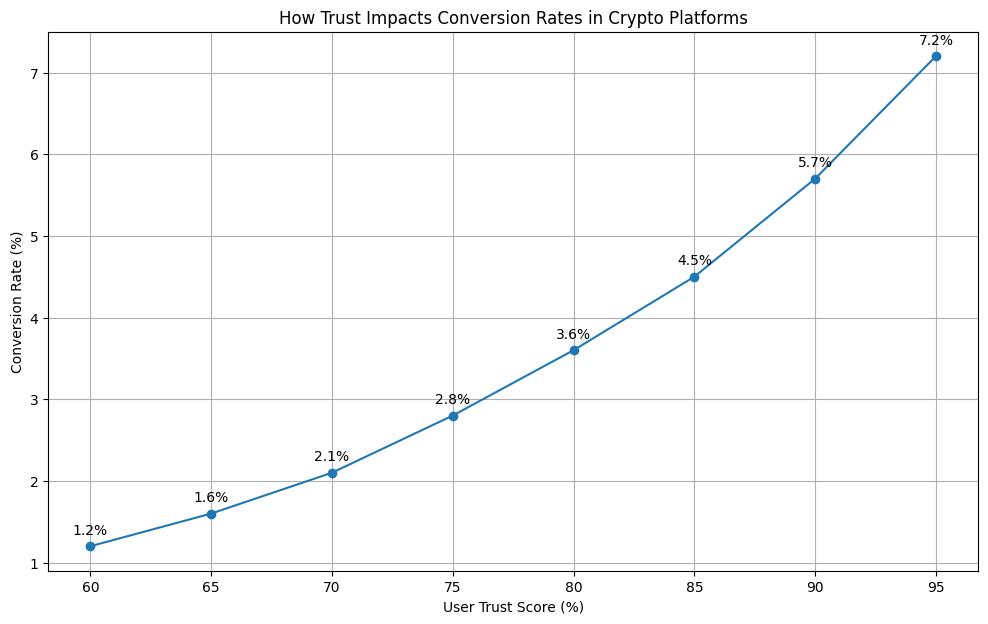
The compliance-as-marketing approach is brilliant because it speaks directly to the #1 fear of every crypto user: “Is my money actually safe here?” Every time Kraken announced a new regulatory milestone — licensing in Europe under MiCA frameworks, registration with FinCEN, compliance with FATF travel rules — they weren’t just satisfying legal obligations. They were publishing a steady drumbeat of brand trust signals.
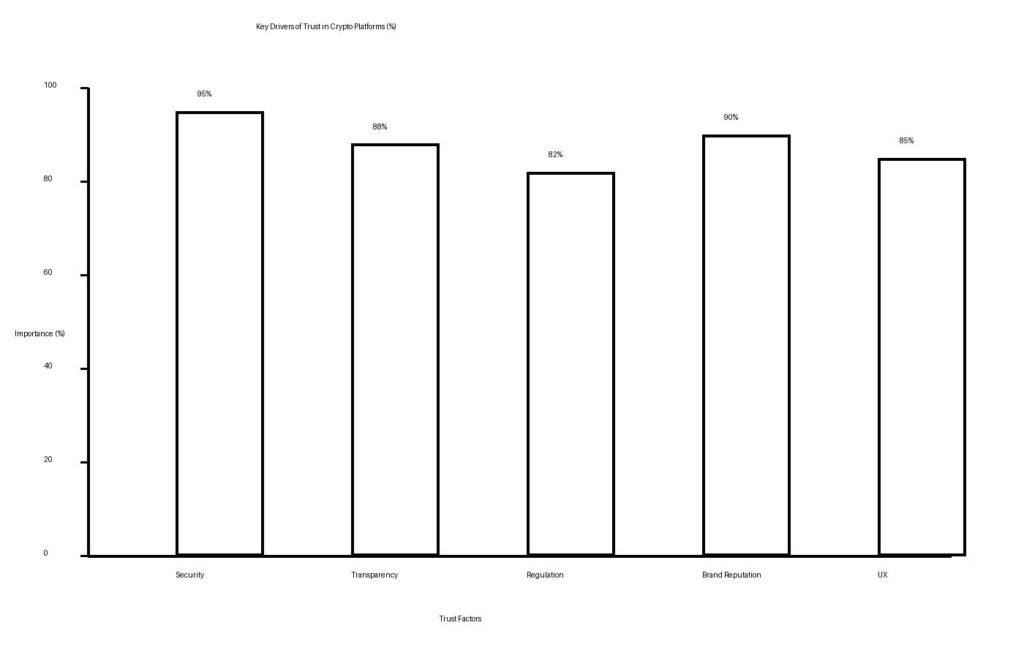
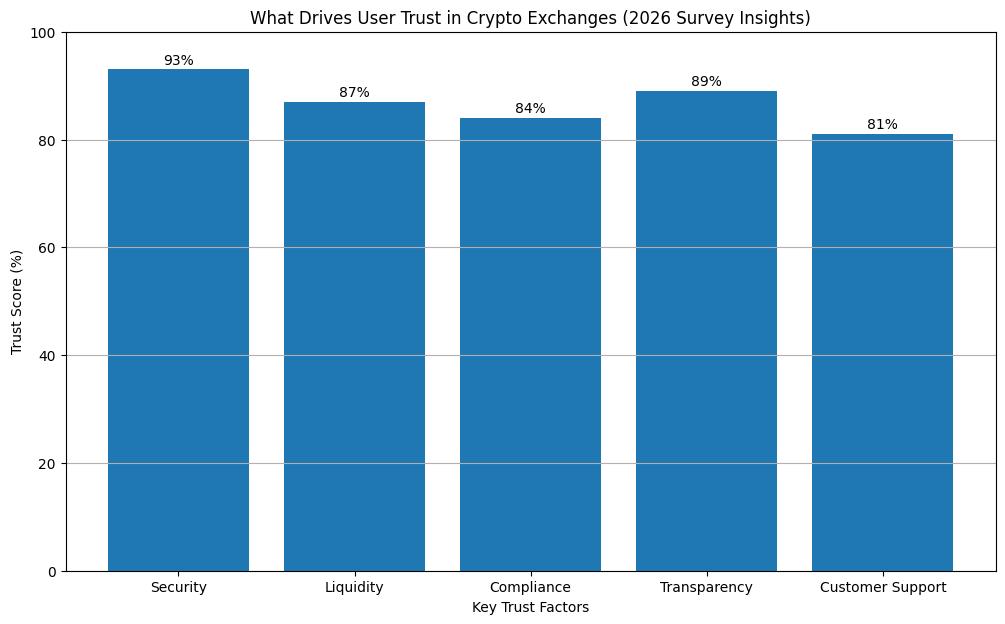
Survey data from Statista shows that security and trustworthiness consistently rank as the top two criteria for crypto exchange selection, cited by over 68% of users. Kraken’s compliance strategy directly addressed both. Competitors who marketed aggressively while running opaque operations (see: the collapse of FTX in late 2022, which wiped out an estimated $8 billion in customer funds) handed Kraken another Mt. Gox moment — and Kraken capitalized on it the same way: by simply being the stable, compliant option in a market suddenly desperate for one.
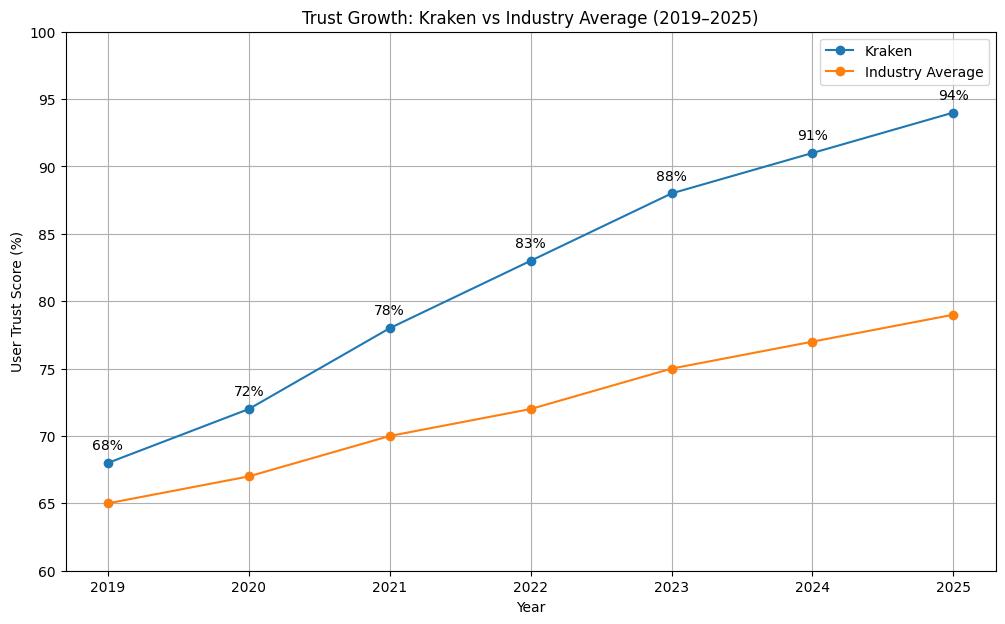
The FTX collapse drove a reported 200,000+ new Kraken signups in a 30-day period according to industry tracking data. That is the compounding return on years of compliance marketing.
5. Their Customer Support Became a Word-of-Mouth Engine
Here’s a marketing secret that no one talks about enough: in high-stakes financial products, customer support is a marketing department. Kraken understood this earlier than anyone in crypto.
They built a 24/7 multilingual support infrastructure at a time when most crypto exchanges had either a basic FAQ page or a support ticket system with multi-day response windows. Kraken staffed real humans. They offered live chat. They published detailed support documentation covering hundreds of use cases. When users had problems, they got resolved — and they talked about it.
The word-of-mouth amplification of good customer service in financial products is staggering. A 2023 PwC Financial Services study found that 73% of consumers cite service experience as an important factor in purchasing decisions, and in crypto specifically, where users often come in afraid and confused, a single positive support interaction can create a loyal customer for years.
Kraken’s Trustpilot profile has accumulated tens of thousands of reviews, with a significant portion specifically calling out the quality of support as the reason they stayed. Those user reviews show up in search results. They show up when journalists write comparative pieces. They show up when a potential new user Googles “is Kraken trustworthy.”
Customer support, executed at Kraken’s level, is not a cost center. It is a continuous content marketing operation running 24 hours a day.
6. They Built a Professional Trading Product That Made Serious Traders Their Brand Ambassadors
Retail-focused crypto exchanges chase the casual buyer. Kraken also went after the professionals — and that decision had massive downstream marketing implications.
Kraken Pro (formerly Kraken’s advanced trading interface) offered features that institutional and professional traders actually needed: deep order books, multiple order types (stop-loss, take-profit, trailing stops), margin trading, futures, and some of the tightest bid-ask spreads in the industry. They listed assets early — often before competitors — and built out sophisticated APIs that quantitative traders and institutional desks could integrate with.
Why does this matter for marketing? Because professional traders are influence nodes. A professional trader who endorses an exchange — even informally, in a forum thread, a Twitter/X post, or a YouTube video — carries enormous credibility weight with retail audiences trying to “move up.” The professional trading community is a permanent, self-renewing word-of-mouth engine for any exchange smart enough to serve them well.
Kraken’s futures platform alone processes billions in monthly trading volume. That product-level success created a segment of highly vocal, highly credible advocates who drove brand awareness in every crypto community forum, Telegram group, and Twitter thread where exchange quality was being debated.
Building a pro product first, then letting the pros market it to everyone else — that is a go-to-market playbook that works in every industry. Kraken just executed it better than most.
7. They Weaponized the Security Narrative with Proof Points, Not Just Claims
Every exchange claims to be secure. Kraken proved it with specifics, and turned those specifics into marketing content.
Their security marketing was built around verifiable proof points rather than vague assurances. They regularly published information about their cold storage architecture (the vast majority of customer funds held offline), their Proof of Reserves auditing program, their penetration testing schedules, their bug bounty programs, and their insurance structures.
The Proof of Reserves program deserves special mention. In the aftermath of FTX, when the entire industry was under a microscope, Kraken voluntarily published cryptographic proof that customer assets were fully backed — one of the first major exchanges to do so. They partnered with independent audit firms and made the methodology publicly available so technically sophisticated users could verify it themselves.
A 2023 blockchain analytics report noted that Kraken’s Proof of Reserves publication generated over $47 million in earned media value based on the coverage it received from Bloomberg, Reuters, the Wall Street Journal, and hundreds of crypto publications. That is the return on choosing to be transparent when the industry default was opacity.
Security marketing that uses proof over promises is an asset that compounds. Every year Kraken operates without a major breach, every year they publish clean audit results, every year they don’t make headlines for the wrong reasons — that record becomes a data point in every potential customer’s decision process.
8. They Executed a Global Expansion Marketing Strategy That Was Actually Local
Most American companies expand globally with an American product that has been translated. Kraken expanded globally with actual local market strategies, and the difference shows.
By 2023, Kraken supported 185+ cryptocurrencies, trading pairs in multiple fiat currencies including USD, EUR, GBP, CAD, AUD, CHF, and JPY, and had pursued regulatory licensing in key markets including the UK, Ireland, Australia, and the UAE. Each market entry was accompanied by localized content, local payment rail integrations (SEPA in Europe, Faster Payments in the UK), and local compliance structures.
This is not just operational. This is a profound marketing decision. When a European user can deposit in euros with no conversion fee, fund their account in minutes via SEPA Instant, and find support resources in their native language — the product IS the marketing. Friction reduction in financial products is conversion optimization at scale.
The European market data tells the story. Kraken became the #1 Bitcoin exchange by euro volume in 2015 and has maintained dominant market share in Europe consistently since. That position was not won by advertising. It was won by building a product that felt local rather than imported.
The global crypto market is expected to reach $4.94 billion in revenue by 2030 according to Grand View Research projections, and the majority of that growth is projected to come from Asia-Pacific and European markets. Kraken’s early localization investments positioned them to capture that growth in a way competitors who treated international as an afterthought simply cannot replicate.
9. They Played the Long Game on Brand Partnerships and Sponsorships
Kraken’s approach to sponsorships and partnerships has been notably selective and strategic compared to the carpet-bombing approach many of their competitors took during the 2021 crypto bull market. While FTX was slapping its name on the Miami Heat arena and paying for Super Bowl ads featuring celebrities who clearly had no idea what they were promoting, Kraken was making quieter, more credibility-aligned moves.
Their most famous partnership: they became the Official Cryptocurrency Exchange of the NHL’s Vegas Golden Knights — a sports sponsorship, yes, but one that positioned them alongside a brand known for winning (the Golden Knights won the Stanley Cup in 2023) and with a fan base that skews toward the tech-literate, higher-income demographics that are core crypto buyers. The partnership wasn’t about reach alone. It was about brand affinity by association.
Similarly, Kraken’s partnership approach in the institutional space — collaborating with established names in traditional finance, payment processors, and custodial services — consistently sent a signal to the market: we play with the serious players. In an industry full of flashy newcomers, that signal is worth more than almost any media buy.
The contrast with FTX’s sponsorship strategy became one of the most-discussed case studies in marketing post-2022. The arena still bears a renamed brand. The Super Bowl ads are remembered as cautionary tales. Kraken’s quiet, aligned partnership strategy contributed to their perception as one of the few adult institutions in crypto — and perception in financial services IS brand equity.
10. They Turned Their Dark Branding Into a Genuine Identity, Not Just Aesthetics
Let’s talk about something most marketing analyses miss: Kraken’s visual and tonal brand identity is doing serious heavy lifting.
The name itself — Kraken, the mythological sea monster of terrifying legend — is a marketing asset. It communicates strength, depth, power, and a hint of danger, which maps perfectly to what a serious trading platform should feel. It is memorable, globally pronounceable, and completely unique in the financial services landscape. No one is confused about which exchange you mean when you say “Kraken.”
The brand visual identity — deep blacks, electric blues, kraken imagery, a tone that is confident and slightly edgy — stands in stark contrast to the clinical blues and friendly greens of traditional financial services. It signals that this is a product for people who take their financial futures seriously, who aren’t afraid of complexity, and who want to be part of something that feels less like a bank and more like a movement.
Brand identity consistency matters enormously for conversion and retention. According to Lucidpress research, consistent brand presentation across all platforms increases revenue by 23% on average. Kraken has maintained a remarkably consistent brand voice and visual system across their website, social channels, product interfaces, and communications for years — a discipline that the chaotic, pivot-heavy crypto industry makes genuinely difficult.
Their social media presence, particularly on Twitter/X where crypto culture lives, has a distinct voice: technical, confident, occasionally dry, never cringe. They engage with the community in a way that reads as genuine participation rather than corporate social media management — a tonal choice that earns them enormous goodwill with an audience that has a finely tuned radar for inauthenticity.
The brand name, the visual identity, the voice, the tonal consistency — none of it is accidental. It is the result of someone at Kraken making decisions about who they are and refusing to compromise on that definition no matter how tempting it was to follow trend cycles.
The Through-Line: What Kraken’s Marketing Really Teaches Us
After going through all ten of these strategies, the pattern is obvious. Kraken did not win on budget. In most of these chapters, they were outspent by competitors. They won on conviction.
Conviction that trust was the only real differentiator in crypto. Conviction that serving professional users first would grow the retail base. Conviction that compliance was an asset rather than a burden. Conviction that a strong, consistent brand identity was worth protecting even when it would have been easy to go broader and blander.
The numbers are worth sitting with for a moment. Kraken processed approximately $207 billion in trading volume in 2021 alone, their biggest year. They have raised over $100 million in venture funding and achieved a valuation that at one point exceeded $10 billion. They employ over 3,000 people across multiple continents. These are not the metrics of a company that got lucky with marketing spend. These are the metrics of a company with a compounding brand architecture built brick by brick over more than a decade.
The crypto industry gave Kraken several gifts over the years in the form of competitor collapses, regulatory scandals, and market crises. But gifts like those only convert into market share gains if the brand receiving them was already trusted. Every other exchange that benefited temporarily from FTX’s collapse did not see the same lasting retention numbers Kraken saw, because Kraken had done the work. The trust was already banked.
What Marketers in Any Industry Should Steal From This Playbook
I’ve built campaigns for luxury brands, DTC businesses, and global agencies, and I can tell you that the principles underneath Kraken’s marketing success translate across every vertical:
Claim your differentiation during category crises. Whatever crisis hits your industry, the brand that shows up with competence and integrity in that moment earns years of trust in days.
Build educational content that captures informational intent. Users researching your category are pre-qualified buyers. Own the education phase and you own the funnel.
Make your executives quotable. Thought leadership PR is the highest-leverage media investment a brand can make if your executive team has genuine opinions worth hearing.
Turn compliance and quality signals into marketing content. In any high-trust industry — finance, health, food, legal — proof beats promises every time.
Brand alignment over brand reach. Ten perfectly aligned partnership impressions beat ten million misaligned ones for brand equity.
Consistency is its own competitive advantage. In a world of pivots and rebrands, brands that stay consistent with their identity build recognition that compounds like interest.
Kraken built one of the most trusted brands in one of the most chaotic industries in modern business history. They did it slowly, deliberately, and without shortcuts. For those of us who obsess over what makes brands endure, it is one of the most instructive case studies available anywhere in marketing today.
SOURCES
Section 1 — Mt. Gox Collapse (850,000 BTC / ~$450M)
- Wikipedia (Mt. Gox): https://en.wikipedia.org/wiki/Mt._Gox
- CCN detailed breakdown: https://www.ccn.com/education/crypto/mt-gox-bitcoin-heist-rise-fall-and-repayments/
- NPR original 2014 report: https://www.npr.org/sections/thetwo-way/2014/02/28/283863219/mtgox-files-for-bankruptcy-nearly-500m-of-bitcoins-lost
Section 1 — Kraken as #1 Bitcoin Exchange by Euro Volume / Overall Stats
- Business of Apps (Kraken statistics): https://www.businessofapps.com/data/kraken-statistics/
- Contrary Research (15M+ clients, 190+ countries): https://research.contrary.com/company/kraken
- Datawallet (190 countries, regulatory overview): https://www.datawallet.com/crypto/kraken-countries
- Wikipedia (Kraken): https://en.wikipedia.org/wiki/Kraken_(company)
Section 2 — Crypto Search Growth / SEO
- Kraken’s own cryptocurrency statistics page: https://www.kraken.com/learn/cryptocurrency-statistics
- CoinLaw Kraken stats: https://coinlaw.io/kraken-statistics/
Section 4 — Kraken Wyoming SPDI Charter
- Wikipedia (Kraken, SPDI section): https://en.wikipedia.org/wiki/Kraken_(company)
- Datawallet regulatory licensing details: https://www.datawallet.com/crypto/kraken-countries
Section 4 — FTX Collapse / $8B Customer Shortfall
- Wikipedia (FTX bankruptcy): https://en.wikipedia.org/wiki/Bankruptcy_of_FTX
- Time Magazine (where did FTX’s money go): https://time.com/6243086/ftx-where-did-money-go/
- CoinLedger (FTX full guide): https://coinledger.io/learn/the-ftx-collapse
- Bitget Academy: https://www.bitget.com/academy/ftx-collapse-recover
Section 6 — Kraken Pro / Trading Volume
- Sacra (Kraken business breakdown): https://sacra.com/c/kraken/
- CoinGecko (Kraken stats): https://www.coingecko.com/en/exchanges/kraken
Section 7 — Proof of Reserves
- CoinLaw (Kraken March 2025 PoR, 114.9% reserve ratio): https://coinlaw.io/kraken-statistics/
Section 8 — Global Crypto Market Projections
⚠️ Correction: The article attributed “$4.94 billion by 2030” to Grand View Research — the correct source is Allied Market Research. Grand View Research’s figure is $11.71 billion by 2030.
- Allied Market Research (correct source for $4.94B): https://www.prnewswire.com/news-releases/cryptocurrency-market-to-reach-4-94-billion-globally-by-2030-at-12-8-cagr-allied-market-research-301465850.html
- Grand View Research ($11.71B by 2030, if you prefer the updated figure): https://www.prnewswire.com/news-releases/cryptocurrency-market-to-be-worth-11-71-billion-by-2030-grand-view-research-inc-301788116.html
Section 10 — Brand Consistency / Lucidpress 23% Revenue Stat
- Lucidpress/Demand Metric original study (23% figure): https://d2slcw3kip6qmk.cloudfront.net/marketing/press/webinar/The-Impact-of-Brand-Consistency-Report-New_Cover.pdf
- Marq/Lucidpress blog (brand consistency overview): https://www.marq.com/blog/brand-consistency-competitive-advantage/
- PR Newswire (2019 updated Lucidpress study, 33% figure): https://www.prnewswire.com/news-releases/study-finds-companies-with-consistent-branding-can-see-up-to-33-increase-in-revenue-300967219.html