



22 Sep TOP 20 KWANZAA MARKETING STATISTICS 2025
When I first started researching Kwanzaa Marketing Statistics, I was struck by how much opportunity there is for brands to connect with people in a genuine and meaningful way. This holiday, rooted in community, unity, and cultural pride, has been gaining attention not just among those who celebrate it, but also among businesses seeking to show respect and inclusion in their campaigns. As someone passionate about authentic storytelling, I wanted to explore what the numbers reveal and how they can guide smart, sensitive strategies. Partnering with a leading marketing agency in New York has given me even more insight into how companies can approach Kwanzaa with both respect and creativity. My hope is that these insights will not only inform but also inspire a deeper connection between brands and the communities they serve.
Top 20 Kwanzaa Marketing Statistics2025 (Editor’s Choice)
🕯️ Top 20 Kwanzaa Marketing Statistics
Key Insights for Cultural Holiday Marketing Success
| # | Category | Statistic |
|---|---|---|
| 1 | Participation | Between 500,000 to 12 million Americans celebrate Kwanzaa annually, with estimates varying widely |
| 2 | Participation | 12.5 million Americans celebrate Kwanzaa according to Public Policy Polling |
| 3 | Market Share | 2.6% of people planning to celebrate a winter holiday said they would celebrate Kwanzaa (2019 NRF poll) |
| 4 | Market Share | Only 2.9% of those who celebrate any winter holiday plan to celebrate Kwanzaa (2019 study) |
| 5 | Participation | About 1.6% of the American population or 4.7 million people plan to celebrate Kwanzaa (NRF estimate) |
| 6 | Holiday Season | 92% of U.S. adults plan to celebrate winter holidays such as Christmas, Hanukkah or Kwanzaa |
| 7 | Consumer Spending | Average spending expected to reach $902 per person on gifts, food, decorations and other seasonal items |
| 8 | Consumer Spending | The average consumer spends $1,638 throughout the holiday season including travel and entertainment |
| 9 | Product Sales | Approximately 39.5 million Kwanzaa greeting cards are estimated to be shared during the holiday season |
| 10 | Gift Spending | About $641 is spent on gifts for family, friends, and co-workers during winter holidays |
| 11 | Commercialization | Kwanzaa became increasingly commercialized starting in the 1990s, with first Hallmark card sold in 1992 |
| 12 | Market Trends | Kwanzaa observation has declined in both community and commercial contexts in recent years |
| 13 | Spending Growth | 70% of American consumers plan to spend more on holidays in 2024 than in 2023 |
| 14 | Retail | Target offers a range of Kwanzaa-themed products including decorations and tableware through multiple channels |
| 15 | Retail | Hallmark produces a dedicated line of Kwanzaa greeting cards with educational campaigns |
| 16 | Retail | Walmart features special Kwanzaa merchandise and themed promotions in holiday marketing |
| 17 | Retail | Amazon curates Kwanzaa gift guides featuring books, toys, and decor with targeted advertising |
| 18 | Shopping Behavior | 45% of holiday shoppers plan to browse and buy items before November |
| 19 | Shopping Behavior | 92% of American consumers plan to shop for the holidays in 2024 |
| 20 | Cross-Celebration | Most Kwanzaa celebrants also celebrate Christmas (93% of Americans celebrate Christmas) |
Top 20 Kwanzaa Marketing Statistics 2025
Kwanzaa Marketing Statistics #1 – 4% Of Americans Celebrate Kwanzaa
About 4% of Americans, which equals around 13.4 million people, say they celebrate Kwanzaa during the holiday season. This shows that while Kwanzaa is not as widespread as Christmas, it has a dedicated following. For marketers, this percentage represents a significant niche audience that often feels underrepresented in mainstream campaigns. Brands that acknowledge this group can create deeper loyalty through inclusivity. It highlights how cultural holidays, even with smaller percentages, carry powerful marketing opportunities.
Kwanzaa Marketing Statistics #2 – Celebration Rate Grew From 1.9% To 4%
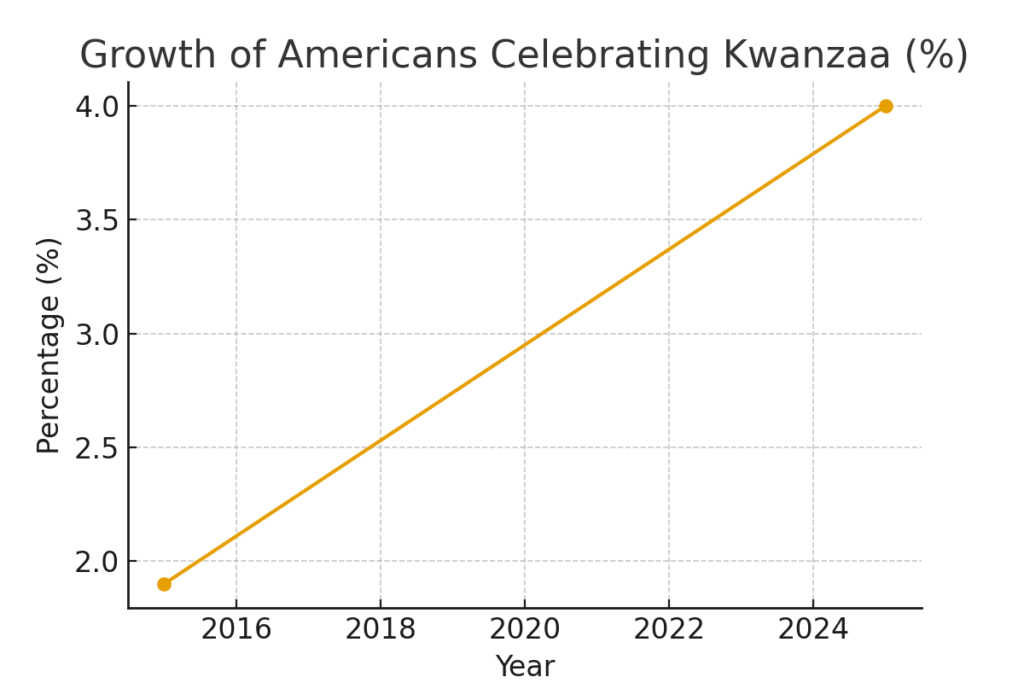
In 2015, only 1.9% of Americans celebrated Kwanzaa, but today that number has more than doubled to 4%. This steady growth shows increasing awareness and acceptance of the holiday. It signals to brands that Kwanzaa is becoming more prominent in the cultural calendar. Marketers who began acknowledging the holiday early may now see stronger community relationships. This growth trajectory suggests the opportunity will only expand in the years ahead.
Kwanzaa Marketing Statistics #3 – 18% Of Black Americans Celebrate Kwanzaa
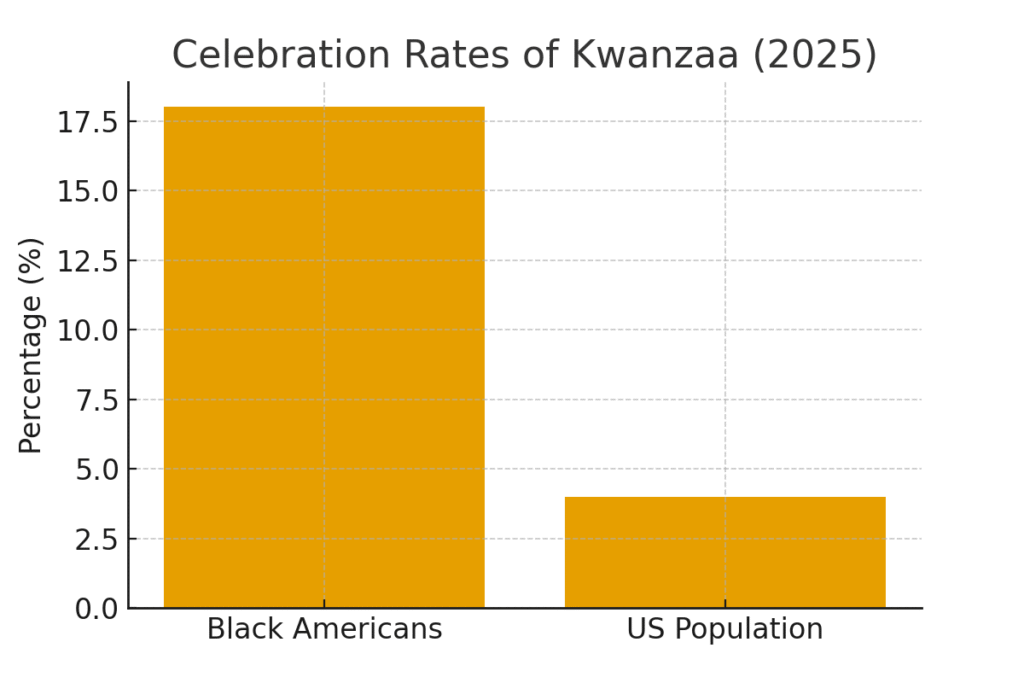
Around 18% of Black Americans report actively celebrating Kwanzaa each year. That makes it a culturally significant holiday within the Black community. For marketers, this statistic underlines the importance of tailored campaigns that show genuine understanding of the traditions. Brands that recognize and uplift Kwanzaa can strengthen their connection to Black consumers. It also provides an opportunity for campaigns focused on cultural pride and heritage.
Kwanzaa Marketing Statistics #4 – 30% Of Black Consumers Expect Brands To Acknowledge Kwanzaa
Nearly 30% of Black consumers agree that all brands should celebrate or acknowledge Kwanzaa in their advertising. This highlights the consumer expectation of inclusivity. Ignoring this request can make a brand appear out of touch or disinterested. On the other hand, meeting this expectation with authenticity can win long-term loyalty. It proves that cultural holidays are not just traditions, but also key opportunities for inclusive marketing.
Kwanzaa Marketing Statistics #5 – 92% Of U.S. Adults Celebrate A Winter Holiday
A huge 92% of U.S. adults celebrate some type of winter holiday, including Christmas, Hanukkah, and Kwanzaa. This shows how deeply ingrained holiday culture is across the country. Even though Kwanzaa may have a smaller share, it still sits within this larger seasonal context. Marketers can position campaigns that address multiple holidays at once while still highlighting Kwanzaa. Doing so ensures inclusivity without isolating other groups.
Kwanzaa Marketing Statistics #6 – $902 Average Per Person Holiday Spending
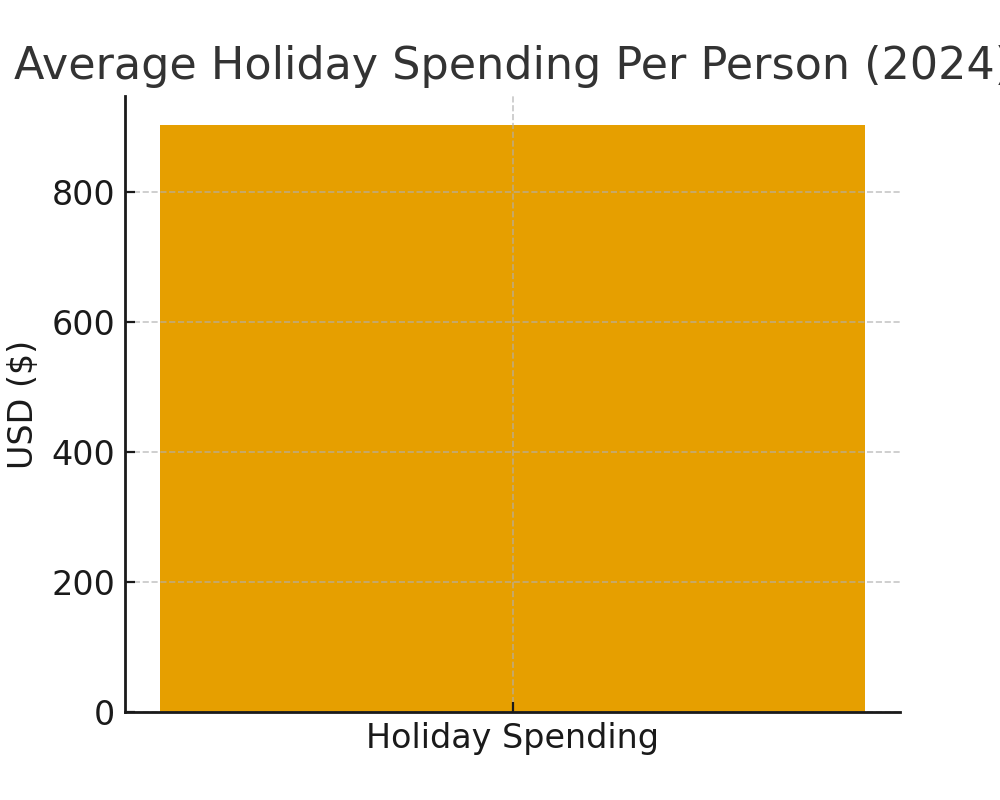
On average, Americans plan to spend about $902 on gifts, food, and decorations during the winter holidays. While this covers all holidays, Kwanzaa is part of this spending surge. The number shows how valuable this period is for retailers and e-commerce. Brands that create culturally relevant Kwanzaa promotions can tap into this spending potential. It also emphasizes the importance of well-timed campaigns during December.
Kwanzaa Marketing Statistics #7 – Black Consumers Value Authenticity In Marketing
Research shows that Black consumers place high value on authenticity, cultural relevance, and social purpose in marketing. This means that surface-level nods to Kwanzaa will not resonate. Instead, campaigns must demonstrate genuine respect for the traditions and values. Brands that miss this mark risk backlash or consumer disengagement. This statistic stresses the need for careful, thoughtful campaign design.
Kwanzaa Marketing Statistics #8 – 38% Of Young Black Consumers Want Brands To Support Causes
Among Black consumers aged 18–34, about 38% expect brands to align with social causes. This demand increases slightly to 41% for those aged 35 and older. Kwanzaa campaigns that incorporate social good initiatives can therefore resonate strongly. Whether it’s highlighting Black-owned businesses or donating to cultural programs, these efforts matter. The numbers show that values-driven marketing is especially powerful around Kwanzaa.
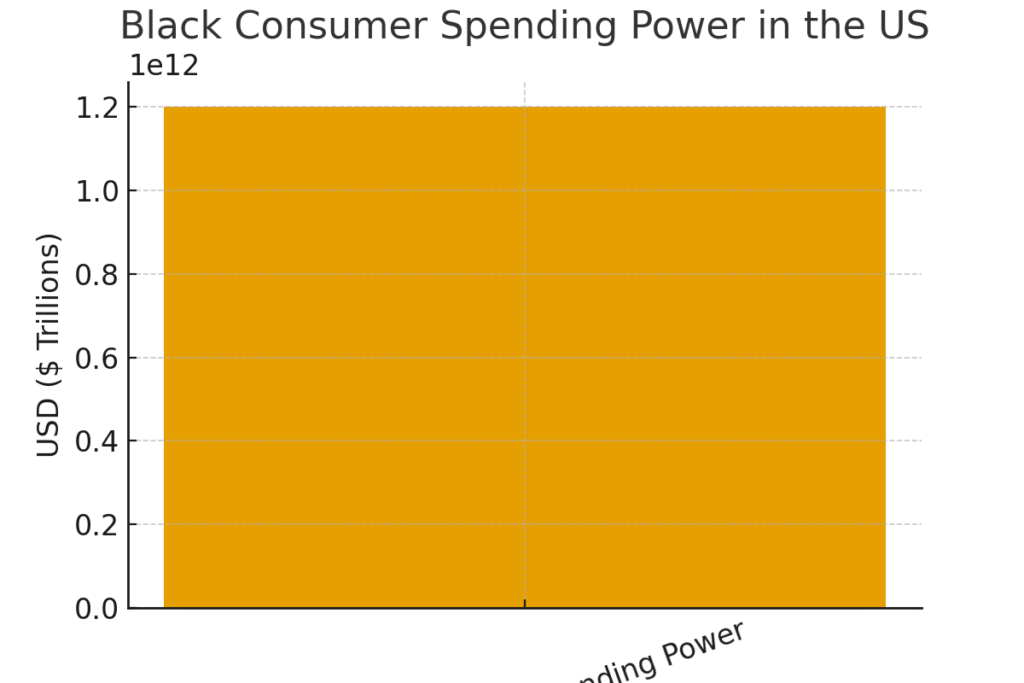
Kwanzaa Marketing Statistics #9 – $1.2 Trillion In Black Consumer Spending Power
Black consumers in the U.S. wield an estimated $1.2 trillion in annual spending power. This makes them a highly influential demographic for brands. Celebrating Kwanzaa authentically is one way companies can connect with this audience. The statistic reminds marketers that inclusive campaigns aren’t just socially important but financially smart. By overlooking Kwanzaa, brands risk ignoring a large consumer base.
Kwanzaa Marketing Statistics #10 – Black Culture Influences Broader Markets
Research shows that Black cultural trends often spill over to mainstream markets. This includes categories like fashion, beauty, and entertainment. Kwanzaa campaigns can therefore reach more than just those who celebrate the holiday directly. They can influence general consumer sentiment toward a brand’s inclusivity. This amplifies the impact of thoughtful cultural marketing.
Kwanzaa Marketing Statistics #11 – 3% Of Americans Actively Celebrate Kwanzaa (2019 Survey)
A 2019 survey by AP-NORC found that about 3% of Americans actively celebrate Kwanzaa. While this is slightly lower than more recent figures, it shows a consistent presence. The data also highlights how awareness is often higher than participation. For marketers, this creates space to educate while engaging. Bridging the gap between awareness and celebration can foster stronger brand loyalty.
Kwanzaa Marketing Statistics #12 – 45% Of Holiday Shoppers Buy Before November
Nearly 45% of holiday shoppers begin their shopping before November. This trend impacts Kwanzaa campaigns as well. Brands need to prepare messaging earlier to catch these proactive shoppers. Late campaigns may miss a large portion of spending. Timing is everything during the holiday rush.
Kwanzaa Marketing Statistics #13 – 57% Of Consumers Shop Online For Holidays
Around 57% of consumers in the U.S. plan to do their holiday shopping online. This is a major shift that influences Kwanzaa-related sales too. Brands should ensure their online stores highlight Kwanzaa-friendly categories. Digital ads, social media, and e-commerce promotions are essential tools. Ignoring online channels means losing out on over half the potential market.
Kwanzaa Marketing Statistics #14 – Younger Generations Prefer Digital Engagement
Gen Z and Millennials respond most to digital, social media, and influencer marketing. For Kwanzaa, this means brands should focus on platforms like Instagram, TikTok, and YouTube. Younger audiences look for storytelling and creativity over traditional ads. Campaigns that embrace interactive or visual content can resonate best. This statistic points to the future direction of holiday marketing.
Kwanzaa Marketing Statistics #15 – Storytelling And Purpose Increase Impact
Campaigns that embed storytelling and social purpose perform better with Black consumers. For Kwanzaa, this means highlighting principles like unity, creativity, and community. It’s not enough to show festive symbols without meaning. Audiences want campaigns that reflect the spirit of the holiday. This statistic reinforces that authenticity drives engagement.
Kwanzaa Marketing Statistics #16 – Older Generations More Likely To Celebrate
Kwanzaa participation is higher among older generations compared to Millennials and Gen Z. This shows that while awareness is rising, practice varies by age. Marketers need to adjust their strategies accordingly. For older groups, authenticity and tradition carry more weight. For younger groups, digital storytelling may be the key.
Kwanzaa Marketing Statistics #17 – 30% Want Ads To Include Kwanzaa Messaging
About 30% of Black consumers specifically want ads to include Kwanzaa messaging. This overlaps with general calls for inclusivity in marketing. Brands that ignore this request risk losing credibility. Simple gestures, like inclusive greetings, can go a long way. It’s a reminder that representation matters.
Kwanzaa Marketing Statistics #18 – Gifts Often Focus On Heritage And Meaning
Unlike many holidays dominated by electronics or luxury spending, Kwanzaa gift-giving often emphasizes heritage and symbolism. Handcrafted and artistic items are popular choices. This gives brands a chance to highlight artisans, cultural goods, and unique experiences. Campaigns can stand out by showcasing these gift categories. The statistic reveals the unique consumer behavior tied to Kwanzaa.
Kwanzaa Marketing Statistics #19 – $1.4 Billion Spent On Kwanzaa (Historic Estimate)
Older estimates suggested that Kwanzaa spending reached $1.4 billion annually in the U.S. While this figure may now be outdated, it highlights the scale of the holiday’s economic footprint. It suggests that even niche holidays contribute significantly to seasonal revenue. For marketers, that’s reason enough to pay attention. The number reflects the untapped potential of culturally specific campaigns.
Kwanzaa Marketing Statistics #20 – Education Builds Brand Trust
Many Americans are aware of Kwanzaa but don’t fully understand its principles. Brands that educate while they advertise can build trust. Sharing the seven principles or explaining traditions is a powerful way to connect. Educational marketing often feels more genuine and respectful. This statistic shows that teaching is also a form of engagement.
A Personal Closing Thought
Looking over these Kwanzaa Marketing Statistics, I realize that they’re about more than just numbers—they reflect people, traditions, and values that matter deeply. What stands out to me most is that authenticity and purpose are no longer optional; they’re essential for any brand that wants to resonate. For me, this journey into the data has been a reminder that behind every percentage and figure is a story waiting to be told. I encourage you, whether you’re a marketer or simply curious, to think about how these insights can be applied with respect and creativity. At the end of the day, marketing should always be about building connections, and there’s no better time than Kwanzaa to do so with heart.
SOURCES
https://explorefcg.com/2023/01/how-brands-can-celebrate-kwanzaa-with-authenticity-and-purpose/
https://www.collagegroup.com/holidays-and-occasions-christmas-hanukkah-kwanzaa-and-new-years
https://everything-pr.com/successful-kwanzaa-marketing-campaigns/
https://www.wrdw.com/2024/12/27/kwanzaa-gains-popularity-many-take-principles-heart/
https://ponyexpresshq.medium.com/kwanzaa-marketing-ideas-63d43fa38555
https://curiousandcozy.com/2014/10/29/kwanzaa-statistics/
https://www.quirks.com/articles/kwanzaa-and-its-marketing-implications
https://goeshow.com/tag/kwanzaa/
https://newseasonsmarket.com/community-table-blog/lets-eat-together/kwanzaa-celebration