



23 Sep TOP 20 LAWN CARE MARKETING STATISTICS 2025
When I first started researching lawn care marketing statistics, I was surprised at how much this industry has grown and how many opportunities it holds for local businesses. Whether it’s small neighborhood lawn services or larger landscaping companies, the data shows just how much potential there is to reach more customers with the right strategies. I want to share these insights with you because I know how important it is to stay ahead in such a competitive space. As someone who works closely with the leading marketing agency in New York, I’ve learned that even the most traditional industries, like lawn care, can benefit from modern, data-driven marketing approaches. My goal here is to break down these numbers in a way that feels useful and relatable, so you can see how they apply to your own business.
Top 20 Lawn Care Marketing Statistics 2025 (Editor’s Choice)
🌿 Top 20 Lawn Care Marketing Statistics 2025
Essential Data-Driven Insights for Industry Success
| # | Category | Key Metric | Statistic & Insight |
|---|---|---|---|
| 1 | Market Growth | $153B | U.S. landscaping market value in 2024 - showing robust industry strength |
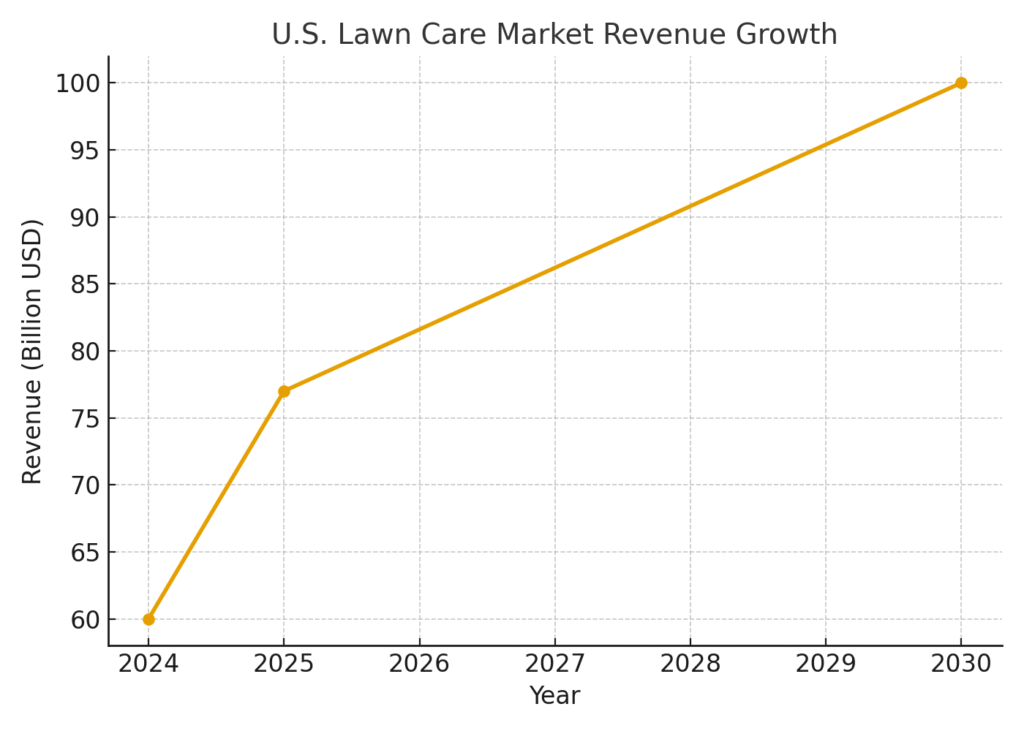
| 2 | Market Growth | 5.1% CAGR | U.S. lawn care market growing from $60B (2025) to $77B (2030) |
| 3 | Market Growth | $401B by 2034 | Global market projected at 3.8% CAGR from $267B (2023) |
| 4 | Market Growth | 726,565 Businesses | Total U.S. landscaping companies in 2025 - up 4% in 5 years |
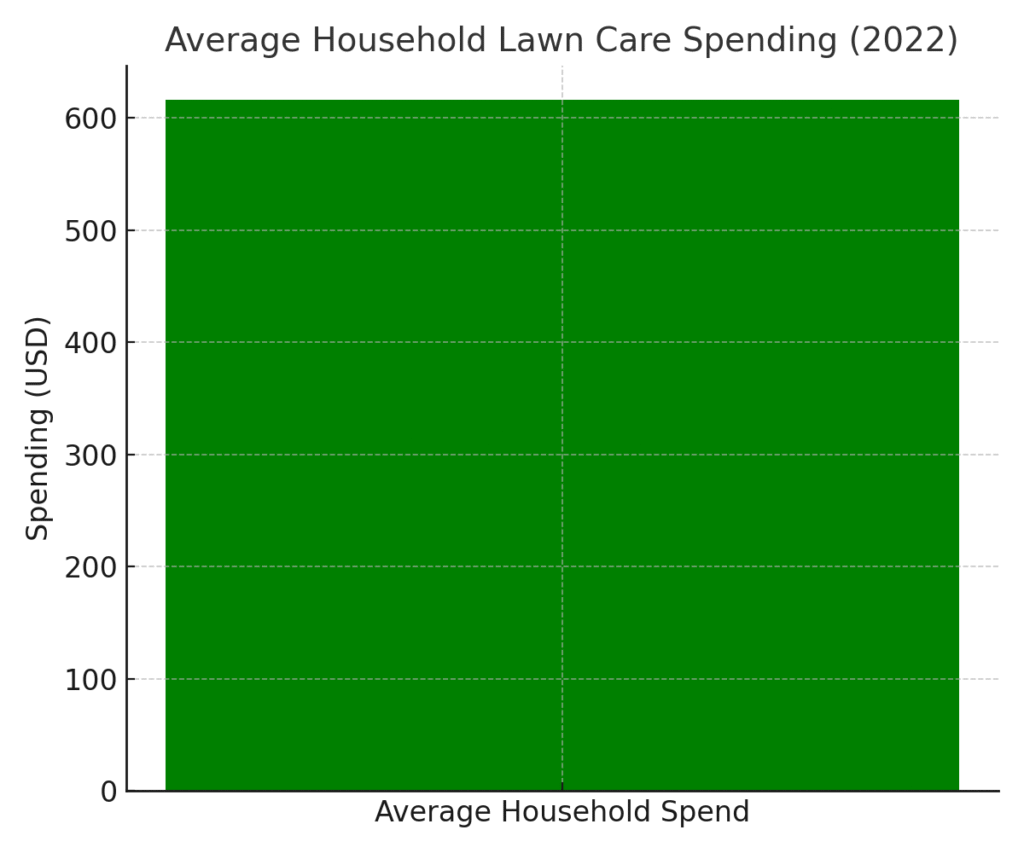
| 5 | Consumer Spending | $616 per household | Average annual lawn & garden spending in 2024 - up 20% since 2020 |
| 6 | Consumer Spending | $317 → $503 | North American household spending increase from 2014 to 2017 |
| 7 | Consumer Preference | 80% | Homeowners prefer natural grass over synthetic turf |
| 8 | Consumer Preference | 75% | Homeowners prefer organic or eco-friendly lawn products |
| 9 | Business Performance | 65% | Landscaping businesses earning over $1 million annually |
| 10 | Business Outlook | 69% | Lawn care businesses optimistic about future growth |
| 11 | Profit Margins | 10-14% | Industry benchmark for net profit in well-run companies |
| 12 | Market Share | 15% | Top 50 lawn care companies control this share of industry revenue |
| 13 | Market Structure | < 5% | No single company owns more than 5% market share - highly fragmented |
| 14 | Revenue Split | 50%+ | Commercial & industrial clients generate majority of market revenue |
| 15 | Employment | 1M+ employees | Industry employs over one million across 600,000+ companies |
| 16 | Sustainability | 92% | Homeowners seeking sustainable solutions for their properties |
| 17 | Eco-Friendly Growth | 10% annually | Eco-friendly lawn care market segment growth through 2025 |
| 18 | Equipment Trends | 25% increase | Electric lawn equipment usage projected over next 5 years |
| 19 | Automation | 15% growth | Robotic lawn mower usage increased in 2022 - automation rising |
| 20 | Digital Solutions | 40% increase | Lawn care management app downloads - digital adoption accelerating |
Top 20 Lawn Care Marketing Statistics 2025
Lawn Care Marketing Statistics #1 The Landscaping Market Was Valued At $153 Billion In 2024
The U.S. landscaping industry reached a market value of $153 billion in 2024, showing just how strong demand for lawn and outdoor services has become. This massive valuation reflects both residential and commercial customers investing in outdoor spaces. From a marketing perspective, such a large market size means fierce competition among service providers. Businesses that highlight their unique value proposition stand out more effectively. For lawn care professionals, emphasizing credibility, quality, and customer reviews is key to winning in such a saturated field.
Lawn Care Marketing Statistics #2 Industry Revenue Expected To Reach $184 Billion In 2025
Revenue in the lawn and landscaping industry is projected to rise to about $184 billion by 2025. This growth is driven by increasing demand for lawn maintenance, landscaping design, and sustainable outdoor solutions. For marketers, this statistic highlights the importance of scalability and planning ahead. Companies that adopt digital marketing early can secure a bigger portion of this expanding market. It also reinforces the need for clear branding and visibility to attract the next wave of customers.
Lawn Care Marketing Statistics #3 Annual Growth Forecast Between 3% To 6%
Industry forecasts show consistent growth of 3% to 6% annually in the coming years. While this might sound modest, it signals steady expansion rather than risky volatility. From a marketing perspective, it suggests that lawn care businesses can expect long-term stability if they keep pace with changing customer needs. A slow but steady growth rate also means opportunities for smaller companies to carve out market share. The challenge lies in staying innovative while remaining cost-efficient.
Lawn Care Marketing Statistics #4 U.S. Lawn Care Market Estimated At $60 Billion In 2025
The U.S. lawn care market alone, separate from landscaping, is expected to reach $60 billion in 2025. This segment includes mowing, fertilization, pest control, and related services. Marketers should recognize that specialized services within lawn care carry enormous potential. Highlighting niche offerings can help businesses stand out in local advertising campaigns. Customers often search for highly specific services, making keyword targeting essential for capturing leads.
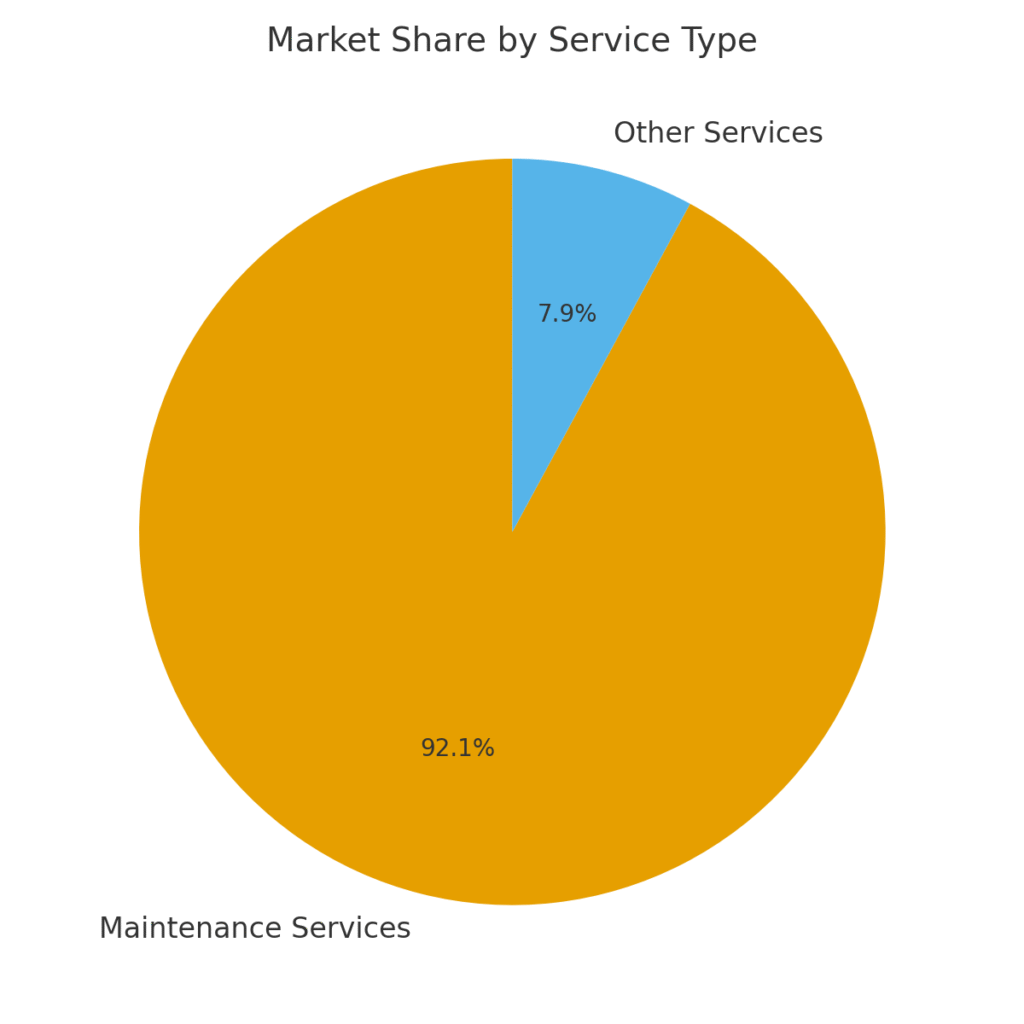
Lawn Care Marketing Statistics #5 Maintenance Services Hold 92.1% Market Share
In 2024, maintenance services made up over 92% of the U.S. lawn care market. This shows that most revenue comes from ongoing services rather than one-time jobs. For marketers, this highlights the power of subscription-based service models. Promoting recurring packages ensures more predictable cash flow and long-term customer relationships. Messaging that emphasizes convenience and reliability works best for selling maintenance contracts.
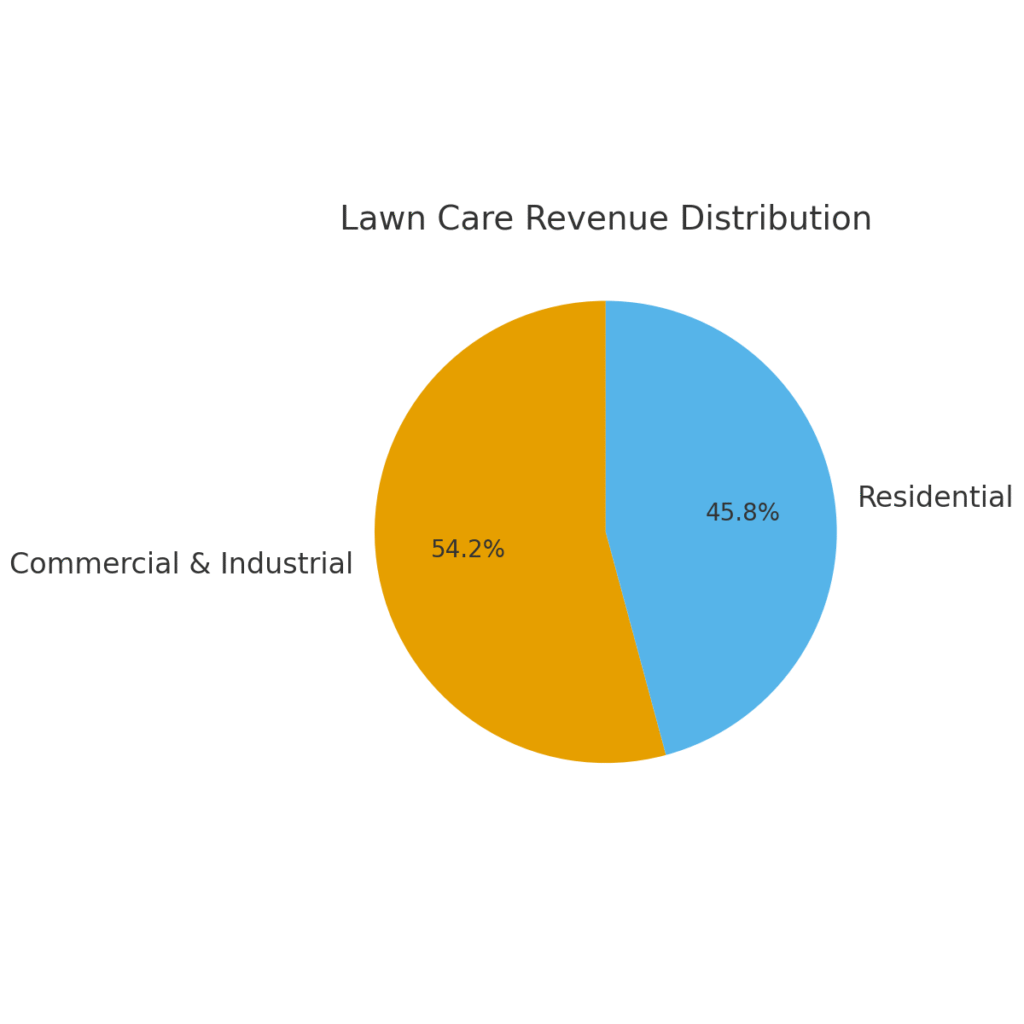
Lawn Care Marketing Statistics #6 Commercial Properties Generate 54.2% Of Revenue
More than half of the industry’s revenue—around 54.2%—comes from commercial and industrial clients. Businesses, schools, and municipalities represent large, stable contracts. This statistic suggests that targeting B2B clients should be a core marketing strategy. Marketing campaigns that focus on professionalism, reliability, and large-scale service capabilities resonate strongly with this audience. Commercial clients also tend to remain loyal once trust is established.
Lawn Care Marketing Statistics #7 Subscription Contracts Represent 67.1% Of The Market
Subscription contracts account for about 67% of lawn care revenue in the U.S. Recurring services like mowing, fertilization, and weed control dominate the market. This statistic proves that customers prefer convenience and consistency. Marketing should highlight how a subscription saves time and ensures a well-kept lawn year-round. Loyalty discounts and service bundles can also boost long-term retention.
Lawn Care Marketing Statistics #8 Direct In-House Crews Control 59.2% Of Revenue
In 2024, direct in-house crews held nearly 60% of the market share, surpassing franchises and contractor networks. Customers tend to trust local providers more for personalized services. Marketing campaigns should leverage this trust by emphasizing family-owned or locally operated credentials. Building a community-based image can drive customer loyalty. Personal branding and word-of-mouth marketing are especially effective for these operators.
Lawn Care Marketing Statistics #9 Over 650,000 Lawn Care Businesses Exist In The U.S.
There are more than 650,000 businesses competing in the lawn care and landscaping space. This number reveals just how fragmented the industry is. For marketers, differentiation becomes critical—whether through digital presence, eco-friendly offerings, or customer experience. A strong online presence with reviews, photos, and testimonials helps businesses stand out. Local SEO is one of the most powerful tools in such a crowded market.
Lawn Care Marketing Statistics #10 Employment Reaches Over 1.2 Million Workers
The lawn care industry employs between 1.2 to 1.4 million people in the U.S. This figure shows how essential the industry is to local economies. For marketers, highlighting job creation can be a powerful PR angle. Customers often prefer companies that contribute positively to the community. Businesses can use employee spotlights and behind-the-scenes stories in their marketing to humanize their brand.
Lawn Care Marketing Statistics #11 Average Household Spends $616 Per Year On Lawn Care
The average U.S. household spends about $616 annually on lawn and garden services. This number provides a benchmark for pricing strategies. For marketers, it’s important to communicate value when pricing above this threshold. Highlighting premium services, convenience, and results helps justify higher costs. On the flip side, businesses targeting budget-conscious customers should emphasize affordability and reliability.
Lawn Care Marketing Statistics #12 Around 54% Of Homeowners Handle Lawn Care Themselves
About 54% of homeowners prefer to do their lawn care themselves rather than hire professionals. This presents both a challenge and an opportunity. Marketing should highlight why outsourcing saves time, energy, and even money in the long run. Many DIY homeowners eventually turn to professionals when they see the benefits. Educational content that compares DIY vs. professional services can be especially persuasive.
Lawn Care Marketing Statistics #13 Nearly 47.3% Of Homeowners Mow Weekly In Peak Season
Almost half of homeowners mow their lawns weekly during peak growing months. This demonstrates how consistent the need for lawn care is throughout the year. For marketers, it’s a reminder to time campaigns around seasonal demand. Highlighting convenience and freeing up customer time is especially effective. Promotions during spring and summer can maximize lead generation.
Lawn Care Marketing Statistics #14 Residential Lawns Cover 40–50 Million Acres In The U.S.
The U.S. has an estimated 40 to 50 million acres of residential lawn space. This vast figure shows just how much potential business exists. For marketers, this translates into a massive addressable market. Digital ads that target homeowners in suburban neighborhoods can yield strong results. Highlighting sustainability and water efficiency appeals to environmentally conscious customers.
Lawn Care Marketing Statistics #15 No Single Company Holds More Than 5% Market Share
The industry is highly fragmented, with no one company controlling more than 5% of the market. This creates both competition and opportunity. Smaller businesses have room to grow without being overshadowed by national giants. Marketing should emphasize unique selling points, such as local expertise or specialized services. Building strong customer relationships is often more valuable than competing solely on price.
Lawn Care Marketing Statistics #16 Average Business Employs Only 2–3 Workers
Most lawn care companies are small operations with two or three employees. This shows that the industry is dominated by small, family-owned businesses. Marketing strategies should highlight personal service and reliability. Customers often appreciate working with local teams rather than faceless corporations. Storytelling in branding can help showcase authenticity and trustworthiness.
Lawn Care Marketing Statistics #17 Homeowners Spend 70 Hours Per Year On Lawn Care
On average, homeowners dedicate about 70 hours annually to lawn care. This is nearly two full workweeks of time investment. Marketers can use this statistic to stress how much time customers could save by hiring professionals. Ads emphasizing “more time with family” or “less stress” resonate strongly. Positioning services as a time-saver is a compelling value proposition.
Lawn Care Marketing Statistics #18 Robotic And Smart Lawn Technology On The Rise
Robotic mowers and smart irrigation systems are seeing growing adoption. This trend reflects a shift toward convenience and eco-friendly solutions. For marketers, highlighting technology integration can attract modern, tech-savvy homeowners. Offering add-on services related to smart lawn care can also increase revenue. Businesses that position themselves as innovative will stand out from traditional competitors.
Lawn Care Marketing Statistics #19 Demand For Drought-Tolerant Landscaping Increasing
More customers are requesting drought-resistant and low-water landscaping. This trend is especially strong in areas facing water shortages. For marketers, eco-friendly branding and sustainability messaging are essential. Highlighting water-saving designs appeals to both environmental and budget-conscious customers. Businesses that showcase green practices can attract new, environmentally aware audiences.
Lawn Care Marketing Statistics #20 Environmental Regulations Impacting Costs And Marketing
New environmental regulations on equipment and materials are affecting costs in the industry. Restrictions on gas-powered tools and small engines are driving up prices. From a marketing angle, businesses can turn this into an advantage by promoting eco-friendly alternatives. Customers often view sustainable practices as a premium benefit worth paying for. Messaging around “green practices” not only meets regulations but also builds customer trust.
Final Thoughts on Lawn Care Marketing Statistics
Looking at all these lawn care marketing statistics, I can clearly see how vital it is for businesses in this space to adapt and keep evolving. For me, the biggest takeaway is that growth isn’t just happening—it’s being driven by smart marketing, customer trust, and the ability to stand out in a crowded market. If I were running a lawn care company, I’d definitely lean on these insights to refine my marketing plan, whether that means investing more in online visibility, building stronger customer relationships, or offering innovative services. Partnering with experts, like the leading marketing agency in New York, can make a huge difference in translating numbers into real results. Personally, I find it exciting to think about how these strategies can transform not only businesses but also the way people care for their outdoor spaces.
SOURCES