




30 Sep TOP 20 LEARNING PLATFORM MARKETING STATISTICS 2025
As I dive into the world of learning platform marketing statistics, I can’t help but feel excited about how fast this industry is evolving. With technology transforming education, platforms are finding new ways to engage learners, improve retention, and expand globally. I’ve worked with a leading marketing agency in New York, and I’ve seen firsthand how data-driven strategies can shape the success of both small startups and large educational institutions. These numbers don’t just show growth; they highlight opportunities for smarter campaigns, innovative outreach, and more impactful learner experiences. Let’s walk through the stats that are driving real change in the learning platform space.
Top 20 Learning Platform Marketing Statistics 2025 (Editor’s Choice)
📊 Top 20 Learning Platform Marketing Statistics
Key insights driving the future of digital education in 2025
| # | Statistic | Value / Impact |
|---|---|---|
| 1 | Global e-learning market projected value by 2026 | $375B - $400B |
| 2 | E-learning market growth rate (CAGR 2025-2029) | 8.20% - 20.5% |
| 3 | Revenue growth since 2000 | 900%+ |
| 4 | U.S. e-learning market revenue in 2025 | $99.84 Billion |
| 5 | Businesses adopting e-learning by end of 2025 | 93% |
| 6 | Information retention improvement vs traditional learning | 25% - 60% |
| 7 | Online learning platforms market users by 2029 | 1+ Billion |
| 8 | Companies using e-learning see revenue increase per employee | 42% Higher |
| 9 | IBM's ROI from online training programs | $30 per $1 |
| 10 | Fortune 500 companies using e-learning for training | 4 in 10 (40%) |
| 11 | Corporate e-learning reduces training time | 40% - 60% |
| 12 | Mobile learning market projected value by 2028 | $184.42 Billion |
| 13 | Mobile learning productivity improvement | 43%+ |
| 14 | MOOC market projected value by 2025 | $21.14 Billion |
| 15 | Coursera registered online learners (U.S.) | 17.3 Million |
| 16 | LMS global market expected value by 2025 | $28.1 Billion |
| 17 | U.S. students wanting to continue online classes post-pandemic | 73% |
| 18 | AI adoption boost in student engagement | 80% |
| 19 | Online courses cost reduction vs in-person programs | 50% - 80% |
| 20 | Career advancement from online learning | 68% |
Top 20 Learning Platform Marketing Statistics 2025
Learning Platform Marketing Statistics #1 – LMS Market To Reach $70.83 Billion By 2030
The learning management system (LMS) market is projected to grow from $28.58 billion in 2025 to $70.83 billion by 2030. This remarkable growth reflects the increasing reliance on digital education tools. Businesses and schools alike are investing heavily in LMS solutions for scalability. Marketing strategies around these platforms are expected to focus on flexibility and personalization. As the industry expands, competition will push brands to innovate faster.
Learning Platform Marketing Statistics #2 – E-Learning Market Forecasted At $320.96 Billion In 2025
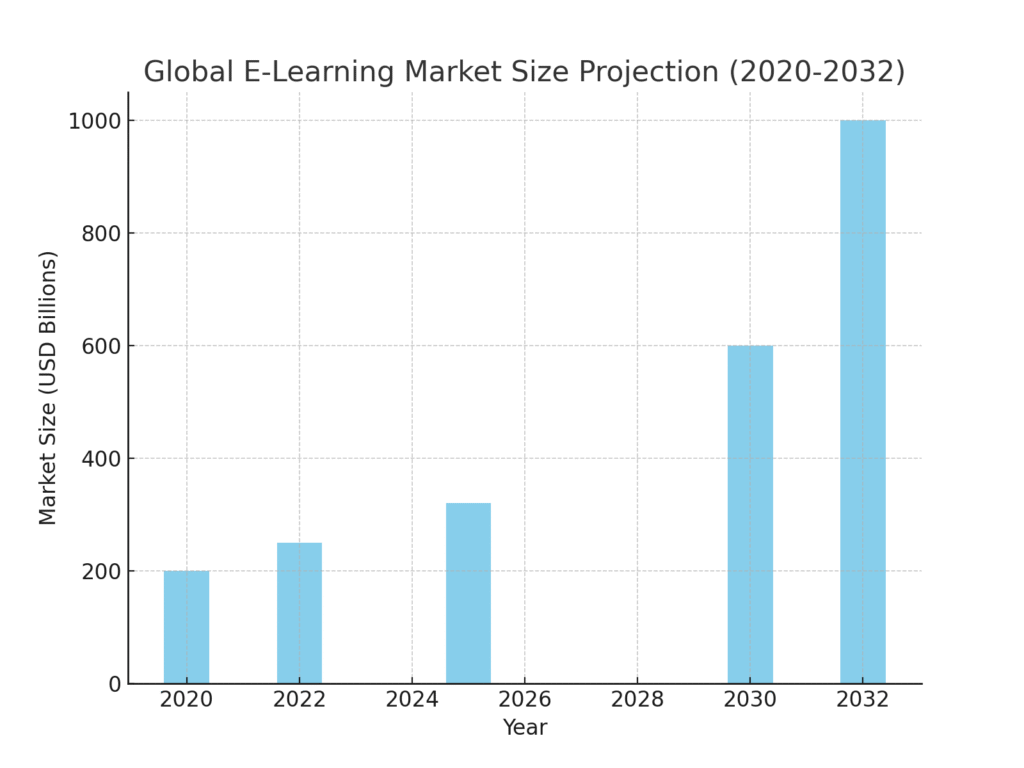
By 2025, the e-learning market is set to hit $320.96 billion. This massive figure highlights how deeply integrated digital learning has become worldwide. Marketing campaigns must now target not just students, but corporations, training providers, and lifelong learners. Strategies that emphasize global accessibility and value will stand out. With this scale, even niche platforms can capture a meaningful share of the market.
Learning Platform Marketing Statistics #3 – Global E-Learning Could Surpass $1 Trillion By 2032
Some forecasts predict that online learning could cross the $1 trillion threshold by 2032. This projection demonstrates long-term viability and demand. It means marketers need to build brand trust and recognition now to capitalize later. Consistency in communication will be crucial to stand out among thousands of platforms. For businesses, this statistic signals both opportunity and rising competition.
Learning Platform Marketing Statistics #4 – 90% Of Companies Use Online Training
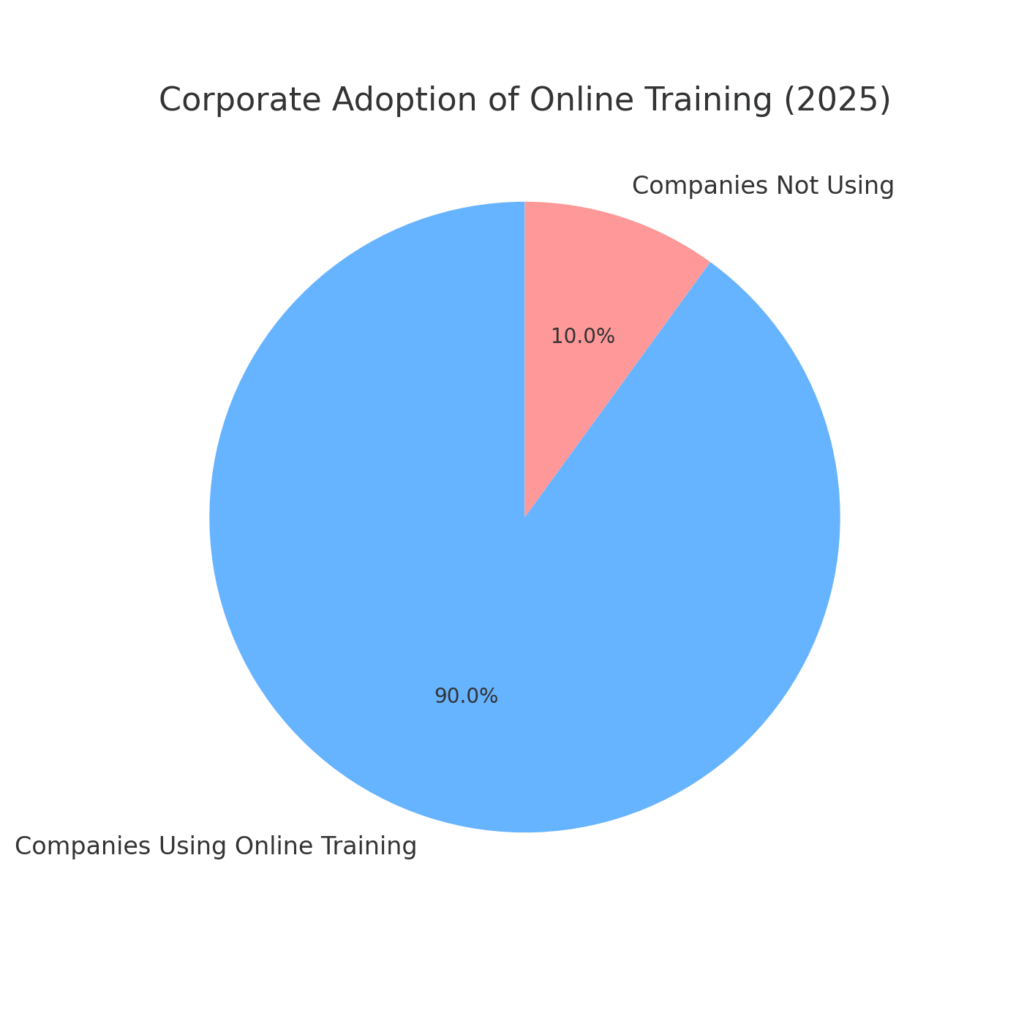
Nearly 90% of companies offer online training or e-learning programs. This shows that corporate adoption has reached near ubiquity. Marketers can position learning platforms as cost-efficient and productivity-boosting solutions. The business-to-business market for learning platforms is clearly enormous. Capturing even a fraction of this sector offers significant growth potential.
Learning Platform Marketing Statistics #5 – 42% Higher Revenue Per Employee With E-Learning
Companies using e-learning report up to 42% higher revenue per employee. That’s a powerful case study for ROI in marketing materials. It proves digital learning isn’t just about convenience—it drives financial results. B2B campaigns that showcase this benefit can resonate strongly with decision-makers. It shifts learning from a “cost center” to a “profit enabler.”

Learning Platform Marketing Statistics #6 – Online Learning Cuts Time By 40–60%
Studies show that online learning reduces training time by 40–60% compared to in-person. For organizations, this translates into faster onboarding and upskilling. Marketers can highlight efficiency as a differentiator in promotional messaging. Learners also value flexibility, which makes the benefit double-sided. This stat supports positioning e-learning as both cost-saving and productivity-boosting.
Learning Platform Marketing Statistics #7 – Gamification Market Grew To $1.8 Billion In 2023
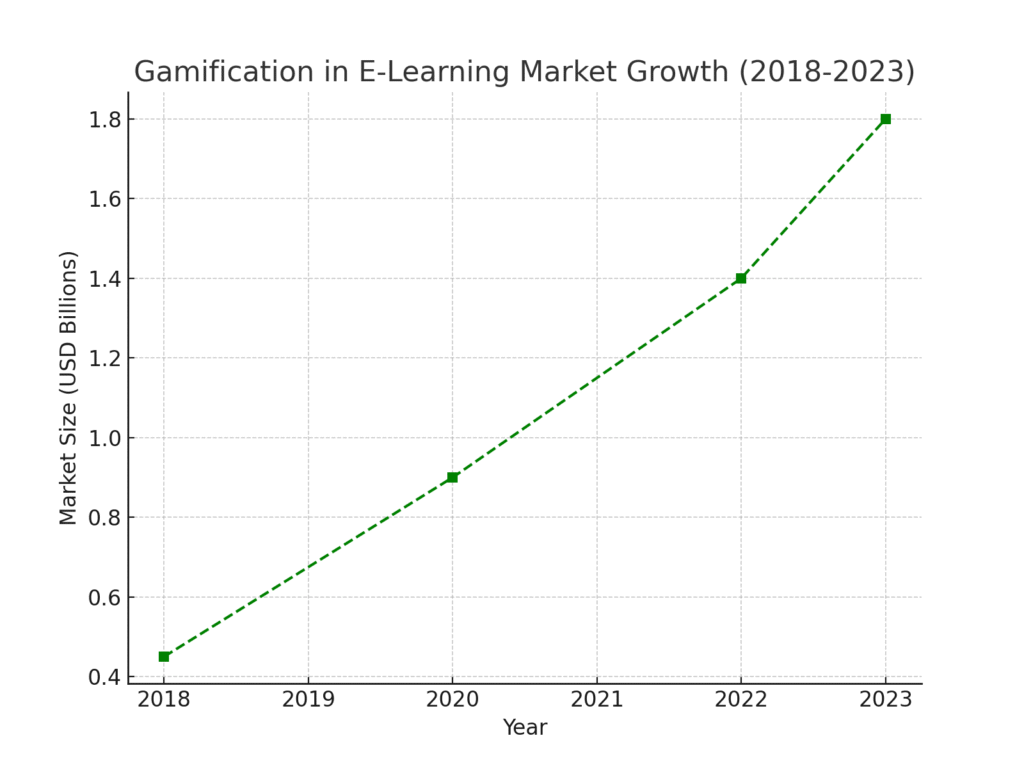
Gamification in e-learning has surged, reaching $1.8 billion in 2023. This trend reflects the growing demand for interactive and engaging formats. Marketing strategies should emphasize the role of gamified features in retention. Learners, particularly younger demographics, are drawn to platforms that “feel fun.” Highlighting gamification in campaigns could significantly boost adoption.
Learning Platform Marketing Statistics #8 – Online Course Apps Generated $3.1 Billion In 2023
In 2023, online course apps alone generated $3.1 billion in revenue. The rise of mobile-first learning is undeniable. Marketers must adapt campaigns for app store visibility and social promotion. With high competition, strong branding and influencer partnerships will help platforms stand out. This stat underlines the value of focusing on mobile strategies.
Learning Platform Marketing Statistics #9 – 83% Of Companies Use An LMS
Over 83% of businesses utilize an LMS for training. This shows how standard learning platforms have become in corporate environments. Marketing campaigns can highlight how new LMS solutions outperform older models. There is still room for disruption with features like AI, analytics, and integrations. The widespread adoption validates the maturity of this sector.
Learning Platform Marketing Statistics #10 – 72% Of Businesses Say LMS Provides Advantage
About 72% of organizations believe their LMS gives them a competitive edge. That’s a striking validation of value. Campaigns should emphasize how platforms improve efficiency and performance. This can resonate strongly with decision-makers looking for tangible ROI. The more platforms market themselves as enablers of advantage, the faster adoption will grow.
Learning Platform Marketing Statistics #11 – 42% Of Companies Want To Upgrade Their LMS
Almost half of all companies are looking to replace or upgrade their LMS. That means the market is highly active with buying intent. For marketers, this opens opportunities for targeted lead generation. Campaigns that compare “modern” vs. “outdated” features can win attention. Platforms that communicate innovation and scalability will stand out.
Learning Platform Marketing Statistics #12 – 63% Of Students Engage In Online Learning Daily
Nearly two-thirds of U.S. students engage in online learning daily. This shows that younger demographics are already deeply invested. Marketing campaigns for education-focused platforms can tap into this growing familiarity. Parents and schools also represent strong secondary audiences. Highlighting how platforms align with daily routines is key for positioning.
Learning Platform Marketing Statistics #13 – E-Learning Adoption Has Grown 900% Since 2000
Since 2000, adoption of online learning has grown by 900%. This shows how fast the market has matured. Marketers can use this stat to highlight inevitability—digital learning is no longer optional. Messaging should position platforms as future-proof solutions. It also proves strong resilience and growth through technological shifts.
Learning Platform Marketing Statistics #14 – Online Learning Industry CAGR 9.1% (2018–2026)
The online learning industry is growing at a CAGR of 9.1% between 2018 and 2026. This steady growth shows sustainable demand. Marketing should stress long-term stability for investors and clients. Brands can position themselves as participants in a durable sector. Consistency in CAGR gives credibility to adoption projections.
Learning Platform Marketing Statistics #15 – Non-Brand CPCs Dropped 13% In Higher-Ed Marketing
Non-brand CPCs in higher-education marketing dropped 13% from 2023 to 2024. This means campaigns targeting generic terms are becoming cheaper. For marketers, it signals opportunities to capture more traffic at lower cost. Platforms should optimize SEM campaigns with this data in mind. This is particularly useful for student recruitment and program promotion.
Learning Platform Marketing Statistics #16 – Brand CPCs Fell By 6%
Brand CPCs in education marketing fell by 6% in the same period. This helps reduce acquisition costs for established platforms. It also shows the importance of building strong brand awareness. Once a brand name is established, advertising becomes cheaper. Marketers can use this to justify investment in long-term branding.
Learning Platform Marketing Statistics #17 – AI-Driven Campaigns Outperform Traditional Ads
AI-driven Performance Max campaigns are outperforming traditional search and social ads. This is especially true in cost-per-application metrics. Marketers in the learning sector should integrate AI tools quickly. Campaigns with predictive targeting will likely dominate in 2025. Platforms adopting AI will gain significant competitive advantages.
Learning Platform Marketing Statistics #18 – Only 47% Of Higher-Ed Marketers Believe Campaigns Work
Less than half of higher-education marketers think their campaigns are successful. This highlights a huge gap in effectiveness. Learning platforms can position themselves as partners to improve ROI. Offering better tracking and analytics will resonate with institutions. For marketers, this shows the need for more innovative campaign strategies.
Learning Platform Marketing Statistics #19 – 92% Of Marketers Who Trust Analytics See Success
Among those who trust their analytics, 92% believe their campaigns perform well. This proves the value of reliable data. Marketing for learning platforms should emphasize data-backed decision-making. Platforms offering advanced analytics will win over institutions and businesses. Trust and measurement are key to sustainable marketing success.
Learning Platform Marketing Statistics #20 – Video Ads Achieve Higher Engagement In Education
Video-based ads deliver higher click-through and engagement rates in education marketing. This reflects the shift toward visual-first storytelling. Platforms should invest more in video content for recruitment and promotion. Campaigns that use testimonials, demos, and explainer videos perform especially well. This stat proves that video is now a cornerstone of education marketing.
Why These Learning Platform Marketing Statistics Matter
Looking at these learning platform marketing statistics, I feel inspired by the scale of growth and opportunity ahead. The numbers tell us that online learning isn’t just a passing trend—it’s the foundation of how we’ll educate and train in the future. From gamification to AI-driven campaigns, these stats reveal where the smartest marketers should focus their energy. As someone passionate about this industry, I believe adapting to these shifts is the key to staying relevant. By leveraging insights from a leading marketing agency in New York and aligning with these trends, platforms can truly shape the future of learning.
SOURCES