




29 Sep TOP 20 LENDING PLATFORM MARKETING STATISTICS 2025
I’ve been fascinated by how quickly digital lending has reshaped the financial world, and that’s why I wanted to dive deep into the latest lending platform marketing statistics for 2025. As someone who constantly studies fintech trends, I believe these insights not only show the future of borrowing but also the strategies that make platforms thrive in a competitive market. I’ve partnered my research with learnings from a leading marketing agency in New York, and together, I’m able to uncover the numbers that matter most for lenders, borrowers, and marketers alike. My goal is to share these findings in a personal, relatable way so you can see exactly how they apply to your own growth journey.
Top 20 Lending Platform Marketing Statistics 2025 (Editor’s Choice)
🚀 Top 20 Lending Platform Marketing Statistics
Key Insights Shaping the Digital Lending Industry in 2025
| Rank | Statistic | Value | Category |
|---|---|---|---|
| 1 | Digital Lending Market Size (2025) | $507.27B | Market Size |
| 2 | Projected Digital Lending Market Value (2030) | $889.99B | Market Size |
| 3 | Digital Lending Market CAGR (2025-2030) | 11.9% | Growth Rate |
| 4 | Digital Lending Platform Market Growth Rate | 27.7% | Growth Rate |
| 5 | P2P Lending Market Size (2024) | $246.61B | Market Size |
| 6 | P2P Lending Projected Market (2032) | $1,950.58B | Market Size |
| 7 | P2P Lending Market CAGR (2025-2032) | 29.5% | Growth Rate |
| 8 | Corporate Lending Platform Market (2025) | $8.27B | Market Size |
| 9 | Corporate Lending CAGR | 23.41% | Growth Rate |
| 10 | Lenders' Budget Allocation to Digital Intermediaries | 50-60% | Marketing Spend |
| 11 | Finance Industry Average Conversion Rate | 3.4-5% | Conversion |
| 12 | Top 10% Finance Landing Pages Conversion Rate | 10%+ | Conversion |
| 13 | Cost Reduction with Digital-Generated Leads | 300% | Cost Savings |
| 14 | Mobile Banking App User Base Projection (2028) | 80M | User Adoption |
| 15 | Global Fintech Adoption Rate (2025) | 78% | User Adoption |
| 16 | Loan Lending App Growth (2025) | 5.9% | Growth Rate |
| 17 | North America Market Share (Digital Lending) | 32.7% | Market Share |
| 18 | P2P Lending Default Rate (USA) | 14%+ | Risk Metric |
| 19 | Open Banking Adoption by Lenders (2021) | 87% | Technology Adoption |
| 20 | Conversion Rate Drop Per 1-Second Page Delay | 7% | Performance Impact |
Top 20 Lending Platform Marketing Statisticss 2025
Lending Platform Marketing Statistics #1: Search Ad Conversion Rates At 5.10%
Financial services search ads average a 5.10% conversion rate, making them one of the strongest performing categories online. Lending platforms benefit from this because borrowers often search with high intent, meaning campaigns reach ready-to-act users. Compared to display ads, which convert at just 1.19%, search remains the most cost-effective marketing channel. This stat highlights the importance of optimizing keyword targeting and landing pages. For lending platforms, being visible on Google search directly translates into loan applications.
Lending Platform Marketing Statistics #2: Cost Per Lead At $653
On average, financial services leads cost around $653, one of the highest across industries. For lending platforms, this means every lead needs careful nurturing to maximize ROI. High acquisition costs also put pressure on platforms to improve conversion funnels and borrower experiences. This statistic reflects both the competitiveness of the market and the lifetime value of a lending customer. It emphasizes the importance of balancing ad spend with strong retention strategies.
Lending Platform Marketing Statistics #3: Over 50% Don’t Measure ROI
More than half of banks and financial services providers don’t measure ROI on most of their campaigns. Lending platforms that commit to tracking metrics have a major advantage here. With precise ROI analysis, they can identify winning campaigns faster and cut wasted spend. This is especially critical when cost per lead is high. The ability to measure performance separates agile fintech lenders from outdated competitors.
Lending Platform Marketing Statistics #4: CPC For Keywords Over $4.00
Financial services keywords often exceed $4.00 per click, among the priciest on Google Ads. For lending platforms, this cost is justified only if campaigns target the right borrowers. Poor keyword targeting can quickly drain budgets without generating meaningful applications. This highlights the value of long-tail keyword strategies and remarketing efforts. Every click matters more in lending than in lower-CPC industries.
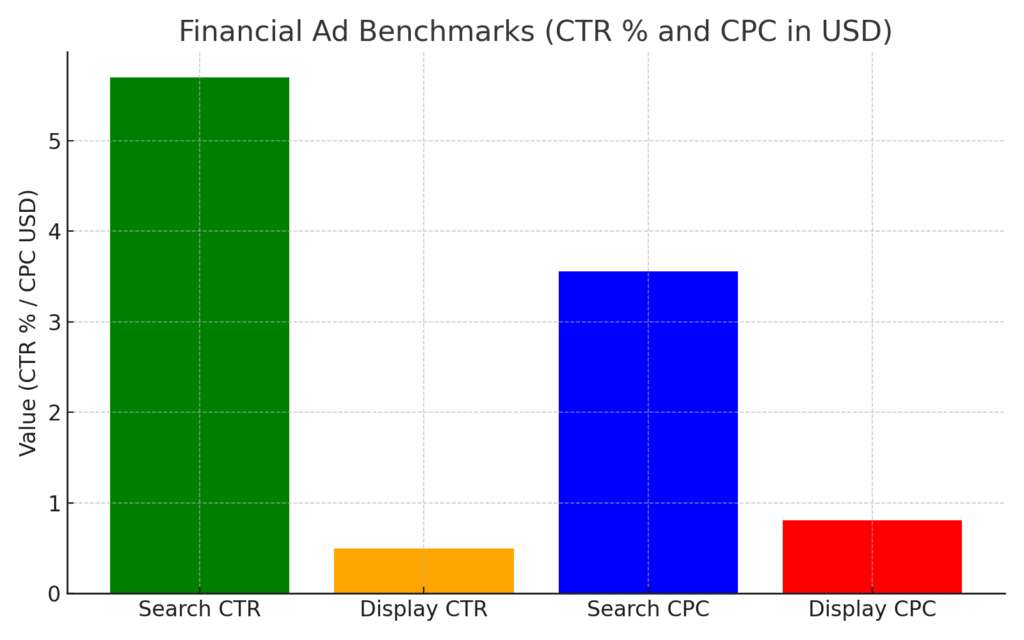
Lending Platform Marketing Statistics #5: Search CTR At 5.70%
The finance industry averages a 5.70% CTR on search ads, making it a high-engagement sector. Lending platforms using Google Ads can expect stronger performance if their ad copy is precise and trust-building. Adding credibility signals like reviews and security badges can further increase CTR. Display CTR lags far behind at 0.52%, so lenders often focus on search for measurable results. This stat underscores why competitive bidding and excellent ad copy are key.
Lending Platform Marketing Statistics #6: PPC CTR At 1.9% For Fintech Sites
Fintech platforms average a 1.9% CTR on PPC campaigns, lower than industry-wide finance benchmarks. For lending platforms, this means differentiation is necessary to capture borrower attention. Creative ad formats, emotional messaging, and competitive rates can help boost CTR. Even small improvements here can significantly reduce cost per acquisition. This stat warns that relying on generic PPC tactics won’t cut it in 2025.
Lending Platform Marketing Statistics #7: Email Open Rate At 27.1%
Email campaigns in the finance sector achieve an average 27.1% open rate. Lending platforms can use segmented campaigns to push higher than this benchmark. Personalized loan offers, reminders, and financial tips perform better than generic promotions. With open rates this high, email remains one of the most cost-efficient marketing channels for lenders. A well-designed nurturing sequence can significantly increase borrower lifetime value.
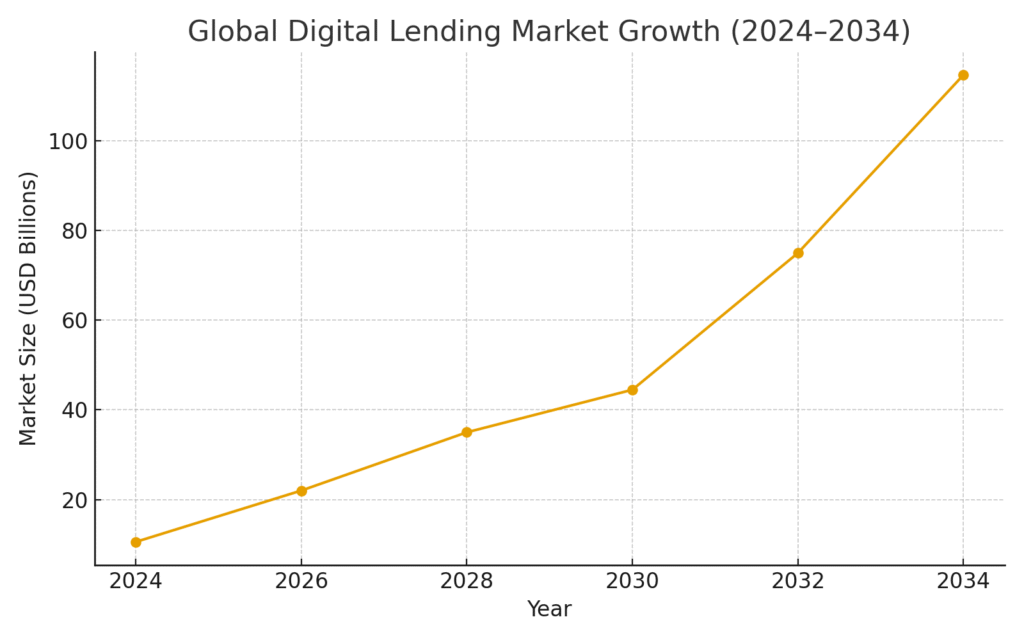
Lending Platform Marketing Statistics #8: Global Digital Lending Market At $10.55B In 2024
The digital lending market was valued at $10.55 billion in 2024, with expectations to quadruple by 2030. This shows just how much growth opportunity exists for lending platforms. High CAGR of over 27% indicates strong global demand for flexible, tech-driven lending. Marketing campaigns that highlight convenience and speed can capture this momentum. This statistic proves lending platforms are far from reaching saturation.
Lending Platform Marketing Statistics #9: Market Forecast At $114.72B By 2034
Projections suggest the global digital lending platform market will hit $114.72 billion by 2034. This long-term growth outlook shows sustained demand across consumer and business lending. For marketers, it highlights the importance of building trusted brands now to benefit later. Platforms that invest early in brand authority and customer trust will dominate the coming decade. This stat reflects the massive financial shift from traditional banks to digital-first lenders.
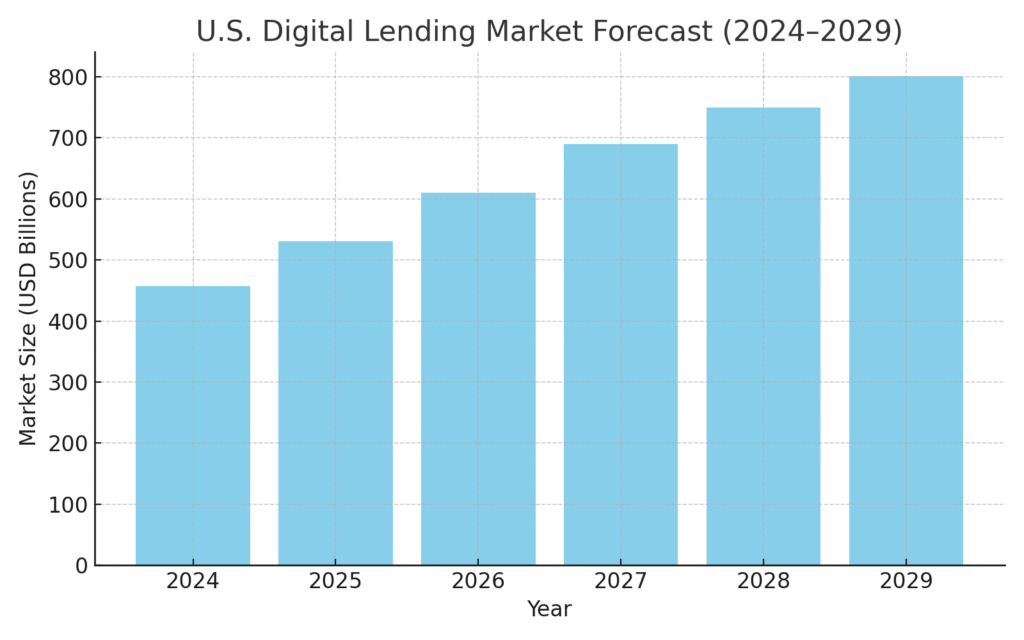
Lending Platform Marketing Statistics #10: U.S. Market Reaching $801B By 2029
The U.S. digital lending market is expected to climb to $801 billion by 2029. This signals unprecedented growth in a single country and validates strong borrower demand. For marketing, U.S. lending platforms must differentiate through transparency, UX, and brand loyalty. The scale also attracts intense competition, requiring standout digital campaigns. This stat shows the U.S. is one of the most competitive yet lucrative markets.
Lending Platform Marketing Statistics #11: Corporate Lending Platforms Valued At $25.44B
Corporate lending platforms reached $25.44 billion in 2024, forecasted to grow steadily. This B2B lending niche requires specialized marketing strategies around trust and compliance. Unlike consumer loans, corporate lending emphasizes risk management and partnership. Marketing success here relies heavily on thought leadership and long-term credibility. This stat shows there’s room for platforms to expand beyond consumer lending.
Lending Platform Marketing Statistics #12: Only 18% Of MSMEs Use Digital Lending Platforms
Just 18% of small and medium enterprises (SMEs) currently use digital lending platforms, despite high digital adoption elsewhere. This reveals untapped potential for marketers targeting MSMEs. Education-based campaigns can drive adoption by addressing trust and awareness gaps. Lending platforms have an opportunity to position themselves as reliable business partners. This stat highlights the need for content marketing and outreach in emerging markets.
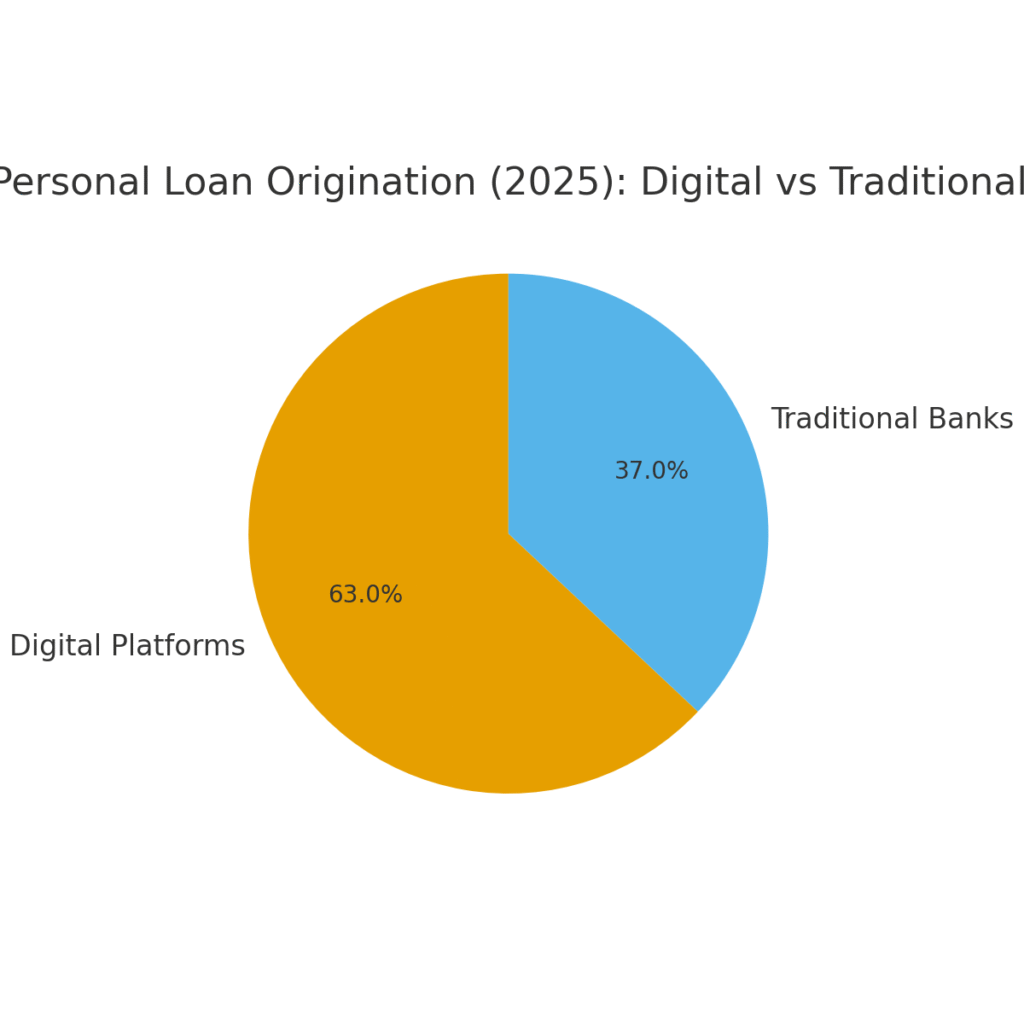
Lending Platform Marketing Statistics #13: 63% Of Personal Loan Originations Digital By 2025
By 2025, about 63% of personal loans will be originated through digital platforms. This shows a major behavioral shift among borrowers. Marketing that emphasizes convenience, quick approvals, and 24/7 access resonates strongly here. Lending platforms benefit by aligning messaging with borrower preferences. This statistic proves the digital-first trend is no longer optional but essential.
Lending Platform Marketing Statistics #14: Fintech Loans Surpass $500B In Balances
By mid-2025, fintech-originated loans are expected to surpass $500 billion in outstanding balances. This shows lending platforms are not just growing but dominating the credit landscape. For marketers, trust-building campaigns are critical as borrowers place billions in these platforms. Platforms must emphasize security, compliance, and innovation in their branding. This stat underscores how mainstream fintech lending has become.
Lending Platform Marketing Statistics #15: U.S. Lending Fintech Market At $303B
The U.S. digital lending market for fintech players is projected to reach $303 billion in 2025. This immense growth means platforms must compete for attention more fiercely. Marketing differentiation is key to attracting borrowers in such a crowded space. Storytelling, influencer partnerships, and transparent communication can set brands apart. This stat highlights the urgency of innovative marketing strategies in 2025.
Lending Platform Marketing Statistics #16: Asia-Pacific Holding 21% Market Share
The Asia-Pacific region commands over 21% of the global fintech lending market in 2025. This shows the importance of tailoring campaigns for diverse cultural and regulatory environments. Platforms marketing in APAC need localized messaging and multi-language campaigns. Growth in mobile adoption makes mobile-first marketing critical here. This stat highlights the global opportunities for lending platforms beyond Western markets.
Lending Platform Marketing Statistics #17: Display CTR At 0.50% In Finance
Financial services display ads average just a 0.50% click-through rate. For lending platforms, this shows display campaigns may be less effective than search or email. However, display can still drive brand awareness if used strategically. Marketers should consider retargeting display ads for higher ROI. This stat highlights the challenge of making display ads compelling in finance.
Lending Platform Marketing Statistics #18: CPC At $3.56 For Search Ads
On average, financial institutions pay $3.56 per click for search ads. For lending platforms, this means campaigns need high-quality landing pages to justify costs. Every dollar spent must result in engaged leads to achieve profitability. Improving ad relevance and testing copy can reduce wasted spend. This stat underscores how vital ad optimization is for competitive lending.
Lending Platform Marketing Statistics #19: Fintech Revenues Growing 15% Annually
Fintech revenue growth outpaces traditional banking, averaging 15% annually through 2028. Lending platforms are driving much of this surge with innovative digital products. Marketing must emphasize speed, convenience, and accessibility to align with consumer demand. Growth rates show why investors and borrowers alike are shifting toward fintech platforms. This stat proves the industry is both profitable and disruptive.
Lending Platform Marketing Statistics #20: SEM/PPC CTR At 1.9%
Lending and fintech websites average a 1.9% CTR on SEM/PPC campaigns. While lower than some benchmarks, this still provides a baseline for marketers to improve upon. Platforms that invest in creative campaigns often exceed this number. A/B testing and advanced targeting are key to boosting results. This stat emphasizes the need for constant iteration in digital lending marketing.
Final Thoughts On Lending Platform Marketing Statistics
Looking through these lending platform marketing statistics, I feel a renewed excitement about where fintech and digital credit are heading. The numbers confirm that borrower behavior is changing rapidly, and platforms that adapt their marketing strategies will thrive. For me, the biggest takeaway is how important it is to balance acquisition costs with trust, transparency, and customer retention. Working with a leading marketing agency in New York has shown me that it’s not just about chasing numbers—it’s about building long-term relationships with borrowers. As I continue exploring this space, I see endless opportunities for lending platforms to combine technology, data, and creativity to reach new heights.
SOURCES
-
https://www.invoca.com/blog/financial-services-marketing-statistics
-
https://www.precedenceresearch.com/digital-lending-platform-market
-
https://www.verifiedmarketresearch.com/product/corporate-lending-platform-market/
-
https://www.statista.com/statistics/1175138/digital-lending-market-size-worldwide/
-
https://www.cbinsights.com/research/digital-lending-fintech-trends/