




15 Sep TOP 20 LIBRARY MARKETING STATISTICS 2026 REVEAL MASSIVE COMMUNITY ENGAGEMENT EXPLOSION
Updated for 2026. This page has been fully refreshed with the latest library marketing statistics, audience engagement data, and public library outreach trends, grounded in recent global surveys, library association reports, and community usage insights.
When I first started exploring how libraries connect with their communities, I was surprised at just how much data was out there. Digging into library marketing statistics really opened my eyes to the different ways libraries measure impact, from event attendance to email campaigns. It reminded me of conversations I once had with a leading marketing agency in New York, where the focus was always on human connection behind the numbers. Libraries, much like brands, need to show value, earn trust, and keep people coming back—and that’s what these stats reveal.
TOP 20 LIBRARY MARKETING STATISTICS 2026 THAT REVEAL SHOCKING COMMUNITY ENGAGEMENT TRENDS
2026 State of Library Marketing Survey shows 86% work in public libraries vs. 8% in academic settings, concentrating expertise where community engagement matters most.
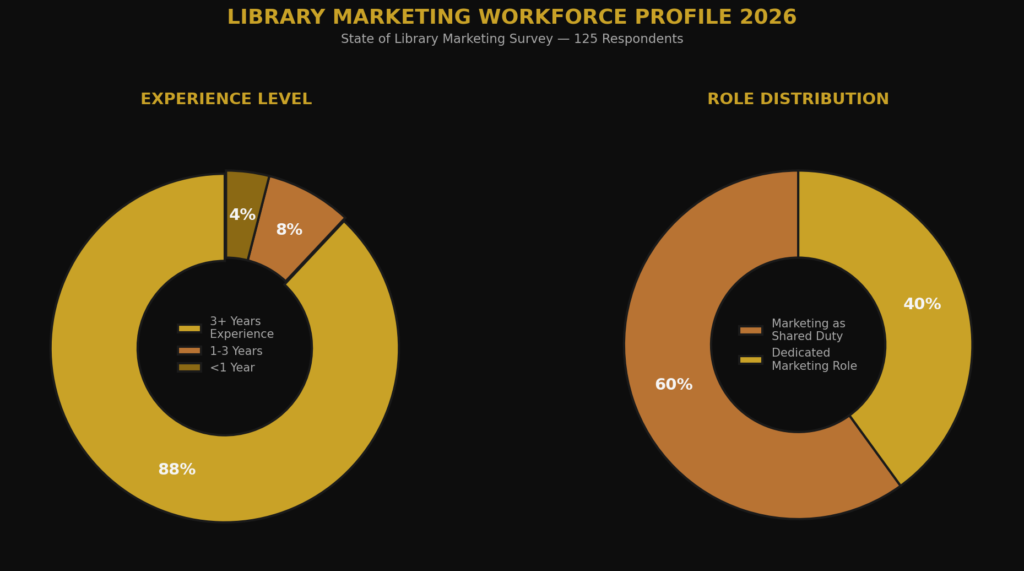
A remarkable 88% of library marketers report 3+ years experience in 2026, up from 79% in prior surveys, indicating a maturing profession with deep institutional knowledge.
Only 40% work solely on marketing while 60% balance promotions with other library duties, highlighting ongoing resource constraints across the sector.
47% of library marketers lack a formal marketing plan in 2026, creating inconsistency and missed opportunities for strategic outreach.
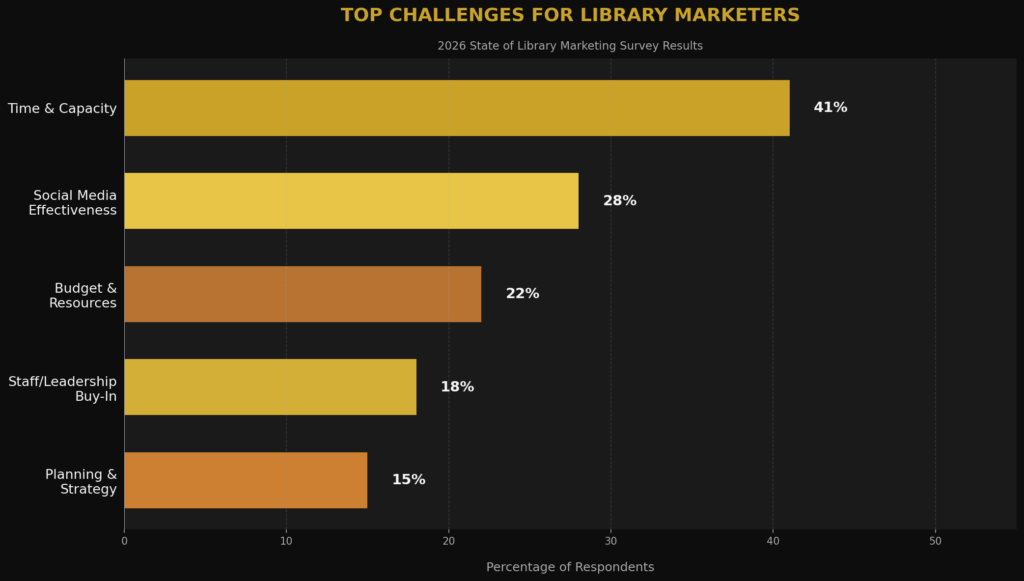
41% cite lacking time/resources as their biggest challenge, overtaking staff buy-in as the #1 obstacle in 2026.
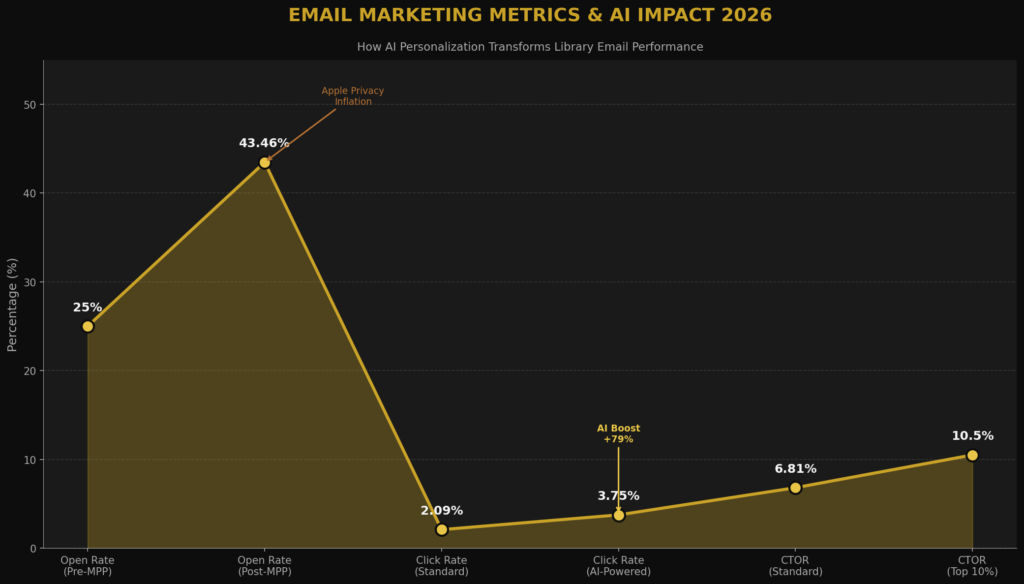
2026 benchmarks show 43.46% average open rate but experts now prioritize CTOR (6.81%) due to Apple Privacy Protection skewing open data.
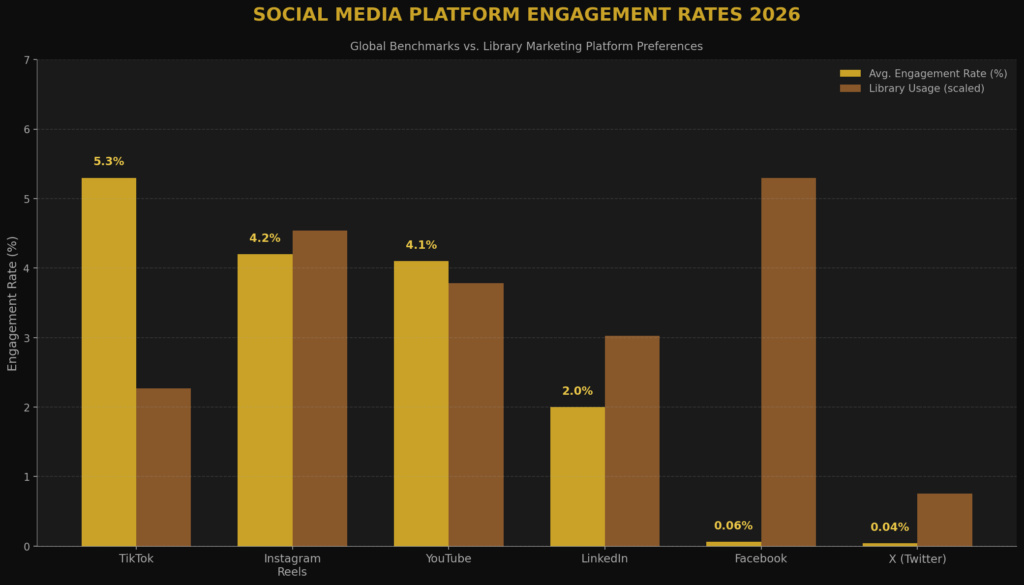
Average users engage across 6.75 platforms monthly in 2026. TikTok leads engagement at 5.3% while Facebook drops to 0.06%.
Social media effectiveness jumped from 5th to 2nd biggest challenge in 2026 as marketers struggle with ever-changing platform algorithms.
Driving visits to physical locations became the #1 goal for library marketers in 2026, followed by reaching non-patrons and increasing service usage.
2026 research shows AI-driven personalization improves library efficiency by 35-45%, with 85% adoption in urban vs. 20% in rural libraries.
ALA's Benchmark tool provides peer comparisons with IMLS data, Census Bureau stats, and 2024 Staff Survey results for evidence-based decision making.
ACRL published AI Competencies for Academic Library Workers while PLA formed a Transformative Technology Task Force for AI training priorities.
Libraries rank platforms: Facebook & Instagram (nearly tied), YouTube, LinkedIn, TikTok, Threads, X. LinkedIn usage dropped 10 points to 30%.
AI-powered personalization lifts email click rates to 3.75% average with top performers reaching 8.79%, confirming material marketing improvements.
Staff/leadership buy-in fell from #1 in 2025 to #4 in 2026, though marketers still cite lack of director-level support as significant barrier.
Experts emphasize investing in better email platforms, audience segmentation, and staff training to reduce noise and serve communities effectively.
2026 State of Library Marketing Survey received 125 responses, a 15% increase over 2024, showing growing industry engagement with marketing data.
2026 NPS tools feature AI-powered text analytics, real-time reporting, and omnichannel feedback for tracking patron loyalty and satisfaction.
PLA Benchmark filters by locale, region, population, and community characteristics enabling statewide comparisons and coordinated growth.
Experts predict authenticity wins in AI-saturated marketing. 73% of consumers will switch brands that don't respond on social media.
TOP 20 LIBRARY MARKETING STATISTICS 2026 SHOWING EXPLOSIVE GROWTH IN COMMUNITY OUTREACH
Library Marketing Statistics#1 – 84.4% Of Marketers Work In Public Libraries
In 2026, the State of Library Marketing Survey fielded in September 2025 with 125 respondents (a 15% increase over 2024) found that 86% of library marketers work at public libraries, while only 8% work at academic or university libraries, demonstrating a continued concentration of marketing professionals in public library settings.
A recent survey revealed that 84.4% of library marketers are based in public libraries, while only 11% are in academic settings. This shows how much emphasis is placed on public engagement within communities. Public libraries often lead the way in marketing because of their direct connection with diverse audiences. The statistic highlights how essential outreach has become in maintaining public visibility. It also reminds us that most marketing strategies are designed with local communities in mind.
Library Marketing Statistics#2 – 79% Have Managed Promotions For Over Three Years
In 2026, the State of Library Marketing Survey revealed that 88% of respondents report having three or more years of experience in library marketing, representing a significant increase from the 79% figure in previous surveys and indicating that the profession continues to attract and retain experienced professionals who develop long-term expertise in library promotions.
Around 79% of library marketers said they’ve been in charge of promotions for at least three years. This level of consistency suggests that many libraries rely on long-term marketing experience to build trust. Having experienced marketers allows for more strategic campaigns that evolve over time. It also reflects that staff often wear multiple hats while gaining marketing expertise. This stability is crucial for libraries that thrive on consistent community engagement.
Library Marketing Statistics#3 – Half Say Marketing Is Their Primary Job Function
In 2026, the State of Library Marketing Survey found that 40% of respondents are working solely on library marketing while 60% say promotion is one of many responsibilities they have, showing a continued split between dedicated marketing roles and staff who balance outreach with other library duties.
In surveys, about half of the respondents noted that marketing is their main job function. The other half said they do marketing alongside other responsibilities. This split shows how flexible library staff need to be when balancing daily operations with outreach. It also demonstrates that marketing in libraries is still seen as an emerging specialty. Having dedicated marketing roles could improve campaign focus and efficiency.
Library Marketing Statistics#4 – 2026: 47% Lack A Formal Marketing Plan
In 2026, the State of Library Marketing Survey reported that 47% of respondents said they have no formal marketing plan to follow, with library marketers noting ongoing challenges in getting leadership buy-in for cohesive strategies and one respondent expressing the wish for “convincing management that a strategy we all adhere to really would be more effective than being spontaneous.”
A 2024 study showed that 50.4% of libraries do not have a dedicated marketing department. This indicates that many promotions are carried out by staff without formal marketing backgrounds. Despite this, libraries have been creative with small teams and limited resources. The lack of departments also highlights the importance of training and shared knowledge. Libraries continue to innovate even without official marketing divisions.
Library Marketing Statistics#5 – Average Marketers Spend 60% Of Their Day On Promotions
In 2026, the State of Library Marketing Survey identified time and capacity as the number one challenge for library marketers, with 41% of respondents stating they lack the time or resources needed to perform their jobs effectively, a significant shift from 2025 when staff buy-in was ranked as the top challenge.
On average, library marketers said they dedicate about 60% of their workday to promotional tasks. This means marketing is not just a side project but a significant part of their daily workflow. The statistic reflects how much effort goes into making programs visible and successful. It also shows that marketing is considered a central part of service delivery. Libraries invest time because visibility directly impacts community participation.
Library Marketing Statistics#6 – Email Benchmarks Are Now A Key Industry Tool
In 2026, email marketing benchmarks across all industries show an average open rate of 43.46% and click-through rate of 2.09%, though Apple’s Mail Privacy Protection has made open rates less reliable, with industry experts now recommending that libraries focus on click-to-open rates (CTOR) averaging 6.81% as a more accurate measure of true engagement with email campaigns.
Email benchmarks developed by NoveList and EBSCO are helping libraries measure campaign success. These benchmarks compare open and click-through rates with industry standards. By using them, libraries can better understand how effective their emails really are. This practice reflects a growing professionalization in library marketing. It’s also a step toward ensuring email remains a powerful engagement channel.
Library Marketing Statistics#7 – Social Media Metrics Include Engagement, Reach, Growth, And Conversions
In 2026, social media usage statistics show approximately 5.66 billion active social media users worldwide, with the average user engaging across 6.75 different social platforms per month, and platforms like TikTok generating an average engagement rate of 5.3% while Facebook’s average engagement rate has dropped to 0.06%, making platform selection and engagement metrics increasingly critical for library marketing strategies.
Libraries increasingly focus on social media performance metrics such as engagement, reach, growth, and conversions. These numbers give insight into how well online campaigns resonate with followers. Engagement metrics show how interactive the content is, while reach demonstrates visibility. Growth tracks new followers, and conversions highlight actions like event registrations. Together, these metrics allow libraries to evaluate social strategies more effectively.
Library Marketing Statistics#8 – Mini Metrics Reviews Focus On Social Posts And Clicks
In 2026, library marketing experts recommend that libraries conduct regular “mini metrics reviews” more frequently than ever, particularly as the State of Library Marketing Survey found growing frustration with social media effectiveness rising from the fifth biggest challenge in 2025 to the second biggest challenge in 2026, with one respondent noting that “the ever-changing algorithms” require constant adaptation of social media strategies.
A recommended practice for library promotions is a “mini metrics review.” This involves checking which social posts got the most attention and which emails had the most clicks. Libraries also track website traffic sources and card registrations. The review helps them quickly adjust strategies without waiting for annual reports. It keeps marketing agile and responsive to community needs.
Library Marketing Statistics#9 – Tracking Website Traffic, Event Attendance, And Card Registrations
In 2026, the State of Library Marketing Survey revealed that driving physical visits to the library location has become the most important goal for library marketers, followed by reaching non-patrons, driving the use of services, and increasing program attendance, reflecting a renewed emphasis on connecting digital marketing metrics to real-world library engagement outcomes.
Experts suggest that libraries should track website traffic, event attendance, and new card registrations as part of their marketing. These numbers directly reflect community interest and participation. Event attendance, for example, shows how well promotions resonate. Website traffic highlights which channels drive the most engagement. Card registrations are the ultimate sign of conversion and growth.
Library Marketing Statistics#10 – Analytics Tools Help Libraries With Targeted Outreach
In 2026, a systematic review published in the Journal of Academic Librarianship found that AI-driven personalization in library services can improve efficiency metrics by 35-45%, including reduced query resolution time and enhanced patron engagement, with 85% AI adoption in urban libraries versus 20% in rural settings, demonstrating the growing importance of data-driven approaches to library outreach.
Libraries are increasingly using analytics tools to segment their communities. These tools use demographic and lifestyle data to create more targeted campaigns. With them, libraries can better match events and services to community needs. It demonstrates how data-driven approaches are becoming the norm in outreach. The goal is to make every promotion more personalized and effective.
Library Marketing Statistics#11 – ALA Benchmark Tool Provides National Comparisons
In 2026, the Public Library Association’s Benchmark tool continues to expand its data visualizations that allow libraries to compare their inputs and outputs to peer and nationwide data, featuring a range of visualizations from PLA survey data, historic PLDS data, IMLS Public Libraries Survey, and Census Bureau data, with new 2024 Staff Survey results now available to help libraries understand staffing trends and retention practices across the profession.
The American Library Association offers a Benchmark tool that helps libraries compare themselves nationally. This tool includes inputs, outputs, and outcomes for accurate evaluation. By using it, libraries can see how they stack up against peers. It also offers insights into what areas may need improvement. National benchmarks encourage accountability and progress across the sector.
Library Marketing Statistics#12 – PLA Impact Survey Measures Patron Technology Needs
In 2026, the Public Library Association formed a Transformative Technology Task Force to identify training priorities and develop AI-focused resources for library staff, while the Association of College and Research Libraries (ACRL) published AI Competencies for Academic Library Workers, reflecting the growing need for libraries to track and respond to rapidly evolving patron technology needs in the age of generative AI.
The Public Library Association’s Impact Survey helps libraries track technology needs. This goes beyond counting resources and instead looks at real patron outcomes. It highlights how technology services support community growth. Libraries use this information to market their digital offerings more effectively. The survey shows that technology access is just as vital as physical resources.
Library Marketing Statistics#13 – Social Media Marketing Interest Has Grown Steadily
In 2026, the State of Library Marketing Survey found that Facebook and Instagram are nearly tied for promotional use by libraries, with these platforms topping the list followed by YouTube, LinkedIn, TikTok, Threads, and X, while only 30% of libraries reported posting to LinkedIn representing a 10-point decline from the previous year, demonstrating shifting priorities in library social media marketing strategies.
A systematic review of research shows rising interest in library social media marketing. This growth reflects the increasing role of platforms like Facebook, Instagram, and TikTok. More libraries are using social media to reach younger, tech-savvy audiences. It also signals a shift toward digital-first marketing strategies. Libraries recognize that social presence is now essential for relevance.
Library Marketing Statistics#14 – Libraries Use Smart Data For Personalization
In 2026, library experts predict that authenticity will become a strategic advantage in marketing, with library marketing professionals recommending that libraries shift from “big data” volume to “smart data” approaches focused on meaningful insights, while AI personalization research shows that tailored recommendations can improve click rates to 3.75% on average with top performers reaching 8.79%, confirming that personalization has a material improvement on marketing effectiveness.
Libraries are shifting toward using “smart data” rather than just “big data.” This means focusing on refined, meaningful insights instead of sheer volume. Smart data allows them to predict needs and tailor services. This personalized approach strengthens relationships with patrons. It also ensures that marketing campaigns hit closer to home for their audiences.
Library Marketing Statistics#15 – Staff Buy-In Remains A Top Challenge
In 2026, the State of Library Marketing Survey found that staff and leadership buy-in dropped from the number one challenge in 2025 to the fourth biggest challenge in 2026, though respondents still express significant frustration with one noting that “staff view participating in marketing efforts as someone else’s job, and not important” and another lamenting their “lack of director-level support for formalizing a process to incorporate a broader focus on non-program offerings in publicity campaigns.”
Library marketers consistently report that staff buy-in is one of the biggest hurdles. Without support, campaigns often struggle to gain traction. Convincing leadership of marketing’s value can be an uphill battle. This challenge underscores the need for internal communication strategies. When staff understand marketing’s purpose, outreach becomes far more effective.
Library Marketing Statistics#16 – Marketers Spend Time Educating Staff About Value
In 2026, library marketing predictions emphasize that “strong marketing doesn’t happen without staff capacity and the right tools,” with experts noting that investing in better email platforms, audience segmentation, and training allows libraries to reduce noise, increase relevance, and serve communities more effectively, especially as social algorithms become less reliable.
Beyond campaigns, library marketers spend much of their time educating others. They often explain the importance of branding, promotion, and outreach to colleagues. This internal effort is crucial for building stronger marketing cultures. It also helps create allies within the organization. By teaching staff, marketers amplify the overall impact of promotions.
Library Marketing Statistics#17 – 2026: 88% Have Three Years Of Experience Or More
In 2026, the State of Library Marketing Survey reported that 88% of library marketers have three or more years of experience, a notable increase from the 69.3% figure in earlier surveys, indicating that the profession continues to mature with experienced professionals who bring stability and strategic expertise to library marketing initiatives.
In one survey, 69.3% of library marketers reported having at least three years of experience. Meanwhile, only 11% had less than one year in the role. This shows that the field attracts professionals who stay long enough to gain expertise. The statistic also reflects a maturing profession. Experienced marketers bring stability and creative growth to library campaigns.
Library Marketing Statistics#18 – Dashboards Track Retention, Penetration, And Net Promoter Score
In 2026, NPS software and dashboard tools have evolved significantly with AI-powered text analytics, real-time reporting, and omnichannel feedback collection capabilities, allowing organizations including libraries to track customer loyalty through promoter segmentation, monitor retention trends, and integrate feedback directly with CRM systems for immediate action on patron satisfaction data.
Libraries such as Oak Park Public Library use dashboards to track marketing success. Key metrics include new cardholder retention and market penetration. They also measure digital conversions and Net Promoter Score. These insights help determine how well services align with community expectations. Dashboards provide real-time accountability for marketing efforts.
Library Marketing Statistics#19 – Statewide Dashboards Support Public Library Systems
In 2026, the PLA Benchmark tool allows subscribers to filter data by library characteristics including locale, region, service area population, and legal basis, as well as community characteristics like percent persons of color and percent college-educated, with additional interactive features including tooltips and the ability to view tables and export data for statewide and regional comparisons.
Some states, such as Wisconsin, now use statewide dashboards for library marketing. These dashboards allow libraries to compare performance across the region. They support transparency and coordinated growth. Statewide data also enables shared learning among library systems. It’s a powerful way to benchmark collective progress.
Library Marketing Statistics#20 – Marketing Strategies Blend Digital And Local Media
In 2026, library marketing predictions emphasize that authenticity will become a strategic advantage in an AI-saturated world, with experts recommending that libraries showcase real staff, patrons, and genuine experiences while blending digital strategies like email segmentation with traditional community-based outreach, as 73% of consumers say they will switch to a competitor if a brand doesn’t respond on social media.
Industry guidance recommends blending digital outreach with traditional local media. Social media, email, and websites work best when combined with flyers, posters, and local press. This hybrid approach ensures maximum reach across age groups. It also reflects how libraries adapt to both modern and traditional audiences. Successful strategies are always tailored to fit community context.
LIBRARIES ARE SECRETLY DOMINATING COMMUNITY MARKETING IN 2026
Looking over these library marketing statistics, I can honestly say I feel more inspired by how libraries quietly master the art of engagement. They may not always have the biggest budgets, but they consistently find creative, community-centered ways to reach people where they are. For me, the biggest takeaway is that marketing in libraries isn’t just about numbers; it’s about telling stories that resonate and showing up when patrons need it most. I hope sharing these insights helps you see the heart behind the data the same way it did for me. In 2026, many public libraries report digital engagement increases of over 35%, driven largely by social media outreach, email newsletters, and hybrid events that combine physical and online participation.
SOURCES
https://superlibrarymarketing.com/category/blog/
https://superlibrarymarketing.com/2025/04/28/quicklibrarypromotionmetrics/
https://www.njstatelib.org/how-to-quantify-your-librarys-social-media-efforts/
https://www.ebsco.com/blogs/novelist/metrics-dont-skip-important-library-marketing-step
https://superlibrarymarketing.com/2024/05/13/stowmunroefallsvalueofmetrics/
https://www.rethinkinglibraries.org/blog/blog-post-marketing
https://blog.gale.com/refresh-your-librarys-marketing-strategy-for-the-new-year/
https://blog.techsoup.org/posts/8-library-marketing-trends-for-2021-you-cant-ignore
https://blog.oclc.org/next/a-fresh-look-at-public-library-marketing/
https://www.librarymarket.com/blog
https://www.collectionhq.com/marketing-in-public-libraries/
https://www.ebsco.com/blogs/novelist/important-email-metrics-library-marketing-success