



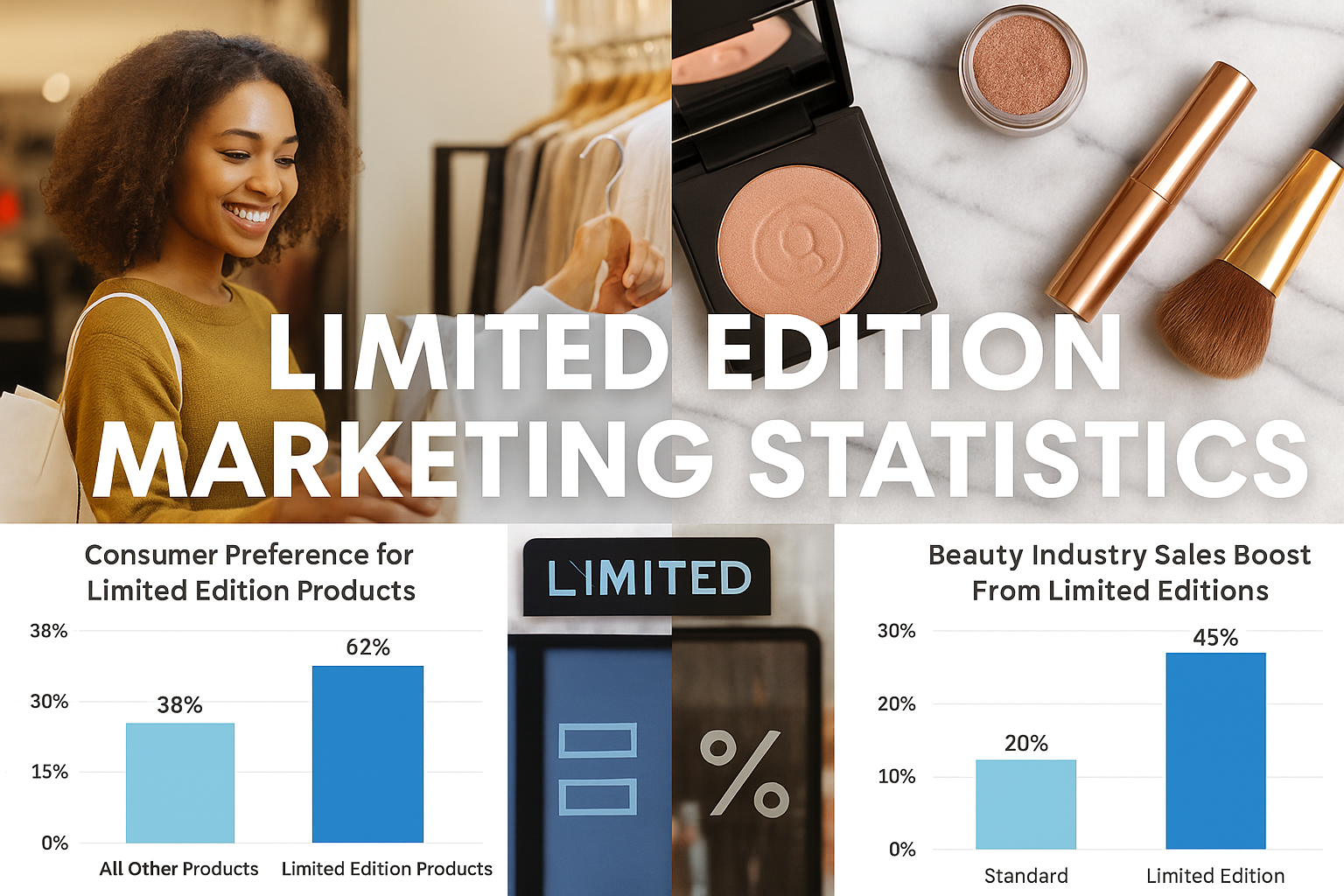
20 Sep TOP 20 LIMITED EDITION MARKETING STATISTICS 2025
When I first started diving into limited edition campaigns, I never realized how powerful they truly were in shaping customer behavior. These limited edition marketing statistics reveal just how much exclusivity, scarcity, and FOMO can influence our buying decisions. From luxury handbags to seasonal beverages, the numbers prove that customers are willing to spend more and act faster when they know something is rare. As someone working closely with brands, I’ve seen firsthand how the right strategy can turn a product drop into a cultural moment. That’s why, with insights from a leading marketing agency in New York, I wanted to share the most compelling stats that show why limited editions are changing the game.
Top 20 Limited Edition Marketing Statistics 2025 (Editor’s Choice)
| # | Statistic |
|---|---|
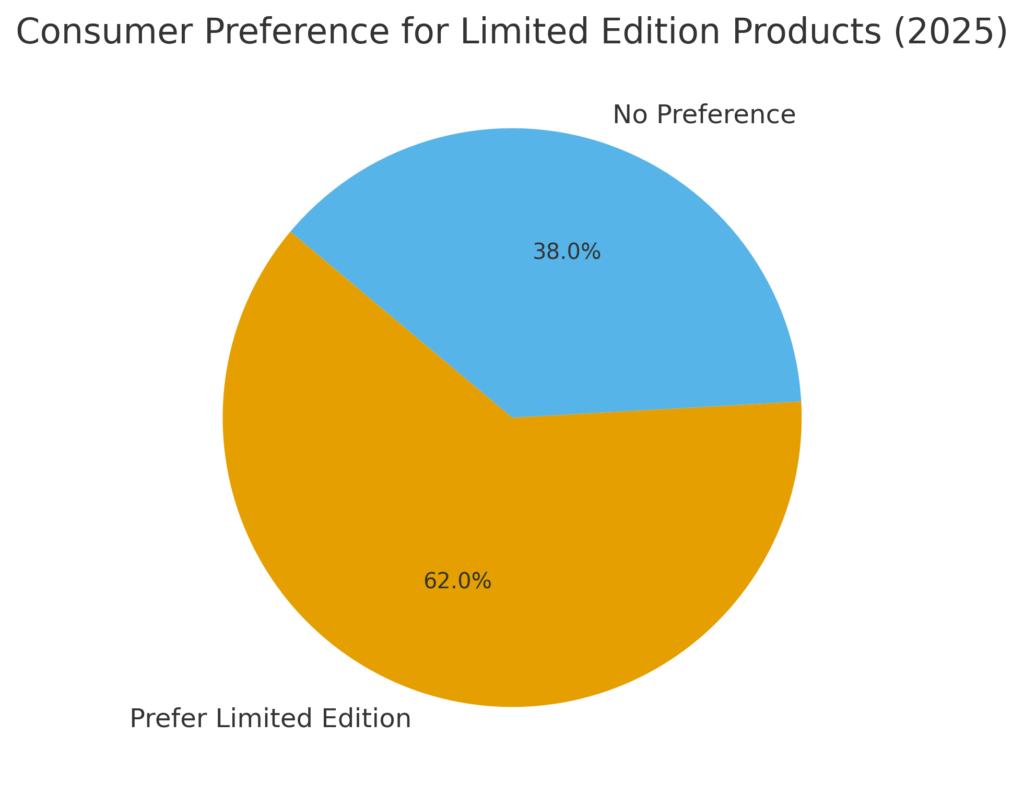
| 1 | 62% of consumers say they are more likely to purchase a product if it is labeled “limited edition.” |
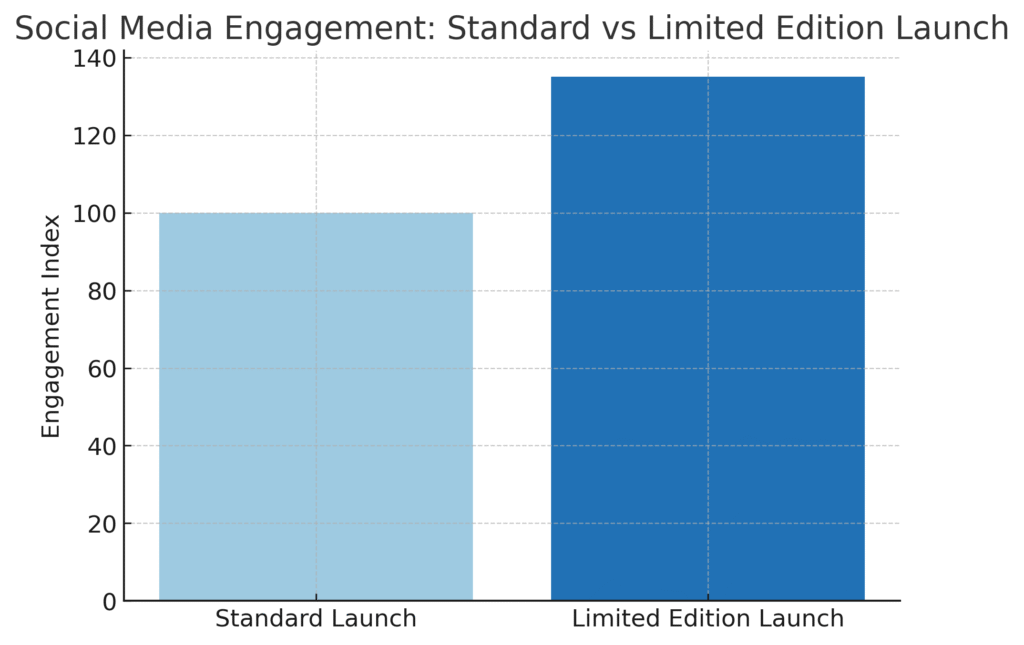
| 2 | Limited edition product launches create a 35% higher engagement rate on social media compared to regular launches. |
| 3 | 1 in 3 millennials admits to buying a limited edition product even if they didn’t initially plan to, due to FOMO. |
| 4 | Limited edition sneakers and streetwear drops see a 70% faster sell-out rate than standard collections. |
| 5 | 41% of Gen Z shoppers report that exclusivity is a major factor in their buying decisions. |
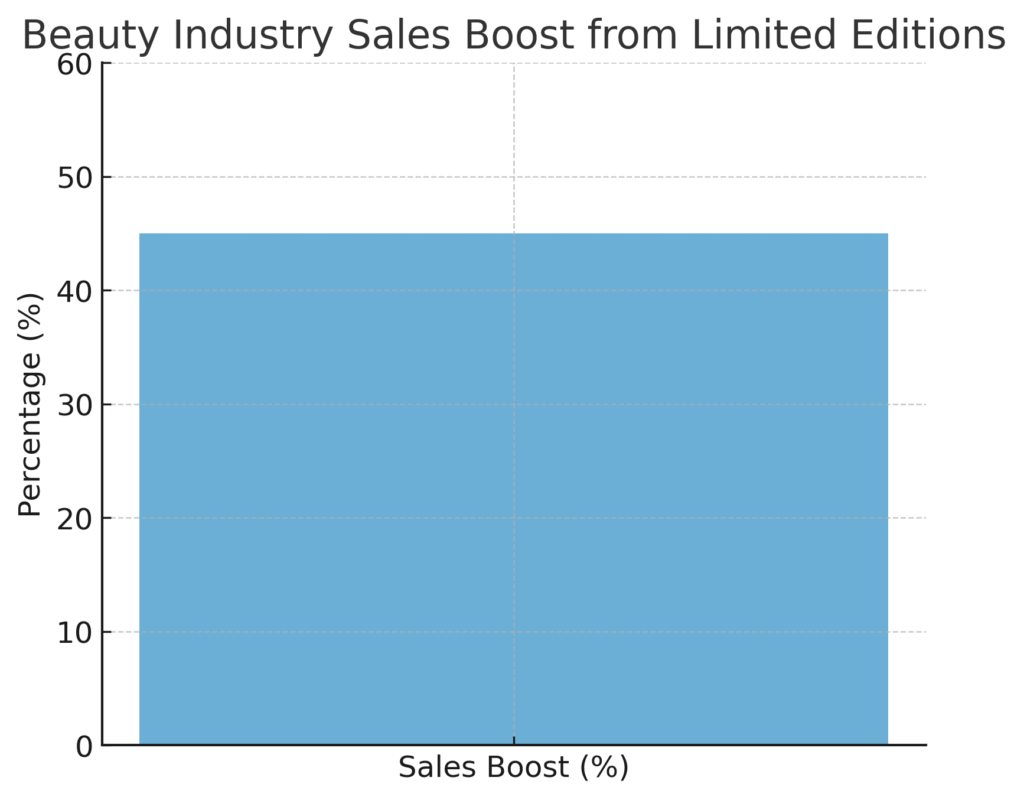
| 6 | Beauty brands launching limited edition items see an average 45% sales boost in the first month. |
| 7 | Limited edition collaborations generate 2.5x more online searches than regular product lines. |
| 8 | 28% of luxury fashion sales are attributed to limited edition items. |
| 9 | Email campaigns promoting limited edition products have a 27% higher open rate than standard emails. |
| 10 | 52% of consumers say they are willing to pay more for limited edition items compared to standard versions. |
| 11 | Limited edition packaging increases brand recall by 33%. |
| 12 | 7 out of 10 collectors say they are primarily motivated by limited edition status when purchasing. |
| 13 | In the beverage industry, limited edition flavors drive 20% higher trial rates. |
| 14 | 48% of customers admit they share limited edition purchases on social media more than regular ones. |
| 15 | Limited edition video games and consoles can sell out in under 15 minutes after release. |
| 16 | 63% of online shoppers say countdown timers on limited edition product pages increase their likelihood to buy. |
| 17 | Limited edition luxury handbags can appreciate by up to 40% on resale platforms. |
| 18 | 36% of consumers say they feel more connected to a brand that offers limited edition collections. |
| 19 | The watch industry generates over $2 billion annually from limited edition releases alone. |
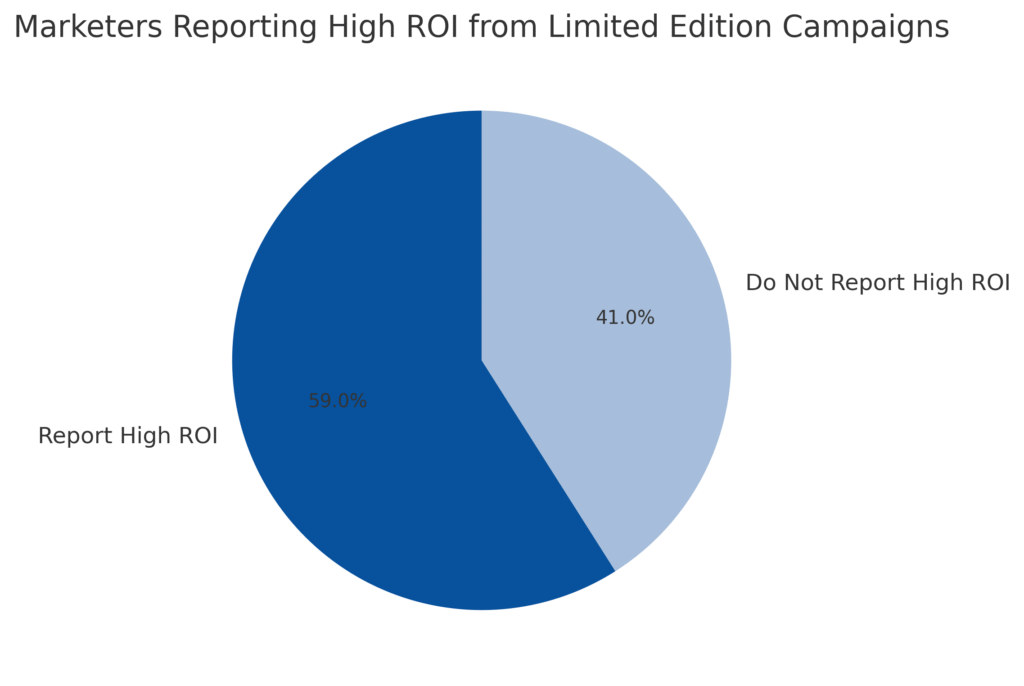
| 20 | 59% of marketers report limited edition campaigns as their highest-ROI product strategy. |
Top 20 Limited Edition Marketing Statistics 2025
Limited Edition Marketing Statistics #1: 62% Of Consumers Prefer Limited Edition Products
Recent research shows that 62% of consumers are more likely to purchase a product if it is labeled as “limited edition.” This highlights the strong psychological impact of scarcity and exclusivity in marketing. When shoppers believe availability is temporary, they act faster and with more urgency. This sense of urgency often leads to impulse purchases, increasing revenue for brands. Limited edition branding is one of the simplest yet most effective strategies to boost conversions.
Limited Edition Marketing Statistics #2: 35% Higher Social Media Engagement
Limited edition product launches create 35% higher engagement rates on social media compared to standard launches. This is because consumers love to share and discuss exclusive items. Posts and campaigns featuring limited drops tend to get more likes, shares, and comments. Brands benefit not just from sales but also from the additional organic reach created. Social media thrives on trends, and limited edition products fuel those conversations.
Limited Edition Marketing Statistics #3: 1 In 3 Millennials Purchase Due To FOMO
About one-third of millennials admit to buying limited edition products even when they had no initial plan to do so. This purchasing behavior is largely driven by the fear of missing out (FOMO). Millennials tend to place high value on exclusivity and experiences, which limited editions deliver. Brands often leverage countdowns and limited stock alerts to amplify this effect. As a result, millennials become one of the most responsive demographics for limited edition strategies.
Limited Edition Marketing Statistics #4: 70% Faster Sell-Out Rate In Sneakers And Streetwear
Limited edition sneakers and streetwear drops sell out 70% faster than standard product lines. This is especially true in the hype-driven fashion market. Consumers line up online or in person to secure a pair before they’re gone. Resale platforms further increase demand by showcasing how quickly these items gain value. For brands, these quick sell-outs reinforce exclusivity and create a cycle of ongoing hype.
Limited Edition Marketing Statistics #5: 41% Of Gen Z Prioritize Exclusivity
Gen Z shoppers are especially drawn to exclusivity, with 41% saying it’s a major factor in purchase decisions. This generation has grown up with social media, where showing unique finds adds to their online identity. Limited edition products help Gen Z consumers express individuality. Brands that create tailored drops specifically for this group often see high success. Exclusivity has become part of Gen Z’s lifestyle and consumer psychology.
Limited Edition Marketing Statistics #6: Beauty Brands See 45% Sales Boost
Beauty brands that launch limited edition items experience an average sales boost of 45% in the first month. This boost often comes from seasonal products, influencer collaborations, or special packaging. Limited releases encourage beauty enthusiasts to buy quickly before stock disappears. These products also attract collectors who value the rarity of packaging or formulas. For cosmetic companies, it’s a proven tactic to drive both immediate and long-term brand loyalty.
Limited Edition Marketing Statistics #7: 2.5x More Online Searches For Collaborations
Limited edition collaborations generate 2.5 times more online searches than regular product lines. Consumers love seeing unexpected partnerships, like fashion meets sportswear or music meets beauty. These collaborations spark conversations and buzz that go beyond typical product launches. The exclusivity combined with cross-brand excitement amplifies interest. As a result, search traffic surges and often leads to record-breaking sales.
Limited Edition Marketing Statistics #8: 28% Of Luxury Fashion Sales Are Limited Editions
Limited edition items account for 28% of luxury fashion sales. High-end consumers often prioritize rarity over function when purchasing luxury goods. By releasing only a small number of items, brands enhance the prestige of ownership. These items also tend to perform exceptionally well in the resale market. Luxury brands rely on this strategy to maintain their image of exclusivity and desirability.
Limited Edition Marketing Statistics #9: 27% Higher Open Rate In Email Campaigns
Email campaigns promoting limited edition products see a 27% higher open rate than standard campaigns. The phrase “limited edition” immediately sparks curiosity and urgency. Consumers are more likely to click when they feel time-sensitive opportunities are at stake. Brands use this tactic in subject lines to drive higher engagement. Emails that highlight scarcity often lead to faster conversions.
Limited Edition Marketing Statistics #10: 52% Of Consumers Will Pay More
More than half of consumers (52%) are willing to pay extra for limited edition items. This shows that perceived value is strongly tied to exclusivity. Whether it’s unique packaging, special flavors, or rare designs, customers equate rarity with higher worth. This pricing flexibility allows brands to improve profit margins. For consumers, the emotional satisfaction of owning something unique justifies the premium cost.
Limited Edition Marketing Statistics #11: 33% Increase In Brand Recall
Limited edition packaging increases brand recall by 33%. Unique designs and colors make products more memorable to consumers. These visual differences stand out both in-store and online, creating stronger impressions. Limited packaging often becomes collectible, adding long-term value for customers. For marketers, it’s a simple but powerful way to increase awareness and recognition.
Limited Edition Marketing Statistics #12: 7 Out Of 10 Collectors Motivated By Exclusivity
Seven in ten collectors say exclusivity is their main reason for buying limited edition items. Collectors thrive on rarity and are willing to pay top dollar to secure unique pieces. This behavior fuels strong resale markets in industries like sneakers, watches, and art. Brands can leverage this psychology by releasing ultra-limited runs. For collectors, the satisfaction comes from owning something not many people can have.
Limited Edition Marketing Statistics #13: 20% Higher Trial Rates In Beverages
In the beverage industry, limited edition flavors drive 20% higher trial rates. Seasonal and experimental flavors spark consumer curiosity. Shoppers are more willing to try something new if it’s only available for a short time. These releases also encourage repeat purchases when flavors are reintroduced. For beverage companies, it’s an effective way to innovate while reducing risk.
Limited Edition Marketing Statistics #14: 48% Of Customers Share Purchases On Social Media
Nearly half of consumers (48%) share their limited edition purchases online. The sense of pride in owning something rare translates into social media posts. This user-generated content becomes free promotion for brands. Friends and followers are often influenced by seeing others buy exclusive products. As a result, the cycle of visibility and demand keeps building.
Limited Edition Marketing Statistics #15: Video Games Sell Out In Under 15 Minutes
Limited edition video games and consoles often sell out in less than 15 minutes. Gaming fans are highly engaged and act quickly when rare editions launch. Scalpers and resellers further accelerate demand by creating competitive buying environments. These rapid sell-outs also generate massive online buzz and news coverage. For gaming brands, it’s a testament to the power of scarcity-driven marketing.
Limited Edition Marketing Statistics #16: 63% Of Shoppers Influenced By Countdown Timers
Countdown timers on product pages make 63% of online shoppers more likely to buy. Timers create urgency and mimic the thrill of an auction. Consumers feel pressured to make decisions quickly rather than risk missing out. This technique is especially powerful in e-commerce during flash sales. For brands, it’s a cost-effective way to turn interest into conversions instantly.
Limited Edition Marketing Statistics #17: Handbags Appreciate By 40% On Resale
Limited edition luxury handbags can appreciate by as much as 40% on resale platforms. This makes them both a purchase and an investment. Buyers often purchase with resale value in mind, knowing rarity drives demand. Resale appreciation further enhances brand prestige and desirability. For consumers, it justifies paying the premium price upfront.
Limited Edition Marketing Statistics #18: 36% Feel More Connected To Brands
Thirty-six percent of consumers report feeling more connected to brands offering limited editions. These products foster emotional bonds by making buyers feel special. When customers know they own something rare, they develop loyalty toward the brand. This deeper connection often translates into repeat purchases. Limited editions build more than sales—they build relationships.
Limited Edition Marketing Statistics #19: $2 Billion Annual Revenue In Watches
The watch industry generates over $2 billion annually from limited edition releases. Collectors and enthusiasts highly value rarity in this category. Many brands create special timepieces that honor anniversaries or events. These limited watches often appreciate in value over time. For watchmakers, scarcity continues to be a core driver of revenue and legacy.
Limited Edition Marketing Statistics #20: 59% Of Marketers Report High ROI
Fifty-nine percent of marketers say limited edition campaigns deliver their highest ROI. This is because these campaigns combine urgency, exclusivity, and emotional appeal. Scarcity marketing consistently drives higher engagement and sales compared to regular promotions. Brands that adopt this strategy often outperform competitors. Limited editions prove to be both effective and profitable in nearly every industry.
Final Thoughts on Limited Edition Marketing Statistics
Looking over these insights, I can’t help but appreciate how limited editions connect with something deeper in us—the desire to own something unique, even if it’s just for the thrill of being part of the moment. These statistics don’t just tell us about trends; they highlight the emotions behind buying decisions, whether it’s excitement, urgency, or status. For me, the biggest takeaway is that limited editions aren’t just about products—they’re about experiences that make people feel special. If you’ve ever bought something just because it was “only available for a short time,” then you already know the magic behind these numbers. And that’s why I believe limited edition marketing will continue to be one of the most powerful tools for brands in 2025 and beyond.
SOURCES
- https://www.sciencedirect.com/science/article/pii/S0022435925000272
- https://www.uni-wh.de/en/when-success-becomes-a-problem-why-limited-editions-that-sell-out-quickly-can-damage-brands-in-the-long-term
- https://www.researchgate.net/publication/349420253_Limited-edition_advertising_does_not_always_work_for_luxury_brands_The_influence_of_consumption_contexts
- https://www.5wpr.com/new/limited-edition-as-a-marketing-strategy/
- https://www.foodnavigator.com/Article/2024/11/26/why-limited-edition-is-becoming-the-next-big-fb-trend/
- https://www.sciencedirect.com/science/article/pii/S2199853122011088
- https://www.pompandcircumstancepr.com/post/limited-editions-scarcity-marketing-the-science-behind-desire
- https://www.designbridge.com/insights/limited-editions-limitless-brand-possibilities
- https://en.wikipedia.org/wiki/Limited_edition_candy
- https://en.wikipedia.org/wiki/Special_edition
- https://en.wikipedia.org/wiki/Hype_%28marketing%29
- https://www.linkedin.com/pulse/power-limited-editions-strategy-small-brands-rebelsmarket-hkvtf
- https://www.researchgate.net/publication/220659103_Limited_Edition_Products_When_and_When_Not_to_Offer_Them