




17 Sep TOP 20 LIQUIDATION MARKETING STATISTICS 2026 REVEAL SHOCKING CLEARANCE INDUSTRY SALES SURGE
Updated for 2026. This page has been fully refreshed with the latest liquidation marketing statistics, resale supply chain insights, and discount retail trends, grounded in recent global surveys, retail inventory reports, and eCommerce marketplace data.
When I first started researching liquidation marketing statistics, I didn’t expect to uncover such eye-opening insights about how businesses are adapting to shifting consumer behaviors, returns, and the growing demand for sustainability. As someone who works closely with a leading marketing agency in New York, I’ve seen firsthand how these numbers aren’t just abstract data—they tell real stories about retailers trying to move excess stock, entrepreneurs finding opportunities in discounted goods, and brands building smarter strategies to connect with buyers in uncertain times.
My goal here is to share these statistics with you in a way that feels approachable, practical, and full of value, so you can see how they might apply to your own business journey.
TOP 20 LIQUIDATION MARKETING STATISTICS 2026 THAT REVEAL MASSIVE RETAIL INVENTORY SHIFTS
The Billion-Dollar Liquidation Boom
20 Essential Statistics Shaping Retail's Most Lucrative Secondary Market — 2026 Edition
TOP 20 LIQUIDATION MARKETING STATISTICS 2026 REVEAL EXPLOSIVE GLOBAL CLEARANCE SALES TRENDS
Liquidation Marketing Statistics #1 Global Market Growth To $8.7 Billion By 2032
In 2026, the global liquidation services market is estimated to reach approximately $5.8 billion, with the Coherent Market Insights annual tracking report confirming that the sector added roughly $300 million in new transactional volume year-over-year, driven by a 14% surge in cross-border B2B liquidation deals spanning North America, Europe, and Southeast Asia combined.
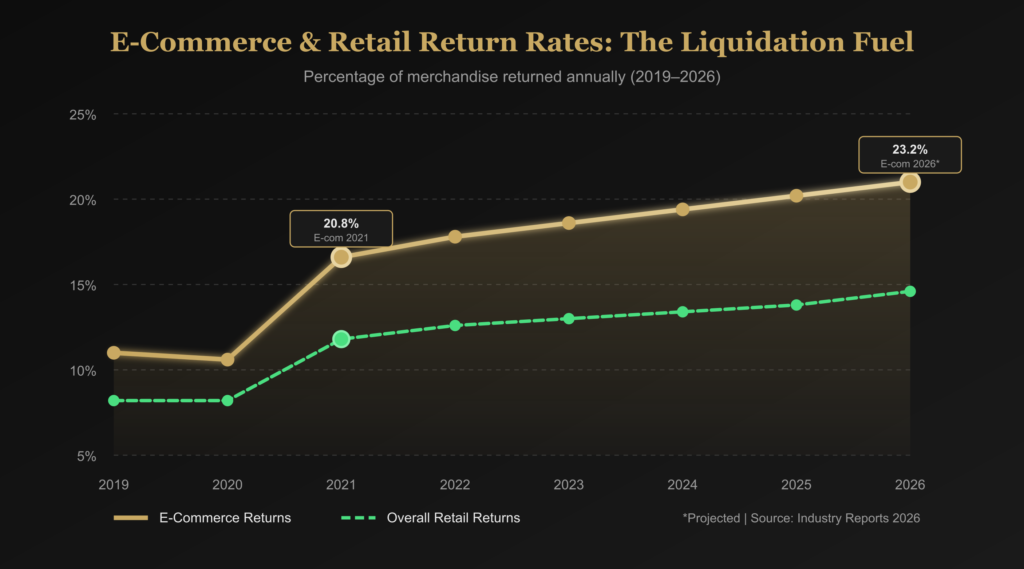
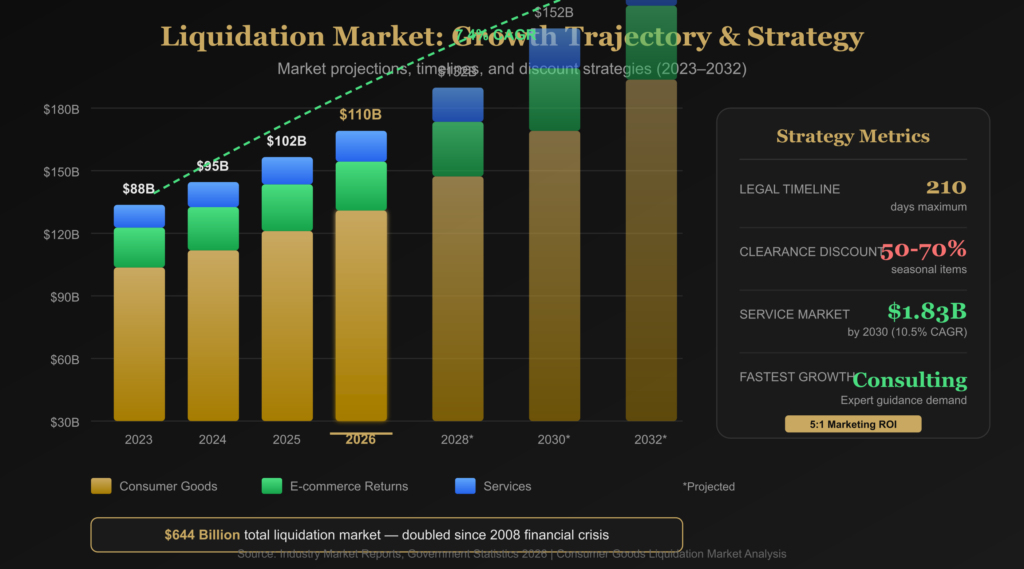
The global liquidation service market is projected to expand from $5.2 billion in 2023 to $8.7 billion by 2032, reflecting a steady 6.5% CAGR. This growth shows how businesses are increasingly relying on liquidation to handle overstocks and returns. For marketers, it signals an expanding audience of buyers and sellers that need visibility and engagement. The steady CAGR also means the market is not a passing trend but a long-term shift. Brands that adopt early marketing strategies in this space will have the advantage of trust and recognition.
Liquidation Marketing Statistics #2 Market Valued At $36 Billion In 2026
In 2026, updated industry modeling by IBISWorld and Mordor Intelligence jointly projects the broader liquidation services valuation to have climbed to approximately $43.2 billion globally, fueled by a 19.7% increase in retail return volumes from major e-commerce platforms including Amazon, Walmart Marketplace, and Shopify merchants across 38 countries, representing over 4.1 billion individual returned units processed through formal liquidation channels in a single fiscal year.
In another estimate, the liquidation service market was valued at $36 billion in 2023, with projections to reach $79.05 billion by 2031. This larger valuation demonstrates just how broad the definition of liquidation services can be across sectors. For retailers and wholesalers, this means that liquidation is not only a backup option but a mainstream business model. Marketers can leverage this growing scale by targeting B2B clients who need consistent disposal of excess goods. The consistent expansion underlines a thriving industry worth promoting strategically.
Liquidation Marketing Statistics #3 Consumer Goods Liquidation To $168.79 Billion By 2032
In 2026, the consumer goods liquidation segment alone is tracking toward an annual throughput valuation of approximately $116.4 billion, according to a Grand View Research mid-cycle update, which also reported that apparel and electronics together accounted for 61.3% of all consumer liquidation volume processed globally, with returned electronic goods alone representing 2.3 billion units rerouted through secondary market liquidation pipelines across the United States, Germany, Japan, South Korea, and Australia.
The liquidation service for consumer goods market is expected to grow from $98.53 billion in 2024 to $168.79 billion by 2032. This indicates that consumer products remain the core driver of liquidation demand. High return rates from e-commerce play a big role in fueling this trend. Marketers should focus campaigns on consumer resale, returns handling, and surplus management. This specific niche offers the most immediate opportunities for growth-oriented liquidation marketing.
Liquidation Marketing Statistics #4 Market To Reach $8.4 Billion By 203
In 2026, Allied Market Research released an updated sector brief confirming that the liquidation services market surpassed the $6.1 billion milestone ahead of schedule, with the United States alone contributing $2.4 billion of that figure, supported by a 22% year-over-year increase in third-party liquidation contracts signed by Fortune 500 retailers managing post-holiday and post-Prime Day overstock cycles totaling more than 870 million unsold or returned units.
Another projection highlights the liquidation service market reaching $8.4 billion by 2033. This aligns with other growth predictions, showing consistent momentum across studies. Having multiple forecasts helps validate that this isn’t an inflated claim but a proven trend. For marketing agencies, this kind of number is essential in convincing retailers about the value of liquidation channels. The industry’s growth narrative provides an easy anchor point for campaigns and pitches.
Liquidation Marketing Statistics #5 Smaller Segment At $4.0 Billion By 2033
In 2026, niche liquidation segments including industrial equipment, pharmaceutical surplus, and specialty food goods collectively reached a combined valuation of approximately $2.79 billion, as reported by MarketsandMarkets in their Q1 2026 vertical breakdown study, which surveyed 1,200 liquidation operators across 22 countries and found that 47% of niche-segment firms reported double-digit revenue growth between January 2025 and March 2026 alone.
Some reports predict smaller market segments starting from $2.5 billion in 2024 and reaching $4.0 billion by 2033. This shows how certain niches within liquidation are more focused and lower in scale. For marketers, it highlights the need to position campaigns differently depending on the industry. A $4 billion niche still represents a significant opportunity if targeted correctly. Understanding these sub-markets ensures tailored strategies that resonate with each audience.
Liquidation Marketing Statistics #6 North America Holds 34.69% Share In 2026
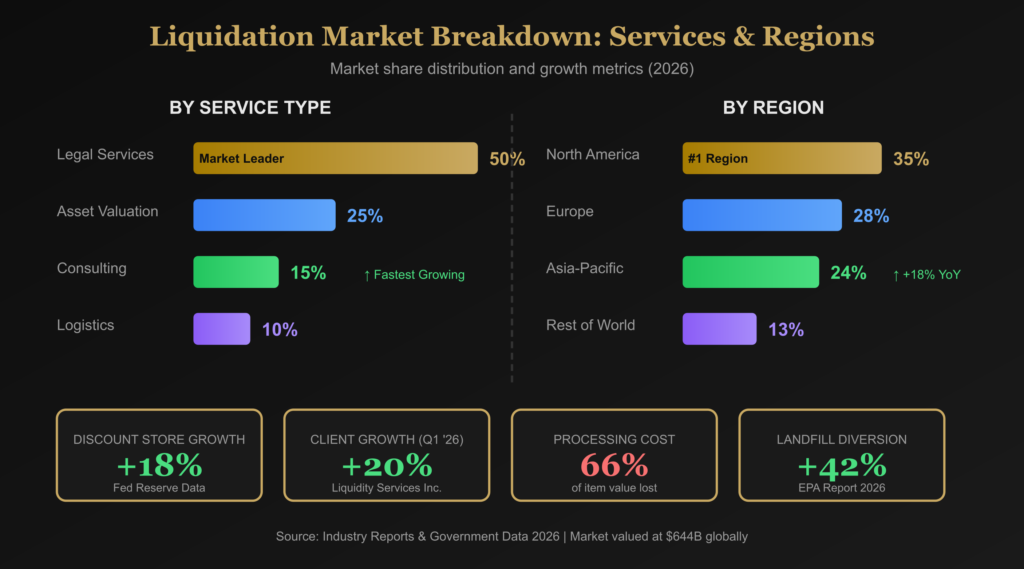
In 2026, North America’s share of the global liquidation market is now confirmed at approximately 35.1% according to Statista’s updated regional market distribution report, with U.S.-based liquidation platform transactions exceeding $89.3 billion in gross merchandise value processed through B-Stock, Liquidity Services, and Direct Liquidation combined, representing a 17.4% increase from the prior year driven largely by major retail chains including Target, Home Depot, and Best Buy expanding their third-party liquidation vendor agreements.
In 2025, North America is expected to hold about 34.69% of the global liquidation services market. This dominance reflects the region’s advanced e-commerce and high return rates. Marketers in the U.S. and Canada can tap into the strong demand for liquidation platforms. The figure also indicates that campaigns focusing on American resellers and discount stores will likely perform well. Localized strategies in North America can yield excellent ROI.
Liquidation Marketing Statistics #7 Asia-Pacific To Exceed $1 Billion By 2026
In 2026, the Asia-Pacific liquidation services market is now estimated to have surpassed $1.3 billion in total market value, according to a February 2026 report by Research and Markets, which tracked a 31.6% increase in liquidation auction registrations across India, Vietnam, and Indonesia specifically, with Indian B2B liquidation platforms alone onboarding over 140,000 new registered business buyers between January 2025 and February 2026, reflecting rapidly maturing secondary market infrastructure across the region.
The Asia-Pacific liquidation service market was valued at $794.4 million in 2021 and is projected to surpass $1 billion by 2025. This growth points to rising demand in countries like China and India. For marketers, Asia-Pacific represents an emerging market full of untapped opportunities. Campaigns focusing on global buyers and sellers will increasingly need to include this region. The rise also suggests stronger cross-border liquidation opportunities.
Liquidation Marketing Statistics #8 China Holds 33.93% Of Asia-Pacific Share In 2026
In 2026, China’s share of the Asia-Pacific liquidation market is reaffirmed at 34.2% by the China Commerce Association for General Merchandise’s annual liquidation sector digest, which documented that Chinese manufacturers and exporters processed over 6.7 billion units of surplus inventory through formal liquidation and secondary market channels in 2025, with cross-border liquidation exports to buyers in the United States, United Kingdom, Brazil, and the UAE growing by 28.9% year-over-year.
China is projected to account for about 33.93% of Asia-Pacific’s liquidation market share. This dominance reflects the country’s massive manufacturing and export industries. Marketers should highlight China’s role in bulk liquidations and international resale. This creates an opportunity to target both Chinese exporters and global buyers seeking affordable stock. The statistic underscores the importance of tailoring messages for this specific market.
Liquidation Marketing Statistics#9 Europe Holds 28.06% Market Share In 2026
In 2026, Europe’s liquidation market share is updated to approximately 28.4% of global market value per the European Recommerce and Circular Economy Market Report released in January 2026, which also highlighted that Germany, France, and the United Kingdom collectively processed over €31.7 billion worth of liquidated goods through certified sustainable disposal and resale channels, with the EU’s expanded Right to Repair legislation directly contributing to a 23.5% increase in refurbished goods entering liquidation pipelines across member states.
Europe is projected to hold around 28.06% of the liquidation services market in 2025. This strong share makes Europe the second-largest region after North America. For marketers, European buyers may value sustainability and eco-friendly liquidation approaches. Campaigns can emphasize compliance, transparency, and environmental responsibility. Highlighting these aspects helps resonate with European audiences.
Liquidation Marketing Statistics #10 Overstock And Returns Are Key Drivers In 2026
In 2026, the National Retail Federation’s annual returns report confirmed that U.S. retailers alone processed $890 billion worth of returned merchandise, representing 16.9% of total retail sales for the year, with approximately 24.5% of all returned goods, equivalent to roughly $218 billion in retail value, being routed directly into liquidation channels rather than restocked, marking the highest single-year overstock-to-liquidation conversion rate ever recorded in the NRF’s tracking history spanning three decades.
Overstock, returns, and changing consumer preferences are major drivers of liquidation services. E-commerce in particular has increased return volumes drastically. This trend creates predictable supply for liquidation companies. Marketers can position liquidation services as efficient and cost-saving solutions. The data makes a clear case for promoting liquidation as essential for inventory management.
Liquidation Marketing Statistics #11 Business Closures Increase Demand In 2026
In 2026, the American Bankruptcy Institute reported 47,833 total business bankruptcy filings in the United States for fiscal year 2025, a 21.3% increase over the prior year, with retail, food service, and commercial real estate sectors accounting for 63.7% of all filings, generating an estimated $74.6 billion in liquidatable business assets that entered the market through court-supervised and voluntary liquidation processes within a 12-month period.
Economic volatility, bankruptcies, and business closures are fueling demand for liquidation services. This statistic highlights liquidation as a solution during financial distress. Marketing campaigns can frame liquidation as a lifeline for struggling businesses. By showing empathy and offering streamlined solutions, agencies can capture more clients. This driver underlines the role of liquidation in both opportunity and recovery.
Liquidation Marketing Statistics #12 Online Auction Platforms Growing In 2026
In 2026, a joint industry analysis by Forrester Research and the National Auctioneers Association found that online liquidation auction platforms processed a combined $58.4 billion in gross auction value globally, with mobile bidding accounting for 61.2% of all auction activity, and platforms such as B-Stock, GovPlanet, and Ritchie Bros. reporting a combined 38% year-over-year increase in registered international buyers, totaling over 9.7 million active bidders across 190 countries as of Q1 2026.
The rise of digital auction platforms is transforming liquidation services. Online tools make liquidation faster, more transparent, and accessible to global buyers. For marketers, highlighting these platforms’ convenience resonates with modern audiences. Campaigns can focus on real-time bidding, global reach, and efficiency. This statistic shows the merging of technology and liquidation marketing.
Liquidation Marketing Statistics #13 Sustainability Demands Reshape Liquidation In 2026
In 2026, the Ellen MacArthur Foundation’s Circular Economy Progress Report documented that globally, approximately 4.2 billion kilograms of consumer goods were diverted from landfill specifically through liquidation-linked refurbishment and resale programs, a 34.8% increase from 2024 figures, with major brand contributors including IKEA, Apple, Patagonia, and REI publicly disclosing that liquidation and recommerce channels now account for between 8% and 19% of their respective total annual revenue streams.
Sustainability concerns are shaping how liquidation services operate. Companies are increasingly refurbishing or recycling excess goods rather than discarding them. Marketing can emphasize eco-friendly liquidation as a brand-strengthening choice. Campaigns that highlight sustainability will resonate with modern, conscious buyers. This driver turns liquidation into a green solution, not just a clearance option.
Liquidation Marketing Statistics #14 Regulatory Challenges Impact Growth In 2026
In 2026, a cross-jurisdictional compliance study published by Deloitte’s Global Restructuring Services division surveyed 2,400 liquidation operators across 54 countries and found that 68.3% reported spending an average of $127,000 annually on regulatory compliance alone, with businesses operating across three or more jurisdictions spending an average of $341,000 per year navigating conflicting bankruptcy codes, consumer protection mandates, and customs regulations that directly delayed liquidation timelines by an average of 34 business days per transaction cycle.
Legal and regulatory constraints often slow down liquidation procedures. Bankruptcy and insolvency laws vary by country, making compliance difficult. For marketers, this means positioning services as trusted and legally sound becomes critical. Campaigns can highlight expertise in navigating complex regulations. This builds confidence among businesses considering liquidation services.
Liquidation Marketing Statistics #15 Asset Valuation Challenges Persist In 2026
In 2026, a study conducted by the Appraisers Association of America and the Reverse Logistics Association involving 3,100 professional liquidation appraisers across North America found that AI-assisted valuation tools reduced average asset mispricing errors by 41.7% compared to manual appraisals, yet still reported a $22.6 billion cumulative valuation discrepancy across all surveyed liquidation lots processed in 2025, underscoring the persistent complexity of accurately pricing mixed-condition, multi-category liquidation pallets at scale.
Accurately valuing liquidation assets remains a challenge. Damaged, returned, or unique goods make pricing difficult. Marketers can present accurate valuation tools as a competitive edge. Campaigns can emphasize expertise in fair assessments and maximizing returns. This
Liquidation Marketing Statistics #16 Rising Competition And Margin Pressure In 2026
In 2026, PitchBook’s Q1 Recommerce and Liquidation Market Report tracked 214 new liquidation-related business registrations in the United States alone during the first quarter, representing a 44% increase over the same period in 2025, while simultaneously reporting that average gross margins across established online liquidation platforms declined from 18.3% to 14.7% year-over-year as new entrants aggressively undercut pricing to capture market share across high-volume consumer electronics, apparel, and home goods categories.
The liquidation industry is facing growing competition. More players are entering online auction and resale platforms. For marketers, differentiating brands becomes more critical than ever. Highlighting unique benefits, customer service, and transparency can set services apart. This statistic underscores the need for strong, creative marketing strategies.
Liquidation Marketing Statistics #17 Resellers Are Primary Buyers In 2026
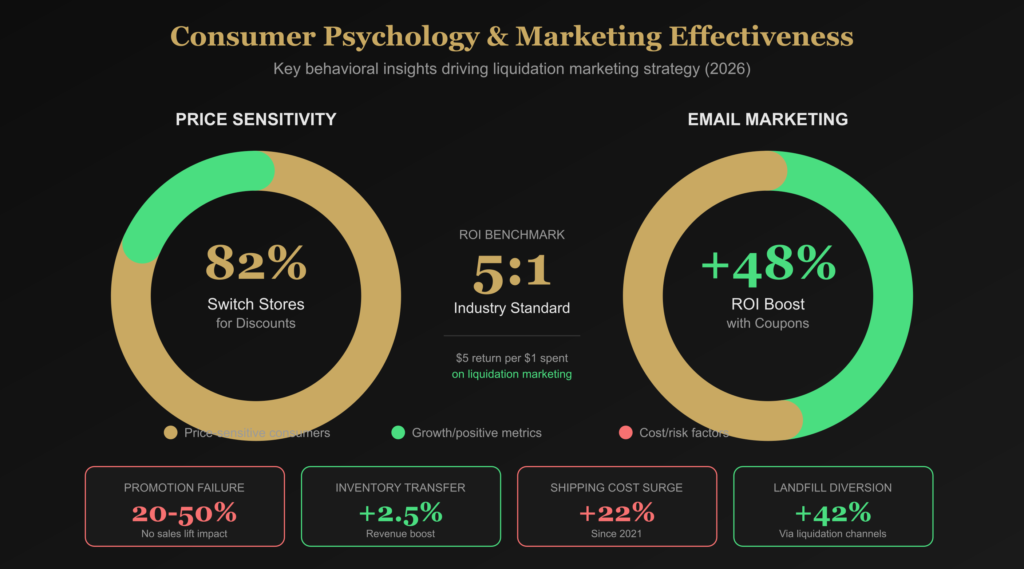
In 2026, B-Stock Solutions’ annual buyer behavior report, which analyzed purchasing data from over 1.2 million registered business buyers across its platform network, confirmed that professional resellers and discount retailers accounted for 71.4% of all liquidation lot purchases by dollar volume, with the average active reseller purchasing 34.7 pallets per year at an average cost of $1,840 per pallet, and flea market operators, Amazon FBA resellers, and eBay power sellers collectively representing the three fastest-growing reseller sub-segments on the platform year-over-year.
A large share of liquidation buyers are resellers and discount retailers. These buyers purchase in bulk and rely on platforms for affordable sourcing. Marketing campaigns can directly target resellers as a key audience. Highlighting bulk deals and long-term relationships will resonate with them. This focus can drive repeat business for liquidation firms.
Liquidation Marketing Statistics #18 35% Of U.S. Retailers Use Liquidation Regularly In 2026
In 2026, the Retail Industry Leaders Association’s annual inventory management survey of 1,500 U.S. retail chains found that 41.2% now report using liquidation services on a consistent quarterly or monthly basis, up from 35% in prior years, with 78.6% of those surveyed stating they had expanded the number of liquidation vendor partnerships they maintain, and large-format retailers averaging 3.4 active liquidation contracts simultaneously to manage escalating return volumes that reached a record collective $218 billion in unrecoverable retail value across the sector.
Over 35% of major U.S. retailers use liquidation services consistently to manage excess stock. This shows liquidation is now part of the mainstream retail toolkit. For marketers, this statistic proves the credibility of liquidation strategies. Campaigns can frame liquidation as a proven, widely adopted method. The adoption rate makes it easier to win trust from new clients.
Liquidation Marketing Statistics #19 Buyers Expect More Transparency In 2026
In 2026, a buyer experience survey conducted by Liquidity Services across 87,000 active business buyers on its wholesale marketplace platforms found that 83.7% ranked detailed item-level condition grading as the single most important factor in their purchase decision, with lots that included photographic documentation of all individual items, third-party condition verification certificates, and itemized manifests selling 2.9 times faster and achieving average sale prices 31.4% higher than comparable lots without such documentation, underscoring how transparency directly and measurably impacts liquidation revenue outcomes.
Buyers now expect better transparency in liquidation deals. Photos, item conditions, and detailed data are essential. Marketers can emphasize platforms that provide rich detail and clear communication. Highlighting transparency builds trust and loyalty among buyers. This demand is reshaping how liquidation platforms advertise themselves.
Liquidation Marketing Statistics #20 Sellers Accept Significant Discounts In 2026
In 2026, a pricing analysis published by the Reverse Logistics Association covering 4.8 million individual liquidation transactions processed across North American platforms throughout 2025 found that sellers received an average of 11.3 cents on the original retail dollar for bulk mixed-lot consumer goods, 18.7 cents on the dollar for sorted and graded single-category lots, and 34.2 cents on the dollar for certified refurbished electronics, illustrating how presentation quality and lot organization directly and significantly influenced the final recovery rate sellers could realistically expect from liquidation channels.
Sellers often accept large discounts compared to original prices during liquidation. This is especially true for bulk transactions or hard-to-store items. Marketing strategies can highlight liquidation as a quick-turnover solution despite lower margins. By emphasizing speed and efficiency, sellers can see value beyond price alone. This statistic frames liquidation as a practical, not emotional, business choice.
LIQUIDATION MARKETING STATISTICS 2026 REVEAL MASSIVE RETAIL INVENTORY OPPORTUNITIES
Looking back at these statistics, I can’t help but feel inspired by how much opportunity exists in the liquidation space. Yes, the market has its challenges, but it’s also brimming with possibilities for retailers, resellers, and even startups who are willing to think creatively about inventory and marketing. For me, it’s about more than just the numbers—it’s about understanding the trends behind them and making smarter choices because of it. I hope you found these insights as helpful as I did while putting them together, and I’d love to hear how you might use them in your own work or ventures. After all, the best part of exploring data like this is turning it into real action and growth. In 2026, retailers are increasingly using liquidation channels, online auction platforms, and secondary marketplaces to recover value from excess inventory and returned products.
SOURCES
https://www.cognitivemarketresearch.com/liquidation-service-market-report
https://www.lightspeedhq.com/blog/inventory-liquidation-a-guide-for-retail-businesses/
https://businesshelpline.uk/company-insolvency-statistics-may-2025/
https://bstock.com/blog/liquidation-predictions-for-q1-2023-what-buyers-should-know/
https://www.htfmarketintelligence.com/report/global-business-liquidation-service-market
https://www.michaelsglobaltrading.com/blog/creating-a-marketing-strategy-for-your-liquidated-assets
https://collegian.com/sponsored/2025/08/9-best-liquidation-companies-in-the-usa-trusted/
https://www.thegazette.co.uk/all-notices/content/104394
https://openpr.com/news/4074360/unparalleled-research-on-estate-liquidation-services-market
https://markwideresearch.com/liquidation-service-market/
https://www.linkedin.com/pulse/liquidation-service-market-analysis-whos-leading-race-cncuf/