




18 Sep TOP 20 LIVESTOCK MARKETING STATISTICS 2025
When I first started diving into livestock marketing statistics, I was amazed at just how much this industry shapes both global economies and the lives of everyday farmers. From market values running into trillions to the livelihoods of millions of people, the numbers tell a story far beyond just animals and trade—they reflect culture, tradition, and innovation all at once. As someone who often looks to a leading marketing agency in New York for inspiration on how data can guide smart strategies, I couldn’t help but see the parallels between digital marketing and livestock markets: both require deep insights, consistent tracking, and an understanding of human behavior. This collection of statistics isn’t just about numbers; it’s about understanding opportunities, challenges, and the future of livestock as an essential part of our world.
Top 20 Livestock Marketing Statistics 2025 (Editor’s Choice)
| Stat # | Category | Geographical Scope | Statistic |
|---|---|---|---|
| 1 | Global Market Size | Global | Livestock & meat market at USD 1.39T in 2025, projected USD 1.60T by 2034 |
| 2 | Growth Rate | Global | CAGR of 1.58% for livestock & meat (2025–2034) |
| 3 | Beef Production | Global | 61.6M tons forecast in 2025, stable vs 2024 |
| 4 | Meat Growth | Global | Meat production more than doubled since 1961 |
| 5 | Tech Monitoring | Global | Livestock monitoring market USD 4.42B in 2024, USD 8.53B by 2030 |
| 6 | Identification | Global | Livestock ID market USD 1.74B in 2025, reaching USD 2.78B by 2031 |
| 7 | Exports | Brazil | Beef exports expected at 3.8M tons in 2025 |
| 8 | Regional Growth | Asia-Pacific | APAC projected fastest growth in livestock monitoring & ID |
| 9 | Population | Pakistan | 225M animals, worth PKR 5.5 trillion (2023) |
| 10 | Milk Production | Pakistan | 5th largest producer, 67M tonnes annually |
| 11 | GDP Share | Pakistan | Contributes ~11% to GDP, 56–60% to agriculture |
| 12 | Employment | Pakistan | 30–35M people engaged in livestock rearing |
| 13 | Poultry | Pakistan | Poultry accounts for 40.7% of meat, growing 7.3% annually |
| 14 | Imports | Pakistan | Livestock imports to reach USD 36M by 2026 |
| 15 | Headcount | Pakistan | 74.4M livestock in 2021, projected 84M by 2026 |
| 16 | Tech Trend | Global | Traceability & monitoring systems growing rapidly |
| 17 | China Imports | China | Beef import growth slows to ~2% in 2025 |
| 18 | Data Issues | Pakistan | Lack of reliable census data hampers planning |
| 19 | Traditional Markets | Pakistan | Festivals & local markets dominate livestock trade |
| 20 | Global Demand | Global | Livestock demand projected USD 20B by 2026 |
Top 20 Livestock Marketing Statistics 2025
Livestock Marketing Statistics #1 Global Market Size In 2025
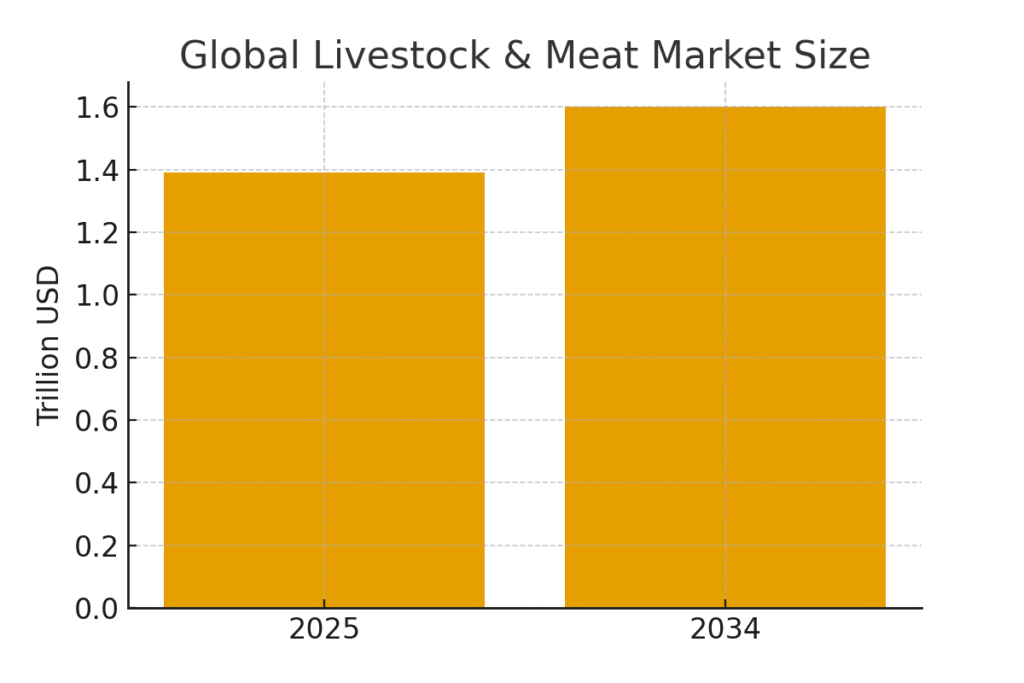
The global livestock and meat market is valued at USD 1.39 trillion in 2025, showing the immense scale of this industry. This figure highlights the critical role livestock plays in feeding the world and supporting economies. Such a huge market size reflects rising demand for protein across developing and developed nations. It also underlines how integrated livestock trade is with global food security. For marketers and policymakers, this number is a reminder of just how influential livestock is in shaping global commerce.
Livestock Marketing Statistics #2 CAGR Of 1.58 Percent
The livestock and meat market is expected to grow at a compound annual growth rate of 1.58% between 2025 and 2034. While modest, this steady growth reflects stable consumer demand for meat products worldwide. The statistic shows that livestock will remain a reliable market even as plant-based alternatives gain attention. For investors, a predictable CAGR suggests long-term sustainability in the industry. It emphasizes the importance of building marketing strategies that focus on consistent growth rather than short-term spikes.
Livestock Marketing Statistics #3 Beef Production At 61.6 Million Tons
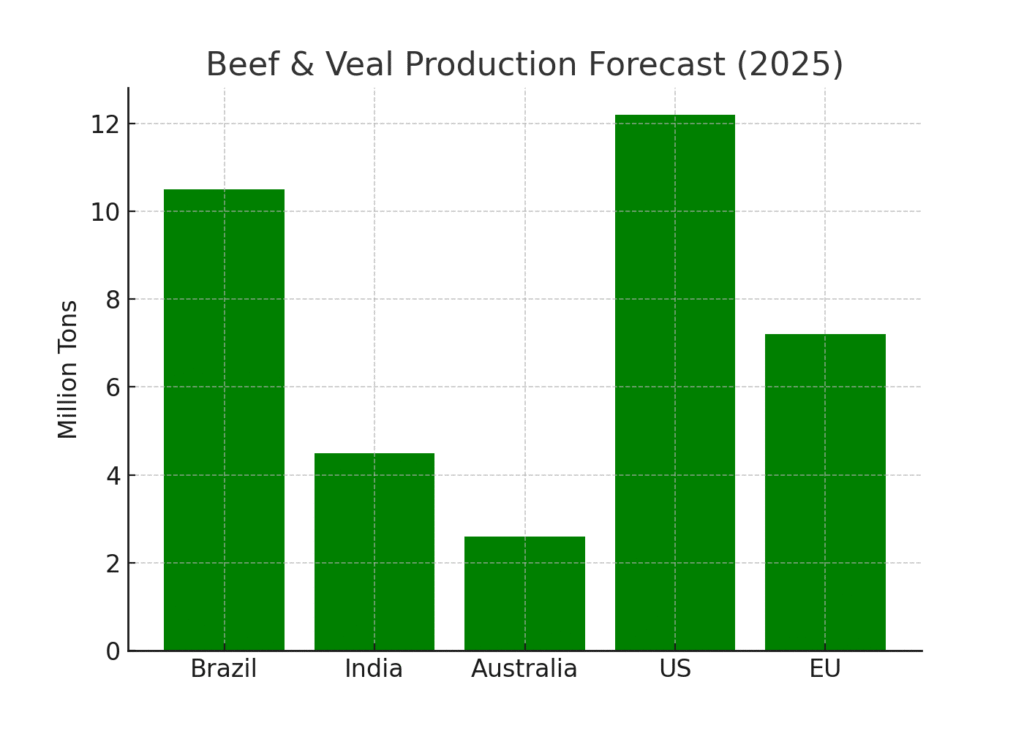
Global beef and veal production is forecast to reach 61.6 million tons in 2025. This figure indicates a balance in the market, as growth in Brazil, India, and Australia offsets declines in the US and EU. Beef continues to be one of the most consumed meats worldwide, driving strong international trade. For marketers, the challenge lies in addressing regional consumption differences. This stability also highlights beef’s resilience as a commodity despite economic fluctuations.
Livestock Marketing Statistics #4 Meat Production More Than Doubled Since 1961
Meat production has more than doubled globally since 1961, showing dramatic shifts in consumer diets. Poultry has grown especially fast, surpassing beef in many markets. This long-term trend highlights the increasing efficiency of livestock production. For marketers, it means adjusting campaigns to promote newer, faster-growing meat sectors. It also reflects global population growth and the demand for accessible protein sources.
Livestock Marketing Statistics #5 Livestock Monitoring Market At USD 4.42 Billion
The livestock monitoring market was valued at USD 4.42 billion in 2024 and is projected to reach USD 8.53 billion by 2030. This growth is driven by technology adoption such as sensors, drones, and wearable devices for animals. Farmers increasingly rely on data to monitor animal health and productivity. For marketers, this presents opportunities to connect technology with traditional farming. It shows how innovation is transforming even the oldest industries.
Livestock Marketing Statistics #6 Identification Market Valued At USD 1.74 Billion
The livestock identification market is estimated at USD 1.74 billion in 2025. By 2031, it is expected to rise to USD 2.78 billion, showing a clear need for traceability. Governments and consumers alike want transparency in food production. This statistic shows how identification is becoming not just a regulatory requirement but a marketing advantage. It emphasizes trust as a key selling point in the livestock sector.
Livestock Marketing Statistics #7 Brazil Beef Exports At 3.8 Million Tons
Brazil is forecast to export 3.8 million tons of beef in 2025. This makes Brazil a dominant force in the global meat trade. The statistic reflects the country’s competitive advantages in land, feed, and production efficiency. For global marketers, Brazil’s position is vital when planning supply chains. It also shows how international demand fuels growth in specific regions.
Livestock Marketing Statistics #8 Asia-Pacific Fastest Growth Region
Asia-Pacific is projected to see the fastest growth in livestock monitoring and identification technologies. Rapid urbanization and growing populations are fueling this demand. The region’s emerging middle class increasingly seeks safe and traceable food. Marketers targeting Asia-Pacific must emphasize technology, safety, and sustainability. This statistic highlights a massive opportunity for expansion in livestock-related innovations.
Livestock Marketing Statistics #9 Pakistan Livestock Population At 225 Million
Pakistan has an estimated livestock population of 225 million animals in 2023. This livestock is valued at over PKR 5.5 trillion, making it a cornerstone of the economy. Such figures show how central livestock is to Pakistan’s rural livelihoods. For marketers, the scale indicates both opportunities and challenges in reaching farmers. It highlights the importance of tailored communication for diverse rural communities.
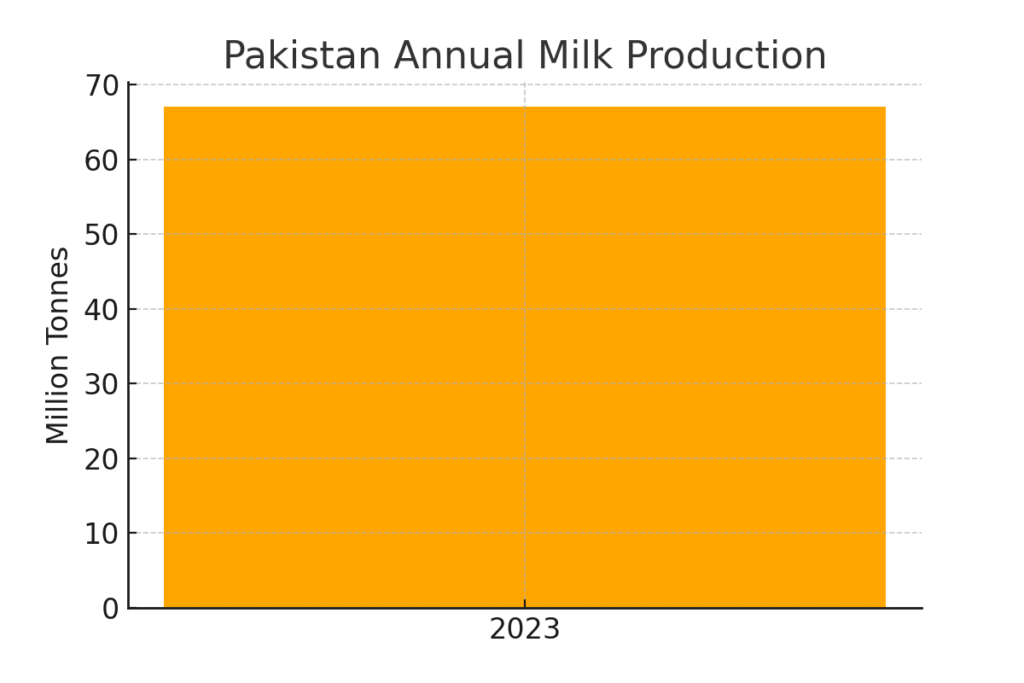
Livestock Marketing Statistics #10 Pakistan Milk Production At 67 Million Tonnes
Pakistan is the fifth-largest milk producer globally, with an annual output of 67 million tonnes. This statistic positions the country as a leader in dairy production. Milk is a staple in Pakistani diets, fueling steady domestic demand. For marketers, dairy offers opportunities in both consumer products and export markets. It also highlights the potential of modernizing dairy farming practices.
Livestock Marketing Statistics #11 Livestock Contribution To Pakistan GDP At 11 Percent
The livestock sector contributes about 11% to Pakistan’s GDP and over half of its agricultural value. This statistic highlights livestock as a backbone of the national economy. It shows how marketing in this sector affects millions of livelihoods. For policymakers, it underscores the need for supportive infrastructure and policies. Marketers must recognize the broad economic significance when crafting campaigns.
Livestock Marketing Statistics #12 Employment Of 30–35 Million People
In Pakistan, 30 to 35 million people are directly engaged in livestock rearing. This makes the sector one of the largest employers in the country. The statistic highlights the social importance of livestock beyond just economic numbers. For marketers, it means communication must consider cultural and community ties. It shows how deeply livestock is integrated into daily life.
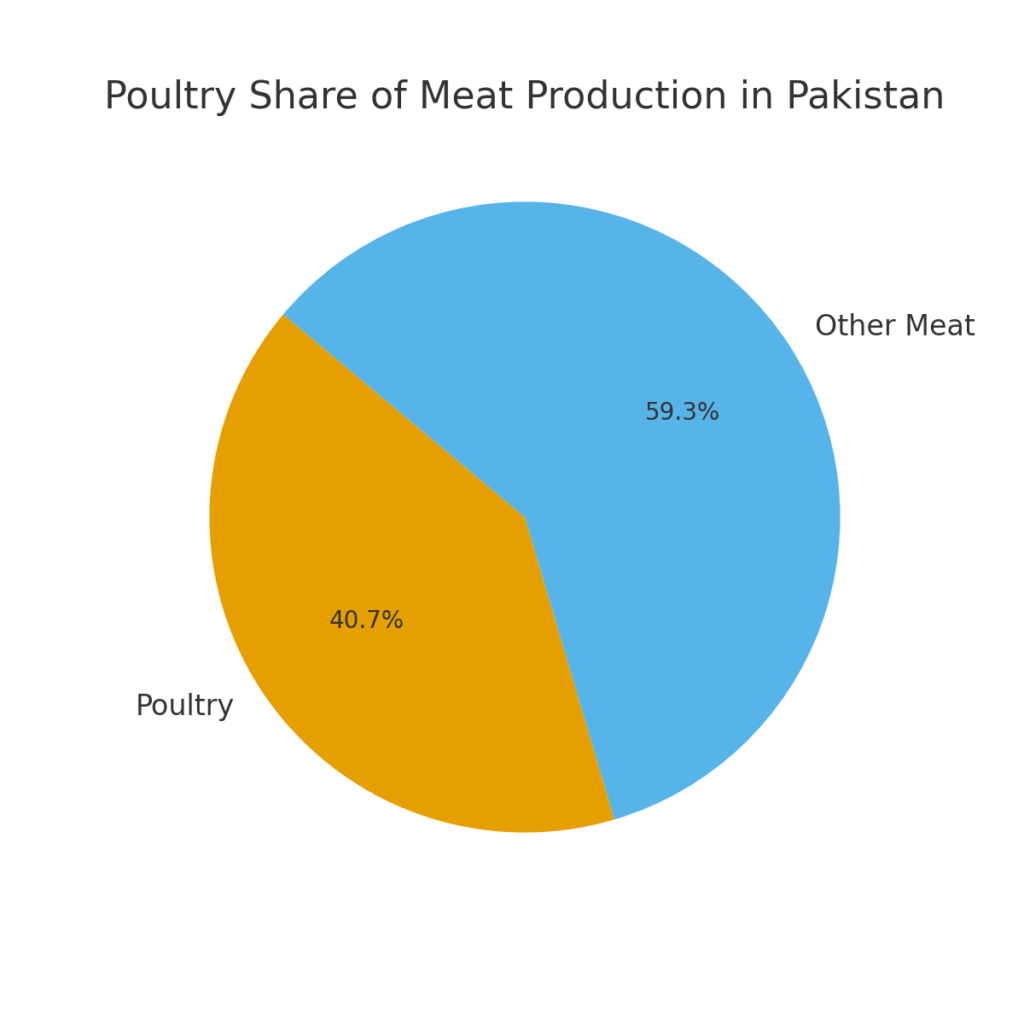
Livestock Marketing Statistics #13 Poultry Share Of 40.7 Percent
Poultry accounts for 40.7% of Pakistan’s meat production. This sector is growing at an average annual rate of 7.3%. Poultry offers quick returns for farmers compared to large livestock. For marketers, it is a fast-moving and high-demand product. The statistic reflects a shift in consumer preference toward affordable protein.
Livestock Marketing Statistics #14 Imports To Reach USD 36 Million
Pakistan’s livestock imports are forecast to reach USD 36 million by 2026. This growth reflects rising domestic demand and gaps in production. Imports also highlight reliance on external supply for certain livestock products. For marketers, this indicates opportunities for foreign suppliers to expand. It underscores the importance of trade agreements in shaping markets.
Livestock Marketing Statistics #15 Headcount Projected At 84 Million By 2026
Pakistan’s livestock headcount was about 74.4 million in 2021 and is projected to hit 84 million by 2026. This shows steady growth in animal populations. For marketers, more animals mean greater demand for feed, medicines, and services. The statistic points to expanding business opportunities across the value chain. It also signals challenges in managing resources and sustainability.
Livestock Marketing Statistics #16 Traceability And Monitoring Rising
Technology-driven traceability and monitoring are rapidly growing in livestock. This trend emphasizes food safety and animal health. For marketers, it offers chances to highlight transparency as a brand value. The statistic reflects consumer demand for knowing where food comes from. It shows that trust and innovation go hand in hand in modern livestock marketing.
Livestock Marketing Statistics #17 China Beef Import Growth Slows To 2 Percent
China’s beef import growth is projected to slow to 2% in 2025. This reflects economic uncertainty and shifting consumer spending. For global exporters, it is a signal to diversify markets. The statistic shows how one country’s consumption can affect global trade. It highlights the volatility of international demand.
Livestock Marketing Statistics #18 Lack Of Reliable Census Data
Pakistan struggles with reliable and updated livestock census data. This makes policymaking and market forecasting more difficult. For marketers, the lack of data means strategies must rely on fragmented information. The statistic shows how weak infrastructure can hinder progress. It emphasizes the need for better systems to support the livestock industry.
Livestock Marketing Statistics #19 Traditional Markets And Festivals
In Pakistan, traditional markets and festivals remain central to livestock trade. Events like Eid-ul-Azha create seasonal spikes in demand. This statistic highlights the cultural side of livestock marketing. For marketers, it means timing campaigns around festivals is crucial. It reflects how culture and religion shape market behavior.
Livestock Marketing Statistics #20 Global Demand At USD 20 Billion
Global livestock demand is expected to reach USD 20 billion by 2026. Growth has been relatively slow, around 0.3% annually since 2017. This shows stability but limited acceleration in the market. For marketers, it means focusing on efficiency rather than aggressive expansion. It highlights the balance between steady demand and emerging alternatives.
Why These Numbers Matter
Looking back at these livestock marketing statistics, I can’t help but feel more connected to the bigger picture. Behind every figure is a farmer, a market day, a family business, or a policy that affects millions. It reminds me that data is never just data—it’s a reflection of people’s lives and choices. For me, the real value lies in how we use these insights: to build fairer markets, support farmers, and create smarter growth strategies that benefit everyone in the chain. And honestly, writing this made me appreciate not just the numbers, but the people and stories they represent.
SOURCES