



27 Sep TOP 20 LNG DELIVERY MARKETING STATISTICS 2025
When I started digging into the latest LNG delivery marketing statistics, I quickly realized just how fast this sector is evolving and how much it mirrors the shifting dynamics of global energy. As someone passionate about connecting insights to strategies, I wanted to highlight data that can actually help companies see where demand, shipping, and regional opportunities are heading. Working closely with the leading marketing agency in New York, I’ve come to understand how essential it is to anchor these numbers in real-world applications, whether it’s shipping fleet capacity, new market entries, or customer demand shifts. My goal here is to give you more than just numbers—I want to provide context that makes these statistics actionable, relatable, and relevant to anyone navigating the LNG landscape.
Top 20 LNG Delivery Marketing Statistics 2025 (Editor’s Choice)
| # | Statistic | Insight |
|---|---|---|
| 1 | Cumulative LNG Deliveries Exceeded 116,000 Cargoes | By 2021, global LNG cargo deliveries passed 116,000, showcasing scale and reliability. |
| 2 | LNG Delivered To 44 Markets In 2021 | Demonstrates LNG’s global adaptability across diverse economies and regions. |
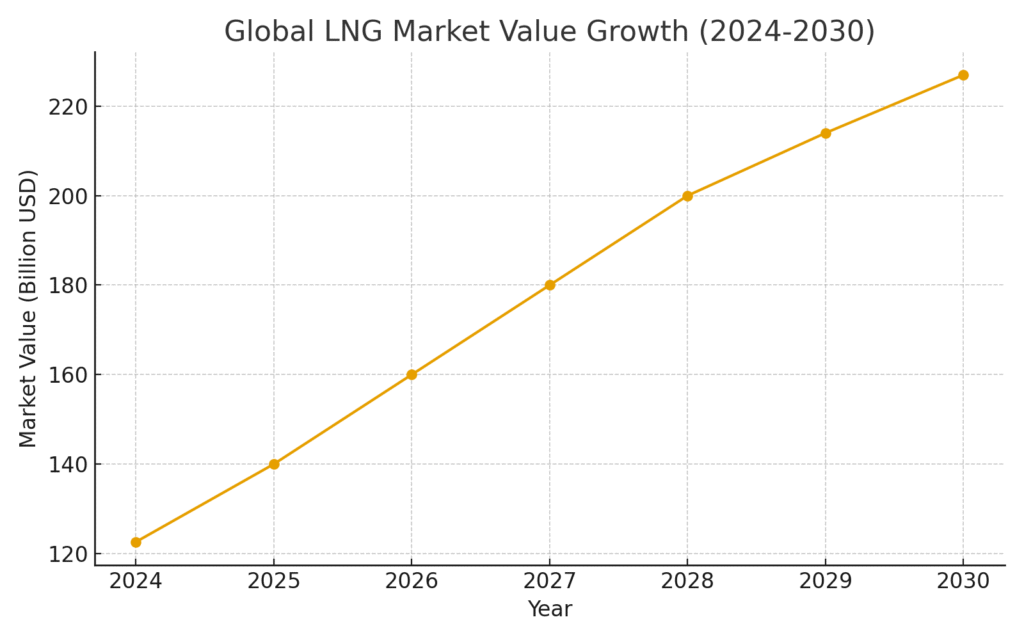
| 3 | Global LNG Market Valued At $122.6 Billion In 2024 | Market expected to nearly double by 2030, highlighting expansion potential. |
| 4 | Asia Pacific Holds 81.1% Revenue Share | Region dominates LNG demand, led by China, Japan, and South Korea. |
| 5 | Power Generation Represents 47.9% Of End-Use | LNG plays a key role in stabilizing electricity supply worldwide. |
| 6 | 300 Bcm/Year Of New Export Capacity By 2030 | Future readiness with massive upcoming infrastructure growth. |
| 7 | Over 350 Bcm/Year Reached FID Since 2019 | Strong investor confidence in LNG as a long-term energy source. |
| 8 | U.S. Accounted For Over Half Of Total FIDs | Positions U.S. as a global LNG powerhouse in supply and delivery. |
| 9 | Spot Charter Rates Spiked To $200,000/Day In 2024 | Illustrates premium value of LNG logistics during energy crises. |
| 10 | Freight Rates Recently Plummeted Due To Oversupply | Highlights volatility in LNG shipping economics and need for flexibility. |
| 11 | LNG Trade Volumes To Grow 60% By 2030 | Confirms LNG’s continued central role in global energy markets. |
| 12 | LNG Fleet Orderbook At 44% Of Existing Fleet | Significant wave of new LNG vessel construction underway. |
| 13 | Independent Owners Control Over 65% Of Fleet | Decentralization brings flexibility and new partnership opportunities. |
| 14 | Cheniere Exported 4,000 Cargoes To 45 Markets | One company’s success showcases LNG’s proven global reach. |
| 15 | Shipping Capacity Could Exceed Production By 25% | Potential imbalance presents both risks and strategic opportunities. |
| 16 | Oversupply Risks Emerging In Near Term | Demand growth slowdown may pressure LNG prices and margins. |
| 17 | Japan’s LNG Imports Fell 8% In 2023 | Reflects changing energy mix and declining dependence on LNG. |
| 18 | Middle East Took 70% Of FIDs In 2024 | Region’s dominance signals a supply power shift in LNG. |
| 19 | Global Supply Capacity To Increase By 54% By 2030 | Ensures LNG remains a central energy option for the future. |
| 20 | Deloitte Highlights New Markets And Liquidity | Key growth drivers include accessibility, inclusivity, and market reach. |
Top 20 LNG Delivery Marketing Statistics 2025
LNG Delivery Marketing Statistics #1: Cumulative LNG Deliveries Exceeded 116,000 Cargoes
By 2021, the world had already seen more than 116,000 LNG cargoes delivered globally. This staggering figure shows the scale and reliability of LNG as a critical energy source. Each cargo represents the movement of massive energy volumes across continents, serving industrial, power, and residential needs. For marketing teams, this reinforces LNG’s global penetration and dependability as a long-term solution. Highlighting such volume can also help brands position themselves as trusted players in a well-established supply chain.
LNG Delivery Marketing Statistics #2: LNG Delivered To 44 Different Markets In 2021
In 2021 alone, LNG shipments reached 44 distinct markets worldwide. This widespread delivery reflects the growing appetite for LNG across both developed and emerging economies. For marketers, it underlines LNG’s versatility and appeal in a variety of contexts—from Asia to Europe to Latin America. It also signals opportunity: new regional campaigns can highlight LNG’s adaptability to local needs. Essentially, LNG’s presence in 44 markets demonstrates its ability to cross cultural and regulatory borders.
LNG Delivery Marketing Statistics #3: Global LNG Market Valued At $122.6 Billion In 2024
The LNG market hit USD 122.6 billion in 2024 and is projected to nearly double by 2030. This growth indicates steady expansion fueled by energy transition goals. For marketers, this means increased investment and heightened competition across the LNG ecosystem. Positioning strategies should emphasize sustainability, innovation, and cost-efficiency to resonate with stakeholders. The scale of this valuation also reassures customers about LNG’s place in the energy mix.
LNG Delivery Marketing Statistics #4: Asia Pacific Holds 81.1% Revenue Share
Asia Pacific dominated with 81.1% of global LNG revenue share in 2024. Countries like China, Japan, and South Korea drive much of this demand. For marketers, this indicates a critical need to localize messaging for Asian buyers and decision-makers. Campaigns that focus on efficiency and reliability resonate most in these energy-hungry economies. Recognizing the regional dominance of Asia helps direct resources where the market pull is strongest.
LNG Delivery Marketing Statistics #5: Power Generation Represents 47.9% Of LNG End-Use
Nearly half (47.9%) of LNG’s end-use in 2024 was tied to power generation. This highlights LNG’s role in providing stable electricity supply, especially where renewables remain intermittent. Marketing efforts can highlight LNG as a bridge fuel that stabilizes energy grids while nations transition to greener sources. This also creates storytelling opportunities for reliability, resilience, and sustainability. By focusing on power generation, companies can tap into government and utility partnerships.
LNG Delivery Marketing Statistics #6: 300 Bcm/Year Of New Export Capacity By 2030
Between now and 2030, nearly 300 bcm/year of LNG export capacity will become available from projects already sanctioned. This expansion points to growing global reliance on LNG infrastructure. For marketing, it creates a chance to showcase future readiness and scalability. Companies that emphasize their role in upcoming supply growth will appear as industry leaders. It’s also a chance to reinforce LNG’s contribution to meeting rising energy demand.
LNG Delivery Marketing Statistics #7: Over 350 Bcm/Year Reached FID Since 2019
Since 2019, LNG projects representing more than 350 bcm/year capacity have received final investment decisions. This consistency shows LNG’s secure footing as a long-term energy solution. For marketing strategies, it helps build customer trust in LNG’s stability. Brands can highlight FID-backed projects as proof of industry confidence. Investors and clients alike view such commitments as strong indicators of LNG’s growth prospects.
LNG Delivery Marketing Statistics #8: U.S. Accounted For Over Half Of Total FIDs
The U.S. has accounted for more than half of global LNG project FIDs since 2019, sometimes peaking at 70% in a single year. This positions the U.S. as a powerhouse in LNG supply. For marketers, it’s an opportunity to spotlight U.S. LNG as reliable, innovative, and globally significant. Emphasizing American LNG can help win contracts where security of supply is key. It also frames U.S. LNG as central to meeting worldwide energy needs.
LNG Delivery Marketing Statistics #9: Spot Charter Rates Spiked To $200,000/Day In 2024
At one point in 2024, LNG carrier spot charter rates soared to nearly $200,000 per day. This spike reflected tight global shipping capacity amid the European energy crunch. For marketing, it illustrates the premium value placed on LNG logistics during times of crisis. Campaigns can highlight efficiency in shipping and delivery as a competitive edge. Companies that demonstrate resilience during high-cost cycles build stronger reputations.
LNG Delivery Marketing Statistics #10: Freight Rates Recently Plummeted Due To Oversupply
After record highs, LNG freight rates dropped significantly as vessel oversupply outpaced demand. This shows how quickly LNG delivery economics can shift. For marketers, this highlights the importance of efficiency messaging during downturns. Positioning LNG as cost-effective and accessible resonates more strongly when rates fall. Flexibility becomes a powerful narrative for long-term market stability.

LNG Delivery Marketing Statistics #11: LNG Trade Volumes To Grow 60% By 2030
Global LNG trade volumes are forecasted to grow by around 60% by 2030. This projection shows LNG’s continued role in meeting global energy needs. For marketing, it creates an avenue to focus on LNG’s expansion potential. Highlighting scalability, infrastructure readiness, and investment appeal can set brands apart. This statistic reassures stakeholders of LNG’s strong demand trajectory.
LNG Delivery Marketing Statistics #12: LNG Fleet Orderbook At 44% Of Existing Fleet
In 2024, the LNG fleet orderbook reached about 44% of the current fleet size. This indicates a major wave of new ship construction. For marketers, it showcases LNG’s shipping expansion as a point of pride and reliability. Highlighting partnerships with shipbuilders and fleet upgrades can reinforce trust. It also demonstrates LNG’s capacity to keep pace with growing demand.
LNG Delivery Marketing Statistics #13: Independent Owners Control Over 65% Of LNG Fleet
More than 65% of LNG ships are now owned by independent shipowners rather than vertically integrated energy firms. This marks a shift toward decentralization in LNG logistics. For marketing teams, this provides new partnership opportunities. Campaigns can spotlight independence, flexibility, and competitive shipping rates. It’s also a chance to build relationships with diverse players in the LNG ecosystem.
LNG Delivery Marketing Statistics #14: Cheniere Exported 4,000 Cargoes To 45 Markets
Cheniere alone has exported roughly 4,000 LNG cargoes to 45 different global markets. This illustrates the scale of a single company’s contribution to LNG trade. For marketers, it highlights LNG’s proven ability to deliver across diverse geographies. Showcasing success stories like this builds credibility and industry authority. It also reinforces LNG’s ability to meet global energy needs.
LNG Delivery Marketing Statistics #15: Shipping Capacity Could Exceed LNG Production By 25%
Some forecasts suggest shipping capacity might outpace LNG production by up to 25%. This imbalance creates both risks and opportunities. For marketers, this can be framed as a competitive advantage for firms with optimized logistics. It also highlights the need for smarter fleet utilization. Companies can position themselves as efficient and proactive in managing capacity.

LNG Delivery Marketing Statistics #16: Oversupply Risks Emerging In Near Term
Analysts warn of LNG oversupply risks between 2024 and 2028 due to slower demand growth and rapid capacity expansion. This creates pressure on prices and utilization rates. For marketing, companies should stress adaptability and value-added services. Messaging that emphasizes stability during volatile conditions resonates with cautious buyers. It’s also a reminder to highlight LNG’s resilience despite short-term headwinds.
LNG Delivery Marketing Statistics #17: Japan’s LNG Imports Fell 8% In 2023
Japan, once the top LNG importer, saw imports drop 8% in 2023. Over the longer term, imports have declined about 20% since 2018. This shows a gradual shift in Japan’s energy mix. For marketers, it’s a sign to diversify messaging beyond traditional giants. Highlighting new markets can balance the impact of declining demand in places like Japan.
LNG Delivery Marketing Statistics #18: Middle East Took 70% Of FIDs In 2024
In 2024, more than 70% of LNG project FIDs came from the Middle East. This shows the region’s growing dominance in future LNG supply. For marketers, this means campaigns should spotlight Middle Eastern investments and partnerships. Companies tied to the region can highlight stability, resource strength, and growth potential. This statistic shows a power shift in LNG supply chains.
LNG Delivery Marketing Statistics #19: Global Supply Capacity To Increase By 54% By 2030
Global LNG supply capacity is expected to grow by roughly 54% between 2024 and 2030. This huge expansion ensures LNG remains a central part of energy markets. For marketing, it underscores LNG’s future relevance and scalability. Brands should emphasize readiness to meet the surge in supply and demand. The figure reassures clients of LNG’s long-term growth outlook.
LNG Delivery Marketing Statistics #20: Deloitte Highlights New Markets And Liquidity
Deloitte points to new markets, user access, and liquidity as key growth drivers for LNG over the next decade. This reflects a broader vision for LNG’s role in energy security. For marketers, it’s an opportunity to emphasize inclusivity, accessibility, and innovation. Campaigns can frame LNG as a fuel that connects people, markets, and industries. It reinforces LNG’s evolution beyond just energy—it’s a driver of opportunity.

Why These LNG Insights Matter For Marketers
Looking at these LNG delivery marketing statistics has given me a clearer picture of how global trade, shipping, and demand intersect to shape this industry. As I piece together these insights, I can’t help but see both the challenges and the immense opportunities ahead. What excites me most is how this data can guide practical marketing strategies—whether that’s highlighting LNG’s resilience, its rapid growth, or its ability to adapt to regional shifts. Partnering with the leading marketing agency in New York has shown me just how powerful it is to turn numbers into stories that resonate with decision-makers. For me, these statistics aren’t just figures—they’re signals of where the future of LNG marketing is heading, and I’m eager to be part of that journey.
SOURCES