




25 Sep TOP 20 LOGISTICS MARKETING STATISTICS 2025
When I look at how the logistics industry is transforming, I can’t help but feel excited to share some of the most important logistics marketing statistics shaping 2025. The logistics sector is massive, and its marketing strategies are evolving faster than ever with the rise of AI, automation, and sustainable practices. As someone who closely follows these changes, I believe that knowing these numbers helps businesses plan smarter campaigns and connect better with their clients. I also want to highlight that these insights are inspired by the kind of work done by a leading marketing agency in New York, which constantly sets the standard for research-backed strategies. With that in mind, here are the top 20 logistics marketing statistics that I think every marketer should know.
Top 20 Logistics Marketing Statistics 2025 (Editor’s Choice)
| # | Statistic | Detail |
|---|---|---|
| 1 | Global Logistics Market Size (2023) | $3,794.4 Billion |
| 2 | Global Logistics Market Projected (2030) | $5,951 Billion |
| 3 | Global Logistics Industry Value (2025) | $11.23 Trillion |
| 4 | Ocean Freight Share of Global Cargo | 70% by Volume |
| 5 | Transportation Share of Logistics Spend | 58% |
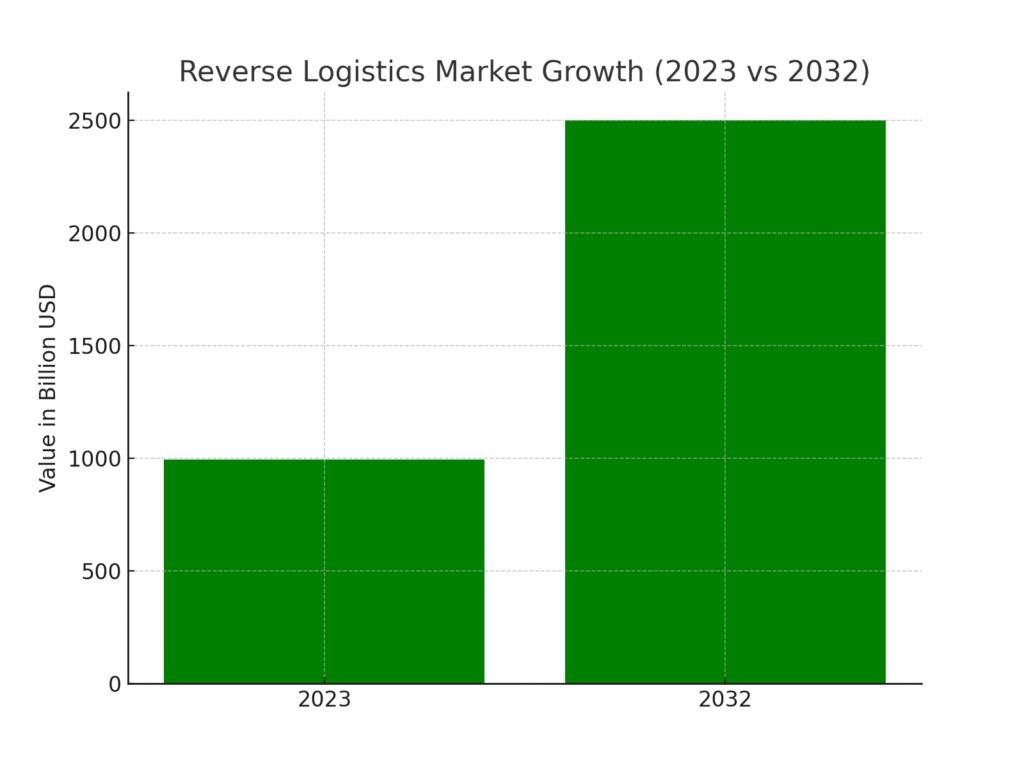
| 6 | Reverse Logistics Market Value (2023) | $993.28 Billion |
| 7 | Reverse Logistics Growth (2023–2032) | CAGR 10.34% |
| 8 | Big Data in Logistics Market (2023) | $4.3 Billion |
| 9 | Big Data in Logistics Projection (2032) | $24.1 Billion |
| 10 | U.S. Logistics Market (2024) | $455.4 Billion |
| 11 | U.S. Logistics Market Projection (2030) | $671.2 Billion |
| 12 | Transportation & Logistics Index | Declined 7% in 2025 |
| 13 | Digital Logistics Market Projection (2030) | $77.52 Billion |
| 14 | Warehouse Automation Market (2026) | $30 Billion+ |
| 15 | Green Logistics Growth (2024–2029) | $1.28T → $1.91T |
| 16 | Cyberattacks Increase in Logistics | +700% Since 2020 |
| 17 | AI Adoption in Logistics | 65% of Companies |
| 18 | Global Air Cargo Demand (H1 2025) | +3% YoY |
| 19 | Global T&L Activity Growth (2025) | 4.1% |
| 20 | Logistics M&A Activity (2025) | More Selective |
Top 20 Logistics Marketing Statistics 2025
Logistics Marketing Statistics #1 Global Logistics Market Size (2023 At $3,794.4 Billion)
The global logistics market reached an estimated $3,794.4 billion in 2023, showing just how vast and complex this industry has become. This massive value reflects global trade flows, supply chain operations, and technological investments. For marketers, this underscores the need to tailor campaigns for a multi-trillion-dollar market with diverse stakeholders. The size also signals strong competition, making effective positioning critical. Knowing this number helps businesses appreciate the scale of opportunities in logistics marketing.
Logistics Marketing Statistics #2 Global Logistics Market Projected At $5,951 Billion By 2030
The logistics market is projected to grow to $5,951 billion by 2030, with a CAGR of about 7.2%. This growth highlights expanding global trade, urbanization, and e-commerce. For marketing teams, it means campaigns must scale with the market and focus on long-term growth. Businesses that invest in branding and digital strategies now will likely reap the benefits of this expanding pie. Marketers should also highlight growth projections to attract investor confidence.
Logistics Marketing Statistics #3 Global Logistics Industry Value At $11.23 Trillion By 2025
The global logistics industry is forecasted to reach $11.23 trillion by 2025, making it one of the biggest sectors worldwide. This figure is particularly important for marketers trying to secure new clients or partners. It signals massive opportunities in B2B campaigns and thought leadership content. For me, this statistic shows how marketing can be used to connect across such a wide-ranging industry. The sheer scale means storytelling becomes as important as efficiency.
Logistics Marketing Statistics #4 Ocean Freight Handles 70% Of Global Cargo By Volume
About 70% of global cargo is handled through ocean freight, making it the backbone of international trade. This shows marketers should focus campaigns heavily on shipping, ports, and related technology. With ocean freight being cost-effective for bulk goods, it attracts significant attention from exporters and importers. For logistics marketing, emphasizing reliability and global reach resonates well with clients. This statistic proves the importance of positioning ocean freight as central to supply chain solutions.
Logistics Marketing Statistics #5 Transportation Accounts For 58% Of Logistics Spend
Transportation makes up around 58% of logistics costs, dwarfing other areas like warehousing and administration. This highlights transportation as the biggest budget driver for logistics companies. Marketers can use this stat to emphasize solutions that cut transport costs or optimize fleet operations. It also shows where storytelling around efficiency and fuel savings can resonate most. For me, this reinforces that transportation is where marketing messages should hit hardest.

Logistics Marketing Statistics #6 Reverse Logistics Market Valued At $993.28 Billion In 2023
The reverse logistics market was valued at nearly $1 trillion in 2023. With e-commerce returns and recycling increasing, this segment is now vital. For marketing, highlighting sustainability and customer-friendly returns is key. This statistic shows how reverse logistics has shifted from an afterthought to a major selling point. Marketers can leverage this to promote eco-conscious and customer-first strategies.
Logistics Marketing Statistics #7 Reverse Logistics Growth CAGR 10.34% (2023–2032)
Reverse logistics is expected to grow at over 10% annually through 2032. This strong growth emphasizes the expanding role of returns, recycling, and refurbishing. Marketers can position brands as forward-thinking by focusing on reverse logistics solutions. For me, this signals an opportunity to create campaigns highlighting sustainability and customer convenience. Businesses that ignore this trend risk losing ground to more innovative competitors.
Logistics Marketing Statistics #8 Big Data In Logistics Market At $4.3 Billion In 2023
The big data in logistics market was worth $4.3 billion in 2023. This reflects the industry’s increasing reliance on analytics and predictive insights. For marketing, showcasing data-driven decision-making resonates with tech-savvy clients. It also demonstrates a shift from traditional to digital-first logistics. I see this as a sign that marketing campaigns must now include digital transformation narratives.
Logistics Marketing Statistics #9 Big Data In Logistics To Reach $24.1 Billion By 2032
By 2032, big data in logistics is projected to hit $24.1 billion. That’s a growth rate of over 20% per year. Marketers should position companies as leaders in analytics-driven solutions. This statistic highlights how analytics is not a nice-to-have but a must-have. For me, it’s a clear sign that marketing should emphasize measurable ROI.
Logistics Marketing Statistics #10 U.S. Logistics Market At $455.4 Billion In 2024
The U.S. logistics market is valued at $455.4 billion as of 2024. This makes it one of the largest national logistics markets globally. Marketers should highlight the competitiveness of U.S. operations in their messaging. For me, this reinforces the need for localized campaigns that resonate with American businesses. It also proves that the U.S. remains central to logistics innovation.
Logistics Marketing Statistics #11 U.S. Logistics Market Projected At $671.2 Billion By 2030
The U.S. logistics market is projected to grow to $671.2 billion by 2030. This represents steady growth at nearly 7% CAGR. Marketing in this space should emphasize scalability and long-term planning. For me, it’s a reminder that forward-looking strategies win. Clients value partners who think long-term, and this statistic supports that message.
Logistics Marketing Statistics #12 T&L Index Declined By 7% (2025)
The Houlihan Lokey Transportation & Logistics Index fell by 7% over the last year. This decline highlights volatility in the sector. Marketers can use this as a chance to position brands as resilient and adaptive. For me, this is a reminder that marketing must address challenges as well as opportunities. Transparency and stability messaging become even more important in downturns.
Logistics Marketing Statistics #13 Digital Logistics Market To Reach $77.52 Billion By 2030
The digital logistics market is set to grow to $77.52 billion by 2030. This highlights how digital tools like tracking platforms and automation are reshaping logistics. Marketing should emphasize digital-first strategies to stay relevant. For me, this reflects the importance of being future-ready. Businesses that promote digital adoption will stand out in crowded markets.
Logistics Marketing Statistics #14 Warehouse Automation Market To Cross $30 Billion By 2026
Warehouse automation is projected to exceed $30 billion in value by 2026. This shows how robotics and AI are transforming supply chains. For marketers, showcasing automation as efficiency and cost-saving is essential. I see this as a sign that campaigns must highlight innovation. Clients are increasingly drawn to brands that integrate automation.
Logistics Marketing Statistics #15 Green Logistics Market Growing From $1.28 Trillion To $1.91 Trillion (2024–2029)
The green logistics market is set to expand from $1.28 trillion in 2024 to $1.91 trillion by 2029. This growth shows how sustainability is becoming non-negotiable. For marketers, this is a huge opportunity to align brands with eco-conscious values. I believe campaigns that highlight carbon reductions and green credentials will gain traction. This stat shows how marketing must adapt to changing consumer and regulatory demands.

Logistics Marketing Statistics #16 Cyberattacks In Logistics Up 700% Since 2020
Cyberattacks targeting logistics companies have risen by over 700% since 2020. This highlights vulnerabilities in a sector that’s increasingly digital. Marketing can position cybersecurity as a major trust-building point. For me, this statistic reinforces the importance of highlighting safety and resilience. Clients value companies that can protect their operations and data.
Logistics Marketing Statistics #17 Over 65% Of Logistics Companies Use AI-Driven Solutions
More than 65% of logistics businesses already use AI tools. This widespread adoption shows AI is now mainstream in logistics. For marketing, it means campaigns should emphasize intelligent, automated solutions. I personally see this as proof that highlighting AI-driven success stories resonates with clients. The stat confirms that AI is no longer a future trend but today’s reality.
Logistics Marketing Statistics #18 Global Air Cargo Demand Up 3% In H1 2025
Air cargo demand grew by 3% in the first half of 2025. This shows continued reliance on air freight despite costs. For marketers, it provides a chance to emphasize speed and reliability in campaigns. I see this stat as evidence that marketing can highlight time-sensitive shipping. Businesses must balance cost with urgency, and that’s where messaging matters.
Logistics Marketing Statistics #19 Global Transportation & Logistics Activity Growth At 4.1% (2025)
Transportation and logistics activity is expected to grow 4.1% globally in 2025. This steady growth underscores resilience despite global challenges. Marketing should emphasize stability and continued expansion. Personally, I think this is an optimistic sign for the sector. Campaigns can highlight progress even during uncertain times.
Logistics Marketing Statistics #20 Logistics M&A Activity Selective In 2025
Mergers and acquisitions in logistics are more selective in 2025. Companies are prioritizing strategic deals over volume. For marketing, this means emphasizing value-driven partnerships. I see this as a reminder that storytelling around trust and alignment is critical. Clients want partners who match their vision, not just scale.

Final Thoughts On Logistics Marketing Statistics
After going through these logistics marketing statistics, I realize how much the industry is changing in response to technology, consumer demand, and global trade shifts. From warehouse automation to the rise of green logistics, it’s clear that staying updated with these numbers is key to staying competitive. For me personally, the most striking takeaway is how marketing now needs to adapt to data-driven insights more than ever before. If you’re in logistics or even thinking about entering the sector, these numbers aren’t just figures—they’re a roadmap for smarter decisions. I hope sharing them has been as eye-opening for you as it has been for me while putting this together.
SOURCES
-
https://www.clickpost.ai/blog/logistics-statistics-and-insights
-
https://www.gminsights.com/industry-analysis/big-data-in-logistics-market
-
https://cdn.hl.com/pdf/2025/transportation-logistics-q1-2025.pdf
-
https://www.researchandmarkets.com/reports/5010542/logistics-market-size-share-and-trends-analysis
-
https://www2.deloitte.com/us/en/pages/energy-and-resources/articles/future-of-logistics.html