




17 Sep TOP 20 Mailbox Marketing Statistics 2025
As a professional deeply involved in the world of marketing, I know how important it is to stay up to date with the latest trends and data. That’s why I’m excited to share these Mailbox marketing statistics, which provide a clear picture of how businesses can leverage both email and direct mail strategies. In my experience, many companies, especially those working with a leading marketing agency in New York, have seen incredible success by understanding these key metrics. These statistics reflect the growing importance of both digital and traditional methods in reaching the right audience. Let’s dive into the data that can help you make informed decisions about your next campaign.
Top 20 Mailbox Marketing Statistics 2025 (Editor’s Choice)
📮 TOP 20 DIRECT MAIL STATISTICS 2025
Unlock the Power of Physical Marketing in the Digital Age
| RANK | CATEGORY | DIRECT MAIL MARKETING STATISTIC |
|---|---|---|
1 |
ROI Performance | Direct mail to house lists delivers an average 161% ROI, the highest of any paid marketing channel |
2 |
ROI Performance | Direct mail has an average ROI of $42 for every $1 spent |
3 |
ROI Performance | 84% agree that direct mail provides the highest ROI of any channel they use |
4 |
ROI Performance | 74% of marketers report getting the best ROI through direct mail marketing compared to other promotional channels |
5 |
ROI Performance | Direct mail has a 29% ROI compared to only 16% for online display and 23% for paid search |
6 |
Response Rates | Direct mail marketing yields an average response rate of 4.4%, compared to 0.12% for email |
7 |
Response Rates | The response rate for direct mail was 5.3% for prospect lists, one of the highest response rates across all marketing mediums |
8 |
Response Rates | House-file campaigns boast a 15.6% average response rate, far above typical digital click-through rates |
9 |
Response Rates | 69% of direct mail campaigns achieve response rates greater than 3% |
10 |
Response Rates | Response rates jump to 27% when direct mail is paired with email campaigns |
11 |
Consumer Engagement | 98% of people check their physical mail daily and Americans spend upwards of 30 minutes with their mail on a single occasion |
12 |
Consumer Engagement | Direct mail has an impressive open rate of 42.2% according to the Print & Mail Communications Association |
13 |
Consumer Engagement | Direct mail has a higher open rate of 80-90%, whereas email has 20-30% |
14 |
Consumer Engagement | 75% of people say they remember receiving a direct mail piece |
15 |
Consumer Engagement | Direct mail captures 132 seconds of undivided attention vs. 13.8 seconds for TV ads |
16 |
Budget & Investment | 82% of marketing executives will increase their direct mail investment in 2025 |
17 |
Budget & Investment | Companies plan to double mail volume from an average of 34.9M in 2024 to 67.3M in 2025 |
18 |
Budget & Investment | 82% of respondents are increasing direct mail spend in 2024 — a considerable increase from 58% in 2023 |
19 |
Personalization | Personalized mail outperforms generic pieces by over 130% |
20 |
Integration | Utilizing direct mail and digital strategies can lead to an approximately 28% increase in conversion rates |
Top 20 Mailbox Marketing Statistics 2025
Mailbox Marketing Statistics #1: Email Marketing ROI
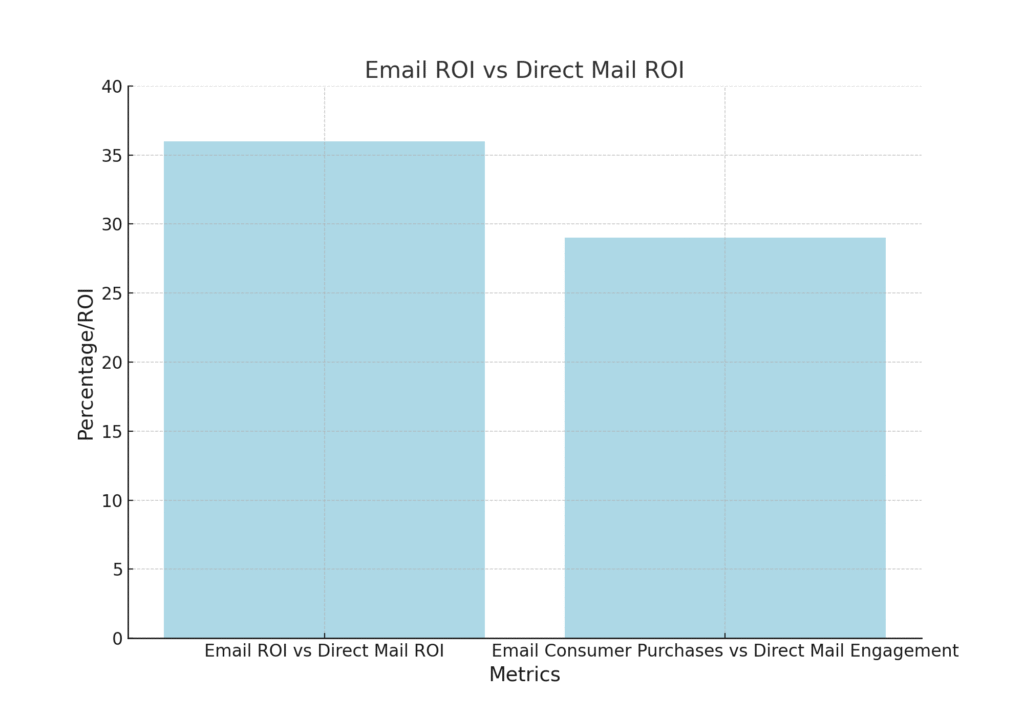
Email marketing campaigns have an impressive average return on investment (ROI) of 36 times, meaning for every $1 spent, businesses earn $36 in return. This statistic highlights the immense value email marketing brings to businesses across all industries. The ROI can be attributed to its cost-effectiveness, targeted reach, and ability to deliver personalized content directly to customers. Marketers are consistently able to generate high revenue with relatively low overhead. This demonstrates why email marketing remains a crucial tool in any marketer’s toolkit, particularly for businesses aiming for long-term growth.
Mailbox Marketing Statistics #2: Consumer Purchases from Email
Over 52% of consumers have made a purchase directly from an email in the past year, reflecting the direct impact email marketing has on buying behavior. This statistic emphasizes the power of email as a sales-driving channel that encourages consumers to take immediate action. With personalized offers, compelling subject lines, and targeted content, businesses are able to convert email recipients into paying customers. The convenience of one-click purchasing and personalized discounts further boost conversion rates. Email marketing is, therefore, an essential part of any strategy focused on driving e-commerce success.
Mailbox Marketing Statistics #3: Email Open Rates
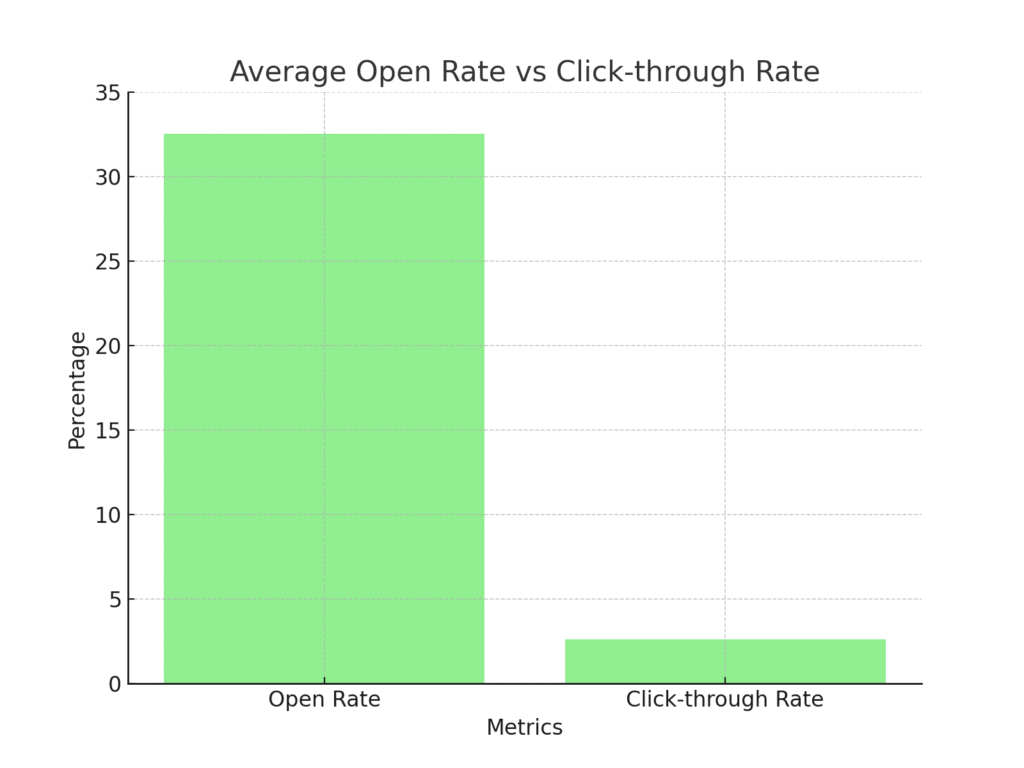
The average open rate for marketing emails across all industries is 32.55%, which indicates a solid level of interest in email campaigns. A higher open rate means more people are engaging with the subject lines, which is a key driver for success in email marketing. While open rates may vary depending on the industry, time of sending, and other factors, achieving above-average open rates can significantly improve the overall performance of your campaign. It’s clear that when emails are well-crafted and relevant, they stand out in crowded inboxes. This statistic underscores the importance of testing subject lines and timing to increase email visibility.
Mailbox Marketing Statistics #4: Email Click-Through Rates
The average click-through rate (CTR) for marketing emails is 2.62%, an important metric for evaluating how effective an email is at encouraging recipients to take further action. CTR measures the percentage of recipients who clicked on a link within an email, which is a direct indication of engagement. A higher CTR suggests that the content in the email was relevant, persuasive, and appealing to the reader. Marketers can enhance CTR by including clear calls to action, engaging visuals, and compelling offers. Optimizing email content for mobile devices also helps increase the likelihood of click-throughs.
Mailbox Marketing Statistics #5: Mobile Optimization
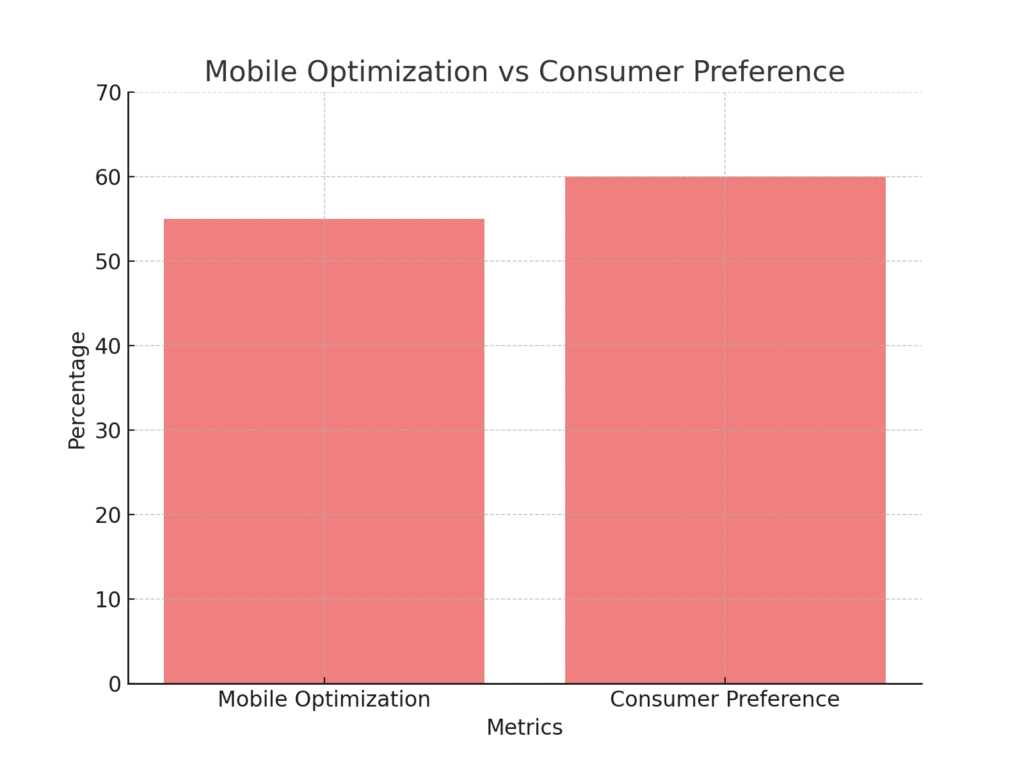
55% of emails are opened on mobile devices, making mobile optimization a critical factor in successful email marketing campaigns. With more consumers checking emails on their smartphones, it’s essential for businesses to design mobile-friendly emails that load quickly and display correctly on smaller screens. Emails that aren’t optimized for mobile can frustrate users and lead to higher bounce rates. This statistic demonstrates the increasing need for marketers to prioritize responsive design to cater to the growing mobile audience. Mobile optimization is no longer optional; it’s a key element for engaging modern consumers.

Mailbox Marketing Statistics #6: Consumer Preference for Email
60% of consumers prefer receiving marketing communications through email, showing that email remains the preferred method of communication for most consumers. Despite the rise of social media and other digital marketing channels, email continues to hold a dominant position in consumer preferences. Consumers appreciate the directness and convenience of email, as it allows them to engage with brands on their terms. This statistic suggests that marketers should focus their efforts on creating high-quality, value-driven email campaigns. Additionally, respecting email frequency and providing useful content can help maintain high levels of engagement.
Mailbox Marketing Statistics #7: Segmented Email Campaigns
52.9% of marketers report that segmented email campaigns result in better open rates. By dividing their audience into smaller, more targeted groups, businesses can send more relevant messages that resonate with each group. Segmentation allows for personalization, which is proven to enhance customer experience and drive higher engagement. Marketers who implement segmentation strategies typically see higher ROI and more meaningful interactions with their audience. This statistic underscores the importance of data-driven marketing and the power of tailoring content to specific customer needs.
Mailbox Marketing Statistics #8: Personalized Email Subject Lines
Emails with personalized subject lines have higher open rates than those with generic ones, proving that consumers respond positively to personalization. When a subject line is tailored to an individual, it grabs their attention and makes them more likely to engage. Personalized emails can create a sense of connection and trust between the brand and the consumer, leading to better outcomes in terms of conversions and customer retention. It’s clear that using data such as the recipient’s name, preferences, or previous purchases can make emails feel more relevant. This statistic highlights the value of personalization in email marketing strategies.
Mailbox Marketing Statistics #9: Consumer Spending from Emails
Consumers spend 128% more when shopping through email compared to other methods, making email marketing a powerful tool for driving higher sales. With personalized recommendations, exclusive offers, and time-sensitive discounts, emails effectively encourage recipients to make purchases. The ability to provide a seamless shopping experience directly within the email also contributes to this increased spending. This statistic proves that email marketing, when executed effectively, can be a substantial revenue generator for businesses. It’s essential for marketers to create compelling offers that motivate consumers to act on the spot.
Mailbox Marketing Statistics #10: Daily Email Checking
99% of consumers check their email daily, making it the most frequently used communication channel. This statistic highlights the importance of email as a direct line to your audience. Even if consumers are busy, they will often make time to check their inbox, increasing the chances of your marketing messages being seen. Since email is consistently used, it remains one of the most reliable ways to reach potential customers. With such a high percentage of daily email usage, businesses should prioritize email campaigns to stay connected with their audience.
Mailbox Marketing Statistics #11: Direct Mail ROI
Direct mail campaigns have an average return on investment (ROI) of 29%, surpassing the ROI of digital marketing channels like paid search (23%) and online display ads (16%). This statistic showcases the enduring power of physical mail in driving customer engagement. Businesses that invest in well-designed direct mail campaigns can see significant returns, especially when paired with other marketing strategies. Direct mail allows brands to stand out in a consumer’s mailbox, offering a tangible experience that digital marketing cannot replicate. The high ROI reinforces why direct mail continues to be a valuable asset in a multi-channel marketing strategy.
Mailbox Marketing Statistics #12: Direct Mail Engagement Rates
Direct mail boasts a remarkable 95% engagement rate, meaning recipients interact with direct mail pieces multiple times. Unlike digital ads that can be easily ignored, physical mail has a more lasting impact as it can be viewed and handled by the recipient multiple times. Direct mail campaigns can also benefit from being paired with a clear call-to-action that drives recipients to visit a website, redeem a discount, or make a purchase. This level of engagement demonstrates how powerful physical mail can be in creating long-term brand awareness. The tactile experience of direct mail makes it stand out in an age where consumers are bombarded with digital ads.
Mailbox Marketing Statistics #13: Consumer Trust in Direct Mail
82% of consumers trust direct mail marketing, which is higher than many other forms of marketing communication. This trust is critical because it means recipients are more likely to act on direct mail pieces, whether it’s opening a letter, reading a brochure, or scanning a QR code. Trust in direct mail can lead to higher response rates and better customer loyalty over time. As a result, businesses can build stronger connections with their audience by using direct mail in their campaigns. This statistic underscores the effectiveness of traditional marketing in establishing credibility and trust with consumers.
Mailbox Marketing Statistics #14: Personalization in Direct Mail
70% of customers find direct mail more personal than digital communications, demonstrating the emotional appeal of receiving a physical, personalized message. Personalized direct mail, whether through name insertion or custom offers, feels more tailored and relevant to the recipient. This personal touch can drive a higher response rate as consumers appreciate businesses that cater to their specific needs. Personalized mail also stands out more in a mailbox filled with generic ads, which increases the likelihood of engagement. This statistic reinforces the idea that adding a personal element to your direct mail campaign can yield substantial results.
Mailbox Marketing Statistics #15: Direct Mail Response Rates
The average response rate for direct mail is 3.63%, which is significantly higher than the 0.1% response rate for email marketing. This difference shows the effectiveness of direct mail in capturing attention and prompting action. Whether it’s an invitation to an event, a limited-time offer, or a product catalog, direct mail tends to evoke stronger responses. The higher response rate makes direct mail an attractive option for businesses seeking to engage with a specific target audience. It also reflects the power of tangible marketing materials that recipients can touch and interact with.
Mailbox Marketing Statistics #16: Direct Mail Budget Allocation
One-third of marketers allocate 25% or more of their marketing budget to direct mail campaigns. This statistic indicates that businesses are willing to invest significantly in physical mail to reach their audience. The decision to allocate a substantial portion of the budget to direct mail reflects its continued relevance and effectiveness. By leveraging direct mail alongside other marketing channels, businesses can create a multi-faceted strategy that drives stronger results. This budget allocation demonstrates confidence in direct mail’s ability to deliver meaningful outcomes.
Mailbox Marketing Statistics #17: Increased Investment in Direct Mail
82% of businesses increased their direct mail spend in 2024, compared to just 58% in 2023. This upward trend in investment highlights the growing recognition of direct mail’s effectiveness in an increasingly digital world. Companies are reallocating their marketing budgets to include more direct mail, understanding its ability to drive higher engagement and stronger connections with customers. The increase in spending reflects the continued importance of tangible marketing materials in creating lasting impressions. This statistic suggests that direct mail is not a dying medium but a powerful tool that’s evolving alongside digital strategies.
Mailbox Marketing Statistics #18: Use of Direct Mail Automation
56% of businesses are using direct mail automation software to streamline their campaigns. Automation helps businesses create and send personalized direct mail at scale, making it easier to reach a larger audience while maintaining a personal touch. With automation, businesses can quickly launch campaigns, track results, and optimize for better performance. This level of efficiency allows for more consistent engagement without the burden of manual effort. The rise of automation in direct mail proves that this traditional marketing channel is adapting to the digital age.
Mailbox Marketing Statistics #19: Multi-Channel Integration
90% of marketers report that integrating direct mail with digital marketing channels improves campaign performance. Combining physical mail with email, social media, or digital ads allows businesses to reach customers across multiple touchpoints, increasing the chances of conversion. Multi-channel integration enables brands to reinforce their messages and create a cohesive customer experience. This approach also helps businesses target consumers at different stages of the buying journey. The ability to synchronize direct mail with digital efforts is key to achieving optimal results.
Mailbox Marketing Statistics #20: Generational Preference for Direct Mail
50% of Baby Boomers prefer receiving marketing communications via direct mail over other channels. Despite the growth of digital marketing, older generations still appreciate receiving physical mail, especially when it’s relevant to their interests or needs. This preference reflects the fact that direct mail remains a trusted and familiar form of communication for many Baby Boomers. Marketers targeting this demographic should consider incorporating direct mail into their strategy to enhance engagement. This statistic highlights the importance of tailoring marketing efforts to generational preferences for better outcomes.
A Balanced Approach is Key
After reviewing these Mailbox marketing statistics, it’s clear that integrating both email and direct mail into your marketing strategy can yield impressive results. Whether you’re aiming to boost engagement, increase ROI, or build stronger customer relationships, understanding these trends can help shape your approach. As we move further into 2025, maintaining a balance between traditional and digital methods will be essential for standing out in an increasingly competitive market. The future of marketing is all about personalization and adaptability, and these statistics are a great starting point for refining your campaigns.
SOURCES