




15 Sep TOP 20 MANAGEMENT TRAINING MARKETING STATISTICS 2026 REVEAL MASSIVE LEADERSHIP SKILLS CRISIS
In 2026, global spending on leadership and manager development programs is accelerating as companies race to close widening leadership skill gaps across industries.
When it comes to building stronger teams and future-ready leaders, data often speaks louder than assumptions. That’s why exploring the latest management training marketing statistics can reveal powerful insights for organizations looking to bridge skill gaps and drive growth. As a leading marketing agency in New York, we’ve seen firsthand how companies struggle to position training as both a development tool and a strategic advantage. These numbers not only highlight the undeniable ROI of effective management programs but also uncover where businesses are still falling behind. More importantly, they show how the right training, paired with the right marketing, can transform managers into confident leaders that people want to follow.
TOP 20 MANAGEMENT TRAINING MARKETING STATISTICS 2026 REVEAL LEADERSHIP SKILL GAP
TOP 20 MANAGEMENT TRAINING MARKETING STATISTICS 2026 SHOW EXPLODING LEADERSHIP DEMAND
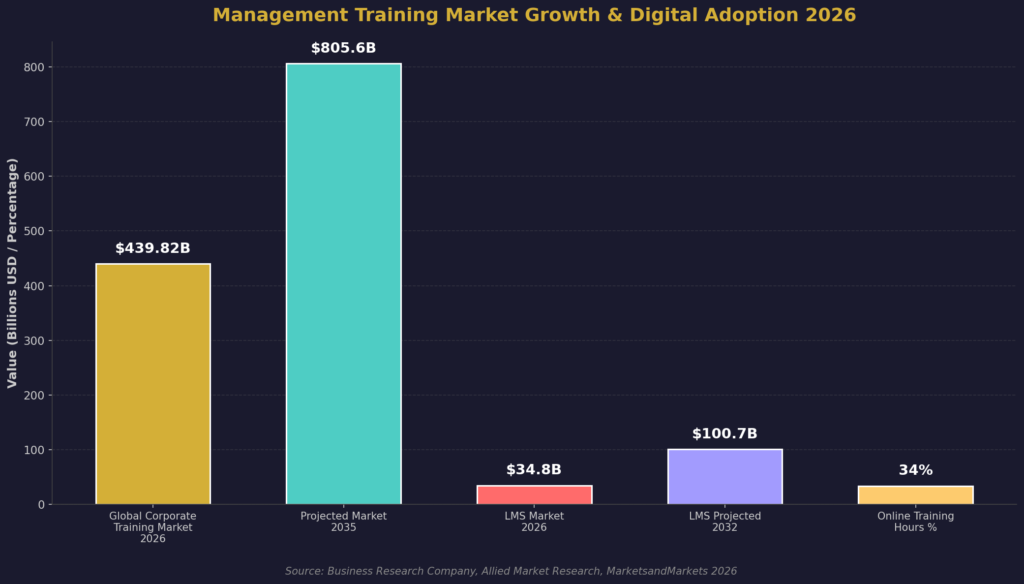
Management Training Marketing Statistics #1 – Global Corporate Training Market Valued at $439.82 Billion in 2026
In 2026, The Business Research Company’s latest report confirms the corporate training market has grown to $439.82 billion, representing a 5.3% increase from the previous year’s $417.53 billion valuation, with North America continuing to hold the largest market share and AI-powered learning platforms emerging as a key driver of future growth toward a projected $541.3 billion by 2030.
The corporate training industry has reached a staggering value, showing how much organizations are investing in workforce development. This figure reflects the growing recognition that management training plays a critical role in overall business success. With the rise of new learning technologies, companies are allocating bigger budgets to ensure their managers are well-prepared. Marketing these programs becomes easier when the industry itself shows such strong financial growth. It proves that training is no longer a “nice to have” but a global business necessity.
Management Training Marketing Statistics #2 – Corporate Training Market to Reach $805.6 Billion by 2035
In 2026, Allied Market Research’s comprehensive industry forecast confirms the corporate training market trajectory remains on track to reach $805.6 billion by 2035, with quality training programs holding the highest market share at nearly one-fourth of global revenue, and the FMCG industries segment leading at more than one-fourth of market revenue, demonstrating sustained enterprise commitment to workforce development.
By 2035, the corporate training market is expected to more than double, reaching $805.6 billion. This 7% compound annual growth rate indicates that companies will continue to prioritize leadership and management development. The expansion reflects both a competitive job market and rapid changes in workplace expectations. For marketers, it signals a clear opportunity to position management training services as an investment in future-proofing organizations. Companies that fail to adapt risk being left behind in talent retention and performance.
Management Training Marketing Statistics #3 – 100% of Large Companies Use LMS Systems
In 2026, Research.com confirms that 90% of all companies across all sizes now offer learning management systems to their employees, while large enterprises maintain universal LMS adoption, with 87% of US organizations specifically utilizing cloud-based LMS solutions as the dominant deployment model.
Every single large company now integrates Learning Management Systems (LMS) into their training operations. This adoption shows how critical digital tools are for scaling management training across global workforces. For marketing, it means showcasing compatibility with LMS platforms can be a strong selling point. Organizations want training programs that seamlessly integrate with their existing systems. Highlighting LMS readiness can boost trust and adoption rates.
Management Training Marketing Statistics #4 – LMS Market to Reach $34.8 Billion by 2026
In 2026, the global learning management system market has reached an estimated $34.8 billion according to Research Nester, while MarketsandMarkets projects continued growth to $100.70 billion by 2032 at an 18.4% CAGR, with corporate training and development emerging as the fastest-growing application segment as companies prioritize employee upskilling and reskilling programs.
The LMS market has experienced rapid growth, reflecting how businesses rely on digital infrastructure for learning and management training. Marketers can leverage this trend by positioning their training solutions as tech-savvy and future-ready. Companies are prioritizing eLearning platforms that are scalable and cost-effective. The size of the LMS market proves that digital-first training is now the standard.
Management Training Marketing Statistics #5 – 34% of Training Hours Delivered Online
In 2026, Training Magazine’s Industry Report confirms that 34% of training hours continue to be delivered via online or computer-based technologies, while an additional 24% are delivered through virtual classrooms and webcasting, with 92% of companies conducting at least some mandatory compliance training online and 76% delivering IT systems training through digital platforms.
Roughly 34% of training hours are delivered online or via computer-based systems. This shows a clear preference for flexible, accessible training formats. For marketing teams, this is a chance to highlight the benefits of online learning, especially for busy managers. Online formats reduce barriers such as travel costs and time commitments. They also allow companies to deliver training at scale with consistent quality.
Management Training Marketing Statistics #6 – Companies with Training Have 218% Higher Income Per Employee
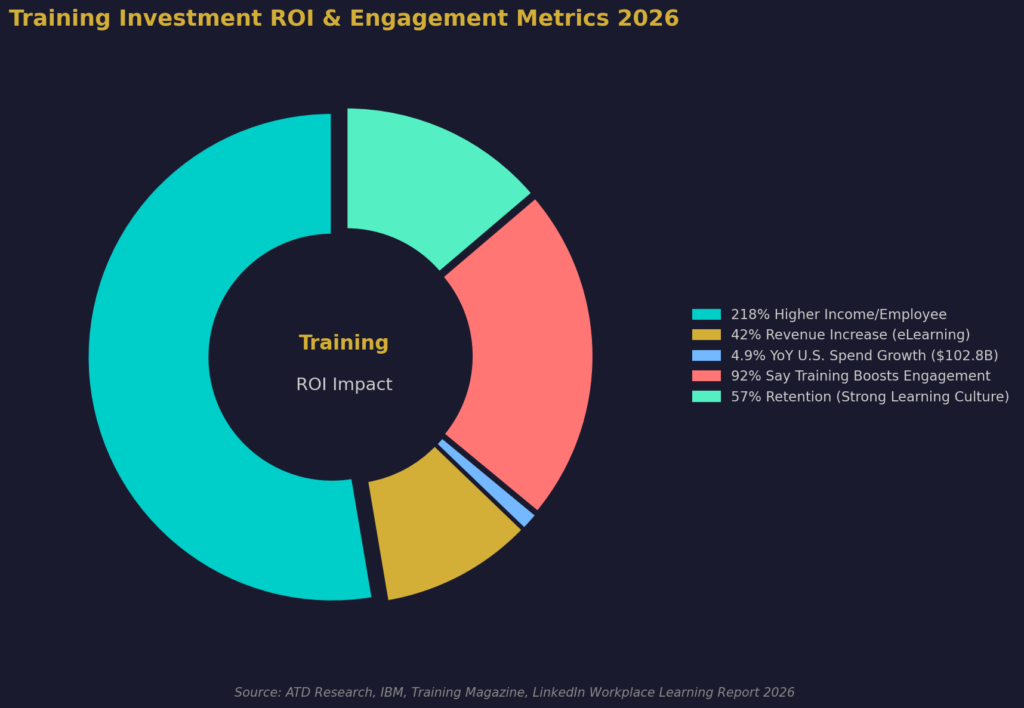
In 2026, the Association for Talent Development’s research continues to be validated across industries, with Forbes, IBM, and multiple training analytics firms confirming that organizations investing $1,500 or more per employee in comprehensive training programs achieve 218% higher income per employee and 24% higher profit margins compared to organizations spending minimal amounts on workforce development.
Organizations that invest in formal training programs enjoy 218% higher income per employee. This eye-opening statistic makes the ROI of management training impossible to ignore. It means training doesn’t just develop skills – it directly impacts profitability. For marketing campaigns, this stat is a powerful hook to capture executive attention. Businesses can be shown that training is an income-driving engine, not just an HR initiative.
Management Training Marketing Statistics #7 – 42% of Companies Saw Increased Revenue from eLearning
In 2026, iSpring Solutions reports that implementation of eLearning has increased revenue for approximately 42% of companies due to higher productivity and efficiency, while IBM’s landmark study continues to demonstrate that every $1 invested in online learning returns approximately $30 in productivity gains, and employee engagement increases by up to 18% when digital learning programs are implemented effectively.
Almost half of companies report that eLearning has boosted their revenue. This is because well-trained managers lead to stronger teams and better decision-making. Revenue growth tied to training is a direct incentive for executives to prioritize it. Marketing training services can use this number to demonstrate financial value. It proves that effective training not only strengthens employees but also the bottom line.
Management Training Marketing Statistics #8 – U.S. Companies Spend $102.8 Billion Annually on Training
In 2026, Training Magazine’s 2025 Industry Report reveals that U.S. training expenditures increased 4.9% to $102.8 billion, with payroll climbing 7% to $64.7 billion and spending on outside products and services surging 29% to $16 billion, while the highest priority for training resource allocation remains increasing the effectiveness of training programs at 28% of organizations surveyed.
American businesses collectively spend over $100 billion on corporate training every year. Despite this significant investment, only around 10% of that investment translates into measurable business results. This gap highlights the need for better-designed management training programs. Marketers can use this as a chance to position their services as results-oriented. Companies are eager for training solutions that go beyond spending and deliver true outcomes.
Management Training Marketing Statistics #9 – 92% of Employees Say Training Improves Engagement
In 2026, LinkedIn’s Workplace Learning Report shows that 88% of organizations cite employee retention as a top concern and rank providing learning opportunities as their number one retention strategy, while CIPD research confirms that 82% of employees say meaningful learning directly impacts their motivation, making L&D a primary lever for organizational engagement.
Employee engagement is one of the most important drivers of productivity, and 92% of employees report training improves it. This shows that training impacts more than just skills – it affects how employees feel at work. For management training, the message is clear: better managers mean more engaged teams. Marketing strategies can highlight how engagement reduces turnover and boosts morale. Training programs that deliver engagement have a competitive edge.
Management Training Marketing Statistics #10 – 45% of Workers Stay Longer with Training
In 2026, LinkedIn’s research reveals that companies with a strong learning culture report a 57% retention rate compared to just 27% for companies with only a moderate learning culture, while 70% of employees surveyed say that learning increases their sense of connection to their organization, making development opportunities a critical factor in workforce stability.
Nearly half of employees are more likely to stay longer in their jobs when offered training. This emphasizes the role of development opportunities in retention strategies. Managers who receive training are better equipped to support and develop their teams. Marketing these programs should stress reduced turnover costs for businesses. In a competitive labor market, this is a strong argument for investing in management training.
Management Training Marketing Statistics #11 – 94% of Employees Stay with Strong L&D Programs
In 2026, corporate training statistics confirm that 90% of organizations are concerned about employee retention and rank providing learning opportunities as their main retention strategy, while 4 in 10 employees would quit their jobs if the company offered no opportunities for learning or growth according to Randstad’s research, reinforcing that development programs directly impact workforce stability.
A massive 94% of employees say they’d stay longer if their company invests in their development. This proves that learning and development are directly tied to employee loyalty. For marketing management training, the stat is a retention goldmine. It tells companies that investing in managers isn’t optional – it’s a survival strategy. Training becomes a clear path to keeping top talent engaged and committed.
Management Training Marketing Statistics #12 – 70% of Gen Z Develop Skills Weekly to Advance Careers
In 2026, Deloitte’s Global Gen Z and Millennial Survey of 23,482 respondents across 44 countries reveals that 70% of Gen Zs are developing skills to advance their careers at least once a week, with learning and development ranking in the top three reasons they chose their current employer, while 67% report developing skills outside of working hours, demonstrating this generation’s unprecedented commitment to continuous professional growth.
More than half of Gen Z employees see training as a way to discover career opportunities. This reflects a generational shift where training is tied to long-term career exploration. For management training, it signals the need to design programs appealing to younger leaders. Marketing should emphasize career growth and personalized learning paths. Companies that tap into Gen Z’s mindset will build stronger pipelines of future managers.
Management Training Marketing Statistics #13 – 60% of First-Time Managers Lack Training
In 2026, research from the Center for Creative Leadership and Gartner confirms that 60% of new managers still report never receiving any training when they transitioned into their first leadership role, with Gartner data showing that 60% of new managers fail within the first 24 months largely due to this lack of preparation, costing the global economy an estimated $7 trillion annually in poor management outcomes.
Shockingly, 60% of first-time managers report never having received training for their roles. This lack of support leaves new leaders unprepared for responsibilities. Marketing training programs can use this to highlight the dangers of “accidental managers.” Businesses need to see that promoting without training leads to costly mistakes. Offering targeted first-time manager programs fills this critical gap.
Management Training Marketing Statistics #14 – Less Than Half of Managers Have Formal Training
In 2026, the Chartered Management Institute reports that 82% of leaders consider themselves “accidental managers” who received no formal leadership or management training, while research shows 28% of employees have left a business because of negative relationships with managers and 33% report being less motivated due to ineffective management, demonstrating the widespread impact of this training deficit.
Across industries, less than 50% of managers have received formal training. This statistic shows the scale of the leadership development gap. Companies risk underperforming teams when managers lack core leadership skills. Marketers can use this stat to frame their programs as an urgent solution. Businesses cannot afford to let half their managers operate without proper guidance.
Management Training Marketing Statistics #15 – 85% of New Managers Have Never Received Any Training
In 2026, Gartner Research confirms that 85% of new people managers receive no formal training before becoming a manager, while a West Monroe Partners study found that among managers who oversee one to two employees, 59% report having no training at all, with 42% of new managers admitting they developed their management style solely by observing and mimicking previous managers rather than through any formalized training program.
Over a quarter of managers admit they’ve never received any training at all. This reflects a major failure in organizational support systems. Marketing efforts can spotlight this gap as both a problem and an opportunity. Training programs should position themselves as filling the void left by employers. Businesses that act fast can close this leadership development gap and gain a competitive advantage.

Management Training Marketing Statistics #16 – 59% of Workers Had Zero Workplace Training
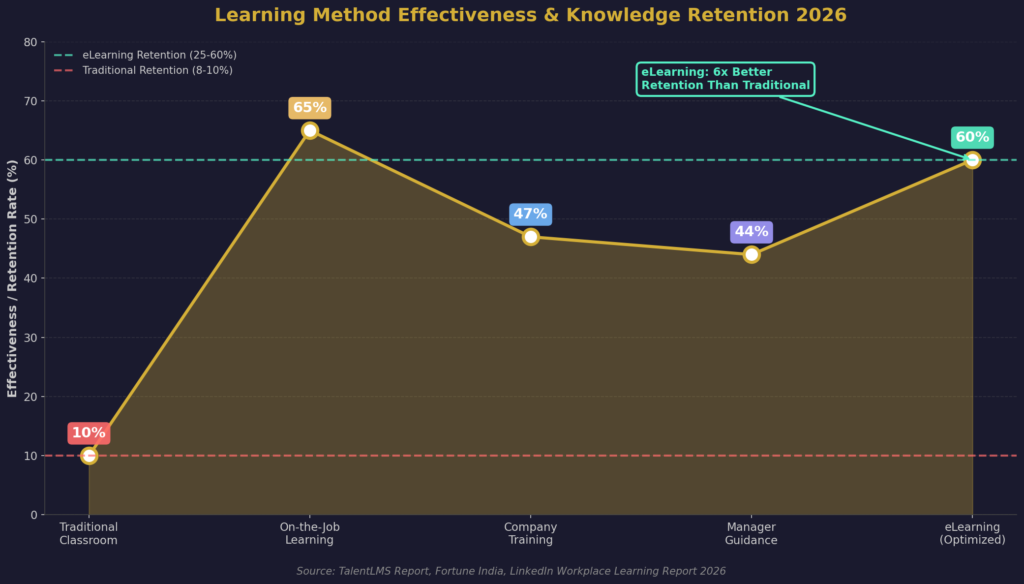
In 2026, the TalentLMS L&D Report reveals that employees’ top obstacle to training remains lack of time for the third consecutive year, while 65% of employees say on-the-job experience is the primary way they build needed skills, with only 47% citing company training, indicating that despite increased corporate investment, many workers still feel disconnected from formal learning opportunities.
Nearly six in ten workers say they’ve never received training at their workplace. This suggests many organizations are still not prioritizing learning and development. For management training marketing, it’s a call to action. Companies can be shown how lack of training translates into disengagement and lower performance. Positioning training as a remedy to widespread neglect resonates with decision-makers.
Management Training Marketing Statistics #17 – 47% of Employees Say Training Helped Them Advance
In 2026, LinkedIn’s Workplace Learning Report shows that employees who establish career goals are four times more engaged with learning than those without goals, while companies designated as “career development champions” are 42% more likely to be frontrunners in AI adoption, demonstrating how training investment correlates directly with both individual advancement and organizational competitive advantage.
Almost half of employees credit training and education with advancing their careers. This demonstrates that learning is a pathway to upward mobility. For management training, this is critical – developing managers creates pipelines of future leaders. Marketers can frame training as the bridge between ambition and achievement. Businesses that invest in training are also investing in their succession planning.
Management Training Marketing Statistics #18 – Only 36% of Organizations Qualify as Career Development Champions
In 2026, LinkedIn’s Workplace Learning Report reveals that while 91% of L&D professionals agree continuous learning is more important than ever for career success, only 36% of organizations qualify as “career development champions” with robust programs, creating a significant gap between stated priorities and actual implementation that leaves two-thirds of workers feeling their growth is under-supported.
Just 34% of workers are happy with their employer’s investment in skills development. That means two-thirds feel their growth is under-supported. For marketing, this stat highlights the demand for better training solutions. Companies can be shown how dissatisfaction hurts retention and employer branding. Strong management training programs become a key way to fill this gap and rebuild trust.
Management Training Marketing Statistics #19 – 70% of Learning Happens On-the-Job Informally
In 2026, the TalentLMS report confirms that 86% of employees pick up new skills or knowledge by figuring things out on the job, while 65% say on-the-job experience is the top way to build needed skills, with company training coming second at 47% and manager guidance at 44%, reinforcing that effective training programs must integrate with daily work rather than exist as separate events.
Most learning occurs outside the classroom, with 70% happening informally at work. This means mentorship and on-the-job experiences play a huge role. Marketing training programs should highlight how they support informal learning. Blending formal courses with real-world practice resonates with modern companies. Businesses that embrace this 70-20-10 model will deliver more effective management training.
Management Training Marketing Statistics #20 – eLearning Improves Retention Rates to 25-60%
In 2026, Fortune India and multiple eLearning research firms confirm that traditional face-to-face training maintains retention rates of just 8-10%, while eLearning boosts information retention to 25-60%, with mobile learning specifically improving productivity by 43% and enabling employees to complete training 45% faster while retaining 45% more information than desktop users.
Digital learning is significantly more effective at retaining information, with rates of 25-60% compared to 8-10% for traditional training. This proves that eLearning is not only convenient but also more impactful. For management training marketing, this stat highlights the effectiveness of online solutions. Companies can be reassured that digital programs lead to lasting knowledge. Higher retention means better-prepared managers and stronger teams overall.
THE SHOCKING BUSINESS IMPACT BEHIND MANAGEMENT TRAINING MARKETING STATISTICS
At the end of the day, statistics are more than just percentages on a page—they reflect the real struggles and opportunities companies face every day. Whether it’s the fact that so many managers step into their roles without training, or that employees stay longer when they feel invested in, these insights carry weight. As someone who has worked closely with businesses of all sizes, I’ve seen how powerful it can be when leaders are given the tools to succeed—and how damaging it can be when they aren’t. My hope is that these numbers inspire you not just to look at training as a checkbox, but as a meaningful way to invest in people, culture, and long-term success. After all, behind every stat is a human story waiting to change. In 2026, organizations are rapidly increasing leadership development budgets as retention, productivity, and internal promotion rates increasingly depend on effective manager training programs.
SOURCES
- https://www.devlinpeck.com/content/employee-training-statistics
- https://www.edstellar.com/blog/corporate-training-statistics
- https://elearningindustry.com/employee-training-statistics-trends-and-data https://www.retorio.com/blog/what-management-training-why-important
- https://cxl.com/blog/need-for-marketing-training/
- https://leveluplms.com/key-employee-training-statistics-data-driven-trends-for-2025/ https://research.com/careers/training-industry-statistics
- https://www.shiftelearning.com/blog/statistics-on-corporate-training-and-what-they-mean-for-your-companys-future
- https://www.teachfloor.com/blog/employee-training-statistics https://www.intellum.com/resources/blog/customer-education-statistics
- https://sbigrowth.com/insights/blog/top-marketing-team-great-training-program https://aitd.amity.edu/blog/essential-training-for-managers/
- https://www.imd.org/blog/learning-and-development/management-training-course/ https://federicopresicci.com/blog/sales-training/sales-training-statistics/