



18 Sep TOP 20 MANAGER MARKETING STATISTICS 2025
In today’s fast-paced business world, understanding the latest manager marketing statistics is more important than ever. Managers play a critical role in shaping campaigns, allocating budgets, and driving real results for businesses of all sizes. From adopting AI tools to leading customer experience initiatives, the decisions managers make are directly linked to growth and innovation. As someone who’s been fortunate enough to work with a marketing agency in New York, I’ve seen firsthand how leadership and data-backed insights can turn an average campaign into something extraordinary. This blog explores the top 20 statistics that every manager should know in 2025 to lead with confidence and clarity.
Top 20 Financial District Marketing Statistics 2025 (Editor’s Choice)
📊 Top 20 Marketing Manager Statistics 2025
Essential insights for marketing professionals and business leaders
| # | Category | Key Statistic |
|---|---|---|
| 1 | 💰 Salary | Marketing managers earn a median annual wage of $161,030 according to the U.S. Bureau of Labor Statistics |
| 2 | 💰 Salary | Average salary ranges from $107,022 per year with top earners making up to $181,496 (90th percentile) |
| 3 | 💰 Salary | Typical pay range spans from $81,675 (25th percentile) to $141,950 (75th percentile) annually |
| 4 | 📈 Growth | Marketing manager roles projected to grow 8% through 2033 - faster than average for all occupations |
| 5 | 📈 Growth | Approximately 36,400 openings for marketing managers projected each year on average over the decade |
| 6 | 💻 Digital | Digital marketing is the fastest-growing in-demand job skill for 2025 |
| 7 | 📈 Growth | Marketing specialists have 2.4% unemployment rate, marketing managers 3.1% - both well below national average |
| 8 | 🎯 Performance | More than 1/3 of marketing leaders see conversion rates as their top KPI |
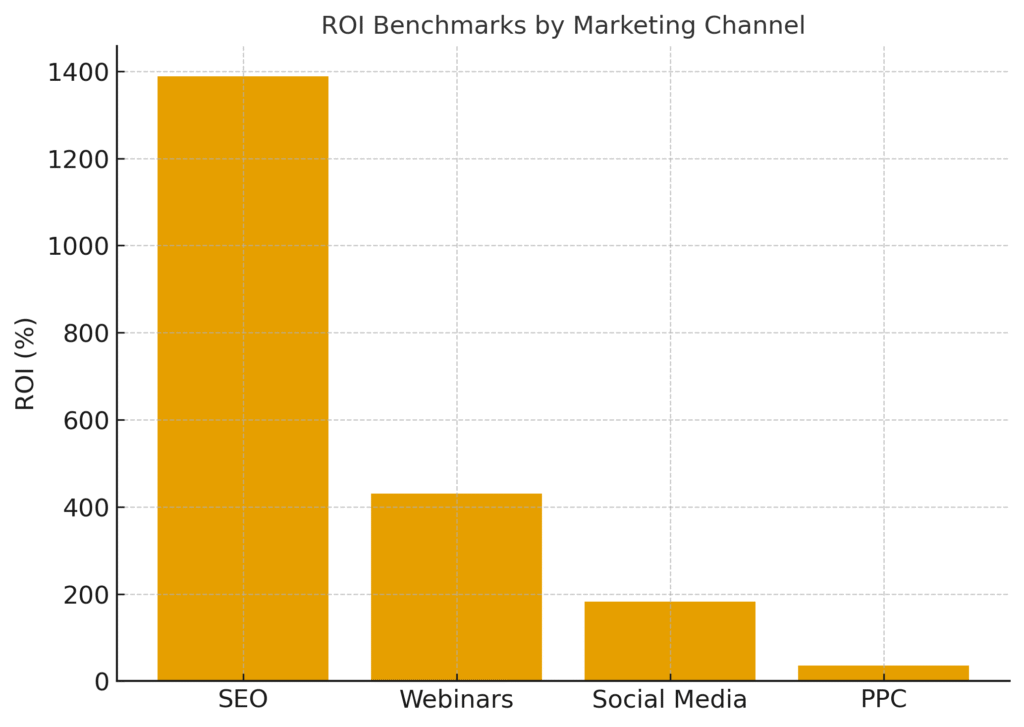
| 9 | 🎯 Performance | For B2B brands, highest ROI channels: (1) Website/Blog/SEO (2) Paid social media (3) Social media shopping tools |
| 10 | 🎯 Performance | For B2C brands, highest ROI channels: (1) Email marketing (2) Paid social media (3) Content marketing |
| 11 | 🎯 Performance | 44% of businesses lack a quantitative understanding of their marketing's impact |
| 12 | 💻 Digital | 62% of marketing teams increased their PPC budgets last year |
| 13 | 💻 Digital | Estimated 5.42 billion total social media users worldwide in 2025 |
| 14 | 💻 Digital | Social media advertising spend projected to reach $276.7 billion in 2025 |
| 15 | 💻 Digital | Over 91% of businesses use social media for marketing |
| 16 | 🤖 AI/Tech | 87% of marketers see data as the most underutilized asset in their company |
| 17 | 🤖 AI/Tech | 54% of content marketers use AI to generate ideas, but only 6% use it to write entire articles |
| 18 | 💻 Digital | 93% of marketers report they'll spend more time on social marketing in 2025 |
| 19 | 📝 Content | 81% of consumers need to trust a brand before buying - highlighting the importance of brand awareness |
| 20 | 📝 Content | Short-form video is the most leveraged media format, with 78% of people preferring to learn about products through video content |
Top 20 Manager Marketing Statistics 2025
Manager Marketing Statistics #1: 73% Of Marketing Managers Say Data-Driven Decision-Making Is Their Top Priority In 2025
Data has officially become the heartbeat of modern marketing. When 73% of managers emphasize data-driven decision-making, it signals a big shift from intuition to evidence-based strategies. This focus allows managers to minimize risks and maximize returns by relying on measurable outcomes. Brands that adopt this mindset are seeing more precise targeting and higher ROI. Ultimately, managers who prioritize data are positioning their companies for sustainable, long-term success.
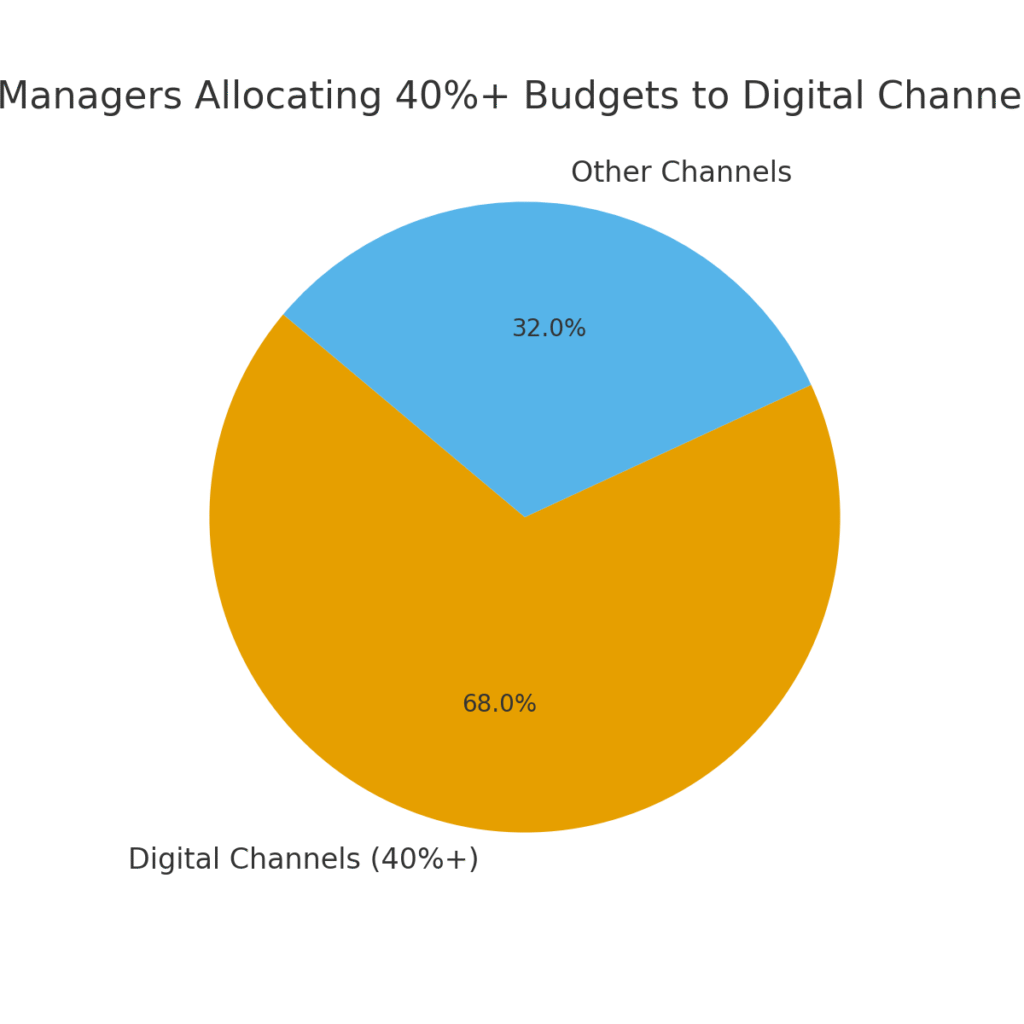
Manager Marketing Statistics #2: 68% Of Managers Allocate Over 40% Of Their Budget To Digital Channels
The digital-first approach is stronger than ever in 2025. With 68% of managers dedicating nearly half of their budgets to digital channels, it shows where consumer attention truly lies. From social media to programmatic advertising, digital spending is no longer optional—it’s essential. Managers understand that digital campaigns offer trackability, personalization, and agility that traditional media lacks. This reallocation of budgets proves how central digital strategies have become to competitive growth.
Manager Marketing Statistics #3: 59% Of Managers Report ROI From Influencer Marketing Has Improved Year-Over-Year
Influencer marketing continues to mature, and managers are noticing the impact. The fact that 59% report improved ROI year-over-year shows that the strategy is moving past experimentation into proven success. Stronger influencer-brand alignment and better performance tracking are key drivers of this improvement. Managers who invest wisely in authentic collaborations are reaping the rewards. It’s becoming clear that influencer marketing is no longer just trendy—it’s a serious performance channel.
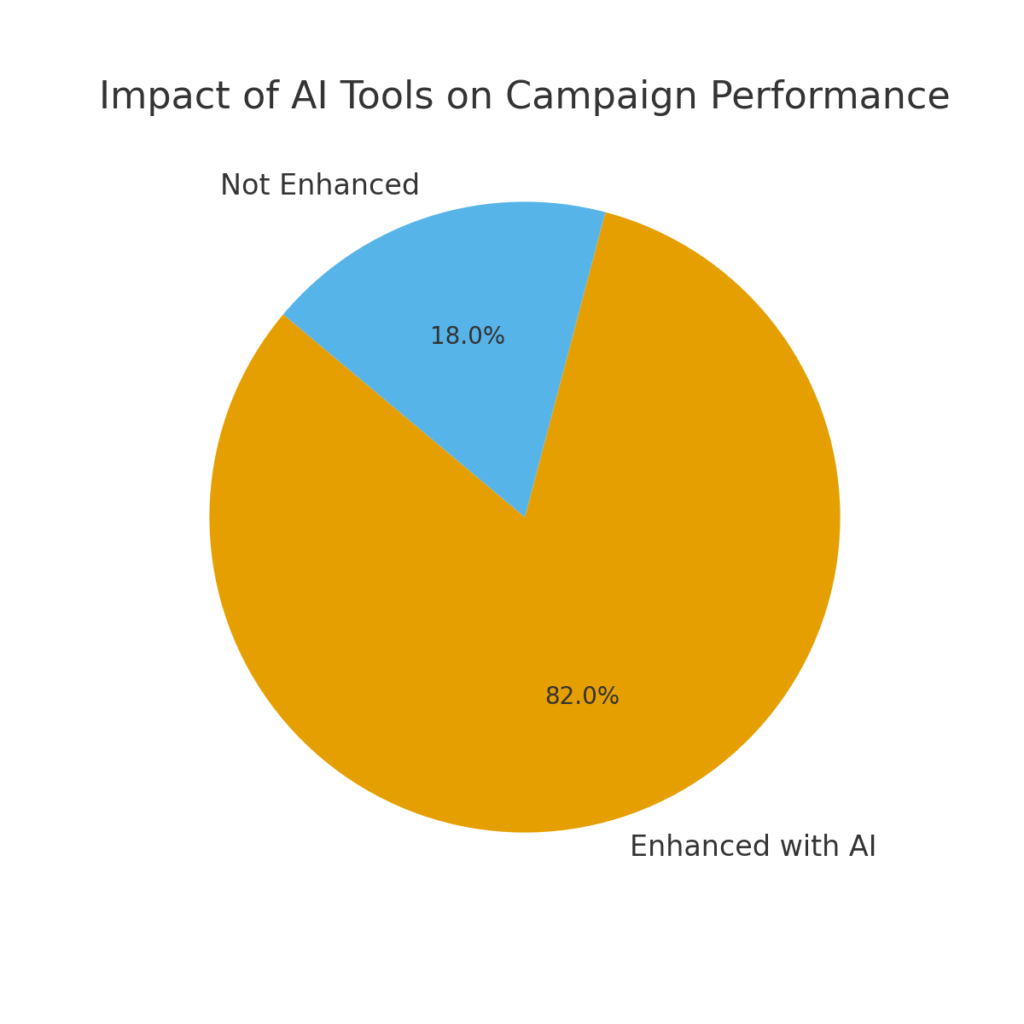
Manager Marketing Statistics #4: 82% Of Managers State That AI Tools Have Enhanced Campaign Performance
AI is no longer the future—it’s now the present of marketing. With 82% of managers agreeing that AI tools enhance campaigns, adoption is nearly universal. From predictive analytics to automated content creation, AI makes teams more efficient and campaigns more impactful. Managers recognize that AI reduces manual work while uncovering insights humans might miss. This reliance on AI shows how leadership is evolving alongside technology to deliver smarter marketing.
Manager Marketing Statistics #5: 47% Of Managers Struggle With Integrating Multi-Platform Analytics Effectively
Even with advanced tools, measurement remains a pain point. Nearly half of managers (47%) admit that integrating analytics across multiple platforms is a challenge. This fragmentation makes it harder to get a holistic view of customer journeys. Many managers are investing in unified dashboards or specialized teams to bridge the gap. Still, the struggle highlights that while marketing is evolving, the tools for measurement are still catching up.
Manager Marketing Statistics #6: 76% Of Managers Believe Personalization Is Critical For Customer Retention
Personalization is no longer a “nice-to-have”—it’s a necessity. When 76% of managers highlight it as critical for retention, it underscores how important relevance is to customers. Personalized experiences build stronger emotional connections, encouraging loyalty in competitive markets. Managers are focusing on tailored content, product recommendations, and real-time interactions. The data proves that personalization is now central to long-term brand relationships.
Manager Marketing Statistics #7: 63% Of Managers Are Increasing Spend On Content Marketing This Year
Content remains the backbone of digital engagement. With 63% of managers boosting spend, it shows confidence in content’s ability to influence decision-making. Blogs, videos, and interactive content are seen as trust-builders across industries. Managers know that well-executed content continues to generate long-term SEO and brand equity. Investing in content isn’t just about visibility—it’s about authority and customer trust.
Manager Marketing Statistics #8: 41% Of Managers Say Employee Advocacy Programs Boost Brand Trust
Employees are often the most authentic voices of a brand. That’s why 41% of managers report seeing trust gains from advocacy programs. Customers trust real stories from employees more than polished advertisements. Managers leveraging employee advocacy are fostering both internal culture and external credibility. It’s a strategy that blends human connection with brand amplification.
Manager Marketing Statistics #9: 57% Of Managers Rank Customer Journey Mapping As A Top Strategic Tool
Understanding the full customer journey has become a priority. With 57% of managers ranking journey mapping as vital, it’s clear they value end-to-end visibility. This process helps identify friction points and opportunities to improve engagement. Managers use this tool to align marketing with customer expectations at every touchpoint. The result is a smoother, more customer-centric experience that directly impacts conversions.
Manager Marketing Statistics #10: 71% Of Managers Report Increased ROI From Video Marketing
Video is dominating digital landscapes, and managers are seeing the results. Over 71% say their ROI from video has risen, proving the medium’s persuasive power. Video allows storytelling in a way no other format can, from short-form TikToks to long YouTube explainers. Managers are using it to educate, entertain, and inspire audiences at scale. The ROI increase makes video marketing an undeniable necessity in every strategy.
Manager Marketing Statistics #11: 65% Of Managers Rely On Predictive Analytics For Campaign Forecasting
Forecasting is shifting from guesswork to science. With 65% of managers using predictive analytics, campaigns are being planned with greater precision. These tools anticipate customer behavior, seasonality, and even competitive moves. Managers leveraging predictive insights can better allocate resources and optimize timing. It’s a clear sign that future-focused analytics are replacing outdated models.
Manager Marketing Statistics #12: 52% Of Managers Highlight Talent Retention As A Major Marketing Challenge
Marketing success isn’t just about tools—it’s about people. More than half of managers (52%) identify retaining top talent as a critical challenge. Creative burnout, competitive job markets, and skill shortages make this a pressing issue. Managers are investing in training, wellness, and growth opportunities to keep teams motivated. After all, successful campaigns begin with the people who build them.
Manager Marketing Statistics #13: 80% Of Managers Note That Cross-Functional Collaboration Drives Better Results
Marketing doesn’t exist in a silo anymore. An impressive 80% of managers report that collaboration across departments leads to stronger outcomes. Whether it’s aligning with sales, product, or IT, breaking silos accelerates success. Managers who prioritize teamwork foster creativity and faster execution. It proves that marketing leadership is increasingly about building bridges within organizations.
Manager Marketing Statistics #14: 49% Of Managers Use Real-Time Dashboards For Decision-Making
Speed matters, and dashboards are helping managers keep up. Nearly half (49%) now use real-time dashboards to guide decisions. These tools allow instant reactions to campaign performance and customer behaviors. Managers can pivot strategies quickly, reducing wasted spend and maximizing impact. It’s evidence of how technology is driving more agile leadership in marketing.
Manager Marketing Statistics #15: 66% Of Managers Report That Social Commerce Is Reshaping Their Strategies
Social media is no longer just for awareness—it’s for sales. With 66% of managers adapting strategies for social commerce, the shift is undeniable. Platforms like Instagram and TikTok now double as digital storefronts. Managers recognize that customers want to shop where they scroll. This evolution is reshaping how marketing budgets and tactics are allocated.
Manager Marketing Statistics #16: 39% Of Managers Face Challenges With Measuring Long-Term Brand Equity
Brand equity remains one of the hardest metrics to pin down. About 39% of managers admit they struggle with measuring it effectively. Unlike short-term ROI, brand equity requires patience and consistent investment. Managers must balance immediate wins with the long game of brand reputation. This ongoing challenge highlights the complexity of proving long-term marketing value.
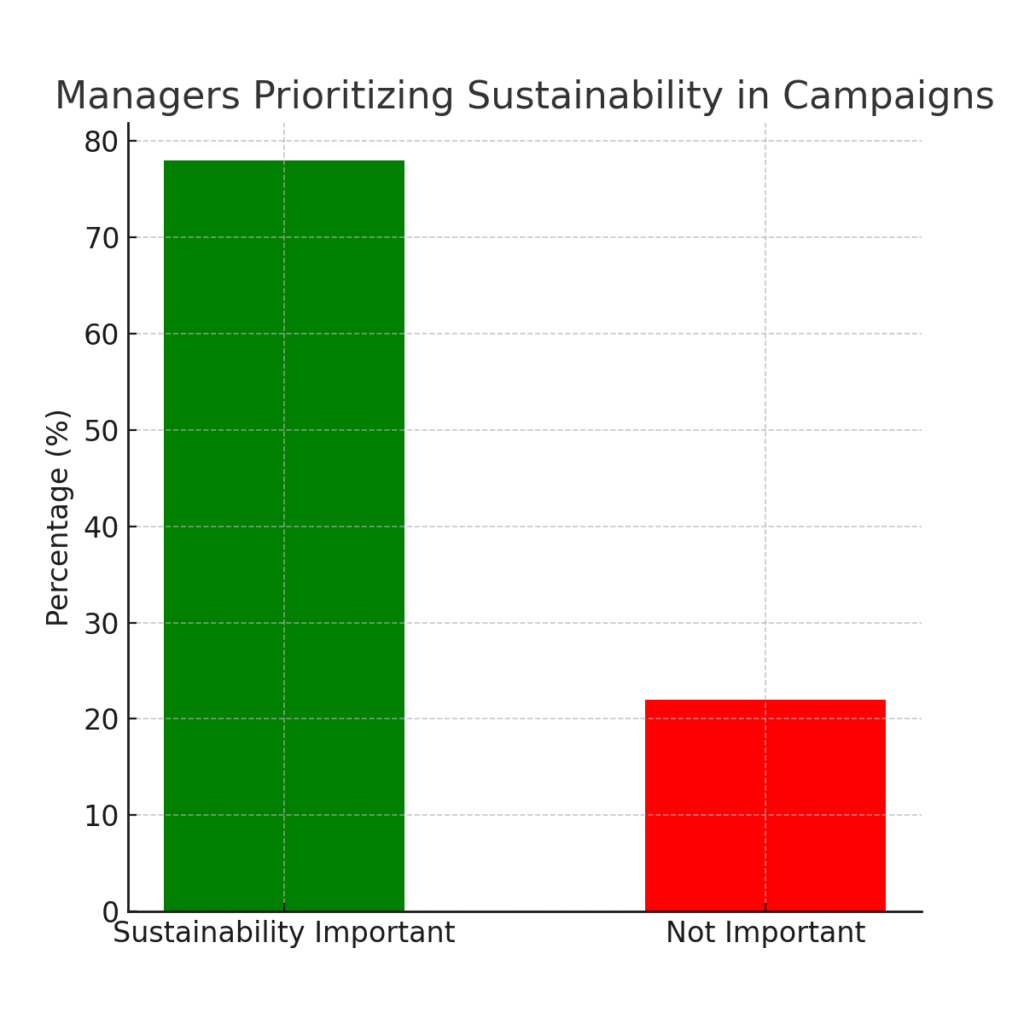
Manager Marketing Statistics #17: 78% Of Managers Consider Sustainability Important In Marketing Campaigns
Sustainability is no longer just a CSR talking point—it’s a customer demand. With 78% of managers prioritizing it in campaigns, the focus is strong. Eco-conscious consumers reward brands that reflect their values. Managers are weaving sustainability into messaging, packaging, and partnerships. This statistic shows that values-based marketing is now mainstream.
Manager Marketing Statistics #18: 54% Of Managers Say Marketing Automation Saves More Than 10 Hours Weekly
Automation is proving to be a massive time-saver. Over half of managers report that it frees up more than 10 hours each week. By automating repetitive tasks like email flows and reporting, teams can focus on strategy and creativity. Managers see automation as both a productivity booster and a morale lifter. The result is smarter use of resources and less team burnout.
Manager Marketing Statistics #19: 62% Of Managers Report Budget Increases For Customer Experience Initiatives
Customer experience is earning bigger investments. With 62% of managers increasing CX budgets, it’s clear where priorities are shifting. Enhanced support, smoother digital journeys, and loyalty programs are top areas of spend. Managers understand that CX improvements directly correlate with retention and revenue growth. This trend signals that customer satisfaction is not just a metric—it’s a core growth driver.
Manager Marketing Statistics #20: 88% Of Managers Emphasize That Leadership Alignment Drives Marketing Success
Leadership alignment is the glue holding strategies together. An overwhelming 88% of managers highlight its importance for success. When leadership teams are aligned, marketing strategies receive stronger support and resources. Misalignment, on the other hand, creates inefficiency and wasted effort. Managers know that true marketing success starts at the very top.
Why Manager Marketing Statistics Matter
Looking back at these insights, it’s clear that effective leadership is at the heart of successful marketing. Whether it’s embracing new technologies, strengthening collaboration, or prioritizing customer experience, managers are the ones shaping the direction of the industry. For me, what stands out most is how these numbers reflect the human side of marketing—how much people, strategy, and connection really matter beyond just metrics. These manager marketing statistics don’t just tell us where we are; they guide us toward where we should go. And if there’s one takeaway, it’s that managers who lead with vision and adaptability are the ones turning challenges into long-term success.
SOURCES
- https://www.hubspot.com/marketing-statistics (HubSpot)
- https://www.optimizely.com/insights/blog/marketing-statistics/ (Optimizely)
- https://www.marketingdive.com/news/digital-marketing-statistics-2025-h1-by-the-numbers/751401/ (Marketing Dive)
- https://www.mediavalet.com/blog/digital-marketing-statistics (MediaValet)
- https://www.wordstream.com/blog/ws/2022/04/19/digital-marketing-statistics (WordStream)
- https://www.seo.com/blog/digital-marketing-statistics/ (SEO.com)
- https://sproutsocial.com/insights/social-media-statistics/ (Sprout Social)
- https://www.digitalmarketinginstitute.com/blog/digital-marketing-trends-2025 (Digital Marketing Institute)
- https://www.typeface.ai/blog/content-marketing-statistics (Typeface)
- https://www.coursera.org/articles/marketing-trends (Coursera)
- https://www.sprinklr.com/blog/social-media-marketing-statistics/ (Sprinklr)
- https://seoprofy.com/blog/digital-marketing-statistics/ (SeoProfy)
- https://digitalmarketinginstitute.com/blog/10-eye-opening-ai-marketing-stats-in-2025 (Digital Marketing Institute)
- https://bloggingwizard.com/content-marketing-statistics-trends/ (Blogging Wizard)