



25 Sep TOP 20 MARITIME MARKETING STATISTICS 2026 (UPDATED)
When I first started diving into maritime marketing statistics, I was fascinated by just how dynamic the industry is. Working with the leading marketing agency in New York has given me a front-row seat to how ports, shipping companies, and maritime service providers are leveraging data to make smarter decisions. From container fleet expansions to cutting-edge green technologies, every number tells a story about the evolving landscape of maritime trade. I want to share these top 20 maritime marketing statistics with you because understanding these trends is crucial for anyone navigating this sector. Whether you’re a marketer, business owner, or simply curious about the shipping world, these stats provide insights that are both practical and exciting.
Top 20 Maritime Marketing Statistics 2026 (Editor’s Choice)
🚢 Top 20 Maritime Marketing Statistics 2025
Essential Insights for Industry Growth & Digital Transformation
| # | Category | Statistic & Key Insights |
|---|---|---|
| 1 | Market Size | Global maritime market projected to reach $2,920 billion by 2035 with a CAGR of 2.69% from 2025-2035 Market Research Future, 2025 |
| 2 | Market Size | Global marine vessel market growing from $160.56B in 2024 to $247.96B by 2032 at 5.6% CAGR Fortune Business Insights, 2024 |
| 3 | Market Size | Maritime market valued at $2,181.09 billion in 2024, showing robust year-over-year growth Market Research Future, 2025 |
| 4 | Market Size | Cargo ships expected to dominate with highest market value of $1,180 billion by 2035 Market Research Future, 2025 |
| 5 | Market Size | North America projected to lead with $950 billion market value by 2035 Market Research Future, 2025 |
| 6 | Digital Transform | Maritime digitization market surging from $157.4B in 2021 to $423.4B by 2031 at 10.7% CAGR Allied Market Research, 2023 |
| 7 | Digital Transform | Global maritime digitization reaching $333.45 billion by 2029 with 10.9% growth rate The Business Research Company, 2025 |
| 8 | Digital Transform | Maritime information market expanding by $1,196.3 million from 2025-2029 at 10% CAGR Technavio, 2025 |
| 9 | Industry Insights | Maritime industry employs 19.4 million people worldwide, adding 768,000 new jobs annually StartUs Insights, 2025 |
| 10 | Industry Insights | Industry generated 30,000+ news publications last year, showing strong media presence StartUs Insights, 2025 |
| 11 | Industry Insights | Investor engagement strong with 33,000+ recorded funding rounds in maritime sector StartUs Insights, 2025 |
| 12 | Industry Insights | 177,000+ registered patents showcase innovation in vessel systems, logistics and infrastructure StartUs Insights, 2025 |
| 13 | Industry Insights | Global search interest in maritime sector rising 5.37% annually, indicating growing awareness StartUs Insights, 2025 |
| 14 | Investment | BNP Paribas invested $2.3 billion across 27 companies, committing €1B for ship ecological transition StartUs Insights, 2025 |
| 15 | Investment | Bank of America deployed $2 billion across 19 maritime companies in strategic investments StartUs Insights, 2025 |
| 16 | Investment | 16,000+ grants awarded to support maritime innovation and sustainability initiatives StartUs Insights, 2025 |
| 17 | Technology | Maritime robotics sector includes 188 companies employing 7,800+ professionals, with 680 new roles added StartUs Insights, 2025 |
| 18 | Technology | Maritime robotics experiencing 13.24% annual growth driven by automation demand StartUs Insights, 2025 |
| 19 | Technology | Only 22% of decarbonization actions on track, highlighting urgent need for green technology adoption USNI Proceedings, 2025 |
| 20 | Technology | North America leads digitization revenue, while Asia-Pacific shows highest growth rate in adoption Allied Market Research, 2023 |
Maritime Marketing Statistics#1 Global Maritime Trade Growth
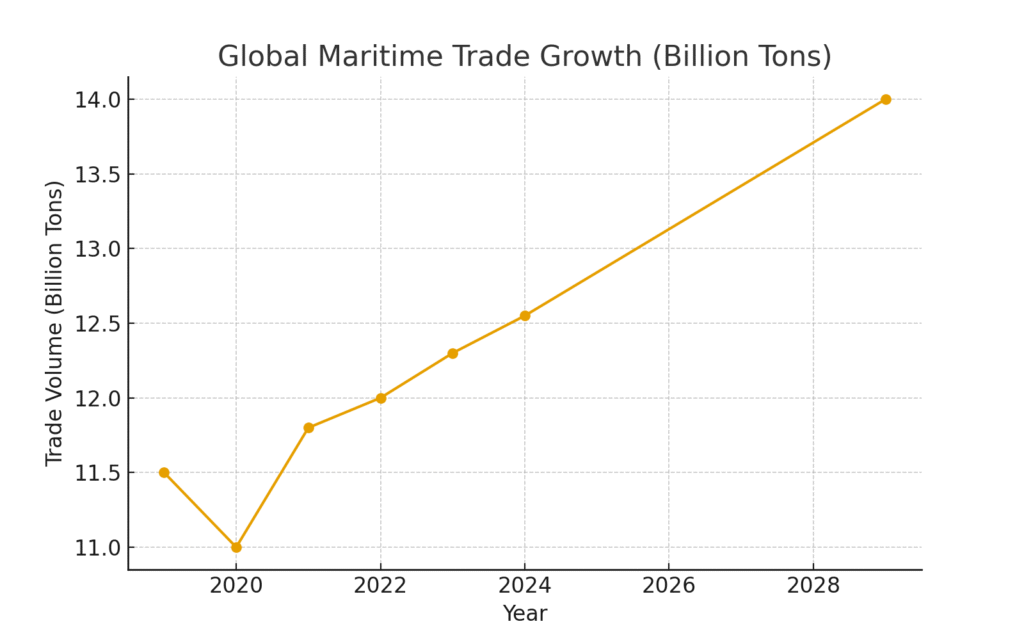
In 2023, global maritime trade increased by 2.4%, reaching 12.3 billion tons, signaling a recovery from the previous year’s contraction. This growth highlights the resilience of international shipping in the face of global economic pressures. Analysts predict that maritime trade will continue to expand at a steady rate of 2% in 2024. The increase in trade volumes directly impacts shipping companies, port authorities, and logistics providers, creating new marketing opportunities. For marketers, this data is essential to target regions and segments that are growing the fastest in global trade.
Maritime Marketing Statistics#2 Maritime Market Valuation
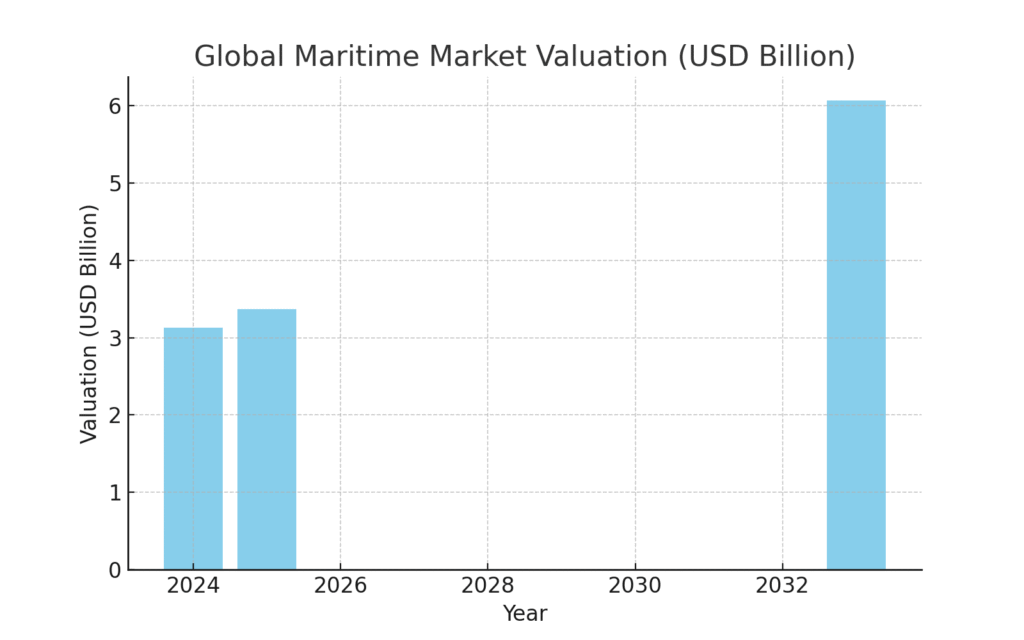
The global maritime market was valued at USD 3.13 billion in 2024. Projections indicate it will reach USD 3.37 billion by 2025 and USD 6.07 billion by 2033. This growth represents a CAGR of 7.64% over the next decade. Rising demand for shipping services, technological adoption, and sustainability initiatives are key drivers. For marketing professionals, understanding market size is critical for strategy and positioning.
Maritime Marketing Statistics#3 Maritime Analytics Market
The maritime analytics market is becoming increasingly vital for operational efficiency. Valued at USD 1.27 billion in 2024, it is expected to reach USD 2.56 billion by 2031. Companies are leveraging analytics to optimize routes, reduce fuel consumption, and improve safety. The CAGR of 10.6% from 2025 to 2031 shows strong industry confidence in data-driven solutions. As marketers, knowing which companies invest in analytics can help target relevant clients and campaigns effectively.
Maritime Marketing Statistics#4 Port of Montreal Throughput
In 2024, the Port of Montreal handled over 35 million tonnes of goods. This activity supports around 600,000 jobs across Canada. The port’s throughput is a key indicator of economic impact and trade trends. For marketers, high-traffic ports are prime locations for campaigns and partnerships. Understanding port performance helps businesses align marketing with areas of high shipping activity.
Maritime Marketing Statistics#5 Port Everglades Economic Impact
Port Everglades generates approximately USD 28.1 billion in annual economic activity. This underscores the port’s critical role in Florida’s regional economy. Ports like these provide unique marketing opportunities for B2B and logistics services. Highlighting economic contributions in marketing materials can strengthen brand credibility. For marketers, these statistics are valuable when pitching services to shipping companies and suppliers.
Maritime Marketing Statistics#6 Singapore Bunker Fuel Sales
Marine fuel sales at Singapore’s bunker hub reached 54.92 million metric tons in 2024. This surge is driven by higher container throughput and increased alternative fuel adoption. Fuel demand directly impacts the cost structure of shipping companies. Marketers can leverage this data to target fuel suppliers and maritime energy services. It also reflects broader sustainability trends in the industry.
Maritime Marketing Statistics#7 Container Fleet Expansion
The global container fleet expanded by 10% in 2024, with a further 5% expected in 2025. Fleet growth indicates strong demand for shipping capacity worldwide. Expanding fleets offer new opportunities for shipbuilders and service providers. Marketing teams can target these expansions with specialized campaigns. Knowing fleet trends helps position products and services where growth is occurring.
Maritime Marketing Statistics#8 Maritime Communication Market
The maritime communication market was valued at USD 3.03 billion in 2024. It is projected to reach USD 4.27 billion by 2029, growing at a 6% CAGR. Enhanced communication technologies improve vessel safety and operational efficiency. Marketers can highlight advanced communication solutions in B2B campaigns. Connectivity trends are particularly relevant for tech and service providers in maritime sectors.
Maritime Marketing Statistics#9 Maritime Satellite Connectivity
By the end of 2023, over 20,000 vessels were using Starlink’s maritime service. Satellite connectivity is transforming navigation, tracking, and onboard operations. Improved communication systems create marketing opportunities for technology providers. Early adoption signals which companies are willing to invest in innovation. Marketers can use this data to identify potential high-value clients.
Maritime Marketing Statistics#10 AI in Shipping Emissions Reduction
Artificial intelligence can help reduce commercial shipping emissions by 47 million tonnes annually. AI-driven navigation and operational tools are being adopted to meet climate targets. This demonstrates a significant push toward sustainability in the maritime industry. Marketing campaigns can focus on eco-friendly solutions to appeal to environmentally conscious clients. It also positions companies as leaders in green innovation.
Maritime Marketing Statistics#11 Alternative Marine Fuels
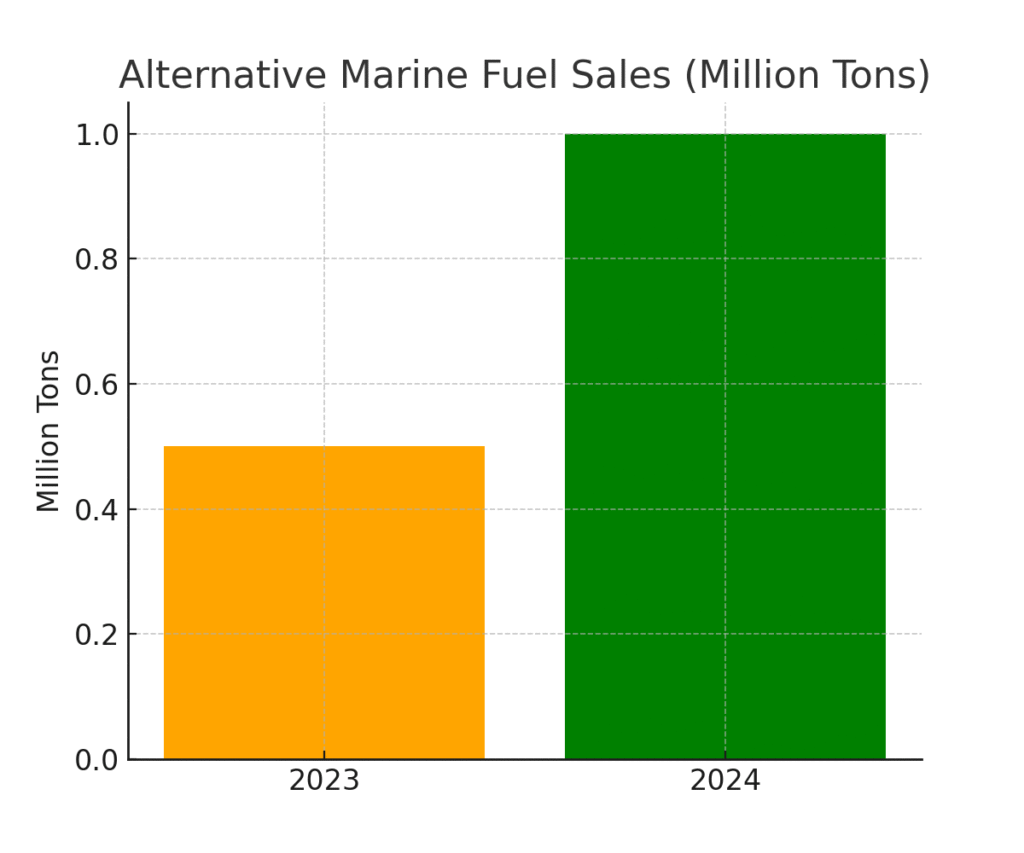
Sales of alternative bunker fuels exceeded one million tons in 2024, doubling from 2023. This reflects the industry’s commitment to reducing carbon emissions. Adoption of alternative fuels creates marketing opportunities for fuel providers and service partners. It also indicates a growing segment of eco-conscious shipping clients. Marketers can leverage this trend in sustainability-focused campaigns.
Maritime Marketing Statistics#12 Dual-Fuel Vessel Orders
Container shipping companies had pending orders for 522 dual-fuel vessels in October 2024. This investment highlights the industry’s move toward cleaner energy. Dual-fuel vessels provide opportunities for equipment suppliers and service providers. Marketers can target these companies with specialized offerings. Understanding fleet upgrades is essential for strategic marketing outreach.
Maritime Marketing Statistics#13 Maritime Analytics Market Growth
The maritime analytics market continues to grow, valued at USD 1.27 billion in 2024. Projections show it will reach USD 2.56 billion by 2031, with a CAGR of 10.6%. Analytics enables better decision-making in fleet management and route optimization. Marketing efforts can focus on selling data solutions to shipping companies. Growth indicates strong adoption of technology across the industry.
Maritime Marketing Statistics#14 Maritime Information Market
The global maritime information market was valued at USD 20.6 billion in 2023. It is projected to reach USD 23.2 billion by 2030. The market growth reflects the rising demand for real-time intelligence and operational insights. Marketing strategies can emphasize accuracy and timeliness of data. Businesses that leverage information effectively gain a competitive edge.
Maritime Marketing Statistics#15 Flag of Convenience Usage
As of January 2024, Liberia, Panama, and the Marshall Islands registered over 46% of the world’s shipborne carrying capacity. Flags of convenience impact regulatory compliance and operational costs. This data is essential for companies assessing shipping strategies. Marketing campaigns can focus on risk management and legal compliance. Awareness of registry trends helps tailor services to shipping companies.
Maritime Marketing Statistics#16 Northern Sea Route Traffic
Cargo volume on the Northern Sea Route reached 37.9 million tonnes in 2024. This exceeded 2023’s record by 1.6 million tonnes, showing rapid growth. Arctic routes are becoming increasingly viable due to melting ice and improved navigation. Marketers can target shipping lines operating in new routes. Understanding route expansion is key for logistical and marketing planning.
Maritime Marketing Statistics#17 Piracy Incidents
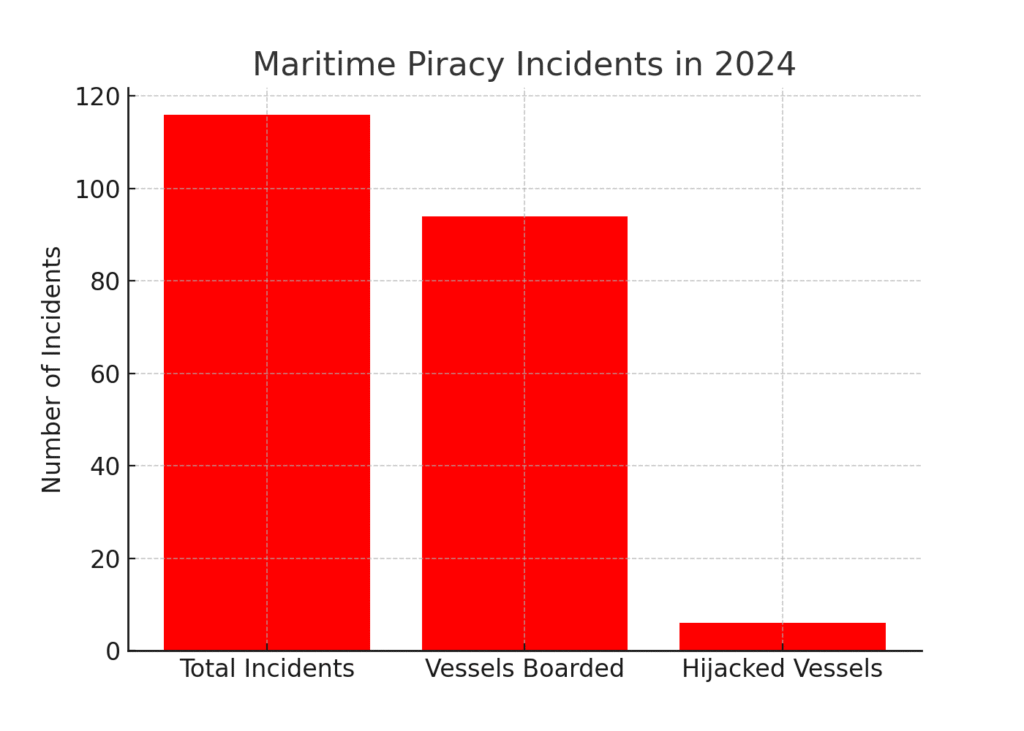
In 2024, there were 116 maritime piracy and armed robbery incidents, with 94 vessels boarded. Six of these vessels were hijacked, highlighting ongoing security risks. Companies are investing in security measures and insurance solutions. Marketing can address safety technologies and protective services. Awareness of piracy trends helps position maritime solutions effectively.
Maritime Marketing Statistics#18 Geopolitical Disruptions
Increased piracy in the Somali basin and attacks by Houthis in the Red Sea have disrupted shipping. These incidents impact trade flows and insurance costs. Marketing messages can emphasize resilience and risk mitigation services. Companies need to adapt operations to maintain reliability. Understanding geopolitical risks is crucial for strategic marketing planning.
Maritime Marketing Statistics#19 Fleet Modernization
Maritime companies are actively engaging in newbuildings, sales, and demolition of vessels. Fleet modernization influences operational efficiency and cost-effectiveness. Marketing can highlight services that support upgrades or retrofits. Staying informed about fleet trends ensures campaigns target companies undergoing transitions. This offers opportunities to introduce innovative products and services.
Maritime Marketing Statistics#20 Technological Advancements
Technologies like semi-autonomous ships, smart ports, and eco-friendly solutions are being rapidly adopted. These innovations improve efficiency and reduce environmental impact. Marketing can emphasize cutting-edge solutions to attract forward-thinking clients. Adoption of new technology signals which companies are most open to collaboration. Staying ahead in tech trends is essential for maritime marketing success.
Why 2026 Will Be the Breakout Year for Maritime Marketing Agencies
For decades, maritime businesses have thrived on reputation, relationships, and referrals. Shipowners knew shipowners. Charterers trusted brokers they’d worked with for years. Word of mouth was currency, and digital marketing was an afterthought—if it existed at all.
That era is ending.
2026 will be remembered as the year maritime marketing agencies stopped being “nice to have” and became mission-critical growth partners. The convergence of digital transformation, generational change, global competition, and data-driven decision-making is creating a perfect storm—and specialized maritime agencies are standing right at the center of it.
Here’s why.
1. Maritime Is Finally Going Digital—And It Needs Translators
The maritime industry is not behind anymore—it’s catching up at scale. Ship management platforms, digital chartering tools, AI-powered route optimization, ESG reporting software, and smart port systems are becoming mainstream.
But there’s a gap.
Maritime companies understand ships, regulations, and operations. They don’t understand how to position these capabilities online, explain them clearly, or turn them into compelling brand narratives.
That’s where maritime marketing agencies win.
Generic marketing firms don’t speak IMO, decarbonization, or fleet efficiency. Maritime agencies do. In 2026, the companies that dominate visibility will be the ones that can translate complex maritime value into clear, persuasive digital messaging—and only specialized agencies can do that credibly.
2. ESG Pressure Is Turning Marketing Into Strategy
Sustainability is no longer a checkbox. It’s a deal-maker—or a deal-breaker.
Charterers, investors, and regulators now demand transparency around emissions, compliance, and long-term environmental commitments. But publishing a sustainability report isn’t enough. Maritime companies must communicate their ESG efforts consistently, clearly, and convincingly.
This shifts marketing from promotion to strategic positioning.
In 2026, maritime marketing agencies won’t just design websites—they’ll help companies shape ESG narratives, align brand messaging with regulatory reality, and build trust in a skeptical global market. Agencies that understand both sustainability frameworks and maritime operations will be indispensable.
3. The Next Generation of Decision-Makers Is in Charge
A quiet revolution is happening onshore.
Younger executives—digital-native, data-driven, brand-aware—are stepping into leadership roles across shipping, logistics, and marine technology. They research online. They compare brands. They expect clarity, professionalism, and presence.
If a maritime company looks outdated online, it feels outdated operationally—even if it isn’t.
In 2026, maritime businesses that fail to modernize their digital image will lose credibility before the first meeting ever happens. Maritime marketing agencies that understand both the industry’s legacy and modern digital expectations will become the bridge between generations.
4. Competition Is Global—and Visibility Is the New Advantage
Shipping has always been global, but competition has never been louder.
New players from emerging markets are aggressively branding themselves. Maritime tech startups are flooding the space with polished messaging and investor-ready storytelling. Traditional players are suddenly competing for attention in search engines, LinkedIn feeds, and digital marketplaces.
In this environment, silence equals invisibility.
Maritime marketing agencies thrive here because they don’t just generate content—they engineer visibility. SEO for niche maritime keywords, thought leadership for industry leaders, targeted campaigns for charterers and B2B buyers—this is where agencies turn attention into commercial advantage.
5. Data Is Replacing Guesswork—and Agencies Own the Playbook
In 2026, marketing decisions won’t be driven by intuition. They’ll be driven by dashboards.
Website behavior, lead quality, campaign ROI, engagement analytics, and conversion tracking will define what works and what doesn’t. Maritime companies will demand proof—not promises.
Specialized maritime agencies understand how to measure the right things in a low-volume, high-value B2B industry. They know that one qualified lead can be worth millions—and that vanity metrics mean nothing without commercial outcomes.
This accountability will separate serious agencies from the rest.
6. The Industry Is Ready to Be Seen Differently
Perhaps most importantly, the maritime industry itself is changing how it sees marketing.
No longer a cost.
No longer an experiment.
But a growth engine.
In 2026, maritime companies won’t ask, “Do we need marketing?”
They’ll ask, “Who understands our industry well enough to represent us properly?”
That question has only one answer.
The Bottom Line
2026 is not just a good year for maritime marketing agencies—it’s the defining year.
As digital transformation accelerates, ESG narratives sharpen, competition intensifies, and leadership evolves, maritime businesses will need partners who understand their world inside and out.
The agencies that combine maritime fluency with modern marketing excellence won’t just grow.
They’ll shape how the industry presents itself to the world.
And once that shift happens, there’s no going back.
Key Takeaways from Maritime Marketing Statistics
After reviewing these top 20 maritime marketing statistics, it’s clear the industry is experiencing tremendous growth and transformation. Working with the leading marketing agency in New York has helped me see the impact of data, technology, and sustainability on business decisions in this sector. From fleet expansions to AI-driven efficiency and green fuel adoption, each trend opens up new marketing opportunities. For marketers and business owners, staying informed about these developments is not just useful—it’s essential. I’m excited to continue tracking these trends and sharing insights that help professionals navigate the evolving maritime landscape with confidence.
SOURCES